# Creativity Articoli collegati

Il Centro Notizie HTX fornisce gli articoli più recenti e le analisi più approfondite su "Creativity", coprendo tendenze di mercato, aggiornamenti sui progetti, sviluppi tecnologici e politiche normative nel settore crypto.

Why Do We Need an AI Content Perspective Today?

The article "Why Do We Need an AI Content Perspective Today?" explores the complex and often contentious integration of AI into the cultural and creative industries, particularly film and television. It begins with the cancellation of Amazon's AI-generated animation "Punky Duck," highlighting the ethical debates surrounding AI content. AI's rapid advancement is transforming video production, enabling cost-effective, full-length AI films (e.g., "RAPHAEL," "Dreams of Violets") while sparking industry resistance over issues like "synthetic actors." The core debate has shifted from whether to use AI to how to use it responsibly. The article analyzes why AI's entry into film is uniquely unsettling. It distinguishes between "cultural fast food" (short-form, fast-paced content like micro-dramas) and "cultural main courses" (traditional, long-form film/TV). AI currently excels at the former, matching its fragmented narratives, shallow emotional needs, and free-to-consumer models. However, venturing into the latter challenges the human-centric essence of storytelling—creativity, emotional depth, and the unique value of human labor and experience. While AI can generate massive volumes of content and lower costs, it risks devaluing human creativity, leading to homogenized output, and creating unfair competition through potential intellectual property infringement. Its efficiency also amplifies content safety risks, making preemptive governance crucial. To counter these risks, the article proposes establishing clear boundaries guided by a human-centered AI content perspective. It outlines four principles: 1) Amplify, rather than displace, human creative space; 2) Respect and protect human creative output; 3) Ensure human creative control and responsibility remain paramount; and 4) Guarantee transparency and traceability in AI creation. The conclusion emphasizes that humans must act as the "helmsmen" of technology, steering AI development to enhance, not replace, the core human values at the heart of cultural expression.

marsbit06/30 12:48

Why Do We Need an AI Content Perspective Today?

marsbit06/30 12:48

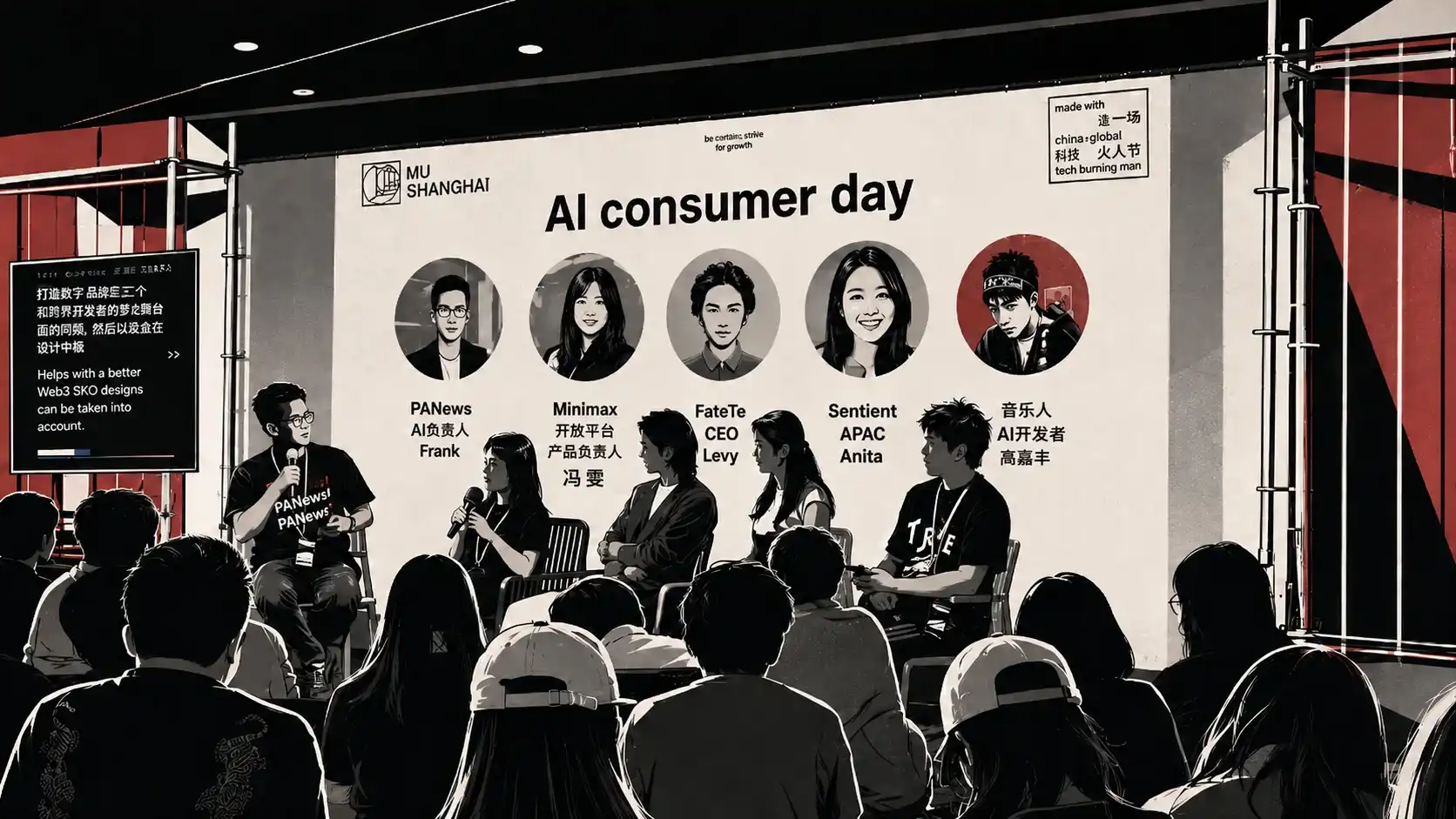
muShanghai Discusses Consumer AI: After Continuous Iteration of Large Models, Product Competition Moves Towards Scenarios and Experience

The roundtable discussion "Innovative Practices and Path Exploration of the AI Consumption Ecosystem" at muShanghai AI Week, featuring experts from model platforms, cultural apps, the open-source ecosystem, and music creation, delved into the practical paths for consumer AI products. A key consensus emerged: while AI model advancements lower prototyping barriers, the real challenge for enduring products lies beyond raw technology. True differentiation comes from deep scene understanding, data organization, user education, delivering emotional value, and building open ecosystems. The competition is shifting from "who has the stronger model" to "who best understands the specific user and scenario." Participants highlighted that application-layer barriers, such as accumulated contextual data and cultural localization (e.g., FateTell's translation of Eastern metaphysics for global users), are not easily erased by model updates. They cautioned that AI simplifies prototyping but not the core entrepreneurial hurdles: user acquisition, community building, and commercialization. The discussion emphasized that value must return to human needs—like emotional comfort (FateTell) or preserving the creative *process* in music-making, as highlighted by musician-developer Gao Jiafeng, rather than just outputting a final product. With the rise of AI Agents, user education is evolving from manual documentation reading to more guided, interactive learning within the product experience itself. Looking ahead 3-5 years, panelists foresee AI moving into the physical world via hardware and robotics, enabling more personalized services and addressing growing needs for companionship amidst technological anxiety. The future points towards "technology democratization," where AI assists diverse lifestyles, and cultural forms may be recombined, with emotional connection becoming paramount. Ultimately, as models continue to evolve, the products that endure will be those that meet genuine human needs, foster understanding, and build meaningful connections.

marsbit05/16 03:06

muShanghai Discusses Consumer AI: After Continuous Iteration of Large Models, Product Competition Moves Towards Scenarios and Experience

marsbit05/16 03:06

In the Era of Agent Explosion, How Should We Cope with AI Anxiety?

The article addresses the widespread anxiety around AI and Agent technologies, arguing against the view that AI advancement is merely a race in token consumption. It critiques recent viral claims suggesting that burning more tokens—such as 100 million or even 1 billion per day—equates to greater power or evolutionary advantage, pointing out the impractical cost and lack of inherent value in pure token usage. Instead, the author frames AI as a force for technological democratization, similar to historical innovations like steam engines, electricity, and the internet. These technologies eventually became accessible to all, rather than remaining exclusive to elites. AI, particularly through tools like ChatGPT, offers a form of knowledge and capability equality—it responds based on parameters, not the user's identity. The key differentiator in using Agents effectively is not the volume of tokens consumed, but the clarity of goals, structural design, and quality of questioning. Efficiency—achieving more with fewer tokens—is where true value lies. Human judgment and creativity remain essential. The piece also explores AI anxiety through the lens of Max Weber’s concept of "instrumental rationality," where AI excels at optimizing for efficiency without questioning underlying values. While AI may outperform humans in task execution, the author suggests that humans must focus on "value rationality"—pursuing meaning, beauty, and purpose beyond pure utility. Just as围棋 (Go) persists as an art form despite AI dominance, human activities can retain significance through aesthetic, emotional, and ethical dimensions. The conclusion urges readers not to fear replacement by AI, but to reaffirm what makes us human: the pursuit of joy, meaning, and values—qualities that AI, despite its power, does not inherently possess or prioritize.

marsbit02/12 03:25

In the Era of Agent Explosion, How Should We Cope with AI Anxiety?

marsbit02/12 03:25

In the Coming Decades, What Could Be Your Most Important Skill?

The most important skill for the future is agency: the ability to take self-directed action without external permission. Unlike specialized skills, which risk obsolescence, agency enables continuous adaptation and learning. Highly agentic individuals act autonomously, treat life as an experiment, and persist through failure. They see challenges as solvable problems rather than impossibilities. In the AI era, agency becomes even more critical. While AI can generate content and automate tasks, it lacks vision and context. Human creators who use AI as a tool—infusing their unique perspective and purpose—will thrive. The fear of AI replacing humans stems from a misunderstanding: tools evolve, but agency and vision remain irreplaceable. Generalists, not specialists, will succeed because they integrate diverse knowledge to solve problems and adapt to change. The education system often promotes conformity, but agency requires breaking free from predefined paths. Humans possess five core capacities: computation, transformation (creation), variation (idea generation), selection (error correction), and attention (perspective-shifting). These remain foundational regardless of technological advances. To cultivate agency, start by setting a goal, study others’ processes, experiment, identify patterns, and create your own methods. Teaching others solidifies understanding. Social media serves as a modern "playground" for practicing agency—offering low-risk experimentation, feedback, and skill development. Ultimately, agency is the art of self-direction, ensuring relevance and resilience in any future.

marsbit01/14 14:35

In the Coming Decades, What Could Be Your Most Important Skill?

marsbit01/14 14:35

活动图片