# Consensus Articoli collegati

Il Centro Notizie HTX fornisce gli articoli più recenti e le analisi più approfondite su "Consensus", coprendo tendenze di mercato, aggiornamenti sui progetti, sviluppi tecnologici e politiche normative nel settore crypto.

What Happens When Two Miners Find a Block in the Same Second? How the 'Orphan Race' Unfolds

Bitcoin mining is a race without a real-time referee. A newly mined block must physically propagate across the global peer-to-peer network before consensus is reached on the chain's tip. This takes seconds, sometimes longer on congested connections. If a second miner finds a valid block before learning of a competing one, they build on their last-known version and broadcast their own block. For a short time, two equally valid blocks exist at the same height, creating a temporary chain split. The network resolves this not by voting or timestamps, but by Proof-of-Work: the chain that accumulates the most work becomes canonical. Blocks on the losing side are "orphaned" or "stale." Their miners lose the block reward and fees, though unconfirmed transactions return to the mempool. Usually, a single subsequent block resolves the tie. A notable two-block reorganization occurred on March 24, 2026. Antpool and Foundry USA mined competing versions of block 941,881 seconds apart. ViaBTC extended Antpool's chain, while Foundry extended its own, creating a one-block split. Foundry then pulled ahead by mining six consecutive blocks, making its chain the heaviest. All nodes switched to Foundry's chain, orphaning blocks from Antpool and ViaBTC. While such multi-block reorganizations are rare, the underlying race condition is common. Analysis shows about 9.2% of block intervals in a sample period were under 60 seconds, each representing a potential short-lived race. Fast relay networks have reduced propagation delays, making prolonged splits rarer. However, the event highlighted a trend of hash rate concentration, where well-resourced pools have a higher chance of winning any specific race and mining consecutive blocks, marginalizing smaller miners.

cryptonews.ru8 min fa

What Happens When Two Miners Find a Block in the Same Second? How the 'Orphan Race' Unfolds

cryptonews.ru8 min fa

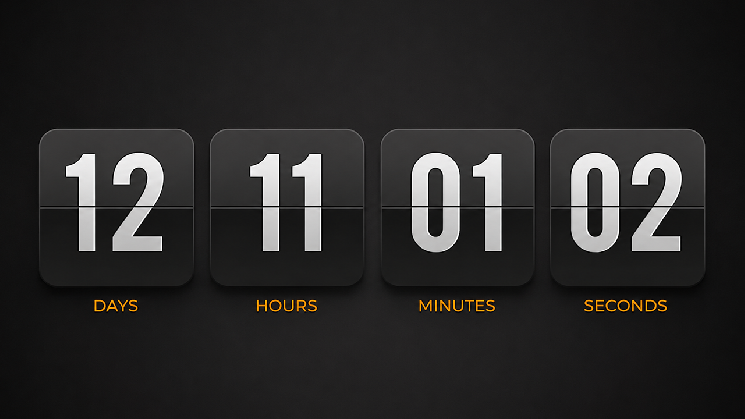
Less Than Two Weeks Left — Bitcoin's BIP-110 Countdown Begins as Miner Support Grows Ahead of Decisive Moment

The BIP-110 activation process for Bitcoin, which proposes a temporary soft fork to limit specific data-heavy transaction types (like Ordinals inscriptions), is entering its critical final phase. As of July 27, 2026, there are roughly 1,790 blocks remaining until the mandatory signaling window begins at block 961,632 (estimated for August 9). Starting then, nodes enforcing BIP-110 will reject blocks not signaling for the proposal. While support from miners has grown from below 1% to around 3% recently, it remains concentrated among smaller pools and independent miners, with major pools like Foundry, Antpool, ViaBTC, and F2Pool largely not signaling. Foundry's stance is particularly decisive, as it holds a large share of the network's hashrate and has tied its signaling to a client vote. Without a major pool's shift, widespread activation is unlikely. If the current low signaling levels persist after the window opens, nodes enforcing BIP-110 will follow a slower, minority chain, potentially creating a chain split from the majority chain followed by legacy (e.g., Bitcoin Core) nodes. This activation mechanism differs from past soft forks like SegWit, resembling the 2017 UASF BIP-148 more closely. Proponents argue BIP-110 is necessary to curb spam-like data transactions that increase node costs and distort fee markets, framing opposition as a contentious hard fork. Critics, however, view the activation method as a radical overreaction to a minor issue. The final outcome in the coming two weeks hinges on whether a major pool switches support, if major exchanges clarify their chain preference, and how miners actually behave once the mandatory window is open.

cryptonews.ruIeri 21:17

Less Than Two Weeks Left — Bitcoin's BIP-110 Countdown Begins as Miner Support Grows Ahead of Decisive Moment

cryptonews.ruIeri 21:17

What Will Ethereum Look Like in 2030?

Ethereum, now in its 11th year, continues to evolve with a long-term vision centered around five "North Star" goals for 2030. First, a **Fast L1**: The consensus mechanism will be streamlined using zero-knowledge proofs to aggregate validator votes, aiming for single-slot finality. Block times are planned to decrease from 12 seconds to 4 seconds, making transactions irreversible within seconds. The staking minimum will also drop to 1 ETH, promoting greater decentralization. Second, a **1 Billion Gas L1**: Leveraging ZK proofs (L1 ZK-EVM), nodes will verify blocks without re-executing transactions, removing a key scalability bottleneck. This paves the way for the L1 to handle ~1 billion gas per second, a 200x increase, while allowing even light clients to fully verify the chain. Third, **Trillion-Gas L2s**: The roadmap focuses on massively scaling data capacity (blobs) for Layer 2 rollups, targeting 1 GB per second bandwidth. This creates a clear division: the L1 acts as a secure settlement layer, while high-throughput, application-specific L2s (like Robinhood Chain) handle execution. Fourth, a **Quantum-Resistant L1**: To counter future quantum computing threats, Ethereum plans to transition its signature schemes to hash-based cryptography, with the goal of a fully quantum-resistant L1 by 2029. Fifth, a **Privacy-Native L1**: Native privacy features, using ZK proofs to hide transaction details while proving validity, are officially on the roadmap, transforming Ethereum's transparent model. The development ecosystem is also shifting, with new organizations like Ethlabs emerging alongside a smaller Ethereum Foundation. While the "Strawmap" document outlining these goals remains a draft subject to change and delays, the core vision is clear: to make Ethereum faster, more scalable, quantum-safe, and privacy-enabled while preserving its foundational qualities of neutrality and trustlessness.

marsbitIeri 13:16

What Will Ethereum Look Like in 2030?

marsbitIeri 13:16

An Undercurrent of Bitcoin Civil War: BIP-110 Raises Fork Concerns

**A Summary of the Bitcoin Governance Crisis: The BIP-110 Showdown and Forking Risks** Bitcoin is facing internal division alongside a market downturn. The core of the conflict is BIP-110, the "Reduced Data Carriage Soft Fork" proposal introduced in December 2025. It aims to restrict non-financial data (like inscriptions) in future transactions, citing concerns over node costs and Bitcoin's original purpose. The controversy lies in its activation mechanism. BIP-110 requires 55% miner support within a difficulty period. However, its voting signal has remained below 1% since monitoring began. If this threshold isn't met by the August 7, 2026 deadline (block height 961,632), compatible nodes (primarily running Bitcoin Knots) are programmed to *enforce* the new rules, rejecting non-compliant blocks. Critics warn this minority-enforced activation could split the chain. Major figures like Michael Saylor, Adam Back, and Jameson Lopp strongly oppose BIP-110. Saylor argues it sets a dangerous precedent for defining "valid" transactions and could stifle future innovations. Opponents view the enforcement strategy as a risky governance overreach, contrasting it with past upgrades that achieved over 90% consensus. BIP-110 was partly a reaction to Bitcoin Core's v30 update in October 2025, which significantly increased the default data relay limit. Core developers called this a policy change, not a consensus rule, but it prompted the creation of the Bitcoin Knots branch and, subsequently, BIP-110. Compounding the pressure, Paul Sztorc plans a separate hard fork around the same time to launch a new chain (eCash) featuring his Drivechain scaling proposal. While independent, these dual forking events create operational and market uncertainty. The market, already in a corrective phase, must now price in this governance tail risk. Analysts predict the original chain, backed by the vast majority of miners and exchanges, would likely retain primary value and liquidity if a split occurs. However, the process would be disruptive, causing short-term chaos with replay attacks, exchange confusion, and widened spreads. August 2026 presents a critical test of Bitcoin's ability to resolve deep governance disputes without fracturing.

Foresight NewsIeri 13:10

An Undercurrent of Bitcoin Civil War: BIP-110 Raises Fork Concerns

Foresight NewsIeri 13:10

Michael Saylor: 110 Reasons to Oppose BIP-110

Michael Saylor presents 110 arguments against Bitcoin Improvement Proposal (BIP) 110, a soft fork aimed at restricting certain non-monetary data storage uses (like inscriptions) on the Bitcoin blockchain. He acknowledges the proponents' valid concerns—such as node costs, fee pressure, and preserving Bitcoin's monetary focus—but fundamentally disagrees with the proposed solution. Saylor argues that BIP 110 represents a dangerous precedent of using consensus rules to enforce value judgments on transaction validity, moving away from Bitcoin's core principles of neutrality and permissionless innovation. His key objections are organized into eleven categories: 1) It violates neutrality and hard consensus by banning currently valid transactions. 2) It fails to meet the high burden of proof required for a consensus change, lacking concrete data on the alleged crisis. 3) Its seven bundled technical restrictions are overly broad, targeting generic script functionalities and blocking future upgrade paths. 4) It sacrifices compatibility and future optionality by closing off designed upgrade hooks. 5) Its temporary rules add significant complexity (grandfathering, expiry states) without sufficient justification. 6) The economic and security impacts, particularly on miner revenue and fee markets, are uncertain and unmodeled. 7) Superior, market-based tools (fee markets, relay/mining policies) already exist to manage blockchain load. 8) It stifles innovation by creating a chilling effect for developers. 9) Its modified activation mechanism (55% threshold, forced signaling) is aggressive and risks network splits. 10) The precedent it sets—using consensus to suppress disliked but legal uses—is more dangerous than the problem it aims to solve. 11) A better path exists: improving measurements, refining resource-based policies, and allowing market forces to work. Saylor concludes that Bitcoin's strength lies in its neutral rules, open markets, and hard consensus. Changing these foundational elements to target specific use cases is an unnecessary and risky "iatrogenic" intervention. He advocates for guarding Bitcoin's neutrality rather than acting as its redeemer.

marsbit07/22 00:06

Michael Saylor: 110 Reasons to Oppose BIP-110

marsbit07/22 00:06

Who Decides the Rules of Bitcoin? BIP-110 Ignites Governance Debate

Bitcoin's governance is once again at the center of a heated debate, this time ignited by BIP-110, the "Reduced Data Temporary Softfork." This proposal aims to curb non-monetary data (like inscriptions and Runes) by introducing seven new consensus-layer restrictions over a year, such as limiting new output scripts to 34 bytes and restoring the OP_RETURN cap to 83 bytes. The controversy stems from BIP-110's fundamental shift: it moves the battle against "spam" from node relay and miner policies to the consensus layer, rendering currently valid transactions invalid. Supporters, arguing that default policy governance has failed (highlighted by Bitcoin Core v30's relaxation of OP_RETURN limits), see this as necessary to protect node resources and Bitcoin's monetary focus. Opponents, led by figures like Michael Saylor and Adam Back, warn it dangerously centralizes governance. Saylor listed 110 reasons against it, criticizing its low 55% miner activation threshold and potential for chain splits. Back emphasized Bitcoin's "permissionless" ethos, arguing no single group should impose value judgments via consensus rules. Further complicating matters, technical critiques suggest BIP-110 may be technically circumventable, and a "BlockSlop" vulnerability in its upgrade path poses a consensus risk. The debate has drawn in diverse stakeholders: miners (with pools like Ocean signaling support and Foundry polling clients), node operators (like Bitcoin Knots), and new players like corporate treasury holder MicroStrategy (Saylor), whose market influence adds a novel dimension. Ultimately, BIP-110 acts as a governance stress test, exposing the unresolved question: who decides Bitcoin's rules? It pits the authority of miners, node operators, developers, and capital holders against each other, with each side claiming to defend Bitcoin's core principles of neutrality and security.

marsbit07/21 06:41

Who Decides the Rules of Bitcoin? BIP-110 Ignites Governance Debate

marsbit07/21 06:41

Who Decides Bitcoin's Rules? BIP-110 Ignites Governance Debate

Title: Who Decides Bitcoin's Rules? BIP-110 Ignites Governance Debate A new technical proposal, BIP-110 (Reduced Data Temporary Softfork), has sparked a fundamental governance debate within the Bitcoin community. It aims to impose new consensus rules for one year to limit non-financial data (like inscriptions and Runes) on-chain, moving beyond simple node and miner policy filters to invalidate currently valid transactions. Supporters argue that default policies have failed due to workarounds, necessitating consensus-layer changes to protect Bitcoin's core monetary function from data spam. Critics, including Michael Saylor and Adam Back, contend this dangerously centralizes judgment, undermines permissionlessness, and sets a risky governance precedent. They advocate for market-based solutions like fees or Layer 2s instead. The debate exposes deeper tensions: miners are divided on activation; node operators assert their sovereignty; Bitcoin Core developers influence defaults without direct accountability; and large corporate holders like MicroStrategy now wield narrative influence. Technically, BIP-110 may not fully block data and carries a disclosed consensus bug risk. Ultimately, BIP-110 acts as a stress test, forcing the community to confront the unresolved question: who legitimately decides what Bitcoin is and how it evolves, amidst competing claims from miners, nodes, developers, and capital holders.

链捕手07/21 06:30

Who Decides Bitcoin's Rules? BIP-110 Ignites Governance Debate

链捕手07/21 06:30

活动图片