# Consensus Articoli collegati

Il Centro Notizie HTX fornisce gli articoli più recenti e le analisi più approfondite su "Consensus", coprendo tendenze di mercato, aggiornamenti sui progetti, sviluppi tecnologici e politiche normative nel settore crypto.

Polymarket's "Hand of God": Frequent Prediction Disputes, the Black Box of Adjudication Power Under the "Centralization" Dilemma

A semantic dispute over whether the U.S. "invaded" Venezuela led to a multimillion-dollar betting outcome on Polymarket, where the "No" option was controversially settled despite real-world actions that many perceived as invasion. This incident highlights a recurring structural flaw in decentralized prediction markets: the challenge of defining "truth" for complex real-world events. Similar semantic ambiguities have repeatedly occurred on Polymarket, such as a high-stakes bet on whether Ukraine’s President Zelensky wore a suit at a specific event. While real-world evidence seemed clear, the outcome was swayed by decentralized oracle UMA’s governance mechanism, allowing token holders to vote on disputed results—sometimes enabling large players to manipulate outcomes. These cases reveal the limits of "code is law" in prediction markets. While blockchain excels at executing predefined rules trustlessly, it struggles with contextual, socially constructed events like political or military interpretations. The authority to define and settle reality ultimately remains centralized in the hands of rule-makers and arbitrators, even when execution is decentralized. Prediction markets work best for clearly defined, data-driven questions but face inherent challenges when applied to politicized or semantically ambiguous events. The core issue isn’t whether the market is decentralized, but who holds the power to define reality when consensus breaks down.

marsbit16 h fa

Polymarket's "Hand of God": Frequent Prediction Disputes, the Black Box of Adjudication Power Under the "Centralization" Dilemma

marsbit16 h fa

Delphi Digital: Solana to Undergo the Most Radical Technical Upgrade Cycle in Its History

Delphi Digital outlines Solana's ambitious 2026 roadmap, describing it as the network's most radical upgrade cycle. The goal is to transform Solana into an exchange-grade environment where its on-chain Central Limit Order Book (CLOB) can compete with centralized exchanges (CEX) in latency, liquidity depth, and fairness. Key upgrades include: - **Alpenglow:** A major consensus overhaul introducing Votor and Rotor. Votor reduces finality time to 100-150ms by aggregating votes off-chain. It ensures liveness with up to 40% of nodes offline or malicious. Proof of History is deprecated. - **Firedancer:** A second validator client built in C++ by Jump, aimed at increasing client diversity and network resilience. - **DoubleZero:** A private fiber-optic network overlay for validators, minimizing latency disparities and enabling faster consensus. - **Block Building:** Innovations like Jito's BAM, which uses Trusted Execution Environments for transaction privacy, and Harmonic, an open block builder aggregation layer. - **Raiku:** A scheduling/auction layer providing deterministic, guaranteed execution for applications like high-frequency trading. These upgrades aim to position Solana as the premier L1 for on-chain capital markets, supporting everything from meme coins to perpetuals and native chain-on stocks, by achieving performance parity with traditional exchanges.

marsbitIeri 09:59

Delphi Digital: Solana to Undergo the Most Radical Technical Upgrade Cycle in Its History

marsbitIeri 09:59

Why Do Memes Only Cut You? An Article That Explains Their True Growth Mechanism

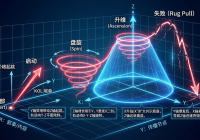
The article "Why Do Meme Coins Only 'Cut' You? Clarifying Their True Growth Mechanism" offers a fresh, analytical perspective on meme coin dynamics, framing their growth not as irrational speculation but as a mathematically explainable phenomenon. The core argument is that a meme coin’s market capitalization isn't just driven by price increases (Z-axis), but is fundamentally supported and "propped up" by two underlying factors: narrative density (X-axis) and the network of传播 nodes (Y-axis). Together, these form the base radius of a "Wealth Cone." A meme with only height (price) but no base (narrative and community) is like a thin needle—easily toppled. A strong, expanding base is necessary to support sustainable, exponential growth. The proposed XYZ three-dimensional growth spiral model explains the interaction: * **X-axis (Narrative Density):** The meme's core idea, cultural resonance, originality, and the richness of community-created content. * **Y-axis (Propagation Network):** The transmission pipelines, from major influencers (e.g., Elon Musk) to KOLs and finally to retail investors. * **Z-axis (Capital Flow):** The monetization of attention, measured by market cap, trading volume, and crucially, liquidity depth. The lifecycle of a successful meme is a reflexive, spiral ascent through stages: **Ignition** (a Y-axis spike from a KOL callout lifts the Z-axis), **Spin** (price growth attracts more discussion, enriching the narrative), and **Ascension** (an expanded narrative base allows for a new, higher level of market cap). Failed memes (rug pulls) occur when a price pump (Z) isn't supported by narrative development (X), causing a collapse. The article concludes that understanding this geometric interplay of narrative, community, and capital is key to evaluating meme coins.

比推Ieri 07:39

Why Do Memes Only Cut You? An Article That Explains Their True Growth Mechanism

比推Ieri 07:39

Why Do the Meme Coins You Buy Only Fall? — Deconstructing the Growth Spiral and Volume of Meme Coins Using First Principles

In this article, the author proposes a novel "financial physics" framework to analyze meme coins, arguing that their value isn't purely speculative but can be understood through a mathematical model. The core idea is that a meme coin's market capitalization isn't just about price increases (Z-axis), but is fundamentally "supported" by a base formed by narrative density ("X-axis") and propagation nodes ("Y-axis"). The growth of a successful meme is visualized as a three-dimensional, upward-spiraling cone. The cone's volume (V), representing market cap, is determined by the formula V = 1/3 * (base area) * (height). Here, the base radius (r) is the product of X (narrative strength) and Y (community/node spread), making it a squared function (r = x * y), which captures the network effect. The height (h) is the capital inflow (Z). A meme with a large, stable base can support a tall, stable cone of high value, whereas one with only height (price pump) and no base is an unstable "needle" destined to collapse. The article illustrates this model through four evolutionary stages: Ignition (a strong X and Y trigger a Z surge), Reflexivity (price increase fuels further propagation), Narrative Upgrade (community expands the story from a simple meme to a cultural symbol, X → X'), and finally, the Value Black Hole (the upgraded narrative attracts massive, stable capital). Two case studies are used: 1. **Broccoli:** Its narrative (X) was ignited by CZ naming his dog "Broccoli," propagated by his massive node (Y), leading to a capital surge (Z). Thousands of copycats failed because they lacked narrative development and a genuine community (a small r), while the successful ones expanded their base. 2. **Pnut:** It started with a powerful narrative of "justice for a killed squirrel" (X), which was massively amplified by top-tier nodes like Elon Musk (Y), causing a capital explosion (Z). Its narrative successfully upgraded to a broader political movement (X'), giving it a huge, stable base and immense market cap. The model highlights that sustainable meme growth depends on first expanding the consensus base (X*Y) before capital (Z) can build a significant and stable value (V). The coefficient 1/3 represents the inherent friction and attention decay in converting hype into lasting value. The article concludes by teasing a follow-up on practical strategies for identifying and participating in meme opportunities across various chains.

marsbitIeri 05:42

Why Do the Meme Coins You Buy Only Fall? — Deconstructing the Growth Spiral and Volume of Meme Coins Using First Principles

marsbitIeri 05:42

活动图片