# Composability Articoli collegati

Il Centro Notizie HTX fornisce gli articoli più recenti e le analisi più approfondite su "Composability", coprendo tendenze di mercato, aggiornamenti sui progetti, sviluppi tecnologici e politiche normative nel settore crypto.

In-Depth Analysis of Fluent: How to Make Every Virtual Machine a Lego Brick?

Tiger Research's report "Deep Dive into Fluent: Making Every Virtual Machine a Lego Brick?" explores Fluent's vision to unify blockchain ecosystems by enabling seamless interoperability between different virtual machines (VMs). The report argues that the performance race in blockchain infrastructure is largely over, and the next frontier is cross-VM composability—allowing applications built on Ethereum Virtual Machine (EVM), Solana Virtual Machine (SVM), and WebAssembly (Wasm) to interact natively on a single chain, eliminating the need for bridges. Fluent, an Ethereum L2, uses a "mixed execution" model where contracts from EVM, SVM, and Wasm are compiled into a unified format (rWasm) to share state and interact within a single transaction. Currently, EVM-Wasm interoperability is live on testnet, with SVM support under development. Beyond technical innovation, Fluent is building Prints, a reputation aggregation layer that consolidates trust signals from multiple platforms (e.g., Ethos, Kaito, Talent Protocol) to identify real users and enable reputation-based benefits. This is complemented by Fluent Connect, a tool for developers to target users based on their reputation data. Fluent is also growing its ecosystem through the Blended Builders Club (BBC), an accelerator supporting early-stage dApps like Pump Pals (social trading) and Sprout (yield optimization). The testnet is used for gathering genuine user feedback rather than incentivizing empty engagement. While still early, Fluent’s integrated approach—chain interoperability, reputation layer, and ecosystem growth—aims to avoid the fate of underutilized L2s by focusing on real utility and cross-VM composability.

marsbit02/24 01:32

In-Depth Analysis of Fluent: How to Make Every Virtual Machine a Lego Brick?

marsbit02/24 01:32

Centrifuge and Pharos Collaborate to Advance On-Chain Distribution Infrastructure for Institutional Assets

Centrifuge and Pharos have announced a collaboration to build shared on-chain infrastructure for the scalable distribution and operation of institutional-grade assets, including tokenized U.S. Treasuries (JTRSY) and AAA-rated structured credit products (JAAA). The partnership addresses a core challenge in institutional onchain finance: distribution. While tokenization has advanced significantly, many institutional assets remain siloed, inaccessible, or become inactive after issuance. A key issue is that access to dollar-denominated products like credit and Treasuries remains restricted in many markets outside the U.S. and Western Europe due to regulatory, operational, and custodial barriers. Even when tokenized, these assets are often distributed in a fragmented way, limiting their reach and usability within active on-chain financial systems. By integrating Centrifuge’s institutional tokenization infrastructure with Pharos’s “inclusive, execution-first” Layer 1 blockchain, the partnership aims to create a unified environment for asset distribution, liquidity, and continuous on-chain operation. Pharos will serve as a strategic liquidity and distribution layer for assets originated through Centrifuge, enabling deeper liquidity pathways and broader capital access. Centrifuge Labs CEO Bhaji Illuminati emphasized that “tokenization alone doesn’t solve accessibility and usability,” underscoring the need for distribution infrastructure. Pharos CEO Wish Wu noted that “the challenge isn’t demand—it’s infrastructure,” highlighting the goal of creating an environment where institutional assets can migrate on-chain and remain active within open, composable financial systems. This collaboration represents a step toward “operational onchain finance,” where tokenized assets are not only on-chain but also supported by infrastructure designed for distribution, execution, and sustained engagement.

marsbit02/17 13:08

Centrifuge and Pharos Collaborate to Advance On-Chain Distribution Infrastructure for Institutional Assets

marsbit02/17 13:08

Aave Founder: What is the Secret of the DeFi Lending Market?

Chain-based lending, which began as an experimental concept around 2017, has evolved into a market exceeding $100 billion, primarily driven by stablecoin borrowing backed by crypto-native collateral like Ethereum and Bitcoin. This system enables liquidity release, leveraged strategies, and yield arbitrage. The key advantage of on-chain lending lies not in technological novelty but in its elimination of financial inefficiencies, offering lower costs (around 5% for stablecoins) compared to centralized crypto lenders (7-12%) due to open capital aggregation, transparency, and automation. On-chain lending is structurally due to permissionless markets that excel in capital pooling and risk pricing, fostering competition and innovation without intermediaries. This model reduces operational costs, replacing manual processes with code, and benefits both capital providers and borrowers. However, the current limitation is not a lack of capital but a shortage of diverse, borrowable collateral. The future of on-chain lending depends on integrating real-world economic value with crypto-native assets, moving beyond abstract financial strategies to serve broader adoption. Traditional lending remains expensive due to inefficiencies in loan origination, risk assessment, and servicing, where misaligned incentives and manual processes inflate costs. Decentralized finance can disrupt this by automating end-to-end operations, ensuring transparency, and reducing expenses. When on-chain lending becomes significantly cheaper and more efficient than traditional systems, widespread adoption will follow, empowering borrowers with faster, more accessible capital. Aave exemplifies this shift, positioning itself as a foundational layer for a new financial backend.

marsbit02/10 02:17
Aave Founder: What is the Secret of the DeFi Lending Market?

marsbit02/10 02:17

Vitalik's Layer2 Reset: Can It Save Ethereum?

Vitalik Buterin's recent post recalibrates Ethereum's Layer2 (L2) strategy, acknowledging that the original 2020 "rollup-centric" roadmap—based on L2s acting as "branded shards" of Ethereum—no longer aligns with reality. Two key issues are identified: L2 decentralization has progressed slower than expected, with only a few major L2s reaching Stage 1 decentralization, and Ethereum L1 has scaled beyond initial projections, reducing L2s' necessity for scalability. The core conceptual shift introduces a "trust spectrum" framework, recognizing that L2s serve diverse purposes and may legitimately operate at varying decentralization levels (e.g., Stage 0 or 1) without being deemed failures. This allows L2s to pursue different economic and regulatory goals, such as compliant chains with asset-freezing capabilities. Technically, Vitalik proposes a "native rollup precompile" to simplify L2 infrastructure by embedding EVM execution verification directly into Ethereum, reducing audit burdens and improving security. Additionally, a mechanism for "synchronous composability" is outlined, enabling atomic cross-layer transactions between L1 and L2. Responses from L2 teams like Arbitrum, Base, Linea, and Optimism reflect strategic diversity, validating the trust spectrum approach. The post implicitly acknowledges L2s' economic realities, such as sequencer revenue and regulatory constraints, and suggests differentiation strategies for L2s in a cheaper L1 environment. This update demonstrates adaptive leadership, prioritizing realistic evolution over outdated assumptions, and provides a clearer path forward for Ethereum's ecosystem.

marsbit02/05 06:00

Vitalik's Layer2 Reset: Can It Save Ethereum?

marsbit02/05 06:00

From "On-Chain Applications" to "Financial Infrastructure": The Generational Evolution and Transformation of Perp DEX

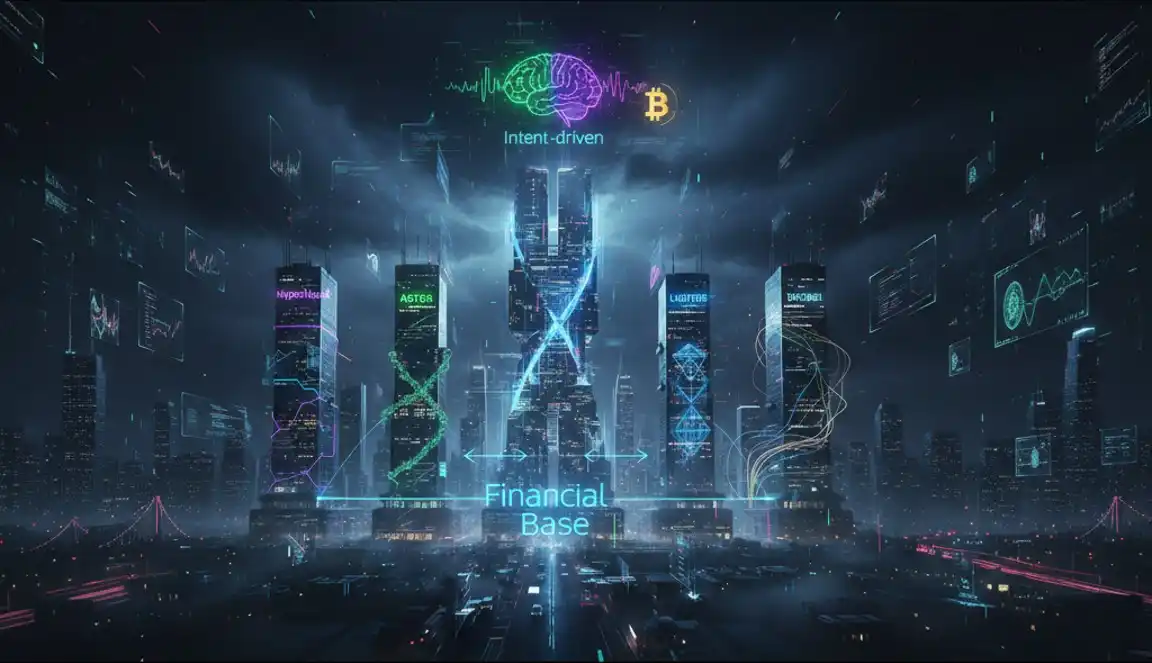
Title: From "On-Chain Applications" to "Financial Infrastructure": The Generational Evolution of Perp DEX The 2025 period was a "great filtering era" for the derivatives sector. Surviving Perp DEX platforms have moved beyond being mere "low-cost versions" of CEXs by solving the core cost in finance: trust. With the adoption of full-chain abstraction, users in 2026 can perform seamless cross-chain transactions while retaining asset sovereignty, as funds are secured in smart contracts rather than held by intermediaries. On-chain derivatives now consistently account for over 25% of total trading volume, marking a fundamental shift in user behavior. Over 90% of Perp DEXs failed due to product homogeneity, reliance on subsidized "rented liquidity," and soaring customer acquisition costs. Merely forking existing code or offering token incentives proved unsustainable. Four successful models have emerged: 1. **Hyperliquid**: Achieved near-CEX performance by building its own L1 blockchain optimized for low-latency order books, attracting quantitative capital. 2. **Aster**: Leveraged the Binance ecosystem to offer enhanced capital efficiency, allowing users to earn yield on collateral (e.g., staking rewards) while trading. 3. **Lighter**: Built an app-specific ZK-Rollup to provide a verifiable, mathematically-proven trading infrastructure with anti-MEV properties, appealing to institutions. 4. **Decibel**: Unified high performance and full-chain composability on Aptos, achieving sub-20ms latency and enabling cross-chain margin accounts for seamless trading from wallets like MetaMask. Future evolution will focus on: * **Intent-centric trading**: Users express a desired outcome, and solvers find the optimal execution path. * **AI Agents**: The rise of AI-driven trading strategies will require DEXs to provide high computational power and low latency. * **Advanced Pricing Models**: Dynamic risk engines will use real-time volatility data to automatically adjust parameters, increasing system robustness beyond traditional CEXs. The key to survival is providing unparalleled execution efficiency that capital and trading strategies cannot refuse.

marsbit01/15 04:34

From "On-Chain Applications" to "Financial Infrastructure": The Generational Evolution and Transformation of Perp DEX

marsbit01/15 04:34

From U.S. Stocks to On-Chain: The Next Structural Opportunity Is Brewing

The article discusses the potential impact of tokenized US stocks on the cryptocurrency market, arguing against the view that tokenized equities will entirely drain liquidity from the crypto space. While acknowledging that some crypto funds may flow into tokenized stocks, the author emphasizes that asset tokenization (including stocks, bonds, and gold) could significantly increase on-chain asset volume. This, combined with crypto’s composability and potential improvements in scalability and privacy, may lead to an explosion in on-chain transactions—attracting not only crypto-native funds but also traditional stock market participants. The piece suggests that tokenized assets won’t remain static on-chain; instead, they will interact with DeFi, derivatives, prediction markets, and other crypto-native applications. This could create new opportunities and even new sectors, similar to how perps and prediction markets emerged in previous cycles. Although the era of broad "altcoin seasons" may be over, high-quality crypto projects—especially those in infrastructure like DeFi, oracles, privacy, digital identity, and wallets—could still thrive. The convergence of tokenized traditional assets and crypto composability might spark innovative combinations, such as crypto AI agents or new financial instruments. Ultimately, the author believes that the next cycle will bring new "version winners," distinct from past cycles, and that while the wild west of crypto is fading, significant opportunities remain for innovative projects that leverage on-chain liquidity and composability.

比推12/19 06:15

From U.S. Stocks to On-Chain: The Next Structural Opportunity Is Brewing

比推12/19 06:15

Why is Crypto the Key Infrastructure for the Large-Scale Adoption of AI Agents?

Why Crypto is Key Infrastructure for AI Agent Mass Adoption For AI Agents to become widely deployable autonomous software, they require two core capabilities: composability and verifiability. These are inherently lacking in traditional Web2 systems but are natively provided by cryptocurrency networks. AI's future lies not in isolated models but in agents that automatically call services, compose with other agents, write code, test, and execute decisions involving financial actions. This agent composability depends on verifiability—knowing another agent executed as promised. Web2 infrastructure (APIs and SaaS) fails here due to black-box operations, mutable data, unprovable results, centralized audits, and manual settlements. Cryptocurrency provides the missing verified base layer through: 1. Verifiable Execution: Smart contracts and ZK proofs enable transparent, provable on/off-chain actions. 2. Verifiable Identity: DIDs and signed agent code ensure trust and integrity. 3. Verifiable Value Transfer: Automated payments, revenue sharing, collateralization, and penalties enable direct fund management without intermediaries. As AI evolves from code generation to full-cycle automation (writing, testing, running, fixing), especially with real-world financial impact, crypto becomes essential. It enables automatic penalties for failures, rewards for contributions, multi-agent settlements, and trustless coordination—making AI economically viable beyond demos. In short: AI enables autonomy; crypto makes autonomy trustworthy. Without crypto's verifiability, AI agents cannot operate reliably at scale in the real economy.

深潮12/09 03:58

Why is Crypto the Key Infrastructure for the Large-Scale Adoption of AI Agents?

深潮12/09 03:58

活动图片