# Classification Articoli collegati

Il Centro Notizie HTX fornisce gli articoli più recenti e le analisi più approfondite su "Classification", coprendo tendenze di mercato, aggiornamenti sui progetti, sviluppi tecnologici e politiche normative nel settore crypto.

Anthropic Creates an AI Jailbreak 'Penal Code': Your Requests, Four Ways to Die

Anthropic has publicly detailed its security measures and a new "Cyber Jailbreak Severity" (CJS) framework following the controversial takedown of its Fable 5 model. The incident, triggered by simple user requests like counting letters or stating a profession, highlighted overzealous safety filters. Anthropic classifies cybersecurity-related prompts into four tiers: malicious activities (blocked), high-risk dual-use (like pentesting, with strict limits), low-risk dual-use (often blocked by "safety margin" errors), and harmless tasks (theoretically allowed but still frequently flagged). The company admits its classifiers are tuned for high sensitivity, leading to many false positives. The newly proposed CJS framework aims to objectively score the severity of AI "jailbreaks" (prompts that bypass safety rules) on a 0-10 scale across four dimensions: Capability Gain (does it grant new attack abilities?), Breadth (does it work across multiple attack types?), Weaponization Ease (how hard is it to turn into a real attack?), and Discoverability (how easy is it to find?). The score determines the response, from no action (CJS-0) to a potential model takedown (CJS-4). The score is context-dependent; for example, discovering a major unknown vulnerability today scores high, while asking about a well-known one scores low. The article raises concerns about Anthropic's dual role: it is both creating powerful models (like the restricted Mythos 5) and defining the rules (CJS) for judging their misuse, potentially giving it disproportionate influence. This is set against the backdrop of U.S. export controls, which for the first time directly restricted API access to a model (Fable 5), creating a "tiered" system where public models are heavily filtered and advanced ones are limited to vetted partners. The CJS framework is portrayed as potentially providing regulators with a metric to justify future API shutdowns. For users, the advice is to carefully phrase prompts, watch for signs of being downgraded to a weaker model, and wait indefinitely for promised filter improvements.

marsbit07/06 00:24

Anthropic Creates an AI Jailbreak 'Penal Code': Your Requests, Four Ways to Die

marsbit07/06 00:24

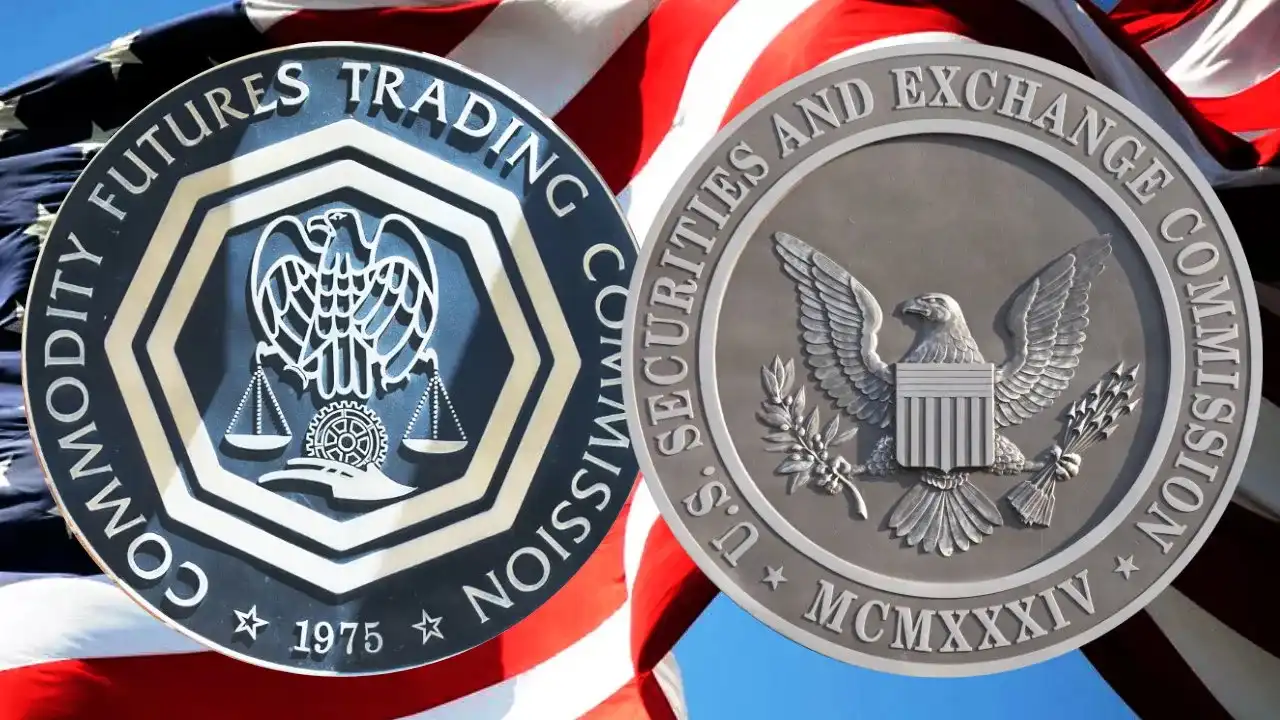
U.S. Crypto Regulatory 'Civil War' Ceasefire: A Turning Point in the Decade-Long Power Struggle Between SEC and CFTC

For over a decade, the U.S. cryptocurrency industry has operated under regulatory uncertainty, with two key questions unresolved: what exactly are crypto assets, and which agency should regulate them? The Securities and Exchange Commission (SEC) and the Commodity Futures Trading Commission (CFTC) have long held overlapping and conflicting claims over crypto oversight, creating a "regulatory fog" that hindered innovation and pushed businesses to more predictable jurisdictions. Recently, signs of change have emerged. The SEC introduced a new classification framework in November 2025, categorizing digital assets into four types—digital commodities, digital collectibles, digital tools, and tokenized securities—acknowledging that not all crypto assets are securities. More significantly, the SEC and CFTC signed a Memorandum of Understanding (MOU) to enhance coordination in areas like crypto regulation, investor protection, and federal policy. Although non-binding, the MOU signals a move toward resolving jurisdictional conflicts and creating an "adaptive regulatory framework" tailored to digital assets. This shift is partly a response to global competition, as other financial centers develop clearer crypto regulations. Additionally, the growing integration of crypto with traditional finance—through stablecoins and real-world asset tokenization—demands a more structured regulatory approach. If successful, these efforts may lead to a unified federal framework, ending long-standing ambiguities and positioning the U.S. to better compete in the evolving digital financial landscape.

marsbit03/13 10:54

U.S. Crypto Regulatory 'Civil War' Ceasefire: A Turning Point in the Decade-Long Power Struggle Between SEC and CFTC

marsbit03/13 10:54

活动图片