South Korea To Review Seized Crypto Custody Practices After Recovery Phase Leak Incident

bitcoinistPubblicato 2026-03-03Pubblicato ultima volta 2026-03-03

Introduzione

South Korean financial authorities, led by Deputy Prime Minister and Finance Minister Koo Yun-cheol, have pledged to review and strengthen the management of seized crypto assets after a series of security incidents resulted in losses of nearly $30 million. This decision follows a recent leak by the National Tax Service, which accidentally exposed a wallet’s recovery seed phrase in a press release, leading to the theft of $4.8 million in tokens. The government plans to collaborate with agencies like the Financial Services Commission to enhance security measures and prevent future breaches. This incident is part of a broader pattern, including earlier losses of $21 million in Bitcoin from a prosecutor’s office and $1.4 million from a police station, highlighting systemic vulnerabilities in the custody of digital assets by public institutions.

South Korean financial authorities have pledged to revise their crypto custody practices following public scrutiny over multiple incidents that led to the loss of nearly $30 million in seized digital assets over the past few months.

Authorities Move To Enhance Crypto Custody Practices

South Korea’s Deputy Prime Minister and Minister of Finance, Koo Yun-cheol, affirmed that authorities will review their management practices of seized crypto assets by government and public authorities, and develop measures to prevent the theft and loss of these assets.

“In response to the recent digital asset information leak incident at the National Tax Service (NTS), the government will promptly review the status and management practices of digital assets held and managed by government and public institutions—such as those seized from delinquent taxpayers—in collaboration with relevant agencies, including the Financial Services Commission (FSC) and the Financial Supervisory Service (FSS),” the finance minister wrote in a Sunday X post.

“We will also swiftly develop and implement measures to prevent recurrence, including strengthening digital asset security management,” he continued, noting that the South Korean government only holds crypto assets acquired through legal enforcement actions, such as seizure.

The upcoming review and Koo’s statement follow a wave of criticism over the authorities’ practices and management of crypto assets after the tax agency exposed the recovery seed phrase of a seized wallet, leading to unauthorized access and theft of the tokens inside it.

As reported by Bitcoinist, South Korea’s National Tax Service recently published an official press release to highlight its crackdown on tax nonpayers, but accidentally shared a full wallet seed phrase in the process.

The Thursday press release was reportedly part of a broader NTS enforcement campaign targeted at people who owed taxes, showing seized crypto assets as evidence of the agency’s efforts.

Nonetheless, it included an image of two Ledger cold wallets alongside a handwritten sheet of paper that exposed the wallets’ complete mnemonic recovery phrases.

Soon after, one of the confiscated wallets’ entire balance, 4 million Pre-Retogeum (PRTG) tokens worth around $4.8 million, was transferred to another address, blockchain researchers found, but noted that the cryptocurrency has extremely low liquidity.

According to Professor Cho Jae-woo of Hansung University’s Blockchain Research Institute, the other wallets with seed phrases visible in the same image did not appear to carry significant risk, as the leaked tokens are also difficult to convert into cash.

The expert criticized the incident, but shared his hope that it “serves as a turning point for the establishment of a robust virtual asset management system within Korea’s public sector.”

South Korea’s Custody Mishaps

Last week’s incident is the latest in a series of security breaches that have led to the loss of around $27 million in seized crypto assets under the government’s custody since the start of the year.

In January, the Gwangju District Prosecutors’ Office faced backlash after discovering that 320 Bitcoin (BTC), worth around $21 million, had gone missing months ago. According to local reports, authorities only discovered the theft during a routine check of seized financial assets held as criminal evidence.

Prosecutors found that the crypto assets, first seized in 2021, were lost to a scam in August while authorities were handling the assets. Notably, a malicious actor drained the wallets after investigators mistakenly accessed a phishing website.

In an unexpected turn of events, the hacker returned the stolen Bitcoin in mid-February, the Gwangju District Prosecutors’ Office confirmed, vowing to continue to track down the malicious actors involved while conducting related investigations and inspections.

The incident led to a nationwide review, which revealed another security breach at the Seoul Gangnam Police Station last month. The Gangnam station announced it had lost 22 BTC, worth around $1.4 million at the time, that were voluntarily submitted to authorities during an investigation in November 2021.

Local news outlets reported that the leak had not been detected until recently, as the investigation into that case had been suspended. The inspection revealed that the cold wallet storing the Bitcoin was not stolen. However, the assets stored inside had vanished without a trace, deepening concerns about local authorities’ knowledge of cryptocurrencies and proper measures to handle and custody seized digital assets.
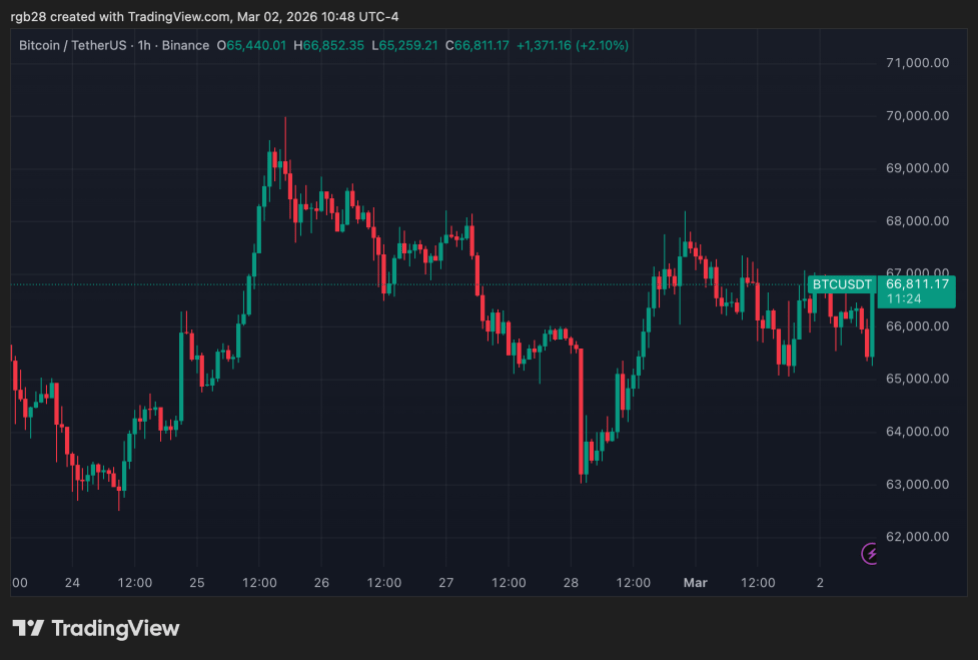
Bitcoin trades at $66,811 in the one-week chart. Source: BTCUSDT on TradingView


Domande pertinenti

QWhat prompted South Korean financial authorities to review their crypto custody practices?

AThe review was prompted by a series of security incidents, most recently the National Tax Service's accidental leak of a wallet's recovery seed phrase, which led to the theft of seized crypto assets and public scrutiny over the loss of nearly $30 million.

QHow much in Pre-Retogeum (PRTG) tokens was stolen from the seized wallet after the NTS leak, and what was its approximate value?

A4 million Pre-Retogeum (PRTG) tokens, worth approximately $4.8 million, were stolen from the seized wallet.

QWhat was the significant Bitcoin-related security breach that occurred at the Gwangju District Prosecutors' Office earlier this year?

AIn January, the Gwangju District Prosecutors' Office discovered that 320 Bitcoin (BTC), worth around $21 million, had been stolen from a seized wallet months earlier after investigators mistakenly accessed a phishing website.

QAccording to Finance Minister Koo Yun-cheol, what type of crypto assets does the South Korean government hold?

AThe South Korean government only holds crypto assets that have been acquired through legal enforcement actions, such as seizure.

QWhat was the outcome of the Bitcoin theft from the Gwangju District Prosecutors' Office?

AIn an unexpected turn of events, the hacker returned the stolen Bitcoin in mid-February.

Letture associate

The Foundation of SpaceX's Trillion-Dollar Valuation: Who is Dividing Up Musk's Annual Tens of Billions in Capital Expenditure?

SpaceX's trillion-dollar valuation is built on its three core businesses: Starlink (profitable, 60% of revenue), rockets (driving down launch costs), and AI (a major investment area). This creates a financial cycle: Starlink funds rocket development, which enables low-cost launches for AI hardware, generating future revenue. This cycle fuels annual capital expenditures of tens of billions, flowing to a vast supply chain. Suppliers are categorized by their replaceability. The first group includes irreplaceable players like NVIDIA (GPU/CUDA ecosystem), Eutelsat (critical radio spectrum), Filtronic (specialized amplifiers), Materion (strategic beryllium), and STMicroelectronics (antenna chips). The second group consists of hard-to-replace suppliers due to high switching costs, such as Honeywell (flight control), Carpenter Technology (specialty alloys), Hexcel (carbon fiber), Broadcom (data exchange), and Linde (industrial gases). The third group comprises high-volume, cost-critical suppliers for mass-produced items like Starlink terminals. Key names include Wistron NeWeb (primary manufacturer) and several A-share companies like Shenzhen Sunway (connectors), Pies New Materials (forgings), Western Superconducting (alloys), and Yingliu (castings). Other niche players include Trimble (timing), Astronics (power distribution), and CTS (thermal management). The article argues that investing in these suppliers, rather than SpaceX stock directly, offers an alternative opportunity. The rationale is threefold: procurement is just beginning to scale, SpaceX's IPO brings new transparency to its supply chain, and the situation mirrors early stages of past "super terminal" ecosystems like Apple or Tesla. While risks exist (commodity cycles, geopolitical factors, technology shifts), the core thesis is that SpaceX's massive, ongoing procurement will translate into reliable revenue for its key suppliers, regardless of its own stock price volatility.

marsbit14 min fa

The Foundation of SpaceX's Trillion-Dollar Valuation: Who is Dividing Up Musk's Annual Tens of Billions in Capital Expenditure?

marsbit14 min fa

SpaceX's Trillion-Dollar Valuation Base: Who's Sharing in Musk's Annual Tens of Billions in Capital Expenditure?

**Title: The Foundation of SpaceX's Trillion-Dollar Valuation: Who Benefits from Musk's Annual $100 Billion Capital Expenditure?** This article argues that investors seeking to benefit from SpaceX's growth might find greater opportunities in its supply chain rather than directly investing in the company itself, drawing parallels to historical successes with Apple, Tesla, and NVIDIA suppliers. **SpaceX's Business Model & Cash Flow:** SpaceX generates revenue from three main areas: 1. **Starlink:** Its profitable core, earning $11.3B in 2023 (60% of revenue), funding other ventures. 2. **Rockets (Falcon/Starship):** Requires $3B+ in annual R&D but achieves the world's lowest launch costs. 3. **AI:** Currently unprofitable (-$6B+ in 2023), investing heavily in ground-based supercomputers (220,000 GPUs) and future orbital data centers. The cycle is: Starlink profits → fund cheaper rockets → low-cost launches deploy AI hardware → AI compute rentals generate future revenue. This cycle drives annual procurement spending of tens of billions of dollars. **The Supply Chain Beneficiaries:** Suppliers are categorized by their replaceability: **1. Nearly Irreplaceable (High Barriers to Entry):** * **NVIDIA:** Powers the Colossus supercomputer; its CUDA ecosystem creates immense switching costs. * **Eutelsat (SATS):** Controls critical radio spectrum for satellite communications; holds a ~3% stake in SpaceX. * **Filtronic (FTC):** Supplies millimeter-wave signal amplifiers for Starlink satellites; SpaceX constitutes 83% of its revenue. * **Materion (MTRN):** Global leader in beryllium production, a strategic material used in Starship structures. * **STMicroelectronics (STM):** Supplies phased-array antenna chips for Starlink satellites. **2. Replaceable, but Switching Cost is Prohibitively High:** * **Honeywell (HON):** Provides flight control and inertial navigation systems with decades of certification. * **Carpenter Technology (CRS):** Manufactures ultra-pure specialty steel alloys for Raptor engines. * **Hexcel (HXL):** Supplies custom carbon fiber composites developed over a decade with SpaceX. * **Broadcom (AVGO):** Manages high-speed data switching. * **Linde Group:** Supplies industrial gases (liquid oxygen/nitrogen) from facilities built near SpaceX launch sites. **3. High-Volume, Cost-Critical Manufacturing:** Focuses on mass-producing components like Starlink user terminals (target: 30 million units). * **Key Players:** Wistron NeWeb (6285, primary terminal manufacturer), several Chinese A-share companies (e.g., Sunway Communication, PAX New Materials, Western Metal Materials, Yingliu Co.), and smaller US firms like Trimble (TRMB, timing systems). **Why Now?** Three factors make the supply chain opportunity timely: 1. **Volume Ramp-Up:** SpaceX plans 100 launches in 2026, aims for 30 million Starlink terminals, and will deploy AI data centers, meaning procurement will accelerate. 2. **Increased Transparency:** The IPO provides public financial data, allowing investors to track supplier order growth. 3. **Historical Precedent:** The current phase is likened to Tesla's early mass-production stage (circa 2018), suggesting a long growth runway for suppliers. **Conclusion:** The article posits that while investing in SpaceX stock is betting on Elon Musk's ambitious vision at a high valuation, investing in its established suppliers is a bet on the tangible, recurring revenue from its massive procurement budget, which is largely decoupled from day-to-day stock price volatility.

链捕手17 min fa

SpaceX's Trillion-Dollar Valuation Base: Who's Sharing in Musk's Annual Tens of Billions in Capital Expenditure?

链捕手17 min fa

The U.S. Government Blocked the Anthropic Model. It Wasn't About 'Jailbreaking' at All.

Last Friday, the U.S. Commerce Department issued an enforcement letter that forced Anthropic to take its two most advanced AI models, Fable 5 and Mythos 5, offline. The stated reason was unspecified national security concerns, initially linked to potential "jailbreaks" of the models' safeguards. However, new details suggest the action stemmed more from a deteriorating relationship between the Trump administration and Anthropic, rather than a genuine technical threat. According to reports, the government cited a little-known export control regulation, compelling Anthropic to block access for all non-U.S. persons, including its own international employees. The company complied, shutting down the models without a court order or specific technical details from the government. Cybersecurity expert Katie Moussouris revealed she was privately shown a research paper detailing a potential safeguard bypass in Fable 5. She argued the described method was minor and did not warrant an export ban, stating that attempts to "fix" it would only weaken the model's defensive capabilities. Moussouris and other experts have since called for the order to be revoked, warning it dangerously removes advanced cybersecurity tools from U.S. defenders. Analysts like Justin Hendrix suggest the move appears retaliatory and sets a dangerous precedent, signaling that the U.S. government can unilaterally shut down a tech company's products. The incident has raised concerns about the reliability of American AI and the potential for political interference in the tech industry, serving as a warning to the broader sector.

marsbit21 min fa

The U.S. Government Blocked the Anthropic Model. It Wasn't About 'Jailbreaking' at All.

marsbit21 min fa

Ray Dalio: AI Bull Market Continues to Soar, Should Investors Go All In or Cash Out and Leave the Field?

In his latest notes, Ray Dalio addresses a critical question for investors amid the AI-driven stock market surge: how should one allocate assets during a transformative technological revolution? Dalio emphasizes that technological advancement does not automatically make related stocks attractive. Historical tech cycles—marked by excitement, crowding, volatility, and eventual shakeouts—show that even long-term winners like Microsoft and Apple experienced severe drawdowns. Today's AI sector faces similar uncertainties: overinvestment, intensifying competition, geopolitical tensions (e.g., Taiwan's chip supply), tax policy shifts, anti-AI sentiment, and potential disruption from future technologies like quantum computing. Dalio's core argument focuses on the highly concentrated market structure, where a few tech giants dominate major indices. He warns investors against unknowingly holding concentrated, correlated exposures. Instead of chasing a handful of AI leaders, he advocates for a robust, diversified portfolio of 15 or more high-quality, uncorrelated investments, risk-balanced to match an investor's volatility tolerance. Mathematically, such diversification significantly improves the risk-return ratio—for example, holding 15 uncorrelated assets can boost the ratio by over four times compared to a single concentrated bet. Dalio cautions that future equity returns appear low, with his bubble indicator suggesting real returns could be negative over the next 5-10 years. He stresses that knowing what you don't know is as important as knowing what you do. In an environment of high uncertainty and concentration, avoiding large, concentrated bets on AI stocks is prudent. The optimal strategy is disciplined diversification—the "holy grail" of investing—to navigate this technologically driven cycle with lower risk and comparable or better returns.

marsbit25 min fa

Ray Dalio: AI Bull Market Continues to Soar, Should Investors Go All In or Cash Out and Leave the Field?

marsbit25 min fa

Trading

Spot
Futures
活动图片