South Korea To Review Seized Crypto Custody Practices After Recovery Phase Leak Incident

bitcoinistPubblicato 2026-03-03Pubblicato ultima volta 2026-03-03

Introduzione

South Korean financial authorities, led by Deputy Prime Minister and Finance Minister Koo Yun-cheol, have pledged to review and strengthen the management of seized crypto assets after a series of security incidents resulted in losses of nearly $30 million. This decision follows a recent leak by the National Tax Service, which accidentally exposed a wallet’s recovery seed phrase in a press release, leading to the theft of $4.8 million in tokens. The government plans to collaborate with agencies like the Financial Services Commission to enhance security measures and prevent future breaches. This incident is part of a broader pattern, including earlier losses of $21 million in Bitcoin from a prosecutor’s office and $1.4 million from a police station, highlighting systemic vulnerabilities in the custody of digital assets by public institutions.

South Korean financial authorities have pledged to revise their crypto custody practices following public scrutiny over multiple incidents that led to the loss of nearly $30 million in seized digital assets over the past few months.

Authorities Move To Enhance Crypto Custody Practices

South Korea’s Deputy Prime Minister and Minister of Finance, Koo Yun-cheol, affirmed that authorities will review their management practices of seized crypto assets by government and public authorities, and develop measures to prevent the theft and loss of these assets.

“In response to the recent digital asset information leak incident at the National Tax Service (NTS), the government will promptly review the status and management practices of digital assets held and managed by government and public institutions—such as those seized from delinquent taxpayers—in collaboration with relevant agencies, including the Financial Services Commission (FSC) and the Financial Supervisory Service (FSS),” the finance minister wrote in a Sunday X post.

“We will also swiftly develop and implement measures to prevent recurrence, including strengthening digital asset security management,” he continued, noting that the South Korean government only holds crypto assets acquired through legal enforcement actions, such as seizure.

The upcoming review and Koo’s statement follow a wave of criticism over the authorities’ practices and management of crypto assets after the tax agency exposed the recovery seed phrase of a seized wallet, leading to unauthorized access and theft of the tokens inside it.

As reported by Bitcoinist, South Korea’s National Tax Service recently published an official press release to highlight its crackdown on tax nonpayers, but accidentally shared a full wallet seed phrase in the process.

The Thursday press release was reportedly part of a broader NTS enforcement campaign targeted at people who owed taxes, showing seized crypto assets as evidence of the agency’s efforts.

Nonetheless, it included an image of two Ledger cold wallets alongside a handwritten sheet of paper that exposed the wallets’ complete mnemonic recovery phrases.

Soon after, one of the confiscated wallets’ entire balance, 4 million Pre-Retogeum (PRTG) tokens worth around $4.8 million, was transferred to another address, blockchain researchers found, but noted that the cryptocurrency has extremely low liquidity.

According to Professor Cho Jae-woo of Hansung University’s Blockchain Research Institute, the other wallets with seed phrases visible in the same image did not appear to carry significant risk, as the leaked tokens are also difficult to convert into cash.

The expert criticized the incident, but shared his hope that it “serves as a turning point for the establishment of a robust virtual asset management system within Korea’s public sector.”

South Korea’s Custody Mishaps

Last week’s incident is the latest in a series of security breaches that have led to the loss of around $27 million in seized crypto assets under the government’s custody since the start of the year.

In January, the Gwangju District Prosecutors’ Office faced backlash after discovering that 320 Bitcoin (BTC), worth around $21 million, had gone missing months ago. According to local reports, authorities only discovered the theft during a routine check of seized financial assets held as criminal evidence.

Prosecutors found that the crypto assets, first seized in 2021, were lost to a scam in August while authorities were handling the assets. Notably, a malicious actor drained the wallets after investigators mistakenly accessed a phishing website.

In an unexpected turn of events, the hacker returned the stolen Bitcoin in mid-February, the Gwangju District Prosecutors’ Office confirmed, vowing to continue to track down the malicious actors involved while conducting related investigations and inspections.

The incident led to a nationwide review, which revealed another security breach at the Seoul Gangnam Police Station last month. The Gangnam station announced it had lost 22 BTC, worth around $1.4 million at the time, that were voluntarily submitted to authorities during an investigation in November 2021.

Local news outlets reported that the leak had not been detected until recently, as the investigation into that case had been suspended. The inspection revealed that the cold wallet storing the Bitcoin was not stolen. However, the assets stored inside had vanished without a trace, deepening concerns about local authorities’ knowledge of cryptocurrencies and proper measures to handle and custody seized digital assets.
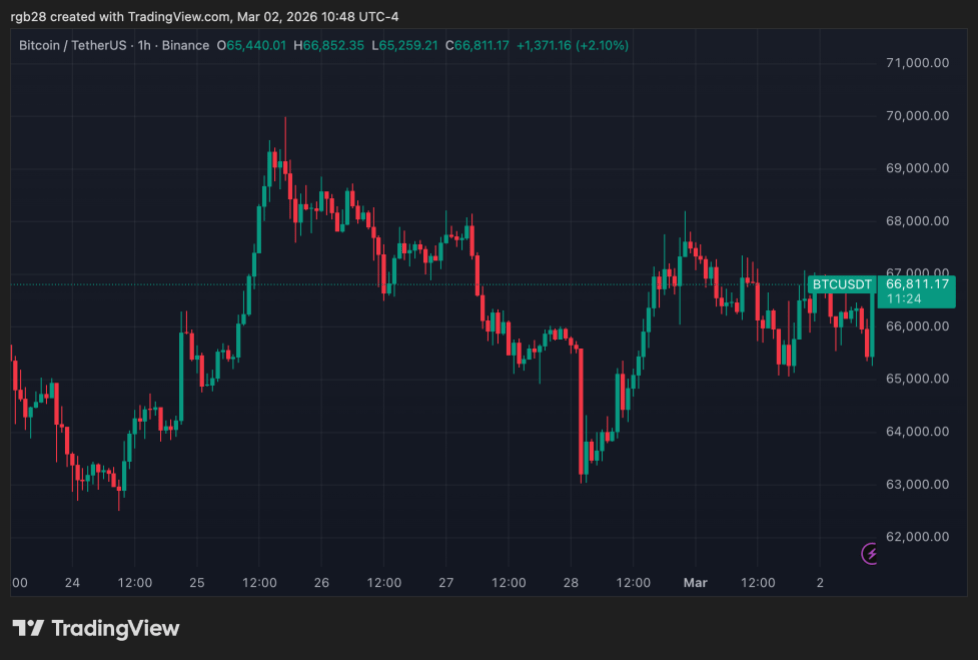
Bitcoin trades at $66,811 in the one-week chart. Source: BTCUSDT on TradingView


Domande pertinenti

QWhat prompted South Korean financial authorities to review their crypto custody practices?

AThe review was prompted by a series of security incidents, most recently the National Tax Service's accidental leak of a wallet's recovery seed phrase, which led to the theft of seized crypto assets and public scrutiny over the loss of nearly $30 million.

QHow much in Pre-Retogeum (PRTG) tokens was stolen from the seized wallet after the NTS leak, and what was its approximate value?

A4 million Pre-Retogeum (PRTG) tokens, worth approximately $4.8 million, were stolen from the seized wallet.

QWhat was the significant Bitcoin-related security breach that occurred at the Gwangju District Prosecutors' Office earlier this year?

AIn January, the Gwangju District Prosecutors' Office discovered that 320 Bitcoin (BTC), worth around $21 million, had been stolen from a seized wallet months earlier after investigators mistakenly accessed a phishing website.

QAccording to Finance Minister Koo Yun-cheol, what type of crypto assets does the South Korean government hold?

AThe South Korean government only holds crypto assets that have been acquired through legal enforcement actions, such as seizure.

QWhat was the outcome of the Bitcoin theft from the Gwangju District Prosecutors' Office?

AIn an unexpected turn of events, the hacker returned the stolen Bitcoin in mid-February.

Letture associate

What's the Connection Between Pinduoduo's Huang Zheng and Blockchain?

This text explores the unexpected connection between Pinduoduo founder Colin Huang and blockchain, as suggested in his article *Turning Capitalism Upside Down*. Huang argues Pinduoduo's core business is about managing "uncertainty." He posits that wealth flows to the rich because they absorb life's uncertainties (e.g., illness, job loss) that devastate the poor, who pay a premium for certainty through insurance or stable prices. Pinduoduo's model attempts a "reverse insurance": by aggregating consumer demand via group-buying and flash sales, it creates a large, predictable order for manufacturers. This certainty allows factories to remove risk premiums, passing savings back as lower prices, thus partially reversing the wealth flow. The key obstacle, Huang notes, is that an individual's buying intent is an unreliable promise. He then asks if blockchain is the natural solution for this "reverse insurance." The text elaborates that blockchain, through smart contracts with binding deposits, could transform casual intent into a costly-to-break, enforceable commitment. This replaces interpersonal trust with coded rules, making promises credible, pricable, and resistant to fraud. Finally, the author draws a parallel to Bitcoin, framing two paths to creating certainty: the "Pinduoduo path" of aggregating decentralized will into scale, and the "Bitcoin path" of locking rules into immutable code. Both sacrifice something—personal freedom or system flexibility—to manufacture trust and predictability.

链捕手36 min fa

What's the Connection Between Pinduoduo's Huang Zheng and Blockchain?

链捕手36 min fa

The Storage Magnate Who Conquered a Trillion-Dollar Kingdom, Yet Ultimately Could Not Become the Richest

**Summary:** "The Memory Magnate Who Built a Trillion-Dollar Empire, Yet Never Became the Richest" explores the journey of Zhu Yiming, founder of GigaDevice (603986) and co-founder of the soon-to-IPO ChangXin Memory Technologies (CXMT). The article positions GigaDevice, a fabless chip designer now valued at ~¥340 billion, as a prequel to the massive IDM (Integrated Device Manufacturer) venture, CXMT. Starting in 2005 with minimal capital, Zhu strategically "picked up the pieces" by focusing on niche markets like NOR Flash and microcontrollers (MCUs), areas major players were exiting. This allowed GigaDevice to grow into a diversified semiconductor company, maintaining robust profitability even during industry downturns by controlling costs. However, the piece argues that in the highly cyclical and capital-intensive memory chip industry, the fabless model has limits. True resilience and scale require the ability for "counter-cyclical expansion" – investing heavily during downturns – a tactic only possible for IDMs like Samsung or SK Hynix. This insight led Zhu to partner with the Hefei city government in 2016 to establish CXMT, an IDM focused on DRAM. Zhu's symbolic moves, like forfeiting salary and diluting his equity, were crucial in securing the massive state and bank funding needed. CXMT's equipment base is now valued even higher than that of BYD's vast auto manufacturing empire. Despite the potential for CXMT to reach a market cap of ¥1-2 trillion upon its IPO, Zhu's indirect stake in both companies is estimated below 3%, placing his personal wealth far below that of China's top billionaires. The article concludes that his strategic vision built a trillion-yuan memory landscape, but the capital structure necessary to achieve it precluded a personal fortune of similar scale.

marsbit43 min fa

The Storage Magnate Who Conquered a Trillion-Dollar Kingdom, Yet Ultimately Could Not Become the Richest

marsbit43 min fa

XRP Ledger Daily Fees Drop Below $400 As Network Activity Question Returns

The XRP Ledger is drawing attention as daily network fees have fallen below $400. While low fees align with XRPL's design for affordable transactions and are often seen as a strength, the metric can also serve as an indicator of network demand and paid transaction volume. This data point of around $3,100 in weekly fee burn highlights the stark contrast with higher-fee chains like Ethereum and Bitcoin. The development fuels an ongoing debate. Proponents view low fees as a sign of efficiency and accessibility, while critics may question if the network is generating sufficient high-value activity relative to its market cap and payments-focused narrative. The article cautions against overstating the finding, noting a single low-fee day does not signify network failure. It instead adds context to discussions about XRPL's usage, especially alongside Ripple's broader initiatives in stablecoins (RLUSD), AI payments, and enterprise infrastructure. The report recommends monitoring for a fee rebound, checking transaction counts for a fuller picture, and confirming the trend via native explorers like Bithomp. It frames the story within a larger market shift where on-chain data, protocol updates, and infrastructure developments are becoming crucial alongside price action. The editorial stance is to present the verified data, explain its significance for assessing network activity, and avoid hype, positioning it as part of the daily crypto conversation.

bitcoinist5 h fa

XRP Ledger Daily Fees Drop Below $400 As Network Activity Question Returns

bitcoinist5 h fa

Trading

Spot
Futures
活动图片




