Solana on trial: How Pump.fun could shake up the network

ambcryptoPubblicato 2025-12-18Pubblicato ultima volta 2025-12-18

Introduzione

The year 2025 has seen memecoins achieve mainstream adoption. Solana solidified its position as a leading network for this high-speed, speculative activity with coins like TRUMP and MELANIA. However, a federal court has now approved a class-action lawsuit against Pump.fun, Solana Labs, and other entities, accusing them of market manipulation. This lawsuit uniquely targets Solana's core technology, specifically its high-speed, high-throughput network. The legal challenge focuses on how the network's internal validator setup allegedly allowed insiders to manipulate memecoin launches on the Pump.fun platform. A key piece of evidence is the extreme supply concentration, where the top 10 holders control approximately 70% of the PUMP token's supply, sidelining retail investors and capping the price. While PUMP's price volatility and its trading below its ICO price are symptoms, the lawsuit presents a significant threat to the entire Solana ecosystem by placing its foundational technology under legal scrutiny.

2025 has been a breakout year for memecoins, pushing them into mainstream adoption. From Dogecoin’s [DOGE] ETF launch to the Bonk [BONK] ETP hype, all of this is forcing investors to rethink speculative bets.

Solana [SOL] memecoins followed closely behind. Launches like Official Trump [TRUMP] and Melania Meme [MELANIA] reinforced Solana’s reputation as the “go-to” network for high-speed, speculative activity.

However, all that fun is now under the legal microscope. Recently, a federal court green-lit a class-action lawsuit against Pump.fun, Solana Labs, and other Solana-linked projects, accusing them of market manipulation.

The key part? This isn’t your usual courtroom drama.

Instead, the accusations hit right at Solana’s core tech. Simply put, it wasn’t just bad timing or clever positioning that let insiders get ahead on memecoin launches. Rather, the lawsuit is targeting the network itself.

Specifically, the “high-speed, high-throughput” network that powers it all. This isn’t just about a few memecoins anymore. Instead, the entire Solana ecosystem and everyone involved could be in the spotlight.

Solana’s legal troubles

Solana Labs is now under the microscope for its internal validator setup.

Basically, the way the network-powered Pump.fun (a memecoin launchpad) that let millions of memecoins be created, traded, and moved lightning-fast on Solana, is now being legally challenged, as explained by a top analyst.

The result? Supply becomes super concentrated. As the chart below shows, the top 10 HODLers control around 70% of PUMP’s circulating supply, leaving retail stuck on the sidelines while the price stays capped.

Based on this, plaintiffs have now taken the case to federal court.

From a technical standpoint, PUMP’s volatility speaks for itself. It’s trading roughly 3.15% below its $0.02 ICO price, and insiders are being called out for keeping supply tight to manipulate prices and leave retail underwater.

However, at the end of the day, PUMP is just a symptom of a bigger issue with Solana’s network, not the problem itself. That’s why the possibility of Solana cracking under legal scrutiny is becoming a real concern.


Final Thoughts

  • The recent lawsuit targets Solana’s high-speed, high-throughput network, putting the entire ecosystem and insiders under legal scrutiny.
  • The top 10 holders control 70% of PUMP, keeping retail sidelined while price manipulation allegations mount.

Domande pertinenti

QWhat is the main focus of the class-action lawsuit against Pump.fun and Solana Labs?

AThe lawsuit focuses on accusations of market manipulation, specifically targeting Solana's core high-speed, high-throughput network technology that enabled insiders to gain advantages in memecoin launches.

QHow has the supply of PUMP tokens been concentrated according to the article?

AThe top 10 holders control approximately 70% of PUMP's circulating supply, leading to allegations of price manipulation and leaving retail investors at a disadvantage.

QWhat role did Solana's internal validator setup play in the legal challenges?

ASolana Labs is under scrutiny for its internal validator setup, which powered Pump.fun and allowed millions of memecoins to be created, traded, and moved rapidly on the network, now facing legal challenges for enabling these activities.

QWhat is PUMP's current trading performance mentioned in the article?

APUMP is trading roughly 3.15% below its $0.02 ICO price, highlighting its volatility and the issues surrounding price manipulation by insiders.

QWhy is the lawsuit considered a threat to the entire Solana ecosystem?

AThe lawsuit targets Solana's foundational technology, not just individual memecoins, putting the entire ecosystem and everyone involved under legal scrutiny and raising concerns about the network's stability.

Letture associate

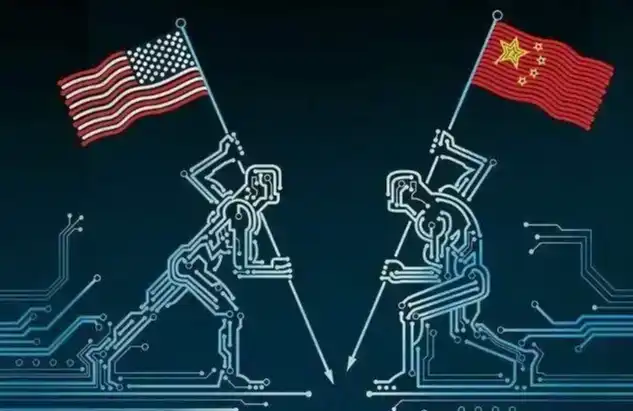
Who Will Define the Rules of the AI Era? Anthropic Discusses the 2028 US-China AI Landscape

This article, based on Anthropic's analysis, outlines the intensifying systemic competition between the U.S./allies and China for AI leadership by 2028. It argues that access to advanced computing power ("compute") is the critical bottleneck, where the U.S. currently holds a significant advantage through chip export controls and allied innovation. However, China's AI labs remain competitive by exploiting policy loopholes—via chip smuggling, overseas data center access, and "model distillation" attacks to copy U.S. model capabilities—keeping them close to the frontier. The piece presents two contrasting scenarios for 2028. In the first, decisive U.S. action to tighten compute controls and curb distillation locks in a 12-24 month AI capability lead, cementing democratic influence over global AI norms, security, and economic infrastructure. In the second, policy inaction allows China to achieve near-parity through continued access to U.S. technology, enabling Beijing to promote its AI stack globally and integrate advanced AI into its military and governance systems, altering the strategic balance. Anthropic contends that maintaining a decisive U.S. lead is essential for shaping safe AI development and governance. The core recommendation is for U.S. policymakers to urgently close compute and model access loopholes while promoting global adoption of the U.S. AI technology stack to secure a lasting strategic advantage.

marsbit1 h fa

Who Will Define the Rules of the AI Era? Anthropic Discusses the 2028 US-China AI Landscape

marsbit1 h fa

“Why Didn’t You Buy 2x Long SK Hynix?”

The article discusses the immense popularity of the "2x Long SK Hynix ETF" (07709.HK) in Hong Kong, which became the world's largest single-stock leveraged ETF by May 2026. Launched in October 2025, the ETF's net value soared over 1000% in seven months, significantly outperforming the 324% gain of SK Hynix's underlying stock, driven by the AI boom and a critical shift in industry demand from computing power to memory. It highlights the mechanics and risks of daily-rebalanced leveraged ETFs. In a smooth bullish market, they generate amplified returns, but during volatile periods—exemplified by market swings during geopolitical tensions in the Strait of Hormuz in March-April 2026—they suffer severe "volatility decay," where choppy price action can cause losses far exceeding twice the drop of the underlying asset. The piece frames SK Hynix, as NVIDIA's primary HBM supplier, within the classic cycle of the memory chip industry—a commoditized sector prone to boom-and-bust cycles of shortage, price hikes, overcapacity, and crashes. While current AI-driven demand and high margins (Q1 2026毛利率~79%) create a "super cycle," the article questions its sustainability. It warns that extreme profits will inevitably tempt competitors like Samsung and Micron to ramp up HBM production, potentially eroding scarcity. Furthermore, the entire narrative remains tethered to the massive AI capital expenditure of tech giants. In conclusion, the ETF's trajectory symbolizes the accelerated, all-in nature of the current AI revolution, where timeframes are compressed and market moves are extreme. However, it also underscores that while industry trends define ultimate returns, macro-geopolitical risks dictate the volatile and uncertain path to get there.

marsbit1 h fa

“Why Didn’t You Buy 2x Long SK Hynix?”

marsbit1 h fa

a16z Crypto: A Guide to the CLARITY Act for Crypto Entrepreneurs

The CLARITY Act, a bipartisan crypto market structure bill, has advanced through the Senate Banking Committee, marking a potential historic shift in U.S. digital asset regulation. For years, a lack of clear rules has stifled innovation, pushed development overseas, and exposed consumers to risk. This bill aims to establish a comprehensive framework, providing long-needed regulatory clarity for blockchain networks and digital assets. It builds upon previous legislative efforts like FIT21 and the House version of CLARITY, which gained strong bipartisan support. CLARITY is crucial because it recognizes that blockchain networks are fundamentally different from traditional companies. Networks operate through decentralized, shared rules rather than centralized control. Applying corporate legal frameworks to networks forces them into a centralized model, concentrating power and value. In contrast, decentralized blockchain networks can function as user-owned public infrastructure, distributing value more equitably among participants. The bill seeks to enable the safe launch of networks in the U.S., clarify regulatory jurisdiction between the SEC and CFTC, oversee crypto exchanges, and enhance consumer protections. Its passage would align U.S. law with the nature of decentralized technology, allowing builders to operate transparently and fund projects domestically without structural compromises due to regulatory uncertainty. Similar to the positive impact seen after the stablecoin-focused GENIUS Act, CLARITY could unlock a new wave of innovation, helping the U.S. reclaim leadership in the crypto space while combating fraud and abuse.

链捕手1 h fa

a16z Crypto: A Guide to the CLARITY Act for Crypto Entrepreneurs

链捕手1 h fa

Trading

Spot
Futures

Articoli Popolari

Come comprare PUMP

Benvenuto in HTX.com! Abbiamo reso l'acquisto di Pump.fun (PUMP) semplice e conveniente. Segui la nostra guida passo passo per intraprendere il tuo viaggio nel mondo delle criptovalute.Step 1: Crea il tuo Account HTXUsa la tua email o numero di telefono per registrarti il tuo account gratuito su HTX. Vivi un'esperienza facile e sblocca tutte le funzionalità,Crea il mio accountStep 2: Vai in Acquista crypto e seleziona il tuo metodo di pagamentoCarta di credito/debito: utilizza la tua Visa o Mastercard per acquistare immediatamente Pump.funPUMP.Bilancio: Usa i fondi dal bilancio del tuo account HTX per fare trading senza problemi.Terze parti: abbiamo aggiunto metodi di pagamento molto utilizzati come Google Pay e Apple Pay per maggiore comodità.P2P: Fai trading direttamente con altri utenti HTX.Over-the-Counter (OTC): Offriamo servizi su misura e tassi di cambio competitivi per i trader.Step 3: Conserva Pump.fun (PUMP)Dopo aver acquistato Pump.fun (PUMP), conserva nel tuo account HTX. In alternativa, puoi inviare tramite trasferimento blockchain o scambiare per altre criptovalute.Step 4: Scambia Pump.fun (PUMP)Scambia facilmente Pump.fun (PUMP) nel mercato spot di HTX. Accedi al tuo account, seleziona la tua coppia di trading, esegui le tue operazioni e monitora in tempo reale. Offriamo un'esperienza user-friendly sia per chi ha appena iniziato che per i trader più esperti.

314 Totale visualizzazioniPubblicato il 2024.12.12Aggiornato il 2026.05.09

Come comprare PUMP

Discussioni

Benvenuto nella Community HTX. Qui puoi rimanere informato sugli ultimi sviluppi della piattaforma e accedere ad approfondimenti esperti sul mercato. Le opinioni degli utenti sul prezzo di PUMP PUMP sono presentate come di seguito.

活动图片