Silent Payments: A New Era of Bitcoin Privacy

marsbitPubblicato 2026-01-20Pubblicato ultima volta 2026-01-20

Introduzione

Silent Payments: A New Era for Bitcoin Privacy Silent Payments, as proposed in BIP 352, offer a method for receiving Bitcoin without revealing private information like balance or transaction history to anyone viewing a public address. This innovation addresses the privacy drawbacks of address reuse, a common practice that exposes all transaction details on the public blockchain. The concept, evolving from earlier ideas like "stealth addresses" and BIP 47, provides a more efficient and private solution. Unlike stealth addresses, which require adding data to the blockchain for every transaction, or BIP 47, which needs an initial on-chain notification transaction, Silent Payments generate a unique, one-time address for each payment using cryptographic techniques. This allows a single, reusable public address to be shared, while ensuring only the sender and receiver know the transaction details. For users, the process is simple: generate and share a Silent Payment code (e.g., as a QR code). The receiver's wallet must scan new Taproot transactions to detect payments, a process optimized for efficiency. The address structure uses bech32m encoding with an "sp1" prefix and contains two public keys to generate a Taproot script. Early adopters include Cake Wallet and BitBox, which have implemented support. A feature called "labeling" allows users to distinguish between different senders or purposes (e.g., donations from different platforms) without sacrificing privacy, adding flexi...

Author: Area Bitcoin

Compiled by: Felix, PANews

Summary: Silent Payments can reduce address reuse and enhance overall privacy.

The privacy of Bitcoin transactions is receiving increasing attention. As the demand for more secure and private ways to conduct on-chain transactions grows, a new proposal has emerged: Silent Payments.

This article will explore what Silent Payments are, their importance to the Bitcoin network, and the structure of Silent Payment addresses, among other topics.

What are Silent Payments?

Silent Payments are a method of receiving Bitcoin that does not leak private information, such as your balance or transaction history, to anyone who can see your public address.

This concept originates from a proposal called BIP 352, which suggests using reusable addresses in Bitcoin.

Imagine you want to accept Bitcoin donations or need to receive payments multiple times throughout the year. Currently, you would either need to create a new address for each transaction or reuse the same address, sacrificing privacy and allowing anyone to track all incoming and outgoing records of that address via a blockchain explorer.

However, with Silent Payments, you simply provide a public key address that can be reused without worrying about privacy leaks.

The concept of Silent Payments was first proposed in March 2022. Recently, this BIP was integrated into the official codebase, marking a significant milestone in the development of this technology.

This integration indicates that the technology has undergone sufficient review, and wallet developers can begin implementation, although some minor adjustments may still be needed.

Why is this important?

Bitcoin addresses are currently similar to bank account numbers. However, because the blockchain is completely transparent, anyone can view all transactions associated with an address through a block explorer.

If you reuse the same address, every payment you receive will be public.

Silent Payments change this: you only need to share a public address, and the transaction details are visible only to the sender and receiver. This is achieved through a cryptographic technique that allows the receiver to receive funds to a completely different, unique address each time, and only the receiver can identify and access these funds.

"Silent Payments" is not a completely new idea; it evolved from the concept of "stealth addresses" proposed in 2012.

However, until now, this idea had not been effectively implemented in Bitcoin.

Stealth addresses were mentioned earlier, but what exactly are they?

Stealth Addresses and BIP 47: The Challenges and Limitations in the Pursuit of Privacy

Bitcoin transaction privacy has been a core concern since the network's inception. Over time, various proposals to enhance privacy have emerged, with stealth addresses and BIP 47 being notable, initially proposed by Peter Todd.

The following explores the limitations and challenges these methods face in the pursuit of greater anonymity and transaction efficiency.

Stealth Addresses

Stealth addresses were one of the earliest attempts to improve Bitcoin transaction privacy.

The idea is simple: allow the recipient to generate a unique and private address that only they can access through encryption.

But there was a major obstacle: for the system to work, an additional key needed to be added to the blockchain, typically using the OP_RETURN field.

This presented two serious drawbacks:

  • Loss of Anonymity: Adding extra data to the blockchain makes it obvious that this is a transaction using a stealth address. Any observer can identify this technique, compromising anonymity.

  • Inefficiency and High Cost: Increasing the blockchain data volume makes transactions bulkier, less efficient, and more expensive, contradicting Bitcoin's principle of being lightweight and easily accessible.

An alternative emerged at the time: utilizing an existing key in the transaction to avoid adding extra data.

But due to technical complexity and the lack of efficient tools at the time (e.g., libraries like Lipsack P that simplify these calculations today), this idea was shelved.

BIP 47

Over time, another proposal aimed at solving these issues emerged: BIP 47.

BIP 47 introduced the concept of a notification system instead of adding data to the blockchain with every payment. In this approach, the sender only needs to upload data to the blockchain once, and the receiver can identify this data and use this "key" to simplify future payment processes.

Advantages of BIP 47:

  • Clear Identification for Receiver: The receiver can easily identify which part of the on-chain data is intended for them, making the verification process simpler.

  • Reduced Extra Data: Notification data is only added the first time, saving more space and resources compared to stealth addresses adding data every time.

Disadvantages of BIP 47:

  • More Complex for Sender: Each payment requires the sender to first send an on-chain notification, equivalent to an extra transaction, which becomes very cumbersome at scale.

  • Inefficient Blockchain Usage: The data added for notification is unrelated to the actual payment, considered inefficient.

  • Payment Linkability: If paying the same person multiple times, the receiver might discover the funds come from the same source, compromising anonymity (whereas in Silent Payments the sender is completely anonymous).

  • Identity Exposure: In the notification transaction, the sender's payment code is exposed to the receiver, which can be problematic in situations requiring high anonymity (e.g., donations to sensitive causes).

Although BIP 47 has its advantages (like clarity for the receiver), significant drawbacks such as extra transactions and lack of full anonymity limited its adoption.

Silent Payments aim to address these issues, offering a more intuitive and private user experience. The only disadvantage compared to BIP 47 is the need to scan the blockchain, but this might be a worthwhile trade-off for a significant privacy boost.

In summary, both stealth addresses and BIP 47 contributed to Bitcoin privacy, but their respective limitations hindered widespread adoption.

Silent Payments now emerge as a promising solution, trying to combine the best of both:

  • Strong Privacy

  • High Efficiency

  • Simplified User Experience

How do Silent Payments work?

For the user, the operation is very simple.

Suppose you have a Bitcoin wallet connected to your own node. You generate an SP (Silent Payment) code, which can be shared as a QR code. Anyone who supports Silent Payments can scan the QR code or enter the code to make a payment... it's that simple.

For receivers running a full node, the cost is almost zero due to optimizations that make the process efficient.

However, the recipient has to do a bit more work. The recipient must check every new Taproot transaction on the network to determine if it contains a payment to their Silent Payment address, which requires more processing by the wallet software.
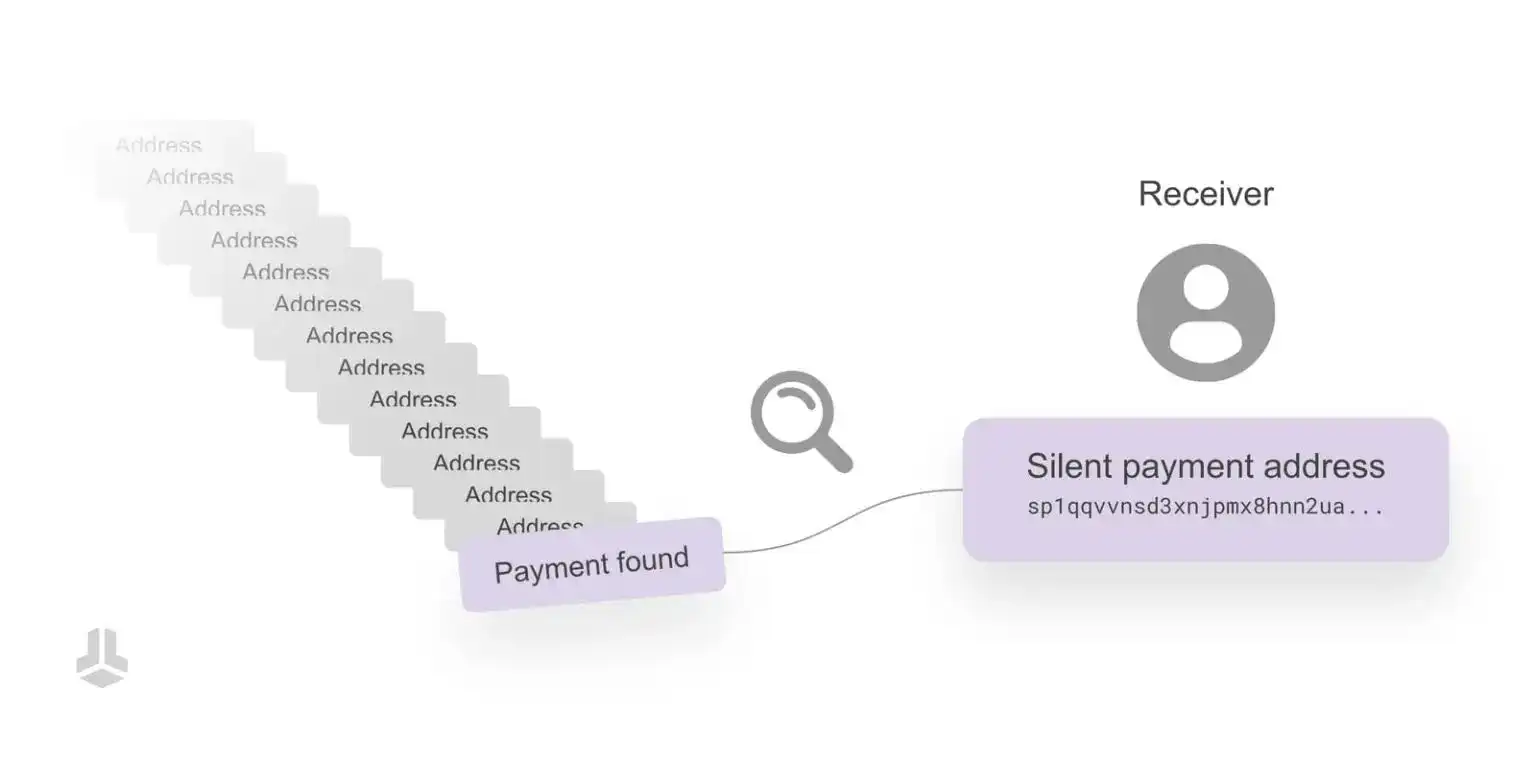
What does a Silent Payment address look like?

The structure of a Silent Payment address is the same as a Taproot address. Taproot addresses use the "bc" prefix, indicating a Bitcoin address, followed by a "1" and a version number, with the rest using bech32m encoding.

Silent Payments also use bech32m encoding, but with the prefix "sp1" (indicating it is a Silent Payment address), and this address contains two public keys. These two public keys do not directly show the destination of the Bitcoin but provide instructions for generating a Taproot public key script.

In practice, users can generate, share, and securely reuse Silent Payment addresses just like a regular Bitcoin address, without sacrificing privacy, which is its core advantage.

Which wallets support this address?

Currently, wallets that support Silent Payment addresses include Cake Wallet and BitBox.

As the Silent Payment feature is still under development and not yet widely adopted, Cake Wallet is one of the first wallets to implement Bitcoin Silent Payments. The wallet is already available in public beta on Android and iOS.

Here's how to use Silent Payments in Cake Wallet:

Click the "Silent Payments" button on the card/box on the wallet's main page to start scanning the blockchain for these transactions.

It is important to note that because Silent Payment transactions are anonymous, the wallet must actively scan the blockchain to search for transactions.
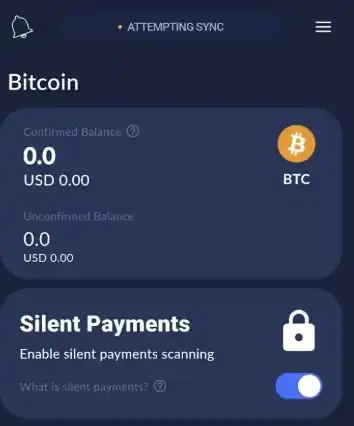
Once the scan is complete, Silent Payment verification automatically turns off upon reaching the latest block.

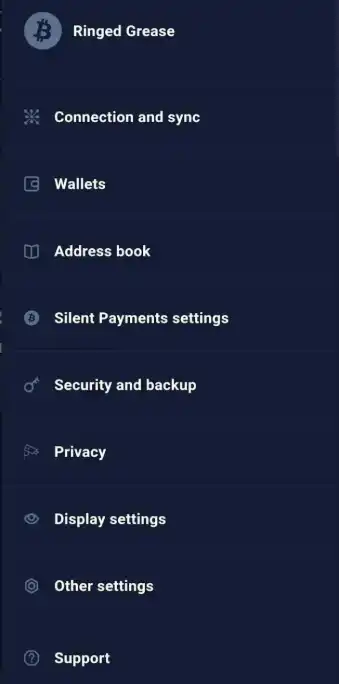
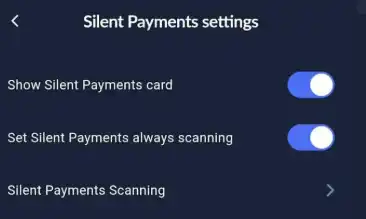
If you want the wallet to continue automatically checking new blocks for Silent Payments, go to "Menu" -> "Silent Payment Settings" and enable the "Always Scan for Silent Payments" option.
BitBox

Like the hot wallet Cake Wallet, BitBox is one of the first hardware wallets to support Silent Payments, greatly enhancing user privacy protection.

Through Silent Payments, the sender can generate a unique address from the receiver's fixed public key. This is particularly useful for activists, NGOs, and charities: they can share a reusable address to receive donations without exposing the identity of the donor or the amount received.

This integration allows BitBox users to support various causes and make payments while avoiding exposing financial activities to unnecessary third parties.

The Role of Labeling

An initial challenge with Silent Payments was how to identify who sent the payment. The solution was the introduction of Labeling.

So, what is Labeling?

Labeling allows you to distinguish between different senders when using a single Silent Payment address, without sacrificing privacy or significantly increasing scanning costs.

This technology allows adding additional information to a Silent Payment address without compromising user privacy. It works by deterministically tweaking the spending key.

Simply put, the spending key is like a digital signature authorizing the use of funds in the address. By tweaking this key slightly, different payment sources can be identified.

For example, suppose you have two Silent Payment addresses:

  • One for activity on X

  • Another for activity on Nostr

With labeling, the first half of these two addresses is the same (indicating they both belong to you), but the second half is slightly different, helping you identify the source of the payment.

This way, when viewing your funds, you can see that some payments came from X users and some from Nostr.

This flexibility strikes a balance between protecting privacy and collecting useful transaction information.

Of course, if you want complete anonymity, you can also just use a standard Silent Payment address without labels, ensuring the sender has no identifiable information. But if you need to track the source of payments, labeling provides an efficient way.

This technology can be applied to various scenarios such as exchanges, social media platforms, personal use, allowing you to manage multiple online identities without creating obvious links, or simply to get more payment information when needed.

Exchange Silent Payment Example

Interesting application scenarios would emerge if exchanges adopted this technology.

Suppose you deposit funds into an exchange. With Silent Payments, instead of giving you a reusable deposit address, the exchange generates a Silent Payment address for you.

Every time you send a payment to this address, the exchange can automatically identify it as yours (through the labeling mechanism), without you having to manage multiple addresses. Furthermore, this technology is also very useful for automatic withdrawals.

You can reuse the same Silent Payment address across platforms without managing different extended public keys (xPubs) for each platform, greatly simplifying the process.

Conclusion

Silent Payments have the potential to revolutionize the way Bitcoin is used, offering a simpler, more intuitive experience while significantly enhancing privacy.

If this technology is widely adopted, the rate of on-chain address reuse could drop significantly, thereby creating a safer and more private environment for everyone.

Silent Payments provide a great opportunity to align user incentives with best privacy practices, making future Bitcoin payments more covert and secure than ever before.

Related reading: Over 1.7 million BTC potentially under direct attack? Bitcoin faces quantum controversy again, public chains begin defense battle


Domande pertinenti

QWhat are Silent Payments and how do they improve privacy in Bitcoin transactions?

ASilent Payments are a method for receiving Bitcoin that allows users to reuse a single public address without revealing transaction history or balance information to third parties. They generate unique, one-time addresses for each transaction using cryptographic techniques, ensuring that only the sender and receiver can see the transaction details, thereby reducing address reuse and enhancing overall privacy.

QHow do Silent Payments differ from previous privacy solutions like Stealth Addresses and BIP 47?

ASilent Payments address limitations of earlier solutions: Stealth Addresses required adding extra data to the blockchain (e.g., via OP_RETURN), reducing anonymity and efficiency. BIP 47 introduced a notification system but required additional on-chain transactions for each sender, complicating the process and exposing sender identities. Silent Payments eliminate these issues by leveraging Taproot transactions and deterministic key adjustments, offering stronger privacy, efficiency, and simpler user experience without extra on-chain data or notifications.

QWhat is the structure of a Silent Payment address and how is it used?

AA Silent Payment address uses the same structure as a Taproot address, with a 'bc' prefix for Bitcoin, followed by '1' and a version number, encoded in bech32m. However, it specifically uses the prefix 'sp1' and includes two public keys that provide instructions for generating a Taproot script. Users can generate, share, and reuse this address securely without privacy compromises, as each payment derives a unique on-chain address.

QWhich wallets currently support Silent Payments, and how do they implement the feature?

ACake Wallet and BitBox are among the first wallets to support Silent Payments. Cake Wallet (available on Android and iOS) allows users to scan blocks for Silent Payment transactions through a dedicated interface, with options for continuous scanning. BitBox, a hardware wallet, integrates Silent Payments to enable private donations and transactions, particularly useful for activists and organizations. Both wallets require scanning the blockchain to detect incoming Silent Payments due to their anonymous nature.

QWhat is the role of 'labeling' in Silent Payments, and how does it enhance functionality?

ALabeling in Silent Payments allows recipients to distinguish between different senders or contexts (e.g., donations from Twitter vs. Nostr) while maintaining privacy. It works by deterministically tweaking the spending key, creating slight variations in the address that identify the payment source without revealing sensitive information. This enables users to manage multiple identities or track transactions efficiently, balancing privacy with practical needs like exchange deposits or automated withdrawals.

Letture associate

Insider Trading in War: 5 People Involved, the Highest Earner Was Arrested

On April 24, the U.S. Department of Justice arrested U.S. Army Special Forces Staff Sergeant Gannon Ken Van Dyke for insider trading related to the capture of Venezuelan President Nicolás Maduro on January 3. Van Dyke allegedly profited over $400,000 by placing bets on a prediction market, Polymarket, using insider knowledge of the covert operation. According to the indictment, Van Dyke registered an account (0x31a5) on December 26 and made a series of bets predicting Maduro’s capture and U.S. military involvement in Venezuela. He withdrew most of his funds on the day of the operation and attempted to obscure his tracks by transferring assets through crypto and brokerage accounts. This case marks the first time the DOJ has prosecuted insider trading on Polymarket. PolyBeats had previously identified five suspicious accounts, including Van Dyke’s—the highest earner—in January. The other accounts, with profits ranging from $34,000 to $145,000, remain under unofficial scrutiny but have not been charged. Their lower profits, indirect access to information, and unclear legal boundaries may complicate prosecution. Polymarket has since strengthened its market integrity rules, explicitly prohibiting trading based on confidential or insider information. Van Dyke’s arrest, nearly four months after his trades, signals increased regulatory attention and the persistent traceability of blockchain-based transactions.

marsbit3 min fa

Insider Trading in War: 5 People Involved, the Highest Earner Was Arrested

marsbit3 min fa

Bitwise: Bullish on Bitcoin's Performance in the Second Half of the Year, AI and Regulation Will Spark a New Altcoin Season

Bitwise CIO Matt Hougan and Research Lead Ryan Rasmussen express strong bullish sentiment on Bitcoin's long-term prospects, suggesting that its $1 million price target may be too conservative. They argue Bitcoin serves a dual role: as digital gold and a potential global settlement asset, especially amid declining trust in traditional monetary systems. Despite a weak Q1 2026 where nearly all crypto assets and prices saw double-digit declines, the analysts remain optimistic due to strong forward-looking catalysts, including institutional adoption via Bitcoin ETFs from major firms like Morgan Stanley and Goldman Sachs. Geopolitical instability, such as Iran’s mention of using Bitcoin for international payments, increases the value of Bitcoin’s “out-of-the-money call option” as a non-political, global settlement currency. This enhances its appeal beyond a mere store of value. . Additionally, Hougan highlights that a clearer regulatory token framework under current SEC leadership, combined with AI efficiency gains and high-performance blockchains, could fuel a new “altseason” by late 2026. This may lead to a wave of legitimate, value-capturing token projects, unlike the earlier ICO boom. . Bitwise also announced an Avalanche ETF, citing its unique architecture and rapid growth in real-world asset (RWA) tokenization, which has surged 10x to nearly $30 billion in two years. The firm believes Layer 1 blockchains are still early in their growth cycle, with significant potential ahead.

marsbit49 min fa

Bitwise: Bullish on Bitcoin's Performance in the Second Half of the Year, AI and Regulation Will Spark a New Altcoin Season

marsbit49 min fa

Trading

Spot
Futures

Articoli Popolari

Cosa è BITCOIN

Comprendere HarryPotterObamaSonic10Inu (ERC-20) e la sua posizione nel mondo delle criptovalute Negli ultimi anni, il mercato delle criptovalute ha assistito a un aumento della popolarità delle meme coin, catturando l'interesse non solo dei trader, ma anche di coloro che cercano coinvolgimento comunitario e valore di intrattenimento. Tra questi token unici c'è HarryPotterObamaSonic10Inu (ERC-20), un progetto intrigante che mescola riferimenti culturali nel tessuto delle criptovalute. Questo articolo esplora gli aspetti chiave di HarryPotterObamaSonic10Inu, analizzando i suoi meccanismi, l'etica guidata dalla comunità e il suo coinvolgimento con il panorama crittografico più ampio. Che cos'è HarryPotterObamaSonic10Inu (ERC-20)? Come suggerisce il suo nome, HarryPotterObamaSonic10Inu è una meme coin costruita sulla blockchain di Ethereum, classificata secondo lo standard ERC-20. A differenza delle criptovalute tradizionali che possono enfatizzare l'utilità pratica o il potenziale investimento, questo token prospera grazie al valore di intrattenimento e alla forza della sua comunità. Il progetto mira a creare un ambiente in cui gli utenti coinvolti possono riunirsi, condividere idee e partecipare ad attività ispirate a diversi fenomeni culturali. Una caratteristica notevole di HarryPotterObamaSonic10Inu è la zero tassa sulle transazioni. Questo elemento allettante tende a incoraggiare il trading e il coinvolgimento della comunità, privo di costi aggiuntivi che possono scoraggiare i trader di piccole dimensioni. L'offerta totale della moneta è fissata a un miliardo di token, un numero che segna la sua intenzione di mantenere una circolazione sostanziale all'interno della comunità. Creatore di HarryPotterObamaSonic10Inu (ERC-20) Le origini di HarryPotterObamaSonic10Inu sono avvolte in un certo mistero; i dettagli sul creatore rimangono sconosciuti. Lo sviluppo di questo token non presenta un team identificabile o un piano esplicito, cosa non rara nel settore delle meme coin. Invece, il progetto è emerso organicamente, con il suo progresso fortemente dipendente dall'entusiasmo e dalla partecipazione della sua comunità. Investitori di HarryPotterObamaSonic10Inu (ERC-20) Per quanto riguarda investimenti esterni e finanziamenti, HarryPotterObamaSonic10Inu rimane ambiguo. Il token non elenca alcuna fondazione di investimento conosciuta o un sostegno organizzativo significativo. Invece, la linfa vitale del progetto è la sua comunità di base, che informa la sua crescita e sostenibilità attraverso azioni collettive e coinvolgimento nello spazio crittografico. Come funziona HarryPotterObamaSonic10Inu (ERC-20)? In quanto meme coin, HarryPotterObamaSonic10Inu opera principalmente al di fuori delle strutture tradizionali che governano spesso il valore degli asset. Ci sono diversi aspetti distintivi che definiscono il funzionamento del progetto: Transazioni senza tasse: Senza costi fiscali sulle transazioni, gli utenti possono comprare e vendere liberamente il token senza preoccuparsi di costi nascosti. Coinvolgimento della comunità: Il progetto prospera sull'interazione della comunità, sfruttando le piattaforme social per creare entusiasmo e facilitare il coinvolgimento. Discussioni, condivisione di contenuti e coinvolgimento sono elementi cruciali che aiutano ad espandere la sua portata e a favorire la lealtà tra i sostenitori. Nessuna utilità pratica: Va notato che HarryPotterObamaSonic10Inu non offre un'utilità concreta all'interno dell'ecosistema finanziario. Piuttosto, è classificato come un token principalmente per attività di intrattenimento e comunitarie. Riferimento culturale: Il token incorpora astutamente elementi della cultura pop per attirare interesse, collegandosi a appassionati di meme e seguaci delle criptovalute. HarryPotterObamaSonic10Inu esemplifica come le meme coin operino in modo diverso rispetto ai progetti di criptovalute più tradizionali, entrando nel mercato come costrutti sociali innovativi piuttosto che come asset utilitari. Cronologia di HarryPotterObamaSonic10Inu (ERC-20) La storia di HarryPotterObamaSonic10Inu è segnata da diversi traguardi notevoli: Creazione: Il token è emerso da un meme virale, catturando l'immaginazione di molti appassionati di criptovalute. Le date di creazione specifiche non sono disponibili, sottolineando la sua crescita organica. Inserimento negli scambi: HarryPotterObamaSonic10Inu ha fatto il suo ingresso in vari scambi, consentendo un accesso e un trading più facili da parte della comunità. Iniziative di coinvolgimento della comunità: Attività in corso volte a migliorare l'interazione della comunità, comprese gare, campagne sui social media e generazione di contenuti da parte di fan e sostenitori. Piani di espansione futura: La tabella di marcia del progetto include il lancio di una collezione NFT, merchandising e un sito di eCommerce relativo ai suoi temi culturali, coinvolgendo ulteriormente la comunità e cercando di aggiungere più dimensioni al suo ecosistema. Punti chiave su HarryPotterObamaSonic10Inu (ERC-20) Natura guidata dalla comunità: Il progetto dà priorità al contributo collettivo e alla creatività, garantendo che il coinvolgimento degli utenti sia al centro del suo sviluppo. Classificazione come meme coin: Rappresenta l'epitome delle criptovalute basate sull'intrattenimento, distinguendosi dai veicoli d'investimento tradizionali. Nessuna affiliazione diretta con Bitcoin: Nonostante la somiglianza nel nome del ticker, HarryPotterObamaSonic10Inu è distintivo e non ha alcuna relazione con Bitcoin o altre criptovalute consolidate. Focus sulla collaborazione: HarryPotterObamaSonic10Inu è progettato per creare uno spazio per la collaborazione e la condivisione di storie tra i suoi detentori, fornendo un canale per la creatività e il legame comunitario. Prospettive future: L'ambizione di espandersi oltre il suo presupposto iniziale verso NFT e merchandising delinea un percorso per il progetto per potenzialmente entrare in strade più mainstream all'interno della cultura digitale. Poiché le meme coin continuano a catturare l'immaginazione della comunità crittografica, HarryPotterObamaSonic10Inu (ERC-20) si distingue per i suoi legami culturali e il suo approccio centrato sulla comunità. Anche se potrebbe non adattarsi al modello tipico di un token orientato all'utilità, la sua essenza risiede nella gioia e nella camaraderia coltivate tra i suoi sostenitori, evidenziando la natura in evoluzione delle criptovalute in un'epoca sempre più digitale. Con la continuazione dello sviluppo del progetto, sarà importante osservare come le dinamiche della comunità influenzano la sua traiettoria nel panorama in continuo cambiamento della tecnologia blockchain.

1.2k Totale visualizzazioniPubblicato il 2024.04.01Aggiornato il 2024.12.03

Cosa è BITCOIN

Come comprare BTC

Benvenuto in HTX.com! Abbiamo reso l'acquisto di Bitcoin (BTC) semplice e conveniente. Segui la nostra guida passo passo per intraprendere il tuo viaggio nel mondo delle criptovalute.Step 1: Crea il tuo Account HTXUsa la tua email o numero di telefono per registrarti il tuo account gratuito su HTX. Vivi un'esperienza facile e sblocca tutte le funzionalità,Crea il mio accountStep 2: Vai in Acquista crypto e seleziona il tuo metodo di pagamentoCarta di credito/debito: utilizza la tua Visa o Mastercard per acquistare immediatamente BitcoinBTC.Bilancio: Usa i fondi dal bilancio del tuo account HTX per fare trading senza problemi.Terze parti: abbiamo aggiunto metodi di pagamento molto utilizzati come Google Pay e Apple Pay per maggiore comodità.P2P: Fai trading direttamente con altri utenti HTX.Over-the-Counter (OTC): Offriamo servizi su misura e tassi di cambio competitivi per i trader.Step 3: Conserva Bitcoin (BTC)Dopo aver acquistato Bitcoin (BTC), conserva nel tuo account HTX. In alternativa, puoi inviare tramite trasferimento blockchain o scambiare per altre criptovalute.Step 4: Scambia Bitcoin (BTC)Scambia facilmente Bitcoin (BTC) nel mercato spot di HTX. Accedi al tuo account, seleziona la tua coppia di trading, esegui le tue operazioni e monitora in tempo reale. Offriamo un'esperienza user-friendly sia per chi ha appena iniziato che per i trader più esperti.

3.6k Totale visualizzazioniPubblicato il 2024.12.12Aggiornato il 2025.03.21

Come comprare BTC

Cosa è $BITCOIN

ORO DIGITALE ($BITCOIN): Un'Analisi Completa Introduzione all'ORO DIGITALE ($BITCOIN) L'ORO DIGITALE ($BITCOIN) è un progetto basato su blockchain che opera sulla rete Solana, con l'obiettivo di combinare le caratteristiche dei metalli preziosi tradizionali con l'innovazione delle tecnologie decentralizzate. Sebbene condivida un nome con Bitcoin, spesso definito “oro digitale” a causa della sua percezione come riserva di valore, l'ORO DIGITALE è un token separato progettato per creare un ecosistema unico all'interno del panorama Web3. Il suo obiettivo è posizionarsi come un asset digitale alternativo valido, anche se i dettagli riguardanti le sue applicazioni e funzionalità sono ancora in fase di sviluppo. Cos'è l'ORO DIGITALE ($BITCOIN)? L'ORO DIGITALE ($BITCOIN) è un token di criptovaluta esplicitamente progettato per l'uso sulla blockchain di Solana. A differenza di Bitcoin, che fornisce un ruolo di stoccaggio di valore ampiamente riconosciuto, questo token sembra concentrarsi su applicazioni e caratteristiche più ampie. Aspetti notevoli includono: Infrastruttura Blockchain: Il token è costruito sulla blockchain di Solana, nota per la sua capacità di gestire transazioni ad alta velocità e a basso costo. Dinamiche di Offerta: L'ORO DIGITALE ha un'offerta massima fissata a 100 quadrilioni di token (100P $BITCOIN), sebbene i dettagli riguardanti la sua offerta circolante siano attualmente non divulgati. Utilità: Sebbene le funzionalità precise non siano esplicitamente delineate, ci sono indicazioni che il token potrebbe essere utilizzato per varie applicazioni, potenzialmente coinvolgendo applicazioni decentralizzate (dApp) o strategie di tokenizzazione degli asset. Chi è il Creatore dell'ORO DIGITALE ($BITCOIN)? Attualmente, l'identità dei creatori e del team di sviluppo dietro l'ORO DIGITALE ($BITCOIN) rimane sconosciuta. Questa situazione è tipica tra molti progetti innovativi nel settore blockchain, in particolare quelli allineati con la finanza decentralizzata e i fenomeni delle meme coin. Sebbene tale anonimato possa favorire una cultura guidata dalla comunità, intensifica le preoccupazioni riguardo alla governance e alla responsabilità. Chi sono gli Investitori dell'ORO DIGITALE ($BITCOIN)? Le informazioni disponibili indicano che l'ORO DIGITALE ($BITCOIN) non ha alcun sostenitore istituzionale noto o investimenti di venture capital prominenti. Il progetto sembra operare su un modello peer-to-peer incentrato sul supporto e sull'adozione della comunità piuttosto che su percorsi di finanziamento tradizionali. La sua attività e liquidità si trovano principalmente su exchange decentralizzati (DEX), come PumpSwap, piuttosto che su piattaforme di trading centralizzate consolidate, evidenziando ulteriormente il suo approccio di base. Come Funziona l'ORO DIGITALE ($BITCOIN) Le meccaniche operative dell'ORO DIGITALE ($BITCOIN) possono essere elaborate in base al suo design blockchain e alle caratteristiche della rete: Meccanismo di Consenso: Sfruttando il proof-of-history (PoH) unico di Solana combinato con un modello di proof-of-stake (PoS), il progetto garantisce una validazione efficiente delle transazioni contribuendo all'alta performance della rete. Tokenomics: Sebbene meccanismi deflazionistici specifici non siano stati dettagliati ampiamente, l'ampia offerta massima di token implica che potrebbe soddisfare microtransazioni o casi d'uso di nicchia che devono ancora essere definiti. Interoperabilità: Esiste il potenziale per l'integrazione con l'ecosistema più ampio di Solana, inclusi vari piattaforme di finanza decentralizzata (DeFi). Tuttavia, i dettagli riguardanti integrazioni specifiche rimangono non specificati. Cronologia degli Eventi Chiave Ecco una cronologia che evidenzia traguardi significativi riguardanti l'ORO DIGITALE ($BITCOIN): 2023: Il dispiegamento iniziale del token avviene sulla blockchain di Solana, contrassegnato dal suo indirizzo di contratto. 2024: L'ORO DIGITALE guadagna visibilità poiché diventa disponibile per il trading su exchange decentralizzati come PumpSwap, consentendo agli utenti di scambiarlo contro SOL. 2025: Il progetto assiste a un'attività di trading sporadica e a un potenziale interesse per impegni guidati dalla comunità, sebbene non siano state documentate partnership significative o avanzamenti tecnici fino ad ora. Analisi Critica Punti di Forza Scalabilità: L'infrastruttura sottostante di Solana supporta alti volumi di transazioni, il che potrebbe migliorare l'utilità di $BITCOIN in vari scenari di transazione. Accessibilità: Il potenziale basso prezzo di trading per token potrebbe attrarre investitori al dettaglio, facilitando una partecipazione più ampia grazie a opportunità di proprietà frazionata. Rischi Mancanza di Trasparenza: L'assenza di sostenitori, sviluppatori o di un processo di audit pubblicamente noti potrebbe generare scetticismo riguardo alla sostenibilità e all'affidabilità del progetto. Volatilità del Mercato: L'attività di trading è fortemente dipendente dal comportamento speculativo, il che può comportare una significativa volatilità dei prezzi e incertezze per gli investitori. Conclusione L'ORO DIGITALE ($BITCOIN) emerge come un progetto intrigante ma ambiguo all'interno dell'evolvente ecosistema di Solana. Sebbene tenti di sfruttare la narrativa dell'“oro digitale”, la sua partenza dal ruolo consolidato di Bitcoin come riserva di valore sottolinea la necessità di una chiara differenziazione della sua utilità e struttura di governance. L'accettazione e l'adozione future dipenderanno probabilmente dall'affrontare l'attuale opacità e dalla definizione più esplicita delle sue strategie operative ed economiche. Nota: Questo rapporto comprende informazioni sintetizzate disponibili a ottobre 2023, e potrebbero essersi verificati sviluppi oltre il periodo di ricerca.

99 Totale visualizzazioniPubblicato il 2025.05.13Aggiornato il 2025.05.13

Cosa è $BITCOIN

Discussioni

Benvenuto nella Community HTX. Qui puoi rimanere informato sugli ultimi sviluppi della piattaforma e accedere ad approfondimenti esperti sul mercato. Le opinioni degli utenti sul prezzo di BTC BTC sono presentate come di seguito.

活动图片