Setting a 'Suicidal' Rule for Themselves: What Is the Ethereum Foundation Aiming For?

marsbitPubblicato 2026-03-16Pubblicato ultima volta 2026-03-16

Introduzione

The Ethereum Foundation (EF) has released a new mission statement, "EF Mandate," outlining its core philosophy and operational principles. Its ultimate goal is to pass the "walkaway test"—ensuring the Ethereum network would continue to function perfectly even if the EF were to dissolve. The foundation defines its role as a guardian, not a ruler, and commits to a "subtraction philosophy," focusing only on essential tasks like core protocol development and long-term research that others in the ecosystem cannot or will not do. It explicitly states what it will not do: act as a kingmaker, rating agency, marketing firm, or encourage Ethereum's use as a "casino." A key framework is CROPS, an indivisible set of non-negotiable principles for all development: Censorship Resistance, Open Source, Privacy, and Security. The vision is to create a "digital sanctuary" for the next 1,000 years, protecting users from coercion by governments, corporations, or AI, and enabling self-sovereignty over data, identity, and assets. The document serves as a decision-making algorithm, prioritizing long-term, decentralized solutions over short-term convenience and user autonomy over paternalistic protection. However, it faces real-world challenges, including budget dependency on ETH's price and potential trade-offs between its idealistic CROPS principles and user demands for speed and low cost. Community reaction is mixed, with critics calling it ideologically rigid and out of touch with practical ...

Original Author: KarenZ, Foresight News

On the evening of March 13, the board of the Ethereum Foundation (EF) released a mission statement titled "EF Mandate".

When you open this mission statement, you might doubt whether you've entered the wrong scene—filled with stars, elves, wizards, and a layout resembling an anime poster. Beneath this flashy exterior lies the current "ideological纲领" of the Ethereum ecosystem.
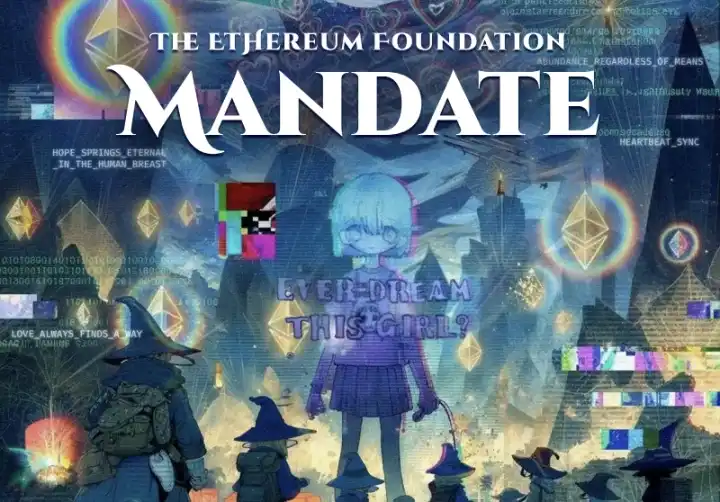
TL;DR

  • EF's Core Positioning: Guardians, Not Rulers. EF's ultimate goal is to pass the "Walkaway Test"—even if the Ethereum Foundation were to disband tomorrow, the Ethereum network would still operate perfectly.
  • CROPS Iron Law is the Bottom Line: Any technological development must satisfy Censorship Resistance, Open Source, Privacy, and Security. These four attributes are inseparable and must not be compromised for any reason, taking the highest priority.
  • EF's Operational Philosophy: The Foundation does subtraction to make Ethereum more resilient. Once the ecosystem is mature enough, the Ethereum Foundation will gradually relinquish control.
  • What Not to Do: Do not be a "kingmaker," do not be a rating agency, do not be a marketing agency that hypes and promotes, and do not encourage treating Ethereum as a "big casino."
  • Ultimate Vision: Look ahead 1000 years to provide a "digital sanctuary" free from exploitation by power, capital, AI, or even family.

What Problem Is Ethereum Trying to Solve?

EF believes that in the digital age, two things are infrastructure-level necessities: controlling one's own data, identity, and assets (self-sovereignty), and collaborating with others without being "strangled" by anyone (sovereignty-preserving coordination).

Pursuing only the first point is sufficient for running a local application; pursuing only the second point is what the internet already offers. Ethereum's unique value lies in achieving both simultaneously.

There is a passage in the manifesto that says: Ethereum exists so that no one can "rug" you—whether it's the government, companies, institutions, or AI.

Around this goal, EF proposed an acronym: CROPS. This term appears 32 times in the manifesto.

  • Censorship Resistance: No one can prevent you from doing legal things; rely on cryptography to maintain neutrality even under external pressure.
  • Open Source & Free: All code and rules are open; there are no hidden black boxes.
  • Privacy: Your data belongs to you, not the platform. You decide what information to share and with whom.
  • Security: Protect both the system and users from technical failures, coercion, and other harms.

These four attributes are defined in the document as an "indivisible whole," representing the highest priority bottom line that cannot be compromised for any reason.

EF's stance is clear:宁愿慢一点,也要从第一天就把这些东西做对. Because once abandoned, it is almost impossible to regain them.

What Does the Foundation Do? What Does It Not Do?

EF is making "making itself unnecessary" its ultimate success criterion.

There is a term in the document called the "walkaway test," meaning: If EF disappeared tomorrow, could Ethereum continue to run and evolve on its own? EF's goal is to make the answer to this question "yes."

Therefore, EF is practicing a philosophy of "subtractive development": focusing on key tasks that no one else in the ecosystem can or is willing to do—core protocol upgrades, long-term technological research, public security保障. Once a certain area can be taken over by the community, EF hands it over, further reducing its relative influence.

Simultaneously, EF has also drawn up a long list of "do not do" items, which read like a solemn disclaimer: not a company, not a kingmaker, not a certification body, not a product studio, not a marketing company, not a boss, not a government agency, not a casino, not an opportunist.

When There Is No Standard Answer, How Will EF Decide?

The previous sections discussed many grand principles: CROPS, self-sovereignty, subtractive philosophy. But what happens when具体 problems arise? This chapter provides the answer.

It is somewhat like the Foundation's "decision-making algorithm": when faced with two paths, how to choose without违背初心?

  • When choosing a technical solution, choose the one that "won't strangle you later," even if it's slower now. An example in the document is transaction propagation: one solution has good performance but relies on a private relay network (whitelist-based), another is decentralized but progresses slowly. EF's answer might be the latter, because once the former is implemented, "decentralizing later"基本不会发生.
  • When designing or evaluating proposals, don't just look at the immediate layer; consider the impact on other layers. Some solutions may seem fine individually, even符合 CROPS principles, but when viewed within the entire ecosystem, they might create new problems elsewhere. Don't solve one problem and create ten more.
  • User security is important, but don't make decisions for users. Only provide users with tools for self-defense; absolutely avoid "paternalistic" restrictions. Do not allow anyone to剥夺用户的自主选择权 under the guise of "protecting users." For example, some wallets enable "safe mode" by default, secretly blocking certain contracts, directing users to指定平台, or even using opaque AI to判定 "risky operations" while covertly collecting user behavior—all of which the Foundation opposes. True protection means giving users verifiable filtering tools and公开规则的黑白名单; whatever the tool, it should protect privacy by default, including AI components.
  • If intermediaries are necessary? Lower barriers, leave an exit path.: If某些领域 currently确实绕不开 intermediaries, then lower the entry barrier to the minimum, allow full market competition, and必须给用户留 "无中介"的替代方案 that is usable and practical.
  • When choosing which teams to support, look not at social光环, but at actual technical choices. Many projects pay lip service to CROPS but hide闭源的核心环节 in their designs, implement whitelist restrictions, or guide users down fixed paths—all should be警惕.

The Ideal is Plump, Reality is Bony

This manifesto is resounding, but现实拷问 never ceases.

Does this document represent a consensus among all, or the ideals of some authors? If EF had a different group of people, would it still hold? Who supervises its execution?

More practical questions:

  • EF's operational funds rely heavily on its holdings of ETH assets. If the ETH price is low, the budget will be compressed. "Not caring about the price" is only spiritual discipline, not financial reality.
  • The CROPS rules are ideal, but the world doesn't operate by CROPS.
  • What most users真正在乎的是: speed, cost, and usability.
  • EF insists on "fully CROPS from day one," but will this cause Ethereum to fall behind more "pragmatic" competitors in terms of user experience and commercialization?
  • How are EF's "do" and "do not do" items assessed? How is accountability determined? How is "coordination" judged to be good or bad?

The Community is Split: Punk Ideals vs. Disconnection from Reality

Within 24 hours of the manifesto's release, community feedback was polarized:

Critics:

  • Eigen Labs researcher Kydo直言, EF's current direction is a 180-degree turn, overturning the previous "pragmatic路线" that supported stablecoins, institutional entry, and RWA, marginalizing the most marketable applications currently;
  • Forward Ind. chairman吐槽: "They build what they want to build, not what you want"—accusing EF of building only according to idealism, ignoring community and market demands;
  • Hazeflow founder Pavel Paramonov called it "another pile of ideological nonsense," failing to clarify Ethereum's specific direction moving forward.

Supporters:

  • Namefi founder Zainan Victor Zhou believes this is a constraint on the EF organization, not a restriction on the entire ecosystem;
  • Columbia Business School professor Omid Malekan pointed out that CROPS is precisely the foundation of Ethereum's leadership in the financial field—it provides true "access rights + verifiability + property rights protection."

Facing controversy, Vitalik personally clarified: This manifesto "won't be a surprise to many" and reflects the direction EF has been思考 over the past few months. EF only acts as Ethereum's guardian; the rest is left to the broader ecosystem—this is the starting point of a new chapter.

At the end of the manifesto, it concludes with an Italian phrase: "E quindi uscimmo a riveder le stelle"—from Dante's "Divine Comedy: Inferno," literally meaning "And so we came out, and once again beheld the stars."

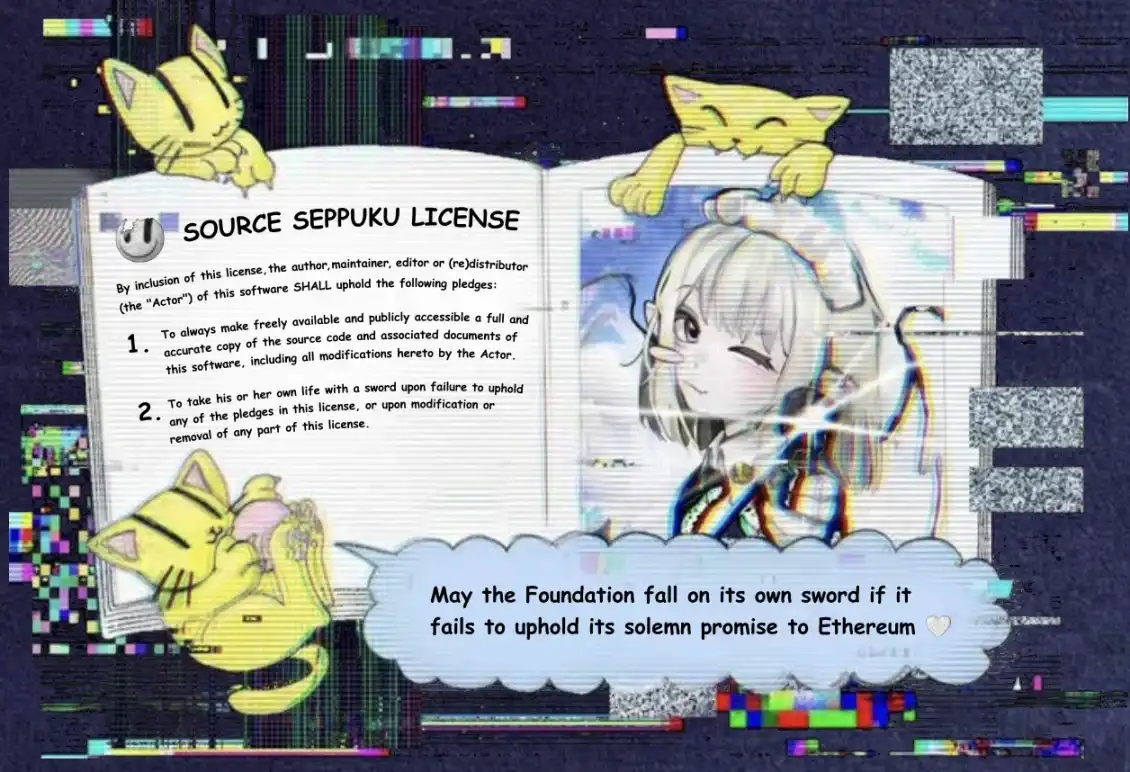
EF also created a meme image of a "SOURCE SEPPUKU LICENSE," which reads: "Should the Foundation fail to uphold its solemn commitment to Ethereum, let it reap the consequences and commit seppuku."

EF compares itself to a traveler passing through hell, advancing towards the stars of "digital freedom" even through现实磨难与质疑. Of course, time will tell.
Domande pertinenti

QWhat is the core mission of the Ethereum Foundation (EF) as stated in its new mandate?

AThe core mission of the EF is to be a guardian, not a ruler, with the ultimate goal of passing the 'Walkaway Test'—ensuring the Ethereum network would continue to function perfectly even if the Foundation were to dissolve.

QWhat does the acronym CROPS stand for and why is it considered a non-negotiable 'iron law'?

ACROPS stands for Censorship Resistance, Open Source & Free, Privacy, and Security. It is considered an 'iron law' because these four properties are an indivisible whole, representing the highest priority and an uncompromisable baseline for all technical development on Ethereum.

QWhat is the 'Walkaway Test' and what does it signify for the EF's operational philosophy?

AThe 'Walkaway Test' is a thought experiment asking if the Ethereum network could continue to run and evolve on its own if the EF disappeared tomorrow. It signifies the Foundation's 'subtractive development' philosophy, where its ultimate success is making itself unnecessary by focusing only on tasks no one else can or will do, and then handing over responsibility to the community when possible.

QAccording to the article, what are some of the key things the EF has stated it will NOT do?

AThe EF has stated it will not be a company, a kingmaker, a certification body, a product studio, a marketing company, a boss, a government agency, a casino, or an opportunist.

QWhat was a major point of contention within the community regarding the new EF mandate?

AA major point of contention was the perceived shift in the EF's direction. Critics argued it abandoned a previously more 'pragmatic route' that supported stablecoins, institutional adoption, and RWA (Real World Assets), instead prioritizing ideological purity over market demands and community needs, potentially leaving Ethereum behind more 'pragmatic' competitors in terms of user experience and commercialization.

Letture associate

How Many Tokens Away Is Yang Zhilin from the 'Moon Chasing the Light'?

The article explores the intense competition between two leading Chinese AI companies, DeepSeek and Kimi (Moon Dark Side), and the mounting pressure on Yang Zhilin, the founder of Kimi. While DeepSeek re-emerged after 15 months of silence with its powerful V4 model—boasting 1.6 trillion parameters and low-cost, long-context capabilities—Kimi has been focusing on long-context processing and multi-agent systems with its K2.6 model. Yang faces a threefold challenge: technological rivalry, commercialization pressure, and investor expectations. Despite Kimi’s high valuation (reaching $18 billion), its revenue heavily relies on a single product with low paid conversion rates, while DeepSeek’s strategic silence and open-source influence have strengthened its market position and valuation prospects, now targeting over $20 billion. Both companies reflect broader trends in China’s AI ecosystem: Kimi aims for global influence through open-source contributions and agent-based advancements, while DeepSeek prioritizes foundational innovation and hardware independence, notably shifting to Huawei’s chips. Their competition is seen as vital for China’s AI progress, with the gap between top Chinese and U.S. models narrowing to just 2.7% on the Elo rating scale. Ultimately, the article argues that this rivalry, though anxiety-inducing for leaders like Zhilin, is essential for driving innovation and solidifying China’s role in the global AI landscape.

marsbit53 min fa

How Many Tokens Away Is Yang Zhilin from the 'Moon Chasing the Light'?

marsbit53 min fa

TechFlow Intelligence Bureau: ChatGPT Helps Amateur Mathematician Crack 60-Year-Old Problem, CFTC Sues New York Regulator Over Coinbase and Gemini

An amateur mathematician, with the assistance of ChatGPT, has solved a combinatorial mathematics puzzle originally proposed by Hungarian mathematician Paul Erdős in the 1960s. This marks another milestone in AI-aided mathematical research, demonstrating the evolving capabilities of large language models in formal reasoning. In other AI developments, OpenAI introduced a new privacy filter tool for enterprise API usage, automatically screening sensitive data. Meanwhile, the Qwen3.6-27B model achieved 100 tokens per second on a single RTX 5090 GPU using quantization, significantly lowering the cost barrier for local AI deployment. In crypto and Web3, the U.S. CFTC sued New York’s financial regulator, challenging its oversight of Coinbase and Gemini—a first-of-its-kind federal-state regulatory clash. Following a vulnerability, KelpDAO and major DeFi protocols established a recovery fund. Tether froze $344 million in assets linked to Iran’s central bank upon U.S. Treasury request, highlighting the centralized control risks in stablecoins. Separately, Litecoin underwent a 3-hour chain reorganization to undo a privacy-layer exploit. In the U.S., former President Trump invoked the Defense Production Act to address power grid bottlenecks affecting AI data centers and dismissed the entire National Science Board, raising concerns over research independence. A retail trader gained 250% on a $600k Intel options bet amid AI-related speculation. Xiaomi announced its first performance electric vehicle, targeting rivals like Tesla. Meanwhile, iPhone users reported devices automatically reinstalling a hidden app daily, suspected to be MDM-related. A Chinese securities report noted that A-share institutional crowding has reached its second-longest streak since 2007, signaling high valuations and potential style rotation. The day’s developments reflect a dual narrative: AI is enabling unprecedented individual breakthroughs, while centralized power structures—whether governmental or corporate—are becoming more assertive, underscoring that decentralization is as much a political-economic challenge as a technical one.

marsbit1 h fa

TechFlow Intelligence Bureau: ChatGPT Helps Amateur Mathematician Crack 60-Year-Old Problem, CFTC Sues New York Regulator Over Coinbase and Gemini

marsbit1 h fa

Trading

Spot
Futures

Articoli Popolari

Cosa è ETH 3.0

ETH3.0 e $eth 3.0: Un'Analisi Approfondita del Futuro di Ethereum Introduzione Nel panorama in rapida evoluzione delle criptovalute e della tecnologia blockchain, ETH3.0, spesso indicato come $eth 3.0, è emerso come un argomento di considerevole interesse e speculazione. Il termine comprende due concetti principali che warrantono chiarimenti: Ethereum 3.0: Questo rappresenta un potenziale futuro aggiornamento volto ad aumentare le capacità dell'attuale blockchain di Ethereum, concentrandosi principalmente sul miglioramento della scalabilità e delle prestazioni. ETH3.0 Meme Token: Questo progetto di criptovaluta distinto cerca di sfruttare la blockchain di Ethereum per creare un ecosistema incentrato sui meme, promuovendo il coinvolgimento all'interno della comunità delle criptovalute. Comprendere questi aspetti di ETH3.0 è essenziale non solo per gli appassionati di criptovalute, ma anche per coloro che osservano tendenze tecnologiche più ampie nello spazio digitale. Che cos'è ETH3.0? Ethereum 3.0 Ethereum 3.0 è pubblicizzato come un aggiornamento proposto per la rete Ethereum già stabilita, che è stata la spina dorsale di molte applicazioni decentralizzate (dApps) e contratti smart sin dalla sua nascita. I miglioramenti previsti si concentrano principalmente sulla scalabilità, integrando tecnologie avanzate come lo sharding e le prove a conoscenza zero (zk-proofs). Queste innovazioni tecnologiche mirano a facilitare un numero senza precedenti di transazioni al secondo (TPS), potenzialmente raggiungendo milioni, affrontando così una delle limitazioni più significative della tecnologia blockchain attuale. Il miglioramento non è meramente tecnico, ma anche strategico; è volto a preparare la rete Ethereum per un'adozione e un'utilità diffuse in un futuro contrassegnato da un aumento della domanda di soluzioni decentralizzate. ETH3.0 Meme Token Al contrario di Ethereum 3.0, l'ETH3.0 Meme Token si avventura in un dominio più leggero e giocoso, combinando la cultura dei meme di internet con la dinamica delle criptovalute. Questo progetto consente agli utenti di acquistare, vendere e scambiare meme sulla blockchain di Ethereum, fornendo una piattaforma che promuove il coinvolgimento della comunità attraverso la creatività e interessi condivisi. L'ETH3.0 Meme Token mira a dimostrare come la tecnologia blockchain possa intersecarsi con la cultura digitale, creando casi d'uso che siano sia divertenti che finanziariamente praticabili. Chi è il Creatore di ETH3.0? Ethereum 3.0 L'iniziativa verso Ethereum 3.0 è principalmente propulsa da un consorzio di sviluppatori e ricercatori all'interno della comunità di Ethereum, tra cui Justin Drake. Conosciuto per le sue intuizioni e contributi all'evoluzione di Ethereum, Drake è stato una figura di spicco nelle discussioni riguardanti la transizione di Ethereum verso un nuovo livello di consenso, chiamato “Beam Chain.” Questo approccio collaborativo allo sviluppo significa che Ethereum 3.0 non è il prodotto di un creatore singolo, ma piuttosto una manifestazione di ingegno collettivo focalizzato sul progresso della tecnologia blockchain. ETH3.0 Meme Token I dettagli riguardanti il creatore dell'ETH3.0 Meme Token sono attualmente non rintracciabili. La natura dei token meme conduce spesso a una struttura più decentralizzata e guidata dalla comunità, il che potrebbe spiegare la mancanza di attribuzione specifica. Questo si allinea con l'etica della comunità crypto più ampia, dove l'innovazione spesso nasce da sforzi collaborativi piuttosto che individuali. Chi sono gli Investitori di ETH3.0? Ethereum 3.0 Il supporto per Ethereum 3.0 proviene principalmente dalla Ethereum Foundation insieme a una comunità entusiasta di sviluppatori e investitori. Questa associazione fondamentale fornisce un considerevole grado di legittimità e migliora le prospettive di implementazione di successo poiché sfrutta la fiducia e la credibilità costruite nel corso degli anni di operazioni della rete. Nel clima in rapida evoluzione delle criptovalute, il supporto della comunità gioca un ruolo cruciale nello sviluppo e nell'adozione, posizionando Ethereum 3.0 come un serio contenditore per i futuri progressi della blockchain. ETH3.0 Meme Token Sebbene le fonti attualmente disponibili non forniscano informazioni esplicite riguardo ai fondamenti o alle organizzazioni di investimento che sostengono l'ETH3.0 Meme Token, ciò è indicativo del modello di finanziamento tipico per i token meme, che spesso si basa sul supporto di base e sul coinvolgimento della comunità. Gli investitori in tali progetti sono tipicamente individui motivati dal potenziale per innovazioni guidate dalla comunità e dallo spirito di cooperazione trovato all'interno della comunità crypto. Come Funziona ETH3.0? Ethereum 3.0 Le caratteristiche distintive dell'Ethereum 3.0 risiedono nella sua proposta di implementazione della tecnologia di sharding e zk-proof. Lo sharding è un metodo di partizionamento della blockchain in pezzi più piccoli e gestibili o “shard,” che possono elaborare transazioni in modo concorrente piuttosto che sequenziale. Questa decentralizzazione dell'elaborazione aiuta a prevenire la congestione e garantisce che la rete rimanga reattiva anche sotto un carico pesante. La tecnologia delle prove a conoscenza zero (zk-proof) contribuisce con un ulteriore livello di sofisticazione consentendo la validazione delle transazioni senza rivelare i dati sottostanti coinvolti. Questo aspetto non solo migliora la privacy, ma aumenta anche l'efficienza complessiva della rete. Si parla anche di incorporare una macchina virtuale Ethereum a conoscenza zero (zkEVM) in questo aggiornamento, amplificando ulteriormente le capacità e l'utilità della rete. ETH3.0 Meme Token L'ETH3.0 Meme Token si distingue capitalizzando sulla popolarità della cultura dei meme. Stabilisce un mercato per gli utenti che desiderano partecipare al trading di meme, non solo per divertimento, ma anche per potenziale guadagno economico. Integrando funzioni come lo staking, la fornitura di liquidità e meccanismi di governance, il progetto promuove un ambiente che incentiva l'interazione e la partecipazione della comunità. Offrendo una miscela unica di intrattenimento e opportunità economica, l'ETH3.0 Meme Token mira ad attrarre un pubblico variegato, che va dagli appassionati di crypto ai semplici intenditori di meme. Timeline di ETH3.0 Ethereum 3.0 11 Novembre 2024: Justin Drake accenna al prossimo aggiornamento ETH 3.0, incentrato sui miglioramenti della scalabilità. Questo annuncio segna l'inizio delle discussioni formali riguardo l'architettura futura di Ethereum. 12 Novembre 2024: La proposta attesa per Ethereum 3.0 dovrebbe essere svelata a Devcon a Bangkok, preparando il terreno per un feedback più ampio della comunità e potenziali passi successivi nello sviluppo. ETH3.0 Meme Token 21 Marzo 2024: L'ETH3.0 Meme Token viene ufficialmente elencato su CoinMarketCap, segnando il suo ingresso nel dominio pubblico delle criptovalute e aumentando la visibilità per il suo ecosistema basato sui meme. Punti Chiave In conclusione, Ethereum 3.0 rappresenta una significativa evoluzione all'interno della rete Ethereum, concentrandosi sul superamento delle limitazioni riguardanti scalabilità e prestazioni attraverso tecnologie avanzate. I suoi aggiornamenti proposti riflettono un approccio proattivo alle future esigenze e usabilità. D'altra parte, l'ETH3.0 Meme Token incarna l'essenza della cultura guidata dalla comunità nello spazio delle criptovalute, sfruttando la cultura dei meme per creare piattaforme coinvolgenti che incoraggiano la creatività e la partecipazione degli utenti. Comprendere gli scopi e le funzionalità distinte di ETH3.0 e $eth 3.0 è fondamentale per chiunque sia interessato ai continui sviluppi nello spazio crypto. Con entrambe le iniziative che tracciano percorsi unici, esse sottolineano collettivamente la natura dinamica e multifacetica dell'innovazione blockchain.

170 Totale visualizzazioniPubblicato il 2024.04.04Aggiornato il 2024.12.03

Cosa è ETH 3.0

Cosa è ETHEREUM

HarryPotterTrumpHomerSimpson777Inu: Panoramica di un Progetto Crypto Web3 Introduzione Nel mondo in rapida evoluzione delle criptovalute e della finanza decentralizzata, progetti innovativi emergono frequentemente, catturando l'interesse della comunità degli investitori e degli appassionati di crypto. Uno di questi progetti è HarryPotterTrumpHomerSimpson777Inu, una criptovaluta che si trova all'incrocio tra cultura popolare e tecnologia blockchain. Questo token guidato dalla comunità mescola personaggi e figure politiche ben noti, con l'obiettivo di creare una piattaforma coinvolgente e promuovere un'adozione diffusa. Che cos'è HarryPotterTrumpHomerSimpson777Inu? HarryPotterTrumpHomerSimpson777Inu è un token costruito sulla blockchain di Ethereum, progettato per essere accessibile e divertente per un pubblico diversificato. L'unicità di questo progetto deriva dal suo approccio tematico, che intreccia elementi di fantasia, politica e intrattenimento. Sfruttando il fascino nostalgico di personaggi amati, il progetto cerca di creare un'esperienza di criptovaluta coinvolgente, incoraggiando il coinvolgimento e la partecipazione della comunità. L'obiettivo principale di HarryPotterTrumpHomerSimpson777Inu è stabilire un token che risuoni con gli utenti a livello personale, promuovendo sia il divertimento che il coinvolgimento nell'ambito crypto. Questo branding distintivo mira ad attrarre individui che in precedenza potrebbero non essersi interessati alle criptovalute, facilitando un nuovo punto di ingresso per utenti potenziali. Creatore di HarryPotterTrumpHomerSimpson777Inu L'identità del creatore dietro HarryPotterTrumpHomerSimpson777Inu rimane sconosciuta. Questa non è una pratica rara nel dominio delle criptovalute, dove l'anonimato è spesso preferito dai fondatori come mezzo di protezione della privacy e promozione di un ethos decentralizzato. Questa oscurità non diminuisce il valore del progetto; al contrario, riflette una tendenza più ampia all'interno del settore, dove molti progetti di successo sono emersi da origini anonime. Investitori di HarryPotterTrumpHomerSimpson777Inu Le informazioni pubbliche riguardo agli investitori di HarryPotterTrumpHomerSimpson777Inu sono limitate. La natura del progetto, incentrata sul coinvolgimento della comunità, suggerisce una dipendenza da investimenti di piccole dimensioni da parte di singoli appassionati piuttosto che da sostegni sostanziali da fondazioni di investimento consolidate o corporation. Questo livello di trasparenza nel finanziamento è tipico di molti progetti di criptovaluta guidati dalla comunità, dove il supporto spesso proviene da movimenti di base piuttosto che da investitori istituzionali. Come Funziona HarryPotterTrumpHomerSimpson777Inu? Operando sulla blockchain di Ethereum, HarryPotterTrumpHomerSimpson777Inu sfrutta la sua solida infrastruttura per facilitare transazioni e promuovere interazioni tra gli utenti all'interno della comunità. Ciò che distingue questo progetto è il suo posizionamento tematico: canalizzando il carisma di personaggi iconici provenienti da diversi ambiti culturali, crea un'identità di marca distintiva. Questo approccio non solo attrae gli utenti, ma coltiva anche una comunità fedele attorno al token. Le meccaniche operative del progetto si concentrano sul coinvolgimento della comunità. Adotta un modello decentralizzato che incoraggia la partecipazione, consentendo agli utenti di interagire attraverso vari canali mentre promuovono lo scambio di idee e esperienze. Inoltre, il progetto abbraccia i principi del Web3, privilegiando la sovranità degli utenti e la decentralizzazione, che sono i pilastri del futuro di Internet. Timeline di HarryPotterTrumpHomerSimpson777Inu La storia di HarryPotterTrumpHomerSimpson777Inu è segnata da diversi eventi decisivi: 12 agosto 2023: L'inizio di HarryPotterTrumpHomerSimpson777Inu, segnando il suo ingresso nell'ecosistema delle criptovalute. Fase di Sviluppo: Un periodo focalizzato sulla costruzione di una strategia completa per stimolare la crescita guidata dalla comunità e il coinvolgimento degli utenti. Listing sugli Scambi: Sebbene i dettagli specifici di listing non siano stati divulgati, il progetto è stato reso accessibile su vari scambi di criptovalute, migliorando la sua visibilità nel mercato. Coinvolgimento della Comunità: Sforzi continui per coinvolgere attivamente la comunità, stabilendo canali di dialogo e promuovendo la partecipazione attraverso varie attività, tra cui concorsi, discussioni e votazioni comunitarie. Aspetti Chiave di HarryPotterTrumpHomerSimpson777Inu Focus sulla Comunità Un tratto distintivo di HarryPotterTrumpHomerSimpson777Inu è la sua forte enfasi sul coinvolgimento della comunità. Il progetto incoraggia attivamente gli utenti a partecipare a discussioni, condividere idee e contribuire all'evoluzione del progetto. Questa interazione coltiva un senso di appartenenza e di ownership tra i membri della comunità, essenziale per la sostenibilità a lungo termine del token. Utilizzo della Blockchain di Ethereum La scelta di costruire sulla blockchain di Ethereum consente a HarryPotterTrumpHomerSimpson777Inu di sfruttare le sue caratteristiche di sicurezza ben consolidate e architettura decentralizzata. Questa base garantisce affidabilità per le transazioni e fornisce un framework affidabile su cui sviluppare varie funzionalità. Approccio Tematico Unico Fusione di elementi della cultura pop nella sua identità, HarryPotterTrumpHomerSimpson777Inu crea una narrazione coinvolgente che lo differenzia da altre criptovalute. L'amalgama di personaggi e temi genera riconoscimento e intrigo immediati, rendendo il token relazionabile a un'ampia gamma di utenti potenziali. Anonimato nello Sviluppo Il creatore anonimo del progetto rimane una caratteristica ricorrente in molte iniziative di criptovaluta. Questo aspetto evidenzia un ethos di decentralizzazione, introducendo anche un livello di mistero che potrebbe affascinare un segmento della comunità crypto, attirando l'attenzione sul progetto e invitando l'impegno da parte di utenti che supportano l'idea di un'iniziativa decentralizzata e gestita dalla comunità. Conclusione HarryPotterTrumpHomerSimpson777Inu si presenta come un'aggiunta distintiva al panorama delle criptovalute, combinando il fascino della cultura popolare con le meccaniche innovative della tecnologia blockchain. Sebbene i dettagli riguardanti il creatore e gli investitori specifici rimangano non divulgati, il focus del progetto sulla comunità e il suo approccio tematico lo contraddistinguono come un potenziale attore influente nel contesto del Web3 e delle criptovalute. Man mano che l'ecosistema delle criptovalute continua ad espandersi, iniziative come HarryPotterTrumpHomerSimpson777Inu ci ricordano le molteplici modalità in cui la blockchain può connettere le comunità globali attraverso narrazioni e valori condivisi.

725 Totale visualizzazioniPubblicato il 2024.04.06Aggiornato il 2024.12.03

Cosa è ETHEREUM

Come comprare ETH

Benvenuto in HTX.com! Abbiamo reso l'acquisto di Ethereum (ETH) semplice e conveniente. Segui la nostra guida passo passo per intraprendere il tuo viaggio nel mondo delle criptovalute.Step 1: Crea il tuo Account HTXUsa la tua email o numero di telefono per registrarti il tuo account gratuito su HTX. Vivi un'esperienza facile e sblocca tutte le funzionalità,Crea il mio accountStep 2: Vai in Acquista crypto e seleziona il tuo metodo di pagamentoCarta di credito/debito: utilizza la tua Visa o Mastercard per acquistare immediatamente EthereumETH.Bilancio: Usa i fondi dal bilancio del tuo account HTX per fare trading senza problemi.Terze parti: abbiamo aggiunto metodi di pagamento molto utilizzati come Google Pay e Apple Pay per maggiore comodità.P2P: Fai trading direttamente con altri utenti HTX.Over-the-Counter (OTC): Offriamo servizi su misura e tassi di cambio competitivi per i trader.Step 3: Conserva Ethereum (ETH)Dopo aver acquistato Ethereum (ETH), conserva nel tuo account HTX. In alternativa, puoi inviare tramite trasferimento blockchain o scambiare per altre criptovalute.Step 4: Scambia Ethereum (ETH)Scambia facilmente Ethereum (ETH) nel mercato spot di HTX. Accedi al tuo account, seleziona la tua coppia di trading, esegui le tue operazioni e monitora in tempo reale. Offriamo un'esperienza user-friendly sia per chi ha appena iniziato che per i trader più esperti.

2.7k Totale visualizzazioniPubblicato il 2024.12.10Aggiornato il 2025.03.21

Come comprare ETH

Discussioni

Benvenuto nella Community HTX. Qui puoi rimanere informato sugli ultimi sviluppi della piattaforma e accedere ad approfondimenti esperti sul mercato. Le opinioni degli utenti sul prezzo di ETH ETH sono presentate come di seguito.

活动图片














