Selling Assets While Racing for a Bank Charter: What's the Rush at PayPal?

marsbitPubblicato 2025-12-17Pubblicato ultima volta 2025-12-17

Introduzione

Facing intense pressure from the shifting financial landscape, PayPal is making two seemingly contradictory moves: selling off $7 billion in "Buy Now, Pay Later" loan assets while simultaneously applying for an industrial bank charter (ILC) to establish "PayPal Bank." The core reason is a strategic pivot to escape the vulnerabilities of its current "rent-a-license" model. For years, PayPal's massive lending business relied on WebBank's charter, making it a "middleman" whose core operations were dependent on a partner. A recent crisis involving a similar intermediary, Synapse, which froze user funds, highlighted the extreme risk of this model. Furthermore, in a high-interest-rate environment, PayPal is missing out on billions in profit by parking its 430 million users' funds at partner banks instead of leveraging them as low-cost deposits to earn interest and lending revenue itself. The urgency is amplified by the existential threat of stablecoins. PayPal's own stablecoin, PYUSD, is issued by a partner, Paxos. As regulators move to grant such partners official banking status and new legislation like the GENIUS Act takes shape, control over stablecoin issuance—and its near-zero-fee model—is shifting to licensed entities. This directly threatens PayPal's core business, which relies on high transaction fees for e-commerce payments. To survive, PayPal must control the entire financial stack. The asset sale was a crucial prerequisite for the bank application. By offloading the r...

PayPal is starting a bank.

On December 15, the global payments giant with 430 million active users formally applied to the Federal Deposit Insurance Corporation (FDIC) and the Utah Department of Financial Institutions to establish an industrial bank (ILC) named "PayPal Bank".

However, just three months earlier, on September 24, PayPal had announced a major deal, selling off a massive $7 billion portfolio of "Buy Now, Pay Later" loan assets to the investment firm Blue Owl.

During the earnings call at that time, CFO Jamie Miller emphatically assured Wall Street that PayPal's strategy was to "maintain a light balance sheet," to free up capital and improve efficiency.

These two actions seem contradictory. On one hand, they pursue being "light," yet on the other, they apply for a bank charter. It's important to remember that running a bank is one of the "heaviest" businesses in the world—requiring massive capital reserves, submitting to the most stringent regulations, and bearing the risks of deposits and loans yourself.

Behind this convoluted decision must lie a compromise driven by some urgent necessity. This isn't a routine business expansion; it's more like a desperate beachhead assault on a regulatory red line.

PayPal's official reason for starting a bank is "to provide lower-cost loan funding to small businesses." But this justification doesn't hold up to scrutiny.

Data shows that since 2013, PayPal has cumulatively provided over $30 billion in loans to 420,000 small businesses worldwide. This means that for the past 12 years without a bank charter, PayPal has still managed to run a thriving lending business. So why choose this specific moment to apply for a bank charter?

To answer this, we first need to understand: Who actually issued those $30 billion in loans?

In Lending, PayPal is Just a "Sublessor"

PayPal's official press releases boast impressive lending data, but they often deliberately obscure a core fact. For every single one of those $30 billion in loans, the actual lender was not PayPal, but a bank based in Salt Lake City, Utah, called WebBank.

Most people have probably never heard of WebBank. This bank is extremely secretive; it doesn't operate consumer-facing branches, doesn't advertise, and even its website is minimal. But in the hidden corners of American fintech, it's an unavoidable behemoth.

The lending behind PayPal's Working Capital and Business Loan products, the installment plans from star company Affirm, and the personal loan platform Upgrade—all of these are backed by WebBank.

This involves a business model called "Banking as a Service" (BaaS): PayPal handles customer acquisition, risk control, and user experience, while WebBank is responsible for just one thing—providing the charter.

Using a more通俗的比喻, PayPal in this business is merely a "sublessor"; the actual property deed is held by WebBank.

For a tech company like PayPal, this was once a perfect solution. Applying for a bank charter is too difficult, slow, and expensive, and obtaining lending licenses in all 50 U.S. states is an administrative nightmare of epic proportions. Renting WebBank's charter was like a VIP fast pass.

But the biggest risk of "renting" to do business is that the landlord can stop renting at any time, or even sell or demolish the property.

In April 2024, a black swan event sent chills down the spines of all U.S. fintech companies. A BaaS intermediary company named Synapse suddenly filed for bankruptcy, directly leading to over 100,000 users having $265 million frozen, with even $96 million simply disappearing. Some people lost their life savings.

This disaster made everyone realize that the "sublessor" model has significant vulnerabilities. If something goes wrong in the middle of the chain, the user trust you've painstakingly built can collapse overnight. Regulatory agencies began严厉审查 the BaaS model, with several banks fined and restricted for BaaS compliance issues.

For PayPal, even though they partner with WebBank and not Synapse, the risk logic is the same. If WebBank has problems, PayPal's lending business is paralyzed; if WebBank adjusts合作条款, PayPal has no bargaining power; if regulators force WebBank to tighten cooperation, PayPal can only passively accept it. This is the "sublessor's" dilemma: you work hard to run the business, but your lifeline is in someone else's hands.

Beyond this, what made management下定决心 to go it alone was another, more赤裸的诱惑: the暴利 of the high-interest era.

During the decade of zero interest rates, being a bank wasn't a particularly sexy business because the net interest margin was too thin. But today, it's completely different.

Even though the Fed has started cutting rates, the U.S. benchmark interest rate remains at a historically high level around 4.5%. This means deposits themselves are a gold mine.
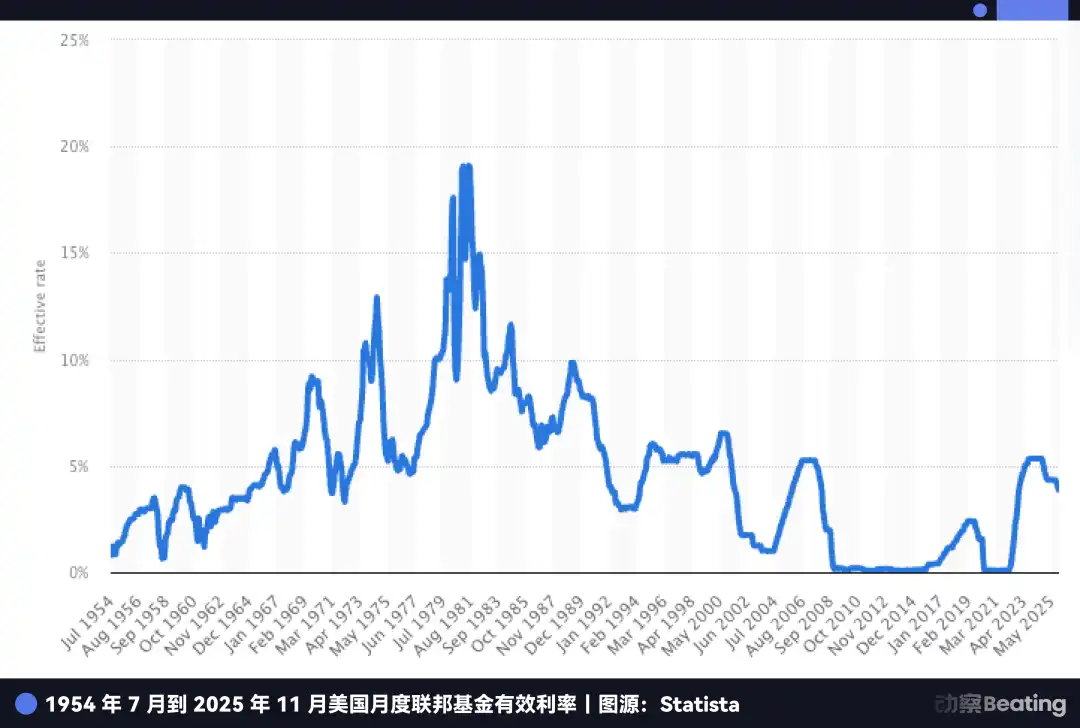
Look at PayPal's current awkward situation: It has a massive pool of funds from its 430 million active users. This money sits in users' PayPal accounts, and PayPal then has to deposit these funds with partner banks.

Those partner banks take this low-cost money and buy U.S. Treasuries yielding 5% or issue higher-interest loans, making enormous profits, while PayPal only gets scraps from the table.

If PayPal gets its own bank charter, it can directly turn the idle funds of those 430 million users into its own low-cost deposits. Then, it can buy Treasuries with one hand and issue loans with the other—keeping all the interest margin profits for itself. In the current high-interest window, this represents a difference of billions of dollars in profit.

But if the goal was just to break free from WebBank, PayPal should have acted long ago. Why wait until 2025?

This brings us to another, more urgent and potentially fatal anxiety deep within PayPal: stablecoins.

With Stablecoins, PayPal is Still a "Sublessor"

If being a "sublessor" in the lending business only meant PayPal made less money and worried more, in the stablecoin battlefield, this dependency is evolving into a genuine survival crisis.

In 2025, PayPal's stablecoin, PYUSD, experienced explosive growth, its market cap tripling in three months to soar to $3.8 billion. Even YouTube announced the integration of PYUSD payments in December.

But behind these lively battle reports is a fact PayPal similarly won't emphasize in its press releases: PYUSD is not issued by PayPal itself, but through a partnership with the New York-based company Paxos.

This is another familiar "white-label" story. PayPal is just the brand licensor—like Nike authorizing a factory to produce shoes instead of running its own factory.

In the past, this seemed more like a business division of labor: PayPal held the product and traffic, Paxos handled compliance and issuance. Everyone ate from their own plate.

But on December 12, 2025, this division began to change flavor. The Office of the Comptroller of the Currency (OCC) gave "conditional approval" for national trust bank charters to several institutions, including Paxos.

This isn't a traditional "commercial bank" that can take deposits and get FDIC insurance, but it signifies that Paxos is moving from being a contract manufacturer to a recognized issuer that can step into the spotlight.

Place this within the framework of the proposed《GENIUS Act》, and you understand why PayPal is急. The bill allows regulated banking systems to issue payment stablecoins through subsidiaries. The power to issue and the profit chain will increasingly concentrate in the hands of those "with a charter."

Before, PayPal could treat stablecoins as an outsourced module. Now, if the outsourcer gains a stronger regulatory身份, it's no longer just a supplier; it can become a replaceable partner, even a potential competitor.

PayPal's尴尬 lies in the fact that it controls neither the issuance infrastructure nor the regulatory身份.

The advancement of USDC and the OCC's move on trust charters are both reminders: the stablecoin battle won't ultimately be about who issues first, but about who can hold the reins of issuance, custody, settlement, and compliance in their own hands.

Therefore, PayPal's move is less about wanting to be a bank and more about acquiring an entry ticket. Otherwise, it risks being permanently left standing outside the arena.

Even more critically, stablecoins pose an existential threat to PayPal's core business.

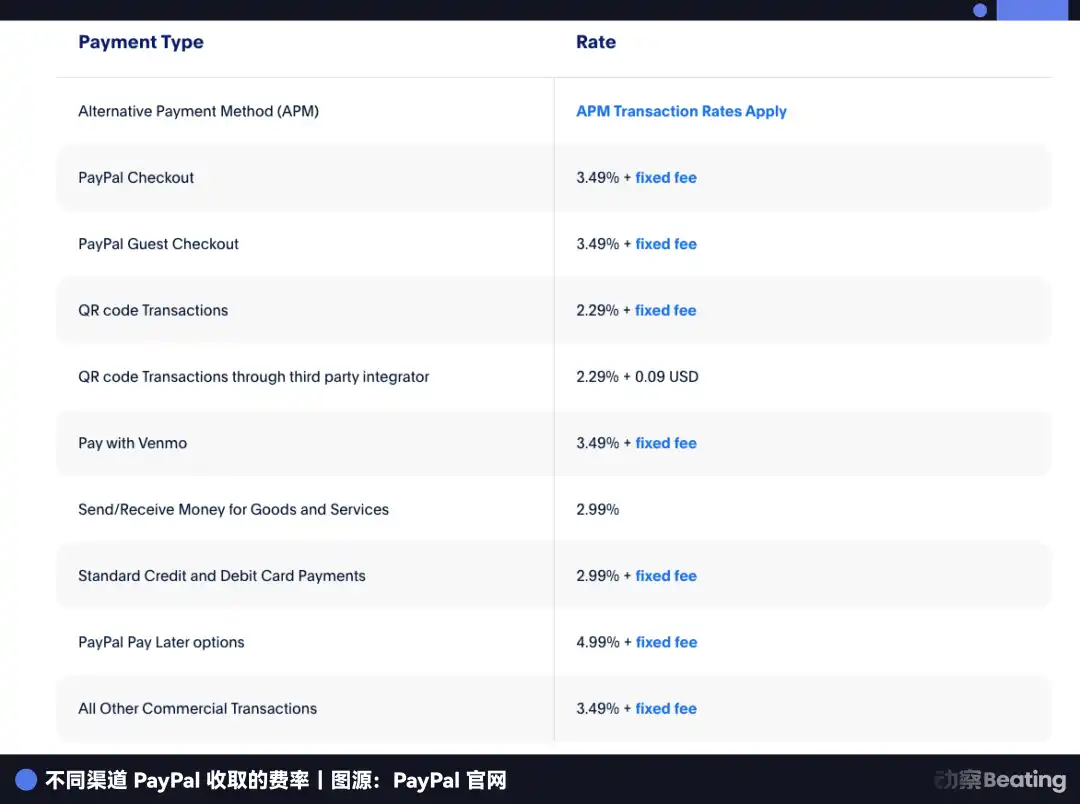
PayPal's most profitable business is e-commerce payments, relying on charging a 2.29~3.49% transaction fee. But the logic of stablecoins is completely different; they charge almost no transaction fees, making money from the interest earned on the Treasury holdings backing the user's deposited funds.

When Amazon starts accepting USDC, when Shopify enables stablecoin payments, merchants will face a simple calculation: if they can use near-zero-cost stablecoins, why pay PayPal a 2.5% toll?

Currently, e-commerce payments account for over half of PayPal's business revenue. Over the past two years, it has watched its market share slide from 54.8% to 40%. If it doesn't seize the initiative on stablecoins, PayPal's moat will be completely filled in.
PayPal's current situation is reminiscent of Apple when it launched its Apple Pay Later business. In 2024, Apple, lacking a bank charter, found itself constrained by Goldman Sachs at every turn and ultimately shut down the service, retreating to its core hardware domain. Apple could retreat because finance was just a nice-to-have; hardware is its core competency.

But PayPal has nowhere to retreat.

It has no phone, no operating system, no hardware ecosystem. Finance is its everything, its only granary. Apple's retreat was a strategic contraction; if PayPal dares to retreat, it faces death.

Therefore, PayPal must advance. It must obtain that bank charter and bring the issuance rights, control, and profit rights of stablecoins back under its own roof.

But starting a bank in the U.S. is incredibly difficult, especially for a tech company carrying $7 billion in loan assets. The regulatory审批门槛 is dauntingly high.

Thus, to obtain this ticket to the future, PayPal orchestrated a masterful piece of financial engineering.

PayPal's Cicada Shedding Its Shell

Now, let's return to the contradiction mentioned at the beginning of the article.

On September 24, PayPal announced the sale of $7 billion in "Buy Now, Pay Later" loans to Blue Owl, with the CFO loudly proclaiming the goal to "become lighter." At the time, most Wall Street analysts assumed this was just window dressing for the financial statements, to make the cash flow look prettier.

But if you view this event alongside the bank charter application three months later, you see it's not a contradiction but a carefully designed one-two punch.

If it hadn't sold those $7 billion in receivables, PayPal's chances of successfully obtaining a bank charter would have been almost zero.

Why? Because in the U.S., applying for a bank charter requires passing an extremely rigorous "physical exam." The regulator (FDIC) holds a ruler called the "capital adequacy ratio."

The logic is simple: the more high-risk assets (like loans) you have on your balance sheet, the more capital reserves you must hold to抵御风险.

Imagine if PayPal knocked on the FDIC's door carrying this $7 billion loan burden. The regulator would immediately see the heavy包袱: "You're carrying all these risky assets; what if they go bad? Do you have enough money to cover the losses?" This wouldn't just mean PayPal needing to post astronomical sums in保证金; it could directly lead to a rejected application.

Therefore, PayPal had to undergo a comprehensive瘦身 before the exam.

This sale to Blue Owl is known in financial jargon as a forward flow agreement. The design is very shrewd. PayPal offloaded the future receivables from loans issued over the next two years (the "printed money") and the default risk entirely onto Blue Owl. But it very cleverly retained the underwriting rights and customer relationships—it kept the "money printing press" for itself.

From the user's perspective, they are still borrowing from PayPal, still repaying through PayPal's App—the experience is unchanged. But on the FDIC's exam report, PayPal's balance sheet instantly appears clean and lean.

Through this move of the cicada shedding its shell, PayPal completed an identity transformation. It went from a lender burdened with heavy default risk to a mere passerby earning risk-free service fees.

This kind of deliberate asset shuffle to pass regulatory审批 isn't unheard of on Wall Street, but doing it so decisively and on such a scale is rare. It precisely proves the determination of PayPal's management: even if it means giving up the fat meat (loan interest) for others to eat, it must secure that longer-term meal ticket.

Moreover, the window for this gamble is closing fast. The reason PayPal is so urgent is that the "backdoor" it has its eye on is being closed, even welded shut, by regulators.

The Soon-to-Close Backdoor

The charter PayPal is applying for is called an "Industrial Loan Company" (ILC). If you're not deeply involved in finance, you've probably never heard of it. But it is the most bizarre and coveted entity in the U.S. financial regulatory system.

Looking at the list of companies with ILC charters creates a strong sense of incongruity: BMW, Toyota, Harley-Davidson, Target...

You might ask: Why are these car sellers and department stores opening banks?

This is the magic of the ILC. It is the only "regulatory loophole" in the U.S. legal system that allows non-financial giants to legally open a bank.

This loophole originated from the Competitive Equality Banking Act (CEBA) passed in 1987. Although the law is named "Equality," it left an extremely unequal privilege: it exempted the parent companies of ILCs from the obligation to register as "bank holding companies."

If you apply for a regular bank charter, the parent company must submit to the Fed's head-to-toe穿透式监管. But if you hold an ILC charter, the parent company (like PayPal) is not subject to Federal Reserve jurisdiction, needing only to answer to the FDIC and state-level regulation in Utah.

This means you enjoy the national-level privileges of a bank—taking deposits, accessing the federal payment system—while perfectly avoiding Fed interference in your commercial empire.

This is所谓的监管套利. Even more enticing is that it allows "mixed operation." This is how BMW and Harley-Davidson play it: vertical integration within their industry chain.

BMW Bank doesn't need physical counters because its business is perfectly embedded in the car-buying process. When you decide to buy a BMW, the sales system automatically connects to BMW Bank's loan services.

For BMW, it makes profit both from your car purchase and from the interest on the car loan. Harley-Davidson is even more so; its bank can even provide loans to motorcycle enthusiasts rejected by traditional banks, because only Harley itself knows that these die-hard fans actually have low default rates.

This is the ultimate form PayPal dreams of: payments on the left hand, banking on the right hand, with stablecoins in the middle—not letting any outsider插手.

Reading this, you must wonder: If this loophole is so good, why didn't Walmart or Amazon apply for this charter and open their own banks?

Because the traditional banking world despises this backdoor.

Bankers believe that allowing commercial giants with massive user data to open banks is a dimensional打击. In 2005, Walmart applied for an ILC charter, triggering a collective uprising across the American banking industry. Banking associations lobbied Congress furiously, arguing that if Walmart Bank used its supermarket data advantage to offer cheap loans only to Walmart shoppers, how could community banks survive?

Under immense public pressure, Walmart was forced to withdraw its application in 2007. This event directly led to regulators "freezing" the ILC. From 2006 to 2019—a full 13 years—the FDIC did not approve a single application from a commercial company. It wasn't until 2020 that Square (now Block) barely broke the deadlock.

But now, this barely reopened backdoor faces the risk of being permanently closed again.

In July 2025, the FDIC suddenly released a notice of proposed rulemaking regarding the ILC framework, seen as a strong signal of regulatory tightening. Meanwhile, related legislative proposals in Congress have never stopped.

Thus, a mad rush for charters began. In 2025, U.S. bank charter applications hit a historical peak of 20, with the OCC (Office of the Comptroller of the Currency) alone receiving 14 applications—equivalent to the total of the previous four years combined.
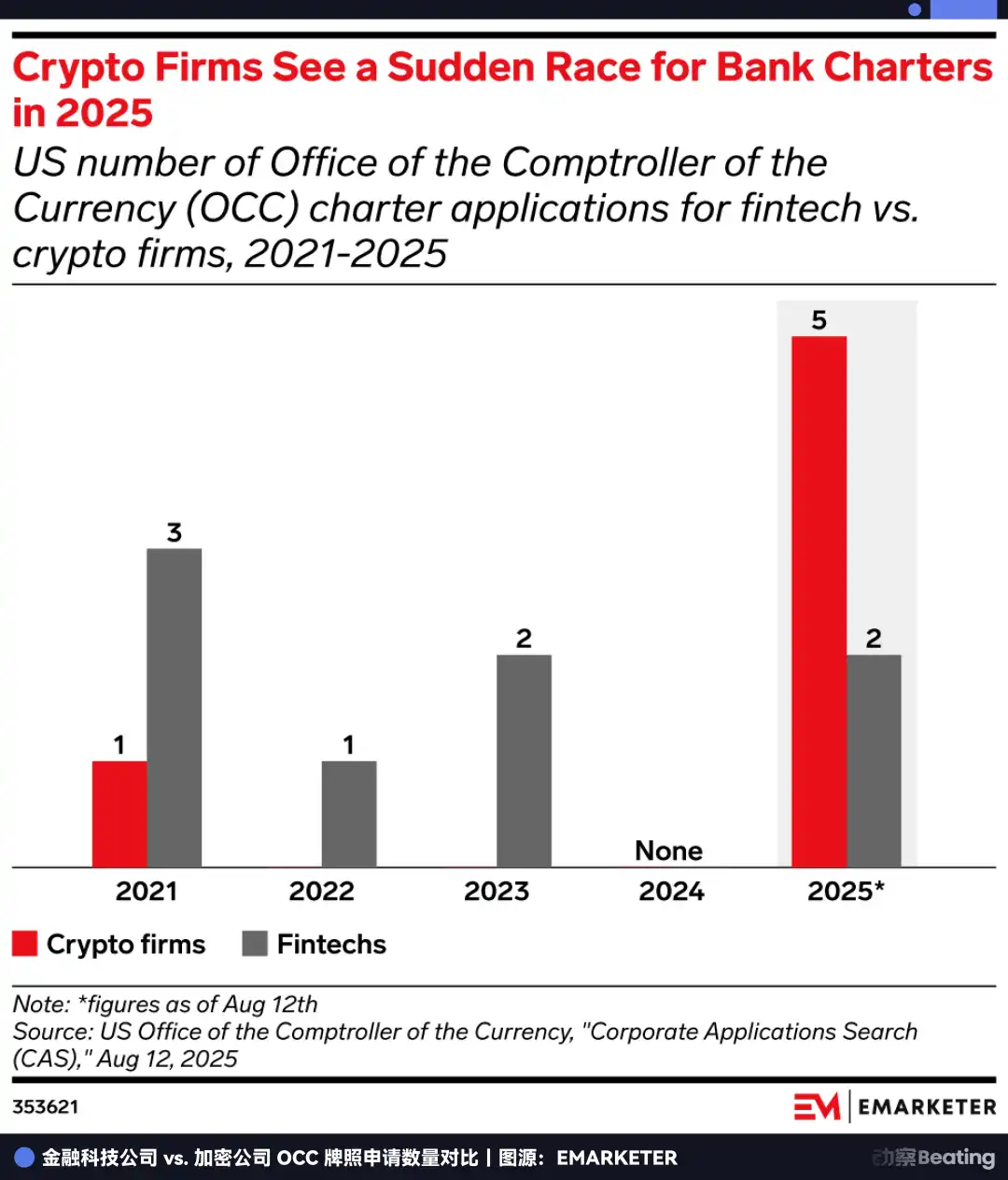
Everyone knows this is the last chance before the door closes. PayPal is racing against the regulators. If you don't rush in before the loophole is彻底堵死 by law, this door might close forever.

A Breakthrough for Survival

The charter PayPal is going to such lengths to obtain is essentially an "option."

Its current value is certain: independently issuing loans and profiting from the interest margin in a high-rate environment. But its future value lies in qualifying PayPal to enter currently forbidden but highly imaginative territories.

Look at the business Wall Street covets most. It's not payments; it's asset management.

Without a bank charter, PayPal could only act as a simple passerby deity, moving funds for users. But once it possesses an ILC charter, it gains a legitimate custodian身份.

This means PayPal can rightfully custody Bitcoin, Ethereum, and even future RWA assets for its 430 million users. Going a step further, under the future《GENIUS Act》framework, banks might be the only permitted legal入口 connecting to DeFi protocols.

Imagine a future where a "High-Yield Savings" button appears in PayPal's App, connecting in the backend to on-chain protocols like Aave or Compound, with PayPal Bank bridging the insurmountable compliance barrier in between. This would彻底打破 the wall between Web2 payments and Web3 finance.

On this dimension, PayPal is no longer competing with Stripe on fees; it's building a financial operating system for the crypto era. It's attempting to evolve from processing transactions to managing assets. Transactions are linear and have a ceiling; asset management is an infinite game.

Understanding this layer allows you to grasp why PayPal is launching this charge at the end of 2025.

It is acutely aware that it is caught in the cracks of the era. Behind it is the fear of its traditional payment business profits being zeroed out by stablecoins. Ahead is the urgency of the ILC regulatory backdoor being permanently welded shut.

To squeeze through this door, it had to sell $7 billion in assets in September to刮骨疗毒, solely to换取 the entry ticket that determines its survival.

If you stretch the timeline back 27 years, you see a轮回 filled with宿命感.

In 1998, when Peter Thiel and Elon Musk founded the precursor to PayPal, their mission was to "challenge the banks," to use electronic money to destroy those old, inefficient financial institutions.

Twenty-seven years later, this former "dragon-slaying youth" is straining every muscle to "become the bank."

In the business world, there are no fairy tales, only survival. On the eve of cryptocurrency重构 the financial order, continuing to be an "ex-giant"游离于 the system之外 means certain death. Only by obtaining that身份, even if through "using the backdoor," can it survive into the next era.

This is a生死突围 that must be completed before the window closes.

If it wins the bet, it becomes the J.P. Morgan of the Web3 era. If it loses, it becomes merely a relic of the previous internet age.

Time is running out for PayPal.

Domande pertinenti

QWhy is PayPal applying for an industrial bank (ILC) license while simultaneously selling off $7 billion in 'Buy Now, Pay Later' loan assets?

APayPal is selling its loan assets to 'lighten' its balance sheet to meet strict regulatory capital requirements for bank license approval. Applying for an ILC license is a strategic move to gain direct control over its lending and stablecoin operations, reduce dependency on partners like WebBank, and capture the full profit from interest margins in a high-rate environment.

QWhat is the core risk of PayPal's current 'Banking as a Service' (BaaS) model with WebBank for its lending business?

AThe core risk is dependency. If WebBank faces regulatory issues, changes its terms, or fails (like Synapse did), PayPal's lending business could be paralyzed. This 'landlord-tenant' model leaves PayPal vulnerable, with its core operations controlled by an external entity, risking user trust and business continuity.

QHow does PayPal's stablecoin (PYUSD) strategy relate to its urgency to obtain a bank charter?

APYUSD is currently issued in partnership with Paxos, making PayPal a 'brand licensor' without direct control. As regulators like the OCC grant trust bank charters to entities like Paxos and proposed laws (e.g., GENIUS Act) favor licensed banks for stablecoin issuance, PayPal risks being sidelined. A bank charter is essential for PayPal to control the issuance, compliance, and profits of its stablecoin directly, which is critical as stablecoins threaten its core payment fee revenue.

QWhat is an Industrial Loan Company (ILC) charter, and why is it particularly attractive to non-financial companies like PayPal?

AAn ILC charter is a type of bank license that allows non-financial companies to own a bank without the parent company being classified as a bank holding company and subjected to the Federal Reserve's stringent oversight. This 'regulatory loophole' allows companies like PayPal, BMW, or Target to enjoy banking privileges (like taking deposits) while avoiding comprehensive federal regulation of their entire commercial business, enabling vertical integration of financial services.

QWhy is there a sense of urgency for PayPal to secure the ILC license in 2025?

AThere is urgency because the regulatory 'loophole' for ILCs is at risk of being closed. The FDIC has signaled potential tightening of ILC rules, and legislative efforts in Congress could permanently shut this path. With a record number of applications in 2025, companies are racing to get approved before the window closes. For PayPal, obtaining the charter is a crucial 'option' for future survival, allowing it to move into asset custody, deeper crypto integration, and compete in the evolving financial landscape.

Letture associate

Cook's Curtain Call and Ternus Takes the Helm: The Disruption and Reboot of Apple's 4 Trillion Dollar Empire

Tim Cook has officially announced he will step down as CEO of Apple in September, transitioning to executive chairman after a 15-year tenure during which he grew the company’s market value from around $350 billion to nearly $4 trillion. He will be succeeded by John Ternus, a 50-year-old hardware engineering veteran who has been groomed for the role through increasing public visibility and internal responsibility. Ternus’s appointment signals a strategic shift toward hardware and engineering leadership, with Johny Srouji—head of Apple Silicon—taking on an expanded role as Chief Hardware Officer. This consolidation aims to strengthen Apple’s core technological capabilities. However, Cook’s departure highlights a significant unresolved issue: Apple’s delayed and fragmented approach to artificial intelligence. Despite early efforts, such as hiring John Giannandrea from Google in 2018, Apple’s AI initiatives—particularly around Siri—have struggled with internal restructuring and reliance on external partnerships, including with Google. The transition comes at a critical moment as Apple faces paradigm shifts with the rise of artificial general intelligence (ASI). The company’s closed ecosystem of hardware, software, and services—once a major advantage—now presents challenges in adapting to an AI-centric world where intelligence may matter more than the device itself. Ternus must quickly articulate a clear AI strategy, possibly starting at WWDC, to reassure markets and redefine Apple’s role in a new technological era. His task is not only to maintain Apple’s operational excellence but also to reinvigorate its capacity to innovate and lead in the age of AI.

marsbit1 h fa

Cook's Curtain Call and Ternus Takes the Helm: The Disruption and Reboot of Apple's 4 Trillion Dollar Empire

marsbit1 h fa

Trading

Spot
Futures

Articoli Popolari

Cosa è $S$

Comprendere SPERO: Una Panoramica Completa Introduzione a SPERO Mentre il panorama dell'innovazione continua a evolversi, l'emergere delle tecnologie web3 e dei progetti di criptovaluta gioca un ruolo fondamentale nel plasmare il futuro digitale. Un progetto che ha attirato l'attenzione in questo campo dinamico è SPERO, denotato come SPERO,$$s$. Questo articolo mira a raccogliere e presentare informazioni dettagliate su SPERO, per aiutare gli appassionati e gli investitori a comprendere le sue basi, obiettivi e innovazioni nei domini web3 e crypto. Che cos'è SPERO,$$s$? SPERO,$$s$ è un progetto unico all'interno dello spazio crypto che cerca di sfruttare i principi della decentralizzazione e della tecnologia blockchain per creare un ecosistema che promuove l'impegno, l'utilità e l'inclusione finanziaria. Il progetto è progettato per facilitare interazioni peer-to-peer in modi nuovi, fornendo agli utenti soluzioni e servizi finanziari innovativi. Al suo interno, SPERO,$$s$ mira a responsabilizzare gli individui fornendo strumenti e piattaforme che migliorano l'esperienza dell'utente nello spazio delle criptovalute. Questo include la possibilità di metodi di transazione più flessibili, la promozione di iniziative guidate dalla comunità e la creazione di percorsi per opportunità finanziarie attraverso applicazioni decentralizzate (dApps). La visione sottostante di SPERO,$$s$ ruota attorno all'inclusività, cercando di colmare le lacune all'interno della finanza tradizionale mentre sfrutta i vantaggi della tecnologia blockchain. Chi è il Creatore di SPERO,$$s$? L'identità del creatore di SPERO,$$s$ rimane piuttosto oscura, poiché ci sono risorse pubblicamente disponibili limitate che forniscono informazioni dettagliate sul suo fondatore o fondatori. Questa mancanza di trasparenza può derivare dall'impegno del progetto per la decentralizzazione—un ethos che molti progetti web3 condividono, dando priorità ai contributi collettivi rispetto al riconoscimento individuale. Centrando le discussioni attorno alla comunità e ai suoi obiettivi collettivi, SPERO,$$s$ incarna l'essenza dell'empowerment senza mettere in evidenza individui specifici. Pertanto, comprendere l'etica e la missione di SPERO rimane più importante che identificare un creatore singolo. Chi sono gli Investitori di SPERO,$$s$? SPERO,$$s$ è supportato da una varietà di investitori che vanno dai capitalisti di rischio agli investitori angelici dedicati a promuovere l'innovazione nel settore crypto. Il focus di questi investitori generalmente si allinea con la missione di SPERO—dando priorità a progetti che promettono avanzamenti tecnologici sociali, inclusività finanziaria e governance decentralizzata. Queste fondazioni di investitori sono tipicamente interessate a progetti che non solo offrono prodotti innovativi, ma contribuiscono anche positivamente alla comunità blockchain e ai suoi ecosistemi. Il supporto di questi investitori rafforza SPERO,$$s$ come un concorrente degno di nota nel dominio in rapida evoluzione dei progetti crypto. Come Funziona SPERO,$$s$? SPERO,$$s$ impiega un framework multifunzionale che lo distingue dai progetti di criptovaluta convenzionali. Ecco alcune delle caratteristiche chiave che sottolineano la sua unicità e innovazione: Governance Decentralizzata: SPERO,$$s$ integra modelli di governance decentralizzati, responsabilizzando gli utenti a partecipare attivamente ai processi decisionali riguardanti il futuro del progetto. Questo approccio favorisce un senso di proprietà e responsabilità tra i membri della comunità. Utilità del Token: SPERO,$$s$ utilizza il proprio token di criptovaluta, progettato per servire varie funzioni all'interno dell'ecosistema. Questi token abilitano transazioni, premi e la facilitazione dei servizi offerti sulla piattaforma, migliorando l'impegno e l'utilità complessivi. Architettura Stratificata: L'architettura tecnica di SPERO,$$s$ supporta la modularità e la scalabilità, consentendo un'integrazione fluida di funzionalità e applicazioni aggiuntive man mano che il progetto evolve. Questa adattabilità è fondamentale per mantenere la rilevanza nel panorama crypto in continua evoluzione. Coinvolgimento della Comunità: Il progetto enfatizza iniziative guidate dalla comunità, impiegando meccanismi che incentivano la collaborazione e il feedback. Nutrendo una comunità forte, SPERO,$$s$ può affrontare meglio le esigenze degli utenti e adattarsi alle tendenze di mercato. Focus sull'Inclusione: Offrendo basse commissioni di transazione e interfacce user-friendly, SPERO,$$s$ mira ad attrarre una base utenti diversificata, inclusi individui che potrebbero non aver precedentemente interagito nello spazio crypto. Questo impegno per l'inclusione si allinea con la sua missione generale di empowerment attraverso l'accessibilità. Cronologia di SPERO,$$s$ Comprendere la storia di un progetto fornisce preziose intuizioni sulla sua traiettoria di sviluppo e sui traguardi. Di seguito è riportata una cronologia suggerita che mappa eventi significativi nell'evoluzione di SPERO,$$s$: Fase di Concettualizzazione e Ideazione: Le idee iniziali che formano la base di SPERO,$$s$ sono state concepite, allineandosi strettamente con i principi di decentralizzazione e focus sulla comunità all'interno dell'industria blockchain. Lancio del Whitepaper del Progetto: Dopo la fase concettuale, è stato rilasciato un whitepaper completo che dettaglia la visione, gli obiettivi e l'infrastruttura tecnologica di SPERO,$$s$ per suscitare interesse e feedback dalla comunità. Costruzione della Comunità e Prime Interazioni: Sono stati effettuati sforzi attivi di outreach per costruire una comunità di early adopters e potenziali investitori, facilitando discussioni attorno agli obiettivi del progetto e ottenendo supporto. Evento di Generazione del Token: SPERO,$$s$ ha condotto un evento di generazione del token (TGE) per distribuire i propri token nativi ai primi sostenitori e stabilire una liquidità iniziale all'interno dell'ecosistema. Lancio della Prima dApp: La prima applicazione decentralizzata (dApp) associata a SPERO,$$s$ è stata attivata, consentendo agli utenti di interagire con le funzionalità principali della piattaforma. Sviluppo Continuo e Partnership: Aggiornamenti e miglioramenti continui alle offerte del progetto, inclusi partnership strategiche con altri attori nello spazio blockchain, hanno plasmato SPERO,$$s$ in un concorrente competitivo e in evoluzione nel mercato crypto. Conclusione SPERO,$$s$ rappresenta una testimonianza del potenziale del web3 e delle criptovalute di rivoluzionare i sistemi finanziari e responsabilizzare gli individui. Con un impegno per la governance decentralizzata, il coinvolgimento della comunità e funzionalità progettate in modo innovativo, apre la strada verso un panorama finanziario più inclusivo. Come per qualsiasi investimento nello spazio crypto in rapida evoluzione, si incoraggiano potenziali investitori e utenti a ricercare approfonditamente e a impegnarsi in modo riflessivo con gli sviluppi in corso all'interno di SPERO,$$s$. Il progetto mostra lo spirito innovativo dell'industria crypto, invitando a ulteriori esplorazioni delle sue innumerevoli possibilità. Mentre il percorso di SPERO,$$s$ è ancora in fase di sviluppo, i suoi principi fondamentali potrebbero effettivamente influenzare il futuro di come interagiamo con la tecnologia, la finanza e tra di noi in ecosistemi digitali interconnessi.

75 Totale visualizzazioniPubblicato il 2024.12.17Aggiornato il 2024.12.17

Cosa è $S$

Cosa è AGENT S

Agent S: Il Futuro dell'Interazione Autonoma in Web3 Introduzione Nel panorama in continua evoluzione di Web3 e criptovalute, le innovazioni stanno costantemente ridefinendo il modo in cui gli individui interagiscono con le piattaforme digitali. Uno di questi progetti pionieristici, Agent S, promette di rivoluzionare l'interazione uomo-computer attraverso il suo framework agentico aperto. Aprendo la strada a interazioni autonome, Agent S mira a semplificare compiti complessi, offrendo applicazioni trasformative nell'intelligenza artificiale (AI). Questa esplorazione dettagliata approfondirà le complessità del progetto, le sue caratteristiche uniche e le implicazioni per il dominio delle criptovalute. Cos'è Agent S? Agent S si presenta come un innovativo framework agentico aperto, progettato specificamente per affrontare tre sfide fondamentali nell'automazione dei compiti informatici: Acquisizione di Conoscenze Specifiche del Dominio: Il framework apprende in modo intelligente da varie fonti di conoscenza esterne ed esperienze interne. Questo approccio duale gli consente di costruire un ricco repository di conoscenze specifiche del dominio, migliorando le sue prestazioni nell'esecuzione dei compiti. Pianificazione su Lungo Orizzonte di Compiti: Agent S impiega una pianificazione gerarchica potenziata dall'esperienza, un approccio strategico che facilita la suddivisione e l'esecuzione efficiente di compiti complessi. Questa caratteristica migliora significativamente la sua capacità di gestire più sottocompiti in modo efficiente ed efficace. Gestione di Interfacce Dinamiche e Non Uniformi: Il progetto introduce l'Interfaccia Agente-Computer (ACI), una soluzione innovativa che migliora l'interazione tra agenti e utenti. Utilizzando Modelli Linguistici Multimodali di Grandi Dimensioni (MLLM), Agent S può navigare e manipolare senza sforzo diverse interfacce grafiche utente. Attraverso queste caratteristiche pionieristiche, Agent S fornisce un framework robusto che affronta le complessità coinvolte nell'automazione dell'interazione umana con le macchine, preparando il terreno per innumerevoli applicazioni nell'AI e oltre. Chi è il Creatore di Agent S? Sebbene il concetto di Agent S sia fondamentalmente innovativo, informazioni specifiche sul suo creatore rimangono elusive. Il creatore è attualmente sconosciuto, il che evidenzia sia la fase embrionale del progetto sia la scelta strategica di mantenere i membri fondatori sotto anonimato. Indipendentemente dall'anonimato, l'attenzione rimane sulle capacità e sul potenziale del framework. Chi sono gli Investitori di Agent S? Poiché Agent S è relativamente nuovo nell'ecosistema crittografico, informazioni dettagliate riguardanti i suoi investitori e sostenitori finanziari non sono documentate esplicitamente. La mancanza di approfondimenti pubblicamente disponibili sulle fondazioni di investimento o sulle organizzazioni che supportano il progetto solleva interrogativi sulla sua struttura di finanziamento e sulla roadmap di sviluppo. Comprendere il supporto è cruciale per valutare la sostenibilità del progetto e il suo potenziale impatto sul mercato. Come Funziona Agent S? Al centro di Agent S si trova una tecnologia all'avanguardia che gli consente di funzionare efficacemente in contesti diversi. Il suo modello operativo è costruito attorno a diverse caratteristiche chiave: Interazione Uomo-Computer Simile a Quella Umana: Il framework offre una pianificazione AI avanzata, cercando di rendere le interazioni con i computer più intuitive. Mimando il comportamento umano nell'esecuzione dei compiti, promette di elevare le esperienze degli utenti. Memoria Narrativa: Utilizzata per sfruttare esperienze di alto livello, Agent S utilizza la memoria narrativa per tenere traccia delle storie dei compiti, migliorando così i suoi processi decisionali. Memoria Episodica: Questa caratteristica fornisce agli utenti una guida passo-passo, consentendo al framework di offrire supporto contestuale mentre i compiti si sviluppano. Supporto per OpenACI: Con la capacità di funzionare localmente, Agent S consente agli utenti di mantenere il controllo sulle proprie interazioni e flussi di lavoro, allineandosi con l'etica decentralizzata di Web3. Facile Integrazione con API Esterne: La sua versatilità e compatibilità con varie piattaforme AI garantiscono che Agent S possa adattarsi senza problemi agli ecosistemi tecnologici esistenti, rendendolo una scelta attraente per sviluppatori e organizzazioni. Queste funzionalità contribuiscono collettivamente alla posizione unica di Agent S all'interno dello spazio crittografico, poiché automatizza compiti complessi e multi-fase con un intervento umano minimo. Man mano che il progetto evolve, le sue potenziali applicazioni in Web3 potrebbero ridefinire il modo in cui si svolgono le interazioni digitali. Cronologia di Agent S Lo sviluppo e le tappe di Agent S possono essere riassunti in una cronologia che evidenzia i suoi eventi significativi: 27 Settembre 2024: Il concetto di Agent S è stato lanciato in un documento di ricerca completo intitolato “Un Framework Agentico Aperto che Usa i Computer Come un Umano”, mostrando le basi per il progetto. 10 Ottobre 2024: Il documento di ricerca è stato reso pubblicamente disponibile su arXiv, offrendo un'esplorazione approfondita del framework e della sua valutazione delle prestazioni basata sul benchmark OSWorld. 12 Ottobre 2024: È stata rilasciata una presentazione video, fornendo un'idea visiva delle capacità e delle caratteristiche di Agent S, coinvolgendo ulteriormente potenziali utenti e investitori. Questi indicatori nella cronologia non solo illustrano i progressi di Agent S, ma indicano anche il suo impegno per la trasparenza e il coinvolgimento della comunità. Punti Chiave su Agent S Man mano che il framework Agent S continua a evolversi, diversi attributi chiave si distinguono, sottolineando la sua natura innovativa e il potenziale: Framework Innovativo: Progettato per fornire un uso intuitivo dei computer simile all'interazione umana, Agent S porta un approccio nuovo all'automazione dei compiti. Interazione Autonoma: La capacità di interagire autonomamente con i computer attraverso GUI segna un passo avanti verso soluzioni informatiche più intelligenti ed efficienti. Automazione di Compiti Complessi: Con la sua metodologia robusta, può automatizzare compiti complessi e multi-fase, rendendo i processi più veloci e meno soggetti a errori. Miglioramento Continuo: I meccanismi di apprendimento consentono ad Agent S di migliorare dalle esperienze passate, migliorando continuamente le sue prestazioni e la sua efficacia. Versatilità: La sua adattabilità attraverso diversi ambienti operativi come OSWorld e WindowsAgentArena garantisce che possa servire un'ampia gamma di applicazioni. Man mano che Agent S si posiziona nel panorama di Web3 e delle criptovalute, il suo potenziale per migliorare le capacità di interazione e automatizzare i processi segna un significativo avanzamento nelle tecnologie AI. Attraverso il suo framework innovativo, Agent S esemplifica il futuro delle interazioni digitali, promettendo un'esperienza più fluida ed efficiente per gli utenti in vari settori. Conclusione Agent S rappresenta un audace passo avanti nell'unione tra AI e Web3, con la capacità di ridefinire il modo in cui interagiamo con la tecnologia. Sebbene sia ancora nelle sue fasi iniziali, le possibilità per la sua applicazione sono vaste e coinvolgenti. Attraverso il suo framework completo che affronta sfide critiche, Agent S mira a portare le interazioni autonome al centro dell'esperienza digitale. Man mano che ci addentriamo nei regni delle criptovalute e della decentralizzazione, progetti come Agent S giocheranno senza dubbio un ruolo cruciale nel plasmare il futuro della tecnologia e della collaborazione uomo-computer.

402 Totale visualizzazioniPubblicato il 2025.01.14Aggiornato il 2025.01.14

Cosa è AGENT S

Come comprare S

Benvenuto in HTX.com! Abbiamo reso l'acquisto di Sonic (S) semplice e conveniente. Segui la nostra guida passo passo per intraprendere il tuo viaggio nel mondo delle criptovalute.Step 1: Crea il tuo Account HTXUsa la tua email o numero di telefono per registrarti il tuo account gratuito su HTX. Vivi un'esperienza facile e sblocca tutte le funzionalità,Crea il mio accountStep 2: Vai in Acquista crypto e seleziona il tuo metodo di pagamentoCarta di credito/debito: utilizza la tua Visa o Mastercard per acquistare immediatamente SonicS.Bilancio: Usa i fondi dal bilancio del tuo account HTX per fare trading senza problemi.Terze parti: abbiamo aggiunto metodi di pagamento molto utilizzati come Google Pay e Apple Pay per maggiore comodità.P2P: Fai trading direttamente con altri utenti HTX.Over-the-Counter (OTC): Offriamo servizi su misura e tassi di cambio competitivi per i trader.Step 3: Conserva Sonic (S)Dopo aver acquistato Sonic (S), conserva nel tuo account HTX. In alternativa, puoi inviare tramite trasferimento blockchain o scambiare per altre criptovalute.Step 4: Scambia Sonic (S)Scambia facilmente Sonic (S) nel mercato spot di HTX. Accedi al tuo account, seleziona la tua coppia di trading, esegui le tue operazioni e monitora in tempo reale. Offriamo un'esperienza user-friendly sia per chi ha appena iniziato che per i trader più esperti.

826 Totale visualizzazioniPubblicato il 2025.01.15Aggiornato il 2025.03.21

Come comprare S

Discussioni

Benvenuto nella Community HTX. Qui puoi rimanere informato sugli ultimi sviluppi della piattaforma e accedere ad approfondimenti esperti sul mercato. Le opinioni degli utenti sul prezzo di S S sono presentate come di seguito.

活动图片