Rolling the Snowball in a Cold Market: How a Meme Coin Achieved 20x in 2 Days with an Automated Market-Making Mechanism?

比推Pubblicato 2025-12-22Pubblicato ultima volta 2025-12-22

Introduzione

**Summary: Snowball Meme Coin’s 20x Surge in 2 Days via Automated Market-Making Mechanism Amid a sluggish crypto market, the Meme token Snowball, launched on pump.fun on December 18, surged 20 times in value within two days, reaching a $10 million market cap—a rare success in the current bearish environment. Its core innovation lies in an automated market-making mechanism designed to create a "snowball effect." Typically, pump.fun tokens allow creators to collect a fee (0.5%–1%) from each transaction, often leading to devs cashing out and abandoning projects. Snowball redirects 100% of this creator fee to an on-chain market-making bot instead. This bot periodically: 1. Uses accumulated funds to buy back tokens, creating buy pressure. 2. Adds purchased tokens and corresponding SOL to the liquidity pool, improving depth. 3. Burns 0.1% of tokens per operation, inducing deflation. The fee rate fluctuates (0.05%–0.95%) based on market cap: higher fees at lower caps to accelerate fund accumulation, lower fees at higher caps to reduce transaction friction. The idea is that each trade fuels buy pressure and liquidity, not dev profits, theoretically creating a self-sustaining cycle: trading generates fees → fees fund buybacks → buybacks boost price → higher price attracts more trading. On-chain data shows 7,270 holders, with top 10 addresses holding ~20% of supply—relatively distributed. Trading volume reached $11 million in 24 hours, with buys slightly outpacing sells. By...

Author: David, Deep Tide TechFlow

Original Title: 20x in 2 Days, A Quick Look at the Automated Market-Making Mechanism of the New Golden Dog Snowball


The crypto market in December is as cold as the weather.

On-chain transactions have been dormant for a long time, and new narratives are hard to come by. Just look at the drama and gossip in the Chinese CT (Crypto Twitter) these past few days, and you'll know hardly anyone is playing in this market anymore.

But the English-speaking community has been discussing something new.

A Meme coin called Snowball launched on pump.fun on December 18th. In four days, its market cap surged to $10 million and is still hitting new highs; meanwhile, it's barely mentioned in the Chinese crypto circle.
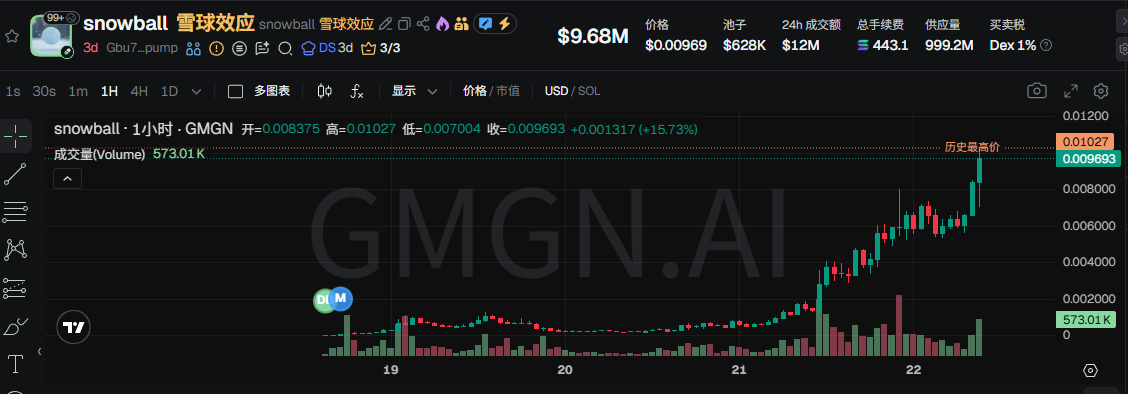
In the current environment where there are few new narratives and even Meme coins are considered unplayable, this is one of the few things that catches the eye and shows some localized wealth effect.

And the name Snowball itself, referring to the snowball effect, is the story it wants to tell:

A mechanism that allows the token to "roll and grow bigger by itself".

Turning Transaction Fees into Buy Pressure, Rolling the Snowball for Market Making

To understand what Snowball is doing, you need to first know how pump.fun tokens typically make money.

On pump.fun, anyone can create a token in minutes. Token creators can set a "creator fee," essentially taking a cut of every transaction into their own wallet, usually between 0.5% and 1%.

This money is theoretically meant for community building and marketing, but in practice, most Devs choose to: accumulate enough and then run.

This is part of the typical life cycle of a shitcoin. Launch, pump, harvest fees, rug. Investors aren't betting on the token itself, but on the developer's conscience.

Snowball's approach is to not take this creator fee money.

To be precise, 100% of the creator fees do not go into anyone's wallet but are automatically transferred to an on-chain market-making bot.

This bot performs three actions at regular intervals:

First, it uses the accumulated funds to buy tokens on the market, creating buy-side support;

Second, it adds the bought tokens and the corresponding SOL to the liquidity pool, improving trading depth;

Third, it burns 0.1% of the tokens with each operation, creating deflation.
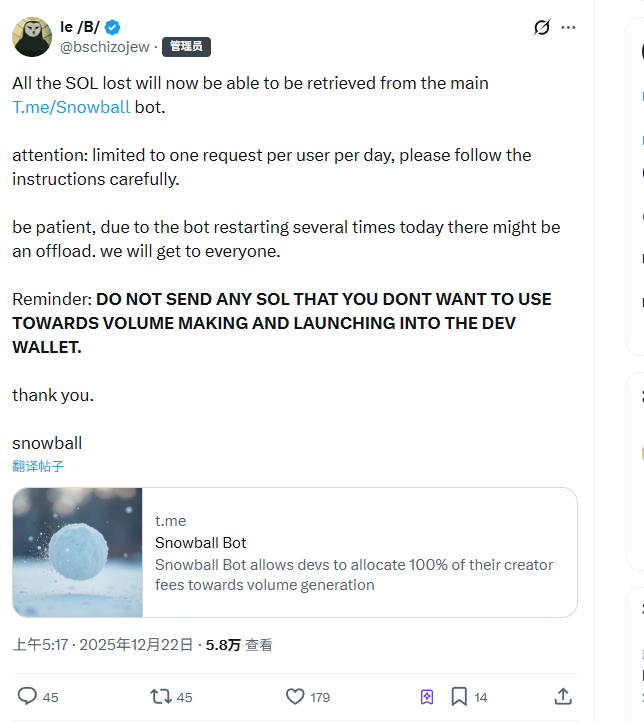
Simultaneously, the percentage of creator fees this coin charges is not fixed; it fluctuates between 0.05% and 0.95% based on market cap.

It takes a higher percentage when the market cap is low, allowing the bot to accumulate ammunition faster; it reduces the fee when the market cap is high, decreasing transaction friction.

To summarize the logic of this mechanism in one sentence: every time you trade, a portion of the money automatically becomes buy pressure and liquidity, instead of going into the developer's pocket.

Therefore, it's easy to understand this snowball effect:

Trading generates fees → Fees become buy pressure → Buy pressure pushes the price up → Higher price attracts more trading → More fees... theoretically, it can roll on its own.

On-Chain Data Situation

Now that the mechanism is explained, let's look at the on-chain data.

Snowball launched on December 18th, so it's been four days now. The market cap grew from zero to $10 million, with a 24-hour trading volume exceeding $11 million.

For a shitcoin on pump.fun, this performance is considered relatively long-lasting in the current environment.

In terms of token distribution, there are currently 7,270 holder addresses. The top ten holders together account for about 20% of the total supply, with the largest single holder holding 4.65%.
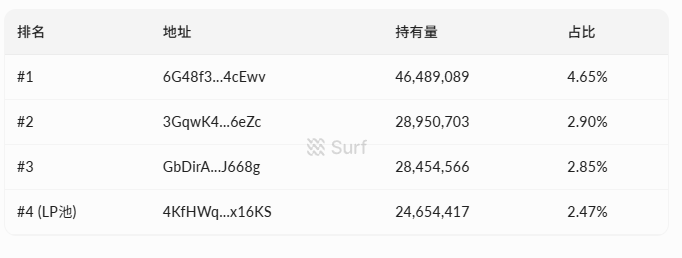
Data source: surf.ai

There's no address holding 20-30% of the supply; the distribution is relatively decentralized.

Regarding trading data, there have been over 58,000 transactions since launch, with 33,000 buys and 24,000 sells. The total buy volume is $4.4 million, and the total sell volume is $4.3 million, resulting in a net inflow of about $100,000. Buying and selling are basically balanced, with no one-sided selling pressure.

The liquidity pool holds about $380,000, half in tokens and half in SOL. For a market cap of this size, the depth isn't very thick, and large orders would still experience significant slippage.

Another noteworthy point is that Bybit Alpha announced listing the token less than 96 hours after launch, which to some extent confirms the short-term hype.

Perpetual Motion Meets a Cold Market

After browsing around, you can see that the English community's discussion about Snowball mainly focuses on the mechanism itself. Supporters' logic is straightforward:

This is the first Meme coin that locks 100% of creator fees into the protocol; developers can't run away with the money, making it structurally safer than other shitcoins, at least.

The development Dev is also playing into this narrative. The developer wallet, market-making bot wallet, and transaction logs are all public, emphasizing "verifiable on-chain."

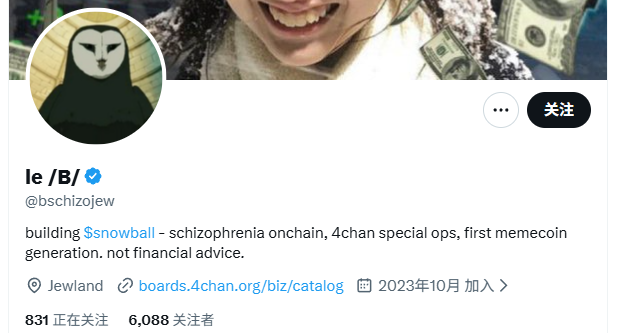
@bschizojew labels himself as "on-chain schizophrenia, 4chan special forces, first-generation Meme coin veteran," radiating a self-deprecating degen vibe that appeals to the crypto-native community.
But mechanism safety and making money are two different things.

The snowball effect relies on the premise that there is sufficient trading volume to continuously generate fees to feed the bot for buybacks. More trading means more ammunition for the bot, stronger buy pressure, higher prices, attracting more people to trade...

This is the ideal state where any Meme coin's so-called buyback flywheel spins up in a bull market.

The problem is, the flywheel needs external momentum to start.

What is the current crypto market environment? On-chain activity is sluggish, the overall heat around Meme coins has declined, and there's simply less capital willing to chase shitcoins. In this context, if new buy-side pressure doesn't keep up and trading volume shrinks, the fees the bot receives will become less and less, buyback strength will weaken, price support will diminish, and trading willingness will decline further.

The flywheel can spin forward, but it can also spin in reverse.

A more realistic problem is that the mechanism solves only one risk point—"developers taking the money and running"—but Meme coins face far more risks than that.

Whales dumping, insufficient liquidity, narratives going out of style—if any of these happen, 100% fee-based buybacks can only do so much.

Everyone is tired of being rugged. A Chinese community member summarized it quite well:

Play if you want, but don't get in over your head.

More Than One Snowball Rolling

Snowball isn't the only project telling this automated market-making story.

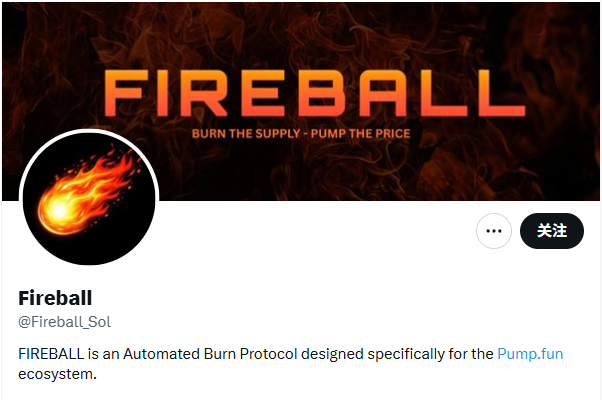
Within the pump.fun ecosystem, a token called FIREBALL is doing something similar: automatic buybacks and burns, packaging it as a protocol other tokens can plug into. But its market cap is much smaller than Snowball's.
This shows the market is currently reacting to the direction of "mechanism-based Meme coins."

The traditional玩法 of shilling, pumping, and community hype is finding it harder to attract capital. Using mechanism design to tell a "structurally safe" story might be one of Meme coins' recent strategies.

However, talking about artificially creating a mechanism isn't a new玩法 either.

OlympusDAO's (3,3) in 2021 was the most typical case, using game theory to package a staking mechanism and telling the story of "everyone profits if no one sells." It reached a peak market cap of billions of dollars. The ending, as everyone knows, was a death spiral, dropping over 90%.

Earlier, there was Safemoon's玩法 of "taxing every transaction and distributing it to holders," also a narrative of mechanism innovation, which ended with the SEC suing and charging the founder with fraud.

Mechanisms can be great narrative hooks, gathering capital and attention in the short term, but mechanisms themselves do not create value.

When external capital stops flowing in, even the most精巧designed flywheel will stop.

Finally, let's recap what this little golden dog is actually doing:

Turning Meme coin creator fees into an "automated market-making bot." The mechanism itself isn't complicated, and the problem it solves is very clear: preventing developers from directly taking the money and running.

Developers can't run away, but that doesn't mean you'll make money.

If after reading this you find the mechanism interesting and want to participate, remember one thing: it's first and foremost a Meme coin, and only secondly an experiment with a new mechanism.


Twitter:https://twitter.com/BitpushNewsCN

Bitpush TG Discussion Group:https://t.me/BitPushCommunity

Bitpush TG Channel: https://t.me/bitpush

Original article link:https://www.bitpush.news/articles/7597578

Domande pertinenti

QWhat is the core mechanism that allows Snowball to achieve its 'snowball effect'?

AThe core mechanism is that 100% of the creator fees from transactions are automatically sent to an on-chain market-making bot. This bot uses the accumulated funds to buy back tokens (creating buy pressure), add the purchased tokens and corresponding SOL to the liquidity pool (improving depth), and burn 0.1% of the tokens (creating deflation) at regular intervals.

QHow does the creator fee for the Snowball token work and how is it different from a typical pump.fun token?

AUnlike typical pump.fun tokens where the fee goes to the developer's wallet, Snowball's creator fee (which floats between 0.05% and 0.95% based on market cap) is entirely sent to an automated market-making bot. This prevents the developer from directly taking the money and running, as the funds are instead used to support the token's price and liquidity.

QWhat were some key on-chain metrics for Snowball four days after its launch?

AFour days after its launch on December 18th, Snowball reached a market cap of $10 million, with a 24-hour trading volume exceeding $11 million. It had 7,270 holder addresses, with the top 10 holders owning about 20% of the supply. The liquidity pool held approximately $380,000.

QAccording to the article, what is the major risk or prerequisite for the 'snowball effect' to work?

AThe major risk is that the 'snowball effect' relies on sufficient trading volume to continuously generate fees to fuel the market-making bot. If new buying pressure dries up and trading volume decreases, the bot's ability to support the price weakens, which could lead to a negative feedback loop where decreasing price support further reduces trading interest.

QHow does the article contextualize Snowball's mechanism within the history of crypto 'mechanism narratives'?

AThe article contextualizes it as part of a trend of 'mechanism-based meme coins' seeking to attract attention with structural innovation. It draws parallels to past projects like OlympusDAO's (3,3) staking mechanism and Safemoon's transaction tax redistribution, noting that while mechanisms can be a good short-term narrative, they do not create intrinsic value and can fail when external capital inflow stops.

Letture associate

Trading

Spot
Futures

Articoli Popolari

Cosa è MEME 2.0

Memecoin 2.0: L'Ascesa di $MEME 2.0 nel Mondo delle Criptovalute Introduzione Nel panorama in continua evoluzione delle criptovalute, è emerso un nuovo contendente. Memecoin 2.0, simboleggiato come $MEME 2.0, porta il concetto di meme coin a un livello emozionante. Come prodotto derivato dal Memecoin originale, questo progetto ha catturato l'attenzione della comunità crypto spostando il focus da incentivi finanziari tipici a un'esperienza coinvolgente e divertente. Operando sulla blockchain di Ethereum, Memecoin 2.0 ridefinisce audacemente l'impegno della comunità nella sfera crypto. Che cos'è Memecoin 2.0, $MEME 2.0? Alla base, Memecoin 2.0 è un progetto di criptovaluta che dà priorità allo spirito di comunità e al divertimento associato alla cultura meme. A differenza delle criptovalute convenzionali, che si concentrano su casi d'uso pratici e benefici tangibili, Memecoin 2.0 si distingue abbracciando il lato più leggero della moneta digitale. Il progetto esiste senza promesse di utilità, una roadmap strutturata o ritorni finanziari, concentrandosi invece sulla creazione di una comunità vibrante incentrata sui meme e sul divertimento condiviso. Facendo così, attinge alla crescente tendenza della cultura meme nello spazio online, rendendola un giocatore unico nel mondo degli asset digitali. Creatore di Memecoin 2.0, $MEME 2.0 Nonostante ricerche approfondite sulle origini di Memecoin 2.0, l'identità esplicita del suo creatore rimane sconosciuta. Questa anonimità non è rara nella comunità crypto, dove molti progetti sono guidati da individui o gruppi che preferiscono rimanere dietro le quinte. La mancanza di informazioni pubblicamente disponibili sul creatore potrebbe essere vista come una mossa strategica, mettendo in evidenza l'impegno della comunità piuttosto che la notorietà individuale all'interno dello spazio. Investitori di Memecoin 2.0, $MEME 2.0 Le informazioni riguardanti gli investitori o il supporto finanziario per Memecoin 2.0 sono scarse. Questa assenza di dettagli potrebbe suggerire che il progetto sia autofinanziato o che il suo focus sulla comunità piuttosto che sulle strutture d'investimento tradizionali abbia attratto un tipo diverso di sostenitore. Poiché il mondo delle meme coin coinvolge tipicamente un maggior coinvolgimento di base piuttosto che investimenti istituzionali, questo approccio si allinea con l'etica dei progetti guidati dalla comunità. Come funziona Memecoin 2.0, $MEME 2.0? Memecoin 2.0 opera interamente sulla blockchain di Ethereum, capitalizzando le sue robuste caratteristiche di sicurezza e scalabilità. Sfruttando i punti di forza di Ethereum, Memecoin 2.0 può offrire un ambiente sicuro per le interazioni degli utenti garantendo che le transazioni siano sia efficienti che convenienti. Uno degli attributi unici di Memecoin 2.0 risiede nella sua struttura guidata dalla comunità. Il valore e la popolarità del token $MEME 2.0 derivano dalla partecipazione attiva dei suoi utenti, piuttosto che dalla utilità intrinseca. Questo design rinforza il focus del progetto sull'aspetto dell'intrattenimento delle criptovalute, implicando che la risata e l'impegno della comunità siano le vere monete che guidano il suo successo. Inoltre, il progetto si inserisce all'interno dell'ecosistema più ampio delle meme coin, dove il valore di ciascuna meme coin oscilla in base alla cultura, alle tendenze e all'impegno della comunità piuttosto che ai principi economici tradizionali. Cronologia di Memecoin 2.0, $MEME 2.0 Per comprendere meglio l'evoluzione e le pietre miliari di Memecoin 2.0, ecco una cronologia che evidenzia eventi significativi nella sua storia: 2024: L'inizio di Memecoin 2.0 è riconosciuto come un ramo del Memecoin originale, affermandosi all'interno del contesto fiorente delle meme coin mentre opera sulla blockchain di Ethereum. 13 luglio 2024: Memecoin 2.0 si posiziona ufficialmente come una meme coin incentrata sulla comunità sulla rete Ethereum, enfatizzando il suo approccio centrato sull'intrattenimento che invita gli utenti a impegnarsi e partecipare alla sua crescita. Punti Chiave su Memecoin 2.0, $MEME 2.0 Diverse caratteristiche critiche definiscono Memecoin 2.0: Approccio Centrico alla Comunità: La missione principale di Memecoin 2.0 è creare un'esperienza comunitaria divertente e coinvolgente, capitalizzando il piacere collettivo derivante dalla cultura memetica. Costruita su Ethereum: Operare sulla blockchain di Ethereum fornisce al progetto un'infrastruttura essenziale che garantisce sicurezza e scalabilità. Mancanza di Utilità o Roadmap: In una marcata deviazione dalle criptovalute tradizionali, Memecoin 2.0 non promette alcuna caratteristica utilitaria o ritorni finanziari, riaffermando il suo impegno per il coinvolgimento della comunità e l'impegno sociale. Focus sulla Cultura Memetica: Abbracciando gli aspetti umoristici e culturali del fenomeno meme, Memecoin 2.0 offre una piattaforma per gli utenti per interagire con la crypto offline e online. Ulteriore Contesto: L'Importanza delle Meme Coin Le meme coin sono emerse come una classe distinta di criptovaluta, spesso guidata dall'umorismo e da un approccio spensierato al trading. Queste monete generalmente mancano di significative utilità o roadmap di sviluppo, attirando gli utenti con la promessa di divertimento, interazione comunitaria e rilevanza culturale. Nel panorama del più ampio ecosistema crypto, le meme coin rianimano l'importanza dell'impegno della comunità, opponendosi ad approcci esclusivamente orientati al profitto. Progetti come Memecoin 2.0 danno il via a un'era in cui l'intrattenimento può armonizzarsi con le aspirazioni finanziarie, trasformando la blockchain in un parco giochi per la creatività e l'interazione sociale. Conclusione Memecoin 2.0, o $MEME 2.0, incarna una nuova ondata di criptovaluta che dà priorità all'impegno della comunità rispetto a rigidi strutture finanziarie. Con un focus sull'umorismo e l'interazione sociale, capitalizza sulla fascinazione circondante la cultura meme. Operando sulla blockchain di Ethereum, Memecoin 2.0 sfrutta le capacità della tecnologia mantenendo fermo il suo impegno per il valore ricreativo della valuta digitale. Mentre lo spazio delle criptovalute continua a evolversi, Memecoin 2.0 serve come testimonianza della nozione che il futuro degli asset digitali potrebbe ben dipendere da esperienze condivise, risate e solidi legami comunitari. Nel mondo imprevedibile delle crypto, forse la gioia può essere altrettanto preziosa quanto il guadagno finanziario tradizionale.

93 Totale visualizzazioniPubblicato il 2024.04.04Aggiornato il 2024.12.03

Cosa è MEME 2.0

Come comprare MEME

Benvenuto in HTX.com! Abbiamo reso l'acquisto di Memeland (MEME) semplice e conveniente. Segui la nostra guida passo passo per intraprendere il tuo viaggio nel mondo delle criptovalute.Step 1: Crea il tuo Account HTXUsa la tua email o numero di telefono per registrarti il tuo account gratuito su HTX. Vivi un'esperienza facile e sblocca tutte le funzionalità,Crea il mio accountStep 2: Vai in Acquista crypto e seleziona il tuo metodo di pagamentoCarta di credito/debito: utilizza la tua Visa o Mastercard per acquistare immediatamente MemelandMEME.Bilancio: Usa i fondi dal bilancio del tuo account HTX per fare trading senza problemi.Terze parti: abbiamo aggiunto metodi di pagamento molto utilizzati come Google Pay e Apple Pay per maggiore comodità.P2P: Fai trading direttamente con altri utenti HTX.Over-the-Counter (OTC): Offriamo servizi su misura e tassi di cambio competitivi per i trader.Step 3: Conserva Memeland (MEME)Dopo aver acquistato Memeland (MEME), conserva nel tuo account HTX. In alternativa, puoi inviare tramite trasferimento blockchain o scambiare per altre criptovalute.Step 4: Scambia Memeland (MEME)Scambia facilmente Memeland (MEME) nel mercato spot di HTX. Accedi al tuo account, seleziona la tua coppia di trading, esegui le tue operazioni e monitora in tempo reale. Offriamo un'esperienza user-friendly sia per chi ha appena iniziato che per i trader più esperti.

264 Totale visualizzazioniPubblicato il 2024.12.12Aggiornato il 2025.03.21

Come comprare MEME

Discussioni

Benvenuto nella Community HTX. Qui puoi rimanere informato sugli ultimi sviluppi della piattaforma e accedere ad approfondimenti esperti sul mercato. Le opinioni degli utenti sul prezzo di MEME MEME sono presentate come di seguito.

活动图片