Ripple Secures Preliminary Luxembourg Approval to Prepare MiCA-Compliant XRP and RLUSD Operations

bitcoinistPubblicato 2026-06-28Pubblicato ultima volta 2026-06-28

Introduzione

Ripple has received a preliminary "Green Light Letter" from Luxembourg's financial regulator, the CSSF, for a CASP (Crypto-Asset Service Provider) license. This step is not a final license but positions Ripple to prepare MiCA-compliant operations for XRP and its stablecoin RLUSD across the European Economic Area. The development emerges as crypto markets seek clearer direction, making it a key test for whether price action is driven by genuine regulatory progress and adoption or short-term speculation. Traders should watch for follow-up confirmations and liquidity response to gauge if this signifies a durable trend or a fleeting narrative.

TL;DR

  • Ripple received a preliminary Green Light Letter from Luxembourg’s CSSF for a CASP license.
  • The approval positions Ripple to prepare MiCA-compliant operations across the EEA.
  • The status is preliminary and remains subject to final conditions.

Luxembourg As Ripple’S Mica Base: Why This Story Matters

Ripple Secures Preliminary Luxembourg Approval to Prepare MiCA-Compliant XRP and RLUSD Operations has become one of the stronger weekend crypto stories because it sits at the intersection of price action, market structure, and the kind of narrative that traders tend to follow closely when the broader news cycle slows down.

The key point is not simply that ripple received preliminary approval for a CASP license from Luxembourg’s CSSF. It is that the development gives the market a fresh way to judge whether the current crypto environment is being driven by genuine network adoption, regulatory progress, liquidity shifts, or short-term speculation.

The Main Details

According to the official source material, Ripple received preliminary approval for a CASP license from Luxembourg’s CSSF. The report also notes that the approval came in the form of a Green Light Letter.

That distinction matters because crypto markets often move first on headlines and only later separate durable developments from short-lived momentum. In this case, the verified boundaries are especially important: Do not call it a final CASP license.

Market Context

For traders, the story arrives at a moment when crypto assets are still trying to define a clearer direction. Bitcoin remains the anchor for broader sentiment, but altcoin narratives are increasingly being judged on their own fundamentals, including usage, liquidity, compliance, treasury activity, and developer progress.

That makes this development relevant beyond a single token or company. If the underlying trend proves durable, it could help shape how investors evaluate Ripple, XRP, RLUSD, MiCA, Luxembourg over the coming weeks. If it fades, however, it may become another example of a strong weekend narrative that struggled to translate into sustained market follow-through.

What To Watch Next

The next important question is whether the market receives further confirmation from primary sources, dashboards, official announcements, or on-chain data. Follow-up disclosures, exchange data, governance updates, or wallet activity could all help clarify whether this is an isolated headline or the start of a broader theme.

Readers should also watch whether liquidity responds. In crypto, even fundamentally meaningful developments can fail to move prices if traders remain defensive, leverage is being unwound, or capital is rotating into other sectors. That is why this story should be read alongside broader market structure rather than in isolation.

This report is based on information from Ripple.

This article was written by the News Desk and edited by Samuel Rae.

Crypto di tendenza

Domande pertinenti

QWhat type of approval did Ripple receive from Luxembourg's CSSF and for what purpose?

ARipple received a preliminary Green Light Letter from Luxembourg's CSSF for a CASP (Crypto-Asset Service Provider) license, positioning it to prepare MiCA-compliant operations for XRP and RLUSD in the European Economic Area.

QAccording to the article, why is the approval's preliminary status specifically highlighted as important for the market?

AIt is important because the market must distinguish between a preliminary approval and a final license. Crypto markets often react to headlines first, but separating durable regulatory progress from short-lived momentum is crucial for accurate market judgment.

QWhat broader market trend does the article suggest this development could help shape?

AIf durable, this development could help shape how investors evaluate Ripple, XRP, RLUSD, MiCA (Markets in Crypto-Assets regulation), and Luxembourg as a regulatory base over the coming weeks, moving beyond just price action to factors like compliance and adoption.

QWhat factors, besides the approval news itself, does the article say are needed to determine if this is a significant, lasting development?

AFurther confirmation is needed from primary sources, official announcements, on-chain data, exchange data, governance updates, or wallet activity. The response of market liquidity is also critical, as meaningful news can fail to impact prices if traders are defensive or capital is rotating elsewhere.

QHow does the article frame the significance of this story for altcoins like XRP in the current market context?

AThe article states that at a time when crypto assets seek clearer direction, altcoin narratives are increasingly judged on their own fundamentals like usage, liquidity, and compliance. This story provides a fresh way to assess whether the market is driven by genuine adoption and regulatory progress versus short-term speculation.

Letture associate

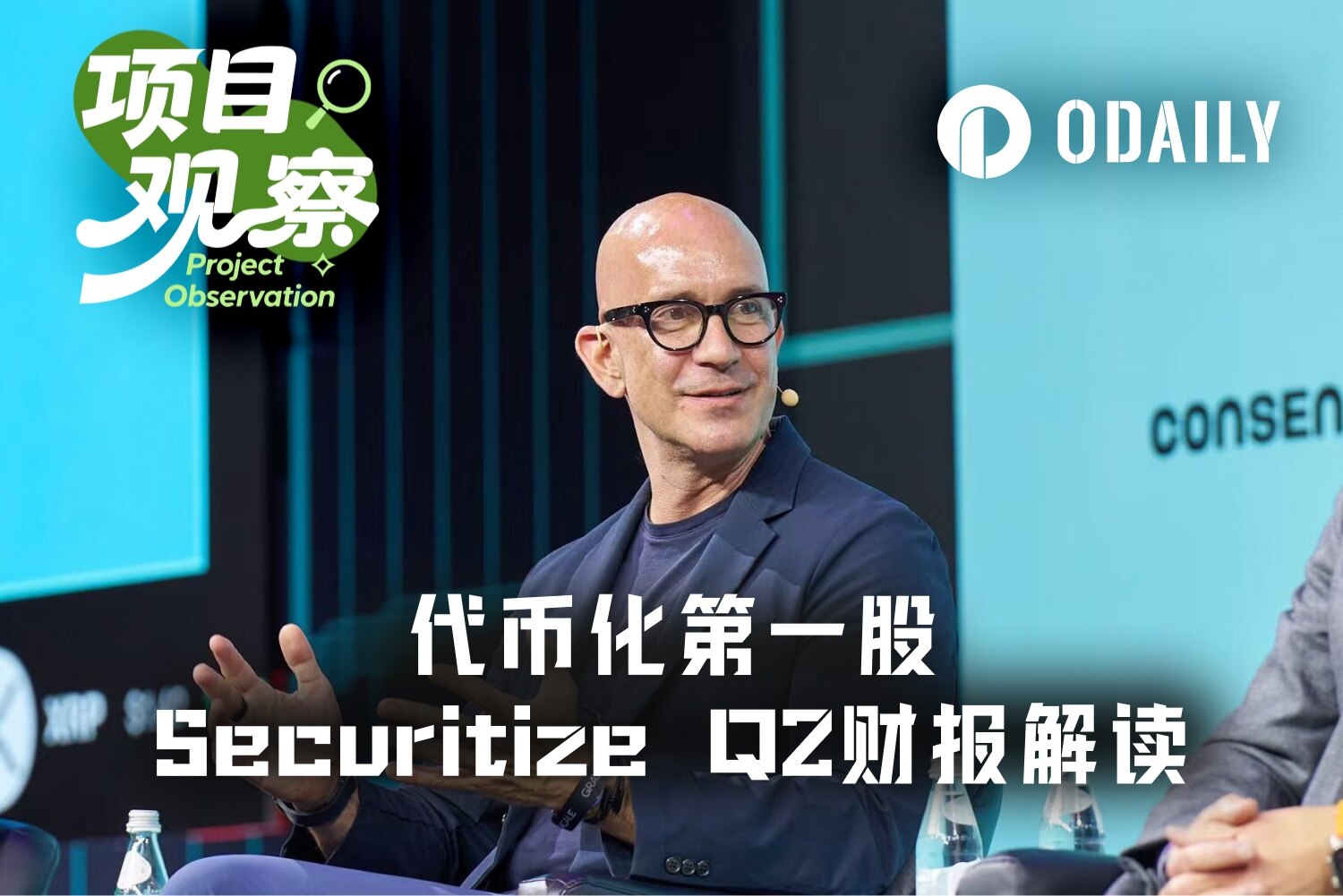
Securitize's First Post-IPO Financial Report Bombshell: Is the 'Compliant Tokenization' Narrative Failing to Sell?

Securitize, a tokenization platform, released its first earnings report since going public in July 2026, revealing disappointing Q2 results. Revenue fell 5% year-over-year to $14.43 million, missing estimates, while the net loss widened significantly to $21.68 million. Despite achieving record tokenized assets under management of $4.3 billion and a 147% surge in platform trading volume, overall assets under administration declined by 20%. The company's stock (SECZ) dropped over 20% in after-hours trading following the report. The article highlights a key concern: Securitize's revenue declined despite substantial trading growth, suggesting either compressed fees or an unclear business model. While Securitize maintains its focus on regulatory compliance—securing key partnerships with entities like Computershare and NYSE, and obtaining an SEC investment advisor registration—its tangible progress in the new tokenized stock business has been slow. Apart from tokenizing its own stock (SECZ) upon listing, it has not launched other tokenized equities. Analysts note that SECZ's high on-chain market capitalization is misleading, as it resulted from a one-time distribution to shareholders rather than organic investor demand. The market's patience is waning as investors prioritize real business metrics like market share and user adoption over the "compliant tokenization" narrative. Securitize's market value has fallen 36% from its debut, reflecting growing concerns over its shrinking revenue and the delayed execution of its tokenized stock initiatives.

Odaily星球日报9 min fa

Securitize's First Post-IPO Financial Report Bombshell: Is the 'Compliant Tokenization' Narrative Failing to Sell?

Odaily星球日报9 min fa

Why Every Investor Needs to Pay Attention to the Federal Reserve

Why Every Investor Should Follow the Federal Reserve Key developments on August 12, 2026, demonstrate how crucial the Fed is. Following the CPI report that matched expectations, markets instantly repriced stocks, bonds, and currencies, adjusting the probability of a September Fed rate hike. The Federal Reserve controls the federal funds rate, the anchor for all borrowing costs. Its "dual mandate" is to maintain stable prices and maximum employment. The current policy rate is 3.50%-3.75% after a series of cuts from 2024-2025. Understanding Fed actions is vital for your portfolio: - **Rate Hikes:** Slow the economy to fight inflation. They pressure growth/tech stocks (due to higher discount rates) and lower bond prices but can initially benefit banks. - **Rate Cuts:** Stimulate the economy. They typically boost growth stocks and bond prices while lowering borrowing costs for consumers and businesses. - **Holding Steady:** Still impactful. Current restrictive policy, with positive real interest rates, continues to weigh on the economy. Market-moving signals now come more from economic data than official guidance. A key change is new Fed Chair Kevin Warsh, who has reduced forward guidance, making each data release (CPI, PCE, jobs reports, GDP) more critical for predicting Fed moves. In this environment, investors should track key reports, compare data to market expectations, and understand what is already "priced in." The focus now is on the September 15-16 FOMC meeting. The August CPI (due Sep 11) and jobs report (Sep 5) will be decisive. Ultimately, interest rates are a powerful, continuous force on all assets. Learning to interpret the data that drives Fed policy is an essential skill for navigating today's markets.

marsbit12 min fa

Why Every Investor Needs to Pay Attention to the Federal Reserve

marsbit12 min fa

MicroStrategy Sells BTC Without a Price Drop, Is STRC's Rebound Truly Good News?

The cryptocurrency market is currently experiencing extreme quiet, with BTC weekly trading volume at its lowest since 2023 and implied volatility hitting bottom. Liquidity is thin, as evidenced by a muted price reaction to CPI data. The market's primary issue is a lack of active participants, not just news. Options data shows traders are pricing in higher short-term downside risks. Market makers' gamma positioning suggests a critical support zone between $61,000 and $60,000; a break below could accelerate a downturn. Two developments are being interpreted bullishly: MicroStrategy (MSTR) selling a small portion of its BTC without causing a price crash, and the rebound of its preferred shares (STRC) from lows near $73 to over $95. However, an alternative bearish interpretation exists. The low liquidity means large entities cannot exit sizable positions easily. A STRK recovery towards $100 could provide the buying pressure these sellers need to finally offload BTC, making the apparent利好 (positive news) actually improve selling conditions. STRC faces a structural ceiling at $100 because MSTR has signaled it will issue new shares around that price, capping upside and inviting short sellers. While recent buybacks boosted the price, they haven't solved this core problem. If STRK cannot sustainably break $100, concerns will grow about MSTR needing to sell BTC for funding. Finally, the Bitfinex Long positions indicator, which typically moves inversely to BTC price, has become ineffective and flat-lined near multi-year lows, offering no directional signal. Large traders are not accumulating on dips as they once did.

marsbit13 min fa

MicroStrategy Sells BTC Without a Price Drop, Is STRC's Rebound Truly Good News?

marsbit13 min fa

Silicon Valley Tech Giants No Longer Need Ethicists

Silicon Valley tech giants are once again sidelining ethicists. Chloé Bakalar, OpenAI's dedicated AI Ethics Lead, left the company in July, a departure emblematic of a broader trend where ethics teams are being disbanded or marginalized in the race for AI dominance. Bakalar's career highlights the tensions between ethical governance and commercial speed. She first made her mark at Meta (formerly Facebook), where she pioneered "embedded ethics," developing tools like checklists to translate abstract principles like fairness and transparency into concrete engineering steps. Her framework aimed to embed ethical considerations throughout a product’s lifecycle—from initial design and data handling to user interaction and deployment. However, this approach faced significant internal resistance. At Meta, her Responsible AI team was eventually disbanded as the company prioritized rapid development, especially in the generative AI race with OpenAI. Bakalar then joined OpenAI in 2025, hoping to influence cutting-edge model development directly. Yet, as the company's sole dedicated ethicist, she reportedly struggled with limited influence and resources amidst intense commercial pressures, leading to her departure after roughly a year. Her exit is not isolated. Similar patterns have emerged across Silicon Valley, with ethics and safety teams at Twitter (post-Musk acquisition) and OpenAI's own "superalignment" team being dissolved. These departures reveal five core, unresolved tensions: 1) the fatal conflict between commercialization speed and ethical caution; 2) the role mismatch where ethicists have prestige but little real decision-making power; 3) the dilution of responsibility when ethics is decentralized as "everyone's job"; 4) the inevitable "translation loss" when complex philosophical values are reduced to quantifiable engineering metrics; and 5) the fundamental clash between academic independence and corporate secrecy. Bakalar’s trajectory suggests that embedding meaningful ethical oversight within hyper-competitive tech companies is profoundly difficult. Lasting change may require external regulatory pressure, like the EU's AI Act, or a fundamental reimagining of the ethicist's role from an internal auditor to a cross-disciplinary builder with genuine authority.

marsbit43 min fa

Silicon Valley Tech Giants No Longer Need Ethicists

marsbit43 min fa

Trading

Spot

Articoli Popolari

Cosa è XRP 2.0

XRP 2.0: Una Nuova Frontiera nel Paesaggio delle Criptovalute Introduzione a XRP 2.0 Nel mondo in continua evoluzione delle criptovalute, nuovi progetti emergono continuamente, cercando attenzione e adozione. Una tale iniziativa promettente è XRP 2.0, un nuovo progetto di criptovaluta progettato per sfruttare avanzate tecnologie blockchain e metodologie di crittografia robuste. Anche se il nome richiama alla mente l'XRP di Ripple, è fondamentale notare che XRP 2.0 opera in modo indipendente, concentrandosi sul miglioramento della sicurezza delle transazioni, della privacy e della scalabilità. Mentre il panorama finanziario digitale abbraccia sempre di più soluzioni decentralizzate, XRP 2.0 mira a contribuire in modo significativo al web3 e all'espansione generale dei progetti crypto. Cos'è XRP 2.0? Alla sua base, XRP 2.0 è un progetto di criptovaluta che mira a creare un ecosistema di valuta digitale sicuro e decentralizzato. La sua tecnologia fondamentale integra principi di blockchain sofisticati con tecniche di crittografia all'avanguardia. L'obiettivo principale di XRP 2.0 è quello di affermarsi come una piattaforma affidabile ed efficiente in grado di consentire un'esecuzione rapida delle transazioni, dando priorità a migliori protezioni della privacy per i suoi utenti. Il progetto è promosso come una soluzione a molte limitazioni affrontate dalle criptovalute esistenti, proponendo un sistema in grado di gestire un volume maggiore di transazioni con migliorata velocità e privacy. Questa versatilità pone XRP 2.0 come un significativo competitor in un mercato affollato di varie valute digitali. Chi è il Creatore di XRP 2.0? L'identità del creatore dietro XRP 2.0 è stata segnalata come 'Wilbur'. Tuttavia, i dettagli completi riguardanti Wilbur o l'entità associata rimangono sfuggenti. L'anonimato di molti creatori di criptovalute non è un fenomeno raro nel settore, spesso progettato per mantenere un certo grado di privacy e sicurezza. Chi sono gli Investitori di XRP 2.0? Al momento, informazioni specifiche relative alle fondazioni o organizzazioni di investimento a supporto di XRP 2.0 non sono disponibili pubblicamente. Nel settore delle criptovalute, il supporto di investitori rinomati può influenzare significativamente la credibilità e il successo di un progetto, tuttavia la trasparenza riguardo ai sostenitori finanziari di XRP 2.0 non è stata stabilita. Come Funziona XRP 2.0? XRP 2.0 si distingue per l'impiego di una combinazione di tecnologia blockchain e algoritmi di crittografia avanzati che garantiscono transazioni sicure e decentralizzate. La sua struttura innovativa include caratteristiche uniche progettate per promuovere il coinvolgimento degli utenti e ampliare le funzionalità oltre le transazioni convenzionali delle criptovalute. Tra queste caratteristiche, XRP 2.0 incorpora capacità alimentate da intelligenza artificiale, come funzionalità di testo in immagini e testo in voce. Queste aggiunte sono progettate per migliorare l'esperienza interattiva per gli utenti, promuovendo una maggiore applicabilità in vari settori. Unendo progressi tecnologici con design incentrati sugli utenti, XRP 2.0 mira a catturare l'attenzione di una vasta gamma di individui e aziende che cercano di integrare soluzioni di criptovaluta nei loro framework operativi. Cronologia di XRP 2.0 Comprendere XRP 2.0 richiede di esaminare i traguardi che hanno definito il suo percorso fino ad ora: 23 luglio 2023: XRP 2.0 viene introdotto come un nuovo progetto di criptovaluta, mirante a rivoluzionare le capacità di transazione sicura e decentralizzata nel dominio blockchain. 8 settembre 2023: Si verifica il lancio di un altro progetto, XRP20, marcando l'emergere di un token ERC-20 sulla blockchain di Ethereum che resta non correlato a XRP 2.0. 13 novembre 2023: Il ledger XRP subisce un significativo aggiornamento con il rilascio della versione 2.0.0 del software server rippled. È essenziale notare che questo sviluppo è scollegato dal progetto di criptovaluta XRP 2.0. Punti Chiave su XRP 2.0 Per distillare l'essenza di XRP 2.0, emergono diversi fattori critici: Caratteristiche Uniche: L'inclusione di funzionalità come il testo in immagini e testo in voce alimentato da intelligenza artificiale diversifica ulteriormente le potenziali applicazioni di XRP 2.0. Tecnologia Blockchain: Il framework utilizza meccanismi blockchain avanzati e protocolli di crittografia, garantendo un ambiente sicuro e decentralizzato per le transazioni. Scalabilità e Privacy: XRP 2.0 dà priorità a migliori protezioni della privacy nei processi di transazione e alla scalabilità necessaria per accogliere una base di utenti in crescita. Nessuna Affiliazione con Ripple: È importante notare che, nonostante il suo nome, XRP 2.0 non ha alcuna fedeltà o collaborazione con l'XRP di Ripple, distinguendo il proprio framework operativo e obiettivi all'interno dell'ecosistema delle criptovalute. Conclusione XRP 2.0 rappresenta un'ambiziosa venture nell'ambito delle criptovalute, mirante a offrire una combinazione di sicurezza, privacy ed efficienza nelle transazioni digitali. Integrando tecnologie sofisticate e caratteristiche user-friendly, il progetto si propone di ampliare gli orizzonti di ciò che le criptovalute possono realizzare nell'economia digitale odierna. Sebbene l'anonimato del suo creatore e la mancanza di investitori dichiarati possano sollevare domande per alcuni, il focus di XRP 2.0 su funzionalità avanzate e decentralizzazione ne amplifica l'appeal in un mercato crypto sempre più affollato. Man mano che il panorama delle criptovalute continua a evolversi, XRP 2.0 potrebbe emergere come un attore decisivo nell'espansione di soluzioni blockchain sicure e scalabili.

293 Totale visualizzazioniPubblicato il 2024.04.05Aggiornato il 2024.12.03

Cosa è XRP 2.0

Come comprare XRP

Benvenuto in HTX.com! Abbiamo reso l'acquisto di XRP (XRP) semplice e conveniente. Segui la nostra guida passo passo per intraprendere il tuo viaggio nel mondo delle criptovalute.Step 1: Crea il tuo Account HTXUsa la tua email o numero di telefono per registrarti il tuo account gratuito su HTX. Vivi un'esperienza facile e sblocca tutte le funzionalità,Crea il mio accountStep 2: Vai in Acquista crypto e seleziona il tuo metodo di pagamentoCarta di credito/debito: utilizza la tua Visa o Mastercard per acquistare immediatamente XRPXRP.Bilancio: Usa i fondi dal bilancio del tuo account HTX per fare trading senza problemi.Terze parti: abbiamo aggiunto metodi di pagamento molto utilizzati come Google Pay e Apple Pay per maggiore comodità.P2P: Fai trading direttamente con altri utenti HTX.Over-the-Counter (OTC): Offriamo servizi su misura e tassi di cambio competitivi per i trader.Step 3: Conserva XRP (XRP)Dopo aver acquistato XRP (XRP), conserva nel tuo account HTX. In alternativa, puoi inviare tramite trasferimento blockchain o scambiare per altre criptovalute.Step 4: Scambia XRP (XRP)Scambia facilmente XRP (XRP) nel mercato spot di HTX. Accedi al tuo account, seleziona la tua coppia di trading, esegui le tue operazioni e monitora in tempo reale. Offriamo un'esperienza user-friendly sia per chi ha appena iniziato che per i trader più esperti.

1.8k Totale visualizzazioniPubblicato il 2024.12.10Aggiornato il 2026.06.02

Come comprare XRP

Discussioni

Benvenuto nella Community HTX. Qui puoi rimanere informato sugli ultimi sviluppi della piattaforma e accedere ad approfondimenti esperti sul mercato. Le opinioni degli utenti sul prezzo di XRP XRP sono presentate come di seguito.

活动图片