The silence of the market is frightening.
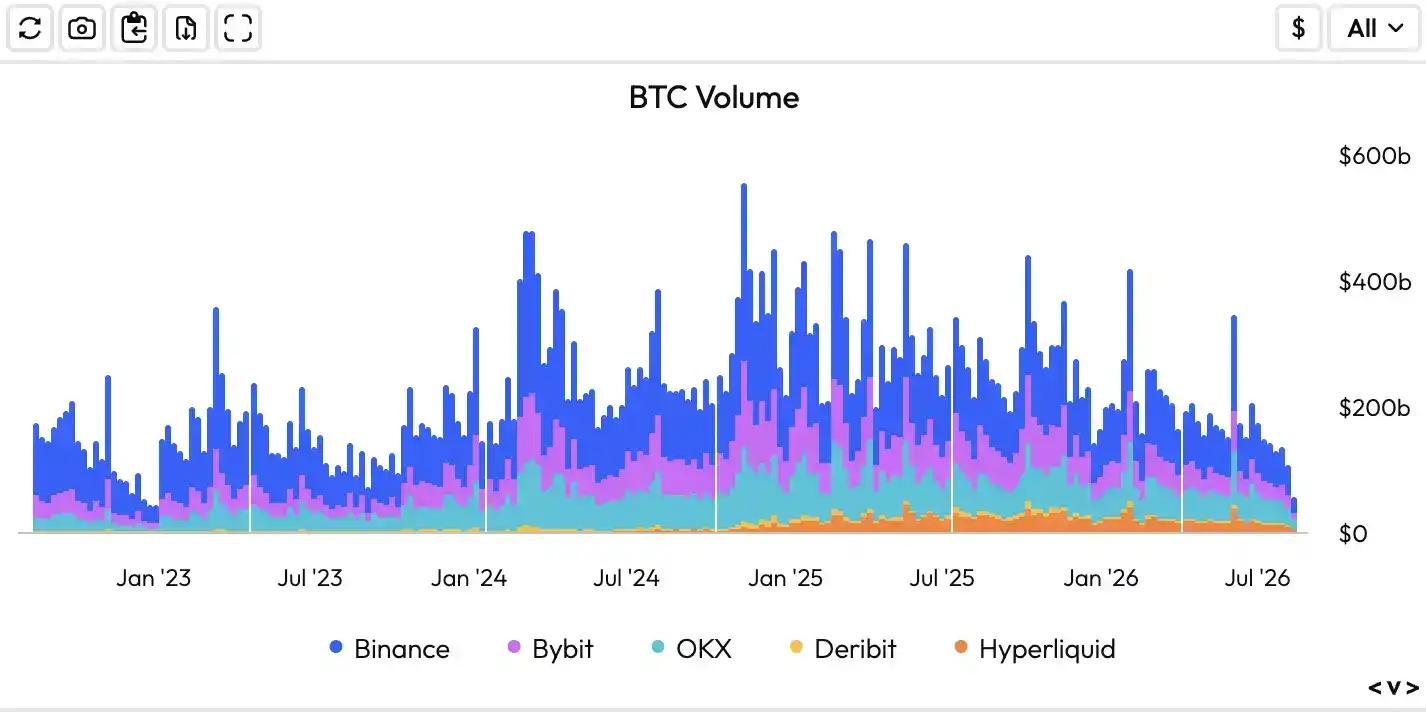
BTC weekly trading volume has fallen to its lowest level since 2023. Deribit's BTC volatility index DVOL also bottomed last week.
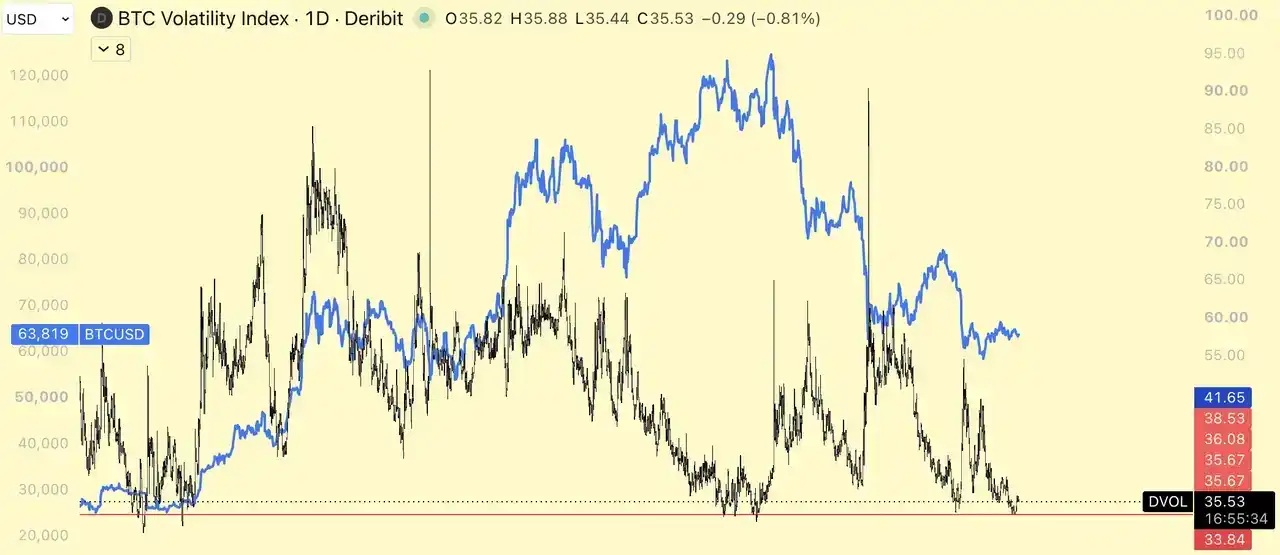
Liquidity is equally scarce. Last night at 20:30, CPI data was released. At the moment of the CPI announcement, BTC quickly fell from $64,450 to around $64,100, then rebounded to near $64,300 before declining again.
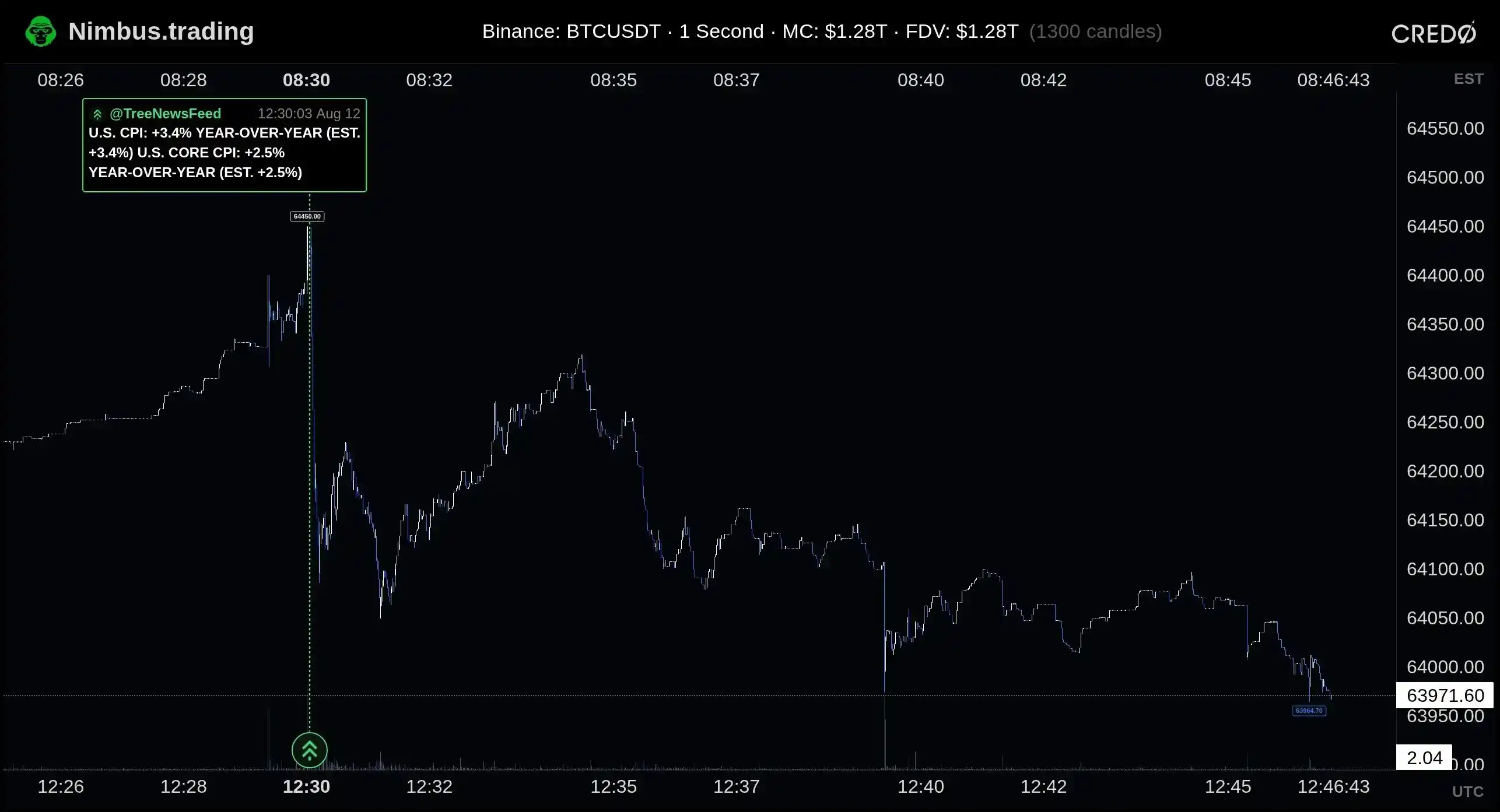
An hour later, when US stocks opened, BTC saw few participants. Apart from short-lived capital flows from cross-market arbitrage, the market failed to establish a new direction. BTC prices are easily moved now, but there aren't enough traders willing to follow through and extend the trend.
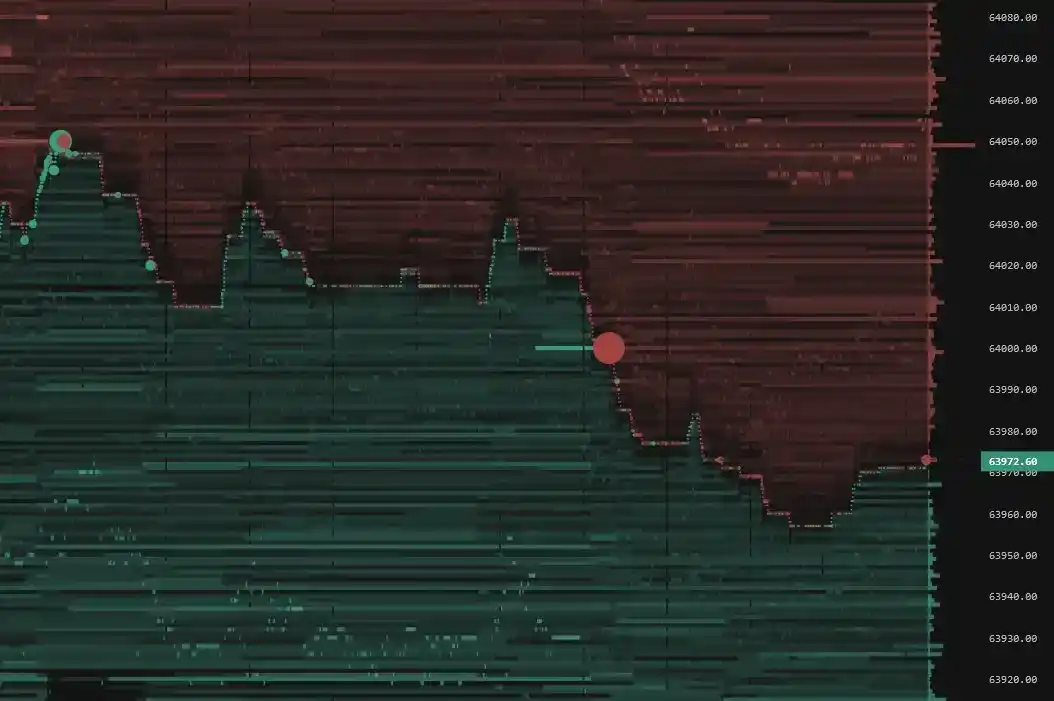
The market lacks more than just a single piece of good or bad news.
It lacks participants.
Options Market
Let's look at the options data.
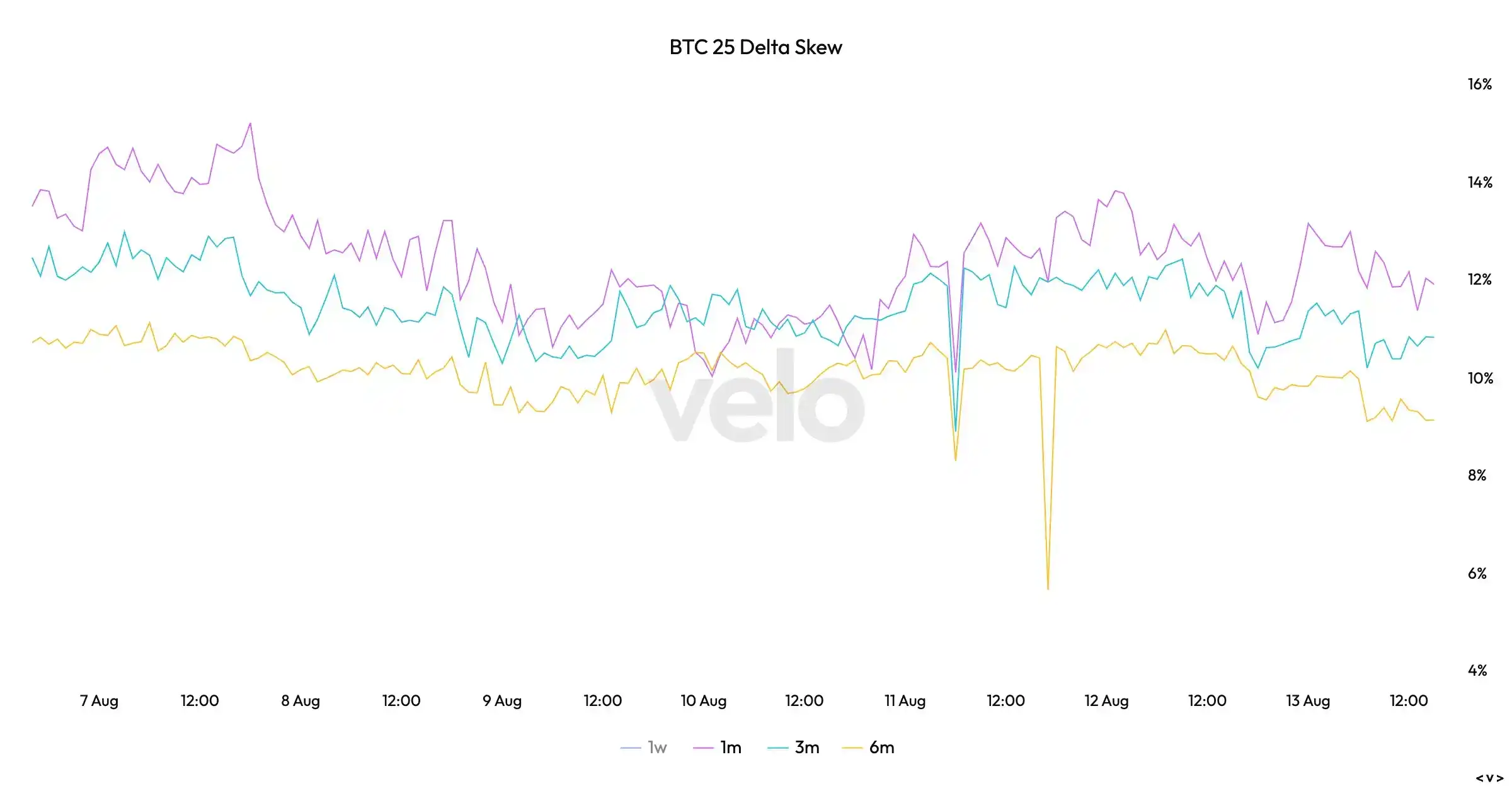
BTC 25 Delta Skew measures the implied volatility difference between put and call options with similar deltas. The curves for one-month, three-month, and six-month tenors in the chart are all in positive territory, approximately 12%, 10.7%, and 9.1% respectively. Shorter tenors show higher skew. Traders' demand for short-term downside protection is significantly higher than their pricing for long-term risks.
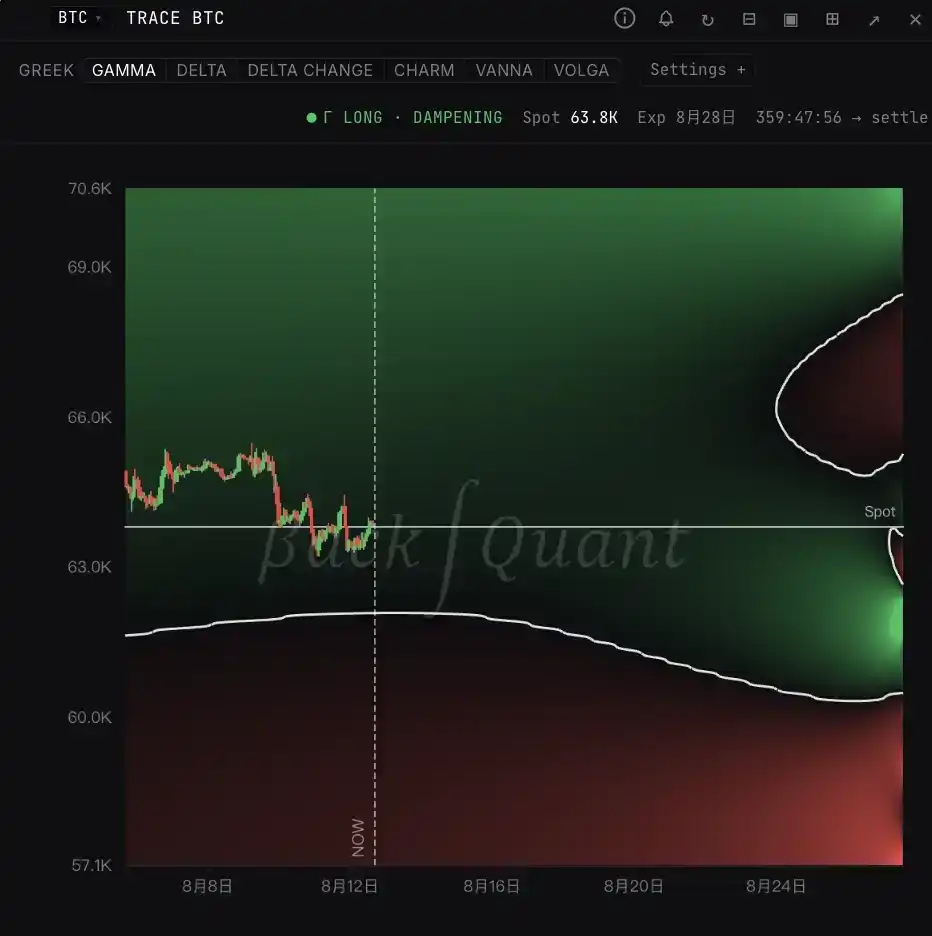
The aggregate Gamma heatmap for the end of the month provides more specific price boundaries. Currently, the market remains in a long gamma, volatility-suppressing zone. Market makers buy on price dips and sell on rallies; their hedging actions pull prices back into the range. The gamma flip zone is located near $61,000 to $60,000. As long as BTC stays above this boundary, market maker hedging absorbs volatility; if the price falls below the boundary, positions shift to short gamma, forcing market makers to continue selling during declines—their hedging behavior switches from a stabilizer to an accelerator.
If You Don't Buy, Who Do We Sell To?
Many traders are citing two changes to support a bullish view. Saylor sold several hundred million dollars worth of BTC in batches over the past month, about 0.13% of MicroStrategy's holdings, yet the BTC price remained roughly flat. Meanwhile, STRC rebounded from lows around $73 to $95.45, just a step away from $100. Saylor sells BTC without causing a sell-off, and STRC recovers most of its losses—the market naturally interprets this as bad news already being digested.
The problem is, given the current low-liquidity, low-volatility market conditions, an alternative explanation exists for the above phenomena.
Large entities still have spot holdings to exit, but the current trading volume cannot absorb large sell orders. They have temporarily paused selling simply because the order book is too thin. When STRC returns to $100, potentially bringing fresh buying interest for BTC, it might offer these entities what could be their last exit opportunity.
Good news can improve selling conditions.
This path explains why BTC consolidated during Saylor's minor selling spree and also suggests why pressure risks remain even after Saylor resumes buying. The variable determining the price is how MicroStrategy's orders compare to the entire market's potential selling pressure. Looking solely at Saylor's buys or sells doesn't provide a complete answer.
A reasonable counterargument is: large entities have previously faced volatile events and MicroStrategy's buying support, so why haven't they completed their exit? The historical trend offers a rather pessimistic answer. After the previous round of STRC restoring fund flows and MicroStrategy providing spot demand, BTC subsequently experienced a rapid decline, settling near $59,000 and entering a prolonged consolidation.
Furthermore, option positions have set $61,000 to $60,000 as the volatility amplification zone. Once large spot sell orders push the price into the negative gamma region, the next bottom is likely to form.
The Dilemma of STRC
MicroStrategy recently increased its dollar reserves by $650 million and repurchased $109 million worth of STRC. The company disclosed that these actions extended the dollar reserve coverage period by 143 days to 2.7 years and narrowed STRC's Bitcoin credit spread by 10 basis points. Including operations from the previous week, the two-week repurchase scale is approximately $190 million.
This money pulled STRC back to $95 but did not solve the most critical problem.
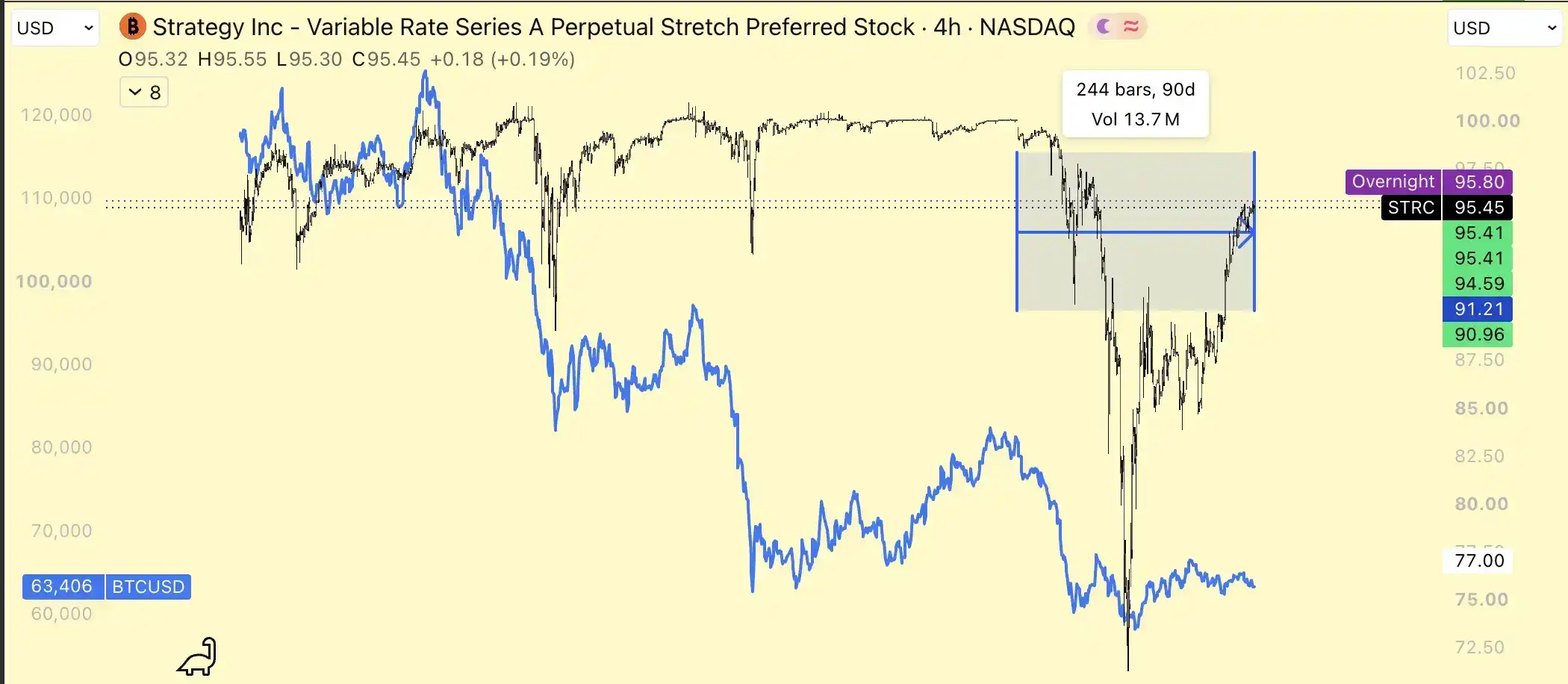
STRC must return to $100.
MicroStrategy issues additional STRC shares at-market near $100. This essentially tells the market that whenever the share price approaches $100, the company will issue more new shares. Consequently, all holders who bought below $100 will sell near $99.9. Even if the STRC price reaches $100, it will immediately be sold back below $100 by these sellers. Short sellers can also sell borrowed shares near $99.9, wait for the price to drop back to $95, buy them back to cover, and earn roughly a $5 per share profit.
The biggest risk in this trade is STRC breaking above $100 and continuing to rise, forcing short sellers to cover at higher prices. However, MicroStrategy itself adding supply near $100 actively caps that upside potential. The more the market believes the company will issue shares at $100, the more willing traders are to sell early at $99.9, making it harder for STRC to truly sustain above $100.
As long as this rule remains unchanged, if the roughly $190 million repurchase still cannot help STRC reclaim $100, the market will continue to question where the next funds to buy STRC will come from, and concerns about BTC liquidation will rise accordingly. MicroStrategy's actions of replenishing dollar reserves while repurchasing STRC already indicate the company's current priority is repairing the financing side; resuming net purchases of BTC is still secondary.
Shorting is not a free trade either. Short sellers need to borrow STRC first, then sell it on the market. During the holding period, they must pay an annualized securities lending rate exceeding 50% and compensate for a dividend yield of about 12%, resulting in a combined annualized cost of over 60%. The longer the stock price remains stuck near $100, the more these fees eat into profits.
Because STRC issuance dilutes upside potential, short sellers rarely face the risk of sustained price increases. If MicroStrategy stopped issuing STRC at $100, and STRC rose from $99.9 to $102-$105, short sellers would immediately face a paper loss of $2.1 to $5.1 per share. Some shorts, forced to cut losses, would have to buy back STRC, and their buying would further push up the price, triggering a short squeeze.
The securities lending fee determines how long shorts can hold, and MicroStrategy's issuance rule determines whether they need to cut losses early. As long as issuance starts at $100, it will attract short sellers.
The capital allocation contradiction hasn't disappeared either. When MSTR's mNAV is below 1, continuing to sell common stock dilutes the per-share value for common shareholders. Repurchasing STRC without raising dividends or repurchasing MSTR provides more direct protection for preferred shareholders. The company sees a longer dollar reserve coverage period and a narrower Bitcoin credit spread, while common shareholders calculate who bears the cost of this repair.
Bitfinex Long
Bitfinex Long positions typically exhibit an inverse relationship with BTC price. When BTC falls, large long positions on Bitfinex often increase; when BTC rises, these long positions gradually decrease. The market is accustomed to using this inverse relationship as a positioning indicator to observe whether large funds are accumulating BTC during price weakness.
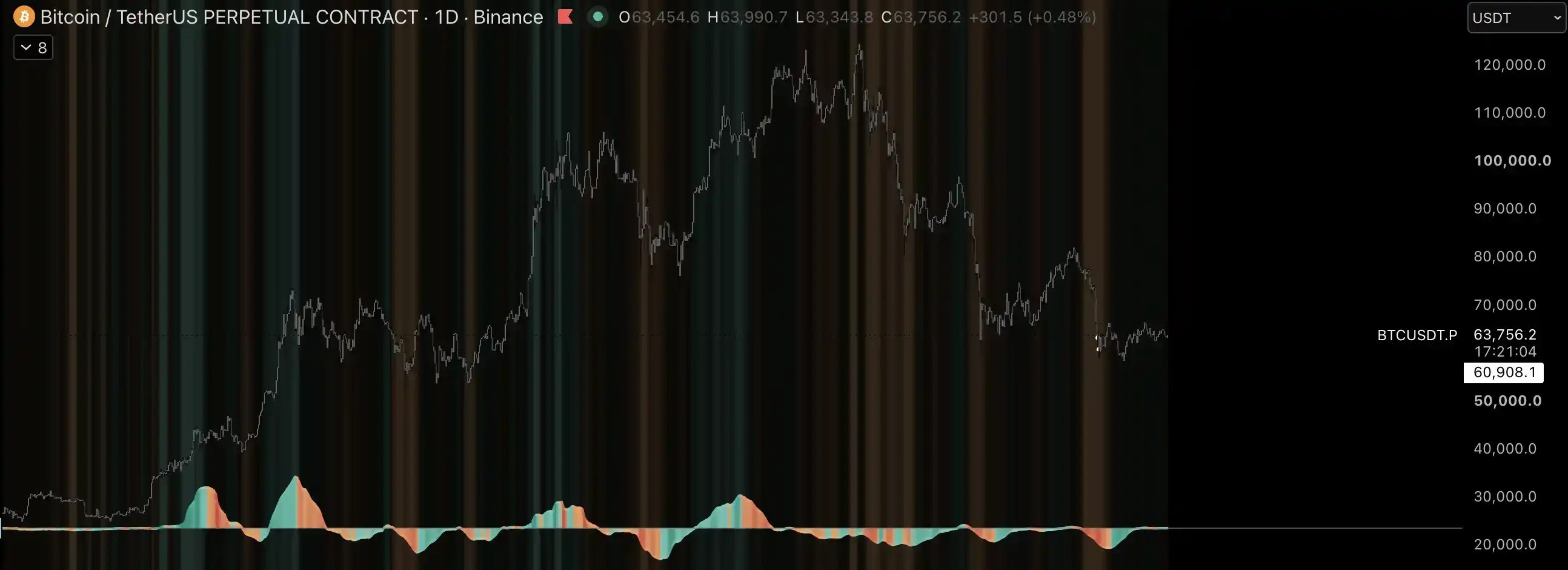
Recently, this indicator has failed. The rate of change for Bitfinex Long has dropped to its lowest level since the end of the 2022 bear market. While BTC consolidates around the $60,000s, Bitfinex long positions have neither increased nor decreased significantly, offering no directional signal for the next price move.
BTC's "savior" has turned into "Satan."