Predicting the 'Side Hustles' of Market Giants: From Online Betting to Offline Store Openings

比推Pubblicato 2026-02-04Pubblicato ultima volta 2026-02-04

Introduzione

The competition between leading prediction market platforms Kalshi and Polymarket has expanded from online to offline. On February 4, Kalshi distributed free groceries (up to $50 per person) at a market in New York City, promoting its event-based trading platform with the slogan “We believe in free markets.” The campaign targeted economic concerns like inflation and aimed to attract users by lowering entry barriers. On the same day, Polymarket announced plans to open a permanent free grocery store in New York, supported by a $1 million donation to address food security. The store, set to open on February 12, aligns with Polymarket’s mission to make prediction markets accessible and socially impactful. This offline move reflects intensifying competition. Kalshi, compliant in the U.S., has partnered with platforms like Coinbase and reported annualized trading volume exceeding $100 billion. Polymarket faces regulatory challenges, including bans in Ukraine and Portugal, and restrictions in Nevada. It also competes with new entrants like Opinion, which raised millions and gained rapid traction. Other players, including Crypto.com, Kraken, Robinhood, and Hyperliquid, are also entering the prediction market space, driven by growing user interest in event-based trading. As global events like elections and sports continue to attract attention, prediction markets are poised for further growth, keeping platforms like Kalshi and Polymarket in a fierce battle for users.

Author: Ma He, Foresight News

Original Title: Behind the 'Side Hustles' of Prediction Market Giants: Opening Offline Grocery Stores Out of Anxiety?


Who would have thought that the competition between the two online prediction market giants, Kalshi and Polymarket, has already extended from purely online to offline.

At 12:00 PM on February 4th, Kalshi gave away free groceries to residents at the West Side Market on 84 Third Avenue in New York City, with a limit of up to $50 per person.

Kalshi CEO Tarek Mansour stated, "We believe in free markets," making it clear that this move aims to promote the concept of prediction markets through tangible benefits to the public.
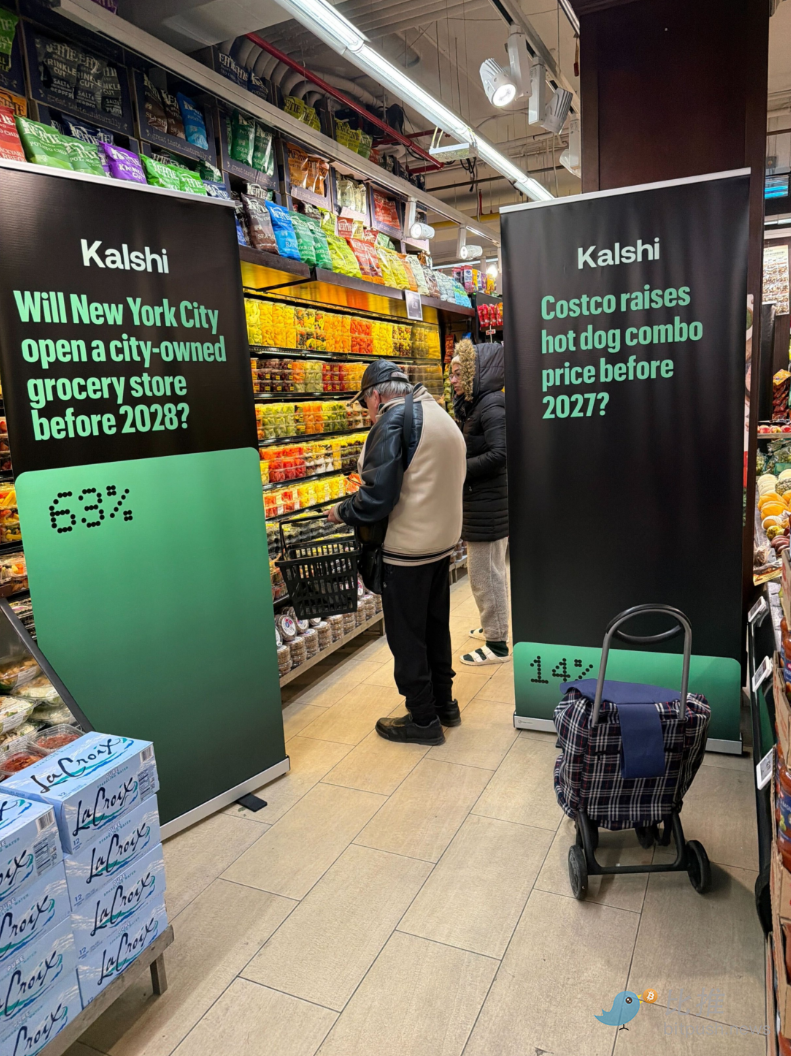
The highlight of the event lies in its clever marketing strategy. First, it directly ties into current economic hot topics—inflation and rising living costs have become pain points for the American public. By offering free groceries, Kalshi not only provides immediate value but also positions itself as an "event contract exchange," allowing users to trade on events such as politics, economics, and sports.

For example, users can predict fluctuations in grocery prices or changes in economic indicators on the platform, thereby transforming the offline experience into online participation. Second, the event’s location in a high-density, high-consumption city like New York maximizes exposure. Official videos show crowds rushing in at the opening moment, likened to "Christmas revisited."

The event had a low barrier to entry: no app download was required to participate; one only needed to shop in-store, and Kalshi would cover the bill. This not only lowered the entry barrier for users but also reinforced the platform’s approachable image.

Unlike Kalshi’s short-term promotion, Polymarket’s offline activity is more long-term and ambitious.

On February 4th, Polymarket announced it would open a "free grocery store" in New York, located at 7 Madison Avenue, scheduled to officially open on February 12th. The store is supported by the Food Bank for New York City, with the project breaking ground in late 2025 and a lease agreement already signed. Additionally, Polymarket donated $1 million to address security concerns.

Polymarket’s announcement coincidentally came on the same day as Kalshi’s event, even with overlapping opening times, which is seen as a direct response.
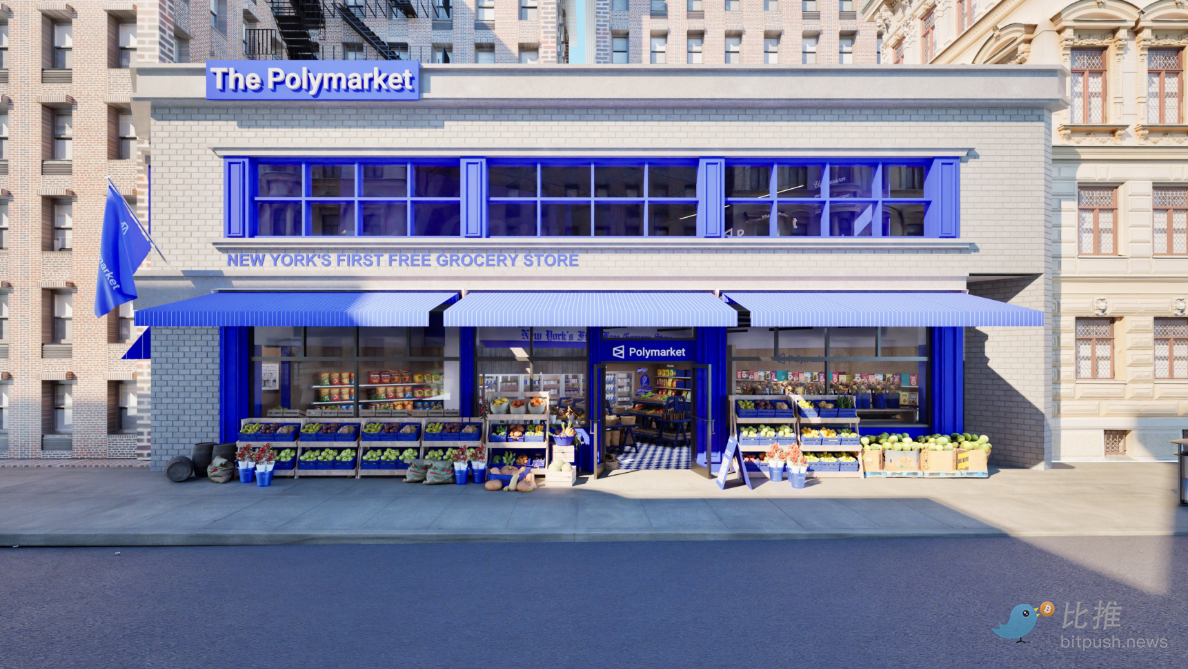
The highlight of Polymarket’s activity lies in its innovation and emphasis on social responsibility. First, this is not a one-time promotion but a permanent store where users can obtain groceries for free, addressing food security issues in New York. Second, this aligns closely with the platform’s core philosophy of revealing truth and allocating resources through prediction markets.

Polymarket founder Shayne Coplan stated that this move is an expansion of the platform from online to offline, aiming to "make prediction markets accessible."
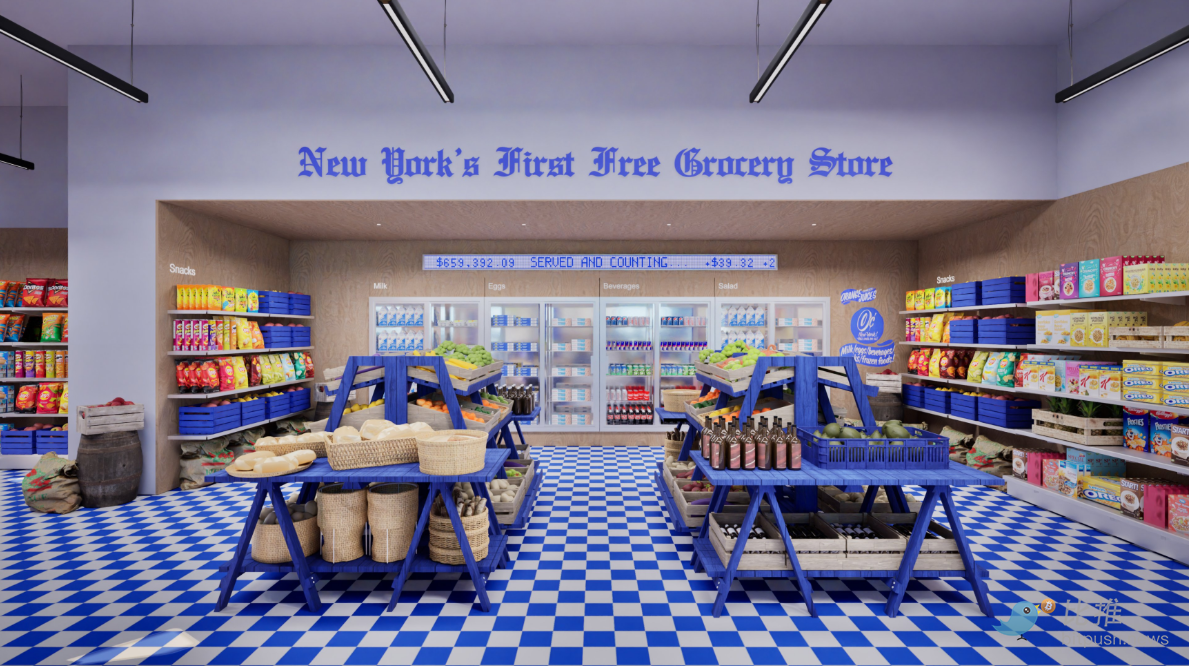
Polymarket incorporates its signature blue logo into the store, with a simple and stylish interior design. Compared to Kalshi’s $50 cap, Polymarket’s free model is more attractive and is expected to reach more low-income groups.

Intensified Rivalry Between the Two Platforms

The offline activities of Kalshi and Polymarket are a microcosm of the fierce competition in the prediction market.

Kalshi uses U.S. compliance as its moat, rapidly expanding its territory. It has not only integrated with various Web3 wallets like Phantom but also partnered with Coinbase to extend its services to all 50 U.S. states. Coinbase users can trade prediction market contracts with as little as $1. In January of this year, Kalshi officially announced that its annualized trading volume exceeded $100 billion.

Polymarket has not only strengthened collaborations with crypto-native players like Jupiter and Phantom but has also expanded its traffic channels by sponsoring events such as the Hollywood Golden Globe Awards.

However, the latest data shows that its market share is still being eroded by Kalshi.
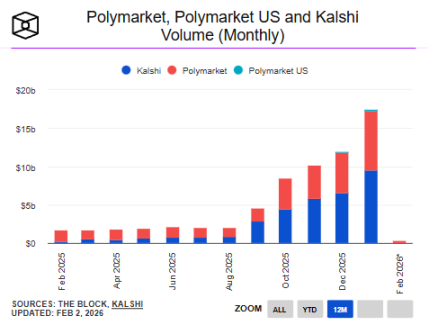
To make matters worse, Polymarket faces troubling regulatory issues.

In January of this year, Ukraine banned Polymarket, as the country’s current legal framework does not recognize prediction markets. Portuguese regulators have also ordered Polymarket to cease operations in the country.

In February, a Nevada court issued a temporary restraining order, prohibiting Polymarket from offering event contract services to Nevada residents before a preliminary hearing on February 11th.

Additionally, many regions in Asia view Polymarket as a gambling platform and have blocked its IP address.

Another competitor backed by Binance is also eyeing the market. Opinion completed a tens of millions of dollars funding round in December 2025. Driven by airdrop expectations, the platform’s trading volume exceeded $5 billion in just one month, with daily fee revenue consistently surpassing $100,000.
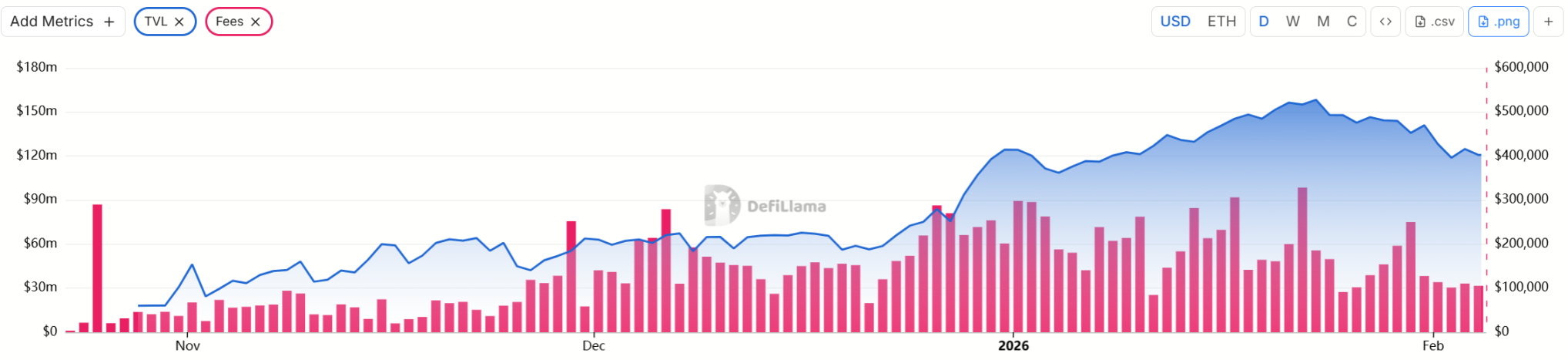
Meanwhile, various exchanges, DEXs, and traditional financial institutions are also entering the prediction market.

Bloomberg reported that Crypto.com announced on Tuesday that it would launch a dedicated prediction market platform, OG, just days before the Super Bowl. Its co-founder and CEO, Kris Marszalek, stated that its event contract business has grown 40 times week-over-week in the past six months, making the launch of an independent product necessary. Another crypto trading platform, Kraken, plans to launch prediction market services in 2026, as revealed by its Global Consumer Business Head, Mark Greenberg, on the Crypto World show.

Robinhood had already launched a prediction market before Trump’s election and plans to introduce more new event contracts. In October 2025, Robinhood CEO Vlad Tenev stated in an interview with Bloomberg that its prediction market segment is one of the fastest-growing sectors and one of its nine business lines with annual revenue exceeding $100 million.

Derivatives DEX leader Hyperliquid is also testing a native prediction market on its testnet. Hyperliquid announced that HyperCore will support Outcome Trading (HIP-4). Outcome Trading involves fully collateralized contracts settled within a fixed range. This is a universal foundational trading element applicable to scenarios such as prediction markets and bounded option-like instruments.

It features non-linear, time-bound contracts, offering a form of derivatives trading without leverage or liquidation, and can be combined with portfolio margin and HyperEVM. Currently, this feature is still under development and is only being tested on the testnet. Once technical development is complete, Hyperliquid will deploy standardized markets denominated in USDH.

The store openings by Kalshi and Polymarket are not just marketing but also battles to capture user attention.

Wars, political events, elections, and sports competitions are gathering global users online, enabling 24/7 non-stop global betting. Rule disputes, wealth stories, and insider trading are all unfolding simultaneously, with only money and brains never sleeping. Perhaps future hot events like the World Cup and U.S. elections will continue to drive prediction market trading volumes and recognition to new heights.

Before the final outcome is determined, no participant dares to let their guard down.


Twitter:https://twitter.com/BitpushNewsCN

Bitpush TG Discussion Group:https://t.me/BitPushCommunity

Bitpush TG Subscription: https://t.me/bitpush

Original link:https://www.bitpush.news/articles/7608693

Domande pertinenti

QWhat was the main purpose of Kalshi's free grocery giveaway event in New York?

AKalshi's free grocery event aimed to promote the concept of prediction markets by providing immediate value to the public, linking economic concerns like inflation to their platform where users can trade on events such as politics, economics, and sports.

QHow does Polymarket's approach to a physical store differ from Kalshi's event?

APolymarket's store is a permanent establishment in partnership with Food Bank for New York City, focusing on long-term social responsibility and addressing food insecurity, while Kalshi's was a temporary promotional event with a spending limit per person.

QWhat regulatory challenges is Polymarket currently facing?

APolymarket faces bans in Ukraine and Portugal, a temporary restriction order in Nevada, and is blocked in several Asia-Pacific regions where it is viewed as a gambling platform.

QWhich companies are emerging as new competitors in the prediction market space?

ANew competitors include Opinion, which received funding and rapid growth, Crypto.com's OG platform, Kraken's planned service, Robinhood's expanding prediction market, and Hyperliquid's testing of native prediction market features.

QWhat is the significance of the competition between Kalshi and Polymarket expanding to physical locations?

AThe expansion into physical locations represents a strategic move to capture user attention and market share beyond online platforms, using real-world engagement to drive awareness and participation in prediction markets amid growing competition.

Letture associate

Winter for Crypto IPOs: Consensys and Ledger Withdraw Applications

The crypto IPO window is tightening significantly in 2026, marked by prominent companies delaying or pausing their public listing plans. Following a successful 2025 "harvest year" that saw Circle, Bullish, and Gemini go public amidst a bull market, the tide has turned. Consensys, developer of MetaMask, recently postponed its IPO until at least fall 2026. Hardware wallet leader Ledger also suspended its planned US listing due to unfavorable market conditions, with Kraken having previously delayed its own plans. This shift is driven by a cooling market in 2026, characterized by a significant Bitcoin price correction, declining trading volumes, and reduced investor risk appetite for crypto stocks. The poor post-IPO performance of 2025 listings like Circle and Bullish, which saw major share price declines, has heightened investor caution. This contrasts sharply with the current AI sector, where companies like SpaceX, OpenAI, and Anthropic are commanding massive valuations and investor enthusiasm based on narratives of stable, exponential growth. Crypto companies now face pressure to transition from hype-driven models to demonstrating reliable cash flows and robust compliance. While the paused IPO plans may lead to valuation resets and affect ecosystem liquidity, they also accelerate industry consolidation toward stronger, more compliant infrastructure players. A potential recovery in Bitcoin's price and clearer regulations could reopen the IPO window in the latter half of 2026.

marsbit5 min fa

Winter for Crypto IPOs: Consensys and Ledger Withdraw Applications

marsbit5 min fa

ChatGPT Can Manage Your Money for You. Would You Trust It with Your Bank Account?

OpenAI has launched a personal finance tool for ChatGPT, currently in preview for US-based ChatGPT Pro users. This feature allows users to connect their bank and investment accounts (via Plaid, supporting over 12,000 institutions) directly to ChatGPT. It analyzes transactions, generates visual dashboards, and offers conversational financial advice—such as budgeting or planning for major purchases—based on the user's actual data. This move follows OpenAI's acquisitions of fintech startups Roi and Hiro Finance, signaling a strategic push into vertical "super assistant" applications, similar to its earlier health-focused feature. However, the launch has sparked significant privacy concerns. Critics question the safety of granting such sensitive financial access to an AI, especially amid ongoing lawsuits alleging OpenAI shared user chat data with third parties like Meta and Google. OpenAI emphasizes that ChatGPT only reads data (no transaction capabilities), deletes it within 30 days if disconnected, and offers opt-out options for model training. Yet, trust remains a major hurdle. The trend reflects a broader industry shift: AI companies like Anthropic and Perplexity are also targeting high-value, data-rich domains like finance and health. While technically promising, the tool operates in a regulatory gray area—it provides personalized guidance but disclaims formal financial advice or liability. Ultimately, OpenAI's challenge is convincing users to trust an AI with their most private financial information.

marsbit6 min fa

ChatGPT Can Manage Your Money for You. Would You Trust It with Your Bank Account?

marsbit6 min fa

Breaking: OpenAI Undergoes Major Reorganization, President Brockman Assumes Command

OpenAI has announced a major internal reorganization just months before its anticipated IPO. The company is merging its three flagship product lines—ChatGPT, Codex, and the API platform—into a single, unified product organization. The most significant leadership change involves co-founder and President Greg Brockman moving from a background technical role to take full, permanent control over all product strategy. This follows the indefinite medical leave of AGI Deployment CEO Fidji Simo. Additionally, ChatGPT's longtime lead, Nick Turley, has been reassigned to enterprise products, with former Instagram executive Ashley Alexander taking over consumer offerings. The consolidation, internally framed as a strategic move towards an "Agentic Future," aims to break down internal silos and create a cohesive "Super App." This planned desktop application would integrate ChatGPT's conversational abilities, Codex's coding power, and a rumored internal web browser named "Atlas" to autonomously perform complex user tasks. The reorganization occurs amid significant internal and external pressures. OpenAI has recently seen a wave of high-profile departures, including Sora co-lead Bill Peebles and other senior technical leaders, leading to concerns about a thinning executive bench. Externally, rival Anthropic recently secured funding at a staggering $900 billion valuation, surpassing OpenAI's own. Google's upcoming I/O developer conference also poses a competitive threat. Analysts suggest the dramatic restructure is a pre-IPO move to present a clearer, more focused narrative to Wall Street—streamlining operations and demonstrating decisive leadership under Brockman to counter internal turbulence and intense market competition.

marsbit3 h fa

Breaking: OpenAI Undergoes Major Reorganization, President Brockman Assumes Command

marsbit3 h fa

Trading

Spot
Futures
活动图片





