Predicting Market's Dormant Phase, Polymarket Prepares a Killer Move to Catch Up with Kalshi

Odaily星球日报Pubblicato 2026-08-12Pubblicato ultima volta 2026-08-12

Introduzione

Amidst a seasonal lull in trading activity on prediction markets following major sporting events like the World Cup, Polymarket is implementing significant strategic adjustments to prepare for upcoming events and boost its US operations. Key changes include a major leadership overhaul, bringing in executives from companies like Bird, Uber, Robinhood, and Coinbase to focus on growth, compliance, and risk management. A central pillar of its strategy is accelerating its US comeback. After settling with the CFTC in 2022 and exiting the US, Polymarket re-entered by acquiring CFTC-licensed QCEX in mid-2025, relaunching as Polymarket US. Since opening to US iOS users in May and launching a web version recently, its US trading volume has surged dramatically—growing from 25% of its international platform's volume in May to 62% by July. However, challenges remain. The new Chief Growth Officer must address past marketing controversies involving simulated trades and ensure compliance. Furthermore, Polymarket US still trails far behind its main US competitor, Kalshi, which recorded a $37.7 billion trading volume in July compared to Polymarket US's $5 billion. With major sports seasons and the November US midterm elections approaching, the coming months are a critical test for Polymarket's revamped strategy and its ability to capture a larger share of the crucial US prediction market.

Original | Odaily Planet Daily (@OdailyChina)

Author | Asher (@Asher_0210)
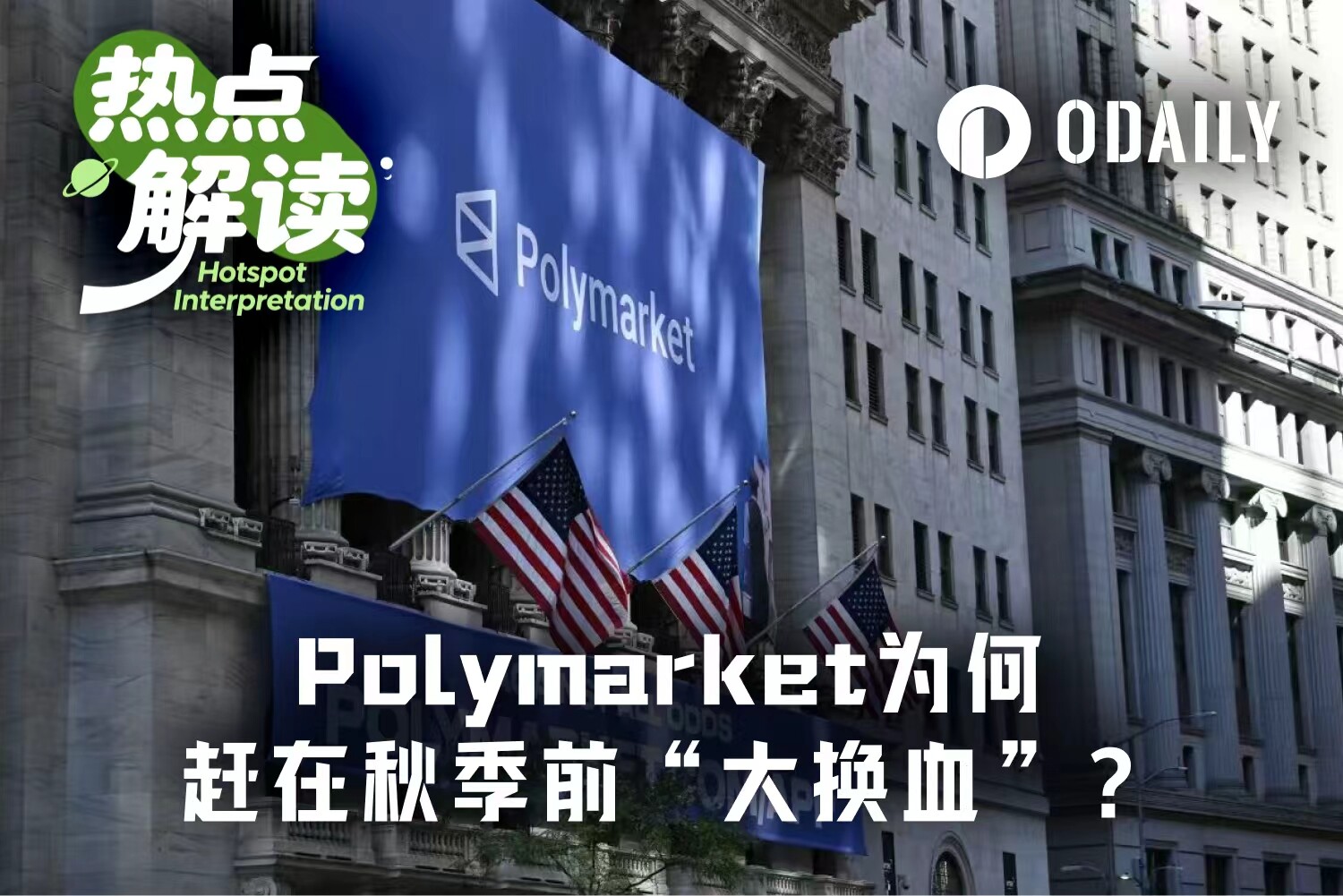
Following the World Cup, as other major sports events have mostly entered their off-season, trading enthusiasm on Polymarket has declined. The platform recently conducted a round of intensive adjustments to its management, market direction, and promotion strategy, preparing in advance for upcoming hot sports events and the U.S. midterm elections in November.

In terms of personnel, Travis VanderZanden, founder of shared electric scooter company Bird and former executive at Uber and Lyft, joined Polymarket as Chief Growth Officer, overseeing the company's marketing system. Additionally, Polymarket has brought in several senior executives from institutions including Robinhood, Coinbase, Nasdaq, and the FBI, covering roles in compliance, regulation, investigation, and risk management.

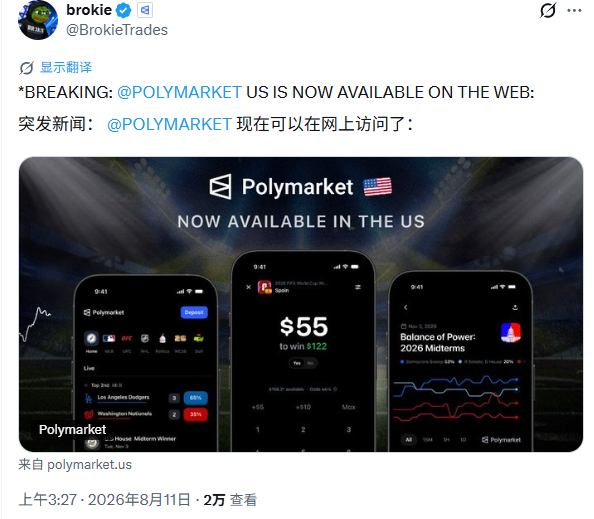
Furthermore, Polymarket continues to exert efforts to return to the U.S. market. The upcoming series of sports events and political events are also expected to further boost trading activity for its U.S. business.

One Year After Returning to the U.S., Polymarket US Enters Growth Phase

From Acquiring Licensed Exchange to Launching Web Version, Polymarket US Accelerates Rollout

In 2022, Polymarket reached a settlement with the CFTC over unregistered derivatives trading business and exited the U.S. market.

It wasn't until July 2025 that Polymarket paved the way for its U.S. return by acquiring QCEX, a CFTC-licensed derivatives exchange and clearing organization, for $112 million. Subsequently, QCX LLC operated under the name Polymarket US and, in November of that year, obtained a revised Designation Order from the CFTC, further solidifying its foundation for conducting regulated trading in the U.S.

In December of the same year, Polymarket US began opening up to users on the waitlist; in May of this year, Polymarket US was fully released to U.S. iOS users. Just yesterday, community members reported that the Polymarket US web version has been launched, with channels for U.S. users continuing to expand.
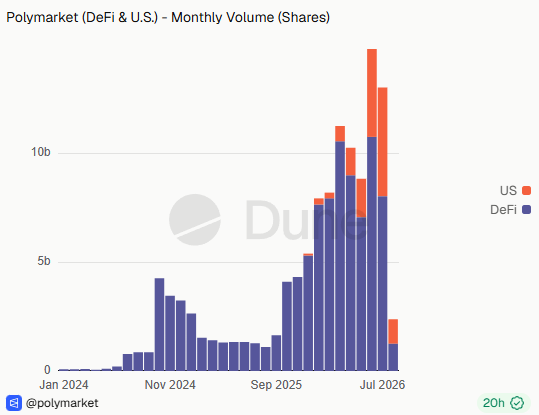
Polymarket US Trading Volume Continues to Grow, Gradually Approaching Polymarket International

In May this year, as access for U.S. users gradually opened, Polymarket US's trading volume began to show significant growth.

According to Dune data, in May, Polymarket US trading volume was $1.769 billion, while Polymarket International trading volume during the same period was $7.077 billion, making US volume about 25% of International's. By June, Polymarket US trading volume rapidly increased to $4.041 billion, more than doubling from May, while International trading volume was $10.773 billion, raising the ratio to about 38%.

In July, this gap narrowed further. Polymarket US's monthly trading volume reached approximately $5 billion, setting a new record high, while International's July trading volume was only $8.044 billion. US trading volume was equivalent to 62% of International's, whereas two months earlier this ratio was only 25%.
As user access points increase and trading scale continues to rise, Polymarket not only needs to further acquire U.S. users but also faces a series of more specific issues such as marketing, compliance, and risk management. Therefore, growth, marketing, compliance, and risk control have become the most concentrated areas in this round of team adjustments.

Hiring for Both Growth and Compliance, But First Need to Address Previous Marketing Issues

After Travis VanderZanden, founder of Bird and former Uber and Lyft executive, takes over marketing, his first task will be to address the promotional controversies left behind.

Previously, a Wall Street Journal investigation found that Polymarket had, through promotional partners, allowed content creators to display simulated trades. Some videos used website interfaces highly similar to the real Polymarket, leading viewers to mistakenly believe the creators were conducting real trades and making profits. The investigation stated that approximately $1.9 million in bets shown across over 1,100 related videos were simulated trades. Subsequently, the CFTC launched an investigation into Polymarket's related marketing practices.

Polymarket then began rectifying its marketing system, including restructuring the marketing department, updating rules for promotional partners, and conducting relevant training for employees. The company also hired consulting firm AlixPartners to review content published by partners, checking for compliance with the new promotional guidelines.

Therefore, VanderZanden's role upon joining Polymarket is not solely about expanding the user base. He is inheriting a marketing system still under adjustment. Polymarket US is currently continuing to expand user access points, and trading volume is in a growth phase. With more sports and political events on the horizon, the platform hopes to further attract U.S. users and increase trading activity. However, the previous regulatory investigation also means that some of the past, more aggressive promotion methods are difficult to continue using.

Autumn is the Real Test, Polymarket Still Needs to Catch Up with Kalshi

In the U.S. prediction market, Kalshi still significantly leads Polymarket US. In July, Kalshi's monthly trading volume was approximately $37.7 billion, while Polymarket US was about $5 billion, and Polymarket International about $8.044 billion during the same period—the two platforms combined around $13 billion, less than one-third of Kalshi's. Moreover, Kalshi's business is almost entirely concentrated in the U.S. market.

This gap is also reflected in capital market valuations. At the end of June, Kalshi was negotiating a new round of financing with a target valuation of approximately $40 billion; just a month earlier, the company had completed a $1 billion financing round with a valuation of $22 billion. In comparison, Polymarket was valued at about $9 billion in October 2025, and its valuation rose to $15 billion after completing around $1 billion in financing in April this year. Entering August, it began seeking another approximately $1 billion in financing, targeting a valuation exceeding $20 billion.

After September, a series of popular sports events and the November U.S. midterm elections will arrive. The U.S. regulated prediction market is Kalshi's foundation and is becoming the most important growth engine for Polymarket. For Polymarket, the next few months will be a critical window for US to further expand its trading scale. The effectiveness of this round of team adjustments will also soon be tested.


Crypto di tendenza

Domande pertinenti

QWhat is the main reason for the recent adjustments in management and strategy at Polymarket?

AThe main reason is to prepare for upcoming hot sports events and the U.S. midterm elections in November, aiming to boost transaction activity.

QWho did Polymarket appoint as the Chief Growth Officer, and what is his background?

APolymarket appointed Travis VanderZanden, the founder of Bird and a former executive at Uber and Lyft, as the Chief Growth Officer to lead its marketing system.

QHow did Polymarket regain its foothold in the U.S. market after its settlement with the CFTC?

APolymarket re-entered the U.S. market by acquiring the CFTC-licensed derivatives exchange and clearing organization QCEX for $112 million in July 2025, which later operated under the name Polymarket US.

QWhat was the reported issue with Polymarket's past promotional activities that led to a CFTC investigation?

AAn investigation found that over 1,100 videos from promotional partners showed simulated trading on websites mimicking Polymarket, falsely implying creators were making real trades, with approximately $1.9 million in shown bets being simulated.

QHow does Polymarket US's trading volume in July compare to that of Kalshi, its main competitor in the U.S.?

AIn July, Polymarket US had a trading volume of about $5 billion, while Kalshi's volume was approximately $37.7 billion, making Kalshi significantly ahead in the U.S. prediction market.

Letture associate

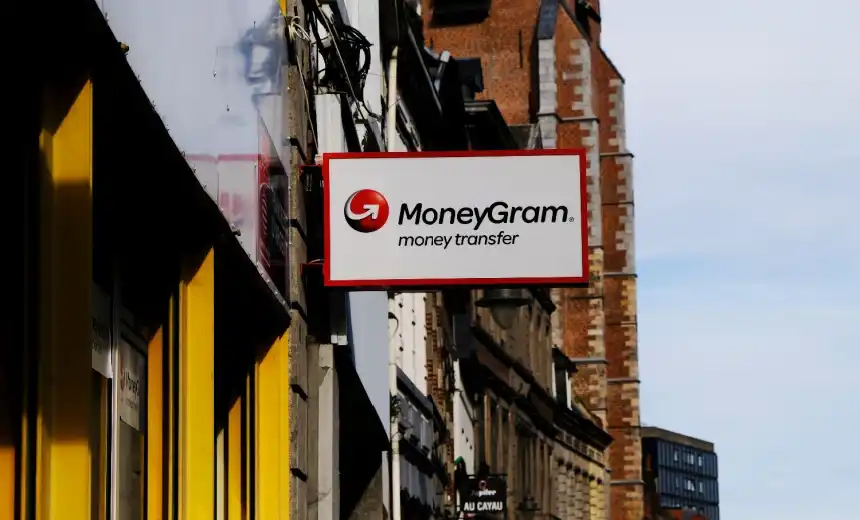
The Last Mile of Stablecoins: MoneyGram Connects Crypto Wallets to Cash Outlets in Over 170 Countries

Stablecoins have revolutionized cross-border payments with speed and low cost, but a fundamental barrier remains: converting digital money into physical cash in most parts of the world. On August 11th, global remittance giant MoneyGram announced its "MoneyGram Ramps" crypto-cash service is now live on the Solana blockchain. This allows developers, via a simple API, to connect their applications to MoneyGram's network of nearly 500,000 cash agent locations across over 170 countries. Users can now walk into a local MoneyGram agent to convert their USDC into local currency cash or use cash to purchase USDC for their wallets. Solana wallet Rift is the first to integrate the service. MoneyGram, founded in 1940 and historically second only to Western Union in global remittance volume, was privatized in 2023. Since then, it has accelerated its shift into a fintech platform, opening its compliance capabilities, cash network, and settlement infrastructure as services for developers. Its involvement with crypto is not new, having previously partnered with Ripple, Stellar, and Circle, and even issuing its own stablecoin, MGUSD, on Stellar in 2026. The Ramps API solves a critical physical obstacle to stablecoin adoption. While a USDC transfer from New York to Lagos takes seconds and costs cents on-chain, the recipient often lacks a bank account to access the funds. MoneyGram's extensive physical agent network, prevalent in regions like Sub-Saharan Africa, Southeast Asia, and Latin America, bridges this gap, connecting on-chain dollars to the offline cash-based economy. No crypto-native company could replicate this network quickly. MoneyGram chose Solana for its multi-chain expansion due to its extremely low transaction fees (often less than a cent) and fast confirmation times, making it ideal for small-value, frequent remittances. Solana's developer ecosystem is also geared toward consumer-facing applications. This partnership represents a pragmatic path for stablecoins in everyday remittances. Users don't need to understand blockchain or have a bank account; they simply visit a trusted local agent. The underlying settlement shifts from SWIFT to Solana, but the user experience remains familiar. The true path to stablecoin adoption is being paved by an 85-year-old remittance company, using its physical network to solve the "last mile" problem for crypto.

marsbit13 min fa

The Last Mile of Stablecoins: MoneyGram Connects Crypto Wallets to Cash Outlets in Over 170 Countries

marsbit13 min fa

How to Adapt to Frequent Miraculous Comebacks After the New Patch When Trading in Polymarket's LOL Section?

After recent League of Legends (LoL) game updates, major comebacks and unpredictable outcomes have become more frequent, making trading on Polymarket's LoL prediction markets challenging. This article analyzes the causes and offers adaptation strategies. The author, a longtime LoL fan turned Polymarket trader, notes that post-update, a large early-game gold lead no longer guarantees victory. The current meta reduces the decisive weight of economy, emphasizing instead "advantage conversion, resource trading, team composition strength, and teamfight execution." Key systemic changes aiding comebacks include: Bounty/Kill Gold Compensation, Strategic Objective Bounties, and reduced Baron Nashor rewards. Furthermore, the prevalence of mage picks in the bot lane, instead of traditional marksmen (ADC), can lower sustained damage and teamfight reliability in the late game, contributing to throws. For more successful trading, the article suggests: 1. **Choosing the Right Region:** Prioritize major regions (LPL, LCK, LEC, LCS) where matches matter for World Championship qualification or player contracts, leading to more serious play. Avoid or be extremely cautious with regions like CBLOL (Brazil), TCL (Turkey), and North American Challengers, citing high volatility and potential for unreliable outcomes. 2. **Trading Strategies:** * **Placing Orders:** Use limit orders below market price for strong favorites. In close matchups, consider placing equal low-ball bids (e.g., 25-40 cents) on both sides of a match; if both fill for a total under $1, you secure profit regardless of the winner. Exploit team "power spikes" by buying low before their composition peaks and selling high. * **Timely Selling:** The most crucial lesson is to take profits. If you buy the early-leading team at a low price (e.g., 50-60 cents), sell most of your position (e.g., 75%) at 85-90 cents to lock in gains and avoid a potential comeback zeroing your position. * **Position Sizing:** Practice strict risk management. Do not exceed 5-10% of your capital per match and avoid "tilting" or chasing losses after a few bad trades. In summary, adapting to the new meta requires understanding that early advantages are less stable. Success depends on analyzing team compositions, player form, and regional contexts, combined with disciplined order placement, profit-taking, and capital preservation. The next patch in August is expected to revive traditional ADCs, potentially shifting the dynamics again.

Odaily星球日报26 min fa

How to Adapt to Frequent Miraculous Comebacks After the New Patch When Trading in Polymarket's LOL Section?

Odaily星球日报26 min fa

Strategy CEO Announces Plan to Resume Bitcoin Purchases This Year, With Buying Volume 25 Times Selling Volume

Strategy CEO Announces Resumption of Bitcoin Purchases This Year, Buy-to-Sell Ratio at 25x In a FOX Business interview, Phong Le, CEO of Strategy (formerly MicroStrategy), stated the company plans to resume its Bitcoin acquisition strategy within the current year. This ends a pause in buying that began in May. Le revealed that since the start of the year, Strategy has purchased approximately 175,000 bitcoins while selling around 7,000, making its buy volume about 25 times its sell volume. The company remains the world's largest corporate holder of Bitcoin, with 840,447 BTC, representing roughly 4% of the circulating supply. Le explained that recent sales were used to fulfill capital obligations under a newly approved framework, including paying preferred stock dividends, funding share buybacks, and bolstering the company's US dollar reserves, which now stand at about $4.7 billion. This move marks a shift from the firm's previous "never sell" mantra, which had contributed to its market premium. The change in strategy and the associated financial pressures led to a significant drop in its stock price (MSTR) and a rating downgrade from JPMorgan. The CEO framed the company's role as the "JPMorgan of the crypto economy," emphasizing its long-term goal of increasing the amount of Bitcoin per MSTR share. The announcement signals the return of a major institutional buyer to the Bitcoin market, which could provide price support. It is also viewed as a micro-indicator of recovering institutional confidence, suggesting the company believes the most acute phase of liquidity pressure has passed.

marsbit48 min fa

Strategy CEO Announces Plan to Resume Bitcoin Purchases This Year, With Buying Volume 25 Times Selling Volume

marsbit48 min fa

ArthurHayes新文:押注日元升值,ENA未来几月或涨5至10倍

Arthur Hayes argues that the Japanese Yen is significantly undervalued and posits that its appreciation against the US Dollar is imminent. He outlines three potential mechanisms for this shift, dismissing the first two—the Bank of Japan raising interest rates and domestic institutions selling foreign assets—as politically or economically unfeasible. He identifies the third and preferred method: the Japanese Ministry of Finance (MOF) using its holdings of US Treasuries as collateral in the Fed's FIMA repo facility to borrow US dollars, then selling those dollars to buy Yen in the forex market. Hayes believes US Treasury Secretary Bessant has signaled support for this approach, which requires the Fed's Foreign Currency Subcommittee, led by Chairman Walsh, to remove lending limits on the FIMA tool. Hayes asserts that implementing this "Scheme 3" would lead to a significant expansion of US dollar liquidity. He predicts this surge in liquidity will act as a catalyst, driving up the prices of assets like Bitcoin and physical gold. Within the crypto space, he views Ethereum (ETH) as undervalued and singles out Ethena's ENA token as a speculative play with potential for 5-10x gains in the coming months, contingent on a recovery in Bitcoin basis trades that would boost demand for its USDe stablecoin. He concludes that investors should watch for the Fed's rule change as the key trigger for these market movements.

marsbit1 h fa

ArthurHayes新文:押注日元升值,ENA未来几月或涨5至10倍

marsbit1 h fa

Trading

Spot

Articoli Popolari

Cosa è $S$

Comprendere SPERO: Una Panoramica Completa Introduzione a SPERO Mentre il panorama dell'innovazione continua a evolversi, l'emergere delle tecnologie web3 e dei progetti di criptovaluta gioca un ruolo fondamentale nel plasmare il futuro digitale. Un progetto che ha attirato l'attenzione in questo campo dinamico è SPERO, denotato come SPERO,$$s$. Questo articolo mira a raccogliere e presentare informazioni dettagliate su SPERO, per aiutare gli appassionati e gli investitori a comprendere le sue basi, obiettivi e innovazioni nei domini web3 e crypto. Che cos'è SPERO,$$s$? SPERO,$$s$ è un progetto unico all'interno dello spazio crypto che cerca di sfruttare i principi della decentralizzazione e della tecnologia blockchain per creare un ecosistema che promuove l'impegno, l'utilità e l'inclusione finanziaria. Il progetto è progettato per facilitare interazioni peer-to-peer in modi nuovi, fornendo agli utenti soluzioni e servizi finanziari innovativi. Al suo interno, SPERO,$$s$ mira a responsabilizzare gli individui fornendo strumenti e piattaforme che migliorano l'esperienza dell'utente nello spazio delle criptovalute. Questo include la possibilità di metodi di transazione più flessibili, la promozione di iniziative guidate dalla comunità e la creazione di percorsi per opportunità finanziarie attraverso applicazioni decentralizzate (dApps). La visione sottostante di SPERO,$$s$ ruota attorno all'inclusività, cercando di colmare le lacune all'interno della finanza tradizionale mentre sfrutta i vantaggi della tecnologia blockchain. Chi è il Creatore di SPERO,$$s$? L'identità del creatore di SPERO,$$s$ rimane piuttosto oscura, poiché ci sono risorse pubblicamente disponibili limitate che forniscono informazioni dettagliate sul suo fondatore o fondatori. Questa mancanza di trasparenza può derivare dall'impegno del progetto per la decentralizzazione—un ethos che molti progetti web3 condividono, dando priorità ai contributi collettivi rispetto al riconoscimento individuale. Centrando le discussioni attorno alla comunità e ai suoi obiettivi collettivi, SPERO,$$s$ incarna l'essenza dell'empowerment senza mettere in evidenza individui specifici. Pertanto, comprendere l'etica e la missione di SPERO rimane più importante che identificare un creatore singolo. Chi sono gli Investitori di SPERO,$$s$? SPERO,$$s$ è supportato da una varietà di investitori che vanno dai capitalisti di rischio agli investitori angelici dedicati a promuovere l'innovazione nel settore crypto. Il focus di questi investitori generalmente si allinea con la missione di SPERO—dando priorità a progetti che promettono avanzamenti tecnologici sociali, inclusività finanziaria e governance decentralizzata. Queste fondazioni di investitori sono tipicamente interessate a progetti che non solo offrono prodotti innovativi, ma contribuiscono anche positivamente alla comunità blockchain e ai suoi ecosistemi. Il supporto di questi investitori rafforza SPERO,$$s$ come un concorrente degno di nota nel dominio in rapida evoluzione dei progetti crypto. Come Funziona SPERO,$$s$? SPERO,$$s$ impiega un framework multifunzionale che lo distingue dai progetti di criptovaluta convenzionali. Ecco alcune delle caratteristiche chiave che sottolineano la sua unicità e innovazione: Governance Decentralizzata: SPERO,$$s$ integra modelli di governance decentralizzati, responsabilizzando gli utenti a partecipare attivamente ai processi decisionali riguardanti il futuro del progetto. Questo approccio favorisce un senso di proprietà e responsabilità tra i membri della comunità. Utilità del Token: SPERO,$$s$ utilizza il proprio token di criptovaluta, progettato per servire varie funzioni all'interno dell'ecosistema. Questi token abilitano transazioni, premi e la facilitazione dei servizi offerti sulla piattaforma, migliorando l'impegno e l'utilità complessivi. Architettura Stratificata: L'architettura tecnica di SPERO,$$s$ supporta la modularità e la scalabilità, consentendo un'integrazione fluida di funzionalità e applicazioni aggiuntive man mano che il progetto evolve. Questa adattabilità è fondamentale per mantenere la rilevanza nel panorama crypto in continua evoluzione. Coinvolgimento della Comunità: Il progetto enfatizza iniziative guidate dalla comunità, impiegando meccanismi che incentivano la collaborazione e il feedback. Nutrendo una comunità forte, SPERO,$$s$ può affrontare meglio le esigenze degli utenti e adattarsi alle tendenze di mercato. Focus sull'Inclusione: Offrendo basse commissioni di transazione e interfacce user-friendly, SPERO,$$s$ mira ad attrarre una base utenti diversificata, inclusi individui che potrebbero non aver precedentemente interagito nello spazio crypto. Questo impegno per l'inclusione si allinea con la sua missione generale di empowerment attraverso l'accessibilità. Cronologia di SPERO,$$s$ Comprendere la storia di un progetto fornisce preziose intuizioni sulla sua traiettoria di sviluppo e sui traguardi. Di seguito è riportata una cronologia suggerita che mappa eventi significativi nell'evoluzione di SPERO,$$s$: Fase di Concettualizzazione e Ideazione: Le idee iniziali che formano la base di SPERO,$$s$ sono state concepite, allineandosi strettamente con i principi di decentralizzazione e focus sulla comunità all'interno dell'industria blockchain. Lancio del Whitepaper del Progetto: Dopo la fase concettuale, è stato rilasciato un whitepaper completo che dettaglia la visione, gli obiettivi e l'infrastruttura tecnologica di SPERO,$$s$ per suscitare interesse e feedback dalla comunità. Costruzione della Comunità e Prime Interazioni: Sono stati effettuati sforzi attivi di outreach per costruire una comunità di early adopters e potenziali investitori, facilitando discussioni attorno agli obiettivi del progetto e ottenendo supporto. Evento di Generazione del Token: SPERO,$$s$ ha condotto un evento di generazione del token (TGE) per distribuire i propri token nativi ai primi sostenitori e stabilire una liquidità iniziale all'interno dell'ecosistema. Lancio della Prima dApp: La prima applicazione decentralizzata (dApp) associata a SPERO,$$s$ è stata attivata, consentendo agli utenti di interagire con le funzionalità principali della piattaforma. Sviluppo Continuo e Partnership: Aggiornamenti e miglioramenti continui alle offerte del progetto, inclusi partnership strategiche con altri attori nello spazio blockchain, hanno plasmato SPERO,$$s$ in un concorrente competitivo e in evoluzione nel mercato crypto. Conclusione SPERO,$$s$ rappresenta una testimonianza del potenziale del web3 e delle criptovalute di rivoluzionare i sistemi finanziari e responsabilizzare gli individui. Con un impegno per la governance decentralizzata, il coinvolgimento della comunità e funzionalità progettate in modo innovativo, apre la strada verso un panorama finanziario più inclusivo. Come per qualsiasi investimento nello spazio crypto in rapida evoluzione, si incoraggiano potenziali investitori e utenti a ricercare approfonditamente e a impegnarsi in modo riflessivo con gli sviluppi in corso all'interno di SPERO,$$s$. Il progetto mostra lo spirito innovativo dell'industria crypto, invitando a ulteriori esplorazioni delle sue innumerevoli possibilità. Mentre il percorso di SPERO,$$s$ è ancora in fase di sviluppo, i suoi principi fondamentali potrebbero effettivamente influenzare il futuro di come interagiamo con la tecnologia, la finanza e tra di noi in ecosistemi digitali interconnessi.

334 Totale visualizzazioniPubblicato il 2024.12.17Aggiornato il 2024.12.17

Cosa è $S$

Cosa è AGENT S

Agent S: Il Futuro dell'Interazione Autonoma in Web3 Introduzione Nel panorama in continua evoluzione di Web3 e criptovalute, le innovazioni stanno costantemente ridefinendo il modo in cui gli individui interagiscono con le piattaforme digitali. Uno di questi progetti pionieristici, Agent S, promette di rivoluzionare l'interazione uomo-computer attraverso il suo framework agentico aperto. Aprendo la strada a interazioni autonome, Agent S mira a semplificare compiti complessi, offrendo applicazioni trasformative nell'intelligenza artificiale (AI). Questa esplorazione dettagliata approfondirà le complessità del progetto, le sue caratteristiche uniche e le implicazioni per il dominio delle criptovalute. Cos'è Agent S? Agent S si presenta come un innovativo framework agentico aperto, progettato specificamente per affrontare tre sfide fondamentali nell'automazione dei compiti informatici: Acquisizione di Conoscenze Specifiche del Dominio: Il framework apprende in modo intelligente da varie fonti di conoscenza esterne ed esperienze interne. Questo approccio duale gli consente di costruire un ricco repository di conoscenze specifiche del dominio, migliorando le sue prestazioni nell'esecuzione dei compiti. Pianificazione su Lungo Orizzonte di Compiti: Agent S impiega una pianificazione gerarchica potenziata dall'esperienza, un approccio strategico che facilita la suddivisione e l'esecuzione efficiente di compiti complessi. Questa caratteristica migliora significativamente la sua capacità di gestire più sottocompiti in modo efficiente ed efficace. Gestione di Interfacce Dinamiche e Non Uniformi: Il progetto introduce l'Interfaccia Agente-Computer (ACI), una soluzione innovativa che migliora l'interazione tra agenti e utenti. Utilizzando Modelli Linguistici Multimodali di Grandi Dimensioni (MLLM), Agent S può navigare e manipolare senza sforzo diverse interfacce grafiche utente. Attraverso queste caratteristiche pionieristiche, Agent S fornisce un framework robusto che affronta le complessità coinvolte nell'automazione dell'interazione umana con le macchine, preparando il terreno per innumerevoli applicazioni nell'AI e oltre. Chi è il Creatore di Agent S? Sebbene il concetto di Agent S sia fondamentalmente innovativo, informazioni specifiche sul suo creatore rimangono elusive. Il creatore è attualmente sconosciuto, il che evidenzia sia la fase embrionale del progetto sia la scelta strategica di mantenere i membri fondatori sotto anonimato. Indipendentemente dall'anonimato, l'attenzione rimane sulle capacità e sul potenziale del framework. Chi sono gli Investitori di Agent S? Poiché Agent S è relativamente nuovo nell'ecosistema crittografico, informazioni dettagliate riguardanti i suoi investitori e sostenitori finanziari non sono documentate esplicitamente. La mancanza di approfondimenti pubblicamente disponibili sulle fondazioni di investimento o sulle organizzazioni che supportano il progetto solleva interrogativi sulla sua struttura di finanziamento e sulla roadmap di sviluppo. Comprendere il supporto è cruciale per valutare la sostenibilità del progetto e il suo potenziale impatto sul mercato. Come Funziona Agent S? Al centro di Agent S si trova una tecnologia all'avanguardia che gli consente di funzionare efficacemente in contesti diversi. Il suo modello operativo è costruito attorno a diverse caratteristiche chiave: Interazione Uomo-Computer Simile a Quella Umana: Il framework offre una pianificazione AI avanzata, cercando di rendere le interazioni con i computer più intuitive. Mimando il comportamento umano nell'esecuzione dei compiti, promette di elevare le esperienze degli utenti. Memoria Narrativa: Utilizzata per sfruttare esperienze di alto livello, Agent S utilizza la memoria narrativa per tenere traccia delle storie dei compiti, migliorando così i suoi processi decisionali. Memoria Episodica: Questa caratteristica fornisce agli utenti una guida passo-passo, consentendo al framework di offrire supporto contestuale mentre i compiti si sviluppano. Supporto per OpenACI: Con la capacità di funzionare localmente, Agent S consente agli utenti di mantenere il controllo sulle proprie interazioni e flussi di lavoro, allineandosi con l'etica decentralizzata di Web3. Facile Integrazione con API Esterne: La sua versatilità e compatibilità con varie piattaforme AI garantiscono che Agent S possa adattarsi senza problemi agli ecosistemi tecnologici esistenti, rendendolo una scelta attraente per sviluppatori e organizzazioni. Queste funzionalità contribuiscono collettivamente alla posizione unica di Agent S all'interno dello spazio crittografico, poiché automatizza compiti complessi e multi-fase con un intervento umano minimo. Man mano che il progetto evolve, le sue potenziali applicazioni in Web3 potrebbero ridefinire il modo in cui si svolgono le interazioni digitali. Cronologia di Agent S Lo sviluppo e le tappe di Agent S possono essere riassunti in una cronologia che evidenzia i suoi eventi significativi: 27 Settembre 2024: Il concetto di Agent S è stato lanciato in un documento di ricerca completo intitolato “Un Framework Agentico Aperto che Usa i Computer Come un Umano”, mostrando le basi per il progetto. 10 Ottobre 2024: Il documento di ricerca è stato reso pubblicamente disponibile su arXiv, offrendo un'esplorazione approfondita del framework e della sua valutazione delle prestazioni basata sul benchmark OSWorld. 12 Ottobre 2024: È stata rilasciata una presentazione video, fornendo un'idea visiva delle capacità e delle caratteristiche di Agent S, coinvolgendo ulteriormente potenziali utenti e investitori. Questi indicatori nella cronologia non solo illustrano i progressi di Agent S, ma indicano anche il suo impegno per la trasparenza e il coinvolgimento della comunità. Punti Chiave su Agent S Man mano che il framework Agent S continua a evolversi, diversi attributi chiave si distinguono, sottolineando la sua natura innovativa e il potenziale: Framework Innovativo: Progettato per fornire un uso intuitivo dei computer simile all'interazione umana, Agent S porta un approccio nuovo all'automazione dei compiti. Interazione Autonoma: La capacità di interagire autonomamente con i computer attraverso GUI segna un passo avanti verso soluzioni informatiche più intelligenti ed efficienti. Automazione di Compiti Complessi: Con la sua metodologia robusta, può automatizzare compiti complessi e multi-fase, rendendo i processi più veloci e meno soggetti a errori. Miglioramento Continuo: I meccanismi di apprendimento consentono ad Agent S di migliorare dalle esperienze passate, migliorando continuamente le sue prestazioni e la sua efficacia. Versatilità: La sua adattabilità attraverso diversi ambienti operativi come OSWorld e WindowsAgentArena garantisce che possa servire un'ampia gamma di applicazioni. Man mano che Agent S si posiziona nel panorama di Web3 e delle criptovalute, il suo potenziale per migliorare le capacità di interazione e automatizzare i processi segna un significativo avanzamento nelle tecnologie AI. Attraverso il suo framework innovativo, Agent S esemplifica il futuro delle interazioni digitali, promettendo un'esperienza più fluida ed efficiente per gli utenti in vari settori. Conclusione Agent S rappresenta un audace passo avanti nell'unione tra AI e Web3, con la capacità di ridefinire il modo in cui interagiamo con la tecnologia. Sebbene sia ancora nelle sue fasi iniziali, le possibilità per la sua applicazione sono vaste e coinvolgenti. Attraverso il suo framework completo che affronta sfide critiche, Agent S mira a portare le interazioni autonome al centro dell'esperienza digitale. Man mano che ci addentriamo nei regni delle criptovalute e della decentralizzazione, progetti come Agent S giocheranno senza dubbio un ruolo cruciale nel plasmare il futuro della tecnologia e della collaborazione uomo-computer.

767 Totale visualizzazioniPubblicato il 2025.01.14Aggiornato il 2025.01.14

Cosa è AGENT S

Come comprare S

Benvenuto in HTX.com! Abbiamo reso l'acquisto di Sonic (S) semplice e conveniente. Segui la nostra guida passo passo per intraprendere il tuo viaggio nel mondo delle criptovalute.Step 1: Crea il tuo Account HTXUsa la tua email o numero di telefono per registrarti il tuo account gratuito su HTX. Vivi un'esperienza facile e sblocca tutte le funzionalità,Crea il mio accountStep 2: Vai in Acquista crypto e seleziona il tuo metodo di pagamentoCarta di credito/debito: utilizza la tua Visa o Mastercard per acquistare immediatamente SonicS.Bilancio: Usa i fondi dal bilancio del tuo account HTX per fare trading senza problemi.Terze parti: abbiamo aggiunto metodi di pagamento molto utilizzati come Google Pay e Apple Pay per maggiore comodità.P2P: Fai trading direttamente con altri utenti HTX.Over-the-Counter (OTC): Offriamo servizi su misura e tassi di cambio competitivi per i trader.Step 3: Conserva Sonic (S)Dopo aver acquistato Sonic (S), conserva nel tuo account HTX. In alternativa, puoi inviare tramite trasferimento blockchain o scambiare per altre criptovalute.Step 4: Scambia Sonic (S)Scambia facilmente Sonic (S) nel mercato spot di HTX. Accedi al tuo account, seleziona la tua coppia di trading, esegui le tue operazioni e monitora in tempo reale. Offriamo un'esperienza user-friendly sia per chi ha appena iniziato che per i trader più esperti.

1.5k Totale visualizzazioniPubblicato il 2025.01.15Aggiornato il 2026.06.02

Come comprare S

Discussioni

Benvenuto nella Community HTX. Qui puoi rimanere informato sugli ultimi sviluppi della piattaforma e accedere ad approfondimenti esperti sul mercato. Le opinioni degli utenti sul prezzo di S S sono presentate come di seguito.

活动图片