Popular Interactive Collection | The Beacon Season 1 Pre-registration; GenLayer Latest Testnet Interaction (May 15th)

Odaily星球日报Pubblicato 2026-05-15Pubblicato ultima volta 2026-05-15

Introduzione

This article from Odaily introduces three recent interactive opportunities in the crypto/blockchain space. First, **The Beacon**, a fantasy action RPG backed by Arbitrum, has opened pre-registration for its Season 1 starting May 25th. With a prize pool of 7.7 million BCN tokens, this is presented as a final chance to earn BCN before its Token Generation Event (TGE). Second, **GenLayer**, an AI-native blockchain platform, has launched a testnet for its FUD Markets project. The tutorial guides users through signing in, obtaining test USDC on Base Sepolia, making a test trade, sharing their experience on X, and submitting the post to GenLayer's portal for potential rewards. Finally, **Seismic**, an EVM-compatible privacy-focused L1, has launched its testnet. The guide explains how to claim test tokens (requiring social verification), deploy a contract, and join the official Discord community to aim for early contributor status. All three projects represent active testnet or pre-launch phases where users can interact for potential future airdrops or rewards.

Original | Odaily Planet Daily (@OdailyChina)

Author | Asher (@Asher_0210)

The Beacon: Fantasy Action Blockchain Game

Project Introduction
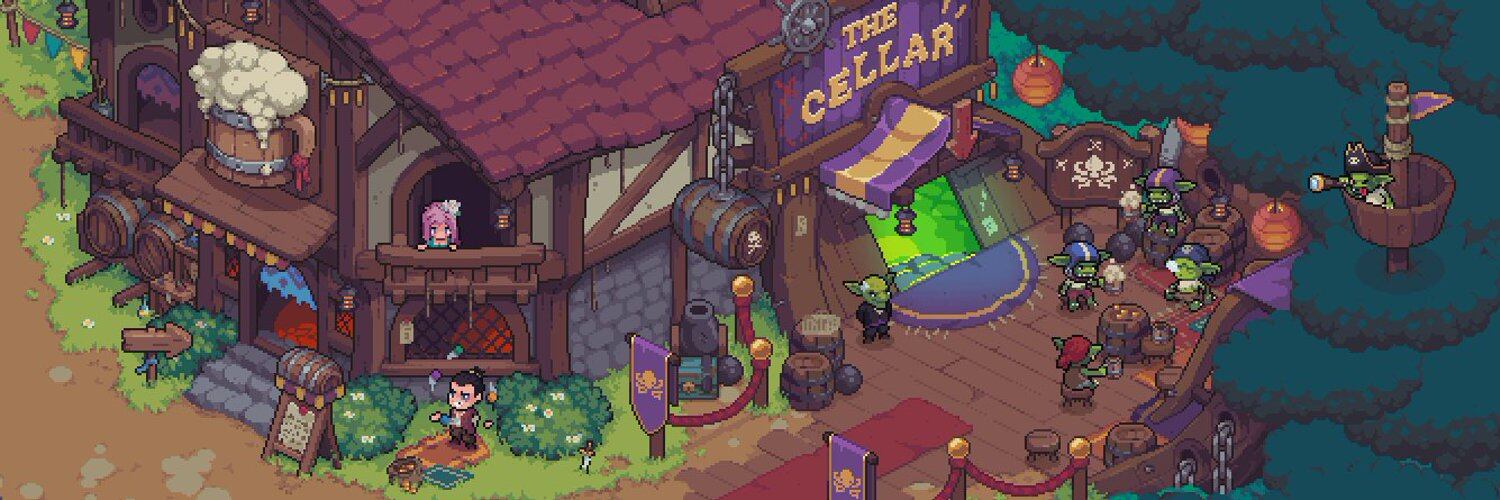
The Beacon, incubated by TreasureDAO, is a fantasy action RPG that blends Roughlite elements and is funded by the Arbitrum Foundation. In The Beacon, players choose a basic weapon to enter dungeons for exploration, where they can upgrade their weapons for better combat. Dungeons are procedurally generated, ensuring a different experience each time.

This week, The Beacon announced on platform X that Season 1 will launch on May 25th, and pre-registration is now open. Additionally, the total prize pool for Season 1 is 7.7 million BCN tokens. The Beacon also stated this is the final opportunity to earn BCN tokens before TGE.

Interaction Tutorial

Go to the website (Link: https://app.thebeacon.gg/pre-register) to complete the pre-registration for the Season 1 event.
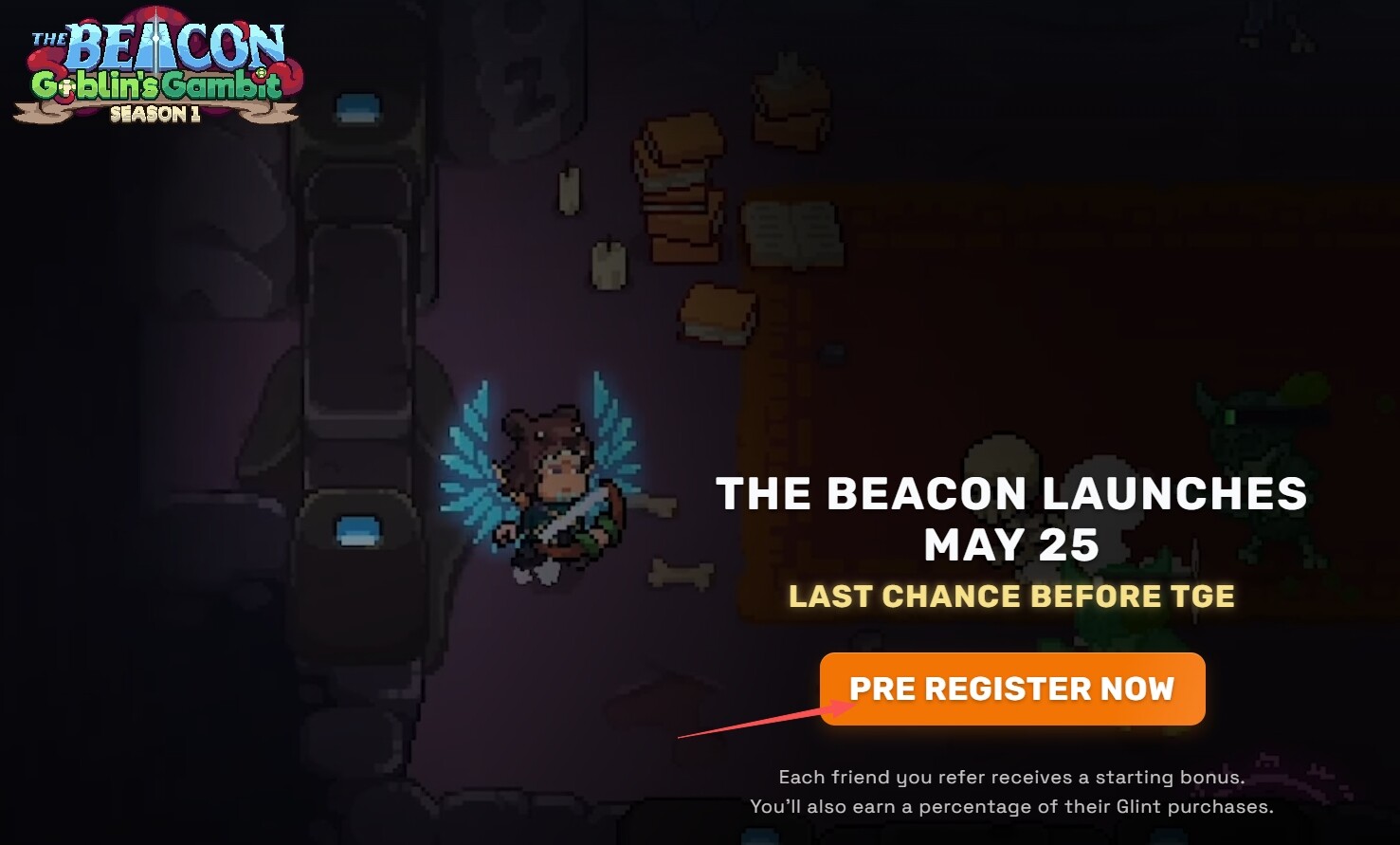
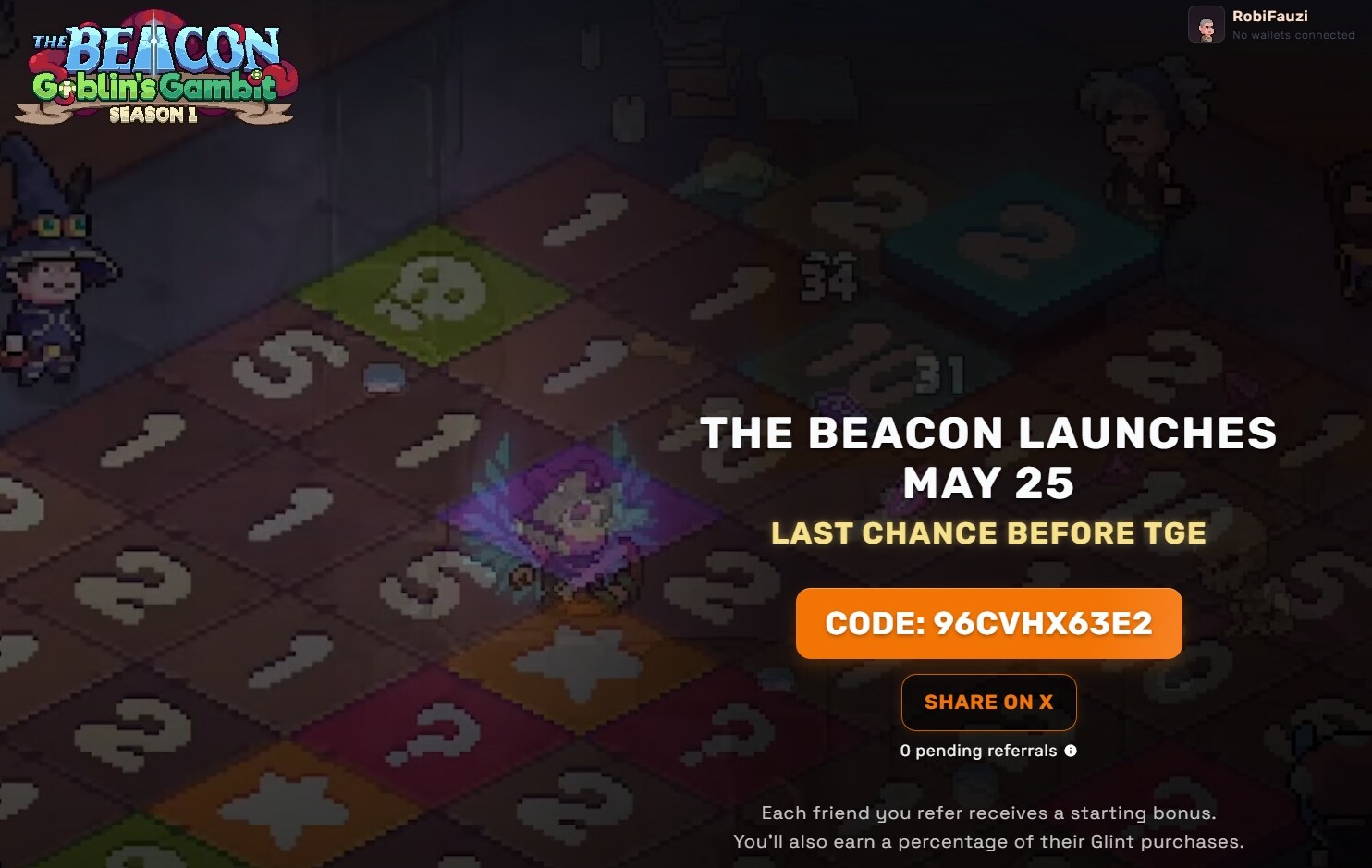
Furthermore, inviting friends can earn you extra rewards.
GenLayer: AI-Native Blockchain Platform

Project Introduction

GenLayer is an AI-native blockchain platform designed to overcome the limitations of traditional smart contracts. The platform employs an Optimistic Democracy consensus, consisting of validator nodes running different AI models (LLMs). Consensus on subjective decisions is achieved through majority voting and an appeals mechanism, functioning as an on-chain "synthetic judicial system."

On August 20, 2024, GenLayer announced the completion of a $7.5 million seed funding round, led by North Island Ventures, with participation from Node Capital, Arrington Capital, and others.

On May 13th, its ecosystem project FUD Markets launched on the testnet, allowing users to participate and earn points through interaction.

Interaction Tutorial

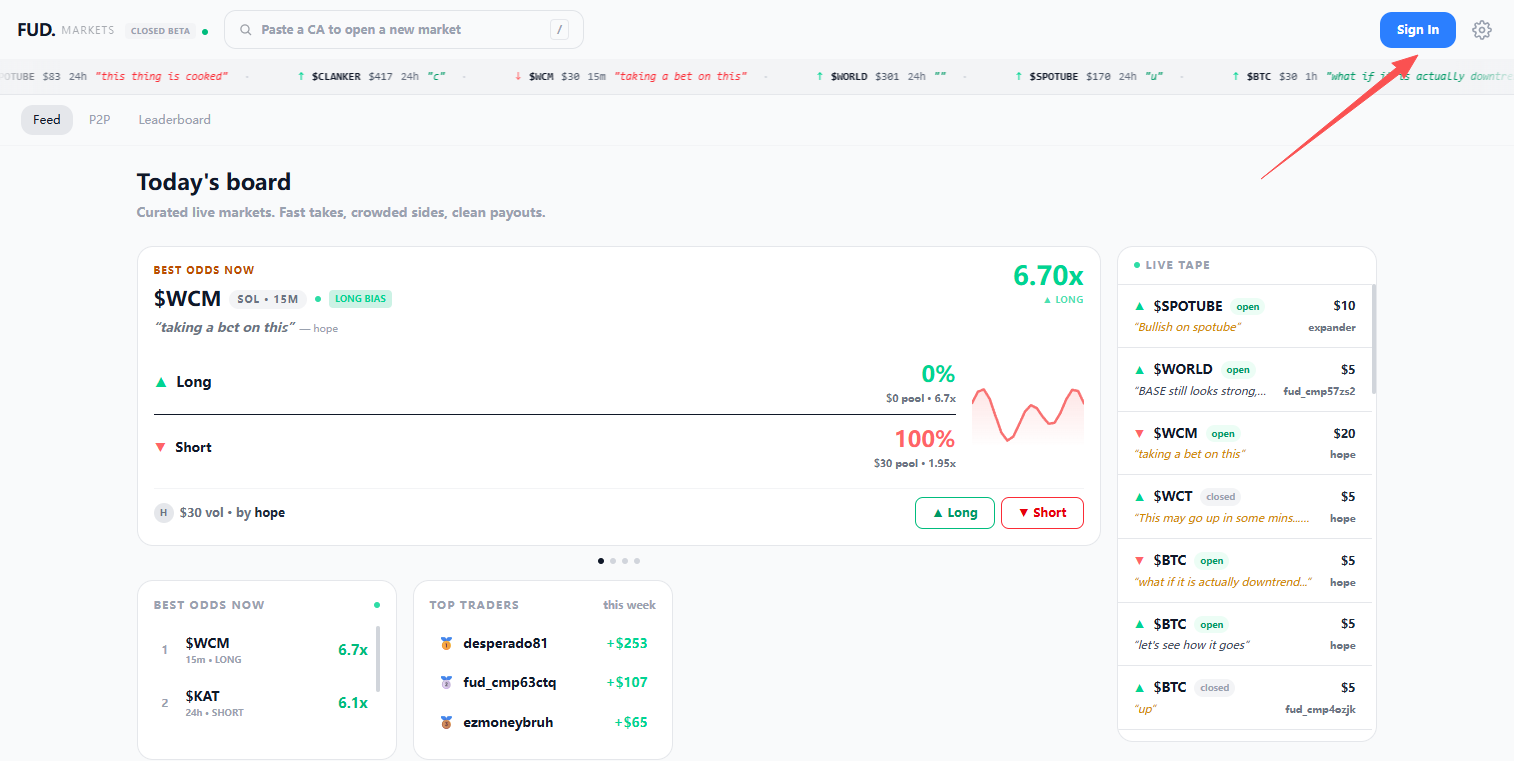
STEP 1. Go to the website (Link: https://fud.markets/), click "Sign in" to log in to your account.
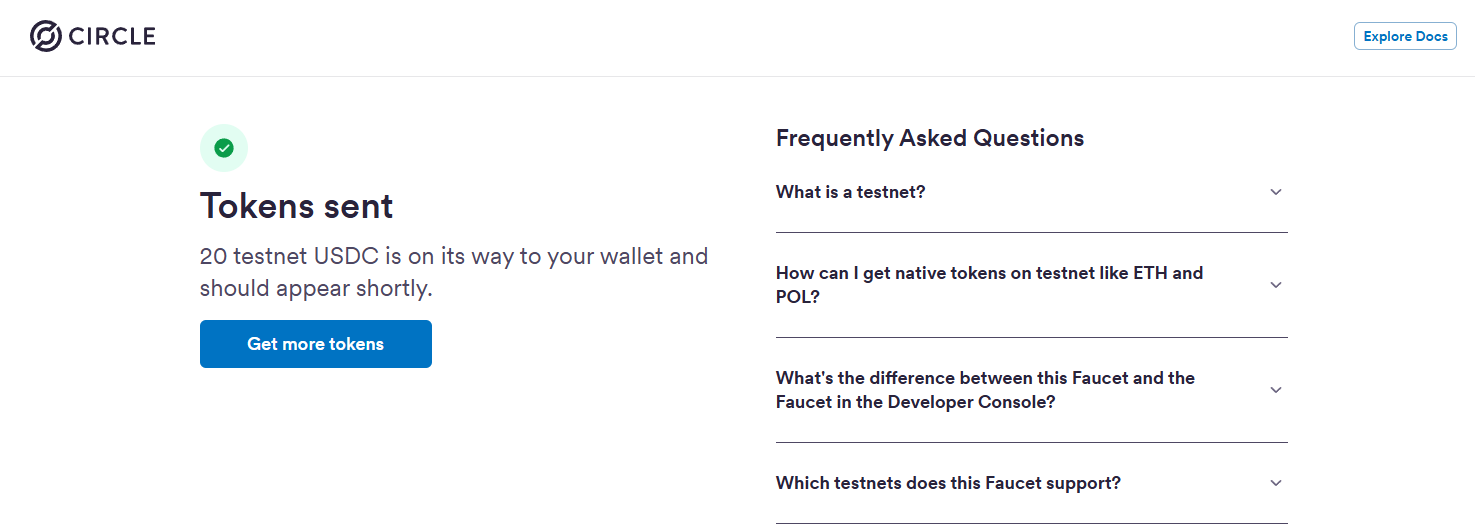
STEP 2. Claim test tokens (Link: https://faucet.circle.com/), enter the address generated upon registration, select the Base Sepolia network, and claim 20 USDC test tokens.
STEP 3. Return to the FUD Markets website to complete transaction confirmation.
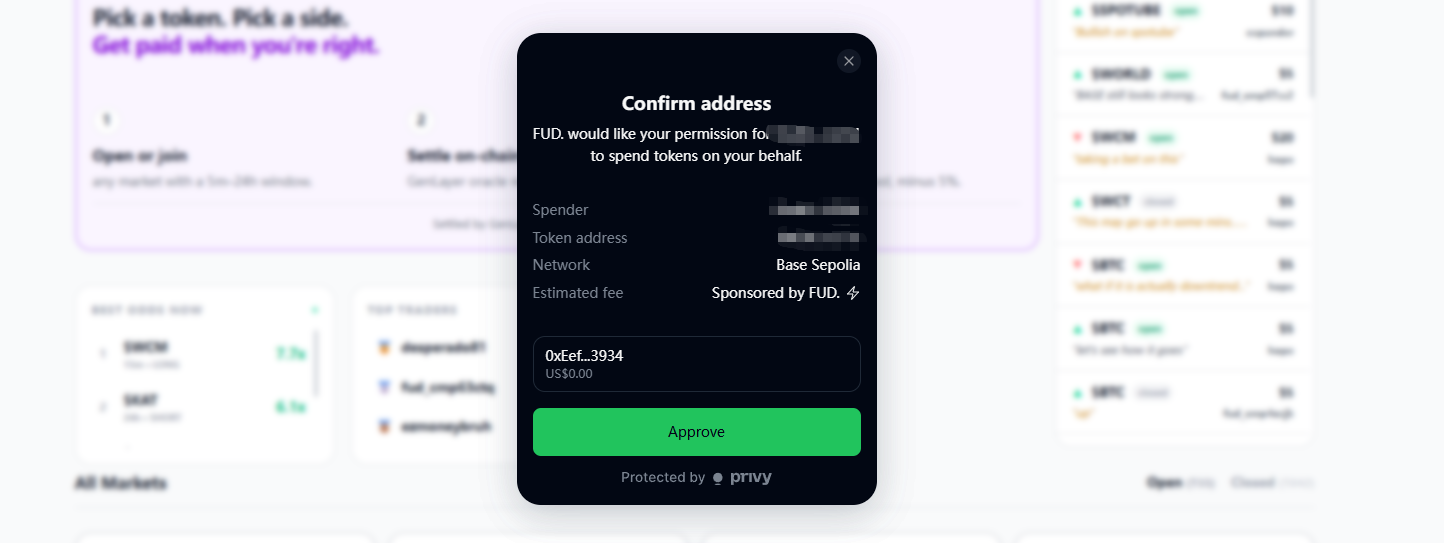
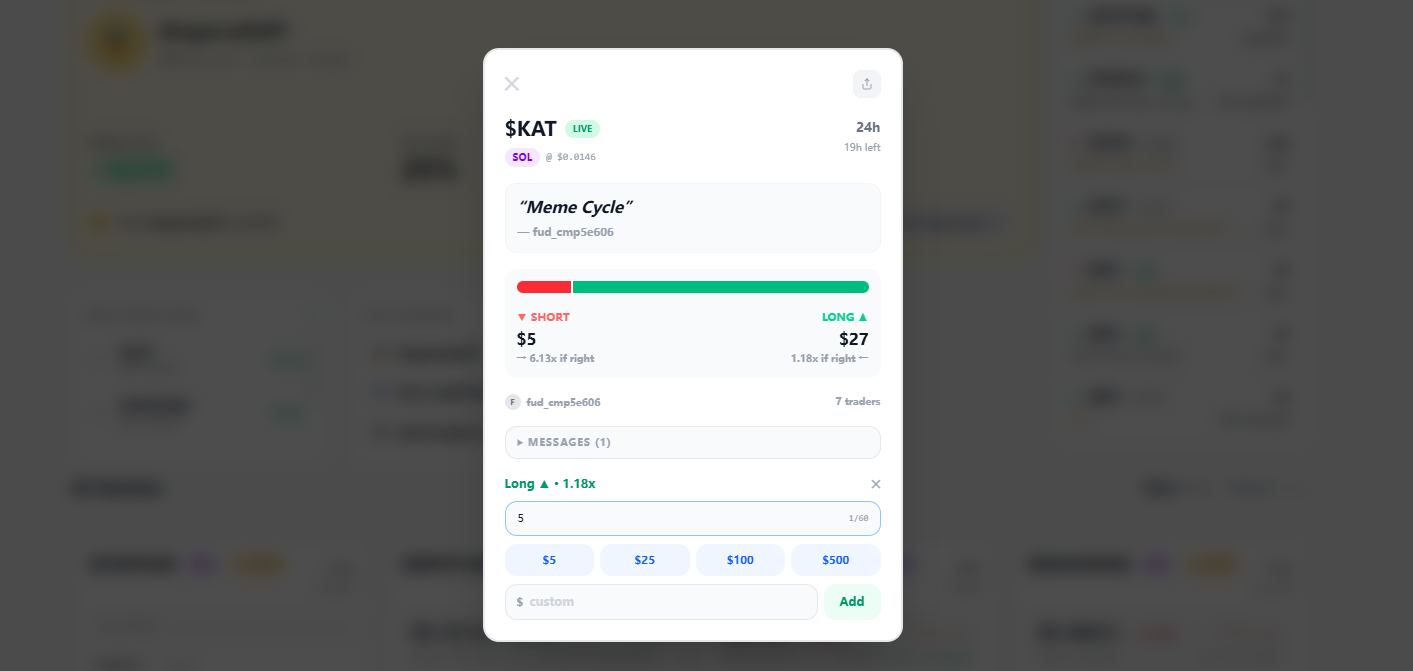
STEP 4. Choose any token and complete an order placement operation.
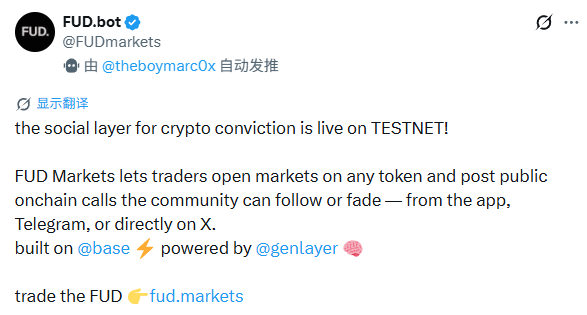
STEP 5. Quote this official X post (Link: https://x.com/FUDmarkets/status/2054584001562562986?s=20) and share your trading experience.
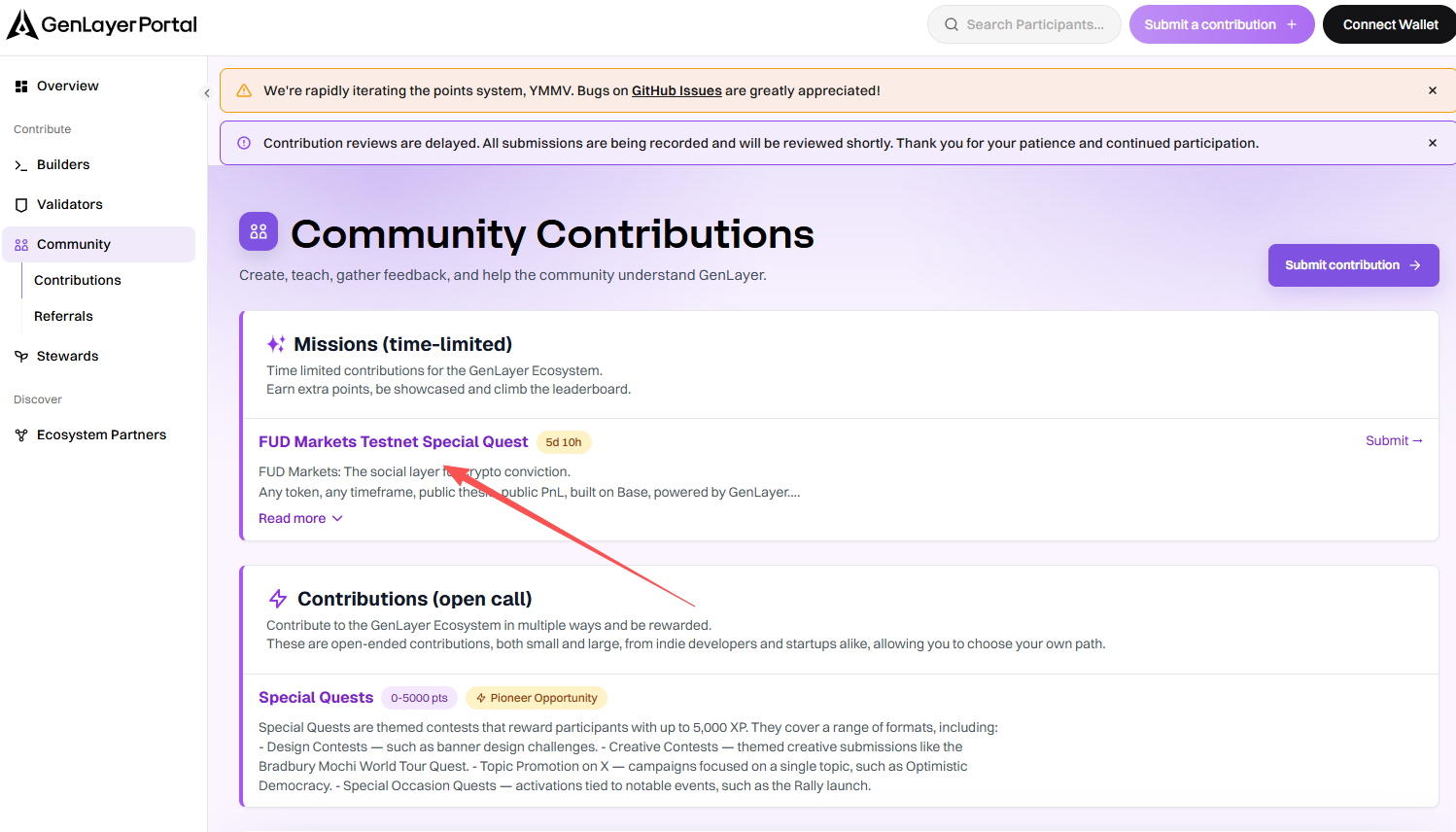
STEP 6. Go to the GenLayer portal website (Link: https://portal.genlayer.foundation/#/community/contributions), select "Community," then click "Contributions," and finally choose "FUD Market Testnet Special Quest" to submit your experience tweet.
Seismic: Privacy-Focused L1 Project

Project Introduction

Seismic is an L1 project in the privacy sector, providing an EVM-compatible privacy solution through Intel TDX Trusted Execution Environment for protocol-level encryption. To date, Seismic has completed two funding rounds this year, totaling $17 million:

  • On March 6, 2025, Seismic announced the completion of a $7 million funding round led by a16z Crypto, with participation from Polychain, 1kx, NGC, and dao5.
  • On November 12, 2025, Seismic announced the completion of a $10 million funding round led by a16z crypto, with participation from Polychain, Amber Group, TrueBridge, dao5, and LayerZero.

On May 13th, Seismic announced that its testnet is officially live.

Interaction Tutorial

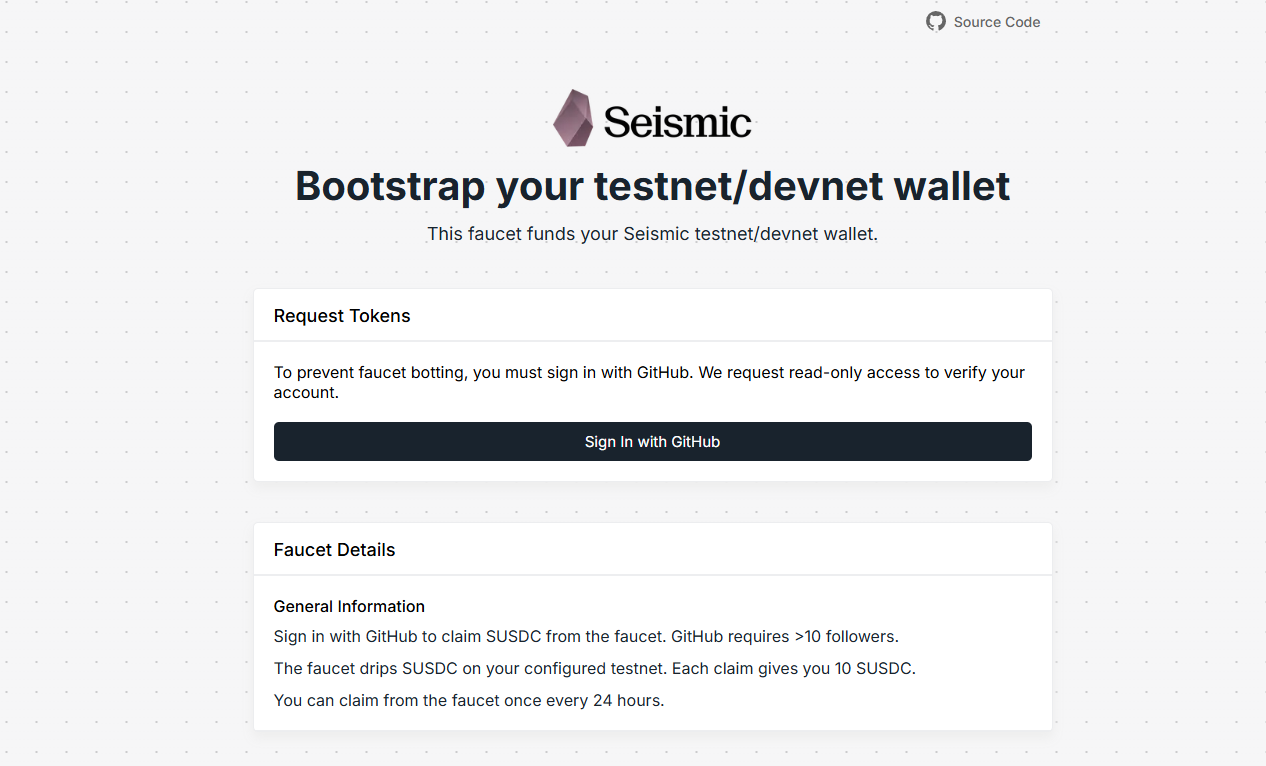
STEP 1. Claim test tokens (Link: https://faucet.seismictest.net/). Verification via X (50+ followers) or GitHub (10+ followers) is required. You can claim 10 sUSDC or 0.5 ETH every 24 hours.
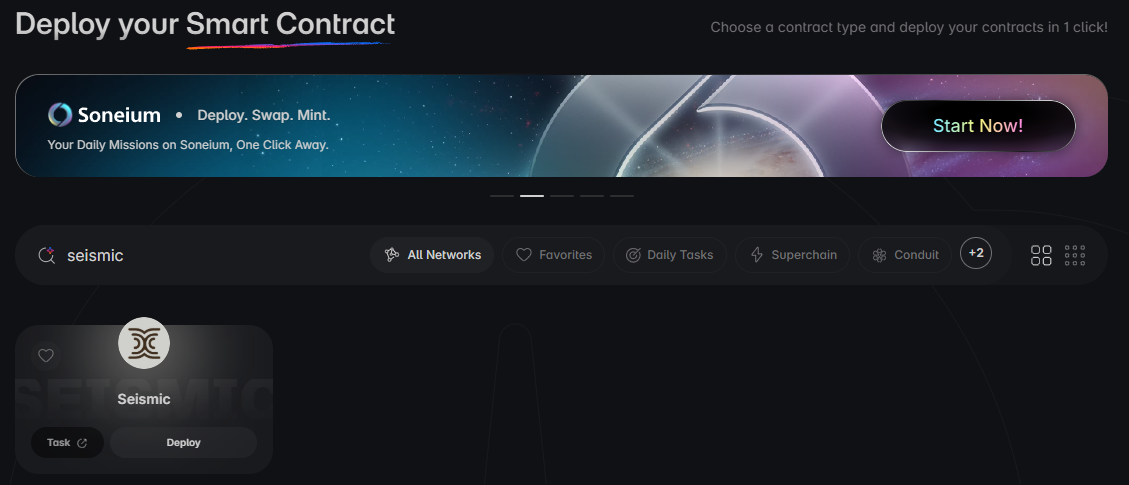
STEP 2. Deploy a contract (Link: https://www.onchaindaily.io/), connect your wallet, and switch to the Seismic Devnet.
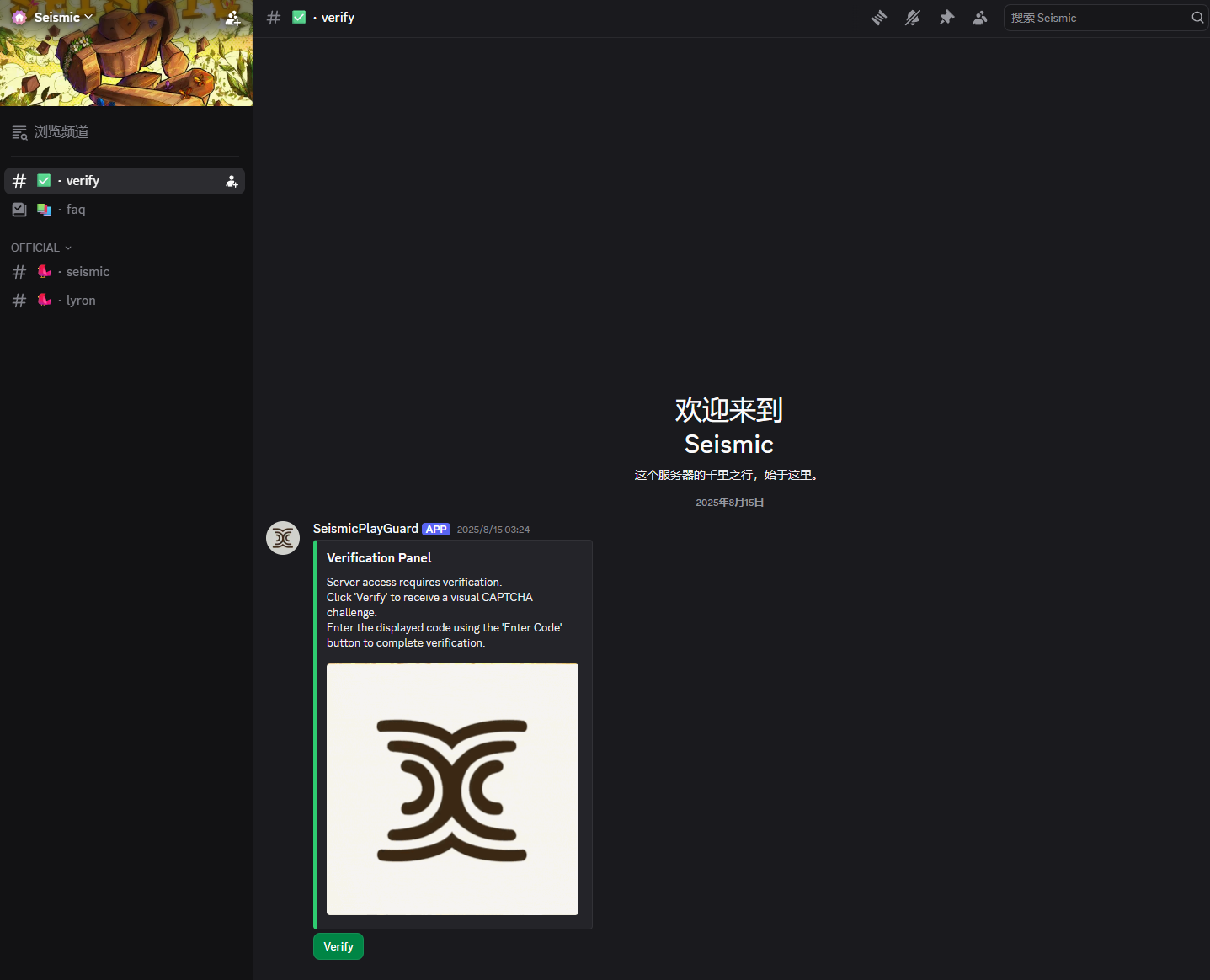
STEP 3. Join the official Discord (Link: https://discord.gg/seismic), stay active in the community, and strive to obtain early access roles.
Domande pertinenti

QWhat is The Beacon, and what significant event is happening on May 25th?

AThe Beacon is a fantasy action RPG incubated by TreasureDAO and funded by the Arbitrum Foundation. It features roguelike elements with procedurally generated dungeons. On May 25th, The Beacon is launching its Season 1 event, which is now open for pre-registration, offering a total prize pool of 7.7 million BCN tokens.

QWhat is the core innovation of the GenLayer platform, and what is its FUD Markets project?

AGenLayer is an AI-native blockchain platform that aims to overcome the limitations of traditional smart contracts. Its core innovation is the Optimistic Democracy consensus, which uses a network of validator nodes running different AI models (LLMs) to reach consensus on subjective decisions through majority voting and appeal mechanisms, essentially creating an on-chain 'synthetic judicial system'. FUD Markets is an ecosystem project on GenLayer's testnet where users can interact to earn points.

QWhat is Seismic, and what technology does it use to provide its privacy solution?

ASeismic is a privacy-focused Layer 1 blockchain project. It provides an EVM-compatible privacy solution by leveraging Intel TDX (Trusted Domain Extensions) technology at the protocol layer to create a trusted execution environment for encryption.

QAccording to the article, what are the steps to participate in the FUD Markets testnet interaction?

AThe steps are: 1) Sign in to the FUD Markets website. 2) Claim test tokens (20 USDC) on the Base Sepolia network via the provided faucet. 3) Return to FUD Markets and confirm a transaction. 4) Place an order (open a position) for any token. 5) Quote the official FUD Markets tweet and share your trading experience. 6) Submit your tweet link in the 'FUD Market Testnet Special Quest' section on the GenLayer portal website.

QWhat is the total funding amount raised by Seismic in 2025, as mentioned in the article, and who were the lead investors?

ASeismic raised a total of $17 million across two funding rounds in 2025. The first round in March was $7 million led by a16z Crypto. The second round in November was $10 million, also led by a16z crypto.

Letture associate

Breaking: OpenAI Undergoes Major Reorganization, President Brockman Assumes Command

OpenAI has announced a major internal reorganization just months before its anticipated IPO. The company is merging its three flagship product lines—ChatGPT, Codex, and the API platform—into a single, unified product organization. The most significant leadership change involves co-founder and President Greg Brockman moving from a background technical role to take full, permanent control over all product strategy. This follows the indefinite medical leave of AGI Deployment CEO Fidji Simo. Additionally, ChatGPT's longtime lead, Nick Turley, has been reassigned to enterprise products, with former Instagram executive Ashley Alexander taking over consumer offerings. The consolidation, internally framed as a strategic move towards an "Agentic Future," aims to break down internal silos and create a cohesive "Super App." This planned desktop application would integrate ChatGPT's conversational abilities, Codex's coding power, and a rumored internal web browser named "Atlas" to autonomously perform complex user tasks. The reorganization occurs amid significant internal and external pressures. OpenAI has recently seen a wave of high-profile departures, including Sora co-lead Bill Peebles and other senior technical leaders, leading to concerns about a thinning executive bench. Externally, rival Anthropic recently secured funding at a staggering $900 billion valuation, surpassing OpenAI's own. Google's upcoming I/O developer conference also poses a competitive threat. Analysts suggest the dramatic restructure is a pre-IPO move to present a clearer, more focused narrative to Wall Street—streamlining operations and demonstrating decisive leadership under Brockman to counter internal turbulence and intense market competition.

marsbit51 min fa

Breaking: OpenAI Undergoes Major Reorganization, President Brockman Assumes Command

marsbit51 min fa

Two Survival Structures of Market Makers and Arbitrageurs

Market makers and arbitrageurs represent two distinct survival structures in high-frequency trading. Market makers primarily use limit orders (makers) to profit from the bid-ask spread, enjoying high capital efficiency (nominally 100%) but bearing inventory risk. This "inventory risk" arises from passive, fragmented, and discontinuous order fills in the limit order book (LOB). This risk, while a potential cost, can also contribute to excess profit if managed within control boundaries, allowing for mean reversion. Market makers essentially sell "time" (uncertainty over execution timing) to the market for price control and low fees. In contrast, cross-exchange arbitrageurs typically use market orders (takers) to exploit price differences or funding rates, resulting in lower nominal capital efficiency (requiring capital on both exchanges) and higher transaction costs. Their risk exposure stems from asymmetries in exchange rules (e.g., minimum order sizes), execution latency, and infrastructure risks (e.g., ADL, oracle drift). These exposures are active, exogenous gaps that primarily erode profits rather than contribute to them. Arbitrageurs essentially sell "space" (capital sunk across venues) for localized, immediate certainty. Both strategies engage in a trade-off between execution friction and residual risk. Optimal systems allow for temporary, controlled risk exposure rather than enforcing zero exposure at all costs. Their evolution converges towards hybrid models: arbitrageurs may use maker orders to reduce costs, while market makers may use taker orders or hedges for risk management. Ultimately, both use different forms of risk exposure—market makers exposing inventory, arbitrageurs immobilizing capital—to extract marginal, hard-won certainty from the market.

链捕手51 min fa

Two Survival Structures of Market Makers and Arbitrageurs

链捕手51 min fa

Who Will Define the Rules of the AI Era? Anthropic Discusses the 2028 US-China AI Landscape

This article, based on Anthropic's analysis, outlines the intensifying systemic competition between the U.S./allies and China for AI leadership by 2028. It argues that access to advanced computing power ("compute") is the critical bottleneck, where the U.S. currently holds a significant advantage through chip export controls and allied innovation. However, China's AI labs remain competitive by exploiting policy loopholes—via chip smuggling, overseas data center access, and "model distillation" attacks to copy U.S. model capabilities—keeping them close to the frontier. The piece presents two contrasting scenarios for 2028. In the first, decisive U.S. action to tighten compute controls and curb distillation locks in a 12-24 month AI capability lead, cementing democratic influence over global AI norms, security, and economic infrastructure. In the second, policy inaction allows China to achieve near-parity through continued access to U.S. technology, enabling Beijing to promote its AI stack globally and integrate advanced AI into its military and governance systems, altering the strategic balance. Anthropic contends that maintaining a decisive U.S. lead is essential for shaping safe AI development and governance. The core recommendation is for U.S. policymakers to urgently close compute and model access loopholes while promoting global adoption of the U.S. AI technology stack to secure a lasting strategic advantage.

marsbit2 h fa

Who Will Define the Rules of the AI Era? Anthropic Discusses the 2028 US-China AI Landscape

marsbit2 h fa

Trading

Spot
Futures
活动图片