A Young Man Born in 1995 from Hangzhou Buys a Silicon Valley Castle for 500 Million

marsbitPubblicato 2026-08-16Pubblicato ultima volta 2026-08-16

Introduzione

Hangzhou-born 95s AI researcher Tony Wu, a former co-founder of Elon Musk's xAI, has reportedly purchased a $70 million Hillsborough, California estate, making it the highest-priced residential deal in Northern California so far this year. The property, acquired through a limited liability company, spans 12 acres and features amenities like a golf course and an outdoor theater. Wu, 31, previously bought a $12 million home last year. He specialized in AI reasoning at xAI, contributing to projects like Grok 3 before departing after the company's merger with SpaceX. The historic IPO of the combined entity has created significant wealth for early employees. Wu's latest acquisition highlights the rapid wealth generation for top AI talent through major tech IPOs, a trend also reflected in the Bay Area's surging real estate prices.

After the xAI co-founders all left Musk, where did they go?

Some started their own ventures, others switched jobs.

In contrast, Tony Wu (Yuhuai Wu) has been quite pragmatic and very Chinese:

Buying a house in Silicon Valley.

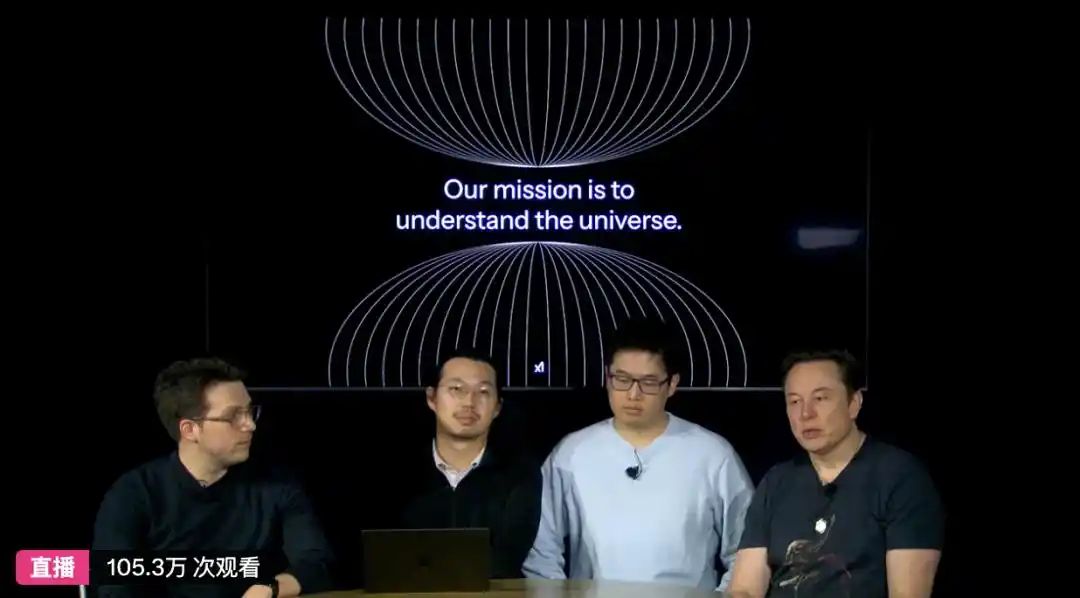
Yes, you read that correctly. It's that Hangzhou-born 1995 guy who appeared on stage with his arm around Musk during the Grok 3 launch last year.

At 31 years old, he just splashed 500 million on a large house in the Bay Area... A life like that of a protagonist in a wish-fulfillment novel, effortlessly achieved!
So, what exactly happened?

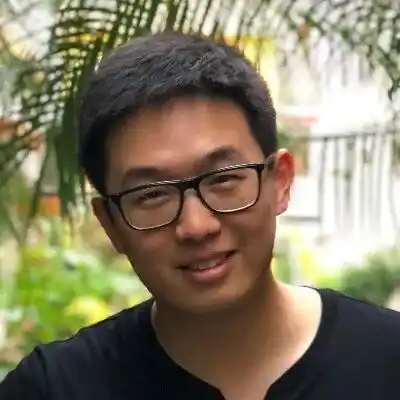
Recently, the San Francisco Bay Area saw the highest-value residential transaction so far this year. Media traced the clues and found that the buyer pointed to xAI co-founder, Yuhuai Wu, "a young man working in AI."

Just last year, he purchased a top-tier residence for $12 million (approximately 80 million RMB).
Wow, he's really playing the real-life "Monopoly" · Tech Edition.

The transaction price is soaring like a SpaceX rocket. This wave, cashing out through xAI's historic IPO, is a huge win!

Bay Area's Most Expensive Mansion This Year: Goes to xAI's Chinese Co-founder

The newly purchased estate is located in Hillsborough, a traditional Silicon Valley affluent area. The property spans about 12 acres, with the main house covering approximately 12,000 square feet, plus a 4,600-square-foot guest house.

A tennis court, a nine-hole golf course, an eighteen-hole putting green, and a koi pond are just standard features. The estate also includes a 150-seat outdoor amphitheater, a 2,100-gallon aquarium, and a set of outdoor fountains modeled after the Bellagio in Las Vegas.
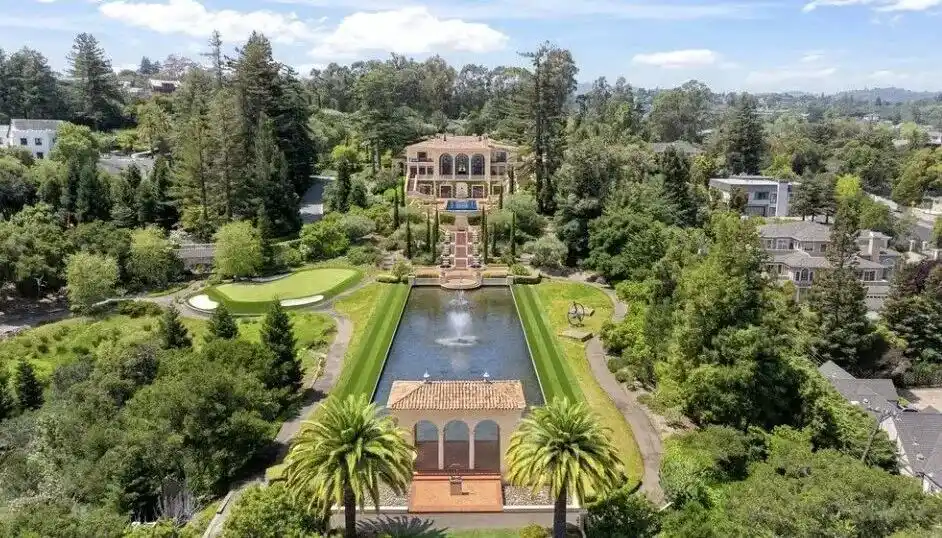
The property was initially listed for $88 million, reduced by $10 million, and finally sold on August 6th for $70 million (approximately 500 million RMB), becoming the largest residential transaction in Northern California so far this year.

In stark contrast to its jaw-dropping luxury, the buyer's identity was tightly concealed.

Public records show the property was purchased by a company named Daikon no Hana Capital. Registered just on July 9th, its manager is a lawyer specializing in estate planning.

And he "coincidentally" transferred Wu's previous $12 million home into a family trust just one week before the new estate deal closed.

Even more coincidentally, the buyer's agent had only handled one other major residential transaction in the past five years, which was precisely the house Wu bought in 2025.

With several clues pointing to him, the identity of the real buyer is almost undeniable.

But even before his real estate investments, Yuhuai Wu was earlier recognized in the AI circle for his work on reasoning models.
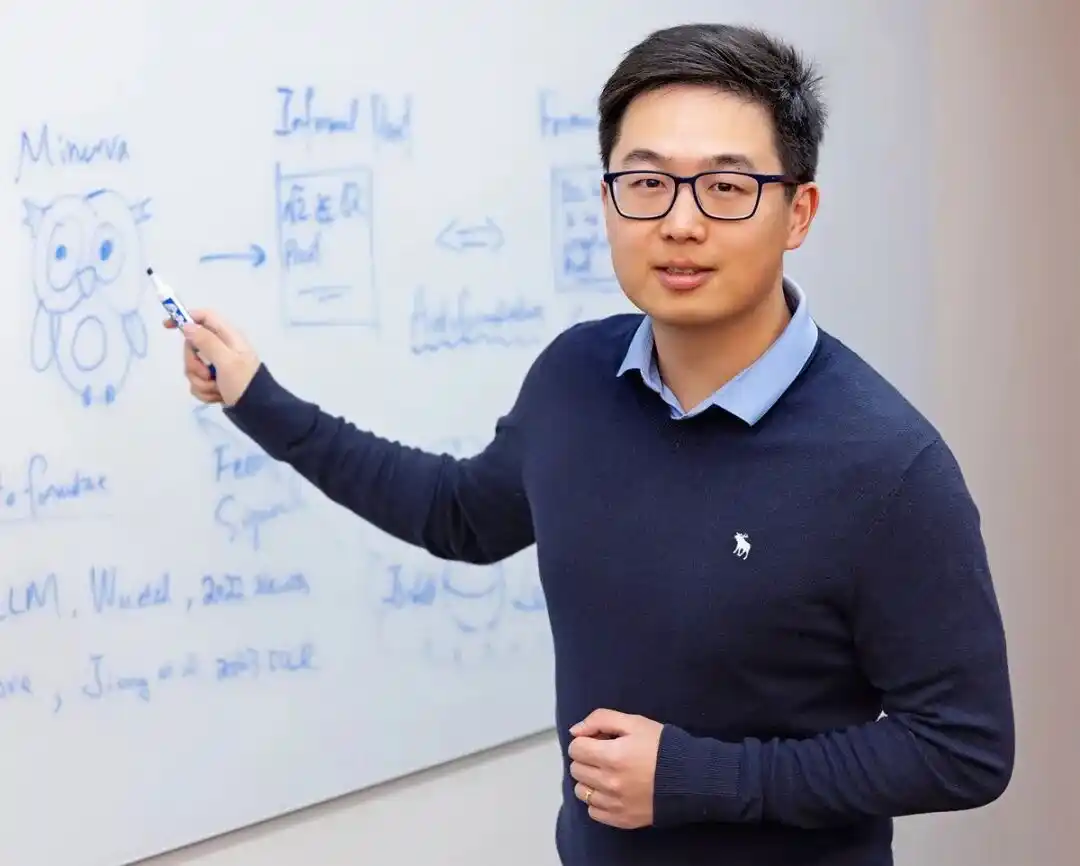
Yuhuai Wu was born in 1995 in Jiande, Hangzhou. He later went to the University of Toronto to pursue a Ph.D. in machine learning, studying under Roger Grosse and Jimmy Ba.

After his Ph.D., he conducted postdoctoral research at Stanford. His personal homepage states his research direction as "building machines that can reason."

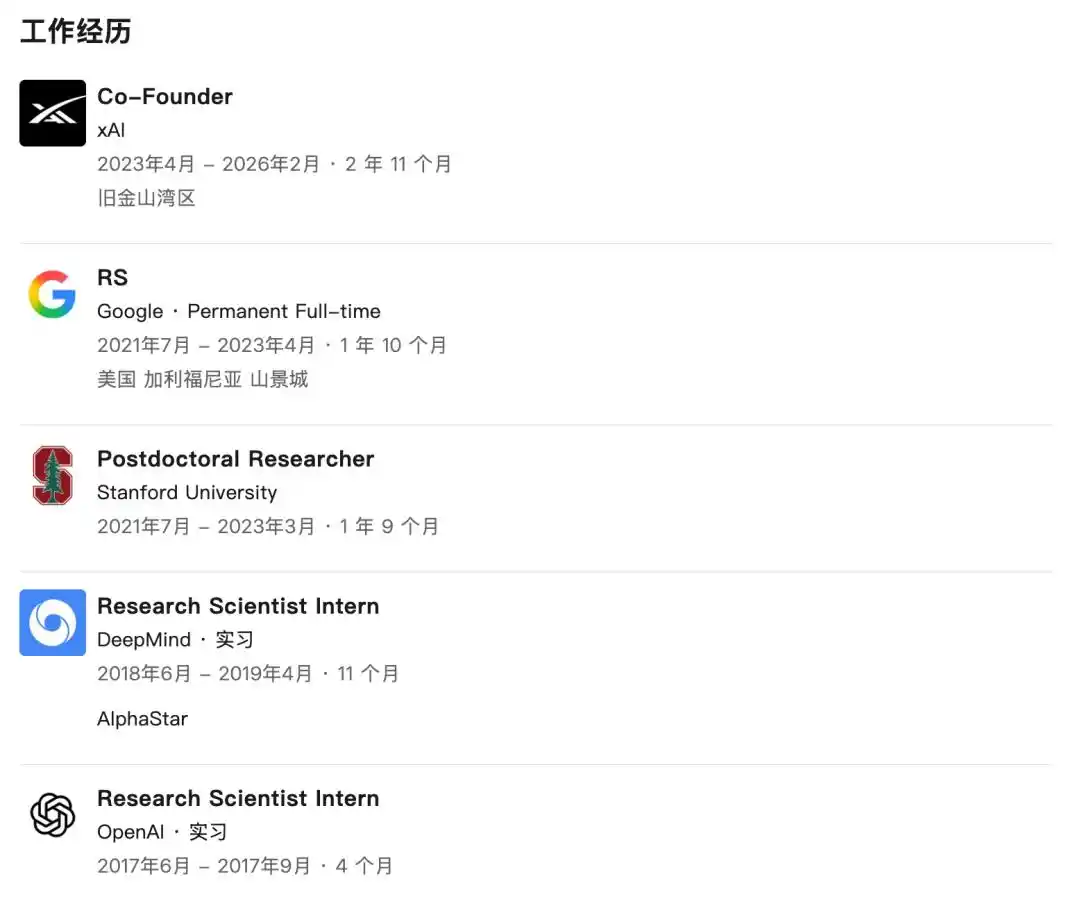
Following this path, he participated in projects like the StarCraft AI AlphaStar, the self-taught reasoner STaR, the mathematical model Minerva, the geometry reasoning system AlphaGeometry, and worked or interned at OpenAI and Google.
Simply put, his focus is on making models generate reasoning steps, check the process, and continue learning from their own reasoning results.

And this research direction is precisely the current competitive frontier in large language models.

In 2023, Musk formed xAI, and Yuhuai Wu, along with his advisor Jimmy Ba, joined as one of the 12 co-founders. By the time Grok 3 was launched, he was already a core figure in the reasoning team.

Grok 3's key feature of "Think, then answer," and its methods for backtracking, verification, and long-chain reasoning, are all productized implementations of his years of research.

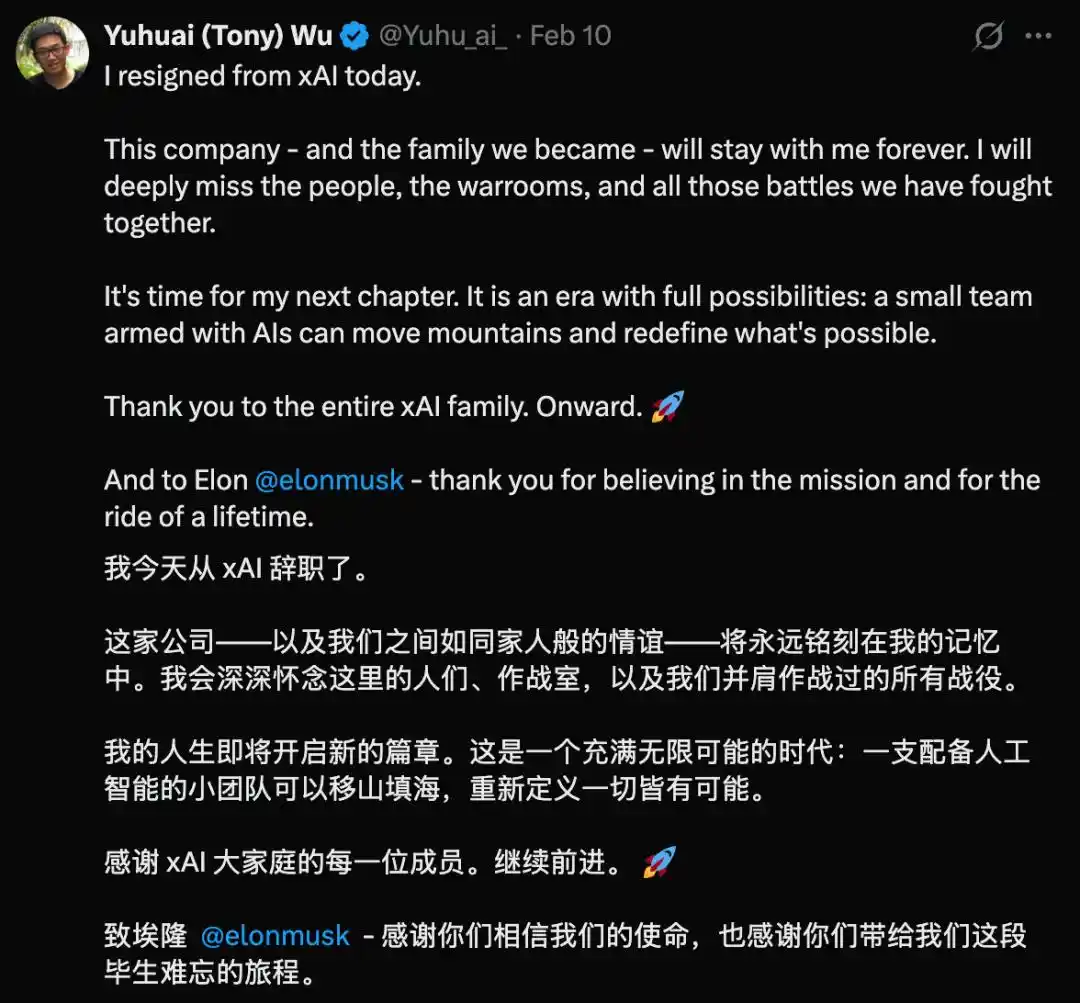
Until this past February, after xAI was merged into SpaceX, Wu announced his departure. A day later, his advisor Jimmy Ba also announced his exit.

At that time, Wu stated his reason:

Next, I will explore a new chapter in life, and I believe a small team armed with AI can move mountains.
Half a year later, there's still no news about a new company, but the equity accumulated at xAI has once again sparked heated discussion, this time in the form of a mansion.

xAI's Wealth Creation

The merger of SpaceX and xAI earlier this year, in hindsight, indeed achieved a 1+1>2 effect.

The bundled IPO set a new historical record, and the equity stakes of the original co-founders multiplied several times over.

U.S. securities filings disclosed that through conversion, each xAI share corresponds to 0.7165 shares of SpaceX. Based on the closing price on the first day of trading, its value was approximately $115.32.

This is about 53% higher than the $75.46 per share cash option SpaceX offered to some eligible individuals at the time of the merger.

However, Wu's specific shareholding quantity has not been made public. How much he cashed out remains unknown.

But judging by his current extravagant spending, it's clearly substantial, especially considering the immense wealth creation scale of SpaceX itself.
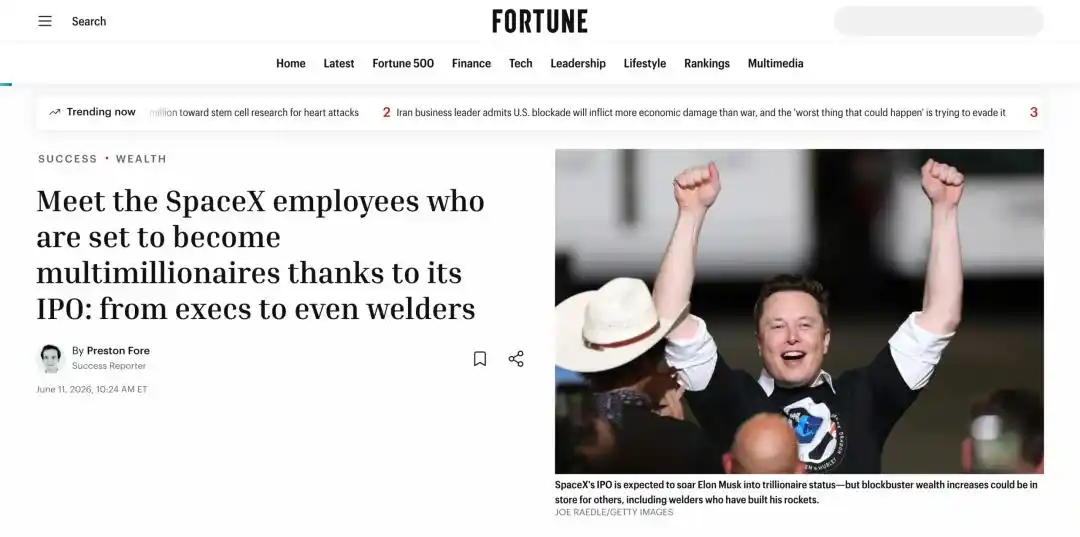
According to media calculations, more than 4,400 current and former employees became millionaires through the IPO, with about 400 holding stakes valued over $100 million.

And such wealth leapfrogging stories are now a daily occurrence in Silicon Valley.

Once Anthropic and OpenAI successively go public with IPOs, more top AI talent will achieve asset leaps through equity acquisitions and super IPOs.

This cohort of frontline researchers is rapidly becoming the protagonists in Silicon Valley's new wealth map.

The most direct reflection of this change is Bay Area housing prices:

They have been steadily climbing, rising by 14% in just the past year.

References:[1]https://sfstandard.com/2026/08/12/xai-cofounder-hillsborough-buyer/[2]https://xhslink.cn/o/6g6pj41mkne[3]https://www.linkedin.com/in/yuhuai-tony-wu-02a641b5/[4]https://yuhuaiwu.github.io/

"Like," "Share," and "Heart" this article

Feel free to leave your thoughts in the comments!

This article is from the WeChat public account "QbitAI," author: Focus on Cutting-edge Technology


Crypto di tendenza

Domande pertinenti

QWhat did Tony Wu, a former xAI co-founder, recently purchase in Silicon Valley?

AHe recently purchased the most expensive mansion in the Bay Area so far this year, a 12-acre estate in Hillsborough, for approximately $70 million (about 500 million RMB).

QWhat is Tony Wu's professional background and area of expertise in AI?

ATony Wu, a 1995-born from Hangzhou, holds a PhD in Machine Learning from the University of Toronto and was a postdoc at Stanford. His research focuses on building machines capable of reasoning, particularly on making models generate reasoning steps, check processes, and learn from their results. He worked on projects like AlphaStar and AlphaGeometry, and was a core member of the reasoning team behind xAI's Grok 3.

QHow is Tony Wu's recent real estate purchase connected to the financial outcome of the xAI and SpaceX merger?

AThe merger of xAI into SpaceX led to a historic IPO. Tony Wu, as a co-founder, held equity in xAI, which converted to SpaceX shares. The significant value increase from this IPO (with xAI shares valued about 53% higher than the pre-merge cash offer) provided him with the capital for his multi-million dollar real estate investments.

QWhat was the original listing price and the final sale price of the Hillsborough estate Tony Wu bought?

AThe estate was originally listed for $88 million. After a price reduction of $10 million, it was finally sold for $70 million.

QWhat reason did Tony Wu give for leaving xAI earlier this year?

AWhen announcing his departure from xAI in February, Tony Wu stated his reason was to 'explore the next chapter of life' and expressed belief that 'a small team armed with AI can move mountains.'

Letture associate

IPO Imminent, OpenAI Faces Major Personnel Upheaval

OpenAI, preparing for a potential IPO, is experiencing significant leadership turmoil. In mid-August 2026, longtime "GPU geek" Scott Gray quietly left, and within three days, Chief Operating Officer Brad Lightcap (8-year veteran) and Chief Revenue Officer Denise Dresser (8-month tenure) departed. This follows a broader exodus of at least 10 senior executives in 2026, including heads of product, safety, and ethics. Analysts view this as a strategic "surgery" to transform from a research lab into a sales-driven enterprise company before going public. Revenue now tilts toward enterprise clients, surpassing consumer income sooner than expected, with annualized revenue reaching $40 billion. The new CRO, Dali Rajic, is a veteran enterprise sales leader. Concurrently, OpenAI has disbanded independent safety teams like "Preparedness," which assessed catastrophic risks, integrating their functions into core research. Critics warn this removes dedicated "brakes" on AI development. The leadership vacuum raises questions about who is the clear second-in-command after former apps CEO Fidji Simo moved to an advisory role. Co-founder Greg Brockman appears to be consolidating power. As OpenAI races against rival Anthropic ($47B annualized revenue), it faces the dual challenge of commercial execution while managing the departure of foundational technical talent and ensuring responsible AI development remains a priority.

marsbit32 min fa

IPO Imminent, OpenAI Faces Major Personnel Upheaval

marsbit32 min fa

AI Can 'Have Moods Too'! New Research from USTC: Confusion and Anxiety Make AI Work Better

The article discusses research from the University of Science and Technology of China and Oxford, revealing that allowing AI to recognize and act upon simulated "internal emotions" can significantly improve its performance. The study demonstrates a coherent pairing between specific emotional states in AI agents and their subsequent skill choices. For instance, an agent feeling curious and desirous will search for products, while one feeling confused and tense will rephrase queries. This mirrors human decision-making influenced by emotions. Statistical validation showed a 76.5% semantic consistency in these pairings. Crucially, the research challenges the traditional view of AI errors as flaws to be eliminated. It found that "bad" emotions like confusion, tension, or frustration serve as useful metacognitive signals, indicating a mismatch between the current strategy and the environment. By responding to these signals, AI can proactively adjust before a failure occurs. This is particularly effective in complex tasks prone to failure. For example, in tasks like "heating an item" and "picking up two items," success rates surged from 9.6% to 56.9% and 4.4% to 31.3%, respectively, when using the emotion-driven skill selection method (EMOTION2SKILL). The AI's "nervous" state about a closed microwave, for instance, prompted it to check and open it first, preventing failure. The article also mentions related work from Tianjin University, which embeds emotional prediction into world models (Large Emotional World Model, LEWM), significantly improving prediction accuracy in human-centric environments. Removing emotional data was found to degrade performance even in unrelated logical reasoning tasks. These studies build on earlier findings, like those from Anthropic, that identifiable emotional representations exist within large language models (LLMs). The focus is shifting from philosophical debate about AI emotion to practically harnessing these internal states as functional signals to enhance AI robustness and capability.

marsbit1 h fa

AI Can 'Have Moods Too'! New Research from USTC: Confusion and Anxiety Make AI Work Better

marsbit1 h fa

Trading

Spot

Articoli Popolari

Cosa è ₿O₿

Bitcoin Bob ($₿o₿): Pionieristico DeFi Centrato su Bitcoin Attraverso Innovazione Ibrida Layer-2 In un'era in cui l'economia digitale sta evolvendo rapidamente, Bitcoin Bob ($₿o₿) emerge come un progetto rivoluzionario volto a migliorare l'utilità di Bitcoin nel settore della finanza decentralizzata (DeFi). Lanciato ufficialmente a maggio 2024, Bitcoin Bob, noto anche come Build on Bitcoin (BOB), rappresenta una soluzione blockchain ibrida Layer-2 che fonde la rinomata sicurezza e immutabilità di Bitcoin con la programmabilità di Ethereum. Questa iniziativa cerca di colmare un'importante lacuna nell'ecosistema di Bitcoin facilitando l'integrazione di smart contract e applicazioni decentralizzate, mantenendo al contempo i principi fondamentali di fiducia e sicurezza insiti in Bitcoin. Con un sostegno significativo da parte di importanti investitori di venture capital, Bitcoin Bob è posizionato per ridefinire il ruolo di Bitcoin nel panorama DeFi, rendendolo una pietra miliare delle operazioni finanziarie decentralizzate a livello globale. Cos'è Bitcoin Bob, $₿o₿? Alla sua base, Bitcoin Bob è una soluzione blockchain ibrida progettata per migliorare la funzionalità di Bitcoin. L'obiettivo principale del progetto è abilitare la finanza decentralizzata su Bitcoin, facilitando transazioni rapide e senza soluzione di continuità, garantendo al contempo elevati livelli di sicurezza. Bitcoin Bob utilizza tecnologie avanzate, in particolare un'architettura ibrida layer-2 che combina le caratteristiche di sicurezza di Bitcoin con la programmabilità e la flessibilità della Ethereum Virtual Machine (EVM). Questo approccio pragmatico consente al progetto di operare efficacemente senza compromettere i valori fondamentali di Bitcoin, rappresentando un passo monumentale nel colmare il divario tra i tradizionali detentori di Bitcoin e l'emergente ecosistema DeFi. Una delle caratteristiche distintive di Bitcoin Bob è il suo ruolo nel fornire un ambiente a fiducia minimizzata attraverso meccanismi innovativi, come gli optimistic rollups inizialmente basati su Ethereum, che si evolveranno infine verso un'integrazione completa con Bitcoin. Questo sistema ibrido è progettato per garantire che la vasta liquidità presente in Bitcoin non solo venga preservata, ma anche utilizzata efficacemente in vari protocolli DeFi. Chi è il Creatore di Bitcoin Bob, $₿o₿? La forza creativa dietro Bitcoin Bob è il co-fondatore e CEO Alexei Zamyatin, che porta con sé una vasta esperienza e conoscenza dal suo ampio background nel settore delle criptovalute. Zamyatin ha conseguito un dottorato in Informatica ed è stato attivamente coinvolto nello sviluppo di Bitcoin dal 2015. La sua profonda comprensione degli ecosistemi di Bitcoin ed Ethereum gioca un ruolo cruciale nel plasmare la visione e le basi tecnologiche di Bitcoin Bob. Insieme a Zamyatin c'è il co-fondatore Dominik Harz, che ricopre il ruolo di Chief Technology Officer (CTO). Insieme, i due hanno coltivato un team di talenti con una passione condivisa per spingere i confini della tecnologia blockchain, assicurando la posizione innovativa di Bitcoin Bob nel mercato. Chi Sono gli Investitori di Bitcoin Bob, $₿o₿? Bitcoin Bob ha ottenuto con successo il supporto di una serie di importanti investitori e società di venture capital che riconoscono il suo potenziale di trasformare il panorama di Bitcoin. A marzo 2024, il progetto ha completato un robusto round di finanziamento seed da 10 milioni di dollari, guidato da Castle Island Ventures, con una partecipazione notevole da parte di aziende come Coinbase Ventures e Bankless Ventures. Poco dopo, a luglio 2024, Bitcoin Bob ha ottenuto un ulteriore finanziamento strategico di 1,6 milioni di dollari. Questo round è stato co-guidato da Ledger Ventures e ha visto la partecipazione di angel investor provenienti da varie aziende di spicco come BlackRock, Aave e Curve. Il forte sostegno finanziario riflette un riconoscimento a livello di settore dell'approccio innovativo di Bitcoin Bob per sbloccare il potenziale di Bitcoin nello spazio DeFi. Questo finanziamento è cruciale non solo per lo sviluppo continuo del progetto, ma anche per stabilire un incubatore per promuovere applicazioni decentralizzate (dApps) native di Bitcoin, mirate specificamente a soddisfare le esigenze di una base utenti in crescita. Come Funziona Bitcoin Bob, $₿o₿? Le meccaniche operative di Bitcoin Bob sono radicate nella sua architettura ibrida rollup, progettata per combinare i benefici della sicurezza di Bitcoin con la versatilità dell'EVM di Ethereum. Il progetto utilizza un modello di sicurezza a fasi che delinea la sua interazione con utenti e sviluppatori nel seguente modo: Fase 1 – La fase iniziale opera come un optimistic rollup su Ethereum, in cui le transazioni vengono elaborate con una promettente aspettativa di validità, aprendo la strada a futuri sviluppi su Bitcoin. Fase 2 – Man mano che il progetto si evolve, integrerà la finalità di Bitcoin attraverso il Bitcoin Staking, sfruttando il Babylon Network per migliorare la sicurezza. Questo meccanismo richiede ai validatori di bloccare Bitcoin, verificando così le transazioni BOB, il che non solo migliora la sicurezza ma crea anche opportunità di rendimento per i partecipanti. Fase 3 – La visione prospettica per Bitcoin Bob è quella di integrarsi completamente con Bitcoin, utilizzando tecnologie innovative come BitVM e prove a conoscenza zero per facilitare il calcolo off-chain mantenendo l'integrità della sicurezza di Bitcoin. Innovazioni chiave come BitVM2, un protocollo di bridge a fiducia minimizzata co-autore di Zamyatin, sono fondamentali per la funzionalità del progetto, consentendo depositi e prelievi di Bitcoin senza la necessità di una dipendenza estesa dalla rete. Questo consente all'ecosistema di connettersi in modo efficiente con Ethereum e altre catene compatibili, creando un modello di interazione snello ed efficace per utenti e sviluppatori. Cronologia di Bitcoin Bob, $₿o₿ Comprendere l'evoluzione di Bitcoin Bob implica seguire le sue tappe importanti: 2019: Alexei Zamyatin e Dominik Harz fondano una società di ricerca focalizzata su soluzioni blockchain, ponendo le basi per progetti futuri. Marzo 2024: Bitcoin Bob raccoglie con successo 10 milioni di dollari in un round di finanziamento seed, segnando il suo ingresso nel competitivo panorama blockchain. 1 Maggio 2024: Si svolge il lancio ufficiale della mainnet, mostrando le capacità del progetto con una significativa adozione da parte degli utenti e un valore totale bloccato (TVL). Luglio 2024: Il progetto attira un ulteriore 1,6 milioni di dollari in finanziamento strategico per stabilire il suo incubatore, mirato a promuovere innovazioni guidate da Bitcoin. Ottobre 2024: Bitcoin Bob rilascia un “Vision Paper”, dettagliando il suo design ibrido layer-2 e le strategie prospettiche. 2025: Si prevede il lancio delle funzionalità della Fase 2, focalizzandosi sulla finalità di Bitcoin e sui bridge BitVM mirati a migliorare la funzionalità complessiva. Conclusione: Ridefinire il Ruolo di Bitcoin nella Finanza Decentralizzata Bitcoin Bob ($₿o₿) non è solo un altro progetto blockchain; rappresenta un cambiamento di paradigma nel modo in cui Bitcoin può interagire con applicazioni finanziarie più ampie. Combinando meticolosamente la sicurezza di Bitcoin con la flessibilità di Ethereum, Bitcoin Bob mira a rimodellare il panorama DeFi, colmando il divario tra valuta digitale e applicazioni decentralizzate. Con un robusto framework tecnologico, una forte leadership e finanziamenti strategici, Bitcoin Bob è ben posizionato per affermarsi come un attore fondamentale nell'ecosistema delle criptovalute, sbloccando nuove dimensioni di liquidità e utilità per Bitcoin. Man mano che il progetto continua a evolversi ed espandersi, promette di inaugurare una nuova era di innovazione, dimostrando che il potenziale di Bitcoin si estende ben oltre essere un semplice deposito di valore, ma piuttosto come una pietra angolare del futuro panorama finanziario. Mentre il progetto avanza attraverso le sue fasi anticipate, tutti gli occhi saranno puntati su Bitcoin Bob, in particolare riguardo al suo impegno per incorporare principi decentralizzati e garantire che gli utenti possano godere dei pieni benefici di DeFi ancorati a Bitcoin.

97 Totale visualizzazioniPubblicato il 2025.06.30Aggiornato il 2025.06.30

Cosa è ₿O₿

Come comprare O

Benvenuto in HTX.com! Abbiamo reso l'acquisto di O1 exchange (O) semplice e conveniente. Segui la nostra guida passo passo per intraprendere il tuo viaggio nel mondo delle criptovalute.Step 1: Crea il tuo Account HTXUsa la tua email o numero di telefono per registrarti il tuo account gratuito su HTX. Vivi un'esperienza facile e sblocca tutte le funzionalità,Crea il mio accountStep 2: Vai in Acquista crypto e seleziona il tuo metodo di pagamentoCarta di credito/debito: utilizza la tua Visa o Mastercard per acquistare immediatamente O1 exchangeO.Bilancio: Usa i fondi dal bilancio del tuo account HTX per fare trading senza problemi.Terze parti: abbiamo aggiunto metodi di pagamento molto utilizzati come Google Pay e Apple Pay per maggiore comodità.P2P: Fai trading direttamente con altri utenti HTX.Over-the-Counter (OTC): Offriamo servizi su misura e tassi di cambio competitivi per i trader.Step 3: Conserva O1 exchange (O)Dopo aver acquistato O1 exchange (O), conserva nel tuo account HTX. In alternativa, puoi inviare tramite trasferimento blockchain o scambiare per altre criptovalute.Step 4: Scambia O1 exchange (O)Scambia facilmente O1 exchange (O) nel mercato spot di HTX. Accedi al tuo account, seleziona la tua coppia di trading, esegui le tue operazioni e monitora in tempo reale. Offriamo un'esperienza user-friendly sia per chi ha appena iniziato che per i trader più esperti.

786 Totale visualizzazioniPubblicato il 2026.06.19Aggiornato il 2026.06.29

Come comprare O

Discussioni

Benvenuto nella Community HTX. Qui puoi rimanere informato sugli ultimi sviluppi della piattaforma e accedere ad approfondimenti esperti sul mercato. Le opinioni degli utenti sul prezzo di O O sono presentate come di seguito.

活动图片