Original: 《Internet Capital Markets - From the Trenches to Wall Street》
Compiled by: Ken, Chaincatcher
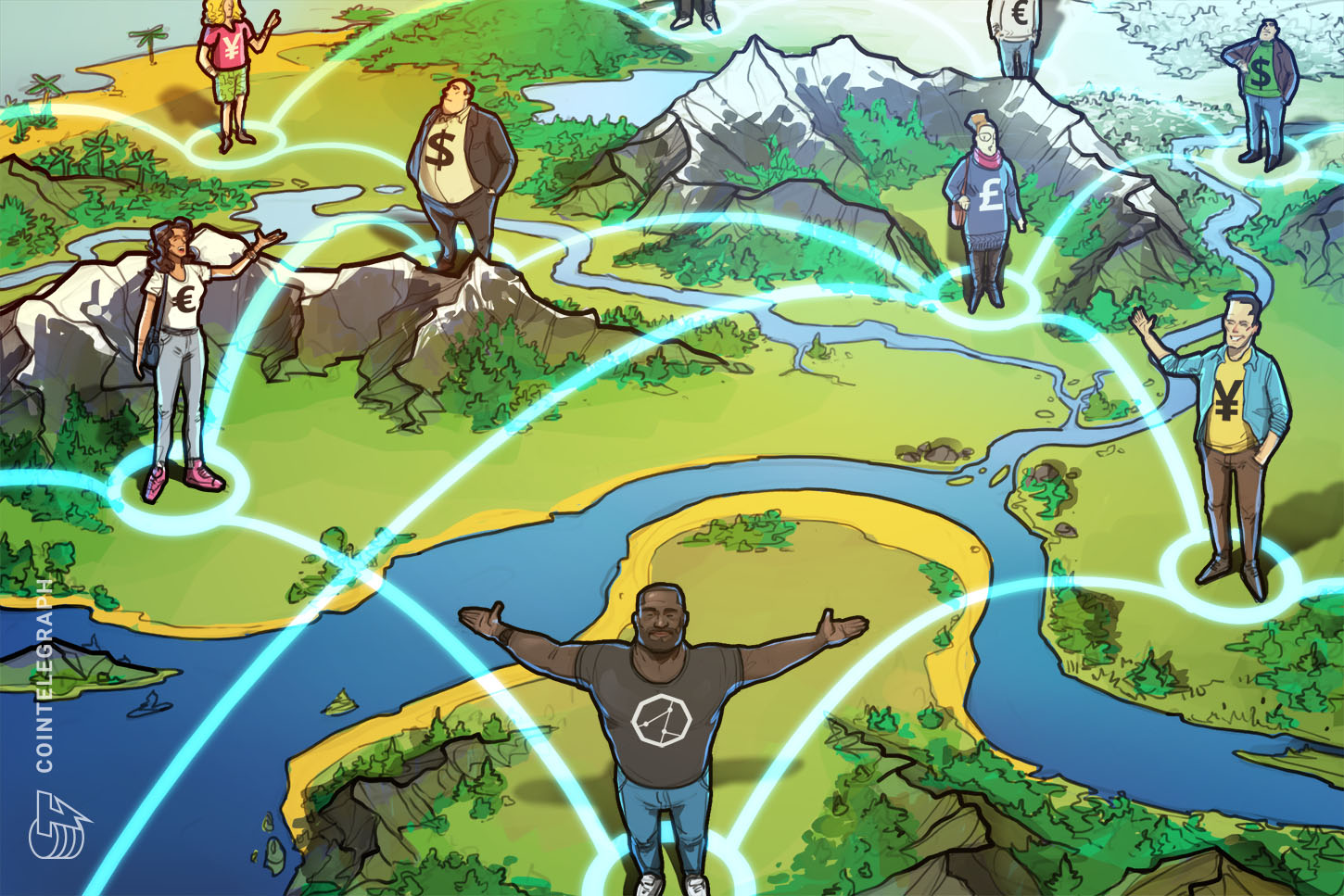
"Internet Capital Markets" (ICM) has been one of the hottest buzzwords of the past year. But what exactly does it refer to? People often lump everything into this broad concept—from Pumpfun to Sonar to xStocks, sometimes even including stablecoin payments, neobanks, and lending protocols! This confuses fundamentally different financial instruments, each with distinct value capture logics and ownership structures.
In my view, "Internet Capital Markets" is another way of saying "using tokens for financing"—whether the financing is for Meme coins or tokenized stocks. I suggest classifying ICM asset categories in a "lifecycle" manner based on the following points:
-
How mature is the tokenized project?
-
What exactly is the financing backing (attention, reputation, product, revenue, or governance rights)?
-
How does value flow and accumulate between the platform and the asset itself?
1 - The Lifecycle of ICM Platforms
The charm of public blockchains is that anyone can issue tokens, regardless of project maturity. Consequently, various issuance and tokenization platforms have emerged to meet the needs of projects at different stages. I believe ICM projects can generally be divided into the following five maturity stages:

Stage 1 - Anonymous Stage
-
Representative Platforms: Pumpfun, Bonk Launchpad
-
Representative Assets: Fartcoin, WIF, MOODENG
At this stage, most tokens issued are pure Meme coins. Tokens issued on Pumpfun or Bonk typically have no strong "fundamentals" or "team" backing them. The pricing of tokens at this stage is entirely filled by the zeitgeist, financial engineering, and the "animal spirits" of the attention market.
Stage 2 - Creator Stage
- Representative Platforms: Zora, Believe App
-
Representative Assets: JESSE, BALAJI, PASTERNAK
In the creator stage, there is usually a well-known creator or team behind the token, and the token can be said to be a financialized form of the "attention" or "reputation" of the token creator (or claimed creator). For example, on Zora, the top two tokens, JESSE and BALAJI, are associated with real individuals. However, unlike early-stage venture capital (which has both a project concept and a founding team), these "creator-stage" token issuance platforms typically do not have a specific fundraising project entity. In this sense, creator-stage tokens are more like the "real-name" version of Pumpfun-style tokens.
Stage 3 - Venture Capital Stage
-
Representative Platforms: MetaDAO, StreetApp
-
Representative Assets: Avici, Umbra, Kled
In the venture capital stage, these tokens no longer resemble "Meme coins" but are closer to traditional venture capital fundraising mechanisms. Projects on MetaDAO and Street (such as Avici, Umbra, and Kled) are qualitatively similar to projects typically supported by blue-chip VCs at the seed to Series A stages. They have established teams, roadmaps, viable product plans, and potential governance rights. The real tension and question here evolve into: how to balance equity holders (and traditional VCs) with token issuance—token issuance broadens capital access but cannot provide the same legal protections and governance oversight.
Stage 4 - "ICO" Stage
-
Representative Platforms: Binance, Upbit, Sonar
-
Representative Assets: MegaETH, Plasma, Octra
The fourth stage is the "ICO" stage, where projects typically have significant market traction, have raised venture-scale funding, and may have stable revenue streams. Similar to an "IPO," token issuance at this stage represents the launch of a more mature, stable product with demonstrated market performance. Centralized exchanges like Binance, Coinbase, and Upbit, as well as specialized ICO platforms like Sonar, typically operate at this stage. At this stage, the tension between tokens and equity becomes more pronounced—existing VCs often receive token rights, but the tokens may only have specific revenue streams, IP, or contract governance rights, not equity, leading to fragmented asset ownership and tokens being seen as "second-class citizens" compared to equity.
Stage 5 - Public Asset Stage
-
Representative Platforms: xStocks, NYSE Tokenized Securities
-
Representative Assets: xNVIDIA, BENJI, PAXG
The final stage is the public asset stage, which involves the tokenization of existing financial instruments. The discussion around RWA has been extensive and won't be repeated here. The core logic is that "tokenized" assets (like xNVIDIA, BENJI, PAXG) are "mirrors" of existing "real" financial instruments; the tokenized version expands access for the on-chain audience, while the "real" asset retains all governance and legal rights.
2 - Where Does Value Accrue in Internet Capital Markets?
After analyzing the platforms and assets across the various "stages" of internet capital markets, a natural question arises—where does the value actually accumulate? My working hypothesis is that it actually depends on the stage the market is in—the earlier the stage, the more value tends to accrue to the platform; the later the stage, the more value tends to accrue to the asset.
In the early stages (Stages 1 and 2), I believe value flows to the platform itself—like Pumpfun or Zora. This is because the token assets themselves have no fundamental backing, and their virality is somewhat random. The game in the early stages is about the frequency and massive scale of project launches on the platform. Pumpfun has generated over $800 million in revenue through its transaction fees and "graduation fee" mechanism, thanks to the sheer volume of tokens issued on its platform.
However, in the later stages of the ICM lifecycle (Stage 3 and beyond), I believe holding the actual asset itself (like Avici, Kled, MegaETH, xNVIDIA) may capture more value than holding the underlying tokenization platform's token. In these later stages, projects typically have "fundamentals," with clear roadmaps, products, and potential monetization paths; holding the asset (not the platform token) captures this upside. In this case, the issuance platform is merely an access medium, and often not the only way to gain exposure to that asset, especially in the "ICO" and "Public Asset" stages. Furthermore, the stronger the asset's fundamentals, the greater its bargaining power tends to be with the issuance platform. For example, Kled, a breakthrough crowdsourced AI data marketplace project, initially launched on Believe but migrated to Street after a token dispute, illustrating this point.
Centralized exchanges (CEXs), however, are an exception to this rule, as they are typically highly profitable businesses. But for major CEXs like Binance and Coinbase, their business moat lies not just in listing, but more importantly in the liquidity and trading volume of specific assets. Arguably, their moat is having a large potential user base to trade your token (and thus generate fees), not just the listing process itself.
3 - What's Next for ICM Projects?
Over the past year, I believe innovation in the ICM space has generally taken on a "barbell" structure. On one end, launchpads like Pumpfun are industrially mass-producing tokens and driving trading volume on chains like Solana; on the other end, banks and other traditional financial institutions are tokenizing traditional assets (from money market instruments to stocks to commodities) to leverage the access advantages of global liquidity.
But in my view, the more interesting observation is how these two phenomena might converge in the middle ground of the ICM lifecycle—namely, Stages 3 and 4 (the venture capital and ICO stages). Currently, through mechanisms like Street's ERC-S and MetaDAO's Futarchy-based ownership tokens, we are seeing how token financing can expand upside exposure to venture-stage projects (like Umbra, Avici, Kled) and potentially capture the value of projects with socially productive use cases.
Admittedly, how this "VC-ownership-token" relationship evolves in the long term remains uncertain, dependent on multiple legal, economic, and governance uncertainties. For example, I personally remain unconvinced that Futarchy is a necessary or scalable governance solution for "ownership token" projects, and the SPV structure used by Street for ERC-S is still experimental from a legal standpoint. If given the choice, for regulatory peace of mind, I might still prefer holding equity. But in my view, the trend suggests tokens will increasingly be tied to productive venture capital, helping to create companies with real-world value. As this process advances, they may ultimately help the internet capital markets live up to that Silicon Valley creed—"making the world a better place."
Disclaimer:The information presented herein represents the personal views of Jay Yu and does not reflect the views of Pantera Capital or any other individual or entity. The information provided is believed to be from reliable sources, but no liability is accepted for any inaccuracies. This article is for informational purposes only and should not be considered investment advice.