Over $1 Billion in Cryptocurrencies Forced to Liquidate, Bitcoin Plunges 6% Below $67,000

华尔街日报Pubblicato 2026-06-02Pubblicato ultima volta 2026-06-02

Introduzione

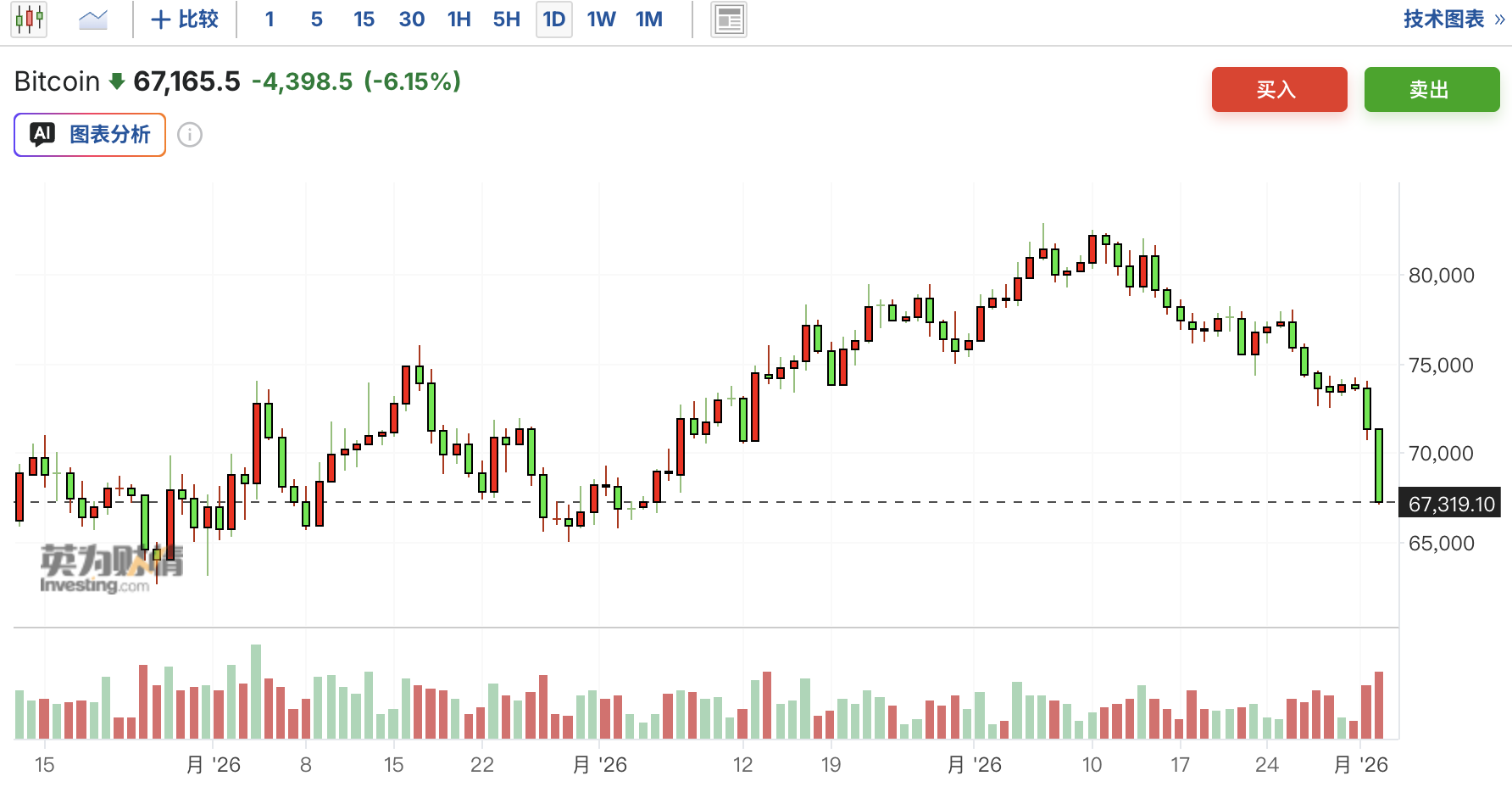
Bitcoin plunged over 6%, breaching the $67,000 mark for the first time since April 5, triggering more than $1 billion in cryptocurrency liquidations—the highest level since February. The sell-off was driven by deteriorating market sentiment amid heightened geopolitical risks from the Iran situation and a symbolic shift in strategy from a major holder. In a significant psychological blow to the market, MicroStrategy disclosed the sale of approximately 32 bitcoins, marking its first divestment since late 2022 and breaking its long-standing "buy-only" stance. Concurrently, U.S. spot Bitcoin ETFs have seen net outflows for a record 11 consecutive days, with approximately $3.5 billion withdrawn, removing a key traditional price support. Analysts note that positive catalysts from U.S. crypto regulatory progress have been completely offset by prevailing risk-off sentiment. Bitcoin is now down nearly 50% from its all-time high of around $126,000 set in October last year, starkly underperforming the rising Wall Street equity markets.

Bitcoin sentiment deteriorated sharply, triggering a wave of forced liquidations exceeding $1 billion, the most severe market pressure in recent months.

Bitcoin fell as much as 6% on Tuesday, breaking below $67,000 for the first time since April 5th. Geopolitical risks from the ongoing situation in Iran, coupled with selling actions from major holder Strategy, jointly dampened investor risk appetite. According to CoinGlass data, the scale of forced liquidations in this round reached its highest level since February this year.

Simultaneously, the two major traditional sources of demand that have historically supported Bitcoin's price—spot ETFs and Strategy—are concurrently turning into drags on the price, further intensifying market pressure.
Strategy's Selling Triggers Sentiment Turning Point

Strategy disclosed on Monday that the company sold approximately 32 bitcoins, raising about $2.5 million, marking its first reduction in holdings since late 2022. Compared to its total Bitcoin position of about $59 billion, the scale of this sale is minuscule. However, it broke the company's long-standing "only buy, never sell" minimalist strategy at a sensitive moment for the market.

Jasper De Maere, an over-the-counter trader at market maker Wintermute, stated:

"This selling wave appears to have been triggered by Strategy's disclosure of selling 32 bitcoins. But the reality is that even without this news, market momentum was already waning, and institutional participation on OTC desks had also receded to low levels."

Sustained ETF Net Outflows Heighten Price Fragility

According to data compiled by Bloomberg, U.S. spot Bitcoin ETFs have recorded net outflows for 11 consecutive trading days, setting a record for the longest consecutive outflow streak. During this period, investors redeemed a total of approximately $3.5 billion.

James Butterfill, Head of Research at CoinShares, pointed out that the price cushioning effect brought by the advancement of U.S. crypto regulatory legislation has been "completely offset" by safe-haven sentiment triggered by the situation in Iran.

Bitcoin is now down nearly 50% from its all-time high of approximately $126,000, which was set in October last year. Meanwhile, Wall Street stocks continue to rise amid a resurgence in AI trading and expectations of a ceasefire agreement, forming a stark contrast with the crypto market.


Domande pertinenti

QWhat event triggered over $1 billion in cryptocurrency liquidations according to the article?

AA sharp deterioration in Bitcoin sentiment, triggered by a combination of geopolitical risks from the Iran situation and the symbolic selling of 32 bitcoins by MicroStrategy.

QHow much did Bitcoin's price fall on Tuesday, and what key level did it break?

ABitcoin fell 6% and broke below the $67,000 level for the first time since April 5.

QWhat was significant about MicroStrategy's recent sale of 32 bitcoins, as described in the article?

AIt marked the company's first sale since late 2022 and broke its long-standing 'buy and hold only' minimalist strategy, acting as a negative sentiment trigger in a sensitive market.

QWhat is the current state of U.S. spot Bitcoin ETFs, and what record was mentioned?

AU.S. spot Bitcoin ETFs have experienced 11 consecutive days of net outflows, which is a record-long streak, with investors redeeming approximately $3.5 billion during this period.

QWhat two major traditional sources of Bitcoin demand have turned into a drag on its price?

ASpot Bitcoin ETFs (due to sustained net outflows) and MicroStrategy (due to its symbolic sell-off), both of which are now contributing to market pressure.

Letture associate

Thanks to Dice Rolls, Bitcoin Keys Are Stored Offline, But Not Everyone Will Do It

The article discusses using dice rolls to generate secure Bitcoin wallet seeds, providing entropy independent of potentially flawed hardware random number generators. It explains that each fair dice roll offers about 2.585 bits of entropy, with around 50 rolls needed for a standard 12-word seed phrase and 99+ recommended for higher security. This method gained attention after a vulnerability was revealed in some Coldcard hardware wallets, where a faulty firmware RNG (dating back to 2021) compromised generated keys. The analysis notes that while a dice-generated main seed was safe from this specific flaw, other Coldcard functions (like creating paper wallets, backup keys, or passwords) could still be vulnerable if they used the defective RNG. The piece argues that while dice-based entropy is technically robust, the manual process is error-prone, tedious, and unrealistic for most new users, who might make mistakes in recording or inputting rolls. It concludes that while manual entropy generation should remain an option for advanced users, the long-term goal is to develop reliable, user-friendly hardware and software that securely generates randomness without requiring specialized knowledge. Coldcard users are advised to check their firmware version and replace any secondary secrets (like paper wallet keys) created with vulnerable devices, while also considering multi-signature setups with devices from different manufacturers for added security.

cryptonews.ru4 h fa

Thanks to Dice Rolls, Bitcoin Keys Are Stored Offline, But Not Everyone Will Do It

cryptonews.ru4 h fa

Trading

Spot
活动图片




