Old Case Resurfaces: The 1011 Crash Sparks a Mixed Battle of Public Opinion Between Exchanges and Ecosystems

Odaily星球日报Pubblicato 2026-02-02Pubblicato ultima volta 2026-02-02

Introduzione

A wave of criticism targeting Binance resurfaced on social media, reignited by ARK Invest CEO Cathie Wood's comments blaming a past "system glitch" at the exchange for the crypto market's prolonged stagnation. She referred to the October 11th ("1011") event, a major market crash that saw over $190B in liquidations, as a key reason crypto wasn't rallying with other assets. Binance co-founder He Yi quickly countered, suggesting Wood, a Coinbase investor, was not a user and misinformed. The 1011 event itself was a "black swan" where a sharp market downturn was exacerbated by a liquidity anomaly on Binance, triggering its Auto-Deleveraging (ADL) mechanism and causing massive, cascading liquidations. Binance later paid $283M in compensation but maintained the sell-off was market-driven. The criticism evolved into a broader industry debate. Key figures leading the charge included Leonidas, a Bitcoin Ordinals proponent, who accused Binance of extracting value from the ecosystem via high token listing fees. OKX founder Star (Xu Mingxing) presented a more technical critique, arguing Binance's high-yield USDe promotion allowed systemic risk to accumulate, fundamentally altering the market's microstructure post-1011. Solana co-founder Anatoly Yakovenko indirectly supported critics, leading CZ to unfollow him—highlighting underlying competition between the BSC and Solana ecosystems. In Binance's defense, some analysts like Dragonfly's Haseeb Qureshi argued the crash lacked a single ca...

Original | Odaily Planet Daily (@OdailyChina)

Author | Ding Dang (@XiaMiPP)
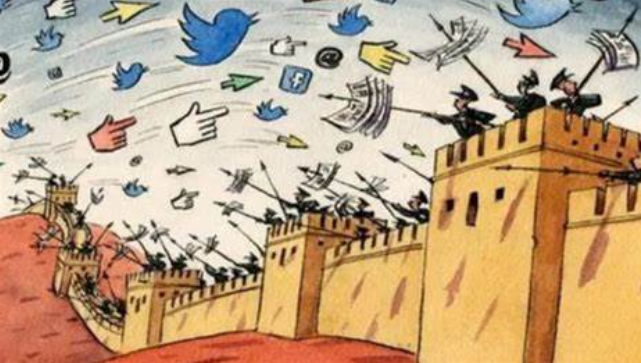
Last weekend, a wave of concentrated criticism against Binance erupted again on X. This time, it was the settling of old scores reignited.

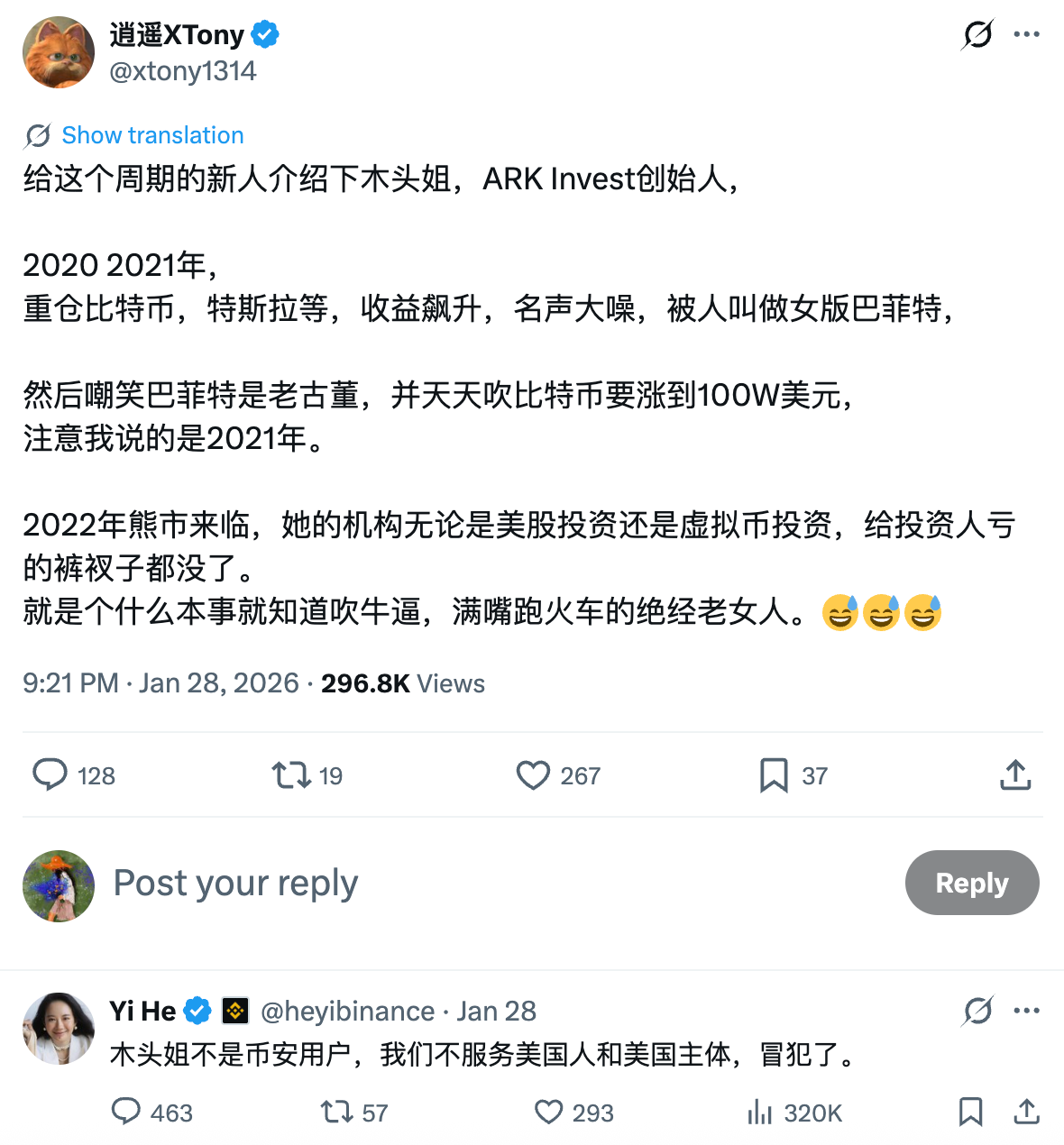
The fuse of the storm was lit on January 26th when ARK Invest CEO Cathie Wood (nicknamed "Cathie Wood") stated in an interview with Fox Business that while gold, silver, and US stocks have been surging recently, the reason cryptocurrencies aren't rising is the lingering aftershocks of the system failure at Binance on October 11th last year (referred to as the "1011 Incident"), which caused $28 billion in leveraged positions to be liquidated.

As an early investor in Coinbase and one of the first Wall Street fund managers to incorporate Bitcoin into institutional investment narratives, Cathie Wood holds a natural cross-industry voice between traditional finance and the crypto industry. Therefore, these remarks quickly revived the market's collective memory of the 1011 Incident. Moreover, it happened at a time when the market sentiment was low, and everyone was in the mood for gossip, allowing the matter to continue fermenting.

Binance quickly responded. Co-CEO He Yi stated that Cathie Wood is not a Binance user, and Binance does not serve US entities. The implication seemed to suggest that Cathie Wood did not understand the real situation, or that there was some kind of conspiracy theory behind it.
The Cause and Effect of the 1011 Incident: The Butterfly Effect Triggered by a "System Failure"

To understand this crusade, one must first clarify the sequence of events of the 1011 Incident. Simply put, it was a "black swan" event in the crypto market: that day, the market suddenly experienced violent fluctuations, with the total global crypto market capitalization evaporating over $500 billion, and the scale of leveraged position liquidations exceeding $19 billion, making it one of the largest leveraged liquidation events in the history of the crypto industry. Everyone from a large number of ordinary users to many well-known market makers and VCs suffered significant losses in this event.

The reason Binance is accused of being the "culprit" is that at the critical juncture of the sharp market fluctuations, there was a noticeable liquidity anomaly within its platform. Whether officially described as a "software issue" or a "brief malfunction of the trading module," the result seen by the market was extremely brutal: the Auto-Deleveraging (ADL) mechanism was triggered, cross-account chain liquidations started, and some market maker accounts suffered devastating losses in a short period, even being forced to exit the market.(For details, read: "Detailed Explanation of the ADL Mechanism for Perpetual Contracts, Why Your Profitable God Trade Gets Automatically Closed?".)

Another clue that has been repeatedly brought up points to Binance's USDe incentive activity at the time. This activity promoted a 12% annualized yield, and some users also used revolving loan methods to collateralize assets like USDe, amplifying both returns and risks. When USDe "depegged" (more accurately, the price difference between platforms, on-chain and off-chain), it triggered large-scale liquidations.

After the event, Binance issued statements repeatedly emphasizing that the sell-off at the time was mainly driven by broader market conditions, not a failure of the platform's own system. Subsequently, Binance paid approximately $283 million in compensation to users affected by the depegging and related issues. This compensation did quell the anger of some crypto users in the short term.

But the controversy did not disappear. Perhaps it was because Binance retrospectively modified the K-line trends of some tokens that had abnormal movements after the fact, or the long-standing doubts about the Binance Alpha listing mechanism—these accumulated grievances found a new outlet through the 1011 public opinion incident.

As public opinion heated up, it now seems to be gradually evolving into camp divisions. Odaily Planet Daily will introduce some of the main characters from both sides of the public opinion below.

One of the Accusing Camps: Leonidas's Long-Term Offensive

The earliest to intensively open fire was Leonidas, co-founder of ZapApp, an important figure in the Bitcoin inscription ecosystem and a core promoter of DOG (a popular dog Meme coin on Bitcoin).

He almost daily outputs criticism about Binance on X, becoming one of the most visible representatives of the current anti-Binance camp. However, looking closely at his expressions, one finds that what he is pursuing is not 1011 itself. For Leonidas, 1011 is more like "evidence": an example that can be used to prove that Binance is sucking the blood of the entire crypto industry.

His grudge with Binance originated from him publicly demanding Binance list the token, which was not approved. Leonidas blasted Binance for requiring projects to pay an extremely high proportion of the token supply (he claimed up to ~10%) as a listing "fee," which Binance or insiders then sold off in large quantities, causing the projects and retail investors to suffer heavy losses.

Leonidas directly called CZ the "biggest liar in crypto history" and the "biggest liar in human civilization history." He believes that although CZ has ostensibly stepped down as CEO, he still holds 90% of Binance's shares, making Binance his "proxy tool." Every post by CZ is interpreted by Leonidas as hypocritical because, in his view, CZ "extracts from the market" through Binance while preaching鸡汤 (chicken soup for the soul) to retail investors. In his opinion, the $283 million Binance later compensated users precisely proves its direct responsibility, stating, "Only guilty companies pay that much money."

From this perspective, there is a direct interest conflict between Leonidas and Binance at the project level, and his emotional expression is clearly mixed with personal grievances. At the same time, he also represents a group long dissatisfied with the power structure of CEXs.

"Friendly Business" Joins the Fray: Star's Systemic Risk Accusations

The one who truly pushed the conflict to its climax was OKX founder Star (Xu Mingxing). He pointed out that after 1011, the microstructure of the crypto market underwent fundamental changes, its destructiveness even exceeding the collapse of FTX. He believes the core trigger was Binance's user growth activity—offering a 12% annualized yield for USDe and allowing it to enjoy the same collateral treatment as USDT and USDC, but lacking sufficient restrictions.

In his view, USDe is essentially closer to a "tokenized hedge fund" rather than a low-risk money market product like BlackRock's BUIDL. Lured by yields, users swapped stablecoins for USDe, creating implied returns of 24%–70% through循环借贷 (revolving loans), causing systemic risk to accumulate rapidly in a short time. When volatility truly arrived, the depegging of USDe, coupled with risk management flaws in WETH and BNSOL,共同放大冲击 (collectively amplified the impact), with some asset prices once approaching zero.

Xu Mingxing emphasized that his intention was not to attack Binance but to希望行业面对真实问题 (hope the industry faces the real problems); as the world's largest platform, Binance should prioritize stability and transparency, not掩盖风险 (cover up risks) through high-leverage marketing.

But the reality is, as one of Binance's main competitors, OKX has long been suppressed by Binance. As the helmsman of OKX, it is reasonable for Xu Mingxing to highlight OKX's "compliant and user-oriented" image in his statements to weaken Binance's market monopoly.

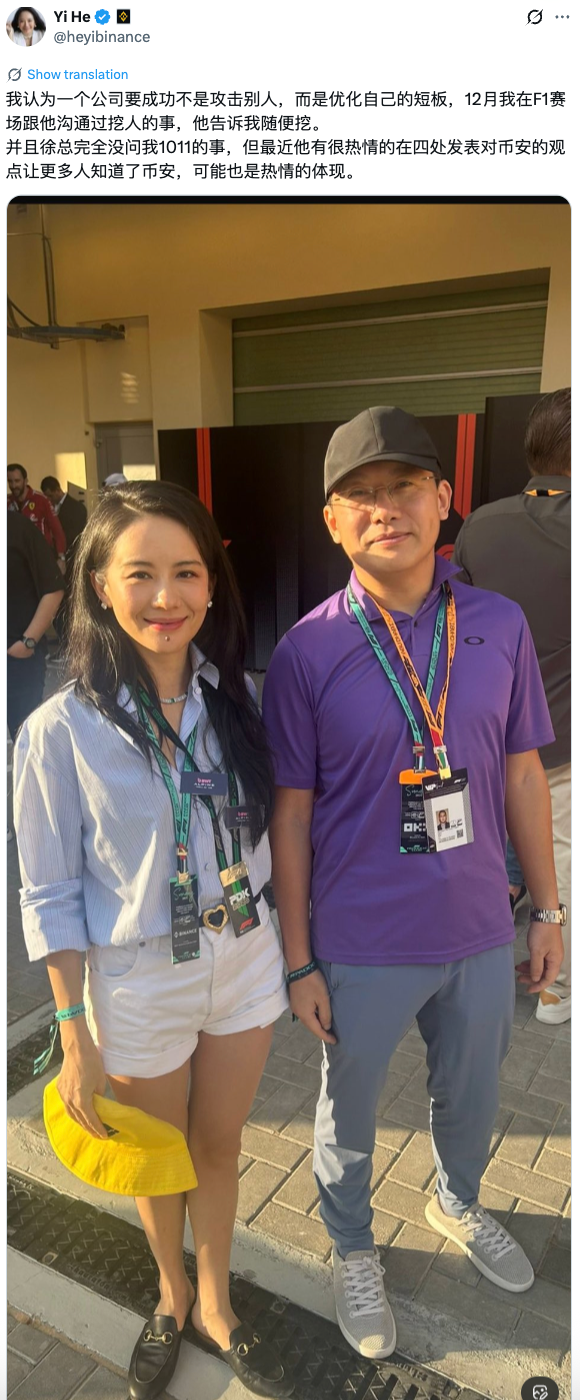
Faced with Xu Mingxing's accusations, both sides naturally engaged in a war of words, with attacks and counterattacks. However, more interestingly, both CZ and He Yi were once employees under Xu Mingxing. Although online it is tense, offline they still maintain a微妙 (subtle) industry relationship. He Yi even threw out a "friendly" group photo with Xu Mingxing from December, stating they had privately discussed "poaching" matters (Binance poached a product manager from OKX) but had not discussed the 1011 incident, which was full of sarcasm.
CZ Unfollows Toly, Another Undercurrent of Public Chain Competition?

Another highlight of this crusade was CZ unfollowing Solana co-founder Anatoly Yakovenko's X account. The reason was that Toly转发 (retweeted) Xu Mingxing's tweet criticizing Binance, adding a meaningful comment: "It only took 18 months after the accident to recover." This暗指 (implied) that Solana (SOL) took 18 months after the FTX crash to return to its 2021 bull market levels, and now Binance is being insinuated as a similar "accident" responsible party. Toly's move was equivalent to indirectly taking sides, supporting the criticism against Binance.

Some crypto users began to worry: Will it be harder for coins in the Solana ecosystem, especially Meme coins, to be listed on Binance in the future?

Behind this is the head-on competition between BSC and Solana for Meme liquidity. The former is going all out to compete for the new round of Meme narrative, while the latter was once the most important incubator for this wave. The game between public chains may be quietly emerging in this public opinion war.

Support Camp: Truth or PR?

Perhaps thanks to Binance's long-term maintenance of KOL relationships, the attitude towards Binance in the Chinese circle is relatively mild. However, in the face of these serious accusations, there are still few major KOLs who dare to publicly support Binance. Among them, EnHeng, nicknamed the "Binance Crown Prince," is one of them.(Supplementary reading: "Post-05 Crypto Madman EnHeng: 'Binance Crown Prince' Is Just My Camouflage".)

Currently, those who can support Binance come more from relatively neutral analysts. For example, trader Benson pointed out that Binance does have responsibility, but USDe was not the starting point of the crash. Looking at the timeline, when the market bottomed at 5:20, USDe was only slightly depegged; the real drop to 0.65 occurred after the rebound.

He believes that what was more abnormal was the large-scale price dislocation between Binance and other exchanges between 5:18—5:20: half of the tokens hit the lowest prices across the entire market on Binance, with some deviations as high as 100%, and the USDT pair was significantly lower than the USD pair. He believes that, reasoning from the result, it is more likely that there was a problem at Binance's system level, rather than simply caused by market makers withdrawing liquidity. He called for taking the opportunity of Binance's released review to allow the industry to have a more sufficient and public discussion of the event.

Dragonfly managing partner Haseeb Qureshi holds a similar view. He believes that the statement "Binance and Ethena caused the crash" is difficult to成立 (hold up) in terms of timeline, market transmission path, and evidence. He pointed out that the Bitcoin price bottomed about 30 minutes before the USDe appeared abnormal on Binance,明显因果倒置 (the causality is clearly reversed);同时 (at the same time), the USDe price deviation only occurred on Binance and did not spread to other trading platforms, unable to explain the large-scale liquidations across the entire market, which is fundamentally different from events like Terra that had a global balance sheet impact. In fact, regarding the USDe depegging, Haseeb had already interpreted it shortly after the 1011 incident. For details, refer to "Ethena Investor Dragonfly: USDe Did Not Depeg, It Was Just Binance's 'Local Price Dislocation'".

In his view, a more reasonable explanation is the叠加 (overlay) of multiple factors: Trump's tariff remarks disturbed the market on Friday evening, Binance API abnormalities caused market makers to be unable to hedge across platforms, liquidation and ADL mechanisms amplified fluctuations, and the crypto market's lack of traditional financial-style circuit breakers and self-stabilizing mechanisms ultimately caused the行情 (market trend) to evolve along an unfavorable path. He emphasized that there is no simple and conspiratorial "single mastermind" for 10/11. Although the market was severely damaged, in the long run, it was not permanently destroyed, only needing time to修复流动性 (repair liquidity) and信心 (confidence).

After Haseeb expressed his support for Binance, CZ转发 (retweeted) this tweet, captioning it, "Dragonfly was once one of OKX's largest investors." However, Xu Mingxing later denied this in his response, stating that Dragonfly never invested in OKX, neither small nor large investments.

SAFU Adjustment: Remedy or Signal?

Amid the spreading Binance FUD, on January 30th, Binance announced in "An Open Letter to the Crypto Community" that it would adjust the asset structure of the SAFU fund, gradually converting the original $1 billion规模的稳定币储备 (scale stablecoin reserve) into a Bitcoin reserve, and plans to complete the exchange within 30 days of this statement. Binance will conduct regular checks on the asset size of the SAFU fund. If the market value of the SAFU fund falls below $800 million due to Bitcoin price fluctuations, Binance will supplement Bitcoin to restore the fund size to $1 billion.

However, regarding the specific purchase method of this $1 billion in BTC, Binance did not specify in the announcement. Odaily Planet Daily has inquired with Binance on this matter and has not yet received a response.

Conclusion

Looking back at this debate, the reason Binance has once again become the focus is perhaps not just because it "did something wrong," but because it is already big enough—big enough that any structural problems will first manifest themselves on it.

This is not the first crusade Binance has experienced, and it probably won't be the last. What is truly important is not just how the event responsibility is divided, but whether, as an industry hub, the leading exchange is willing to take on a higher level of stabilizing responsibility.

In a market that still highly relies on leverage, sentiment, and narrative drive, this debate itself is perhaps more important than the outcome.

Domande pertinenti

QWhat was the '1011 incident' mentioned in the article, and why is Binance being blamed for it?

AThe '1011 incident' refers to the massive market crash on October 11th, where the global crypto market lost over $500 billion in value and over $19 billion in leveraged positions were liquidated. Binance is being blamed because, during the extreme market movements, its platform experienced a 'system glitch' or 'temporary trading module failure' that caused liquidity anomalies, triggered its Auto-Deleveraging (ADL) mechanism, and led to cascading liquidations across accounts, resulting in severe losses for many users and market makers.

QAccording to the article, what role did Cathie Wood ('Cathie Wood') play in reigniting discussions about the 1011 incident?

ACathie Wood, CEO of ARK Invest and an early investor in Coinbase, stated in a Fox Business interview that the reason cryptocurrencies were not rising while gold, silver, and US stocks were surging was due to the lingering effects of the October 11th system glitch at Binance, which caused $28 billion in leveraged positions to be liquidated. Her comments, given her influence in both traditional finance and crypto, revived market memory of the event and fueled its spread on social media.

QWho is Leonidas, and what is his main criticism against Binance beyond the 1011 incident?

ALeonidas is the co-founder of ZapApp and a key figure in the Bitcoin Ordinals ecosystem. His main criticism against Binance extends beyond the 1011 incident; he accuses Binance of 'sucking blood from the entire crypto industry' by demanding extremely high proportions of a project's token supply (claiming up to ~10%) as a listing 'fee,' which Binance or its insiders then allegedly dump on the market, causing significant losses for the projects and retail investors.

QWhat was OKX founder Star Xu's (徐明星) primary argument regarding the systemic risk highlighted by the 1011 incident?

AStar Xu argued that the 1011 incident caused a fundamental change in the crypto market's microstructure, with its destructive impact even exceeding that of the FTX collapse. He pointed to Binance's user growth campaign offering a 12% APY on USDe and treating it with the same collateral status as USDT and USDC, without sufficient restrictions, as the core诱因. He stated that USDe is more akin to a 'tokenized hedge fund' than a low-risk product, and users, enticed by high yields, used循环借贷 (recursive lending) to create implied returns of 24-70%, leading to a rapid buildup of systemic risk that amplified the market crash.

QWhat significant adjustment did Binance announce regarding its SAFU fund amidst the spreading FUD, and what was the stated reason for this change?

AAmidst the spreading FUD, Binance announced in an 'Open Letter to the Crypto Community' that it would adjust the asset structure of its SAFU (Secure Asset Fund for Users) fund. It planned to gradually convert the existing $1 billion in stablecoin reserves into Bitcoin reserves, completing the conversion within 30 days. The fund's size would be regularly reviewed, and if its value fell below $800 million due to Bitcoin price fluctuations, Binance would top it up with more Bitcoin to restore the fund to a $1 billion valuation. The stated reason was an adjustment in the fund's asset composition, though the specific method of acquiring the Bitcoin was not detailed in the announcement.

Letture associate

Morning Post | Trump Media Group Releases Q1 Financial Report; Top Three DeFi Applications Return Nearly $100 Million in Revenue to Token Holders in 30 Days; Michael Saylor Shares Bitcoin Tracker Info Again

**Title: Daily Briefing | Trump Media Group Releases Q1 Report; Top 3 DeFi Apps Return Nearly $100M to Token Holders; Michael Saylor Signals Potential Bitcoin Buy** **Summary:** Key developments in the past 24 hours include: * **Economic Outlook:** Goldman Sachs has pushed back its forecast for the next two Federal Reserve interest rate cuts to December 2026 and March 2027, citing persistent inflationary pressures from energy costs. This delayed timeline is expected to tighten liquidity flow into risk assets, including cryptocurrencies. * **DeFi & Revenue:** Data from DefiLlama shows that three leading DeFi applications—Hyperliquid, Pump.fun, and EdgeX—collectively distributed $96.3 million in revenue to their token holders over the last 30 days. This trend highlights a shift in the crypto community's focus towards real protocol earnings and sustainable economic models. * **Corporate Bitcoin Moves:** Michael Saylor, founder of MicroStrategy (note: referred to as 'Strategy' in the text, likely a typographical error), has signaled potential upcoming Bitcoin purchases by posting a "Bitcoin Tracker" update, following a pattern that typically precedes the company's official disclosure of new acquisitions. * **Market Integrity:** Prediction market platform Polymarket announced updates to address platform issues, including identifying and banning clusters of accounts involved in "ghost-fill" activities and implementing measures to prevent bulk account creation. * **Regulation:** The Bank of England Governor warned that stablecoin regulation could lead to tensions between US and international regulators. In South Korea, the National Tax Service has launched a pilot program to entrust seized virtual assets to private custody firms for management. * **Meme Token Trends:** GMGN data lists the top trending meme tokens on Ethereum (e.g., HEX, SHIB), Solana (e.g., FWOG, TROLL), and Base (e.g., SKITTEN, PEPE) over the past day. **Financial Note:** Trump Media & Technology Group reported a Q1 loss of approximately $4 billion, primarily attributed to unrealized losses on its Bitcoin and other digital asset holdings.

链捕手28 min fa

Morning Post | Trump Media Group Releases Q1 Financial Report; Top Three DeFi Applications Return Nearly $100 Million in Revenue to Token Holders in 30 Days; Michael Saylor Shares Bitcoin Tracker Info Again

链捕手28 min fa

Telegram Takes Direct Control of TON, Social Traffic Rewrites the Public Chain Narrative

Telegram founder Pavel Durov announced that Telegram will replace the TON Foundation as the core driver and largest validator of The Open Network (TON). Key initiatives include a sixfold reduction in transaction fees, performance upgrades, and improved developer tools within the next few weeks. This marks a strategic shift from Telegram merely providing user access to deeply integrating TON into its platform's core infrastructure. The goal is to transform Telegram's massive social traffic into sustainable on-chain activity. While viral mini-apps like Notcoin have demonstrated Telegram's ability to drive user adoption, TON aims to support frequent, low-value transactions inherent to social platforms—such as tipping, in-app payments, and game rewards. Ultra-low fees and sub-second finality (0.6 seconds) are crucial to making blockchain interactions seamless and nearly invisible within the Telegram user experience. However, Telegram's increased central role raises questions about network decentralization. Durov argues that Telegram's participation will attract more large validators, thereby enhancing decentralization. TON also offers high annual staking rewards (18.8%), aiming to retain capital within its ecosystem. The fundamental challenge for TON is no longer leveraging Telegram's user base, but becoming an indispensable, seamless infrastructure layer for Telegram's everyday applications—moving from an adjacent chain to an embedded utility.

marsbit29 min fa

Telegram Takes Direct Control of TON, Social Traffic Rewrites the Public Chain Narrative

marsbit29 min fa

Telegram Takes Direct Control of TON, Social Traffic Reshapes Public Chain Narrative

Telegram's founder, Pavel Durov, has announced a major shift in the development of The Open Network (TON). Telegram will now become the core driver of TON, replacing the TON Foundation and becoming its largest validator. The focus will be on technical upgrades over the next few weeks, including slashing network fees by six times to near-zero and improving finality time to 0.6 seconds. This move signifies a deeper integration between Telegram and TON, moving beyond just providing a user base. The goal is to transform Telegram's vast social traffic and built-in features—like Mini Apps, payments, and bots—into sustainable, on-chain usage scenarios. The reduced fees and faster speeds are crucial for enabling the small, frequent transactions typical of social interactions. While this promises stronger execution and product alignment, it raises questions about centralization. Durov argues Telegram's involvement will attract more validators, enhancing decentralization, but the outcome remains to be seen. Additionally, TON's high annual staking reward of 18.8% aims to retain capital within the ecosystem. The key challenge for TON is no longer just leveraging Telegram's entry point, but becoming an invisible, seamless infrastructure layer within Telegram's daily use. Its success hinges on converting viral attention into lasting, embedded utility.

Odaily星球日报39 min fa

Telegram Takes Direct Control of TON, Social Traffic Reshapes Public Chain Narrative

Odaily星球日报39 min fa

OpenAI Post-Training Engineer Weng Jiayi Proposes a New Paradigm Hypothesis for Agentic AI

OpenAI engineer Weng Jiayi's "Heuristic Learning" experiments propose a new paradigm for Agentic AI, suggesting that intelligent agents can improve not just by training neural networks, but also by autonomously writing and refining code based on environmental feedback. In the experiment, a coding agent (powered by Codex) was tasked with developing and maintaining a programmatic strategy for the Atari game Breakout. Starting from a basic prompt, the agent iteratively wrote code, ran the game, analyzed logs and video replays to identify failures, and then modified the code. Through this engineering loop of "code-run-debug-update," it evolved a pure Python heuristic strategy that achieved a perfect score of 864 in Breakout and performed competitively with deep reinforcement learning (RL) algorithms in MuJoCo control tasks like Ant and HalfCheetah. This approach, termed Heuristic Learning (HL), contrasts with Deep RL. In HL, experience is captured in readable, modifiable code, tests, logs, and configurations—a software system—rather than being encoded solely into opaque neural network weights. This offers potential advantages in explainability, auditability for safety-critical applications, easier integration of regression tests to combat catastrophic forgetting, and more efficient sample use in early learning stages, as demonstrated in broader tests on 57 Atari games. However, the blog acknowledges clear limitations. Programmatic strategies struggle with tasks requiring long-horizon planning or complex perception (e.g., Montezuma's Revenge), areas where neural networks excel. The future vision is a hybrid architecture: specialized neural networks for fast perception (System 1), HL systems for rules, safety, and local recovery (also System 1), and LLM agents providing high-level feedback and learning from the HL system's data (System 2). The core proposition is that in the era of capable coding agents, a significant portion of an AI's learned experience could be maintained as an auditable, evolving software system.

marsbit1 h fa

OpenAI Post-Training Engineer Weng Jiayi Proposes a New Paradigm Hypothesis for Agentic AI

marsbit1 h fa

Your Claude Will Dream Tonight, Don't Disturb It

This article explores the recent phenomenon of AI companies increasingly using anthropomorphic language—like "thinking," "memory," "hallucination," and now "dreaming"—to describe machine learning processes. Focusing on Anthropic's newly announced "Dreaming" feature for its Claude Agent platform, the piece explains that this function is essentially an automated, offline batch processing of an agent's operational logs. It analyzes past task sessions to identify patterns, optimize future actions, and consolidate learnings into a persistent memory system, akin to a form of reinforcement learning and self-correction. The article draws parallels to similar features in other AI agent systems like Hermes Agent and OpenClaw, which also implement mechanisms for reviewing historical data, extracting reusable "skills," and strengthening long-term memory. It notes a key difference from human dreaming: these AI "dreams" still consume computational resources and user tokens. Further context is provided by discussing the technical challenges of managing AI "memory" or context, highlighting the computational expense of large context windows and innovations like Subquadratic's new model claiming drastically longer contexts. The core critique argues that this strategic use of human-centric vocabulary does more than market products; it subtly reshapes user perception. By framing algorithms with terms associated with consciousness, companies blur the line between tool and autonomous entity. This linguistic shift can influence user expectations, tolerance for errors, and even perceptions of responsibility when systems fail, potentially diverting scrutiny from the companies and engineers behind the technology. The article concludes by speculating that terms like "daydreaming" for predictive task simulation might be next, continuing this trend of embedding the idea of an "inner life" into computational processes.

marsbit1 h fa

Your Claude Will Dream Tonight, Don't Disturb It

marsbit1 h fa

Trading

Spot
Futures
活动图片




