NVIDIA and YC Invest in a Company Aiming to Build a Hotel on the Moon by 2032

marsbitPubblicato 2026-01-14Pubblicato ultima volta 2026-01-14

Introduzione

Nvidia and YC have invested in GRU Space, a startup founded by 22-year-old Berkeley graduate Skyler Chan, which aims to build a luxury hotel on the Moon by 2032. The company, with just two full-time employees, is already accepting reservations: a non-refundable $1,000 application fee, followed by deposits of $250,000 or $1 million if selected. Final room prices may exceed $10 million. The ambitious timeline includes applicant screening in 2026, a private auction in 2027, lunar landing tests in 2029, hotel module deployment in 2031, and opening in 2032. GRU positions itself as betting on U.S. space policy shifts and potential government reliance on commercial lunar infrastructure. The article draws parallels to Virgin Galactic’s long-delayed, costly suborbital tourism efforts, noting that GRU’s lunar ambition is far more complex. However, the founder openly acknowledges the high-risk, high-reward nature of the venture, framing it as a strategic gamble rather than a scam. The company’s name, GRU, and its slogan—“It’s time to steal the Moon”—reference the film *Despicable Me*, adding a layer of playful audacity to the project.

Written by: Curry, Shenchao TechFlow

In 1980, a used car salesman named Dennis Hope, who was unemployed, walked into a government office in San Francisco and claimed he wanted to "claim" ownership of the entire Moon.

The staff thought he was crazy.

But after scouring legal documents, the 1967 Outer Space Treaty only prohibited nations from claiming the Moon, not individuals. Hope exploited this loophole, sent a letter to the United Nations saying the Moon was his, and the UN didn't respond.

So Hope registered a company called "Lunar Embassy" and started selling plots of lunar land. Twenty dollars per acre, complete with a gold-embossed deed and a satellite photo.

45 years have passed, and Hope has sold 600 million acres of lunar land. His clients include famous actors like Tom Cruise and John Travolta, and reportedly even three former U.S. presidents. How much money did he make?

12 million dollars.

This business was labeled "profiteering and madness" in China and explicitly banned. But in the U.S., Hope remains at large, still selling deeds.

Now, a 22-year-old young man says:

Selling land is too low-end; I want to open a hotel on the Moon.
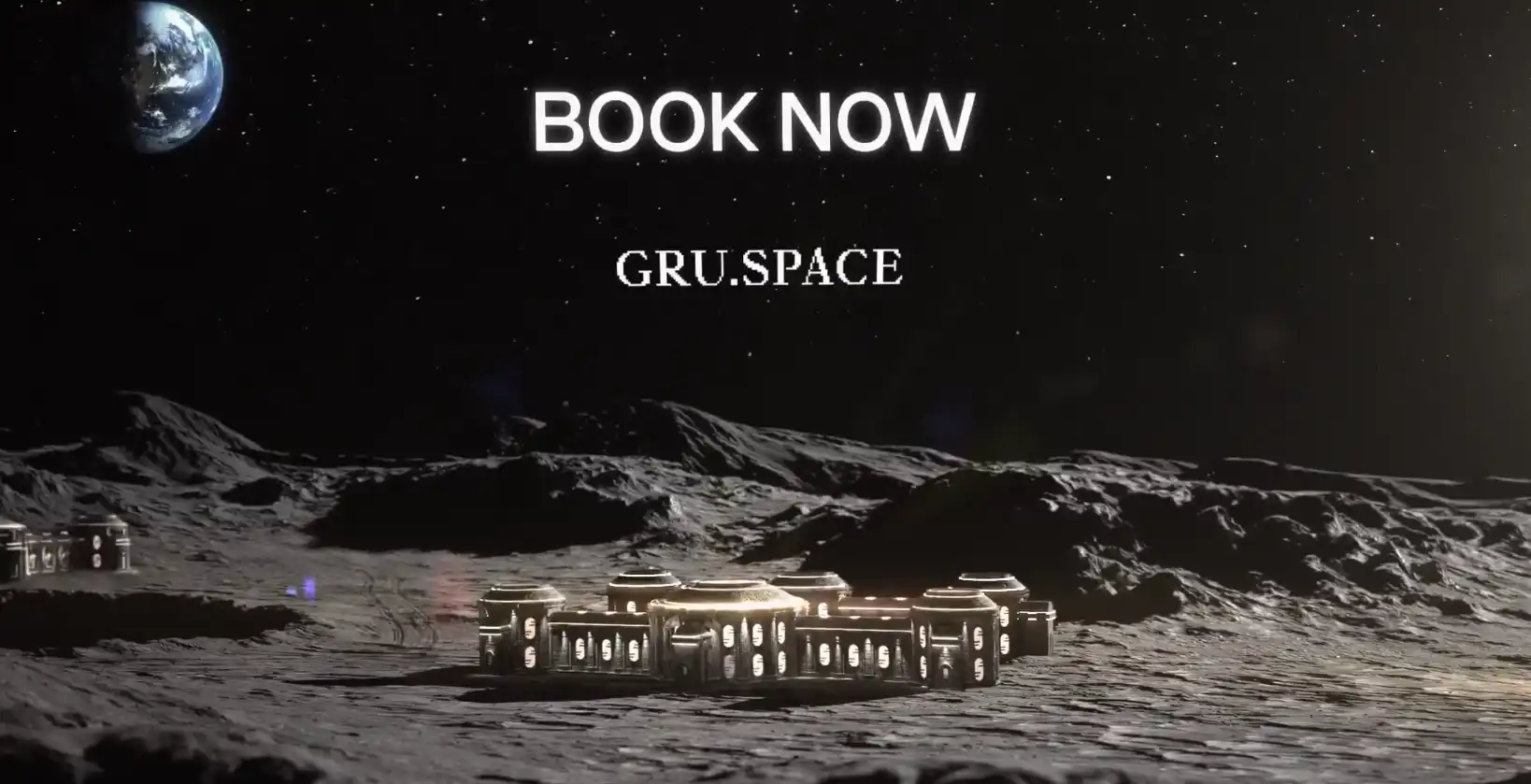
This company is called GRU Space, short for Galactic Resource Utilization. It just opened bookings for future hotel rooms last week.

The founder, Skyler Chan, holds dual degrees in Electrical Engineering and Computer Science from UC Berkeley. He graduated last May, a year ahead of the standard schedule.

We checked his resume, and it's indeed impressive: obtained a pilot's license from the Air Force at 16, wrote vehicle software at Tesla, built a NASA-funded 3D printer that was sent to space.

The company joined YC (Y Combinator), Silicon Valley's most famous startup incubator; Airbnb, Stripe, and Dropbox all came from there.

It also has backing from NVIDIA's support program and an investor who backed Musk's SpaceX and the military unicorn Anduril.

Sounds impressive, right?

The YC profile states clearly: 2 full-time employees.

2 people, aiming to get a hotel on the Moon within 6 years.

Even though I can't afford it, out of curiosity, I looked into their pricing structure.

There's a $1,000 application fee, non-refundable. If selected, you need to pay a deposit of $250,000 or $1 million. You can back out within 30 days, but after that, you can only get a refund once the hotel is built. The final room price "could exceed $10 million".

The timeline is as follows:

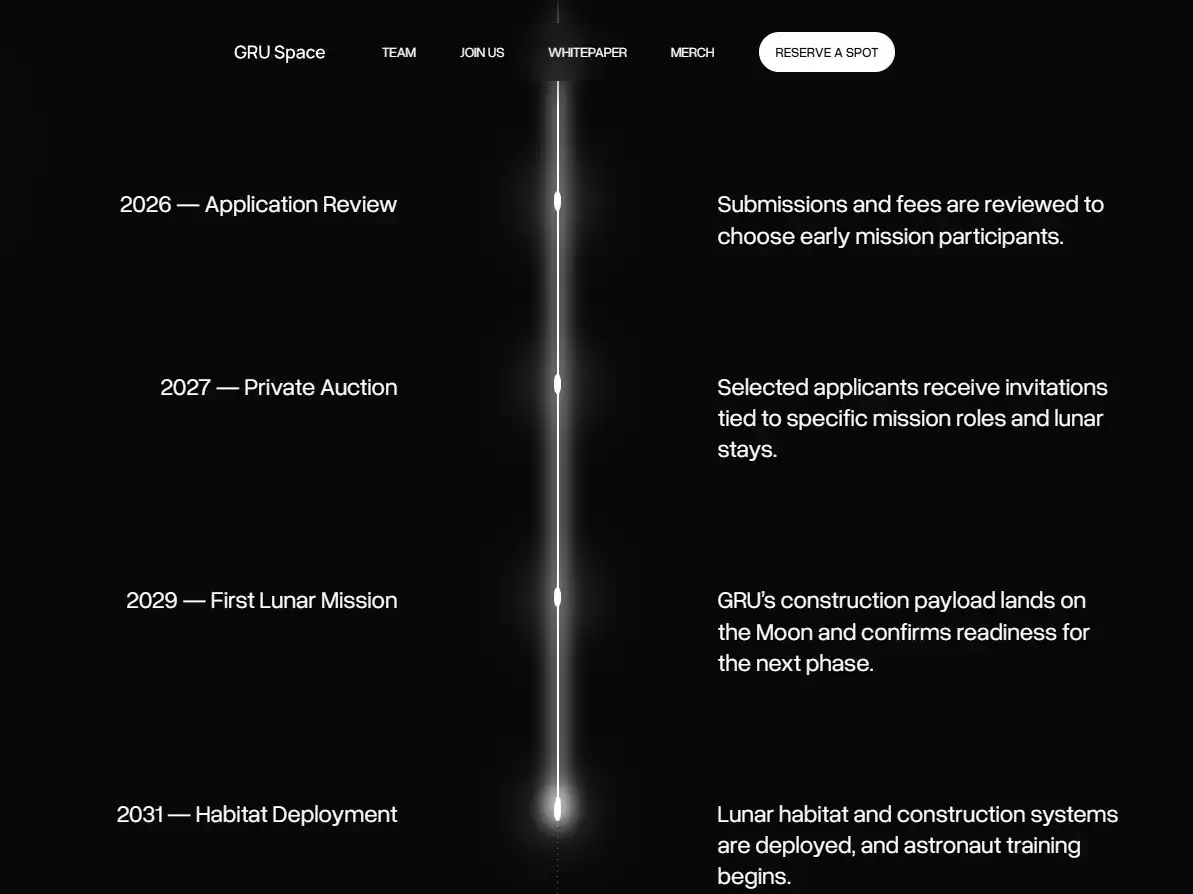
Application screening in 2026, a private auction in 2027, the first lunar landing test in 2029, hotel module deployment in 2031, and opening for business in 2032.
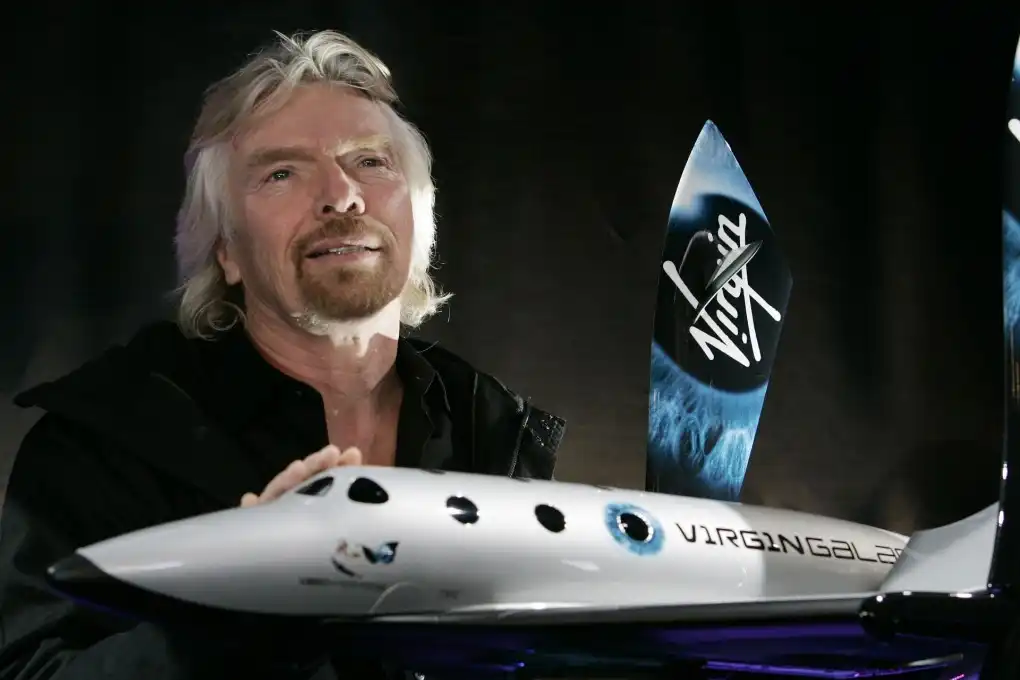
This model reminds me of Virgin Galactic. The space tourism company founded by British billionaire Richard Branson.

Branson is the owner of the Virgin Group, involved in airlines, records, cola, you name it. In 2005, he announced plans to take ordinary people to space and started collecting deposits, $200,000 per person. The first flight was initially promised for 2007.

Then it was 2008, 2009, 2010......

In 2011, a 75-year-old man named Alan Walton couldn't wait any longer and asked for a refund. He said he had already climbed Kilimanjaro, been to the North Pole, and skydived over Everest—space was the last item on his list, but he was old and really couldn't wait anymore.

In 2014, Virgin Galactic's spacecraft crashed during a test, killing one pilot. A group of customers requested and received refunds.

In 2021, Branson finally went to space himself. The customers breathed a sigh of relief, thinking their turn was finally coming.

In 2022, an 84-year-old man of Bulgarian descent, Chapadjiev, got his refund. He paid in 2007, waited 15 years, and was told "next year" every year. He said his relatives in Bulgaria kept asking him when he was going to space, and he couldn't answer.

Virgin Galactic's ticket price has now risen to $450,000, with a $150,000 deposit, $25,000 of which is non-refundable. Commercial flights have indeed started, but they only go to the edge of space for a few minutes before returning.
What GRU Space aims to do is take you to the Moon to stay for a few days. The difficulty is several orders of magnitude greater.

And Virgin Galactic spent 20 years, burned through billions of dollars, and suffered fatalities to get to where it is today. GRU Space has only 2 full-time employees and has given itself 6 years.

However, I don't think this is a scam.

The founder of GRU, that 22-year-old Berkeley graduate, states in the white paper that he knows this is a huge gamble. He doesn't hide it; he's proud of it. He says if successful, this will be the most influential event in human history.

That sounds arrogant, but the logic is consistent.

The Trump administration wanted to build a lunar base. The new NASA administrator, Jared Isaacman, is the billionaire who paid his own way to space and has stated that "initial facilities" will be built by 2030.

Chan is betting that the government won't have time to develop everything from scratch and will have to rely on commercial companies. He wants to be the one they depend on.

The project's white paper quotes a line:

"If America must build a lunar base within a decade, there is no time to invent from scratch those peculiar devices exclusive to the government."

So this $1 million deposit isn't buying a hotel room. It's buying a ticket to enter the race, a bet on the direction of U.S. space policy.

Finally, one detail.

The company is named GRU. The white paper ends with: "It's time to steal the Moon."
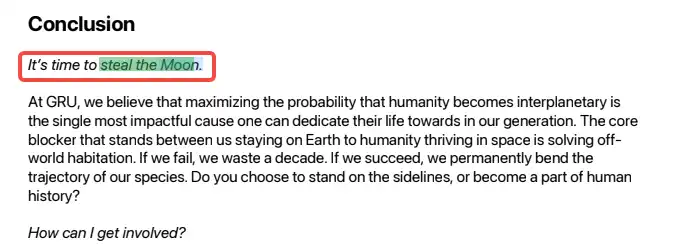
It's time to steal the moon.

Gru in Despicable Me also wanted to steal the moon. In the end, he didn't succeed but adopted three orphans and became a good father.

I wonder if Skyler Chan has seen that movie.

And I wonder, six years from now, will those who paid the deposit check into a lunar hotel, or will they, like the 84-year-old Chapadjiev, ultimately ask for a refund.

Anyway, the deposit is refundable after 30 days.

The Moon will still be there; it's not going anywhere.

Domande pertinenti

QWhat is the name of the company that plans to build a hotel on the Moon by 2032, and which major investors are involved?

AThe company is called GRU Space (Galactic Resource Utilization). It is backed by Y Combinator (YC), NVIDIA's support program, and has investors connected to SpaceX and Anduril.

QWho is the founder of GRU Space, and what is his background?

AThe founder is Skyler Chan, a 22-year-old who graduated from UC Berkeley with dual degrees in Electrical Engineering and Computer Science. He obtained a pilot's license at 16, worked on vehicle software at Tesla, and developed a NASA-funded 3D printer sent to space.

QHow does GRU Space's business model and timeline compare to Virgin Galactic's historical challenges?

AGRU Space charges a $1,000 application fee (non-refundable) and requires deposits of $250,000 or $1 million, with a 30-day cancellation window. It aims to open the lunar hotel by 2032. Virgin Galactic, by contrast, faced decades of delays, a fatal test crash in 2014, and multiple customer refunds after repeatedly postponing its suborbital flights, which eventually began in 2021 after 16 years.

QWhat legal precedent did Dennis Hope exploit to sell lunar land, and how successful was his venture?

ADennis Hope exploited a loophole in the 1967 Outer Space Treaty, which prohibits nations from claiming the Moon but does not explicitly forbid individuals. He registered Lunar Embassy and sold lunar land at $20 per acre, generating $12 million in revenue over 45 years by selling 600 million acres, including to celebrities and former U.S. presidents.

QWhat is the strategic bet GRU Space's founder is making regarding U.S. space policy?

ASkyler Chan is betting that the U.S. government, under initiatives like the Trump administration's lunar base plans and NASA's goals, will lack the time to develop lunar infrastructure from scratch and will rely on commercial companies. GRU Space aims to position itself as that critical commercial partner, with the lunar hotel project serving as an entry ticket into this emerging market.

Letture associate

After Three Consecutive Quarters of Decline, Can the Crypto Market Find a Window for Stabilization in Q3?

The cryptocurrency market has just concluded its worst-performing quarter since 2022, with total capitalization dropping 12.6% to $2.1 trillion. All core metrics indicate capital is leaving the sector, not just rotating within it. Bitcoin fell 14.2% and Ethereum dropped 25.4% in Q2, breaking their previous correlation with US tech stocks. A key driver is the reversal in US spot Bitcoin ETF flows, which saw a net outflow of approximately $4.67 billion in Q2, including a record monthly outflow near $4.5 billion in June. While recent data suggests long-term holders are accumulating again, sustained ETF outflows mean continued selling pressure. Market focus is now singularly on the Federal Reserve. The upcoming July FOMC meeting is seen as the most critical event for Q3. A dovish signal could support Bitcoin reclaiming a $68,000-$84,000 range, while a hawkish stance might establish a new trading band around $50,000-$56,000. Additionally, regulatory uncertainty persists, with the progress of the crucial *CLARITY Act* stalling in the Senate, reducing its perceived 2026 passage probability to 40-45%. Despite the broad downturn, a few sectors showed growth. Prediction markets saw nominal volume surge 48.7% year-over-year to $113.8 billion, and tokenized collectibles transaction volume rose 143% quarterly to $1.4 billion. The Real-World Asset (RWA) tokenization sector also continued steady growth, now representing ~$28.1 billion in on-chain value. The market's foundation for an extreme crash appears limited, with Bitcoin price hovering near its 200-week moving average. However, the trading paradigm has shifted from narrative-driven speculation to decisions based on price action, policy developments, and interest rate expectations, making a broad sentiment-driven rally unlikely in the near term.

marsbit10 h fa

After Three Consecutive Quarters of Decline, Can the Crypto Market Find a Window for Stabilization in Q3?

marsbit10 h fa

BIT Trading Moment: BTC Still Suppressed by Weekly 200 EMA, Rejection May Restart Decline; Storage and Semiconductors that Surged Last Night Begin Falling in Evening Trading

**Crypto & Stock Market Wrap: Bitcoin Tests Resistance, Stocks Retreat After AI Surge** Bitcoin consolidates around $66,000, facing key resistance near $68,000—an area seen as a major psychological and technical hurdle where previous rallies have failed. Analysts note the cryptocurrency is caught between its 200-week moving average (~$63,333) and 200-week EMA (~$68,328). A clear break above $68k is needed to signal a stronger bullish trend, while a rejection could lead to a retest of $63k support. Market sentiment remains cautious, with low futures open interest pointing to a low-liquidity rebound rather than a full bull market. Bitcoin spot ETFs saw another $203 million inflow. US stock futures pointed lower after a strong Tuesday session led by a massive rebound in semiconductors and memory stocks. The rally was fueled by renewed optimism about AI-driven hardware demand, with Micron, SanDisk, and SK Hynix surging. However, those gains reversed in pre-market trading. Super Micro Computer (SMCI) soared over 20% after hours on strong guidance and a record backlog. Other standouts included Rocket Lab and nuclear energy plays Oklo and X-Energy. Rising oil prices (Brent above $91) and climbing Treasury yields (10-year near 4.64%), however, are reigniting inflation concerns and acting as a headwind for equities. In Asia, markets were mixed. South Korea's KOSPI pared early gains to close slightly higher as semiconductor stocks like SK Hynix gave back initial surges. Japan's Nikkei edged lower as the yen hit a fresh 38-year low against the dollar, raising fears of potential market intervention. Key events to watch include the Samsung Galaxy launch, AMD's AI event, and a slew of major tech earnings from Alphabet, Tesla, and IBM after the close on Wednesday, followed by the ECB meeting and Intel's earnings on Thursday.

marsbit11 h fa

BIT Trading Moment: BTC Still Suppressed by Weekly 200 EMA, Rejection May Restart Decline; Storage and Semiconductors that Surged Last Night Begin Falling in Evening Trading

marsbit11 h fa

Former CFTC Chairman, Circle President Tarbert: Preaching Long-Termism While Cashing Out $30 Million Himself

Former CFTC Chairman and Circle President Heath Tarbert has consistently advocated for a long-term vision in public, urging patience from investors as Circle’s stock price has fallen significantly from its peak. However, it has been revealed that since Circle’s IPO, Tarbert has continuously sold his CRCL shares through pre-arranged trading plans, cashing out approximately $30 million, without making any public market purchases. This contrast between his public messaging and personal actions has drawn criticism. Tarbert joined Circle in July 2023 as Chief Legal Officer, leveraging his regulatory experience to help guide the company through its IPO and expansion. Despite promoting stablecoins as long-term infrastructure, he established a 10b5-1 trading plan just before Circle went public, leading to substantial stock sales over the following year. In March 2026, he initiated another plan to sell more shares. His career trajectory highlights a pattern of moving between high-level regulatory roles and influential positions in the financial sector. After resigning as CFTC Chairman in early 2021, he joined Citadel Securities as Chief Legal Officer just 27 days later, during a period of intense regulatory scrutiny for the firm. He later joined Circle, aiding its efforts to navigate regulatory challenges for its public listing. While Tarbert's expertise in policy and compliance is valuable to companies like Circle, his actions—advocating long-term confidence while personally divesting—raise questions about the alignment between his public statements and his private financial decisions, leaving investors who followed his advice to bear the market risks.

marsbit11 h fa

Former CFTC Chairman, Circle President Tarbert: Preaching Long-Termism While Cashing Out $30 Million Himself

marsbit11 h fa

Gate Research Institute: The 'Wall Street-ization' Wave of Crypto Financial Products – Competition or Integration?

The article titled "Gate Research Institute: Are Crypto Financial Products Sparking a 'Wall Street' Wave—Competition or Convergence?" explores the evolving relationship between the crypto ecosystem and traditional finance (TradFi). The piece begins by reflecting on Bitcoin's original 2009 vision of decentralization, disintermediation, and moving away from banks. It then contrasts this with the 2024 landscape, where key crypto assets like Bitcoin are increasingly held through Wall Street products like ETFs issued by giants like BlackRock. The article questions whether this signifies that TradFi is systematically taking over the rights to issue, price, custody, and distribute crypto financial assets. The core argument is that this is not a zero-sum takeover but rather a bidirectional convergence where each side addresses the other's weaknesses. Crypto offers 24/7 global markets, programmable settlement, and open access but lacks compliant channels, institutional-grade custody, deep fiat liquidity, and mainstream distribution. TradFi possesses these but is constrained by legacy systems, limited operating hours, and slow settlement. Two primary convergence paths are highlighted: * **Path A (CEX to TradFi):** Exemplified by Gate, which has progressed from offering tokenized stocks and CFDs to providing direct, real stock trading (US, Hong Kong, South Korea) within its platform, using USDT. * **Path B (TradFi to Crypto):** Exemplified by Robinhood, which has integrated crypto trading, acquired exchanges like Bitstamp, and is moving traditional assets like stocks onto the blockchain via tokenization and its own Layer 2. Both paths are ultimately competing to become the next-generation, unified financial account—a "super account" where users can seamlessly trade cryptocurrencies, stocks, ETFs, RWA (Real World Assets), and tokenized treasury products in one interface. The growth of RWA and tokenized treasuries (e.g., BlackRock's BUIDL) is presented as the asset-layer fusion, providing stable, yield-bearing assets on-chain and acting as a bridge between the two worlds. In conclusion, the "Wall Street-ization" of crypto is framed as a mutual transformation. Decentralized ideals persist in the protocol layer, while at the application layer, a more efficient, global, and accessible unified capital market is emerging from this convergence. The future competition lies not between crypto exchanges and stockbrokers, but between platforms vying to offer the most comprehensive asset coverage, liquidity, and user experience within a single account.

marsbit11 h fa

Gate Research Institute: The 'Wall Street-ization' Wave of Crypto Financial Products – Competition or Integration?

marsbit11 h fa

Trading

Spot
活动图片





