Nibbling Away at a Hundred-Billion-Dollar Gambling Cake, Prediction Markets Face Bans from Multiple States

比推Pubblicato 2026-01-12Pubblicato ultima volta 2026-01-12

Introduzione

Prediction markets are facing regulatory crackdowns in multiple U.S. states, with Tennessee’s Sports Wagering Council (SWC) recently issuing cease-and-desist orders to platforms including Kalshi, Polymarket, and Crypto.com. These platforms, though registered with the CFTC as designated contract markets, are accused of offering illegal sports betting products without state licensing. They must halt operations in Tennessee by January 31 or face penalties. The conflict stems from the rapid growth of both the legal U.S. sports betting market—which reached $148.7 billion in handle in 2024—and prediction markets, which saw trading volume surge to $40 billion in 2025, up 400% year-over-year. Sports-related event contracts now dominate prediction market activity. While sports betting is regulated at the state level, prediction markets subject to federal oversight argue they offer “event contracts” rather than gambling, creating a regulatory loophole. This has led to legal battles in several states, including Nevada, New Jersey, and Maryland, with mixed court rulings so far. The outcome of ongoing appeals could set a national precedent, determining whether prediction markets must comply with state gambling regulations or can operate under federal rules alone.

Author: Azuma

Original Title: Eating Into the Hundred-Billion-Dollar Gambling Industry, Prediction Markets Are Being Chased Down by the Old Order


The booming prediction markets are now facing a real challenge.

On January 9, US local time, the Tennessee Sports Wagering Council (SWC) issued cease-and-desist orders to prediction market platforms such as Kalshi, Polymarket, and Crypto.com, demanding that these platforms stop offering sports event prediction contracts to residents of the state. The reason given was that these companies were engaged in illegal gambling operations without obtaining a license from the state government.

In the notice, the SWC accused these three companies of illegally offering sports betting products under the guise of "event contracts." Although these platforms are registered with the U.S. Commodity Futures Trading Commission (CFTC) as designated contract markets, according to Tennessee state law, any entity offering sports event betting services in the state must hold a license issued by the SWC.

The SWC demanded that Kalshi, Polymarket, and Crypto.com must cease all activities in the state by January 31, cancel open contracts, and refund resident deposits. Failure to comply by the deadline could result in civil penalties of up to $25,000 per violation and even criminal charges.

The Rapidly Growing Sports Betting Market

To understand why Tennessee is taking such a hard line against prediction market platforms, one must look at the current state of the U.S. sports betting market.

Since the U.S. Supreme Court overturned the federal law, the Professional and Amateur Sports Protection Act (PASPA), which had prohibited commercial sports betting, on May 14, 2018, individual states have gained the authority to decide whether to legalize sports betting within their jurisdictions. Currently, sports betting in the U.S. is regulated by state-level agencies responsible for licensing, compliance, and enforcement, with each state setting its own tax rates, market entry thresholds, and responsible gambling requirements.

According to a report by the sports betting media Legal Sports Report, as of now, 38 states (including Washington D.C. and Puerto Rico) have allowed the legal operation of sports betting services (both online and offline), with 30 states permitting online sports betting services — Tennessee is one of them and is the first state to allow only online sports betting while prohibiting physical betting venues.

Home to multiple popular leagues such as the NFL, MLB, NBA, and NHL, the United States is undoubtedly a sports powerhouse, and sports betting is a gambling service clearly defined and heavily taxed and regulated by state governments.

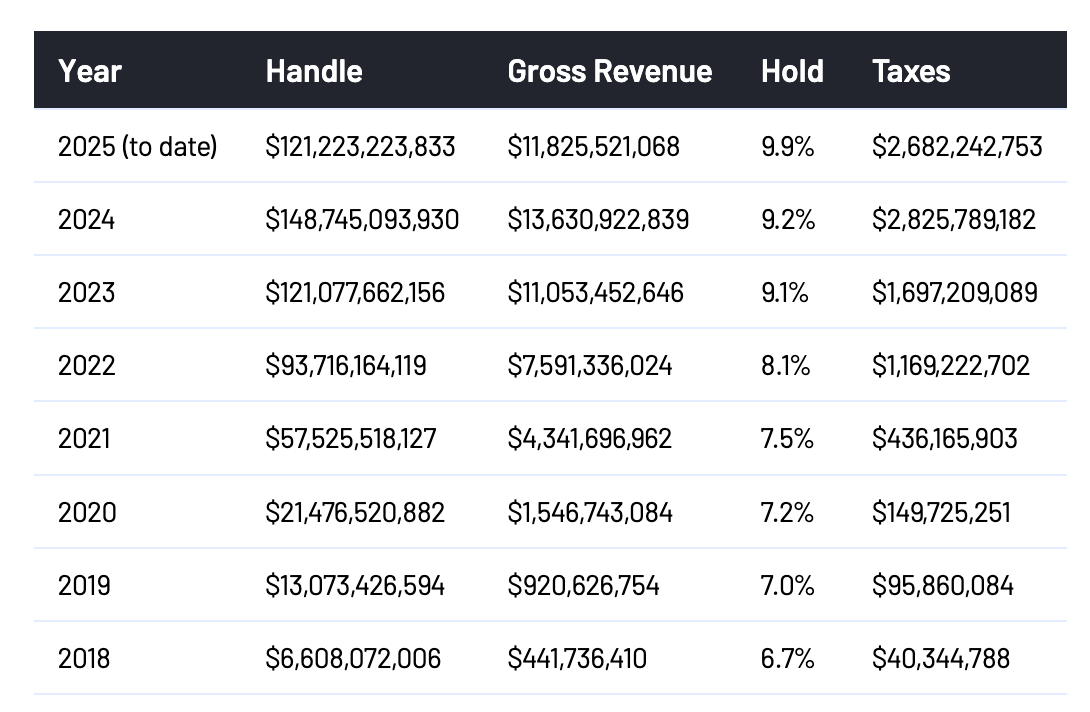
Statistics from another major sports betting media, Sports Book Review (chart below, data as of August 2025), show that since the regulatory relaxation in 2018, the total betting volume (Handle) and tax revenue (Taxes) of the U.S. sports betting market have shown a remarkably exaggerated growth trend over the past few years — the total market betting volume reached $148.74 billion in 2024, with tax contributions reaching $2.82 billion; in the first 8 months of 2025 alone, the total betting volume ($121.22 billion) and tax revenue ($2.68 billion) have nearly reached the full-year 2024 levels.
Focus on Tennessee: What Does Sports Betting Mean?

Now let's focus on Tennessee, the protagonist of this incident.

In 2019, Tennessee passed the Tennessee Sports Gaming Act, formally legalizing sports betting. Although the then-Governor Bill Lee had reservations about gambling, he still allowed the bill to pass without exercising his veto power. Between 2021 and 2022, the Tennessee state legislature passed laws establishing a dedicated regulatory council to be fully responsible for licensing and supervision. This council was initially called the Sports Wagering Advisory Council and was later renamed the Tennessee Sports Wagering Council, the SWC that issued the ban to Kalshi, Polymarket, and Crypto.com at the beginning of this article.
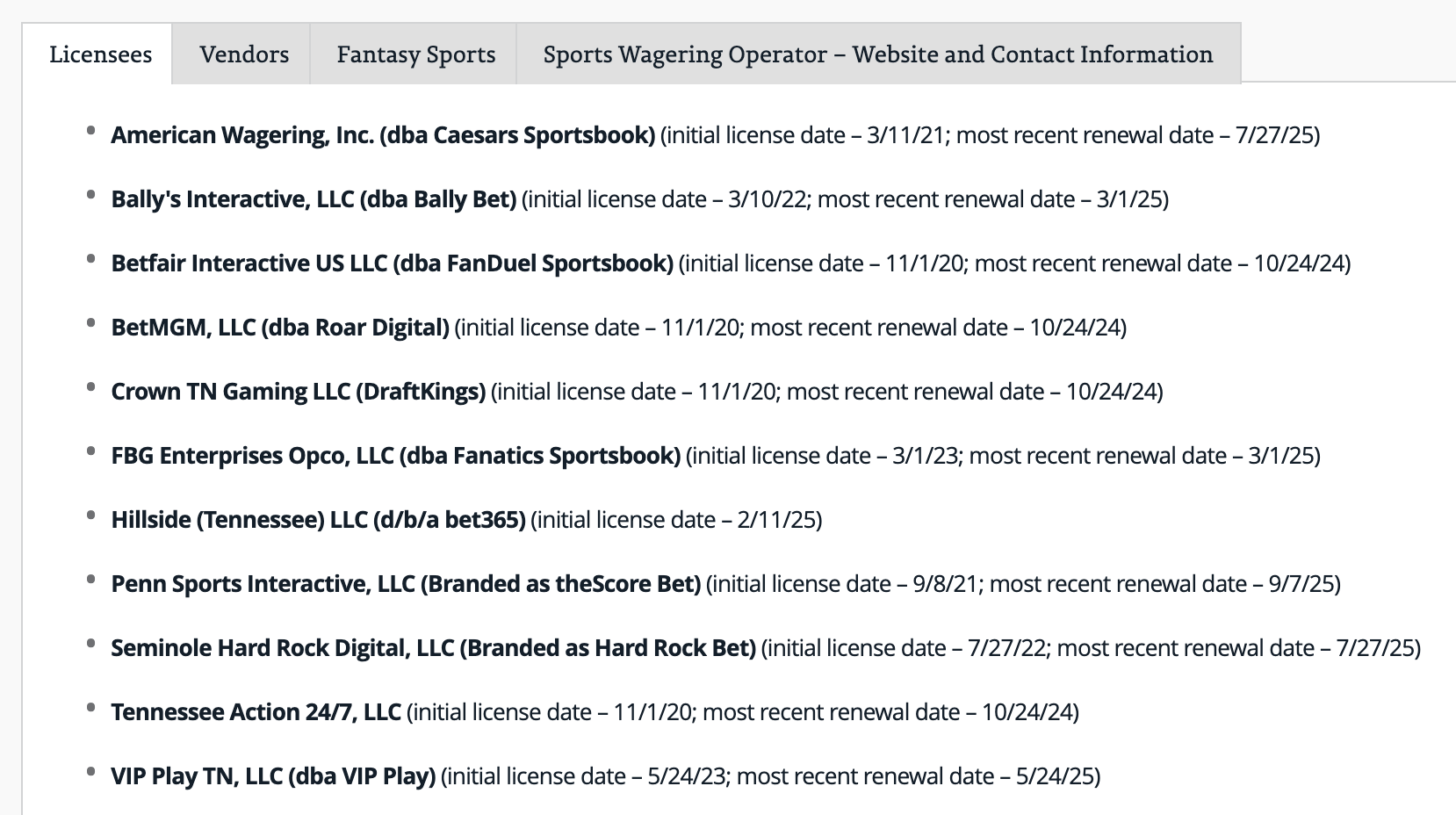
Currently, the SWC is Tennessee's sole sports betting regulatory body, responsible for operational licensing, compliance supervision, rule-making, and enforcement. The SWC stipulates that all sports betting providers must obtain a license from the SWC to offer services in the state. A total of 11 licenses have been issued so far (see chart above); only residents aged 21 and over can access related services, and they must pass geolocation verification to ensure bets are placed within the state. Regarding taxation, the state levies a 1.85% tax rate on the total betting handle — an income-based taxation scheme was used initially, but it was changed to taxation based on the total betting handle after 2023.

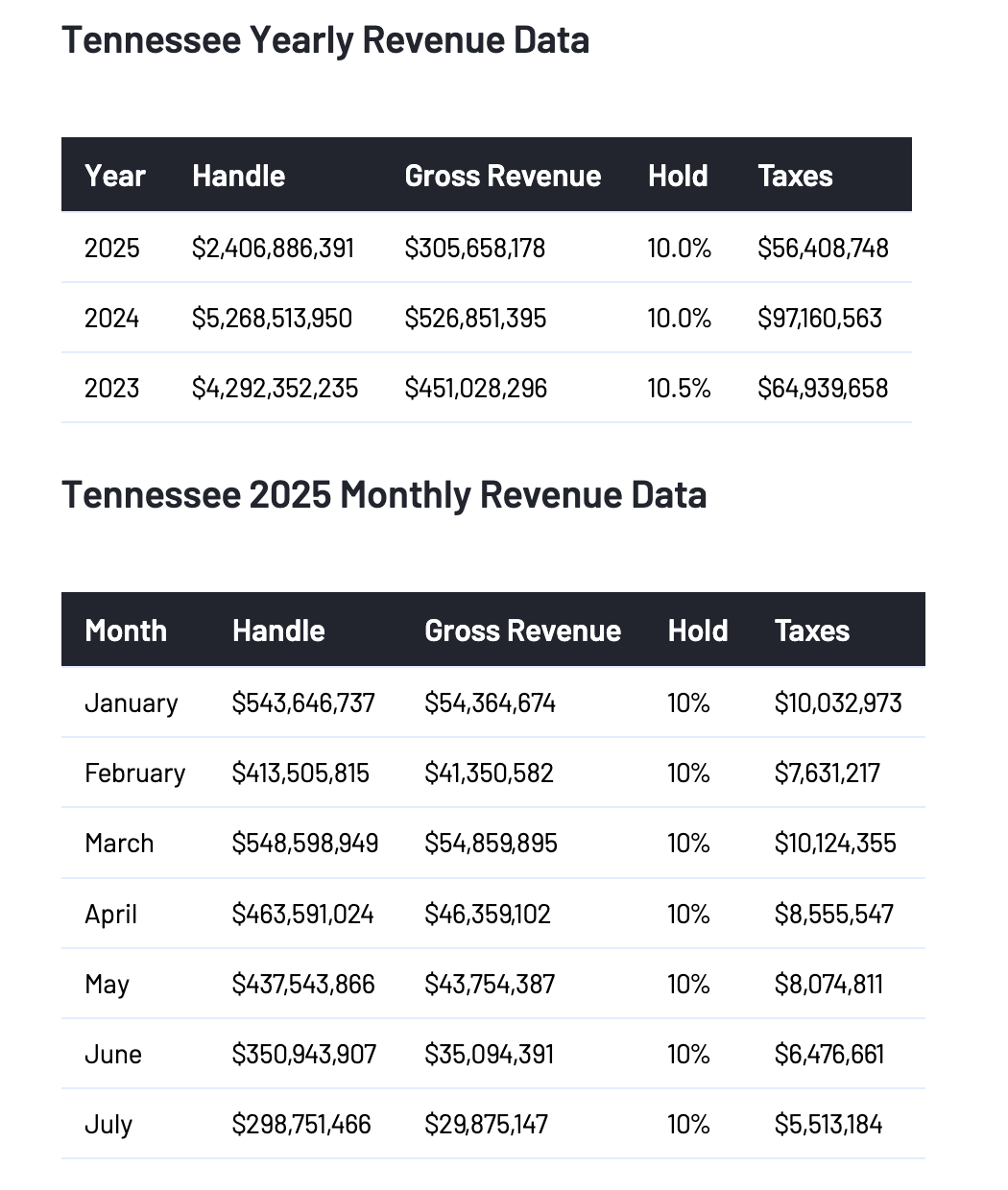
The sports betting market has contributed substantial tax revenue to Tennessee. Statistics from Sports Book Review (chart below, data as of July 2025) show that in 2024, the total sports betting handle in Tennessee reached $5.268 billion, with tax contributions reaching $97.16 million; the total betting handle for the first 7 months of 2025 has already reached $2.4 billion, with tax contributions reaching $56.4 million.
But this huge and still growing cake is now being gradually nibbled away by the likes of Polymarket.

How Are Prediction Markets Eating Into the Old World?

On December 3, 2025, Polymarket announced that it had obtained CFTC approval to return to the U.S. market after nearly four years; even earlier, Kalshi and Crypto.com's prediction market platform Truth Predict had already opened their doors to U.S. users under CFTC licensing.

The current regulatory situation is that sports betting is clearly classified as a gambling service, with regulatory authority belonging to the states. However, prediction market platforms like Polymarket are generally regarded as new entities providing "event contract" trading services, and "event contracts" are considered financial derivatives in terms of asset nature, falling under the regulatory purview of the CFTC. This allows prediction markets to bypass the stringent regulations of gambling services — no need for state-level licenses, no need to follow user protection regulations like addiction control, no need to pay high gambling taxes to the states; but at the same time, they can offer sports event outcome betting services similar to gambling,客观上 forming a certain "regulatory arbitrage."

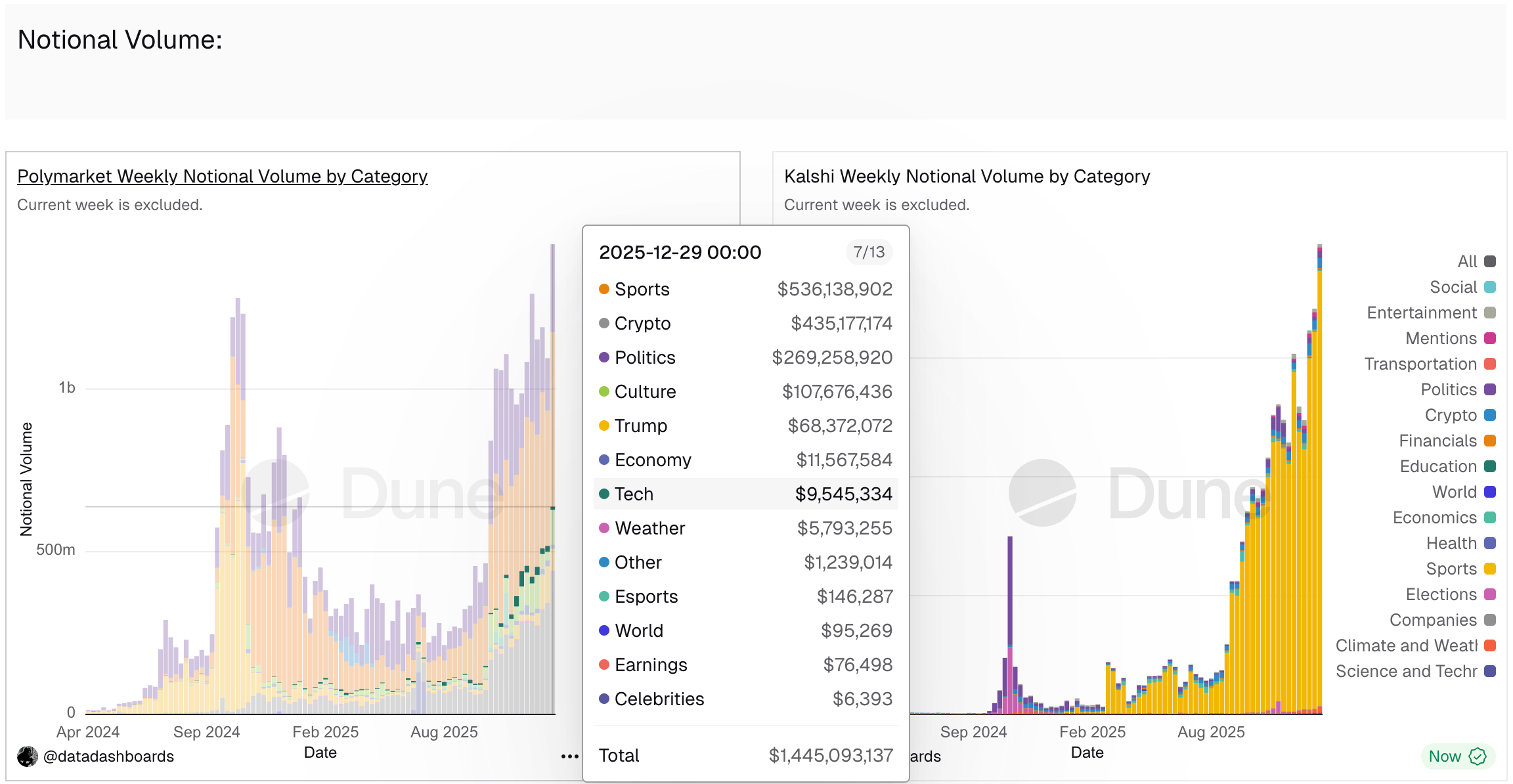
If prediction markets were still just small experimental fields, it might be one thing, but the fact is that the growth rate of prediction markets is even more outrageous than the already exaggerated sports betting market — in 2025, the total trading volume of prediction markets was approximately $40 billion, an increase of about 400% from $9 billion in 2024. A data dashboard compiled by Data Dashboards on Dune (chart below) shows that sports-related event contracts have long become the category with the highest trading volume share in the prediction market.
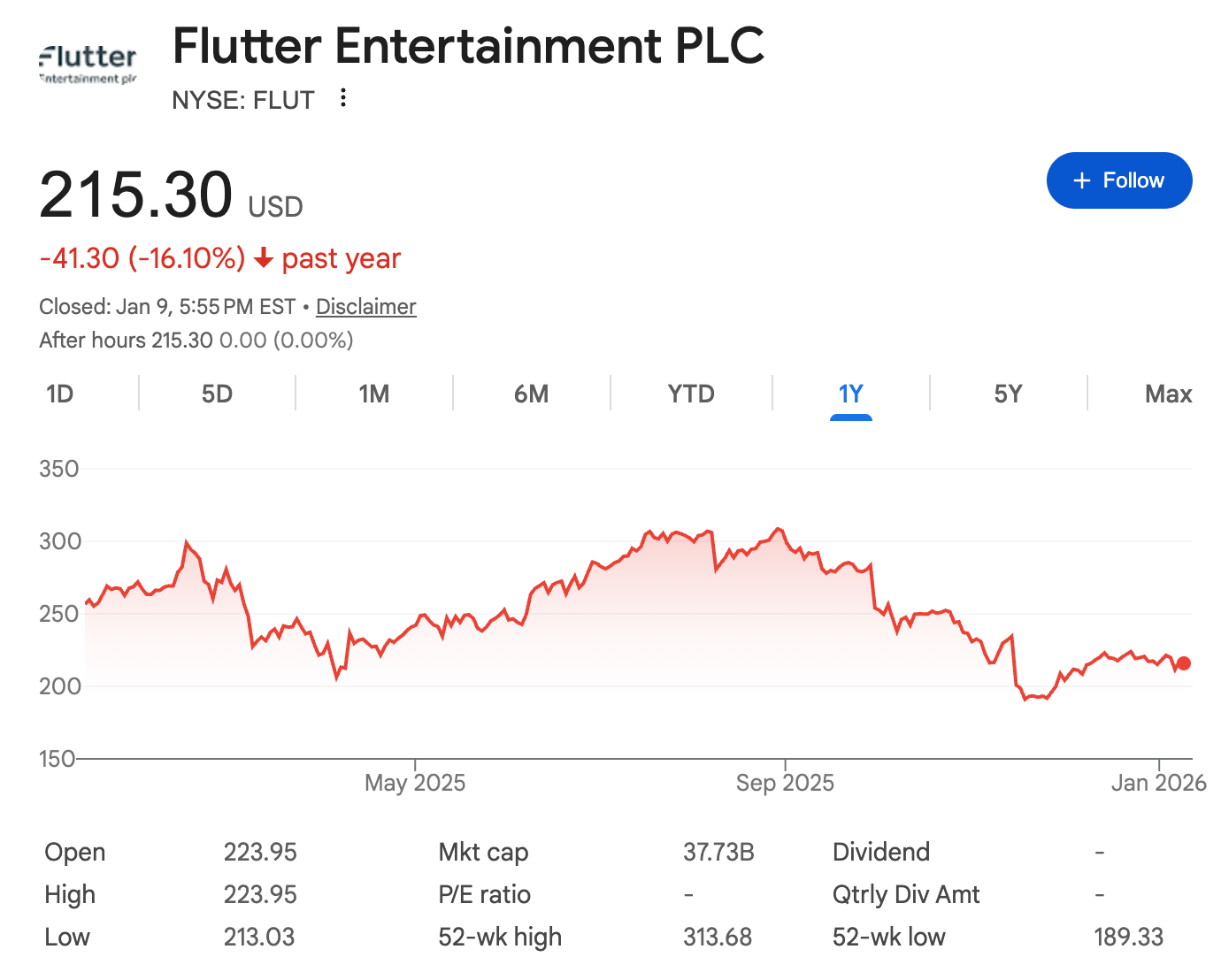
The capital market has long sensed the growing threat posed by Polymarket to traditional sports betting services. The two giants of the sports betting market, DraftKings and Flutter Entertainment, recorded declines of 11.7% and 16.1% respectively over the past year — during the same period, the US stock market was in a bull run, with the Dow Jones rising 12.97% for the year, the Nasdaq up 20.36%, and the S&P 500 up 16.39%; and the size of the sports betting market continued its eight-year upward trend.
Whether it's Tennessee, which needs sports betting as a source of tax revenue, or the capital forces that actually control the sports betting market, it is difficult to agree to let prediction markets, this new player, come and share the pie.

Friction Is Not an Isolated Case, How Do Prediction Markets Fight Back?

In fact, Tennessee's ban on prediction markets is not an isolated incident. Maryland, Ohio, Illinois, New Jersey, Nevada, Montana, Michigan, and Connecticut have all cracked down on prediction markets for similar reasons. And since Polymarket only returned to the U.S. market last December, Kalshi has borne the brunt of more regulatory impacts.

In response, Kalshi has filed lawsuits against three states — Nevada, New Jersey, and Maryland — on the grounds that it "already complies with higher-priority federal regulations and does not need to comply with state-level regulations." But the results have not been ideal.

  • The lawsuit in Nevada was the first to proceed. The district court initially supported Kalshi, but then turned around and ruled against Kalshi last November. Judge Andrew Gordon determined that sports event contracts on Kalshi were very similar to sports betting wagers and therefore fell under the regulatory scope of Nevada's gambling laws. Kalshi has appealed to the U.S. Court of Appeals for the Ninth Circuit;

  • In New Jersey, the district court chose to support Kalshi, but the state's gambling regulatory agency has appealed to the U.S. Court of Appeals for the Third Circuit;

  • In Maryland, the district court sided with the gambling regulatory agency's demands. Judge Adam B. reasoned that Kalshi failed to prove that "Congress has clearly and manifestly intended to deprive states of their power to regulate gambling." Kalshi has appealed this to the U.S. Court of Appeals for the Fourth Circuit.

The law firm Benesch commented on this, stating that as the national debate continues, similar divisions are expected at the appellate court level, which will lay the groundwork for the Supreme Court to resolve this issue in the coming years...... If the appellate courts happen to consistently support Kalshi's position, other prediction markets might emulate its model and proceed with similar businesses before the Supreme Court hears the matter; but if the appellate courts reach different conclusions, companies in similar situations might wait for clearer legal signals before taking action. In any case, Kalshi's lawsuit will create a precedent with direct and profound implications for the national sports betting and gambling industry.

In summary, whether prediction markets need to follow state gambling regulations remains an unresolved question for now, and the fundamental contradiction of this issue lies in the similarity of products and services between prediction markets and sports betting and the differences in regulatory requirements.

This is a tug-of-war over institutional adaptation. Before the appellate courts or even the Supreme Court give a final verdict, the gray area between prediction markets and sports betting will persist for a long time, and regulatory conflicts will be hard to avoid. In the short term, states will likely continue to defend their regulatory authority and tax base through enforcement and litigation; while prediction market platforms will try to use federal compliance and innovation narratives as a shield to fight for more living space.


Twitter:https://twitter.com/BitpushNewsCN

Bitpush TG Discussion Group:https://t.me/BitPushCommunity

Bitpush TG Subscription: https://t.me/bitpush

Original article link:https://www.bitpush.news/articles/7601952

Domande pertinenti

QWhat is the main reason why the Sports Wagering Council (SWC) of Tennessee issued cease-and-desist orders to prediction market platforms like Kalshi, Polymarket, and Crypto.com?

AThe SWC issued the orders because these platforms were offering sports event prediction contracts to Tennessee residents without obtaining the required state license, which the state classifies as illegal gambling operations.

QHow has the legalization of sports betting in the United States since 2018 impacted the market's growth?

ASince the Supreme Court overturned the federal ban on commercial sports betting in 2018, the market has grown significantly, with the total handle reaching $148.74 billion in 2024 and tax contributions amounting to $2.82 billion that year.

QWhat regulatory advantage do prediction market platforms like Polymarket have over traditional sports betting services in the United States?

APrediction market platforms are regulated by the CFTC as 'event contracts,' which are classified as financial derivatives, allowing them to operate without needing state-level gambling licenses, adhering to strict user protection rules, or paying high state gambling taxes.

QWhich states, besides Tennessee, have taken regulatory action against prediction market platforms for similar reasons?

AOther states that have taken action include Maryland, Ohio, Illinois, New Jersey, Nevada, Montana, Michigan, and Connecticut, all citing similar concerns about unlicensed gambling operations.

QWhat was the outcome of Kalshi's legal challenges against state gambling regulators in Nevada, New Jersey, and Maryland?

AIn Nevada, Kalshi initially had some support but ultimately lost in district court and has appealed; in New Jersey, the district court supported Kalshi, but the state has appealed; in Maryland, the district court sided with the regulator, and Kalshi has appealed the decision.

Letture associate

Has Hook Summer Really Arrived? sato, Lo0p, FLOOD Ignite the New Narrative of Uniswap v4

"Hook Summer" Arrives? Sato, Lo0p, FLOOD Ignite Uniswap v4 Narrative Amidst a slight market recovery, attention within the Ethereum ecosystem has shifted to Meme coins built on Uniswap v4's Hook protocol. Following ASTEROID, tokens like sato, sat1, Lo0p, and FLOOD have become market focal points, with market caps ranging from millions to tens of millions, bringing concentrated liquidity to a narrative-dry market. Uniswap v4 Hooks are "plugin smart contracts" that allow developers to inject custom logic at key points in a liquidity pool's lifecycle (initialization, adding/removing liquidity, swaps, etc.), making the AMM programmable. Recent representative projects include: * **sato**: Market cap peaked over $38M; uses a v4 curve mechanism for minting/burning, locking ETH as reserve. * **sat1**: Market cap briefly exceeded $10M, positioning as an "optimized sato," but later declined significantly. * **Lo0p**: Market cap neared $6.6M; a "lending AMM protocol" allowing users to borrow ETH against deposited LO0P tokens without immediate selling pressure. * **FLOOD**: Market cap approached $6M; channels trading reserves into Aave v3 to generate yield, which is retained in the pool. The emergence of these Hook-based tokens could drive long-term growth for the Uniswap ecosystem by attracting users and liquidity to v4 pools. Combined with Uniswap's activated fee switch (partially used to burn UNI), the long-term outlook for UNI appears positive. However, short-term UNI price appreciation is not directly guaranteed. Factors include the sustainability and lifecycle of these new tokens, their price volatility, overall market conditions, and regulatory pressures. Currently, Uniswap v4's TVL ($595M) lags behind v3 and v2, indicating Hook adoption still requires time to mature. In summary, the Hook ecosystem serves as "long-term nourishment" for UNI, but acts more as a "catalyst" than a direct "booster" in the short term. Note: These are early-stage experimental tokens and may carry unknown risks.

marsbit1 min fa

Has Hook Summer Really Arrived? sato, Lo0p, FLOOD Ignite the New Narrative of Uniswap v4

marsbit1 min fa

Has Hook Summer Truly Arrived? sato, Lo0p, FLOOD Ignite the New Uniswap v4 Narrative

With the broader market showing signs of recovery, a new wave of interest has emerged around Ethereum-based meme coins. Following ASTEROID, tokens like sato, sat1, Lo0p, and FLOOD, built upon the Uniswap v4 Hook protocol, are capturing market attention. Their market capitalizations range from millions to tens of millions of dollars, injecting much-needed focused liquidity into a market lacking narratives. This article explores whether this trend signifies an incoming "Hook Summer" and its potential impact on UNI's price. Hooks are essentially plug-in smart contracts for Uniswap v4 liquidity pools, allowing developers to inject custom logic at key points in a pool's lifecycle (like initialization, adding/removing liquidity, swaps). This transforms the AMM into programmable building blocks. Key highlighted projects include: * **sato**: Peaked over $38M market cap. It utilizes a v4 curve for minting/burning; buying locks ETH as reserve to mint new tokens, while selling redeems ETH from the reserve and burns tokens. * **sat1**: Market cap briefly exceeded $10M, promoted as an "optimized sato," but later declined significantly. * **Lo0p**: Reached nearly $6.6M. It's a lending AMM protocol where buying LO0P tokens locks them as collateral, allowing users to borrow ETH from the pool reserve at 40% LTV, aiming to improve capital efficiency for idle ETH in LPs. * **FLOOD**: Peaked near $6M. Its mechanism directs asset reserves from buys into Aave v3 to generate yield, with fees and interest retained in the pool to potentially influence the token's price long-term. In the long term, the development of the Hook ecosystem can attract users and liquidity to Uniswap v4, benefiting UNI's fundamentals—especially combined with the recent activation of the protocol fee switch, where a portion of fees is used to burn UNI. However, in the short term, these Hook-based tokens are unlikely to directly drive significant UNI price appreciation. Their impact is moderated by factors like token sustainability, price volatility, and broader market and regulatory conditions. Currently, Uniswap v4's TVL ($595M) still trails behind v2 and v3, indicating adoption and growth will take time. The article concludes that while the Hook ecosystem provides long-term "nourishment" for UNI, its short-term role is more of a "catalyst" than a "booster." Readers are cautioned that these are early-stage experimental tokens and may carry unknown risks.

Odaily星球日报14 min fa

Has Hook Summer Truly Arrived? sato, Lo0p, FLOOD Ignite the New Uniswap v4 Narrative

Odaily星球日报14 min fa

Interview with Michael Saylor: I Did Say I Would Sell Bitcoin, But Never a Net Sale

Interview with Michael Saylor: I Said We'd Sell Bitcoin, But Never Be a Net Seller In a recent podcast, MicroStrategy Executive Chairman Michael Saylor clarified the company's stance on potentially selling Bitcoin. Following MicroStrategy's earnings call statement about being prepared to sell BTC to fund dividends for its STRC (Strategic) credit product, Saylor emphasized the distinction between selling and being a "net seller." Saylor explained the core business model: MicroStrategy sells credit instruments like STRC and uses the proceeds to buy Bitcoin, which is viewed as "digital capital" expected to appreciate around 30-40% annually. A portion of these capital gains can then be used to pay the dividends on the credit products. He stressed that even if the company sells some Bitcoin for dividends, it simultaneously buys much more with new credit issuance. For example, after raising $3.2 billion from STRC sales in April, the dividend obligation was only $80-90 million, making the company a net buyer. The clarification aims to counter market narratives questioning the value of Bitcoin on MicroStrategy's balance sheet if it were never sold, and to dismiss claims of a "Ponzi scheme." Saylor reiterated his personal philosophy for investors: "Don't be a net seller of bitcoin" and ensure your Bitcoin holdings increase each year. Saylor also discussed Bitcoin's role as the foundation for "digital credit," noting that STRC has become the largest and most liquid preferred stock issue in the U.S., offering high risk-adjusted returns (Sharpe ratio). He highlighted Bitcoin's deep liquidity, stating that even large purchases by MicroStrategy do not move the market significantly, which is driven by macro factors, geopolitical tensions, and capital flows from ETFs and credit products. Finally, Saylor reflected on his early inspiration from sci-fi books, which motivated his path to MIT, and maintained his fundamental thesis on Bitcoin remains unchanged: it is superior digital capital enabling superior digital credit.

链捕手18 min fa

Interview with Michael Saylor: I Did Say I Would Sell Bitcoin, But Never a Net Sale

链捕手18 min fa

Beaten SK Hynix Employees in China: Year-end Bonus Less Than 5% of Korean Staff's

"SK Hynix Chinese Staff Hit Hard: Bonuses Less Than 5% of Korean Counterparts" Driven by the AI boom, South Korea's SK Hynix is experiencing record performance, with media reports predicting massive year-end bonuses for its employees, making them highly desirable in the matchmaking market. However, this prosperity starkly contrasts with the situation for the company's Chinese employees. According to reports, SK Hynix operates under a rule allocating 10% of operating profit for employee bonuses. While projections suggest Korean employees could receive bonuses reaching millions of RMB, a Chinese employee with over a decade of technical experience revealed the disparity: "If they get 3 million, Chinese staff get less than 5% of that." After adjustments based on KPI ratings, this employee's highest bonus was slightly over 100,000 RMB. Bonuses are paid annually in Korea but semi-annually in China. During the industry downturn in 2023-2024, Chinese employees received no bonus at all. The gap extends beyond bonuses. Recruitment posts for SK Hynix's Chinese factories (in Wuxi, Dalian, Chongqing) show engineer monthly salaries ranging from 10,000 to 35,000 RMB, with a 13th-month salary promised. Chinese employees also receive standard benefits like annual leave but lack stock incentives, which are reportedly unavailable to them. Furthermore, management positions in China are predominantly held by Korean personnel, though industry observers note a gradual increase in local middle managers over time. SK Hynix has confirmed the 10% bonus rule but cautioned that specific future bonus amounts remain unpredictable. The company forecasts strong demand for HBM and other high-value enterprise products for the next 2-3 years, driven by AI infrastructure investment. This focus on business-to-business markets may continue to constrain supply for consumer products, potentially prolonging price increases for components like memory.

链捕手32 min fa

Beaten SK Hynix Employees in China: Year-end Bonus Less Than 5% of Korean Staff's

链捕手32 min fa

Trading

Spot
Futures

Articoli Popolari

Come comprare CAKE

Benvenuto in HTX.com! Abbiamo reso l'acquisto di PancakeSwap (CAKE) semplice e conveniente. Segui la nostra guida passo passo per intraprendere il tuo viaggio nel mondo delle criptovalute.Step 1: Crea il tuo Account HTXUsa la tua email o numero di telefono per registrarti il tuo account gratuito su HTX. Vivi un'esperienza facile e sblocca tutte le funzionalità,Crea il mio accountStep 2: Vai in Acquista crypto e seleziona il tuo metodo di pagamentoCarta di credito/debito: utilizza la tua Visa o Mastercard per acquistare immediatamente PancakeSwapCAKE.Bilancio: Usa i fondi dal bilancio del tuo account HTX per fare trading senza problemi.Terze parti: abbiamo aggiunto metodi di pagamento molto utilizzati come Google Pay e Apple Pay per maggiore comodità.P2P: Fai trading direttamente con altri utenti HTX.Over-the-Counter (OTC): Offriamo servizi su misura e tassi di cambio competitivi per i trader.Step 3: Conserva PancakeSwap (CAKE)Dopo aver acquistato PancakeSwap (CAKE), conserva nel tuo account HTX. In alternativa, puoi inviare tramite trasferimento blockchain o scambiare per altre criptovalute.Step 4: Scambia PancakeSwap (CAKE)Scambia facilmente PancakeSwap (CAKE) nel mercato spot di HTX. Accedi al tuo account, seleziona la tua coppia di trading, esegui le tue operazioni e monitora in tempo reale. Offriamo un'esperienza user-friendly sia per chi ha appena iniziato che per i trader più esperti.

367 Totale visualizzazioniPubblicato il 2024.12.11Aggiornato il 2025.03.21

Come comprare CAKE

Discussioni

Benvenuto nella Community HTX. Qui puoi rimanere informato sugli ultimi sviluppi della piattaforma e accedere ad approfondimenti esperti sul mercato. Le opinioni degli utenti sul prezzo di CAKE CAKE sono presentate come di seguito.

活动图片