Original Title: Pump's Year Ahead: Reflections on Resilience, Creator Economics, and the Search for Direction
Original Author: @simononchain, Crypto KOL
Original Compilation: Deep Tide TechFlow
The following content is excerpted from Delphi's upcoming "2026 Application Prospect Report," focusing on Pump(.)fun—one of the consumer applications we are most interested in for the coming year.
Since we published the initial Pump report (before its funding round), many things have changed. Many of the dynamics we predicted have been validated, but some areas have fallen short of expectations, disappointing users and investors. However, the core challenges facing Pump remain unchanged.
To achieve Pump's grand vision, the team needs to balance the short-term profit-driven nature of the crypto industry with its long-term vision for the platform. Notably, once a project launches a token, its operating environment changes; the token itself becomes an independent product with inherent reflexivity, continuously influencing user expectations—Pump is no exception.
Since completing its funding round, the Pump team has increased its investment in crypto-native streaming, but this area has not developed as smoothly as we expected, at least not yet reaching the ideal state.
Pump has not yet successfully attracted core creators from outside the crypto ecosystem, and the CCM meta (CCM universe) that emerged on the Pump platform was short-lived. The most notable moment came from the "Bagwork" event, which not only demonstrated the potential of creator-driven tokens but also revealed the structural issues hindering the development of this model.
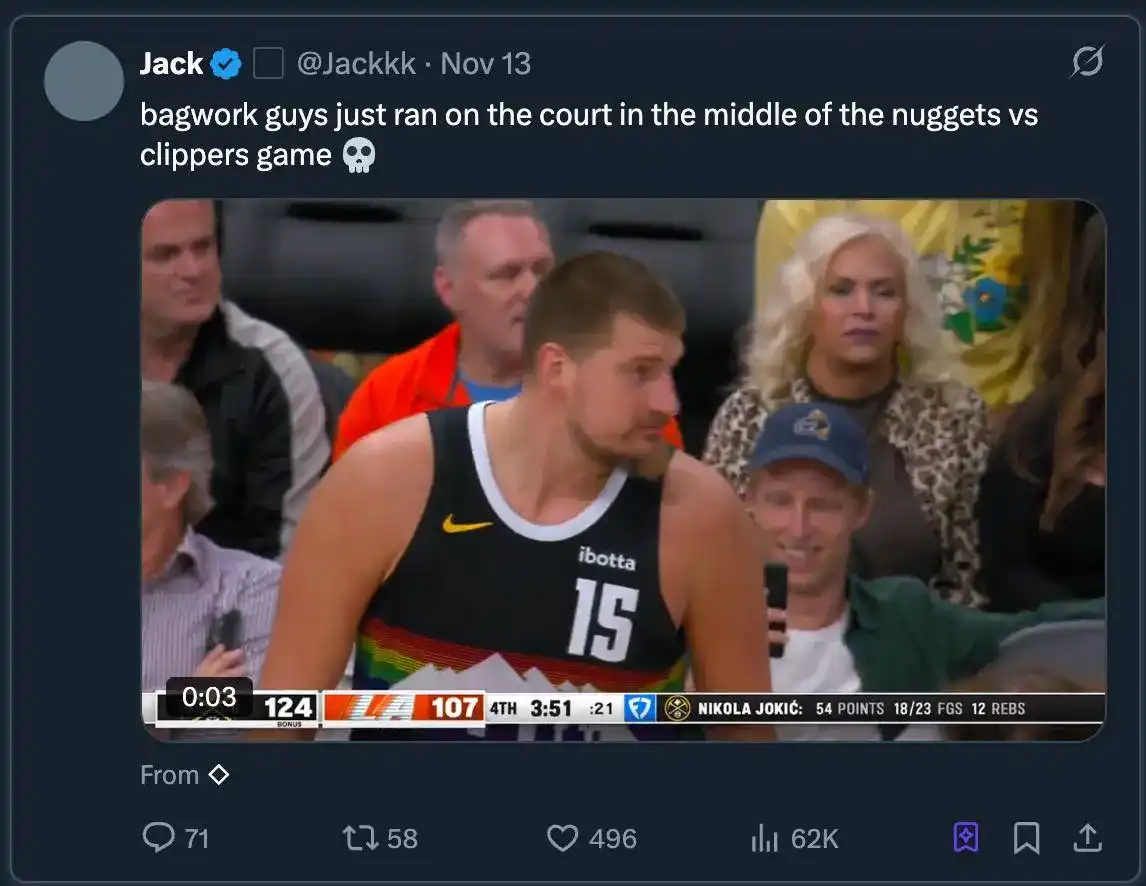
This phenomenal爆发 was led by a group of teenagers who, with some support from Pump, carried out a series of sensational events: snatching Bradley Martyn's hat,闯入 the Dodgers' game venue, rushing onto the Knicks' court, and even getting tattoos of Pumpfun and Bagwork.
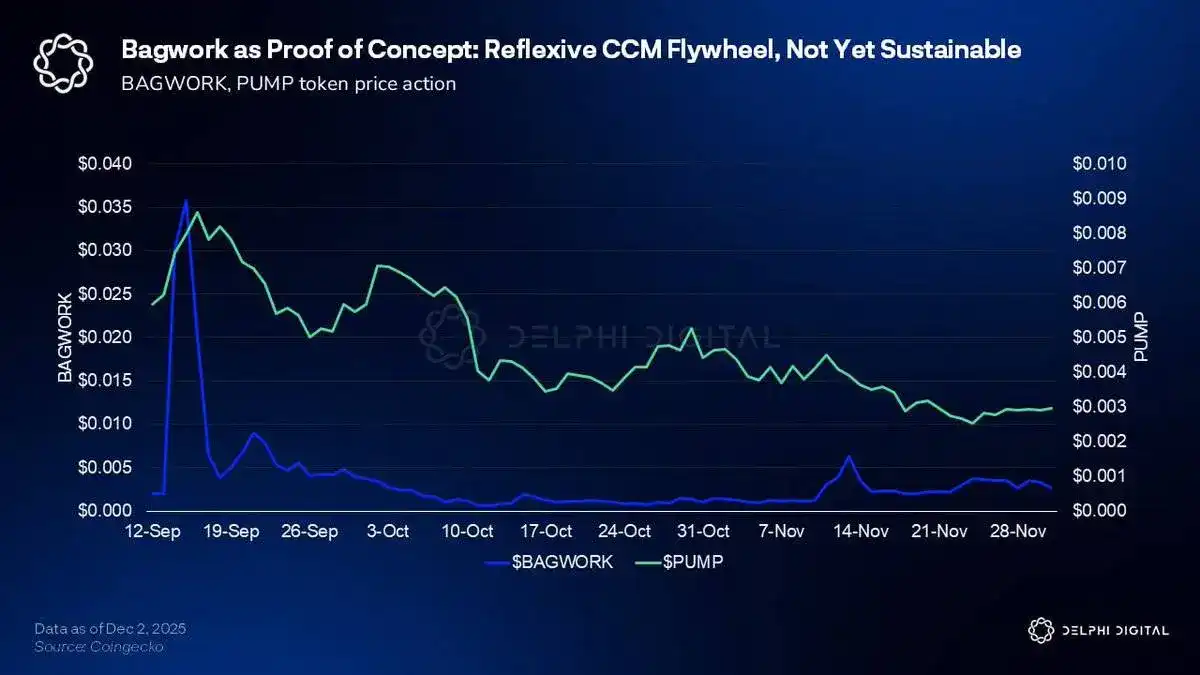
The rise of @onlybagwork almost perfectly coincided with the peak of Pump.fun's frenzy in mid-September. At that time, the fully diluted valuation (FDV) of $PUMP reached approximately $8.5 billion, and Bagwork's market cap once exceeded $50 million.
However, since then, no creator token has come close to this organic momentum or reached a similar valuation peak.
The Knicks court incident occurred more recently, long after the initial frenzy, and now Bagwork's market cap is just over $2 million.
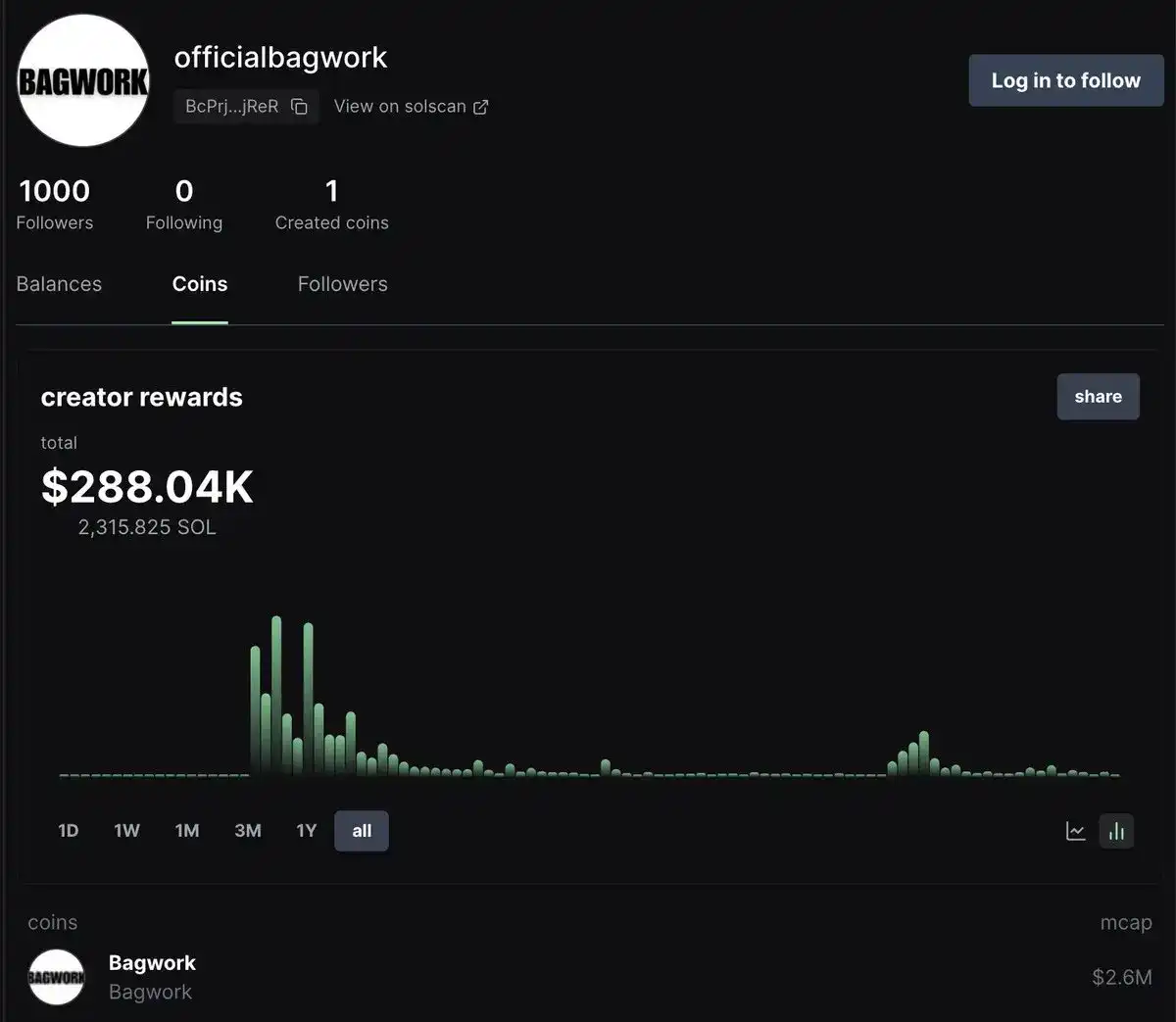
Bagwork is one of the few cases in Pump's streaming experiment that actually worked as intended. The Bagwork team earned over 2300 SOL in creator revenue from $BAGWORK trading fees (approximately $300,000 at current prices).
Notably, all of this was achieved without the team selling their holdings. Viral events directly translated into attention, trading volume, and fee revenue, creating Pump's closest case to a true creator token flywheel effect so far.
However, apart from Bagwork, Pump has struggled to realize its streaming vision. Creator tokens have consistently failed to maintain their value. This phenomenon can be traced back to a fundamental problem: the token itself is part of the product.
Currently, the economic rationale for owning or supporting a streamer's token remains unclear. Bagwork's early success quickly faded, and since then, every major streamer token has failed to gain similar traction, eventually trending towards zero.
Creators can achieve short-term gains through the CCM fee structure, but the reputational risk associated with crashed tokens makes this model unattractive to larger, more established creators who could have helped the platform reach a broader audience. From a trader's perspective, these tokens remain a zero-sum game environment rather than genuine communities.
This is the most important issue Pump needs to address as it enters 2026.
So far, the team has not made meaningful attempts at deeper creator incentives, and airdrop allocations remain untouched. Apart from the informal support provided during the Bagwork frenzy, Pump has not taken any coordinated measures, such as targeted airdrops, creator rewards, or other incentive mechanisms that could have been used to kickstart early activities, create more PvE (Player vs. Environment)-style incentives, and provide creators with experimental space without immediately破坏 their communities.

The good news is that this provides Pump with significant flexibility.
The unused "Community & Ecosystem Initiatives" fund pool remains an important lever the team can utilize as the model matures. If Pump can design a sustainable incentive structure for creator tokens, it will open up a全新的 economic category for creators looking to leverage crypto mechanisms for monetization and audience expansion.
Although this potential gain is substantial, until then, streaming will continue to manifest as a series of short-lived frenzy cycles rather than a lasting and repeatable vertical.
In terms of the token, the main catalyst that drove $PUMP from around 0.025 to 0.085 was the team's decision to use 100% of net income for buybacks.
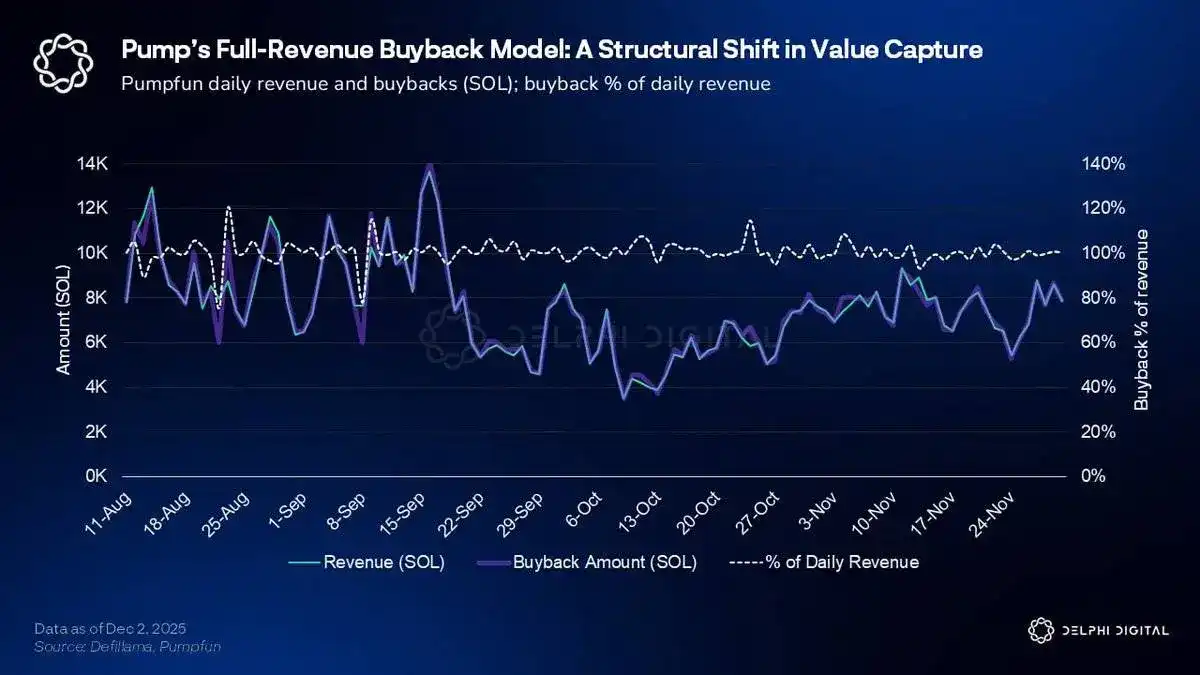
Pump shifted from initially planning to use about a quarter of its income for buybacks to almost完全 adopting a Hyperliquid-style buyback model. This change was made after the market clearly indicated that a partial buyback model would not be well-received. This shift ignited one of the strongest large-cap token rallies this year in a liquidity-scarce and challenging altcoin market.
In terms of the buyback-to-market cap ratio, no major token currently trades at a lower multiple.
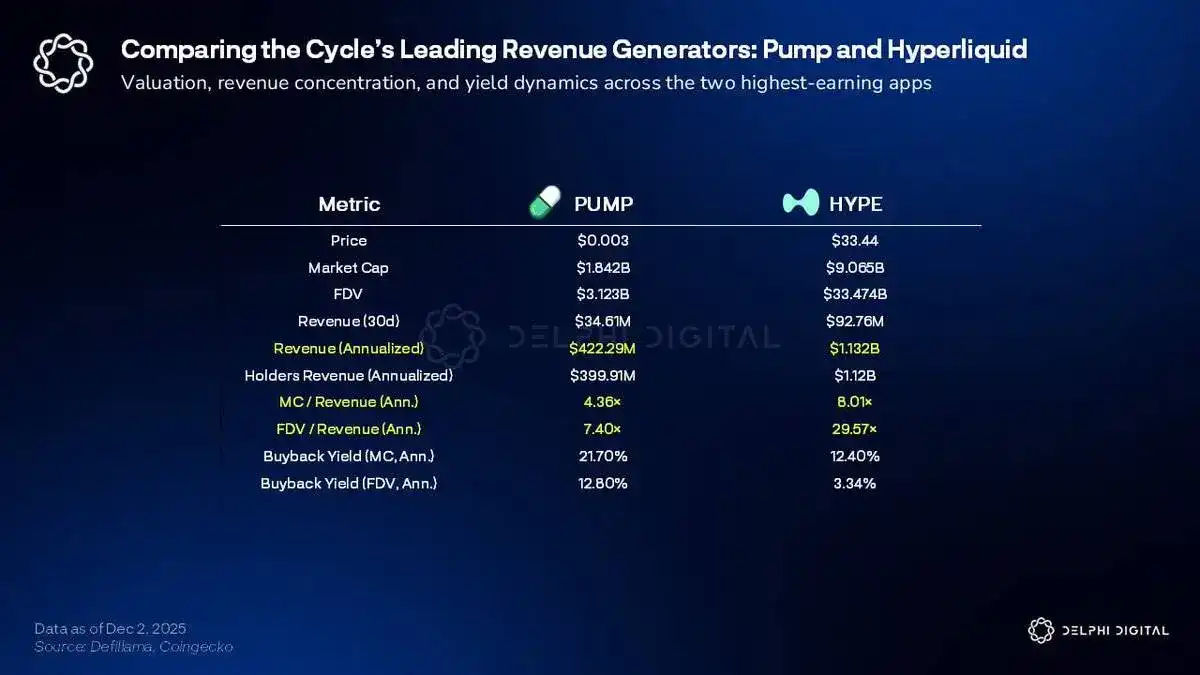
Based on current data, Pump's annualized revenue is $422 million, with a market cap of $1.84 billion,这意味着 a market cap/revenue ratio (MC/Rev) of 4.36x and an annualized buyback yield of approximately 12.8%. This level is significantly lower than other large-cap tokens, including Hyperliquid's约 8.01x MC/Rev and约 3.34% yield.
Even so, the market remains skeptical about Pump's long-term business prospects.
Market concerns may include: whether the team can consistently launch meaningful products; the impact of future unlocks on the market given that about 40% of the token supply has not yet been unlocked; and uncertainty regarding the final distribution of airdrop and creator incentive allocations. Additionally, there are doubts about the overall contraction of Meme coin activity in the crypto market, reduced end-user activity, and the sustainability of Pump's revenue base.
Despite these concerns, Pump still dominates the Meme coin launchpad space, earning (and buying back) about $1 million daily even in the current extremely tough market environment.
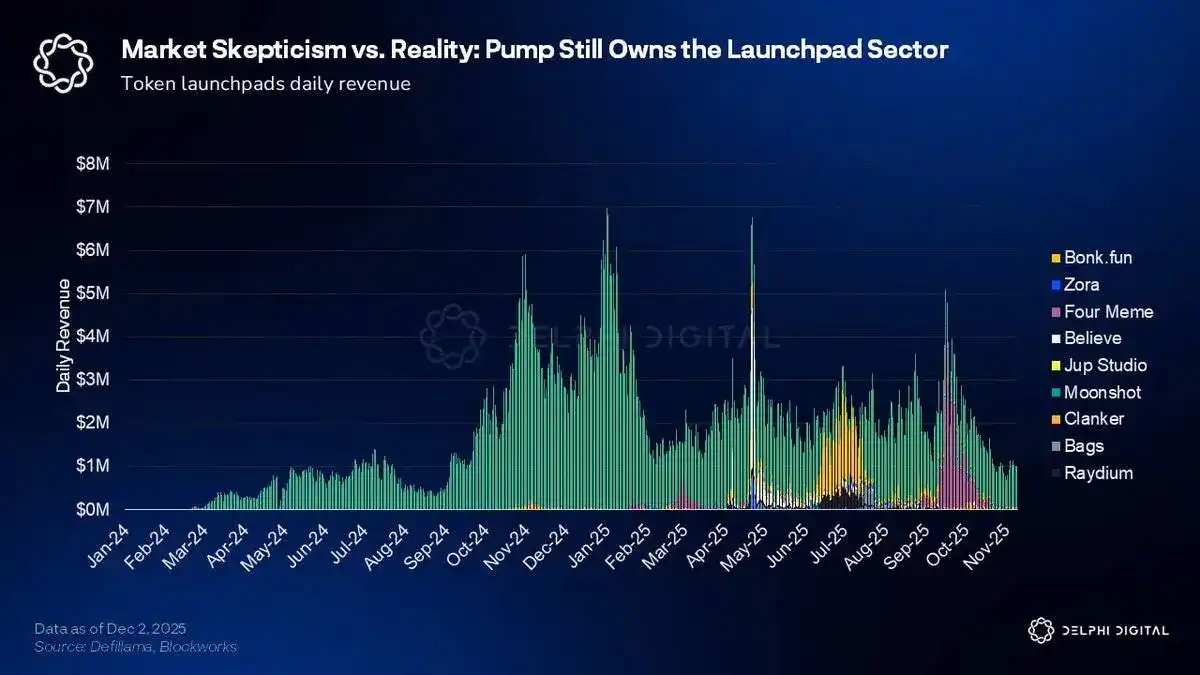
Pump's daily Launchpad revenue has declined by nearly 85% from its peak of almost $14 million at the beginning of the year to currently around $2 million. However, competitors have only posed a threat for brief periods, failing to bring substantial challenges. This aligns with our prediction in the initial report about the短暂 Bonk and Raydium challenge phases: even during cyclical trading volume contractions, Pump has maintained structural advantages, dominating the industry's activity share.
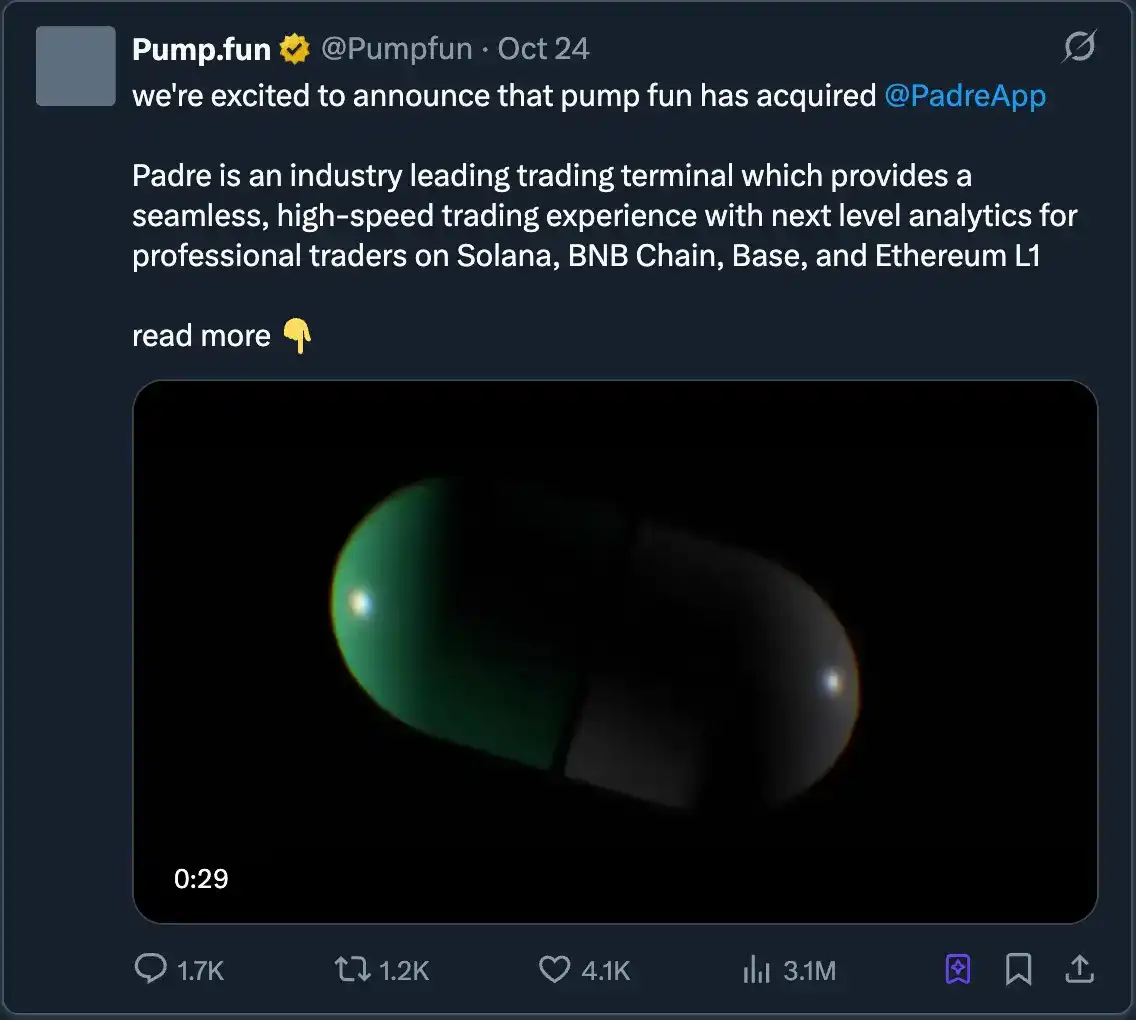
The acquisition of Padre supports the view that Pump intends to expand beyond Solana into a multi-chain ecosystem, and through the Padre frontend, it has achieved support for BNB ecosystem assets. This also aligns with our earlier prediction that Pump would eventually acquire a terminal or terminal-related asset to strengthen user acquisition channels and integrate more of the user journey.
Beyond these actions, the team has recently maintained a low-key strategy. An investor call is currently planned, but as of the time of writing, it has not yet been held, so more detailed information may be disclosed later.
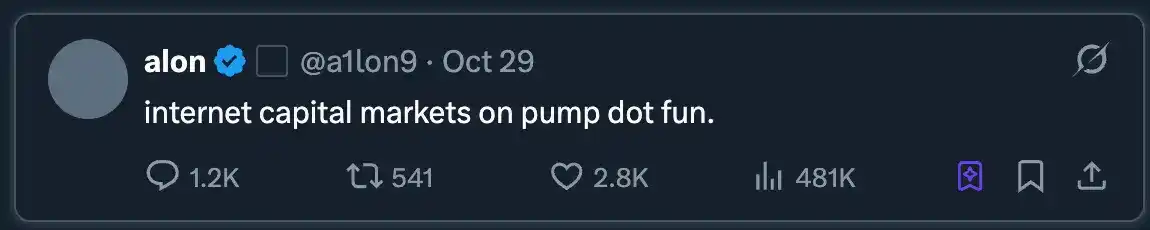
The leadership team has also expressed interest in the broader ICM (Initial Community Offering) category, although we believe this is not the core area of Pump's current brand positioning or product advantage. Pump initially tried the Believe model but failed to gain actual market attention. MetaDAO has become the dominant player in the "high-quality founder + community" financing field.
Furthermore, the culture and structure of ICM seem不太契合 with Pump's brand positioning. Pump's brand core revolves around speculation, speed, and the Meme culture of creators, rather than long-term governance or Futarchy-based systems. If Pump wants to succeed in the ICM field, they would need to lean towards a more governance-focused structure and attract non-crypto teams that want to operate on-chain. However, this does not fully align with the needs and positioning of Pump's current users and creators. Although in theory, ICM could bring certain potential gains if the team takes action, we believe this is more of a secondary or optional direction rather than a natural extension of Pump's existing flywheel effect in 2026.
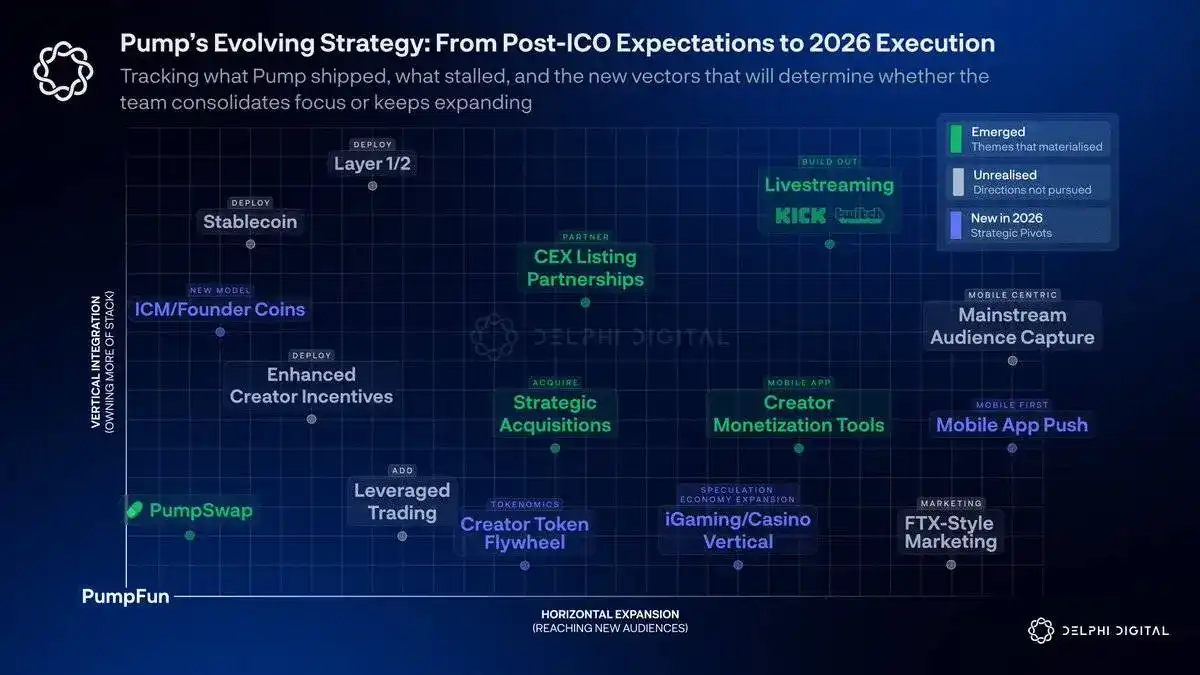
Looking ahead to 2026, the main questions facing Pump focus on the following aspects: whether it can finally establish an incentive-compatible creator token model, whether it can achieve substantial expansion of the multi-chain market through Padre, how to manage the risks of token unlocks and declining revenue visibility, and which product vertical to choose as the main focus. Currently, Pump's strategy seems scattered across multiple directions, including streaming, ICM, and mobile.
At some point in the future, the team may need to clearly focus on a core breakthrough. For most of 2025, this breakthrough seemed to be streaming, but now this is no longer clear.
The bigger question is whether Pump can attract larger non-crypto creators. This may require redesigning the flywheel mechanism for creator tokens, providing stronger, longer-term incentives to support viral spread beyond the crypto-native user base. Pump has the basic conditions to achieve this goal. The 2025 Bagwork frenzy briefly demonstrated the potential success of this model, when Pump seemed close to crossing the chasm.
Additionally, Pump still has broad space to expand its product suite. One strategic direction the team should seriously evaluate is entering the iGaming or casino-related vertical. Adopting a model similar to Kick or Stake naturally fits with Pump's speculation-driven user base. This direction would form deep synergies with its Meme coin and streaming strategic goals, and the profit potential of this field has already been proven.
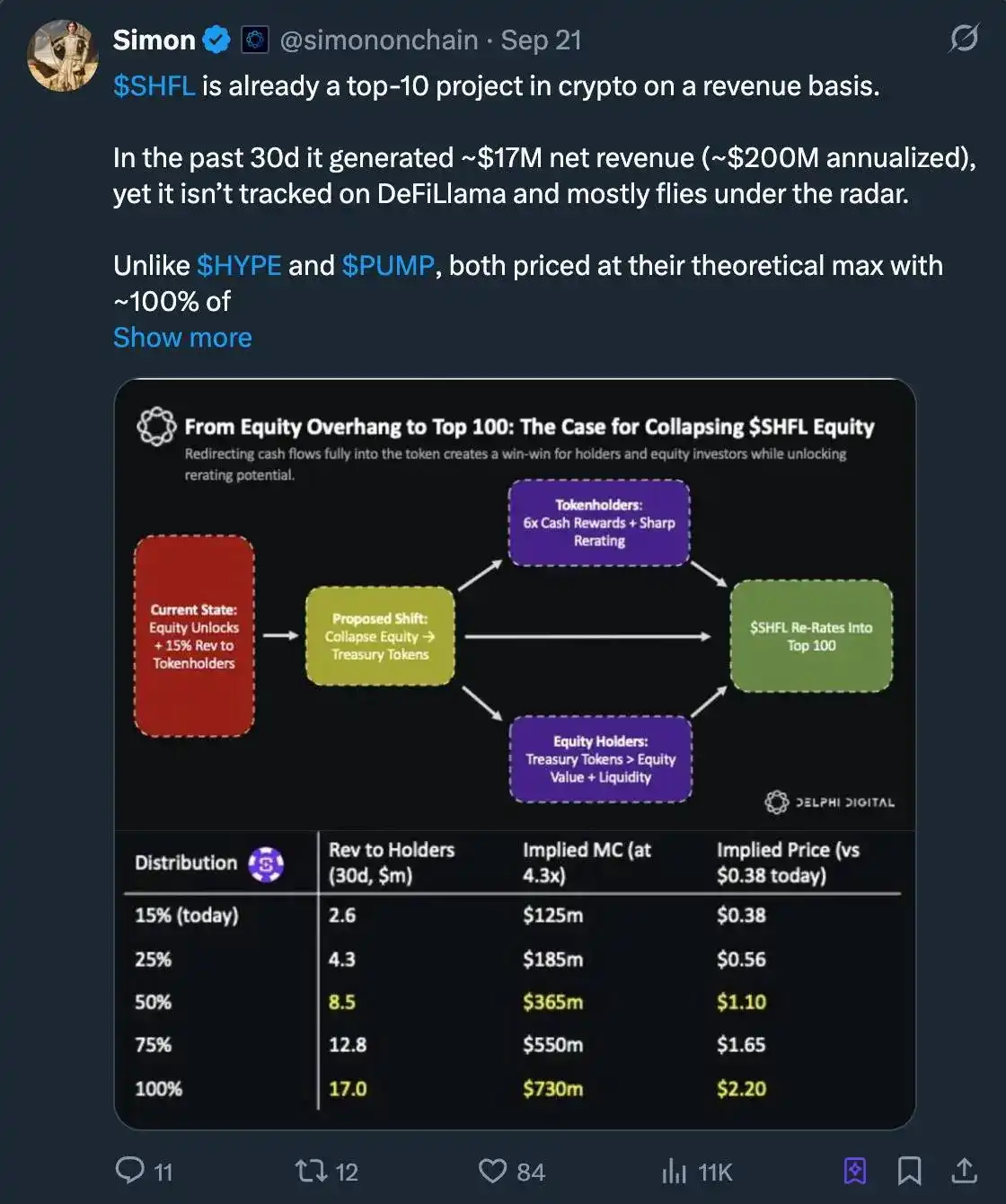
Shuffle's net gaming revenue and weekly lottery distribution demonstrate the huge potential of this field with successful execution.
Pump's mobile application is another underutilized advantage. Deeper expansion into mobile can broaden user acquisition channels, make the product more accessible to mainstream users, and provide creators with more monetization scenarios. If combined with iGaming, this could not only significantly expand Pump's potential audience but also strengthen the platform's existing successful elements.
Despite the uncertainties, Pump remains one of the most resilient consumer applications in this cycle, maintaining its dominant position even as the overall market landscape changes. Substantial progress in any key direction could trigger a significant shift in market sentiment and help Pump achieve a breakthrough, attracting a broader non-crypto-native user base.
Original Link
Crypto di tendenza











Domande pertinenti
QWhat is the core challenge that Pump.fun continues to face, according to the article?
AThe core challenge is the need to balance the crypto industry's short-term profit-seeking nature with the platform's long-term vision. A key issue is that once a project launches a token, the token itself becomes a separate product with inherent reflexivity that continuously shapes user expectations.
QWhich event was cited as the most notable case showing both the potential and the structural problems of the creator-driven token model?
AThe 'Bagwork' event was the most notable case. It was a viral, creator-driven phenomenon that generated significant attention and over 2300 SOL in creator fees for the team without them selling their holdings, showcasing the potential flywheel effect. However, it also highlighted structural issues, as its success was short-lived and no other creator token has since matched its organic momentum or valuation peak.
QWhat major change in its tokenomics acted as the primary catalyst for the $PUMP token's price surge from ~$0.025 to $0.085?
AThe primary catalyst was the team's decision to shift from allocating roughly a quarter of its net income to buybacks to committing 100% of its net income to buybacks, adopting a Hyperliquid-style buyback model.
QWhat are some of the market's main doubts about Pump.fun's long-term business prospects?
AThe market is skeptical about the team's ability to ship meaningful products continuously, the impact of future token unlocks (with ~40% of the supply still locked), the uncertainty around the final allocation of airdrop and creator incentives, the contraction of overall crypto meme coin activity, reduced end-user activity, and the sustainability of Pump's revenue base.
QWhat potential new strategic direction does the article suggest could be a natural fit for Pump.fun's user base?
AThe article suggests that entering the iGaming or casino-related verticals, adopting a model similar to Kick or Stake, would be a natural fit. This aligns with Pump's speculation-driven user base and would create deep synergies with its meme coin and streaming strategies, leveraging proven monetization potential in that sector.
Letture associate


Trading
Articoli Popolari
Come comprare PUMP
Benvenuto in HTX.com! Abbiamo reso l'acquisto di Pump.fun (PUMP) semplice e conveniente. Segui la nostra guida passo passo per intraprendere il tuo viaggio nel mondo delle criptovalute.Step 1: Crea il tuo Account HTXUsa la tua email o numero di telefono per registrarti il tuo account gratuito su HTX. Vivi un'esperienza facile e sblocca tutte le funzionalità,Crea il mio accountStep 2: Vai in Acquista crypto e seleziona il tuo metodo di pagamentoCarta di credito/debito: utilizza la tua Visa o Mastercard per acquistare immediatamente Pump.funPUMP.Bilancio: Usa i fondi dal bilancio del tuo account HTX per fare trading senza problemi.Terze parti: abbiamo aggiunto metodi di pagamento molto utilizzati come Google Pay e Apple Pay per maggiore comodità.P2P: Fai trading direttamente con altri utenti HTX.Over-the-Counter (OTC): Offriamo servizi su misura e tassi di cambio competitivi per i trader.Step 3: Conserva Pump.fun (PUMP)Dopo aver acquistato Pump.fun (PUMP), conserva nel tuo account HTX. In alternativa, puoi inviare tramite trasferimento blockchain o scambiare per altre criptovalute.Step 4: Scambia Pump.fun (PUMP)Scambia facilmente Pump.fun (PUMP) nel mercato spot di HTX. Accedi al tuo account, seleziona la tua coppia di trading, esegui le tue operazioni e monitora in tempo reale. Offriamo un'esperienza user-friendly sia per chi ha appena iniziato che per i trader più esperti.
530 Totale visualizzazioniPubblicato il 2024.12.12Aggiornato il 2026.07.09

