New Paradigms and Investment Logic in the Era of AI+Web3

marsbitPubblicato 2026-05-21Pubblicato ultima volta 2026-05-21

Introduzione

In the era of AI+Web3, a venture capital firm shares insights from reviewing numerous projects. The AI industry is seen as still early-stage, structured in a "seven-layer matrix" from power infrastructure to AI agents. Investment timing is crucial, especially in cyclical sectors like AI data centers. The integration of AI and Crypto is deemed essential for two reasons: 1) AI agents require "financial sovereignty" for micro, high-frequency, machine-to-machine transactions, and 2) blockchain provides trust and auditability to address AI "hallucinations" and ensure transparency. The core investment principle is "honesty." Teams must be genuine, not hastily assembled, and products must be substantiated by real metrics, not just flashy demos. Projects built on honesty are valued for long-term success over short-term hype. Looking ahead, the most underestimated opportunity for 2026 is the deep fusion of AI, blockchain, and entertainment. While most investment focuses on B2B infrastructure like payments and decentralized computing (DePIN), the future lies in consumer applications. As AI automates most human labor, society will shift towards leisure, creating massive demand for high-quality entertainment. AI can power immersive experiences (e.g., NPCs with autonomous consciousness in games), while blockchain secures digital ownership and economic systems. This convergence could unlock tremendous value in user time and capital within virtual worlds. *Disclaimer: The content represe...

In recent years, the AI concept has been everywhere, with large models and decentralized technology intertwining, creating a dizzying array of developments. As a VC firm, we have reviewed hundreds of crossover projects and want to share some hard truths — including the real cycle of the AI industry, why AI cannot do without Crypto, and what we value most and are most wary of when evaluating projects.

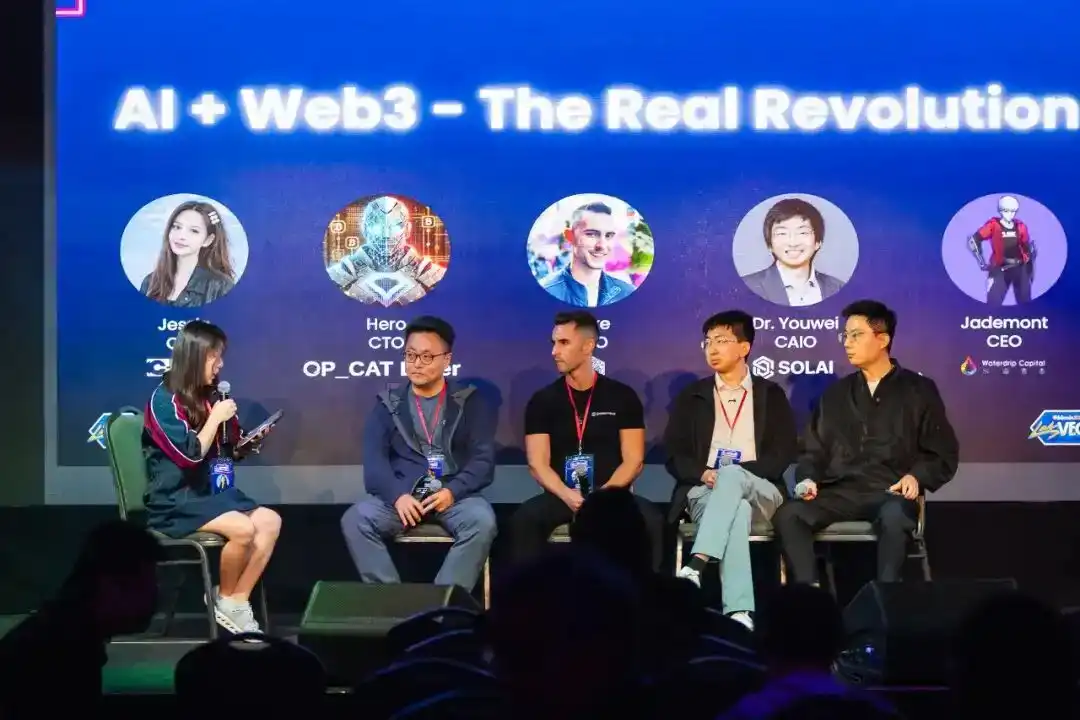
Note: The content of this article is excerpted from the roundtable discussion "AI+Web3-The Real Revolution" at the "AI + Bitcoin, the Next-Gen Revolution - BTC Vegas Side Event" held on April 28th.

I. The "Seven-Layer Matrix" and Investment Cycle of the AI Industry

Although giants like OpenAI, Anthropic, and Google are currently riding high and seem poised to dominate everything, our research indicates that the entire AI industry is still in a very early stage.

Being in an early stage doesn't mean one can invest blindly now, especially in overheated areas like AI hardware manufacturing, which require cooler heads. In our view, the AI industry chain can be broken down from bottom to top into seven different layers, and how to invest money in each layer is completely different:

• Layer Seven: AI Agents

• Layer Six: Token Optimization

• Layer Five: Token Distribution

• Layer Four: Large Language Models

• Layer Three: GPUs

• Layer Two: AI Data Centers

• Layer One: Power Infrastructure
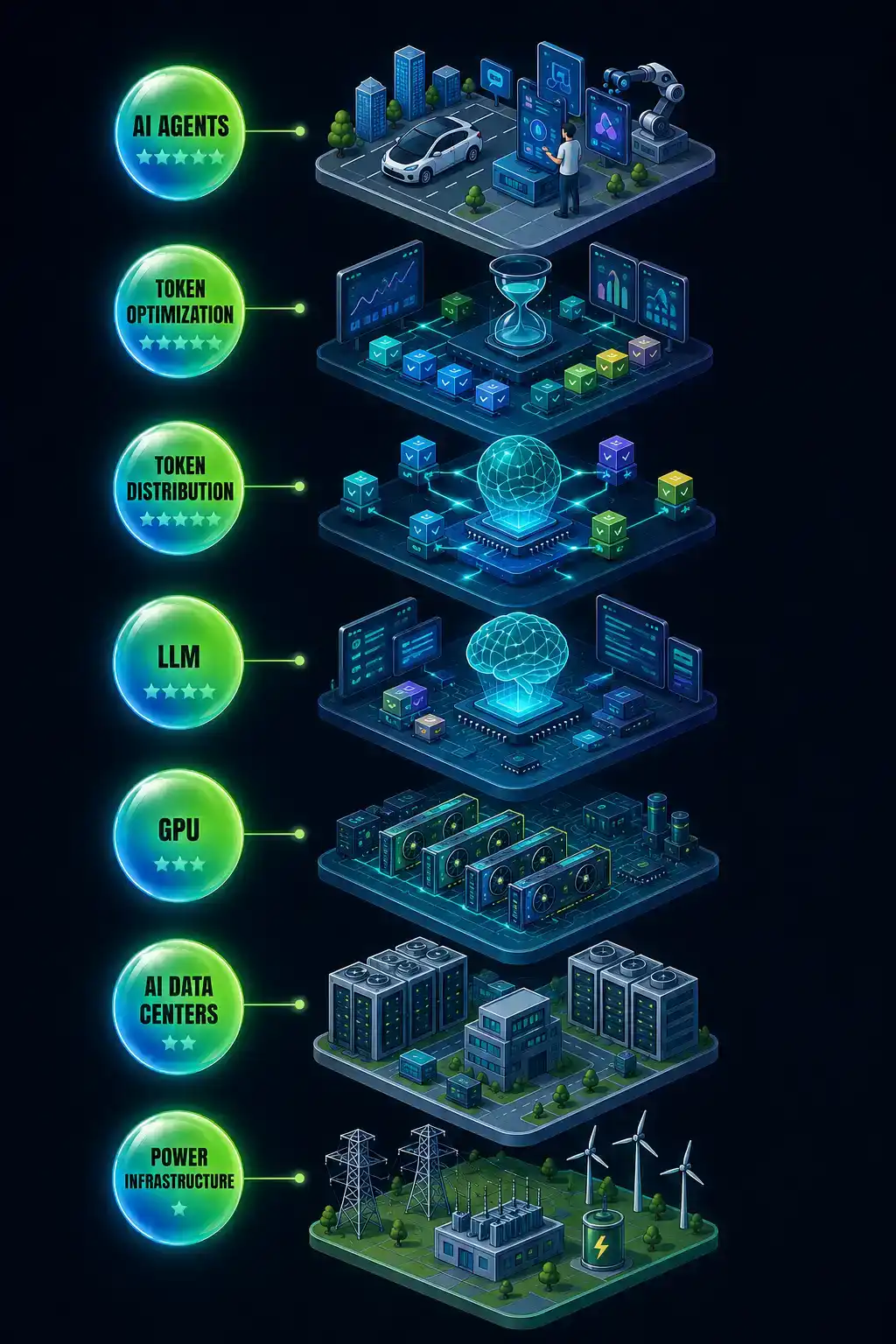
Take Layer Two, AI Data Centers, as an example. This is a typical cyclical industry. Over the past two years, global capital has been frantically buying land, building facilities, and expanding with heavy assets. However, there is a time lag between when this capacity is built, powered up, and actually brought to market. Based on our observations, this massive wave of capacity is likely to come online around 2028.

This means that if people are still single-mindedly pouring money into traditional data centers next year or even now, they will likely run headfirst into severe oversupply when everyone opens for business around 2028. Rents and returns will plummet, and capital that jumps in late will have a tough time. Therefore, aligning with the cycle and timing correctly is key.

Back in 2024, we believed there was a significant opportunity in the AI computing power layer, particularly in the crossover area of using Web3 methods for computing power scheduling. So, we focused a lot of effort and capital there. Currently, an AI computing power infrastructure company in which we are a major shareholder is in the final stages of preparing for a Nasdaq listing.

II. Why Are AI and Crypto Inseparable?

Many people often ask: Why does AI need Crypto when Web2's large models are already so powerful? In our view, this is not a forced concept mashup. Rather, there are two things that traditional Web2 cannot solve as AI advances:

1. In the Near Term: Payment — AI Agents Need Their Own "Financial Sovereignty"

Traditional bank cards, PayPal, or gateway payments are all designed for "humans," with an extremely cumbersome identity verification and centralized settlement process. But the transaction model for future AI Agents collaborating with each other is completely different.

Their interactions often involve extremely micro-amounts (e.g., spending $0.0001 to buy a few seconds of computing power), ultra-high frequency, and continuous transactions. If they go through traditional channels like Visa, the fees could exceed the transaction amount. More importantly is the issue of "payment sovereignty": AI Agents have autonomous execution capabilities. As they evolve to a certain level, they will inevitably need to own and have absolute control over their own wallet accounts, rather than forever relying on human physical bank cards or worrying about having their API accounts shut down by centralized giants at any moment. Cryptocurrency payments on the blockchain are currently the only technological means that allows machines to settle autonomously with each other.

2. In the Long Term: Trust — Guarding Against Hallucinations and Credible Audits

Everyone using large models now knows they sometimes fabricate things, the so-called "hallucination rate." In the traditional Web2 black box, when an AI provides a wrong or biased answer, it's difficult for humans to investigate: Is this a random technical hallucination, or is the centralized giant behind it intentionally manipulating the algorithm, poisoning data, or deceiving people?

This creates a hard need for blockchain. Pushing key AI operational data, prompt records, and call paths onto the chain in real-time can create an immutable, traceable, and auditable evidence storage system. This isn't just about defining data property rights; it's a reliable path for humans to supervise and verify whether AI behavior is compliant in the future.

III. Investing in Projects: Using "Honesty" as the Measuring Stick

Every year, we see thousands of business plans for AI + Web3. After reviewing so many stories, the core screening principle we've settled on is actually just two words: Honesty. This sounds like simple common sense, but in the current浮躁 industry, it might be the rarest quality. We break down honesty into two levels:

1. The Team Must Be Honest — Reject Packaging and Patchwork

The resumes of founders and core teams must have no falsification or excessive boasting. In the industry today, we often see hastily assembled teams. To catch a bull market or chase a trend, they forcefully slap together labels like "big company scientist" or "prestigious school background," but there's zero internal team chemistry. Such projects often fall apart at the first sign of a technical bottleneck or market adjustment. A team that can truly succeed needs complementary skills, and the founder's background must be genuine — someone who is earnest about building something.

2. The Product Must Be Honest — Reject PPT-Driven Hype and False Metrics

What a product can actually achieve, how its user data looks — these must be supported by tangible underlying metrics like code and node counts. We've seen too many projects that simply wrap an OpenAI API on the frontend, change the interface, and then dare to claim in their PPT that they are an "autonomous native large model," using a fake demo to fool investors. On the product level, one must be realistic, able to genuinely solve problems.

In the capital markets, dishonest projects driven by hype and fabrication might, in the short term, inflate their valuations highly in secondary markets or exchanges through fancy financial engineering. But because there's no real underlying business supporting them, once the bubble bursts, their ultimate fate is inevitably to go to zero.

Conversely, projects that work diligently and honestly might seem slower initially because they disdain hype and fraud, perhaps even appearing a bit笨 in the eyes of some speculative capital. But because they have a solid foundation, they can often go the distance. In investing, slow is fast. These long-lasting projects are the ones we are willing to invest in and support strategically.

IV. The Most Underestimated Opportunity in 2026: The Ultimate Fusion of AI + Blockchain + Entertainment

Finally, regarding future opportunities that everyone hasn't yet noticed or that are severely underestimated. Based on our research, what we're most excited about is actually the deep integration of AI + Blockchain + Entertainment.

Currently, most market capital is focused on relatively hardcore, dry B2B infrastructure like AI payments and decentralized computing (DePIN). These tracks are important, but the competition is too fierce. People are overlooking the consumer end, which is best at attracting mass users and retaining capital.

Our observation and logic are as follows: As large models and Agents mature, AI, as an efficient labor force, will inevitably replace the vast majority of repetitive white-collar and blue-collar human jobs in the future. When productivity becomes extremely abundant and material costs are extremely low, human society will undergo a fundamental transformation — most people won't need to work forced jobs just to make ends meet. At that time, the demand for吃喝玩乐 will explode. Where will human time and energy go? High-quality entertainment is an inevitable destination.

Future entertainment should fully integrate AI.

Take gaming as an example. Every NPC in the game could have autonomous consciousness, with their own memories, personalities, and social relationships. When players enter the game, they no longer face a repeater bot, but a "living person" who develops emotions based on your actions and words, and might even spontaneously conduct transactions with you on-chain. The integration of AI will lead to a qualitative leap in the freedom and enjoyment of games.

And blockchain's role here is "property rights": it defines land ownership, the uniqueness of rare items in this virtual world, and uses Tokens to establish economic order.

When people no longer need to work in reality and pour a large amount of time, energy, and even assets into such a fun, AI-driven virtual world where assets belong to the players themselves, the commercial value unleashed within will be terrifying. We are currently actively looking for pioneers in this direction. This could be the next narrative that ignites the entire industry.

Disclaimer: The content of this report represents only the author's and the institution's industry research views. It is intended for industry discussion only and does not constitute any investment advice.


Domande pertinenti

QAccording to the article, what are the seven layers of the AI industry from bottom to top, and which layer is considered a typical cyclical industry?

AAccording to the article, the seven layers of the AI industry from bottom to top are: First layer: Power infrastructure; Second layer: AI data centers; Third layer: GPU; Fourth layer: Large language models; Fifth layer: Token distribution; Sixth layer: Token optimization; Seventh layer: AI agents. The second layer, AI data centers, is identified as a typical cyclical industry, with concerns about a potential supply glut around 2028 due to a time lag in bringing new capacity online.

QThe article argues that AI and Crypto are inseparable. What are the two key reasons provided for this, focusing on immediate and long-term needs?

AThe article provides two key reasons why AI and Crypto are inseparable. The immediate need is for payments: AI Agents require their own 'financial sovereignty' for micro, high-frequency, continuous transactions between machines, which traditional payment systems are ill-suited for. The long-term need is for trust: Blockchain provides a solution for auditing and verification, creating an immutable record to track AI data, prompts, and execution paths. This helps distinguish between technical 'hallucinations' and potential deliberate manipulation by centralized entities, ensuring accountability.

QWhat is the core principle the VC firm uses to filter AI+Web3 projects, and how is this principle broken down into two specific aspects?

AThe core principle the VC firm uses to filter AI+Web3 projects is 'honesty'. This principle is broken down into two specific aspects: 1. Team Honesty: Rejecting packaging and fabrication. Founders and core teams must have genuine, non-exaggerated backgrounds, and the team must be cohesive rather than hastily assembled. 2. Product Honesty: Rejecting PPT-driven pitches and fake metrics. The product's capabilities must be supported by real underlying code, node counts, and other tangible indicators, not just superficial demos built on third-party APIs.

QWhat future opportunity does the article identify as the most underestimated for 2026, and what is the core logic behind this prediction?

AThe article identifies 'AI + blockchain + entertainment deep fusion' as the most underestimated opportunity for 2026. The core logic is that as AI matures and automates most repetitive human labor, society will shift towards a post-scarcity model where basic needs are met. Consequently, human time and energy will increasingly flow towards high-quality entertainment. The fusion of AI (to create dynamic, intelligent game worlds and NPCs), blockchain (to establish ownership and economic order for virtual assets), and entertainment will unlock massive commercial value as people invest their time and assets into these immersive, player-owned virtual worlds.

QIn the context of AI Agent payments, what specific problem does blockchain-based cryptocurrency solve that traditional payment systems cannot?

ABlockchain-based cryptocurrency solves the problem of enabling autonomous, micro-value, and high-frequency transactions between AI Agents. Traditional payment systems like Visa, PayPal, or bank cards are designed for humans, involving cumbersome identity verification and centralized清算 (settlement) processes with high relative fees for tiny transactions. Cryptocurrency allows machines to have their own sovereign wallets, enabling direct, efficient, and permissionless清算 between agents without relying on human-controlled accounts or facing risks like API bans from centralized platforms.

Letture associate

Blocked Its Own Treasure, WeChat AI Steps Up

Tencent's stock surged over 10% on June 2nd amid reports that WeChat, with 1.43 billion monthly users, is finalizing tests for a native AI Agent. The reported feature, accessible by swiping right from the main interface, allows users to issue commands in natural language. The AI then decomposes tasks and automatically calls upon relevant Mini Programs within WeChat to complete actions like ordering food, booking tickets, or making payments, creating a closed-loop service execution system. This strategic shift follows the internal conflict and subsequent "blocking" of Tencent's standalone AI app, Yuanbao, by WeChat for violating sharing rules during a 2026 Spring Festival promotion. The incident highlighted a lack of internal consensus and exposed the weakness of competing in the standalone AI assistant arena against rivals like ByteDance's Doubao (345M MAU) and Alibaba's Qianwen. The new WeChat AI Agent aims to leverage WeChat's unique assets—its massive user base, standardized Mini Program APIs, WeChat Pay, and identity system—to move from simple content generation to actual task execution. Analysts note this changes the competitive landscape from model benchmarks to which AI can connect to more real-world services. However, success depends on key variables: the capability of Tencent's underlying Hunyuan model, managing massive inference costs, and redesigning incentives for Mini Program developers whose traffic might be bypassed. The move is seen as an attempt to keep user service intent within WeChat's ecosystem as AI begins to redefine how users access services.

marsbit53 min fa

Blocked Its Own Treasure, WeChat AI Steps Up

marsbit53 min fa

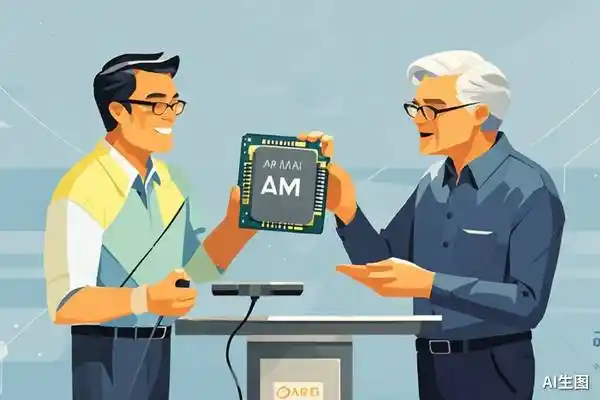
ByteDance Adopts Arm CPUs, Jensen Huang: So Sad I Didn't Buy Arm

**Summary:** At Computex 2026, Arm CEO Rene Haas announced that ByteDance and Oracle have adopted Arm's self-designed Arm AGI data center CPU. The company expects significant revenue growth from this product, projecting $20 billion in demand for the 2027/2028 fiscal years. Haas noted that restricting AI-capable CPUs from the US to China is nearly impossible due to their widespread applications. Arm's stock has surged dramatically this year, notably rising 16% after NVIDIA's Arm-based Vera CPU and RTX Spark announcements. A highlight was the informal, humorous on-stage conversation between Haas and NVIDIA CEO Jensen Huang. Huang joked about NVIDIA's failed attempt to acquire Arm and playfully lamented selling his Arm shares. Both executives showed a clear sense of camaraderie and shared regret over the missed merger. Key technical topics were discussed: 1. **AI PC Design:** Huang explained NVIDIA's RTX Spark superchip (with a 20-core Arm CPU) is designed for future AI agents that will autonomously run and use tools on PCs, blending local and cloud processing. 2. **Agent vs. OS:** Huang emphasized the operating system remains crucial, as AI agents rely on its APIs and tools to function. 3. **Growth Constraints:** He identified the shift to "useful AI" that generates profitable tokens as a primary driver for immense, almost limitless, computational demand. Haas outlined Arm's strategy across PC and data centers. For PCs, Arm collaborates with partners like NVIDIA and MediaTek, offering its compute subsystem (CSS) for custom SoCs. In data centers, its Arm AGI CPU (built on TSMC's 3nm process) has gained major partners including OpenAI, Meta, and now ByteDance and Oracle. Arm presented a multi-year roadmap for its in-house CPU line. The article concludes that while GPUs dominated the AI training race, the explosion of AI agents is shifting significant focus to CPUs for inference, state management, and tool orchestration. The industry is trending towards vertical integration, with companies like cloud providers designing chips and chip/IP firms offering full solutions, all competing to deliver more efficient computing per watt.

marsbit1 h fa

ByteDance Adopts Arm CPUs, Jensen Huang: So Sad I Didn't Buy Arm

marsbit1 h fa

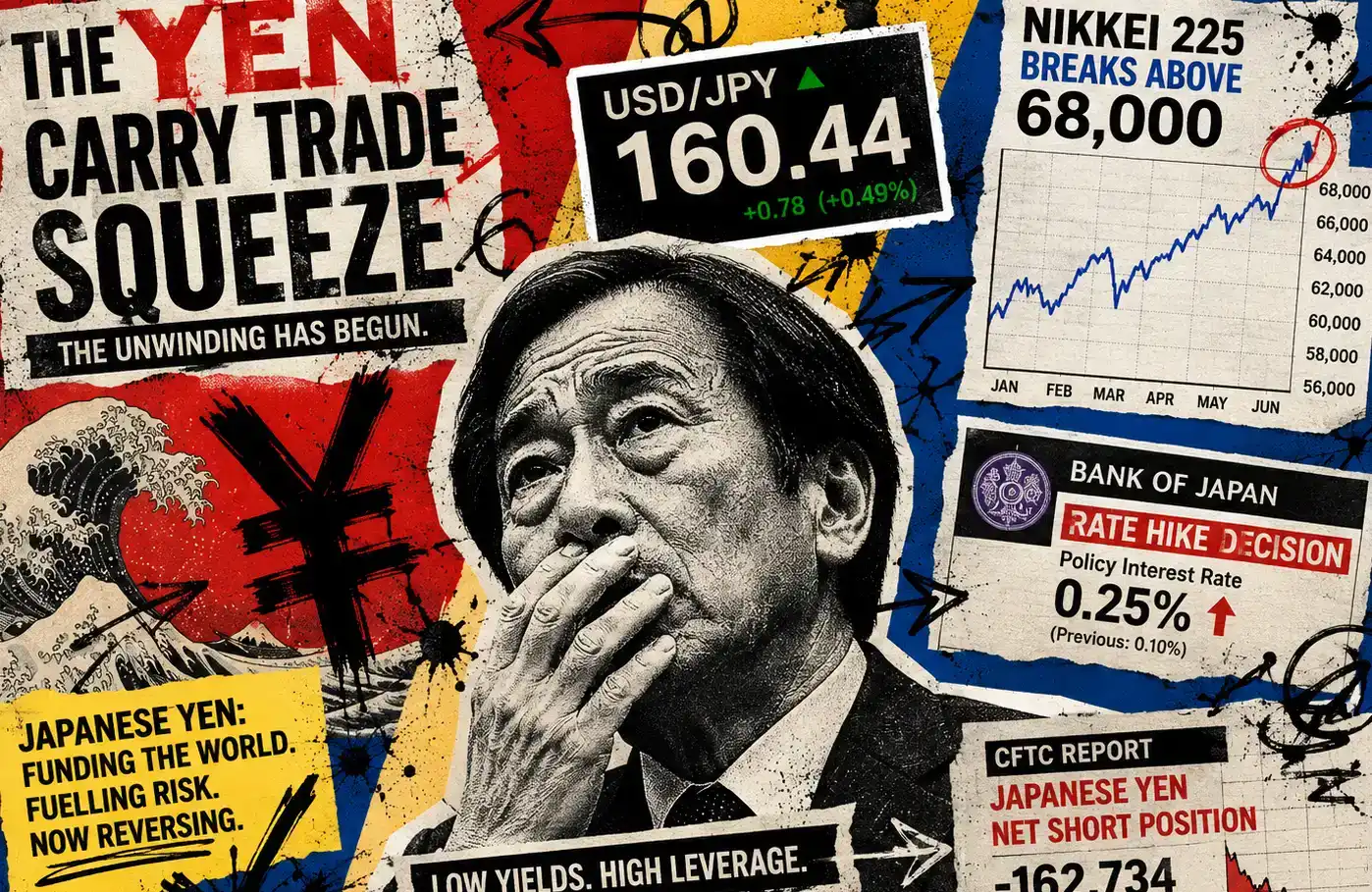
New Wall Street Play: Yen Shorts Still Adding, But Japan Stocks Don't Rely on Carry Trade Unwinding

On June 3rd, USD/JPY hit 160.44, its highest level since July 2024, while the Nikkei 225 surged past 68,000 points. Contrary to popular narratives of an imminent "carry trade unwind" akin to August 2024, data reveals a more complex picture. Speculative net short positions in yen futures have actually increased, reaching -114,667 contracts by late May, suggesting traders are doubling down rather than retreating. Meanwhile, Japan's Finance Ministry conducted its largest-ever single-round FX intervention (11.73 trillion yen) in April-May but failed to hold the 160 yen line. The Nikkei's rally is not driven by carry trade dynamics. Foreign investors are aggressively buying Japanese stocks, with net purchases in 2026 running nearly 16 times higher than 2025 levels. This inflow is concentrated in AI and semiconductor-related stocks like SoftBank and Socionext, fueled by positive sector outlooks, rather than being a flight from unwinding yen shorts. Furthermore, the Nikkei has continued climbing despite the Bank of Japan's (BOJ) rate hikes to 0.75%. This disconnect exists because the current equity boom is fueled by AI-driven foreign investment, not reliant on cheap yen funding. However, this relationship remains fragile. Should the BOJ hike rates further (e.g., to 1.0%) while dollar weakness increases carry trade costs, the trajectories of the yen and Japanese stocks could reconverge, potentially triggering volatility.

marsbit1 h fa

New Wall Street Play: Yen Shorts Still Adding, But Japan Stocks Don't Rely on Carry Trade Unwinding

marsbit1 h fa

Broadcom's Q3 Guidance Misses Expectations by $12 Billion, After-Hours Trading Plummets Over 13%, AI Narrative "Cooling"?

On June 3, Broadcom released record Q2 FY26 results with revenue of $22.19B, up 48% YoY, and AI chip sales of $10.8B, up 143%. Adjusted EPS of $2.44 beat estimates. However, its Q3 AI semiconductor revenue guidance of $16B, while up over 200% YoY, fell roughly $1.2B (7%) short of analyst consensus expectations of $17.2B. This miss, coupled with slightly weaker-than-expected software revenue, triggered a severe market reaction. CEO Hock Tan maintained the FY26 AI revenue outlook of over $100B but did not raise it, disappointing investors who had priced in more robust growth. The stock plummeted over 13% in after-hours trading, erasing roughly $270B in market cap. The sell-off extended to peers like Marvell. A key concern for markets, particularly for Chinese optical module suppliers, was Tan's comment that the contribution of AI networking (e.g., Ethernet switches, optical interconnect chips) to AI revenue, currently near 40%, is expected to normalize to around 30% over time, signaling a potential peak in growth for that segment. Despite the guidance shortfall, Tan reiterated that AI demand remains "insatiable" and reaffirmed the long-term target of exceeding $100B in AI revenue by FY27. The reaction highlights the heightened sensitivity and premium valuation placed on AI-exposed stocks, where anything less than stellar guidance can prompt significant profit-taking. The broader question is whether this represents a cooling AI narrative or a correction in overstretched valuations.

marsbit1 h fa

Broadcom's Q3 Guidance Misses Expectations by $12 Billion, After-Hours Trading Plummets Over 13%, AI Narrative "Cooling"?

marsbit1 h fa

Trading

Spot
Futures

Articoli Popolari

Come comprare ERA

Benvenuto in HTX.com! Abbiamo reso l'acquisto di Caldera (ERA) semplice e conveniente. Segui la nostra guida passo passo per intraprendere il tuo viaggio nel mondo delle criptovalute.Step 1: Crea il tuo Account HTXUsa la tua email o numero di telefono per registrarti il tuo account gratuito su HTX. Vivi un'esperienza facile e sblocca tutte le funzionalità,Crea il mio accountStep 2: Vai in Acquista crypto e seleziona il tuo metodo di pagamentoCarta di credito/debito: utilizza la tua Visa o Mastercard per acquistare immediatamente CalderaERA.Bilancio: Usa i fondi dal bilancio del tuo account HTX per fare trading senza problemi.Terze parti: abbiamo aggiunto metodi di pagamento molto utilizzati come Google Pay e Apple Pay per maggiore comodità.P2P: Fai trading direttamente con altri utenti HTX.Over-the-Counter (OTC): Offriamo servizi su misura e tassi di cambio competitivi per i trader.Step 3: Conserva Caldera (ERA)Dopo aver acquistato Caldera (ERA), conserva nel tuo account HTX. In alternativa, puoi inviare tramite trasferimento blockchain o scambiare per altre criptovalute.Step 4: Scambia Caldera (ERA)Scambia facilmente Caldera (ERA) nel mercato spot di HTX. Accedi al tuo account, seleziona la tua coppia di trading, esegui le tue operazioni e monitora in tempo reale. Offriamo un'esperienza user-friendly sia per chi ha appena iniziato che per i trader più esperti.

345 Totale visualizzazioniPubblicato il 2025.07.17Aggiornato il 2026.06.02

Come comprare ERA

Discussioni

Benvenuto nella Community HTX. Qui puoi rimanere informato sugli ultimi sviluppi della piattaforma e accedere ad approfondimenti esperti sul mercato. Le opinioni degli utenti sul prezzo di ERA ERA sono presentate come di seguito.

活动图片