Compiled by: ChainCatcher
Key News:
- Sharplink and Forward to be Included in Russell Indices, Providing Indirect Exposure to ETH and SOL
- Coinbase Partners with Standard Chartered to Expand Multi-Currency Fiat Channels
- Tom Lee: Crypto Supercycle Imminent, ETH to Benefit from Wall Street Tokenization and AI Agent Wave
- Hong Kong Monetary Authority: Adds Three New Supervisory Measures for Mainland Investor Investment Accounts, KYC Verification Retroactive to January 2023
- Polymarket to Require Traders to Undergo KYC to Address Sanctions and Legal Risks
- Bloomberg Analyst: SK Hynix ETF Assets Surge 10x This Year, Now Third-Largest ETF in Hong Kong Market
- JPMorgan CEO: JPMorgan May Issue a Stablecoin in the Future
What Happened in the Last 24 Hours?
JPMorgan CEO: JPMorgan May Issue a Stablecoin in the Future
Bloomberg Analyst: SK Hynix ETF Assets Surge 10x This Year, Now Third-Largest ETF in Hong Kong Market
ChainCatcher news, Eric Balchunas, Senior ETF Analyst at Bloomberg, posted on X platform stating that the assets of the 2x leveraged SK Hynix ETF have grown approximately 10 times this year and it has now become the third-largest ETF in the Hong Kong market, accounting for about 8.5% of total ETF assets.
Eric Balchunas also pointed out that the ETF's daily trading volume exceeds the billion-dollar level. When scaled to the equivalent US market size, this would be equivalent to a daily trading volume of about $150 billion, which is considered extremely rare in the global ETF market. If proportionally scaled, the size of this ETF in the US market would be equivalent to an ETF of about $1.3 trillion, but a product of this magnitude does not yet exist globally.
Forbes: Hyperliquid's Launch of SpaceX Perpetual Contract Raises Regulatory Gap Concerns
ChainCatcher news, according to a Forbes report, the decentralized derivatives platform Hyperliquid has launched a SpaceX pre-IPO perpetual contract (SPCX-USDC) via Trade.xyz, sparking global debate over regulatory gaps. This contract provides leveraged trading without requiring holders to own any SpaceX stock or authorization from the company. Initially priced at $150, implying a valuation of about $1.78 trillion, it quickly surged to $216.
It is reported that the contract settles in USDC, with pricing from a market oracle, and is not linked to SpaceX's actual financials or equity structure. SpaceX itself is neither authorized nor involved in this market, yet its valuation is being priced and traded on-chain in real-time, raising controversy over "private company price discovery being taken over by decentralized derivatives." This market originates from Hyperliquid's HIP-3 mechanism, supporting the notion that private company valuations may be being repriced by on-chain derivatives, while the regulatory system has yet to establish a corresponding framework.
Polymarket to Require Traders to Undergo KYC to Address Sanctions and Legal Risks
ChainCatcher news, according to The Information report, prediction market Polymarket is facing escalating regulatory and sanctions compliance pressure. The platform is pushing for traders to undergo identity verification (KYC) to mitigate potential legal and compliance risks.
The report states that although Polymarket's betting platform rules in certain regions do not permit related activities, users still participate in market trading through methods like automated trading bots, creating gray-area usage paths in regions like Russia. Some developers even use tools like Telegram to organize trading traffic and expand user bases. As the platform scales and regulatory scrutiny increases, Polymarket is being forced to seek a balance between decentralized prediction markets and compliance requirements to address potential sanctions and legal risks.
Hong Kong Monetary Authority: Adds Three New Supervisory Measures for Mainland Investor Investment Accounts, KYC Verification Retroactive to January 2023
ChainCatcher news, according to a Cailian Press report, in response to the matter of "some banks in Hong Kong requiring signing a declaration to open investment accounts," the Hong Kong Monetary Authority (HKMA) responded today that the relevant supervisory requirements were issued to all authorized institutions on May 22.
Materials provided by the HKMA show that registered institutions are required to take three additional measures when opening and managing investment accounts for mainland investors, including:
1. Close investment accounts opened using suspicious or forged documents, identify customer investment accounts opened using suspicious or forged documents since January 2023 or any other period specified by the HKMA. Such documents include identification documents.
2. Close zero-balance inactive investment accounts, specifically referring to investment accounts held by mainland investors that have zero asset balance as of May 22, 2026 (reference date), and have had no customer-initiated activity in the 12 months prior to the reference date.
3. When opening new investment accounts, obtain a written declaration from the mainland investor confirming that all funds used to support investment activities and related settlements originate from legal sources outside Mainland China.
Relevant documents show that the new additional supervisory measures only apply to investment accounts, including investment accounts within comprehensive bank accounts. Non-investment functions (such as ordinary savings, current/demand deposits, payments, loans, and credit cards) are not within the scope of these measures. Additionally, these additional measures apply to individual customers and do not apply to corporate or institutional clients.
Noted Trader: Current Loss Period May Not Be Long Enough to Confirm Bear Market Bottom
ChainCatcher news, noted trader Killa (@KillaXBT) posted stating that, from the perspective of the 180-day realized price dimension, the duration investors have been in a loss-making state during this adjustment may not yet be sufficient.
Historical experience indicates that bear markets are typically accompanied by prolonged periods of sustained losses, with many investors remaining in unrealized losses for extended periods. If historical patterns repeat, the current adjustment cycle may require more time to digest, and the market may still need to undergo a longer bottoming process.
Vitalik: Will Shift from Regular Blog Posts to Trying Decentralized Governance-Themed Sci-Fi
ChainCatcher news, Ethereum co-founder Vitalik Buterin posted that he will no longer write regular blog posts and has decided to try writing some science fiction themed around decentralized governance.
According to the link he posted, he has already completed the first and second chapters of this sci-fi story.
Falcon Finance and Anchorage Launch Institutional-Grade Compliant Stablecoin fUSD
ChainCatcher news, Falcon Finance officially announced the launch of the US dollar stablecoin fUSD in partnership with Anchorage Digital Bank. The product is positioned as an institutional-grade payment stablecoin compliant with the GENIUS Act framework and is now live on Ceffu's custody and collateral infrastructure.
It is reported that fUSD is backed by reserves such as US Treasury bonds, issued by Anchorage Digital Bank, but does not directly pay interest or yield to holders.
South Korea's Virtual Asset Trading Volume Falls to ~8% of KOSPI, Bitcoin Korean Premium Remains Negative
ChainCatcher news, according to Digital Asset report, South Korea's domestic virtual asset trading volume has fallen to about 8% of KOSPI trading volume, less than one-tenth. Media statistics show that the ratio of trading volume on KRW market exchanges (Upbit, Bithumb, Coinone, Korbit, Gopax) to KOSPI trading volume is only 8%.
The report notes that South Korea's virtual asset market has continued to weaken since the second half of 2025, with a large-scale futures liquidation causing a decline in October 2025, while KOSPI has strengthened driven by semiconductor industry momentum and policy. According to CryptoQuant data, the Bitcoin Korean Premium indicator has been mostly negative since March, reflecting weak buying interest in the Korean market.
TD Cowen: Deteriorating Political Environment Lowers Chances of Crypto Market Structure Bill Passage This Year
ChainCatcher news, Jaret Seiberg, Managing Director of the Washington Research Group at investment bank TD Cowen, released a research note on Tuesday stating that the political environment surrounding the CLARITY Act continues to deteriorate, lowering the likelihood of the crypto market structure bill passing this year. Seiberg noted that recent controversies involving President Trump have made it difficult for Democrats to support the bill in the absence of a conflict-of-interest provision.
Seiberg stated that these events have increased pressure on Democrats to demand the inclusion of a conflict-of-interest clause targeting the President, while also making Republicans reluctant to advance legislation that might force them to vote against related amendments. He expects lawmakers may choose to wait and see, but the midterm elections leave little room for further delays. He had previously indicated the legislative window might extend until the August recess; if not resolved this year, passage could be delayed until 2027.
a16z crypto: Most Tokenized Assets Are Merely Digitalized, True On-Chain Composability Remains Unlocked
ChainCatcher news, a16z crypto pointed out in a post that not all tokenized assets are fully utilized on-chain. Bonds are currently the largest category of tokenized assets, with a market cap of $15.2 billion, but only about 5% of the supply is used in DeFi; the situation is similar for precious metals, which are on-chain but mostly idle.
In contrast, smaller categories perform differently: reinsurance tokens have 84% of their supply deployed in DeFi, and private credit has 33%. a16z believes this is logical because the categories with the highest DeFi usage were built for DeFi from the start, such as Nexus Mutual and Maple Finance.
a16z notes that much of what is currently called tokenization is closer to digitization—moving records onto the blockchain without unlocking many new functionalities. One of the core value propositions of an on-chain financial system is composability.
Tom Lee: Crypto Supercycle Imminent, ETH to Benefit from Wall Street Tokenization and AI Agent Wave
ChainCatcher news, Bitmine Chairman Tom Lee stated that he remains firmly optimistic that the crypto market is about to enter a new supercycle and believes Ethereum will be a core beneficiary. Tom Lee pointed out that the two core drivers of this cycle are asset tokenization driven by Wall Street and the rapid development of AI Agents.
He said: "We continue to expect that the crypto market and Ethereum will enter a supercycle." Additionally, Tom Lee believes that Ethereum's previous significant correction instead provided an attractive buying opportunity. Currently, the staking scale within the Ethereum ecosystem continues to climb, with over 39.2 million ETH staked, accounting for about 32% of the total supply.
According to market news, Bitmine increased its holdings by a total of 111,942 ETH last week. Its ETH holdings account for about 4.47% of the total supply of 120.7 million ETH.
Supreme Court: To Research Judicial Rules for New Types of Cases Including Virtual Currency
ChainCatcher news, the State Council Information Office held a press conference on the "Starting the 'Fifteenth Five-Year Plan'" series, introducing the progress of "advancing comprehensive rule of law." Liu Guixiang, Deputy Department-Level Full-time Member of the Judicial Committee of the Supreme People's Court and Second-Grade Grand Justice, stated that the Supreme Court will conduct in-depth research on judicial rules for new types of cases including virtual currency and cross-border finance, and will formulate judicial interpretations on civil compensation related to insider trading and market manipulation as soon as possible to ensure the stable operation of capital markets and protect the legitimate rights and interests of small and medium investors.
Additionally, he stated that regarding new business models in the digital economy, the Supreme Court will research and formulate normative documents on judicial protection for AI-related cases and data property rights, improving judicial rules on data ownership, data transactions, and AI-generated content.
Coinbase Partners with Standard Chartered to Expand Multi-Currency Fiat Channels
ChainCatcher news, Coinbase announced a partnership with Standard Chartered to expand global multi-currency funding channels via Coinbase Prime, supporting Australian Dollar, Singapore Dollar, Canadian Dollar, Swiss Franc, Euro, and Pound Sterling.
Coinbase stated that this move will improve capital efficiency, reduce foreign exchange friction, and enable institutional clients to seamlessly conduct global market operations on the same platform via Coinbase Prime.
Sharplink and Forward to be Included in Russell Indices, Providing Indirect Exposure to ETH and SOL
ChainCatcher news, according to a The Block report, Sharplink and Forward Industries, which employ crypto asset reserve strategies, will be included in the Russell 2000 and Russell 3000 indices following the FTSE Russell annual reconstitution, effective at the US market open on June 29. This means index investors will gain indirect exposure to ETH and SOL through the two companies.
The report states that Sharplink currently holds 868,699 ETH, worth nearly $1.8 billion; Forward Industries holds approximately $585 million worth of SOL. FTSE Russell previously reported that about $12.2 trillion in assets are benchmarked to Russell US indices.
Meme Hot List
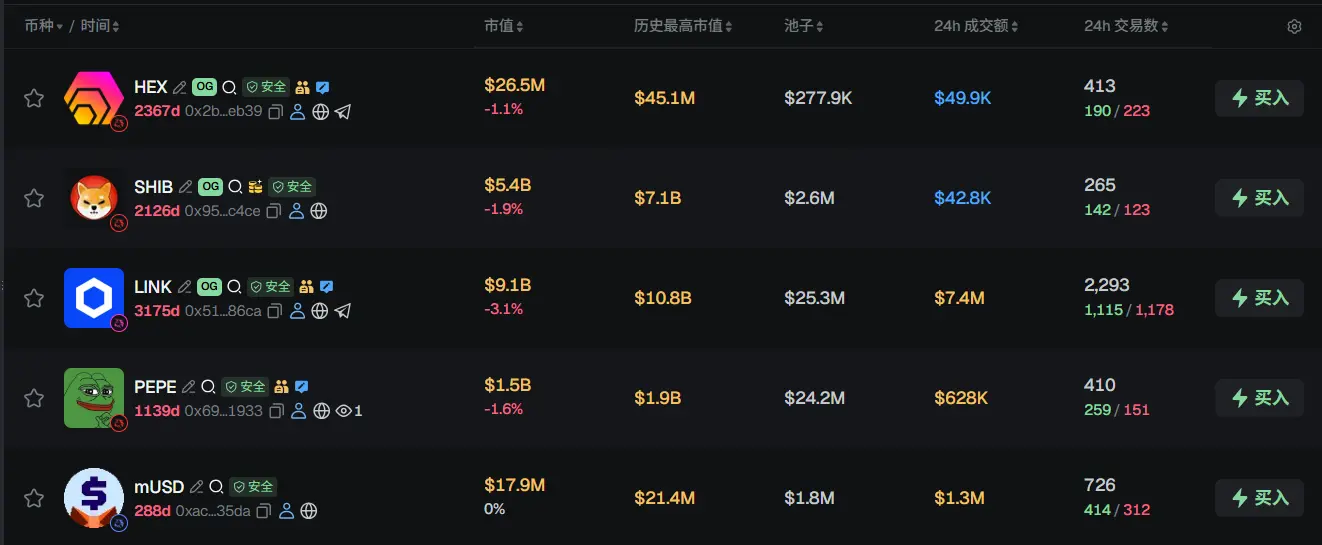
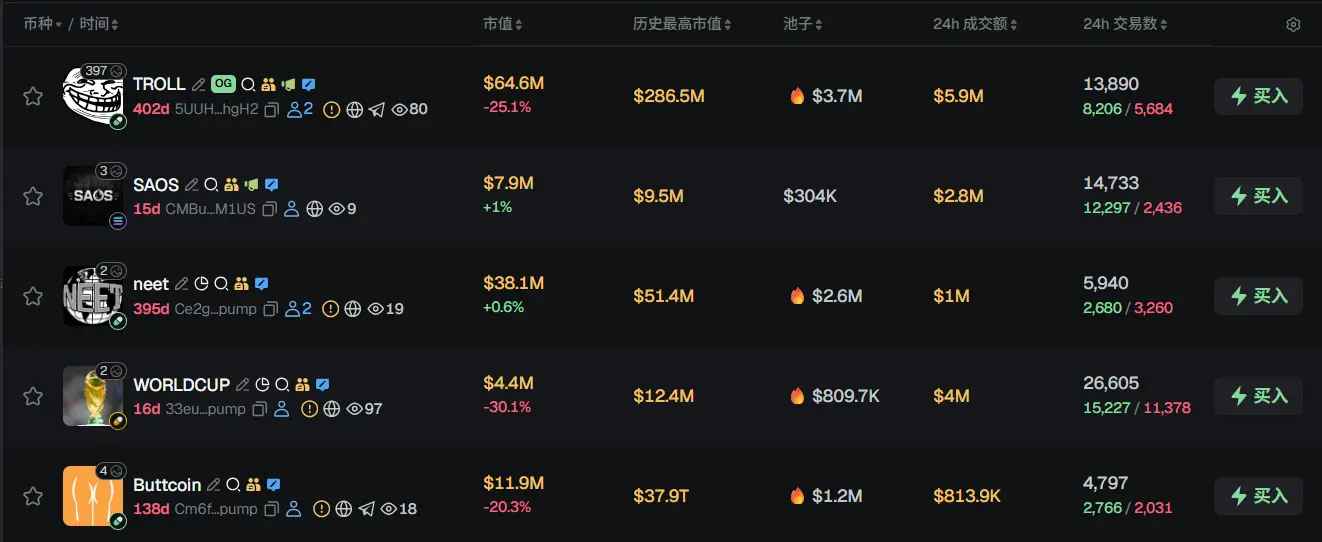
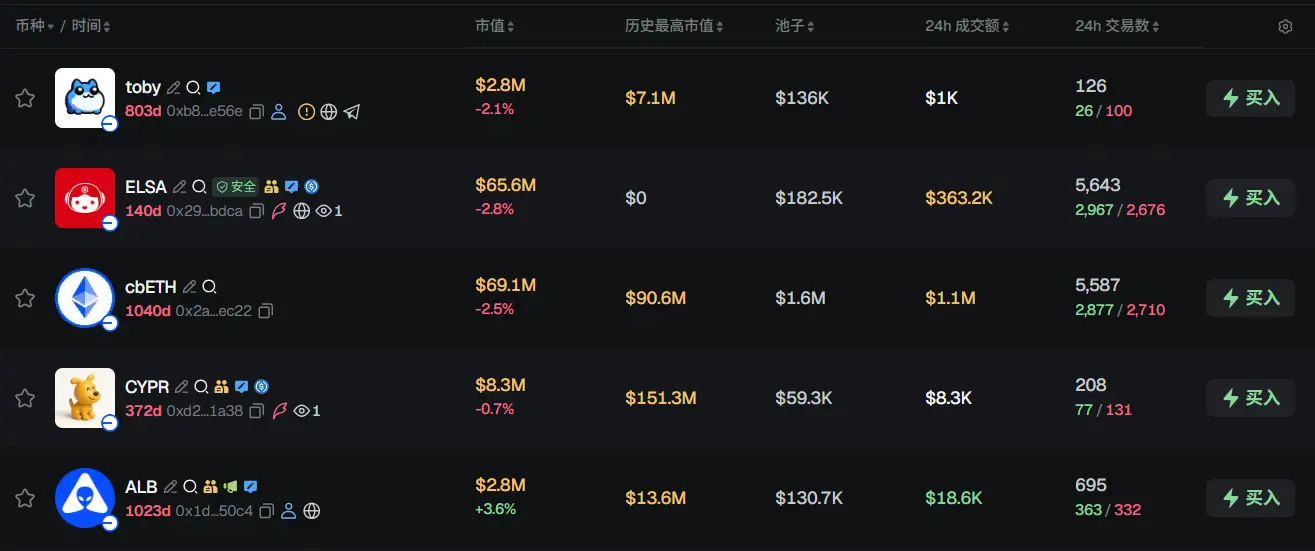
According to data from the Meme token tracking and analytics platform GMGN, as of 09:00 on May 28,
The top five trending ETH tokens over the past 24h were: HEX, SHIB, LINK, PEPE, mUSD
The top five trending Solana tokens over the past 24h were: TROLL, SAOS, neet, WORLDCUP, Buttcoin
The top five trending Base tokens over the past 24h were: toby, ELSA, cbETH, CYPR, ALB
What Are the Must-Read Articles in the Last 24 Hours?
Bankless Founder: Why I Sold All My ETH
In case you missed the news last week, I sold my ETH.
For someone who built a career, community, identity, and business empire around Ethereum, this decision was anything but easy.
The reasons for deciding to sell require a more thorough explanation than fragmented tweets on Twitter.
The "ETH is money" thesis hasn't failed... it's just been realized. Ethereum got the ETH price it deserved, and I don't think ETH as an asset will be revalued, either upwards or downwards.
Who Can Make Money in the Age of Agents?
Many speculate that blockchain's next billion users will be Agents. But few have asked the follow-up question: in that world, who can make money?
Every previous theory of value capture in crypto assumed the user was human. The "Fat Protocols" theory held that protocols were best at monetizing human users.
While the "Fat App" theory, which my colleagues and I explored in "How to Capture Value" and "The Great Revaluation", argued the application layer could do better. But Agents change the nature of who the user is, rendering existing theories obsolete.






