More Than a Madman: Trump's 11 Unchanging Decision-Making Principles Over 40 Years

marsbitPubblicato 2026-01-22Pubblicato ultima volta 2026-01-22

Introduzione

Donald Trump's 40-year decision-making framework, as detailed in his book "The Art of the Deal," consists of 11 consistent principles. These include thinking big to achieve higher outcomes, protecting downside risks while pursuing upside gains, maximizing options to avoid early commitments, and leveraging market knowledge and momentum. He emphasizes using leverage strategically, enhancing asset value, and aggressively promoting his actions. Trump is known for fighting back fiercely, delivering on promises, minimizing personal costs while maximizing gains, and maintaining an energetic, enjoyable approach. The analysis concludes that Trump is a calculated strategist rather than impulsive; investors should focus on his actions, not his rhetoric, to navigate market volatility effectively.

Author: Levi 💎⚡️

Compiled by: Deep Tide TechFlow

Deep Tide Introduction: Is Trump an unpredictable madman or an extremely rational calculator? After reading the book The Art of the Deal, written by Trump when he was 41, crypto researcher Levi discovered that this president has actually been using the same playbook from his real estate developer days for the past 40 years.

Whether it's extreme tariff threats, the TikTok divestiture negotiations, or his "smoke and mirrors" political fundraising, there are clear 11 principles hidden behind them. Levi believes that only by seeing through the "smoke screens" Trump sets up and focusing on his actions rather than his words can investors remain clear-headed amidst future market fluctuations. This article will deconstruct the "underlying code" Trump uses to handle all matters.

Main Body:

When Donald Trump was 41 years old, he wrote a book called The Art of the Deal. I read it from cover to cover, so you don't have to.

After reading it, I realized: Trump today is the same person he was 40 years ago. The playbook he uses now to make deals as President of the United States is exactly the same one he used as a real estate developer.
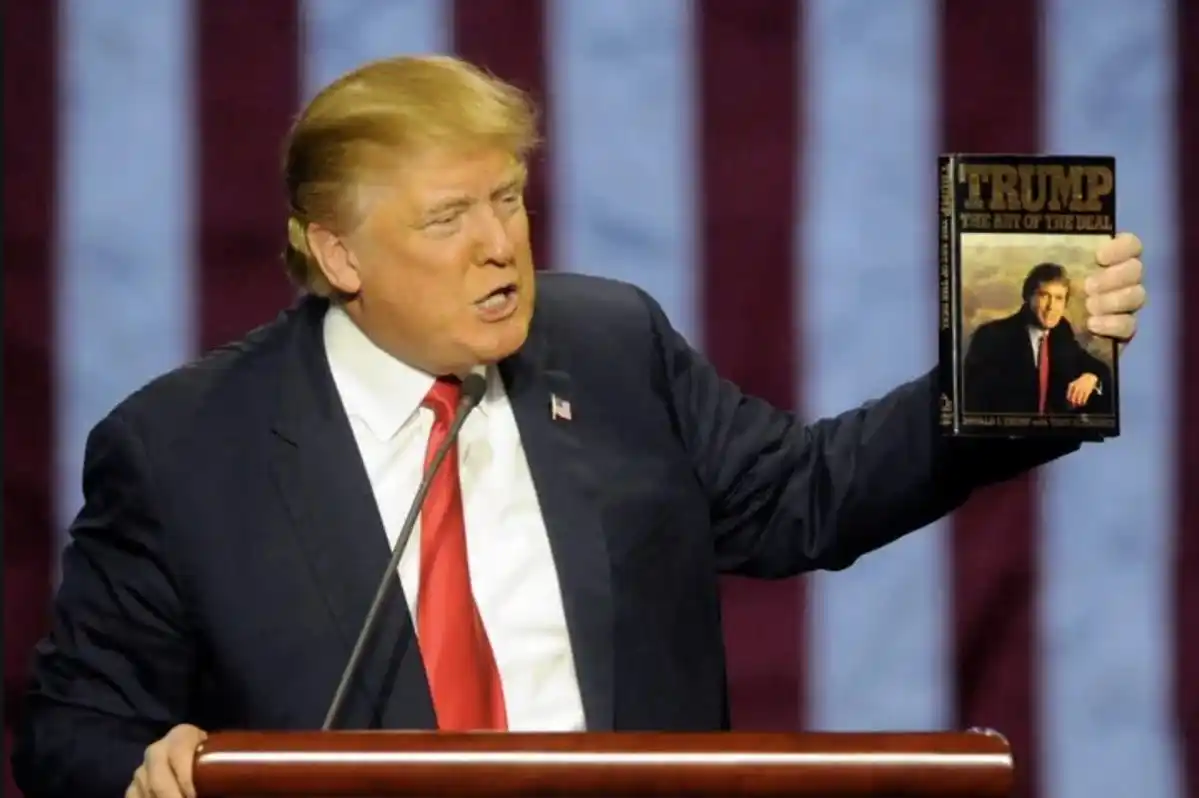
Caption: Trump praised his own book as the "number one bestselling business book of all time"

Below are the 11 steps he wrote himself. After reading them, you will be able to clearly see through his smoke screens, better cope with market volatility, and gain a "Trump advantage" in the game that surpasses the market.

1. Think Big

Trump likes to set grand goals. Because even if they aren't fully achieved, the accomplishment will be higher than if the goal was set too low. This is why you always see him proposing crazy objectives.

2. Protect the Downside and the Upside Will Take Care of Itself

Trump is very good at annoying people, but he is equally good at leaving room for recovery. Take China policy as an example: he would first announce 100% tariffs to force the other side back to the negotiating table, then soften his tone and extend tariff deadlines as details are finalized.

3. Maximize Your Options

Trump knows he is playing a high-stakes game, so he never locks himself in too early. In the TikTok sale case, he met with every executive, maximizing US equity and interests, while creating a sense of urgency through a tight ban deadline, extending it as needed.

4. Know Your Market

Trump won the election because he understood the voter market better than anyone else. You might not know that the "Make America Great Again (MAGA)" trademark was registered by him back in 2012. He has an astonishing intuition for the direction of momentum, going from a perceived "clown candidate" to serving two terms.

5. Use Your Leverage

Trump knows that factory jobs are the pillar of the Chinese economy, so the other side is eager to make a deal. This is why Trump applies high pressure. US wholesalers can order inventory in bulk to prepare for a breakdown in relations, but China, after a year of pandemic, cannot afford factory closures.

6. Enhance Your Location

Coming from a real estate background, Trump knows the US is sitting on a gold mine, but in the past chose to bow to the moral high ground of environmentalism. He reopened drilling, making US land more valuable and thus attracting new foreign investment.

7. Get the Word Out

This one is deeply felt by everyone. Trump's use of social media is an order of magnitude more intense than all previous presidents combined. He has "normalized" modern politics. This is why you feel he is always in the news—because he really is always there.

8. Fight Back

No words can surpass the impact of this moment:
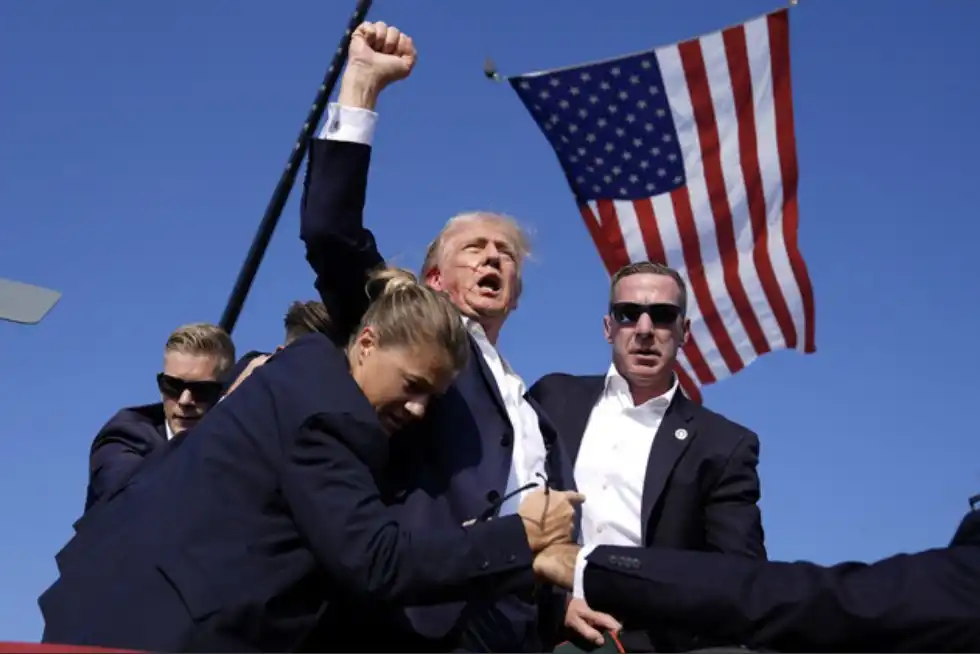
Caption: The moment after Trump was shot at a rally in Pennsylvania on July 13, 2024

9. Deliver the Goods

Trump delivered on almost every campaign promise through executive orders. Whether they will have long-term effects remains to be seen.

10. Contain the Costs

If you study how Trump does real estate deals, you'll find he is famous for "not investing personal capital." Instead, he finds landlords to provide funding, construction companies to develop, management companies to operate, and walks away with tens of millions in profit, with his name on the building.
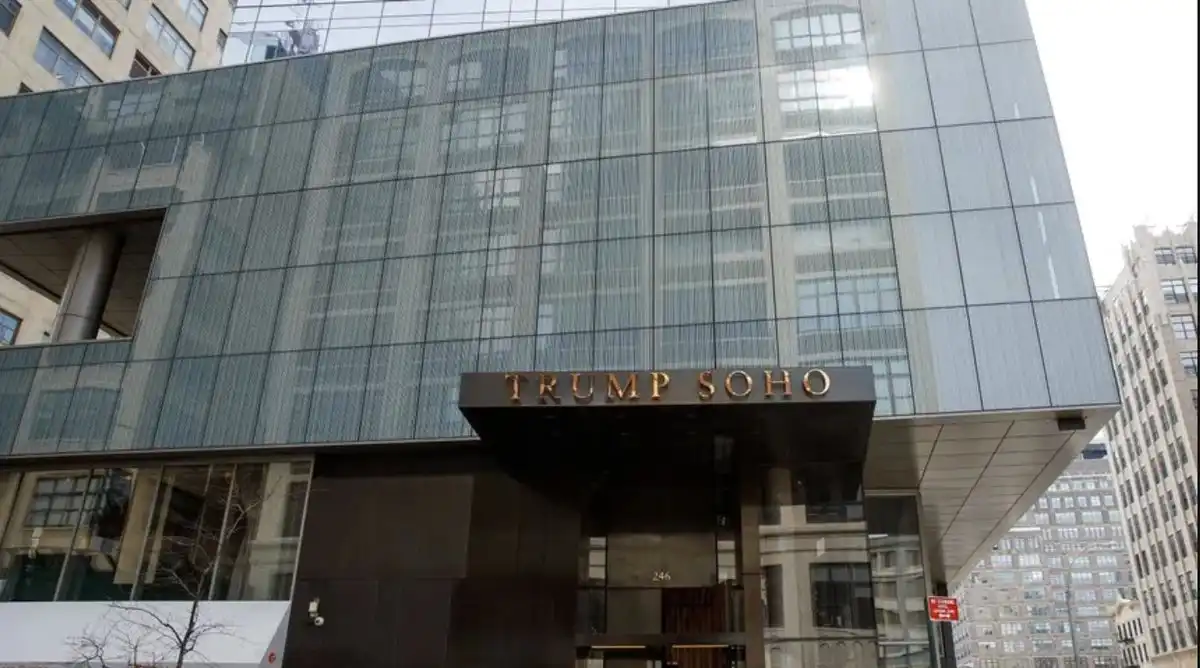
Caption: The Trump Soho project, where Trump gained 18% equity and a $6 million salary solely through brand licensing and management deals. He contributed no capital, only his time.

He spent $66 million on his 2016 campaign (because he was a nobody then), but did you know that in the 2020 and 2024 campaigns, he spent not a single penny of his own money?

11. Have Fun

I respect that Trump always seems full of energy. He has lived an extraordinary life and is clearly enjoying it.
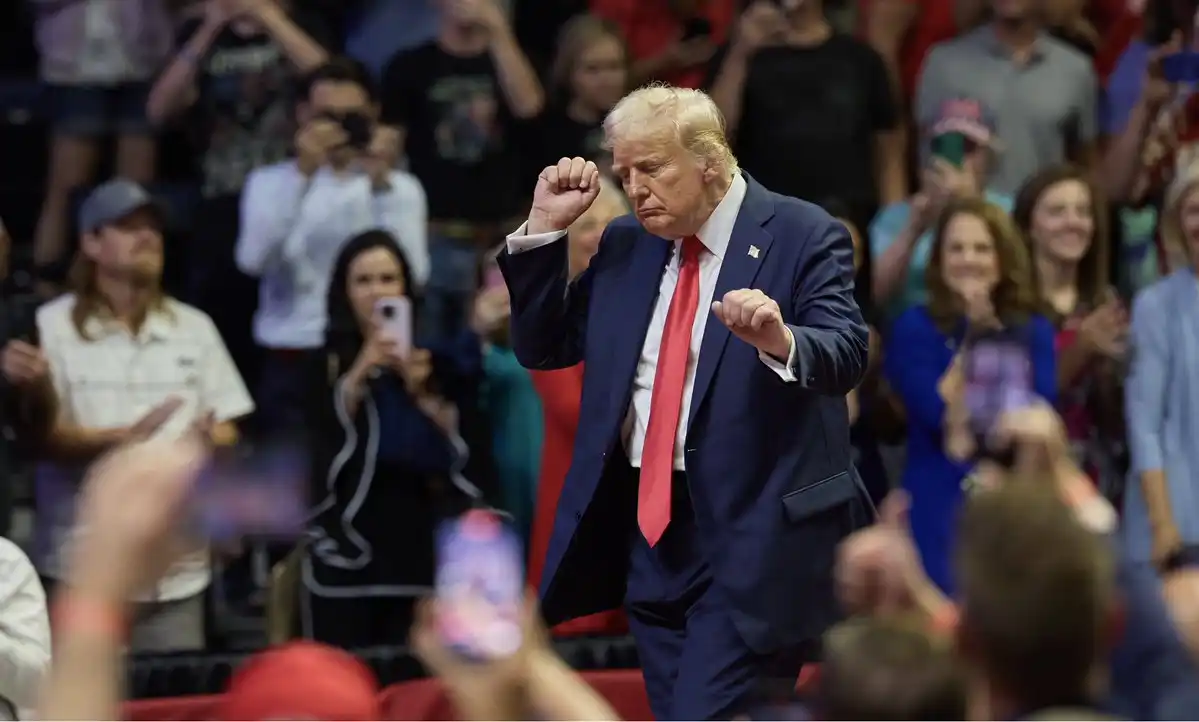
Caption: Trump doing his signature dance at a 2024 Michigan rally

Summary: How to Navigate the Future Trump Era

Trump is not the "reckless fool" portrayed by the media. On the contrary, beneath his impulsive exterior lies highly calculated and purposeful consideration.

Before reading his book, my impression of Trump was the same as everyone else's—a stupid, reckless, arrogant guy who would only ruin the country.

But now I know: Ignore his words, focus on his actions.

This has given me unprecedented clarity in dealing with the markets, and I no longer lose sleep at night. If you are troubled by Trump's actions in the future, come back to this article and understand what he is really trying to do.


Domande pertinenti

QWhat are the 11 decision-making principles that Donald Trump has consistently used for 40 years, according to the article?

AThe 11 principles are: 1. Think Big, 2. Protect the Downside and the Upside Will Take Care of Itself, 3. Maximize Your Options, 4. Know Your Market, 5. Use Your Leverage, 6. Enhance Your Location, 7. Get the Word Out, 8. Fight Back, 9. Deliver the Goods, 10. Contain the Costs, 11. Have Fun.

QHow does the article suggest one should interpret Trump's actions to better understand his strategy and navigate market volatility?

AThe article advises to ignore his rhetoric and focus on his actions, as his impulsive exterior masks a highly calculated and purposeful approach. This perspective provides clarity for dealing with market fluctuations.

QAccording to the article, what is an example of Trump 'Containing the Costs' in his business and political ventures?

AIn business, he was known for not investing personal capital in real estate deals, instead having others fund projects while he profited. In politics, he spent $66 million of his own money in 2016 but spent none of his personal funds in the 2020 and 2024 campaigns.

QWhat book did Trump write at age 41 that outlines his deal-making philosophy, and what does the article claim about its relevance to his presidency?

AHe wrote 'The Art of the Deal'. The article claims that the playbook he uses to make deals as President is exactly the same as the one he used as a real estate developer.

QHow does the article describe Trump's use of leverage in negotiations, using the China trade policy as an example?

AHe uses leverage by applying high pressure, knowing the other party's vulnerabilities. For example, he announced 100% tariffs on China to force them back to the negotiating table, knowing that factory jobs are the pillar of the Chinese economy and they could not afford factory closures.

Letture associate

You Bet on the News, the Pros Read the Rules: The True Cognitive Gap in Losing Money on Polymarket

The article explains that the key to profiting on Polymarket, a prediction market platform, lies not just predicting real-world events correctly, but in meticulously understanding the specific rules that govern how each market will be resolved. It illustrates this with examples, such as a market on Venezuela's 2026 leader, where the official rules defining "officially holds" the office overruled the intuitive answer of who was in practical control. Other examples include debates over the definition of a "token" or what constitutes an "agreement." The core argument is that a "reality vs. rules" gap creates pricing discrepancies that savvy traders ("车头" or "whales") exploit. The platform has a formal dispute resolution process managed by UMA token holders to settle ambiguous outcomes. This process involves proposal submission, a challenge window, a discussion period, and a final vote. However, the article highlights a critical flaw in this system compared to a traditional court: the lack of separation between the arbiters (UMA voters) and the interested parties (traders with financial stakes in the outcome). This conflict of interest undermines the discussion phase, leads to herd mentality, and results in opaque final decisions without explanatory rulings. Consequently, the system lacks a body of precedent, making it difficult for users to learn from past disputes. The ultimate takeaway is that success on Polymarket requires a lawyer-like scrutiny of the rules to identify and capitalize on the cognitive gap between how events appear and how they are contractually defined for settlement.

marsbit30 min fa

You Bet on the News, the Pros Read the Rules: The True Cognitive Gap in Losing Money on Polymarket

marsbit30 min fa

Will the Fed Still Cut Interest Rates? Tonight's Data Is Crucial

The core debate surrounding the Federal Reserve's potential interest rate cuts is intensifying amid geopolitical conflict and rebounding inflation. The key question is whether high energy prices will cause persistent inflation or weaken consumer demand enough to force the Fed to cut rates. Citigroup presents a bullish case for cuts, arguing that oil supply disruptions from the Strait of Hormuz are temporary and will not lead to lasting inflationary pressure. They point to receding bond yields and oil prices as evidence the market is pricing in a short-lived shock. Citi's data also shows tightening financial conditions, a stabilizing labor market, and healthy tax returns, supporting their view that the path to lower rates remains open. Conversely, Deutsche Bank offers a starkly contrasting, more hawkish outlook. They argue the Fed's current policy is already neutral and expect rates to remain unchanged indefinitely. Their view is based on stalled disinflation progress and a shift toward more hawkish rhetoric from key Fed officials like Waller, who cited risks from prolonged Middle East conflict and tariffs. Other officials, including Williams and Hammack, signaled rates would likely stay on hold for a "considerable time." The market pricing has shifted dramatically, now forecasting zero cuts in 2026. The imminent release of the March retail sales "control group" data is highlighted as a critical test. This metric, which excludes gas station sales, will reveal if high gasoline prices are eroding consumer spending in other areas. A weak reading could support the case for imminent rate cuts, while a strong one would bolster the argument for the Fed to hold steady. This data is pivotal for determining the near-term policy path.

marsbit51 min fa

Will the Fed Still Cut Interest Rates? Tonight's Data Is Crucial

marsbit51 min fa

Trading

Spot
Futures
活动图片