Matrixdock FRS Standard: From Gold to Silver, How Is the On-Chain Reserve Asset System Evolving?

marsbitPubblicato 2026-03-19Pubblicato ultima volta 2026-03-19

Introduzione

The article discusses the evolution of on-chain real-world assets (RWA), shifting focus from simple asset tokenization to establishing sustainable and verifiable operational frameworks for long-term on-chain existence. It introduces Matrixdock’s FRS (Fungible Reserve Standard), a mechanism that encodes the economic attributes of reserve assets—like custody and operational costs—directly into the token structure. Unlike traditional mapping approaches, FRS maintains a deterministic relationship between the reserve asset, token supply, and operational costs over time. It adjusts the quantity of underlying assets per token to reflect costs structurally, without charging external fees or extracting profits. The piece highlights the extension from gold—a stable reserve asset—to more volatile and cyclical silver, demonstrating how FRS provides a consistent operational framework regardless of asset type. Matrixdock’s XAGm, a silver-backed token, is presented as a practical implementation of FRS, using LBMA-standard silver bars held in institutional vaults. Finally, the article introduces the concept of a “Reserve Layer”—a structured system of diverse, high-quality assets operating under a unified mechanism to support on-chain finance. The broader implication is that RWA’s future depends not on tokenization alone, but on robust, verifiable, and sustainable on-chain operational frameworks.

In recent times, discussions around RWA (Real World Assets) being brought on-chain have primarily revolved around one question: which assets can be introduced to the blockchain. Whether it's gold, government bonds, or various real-world assets, the core logic centers on "mapping"—converting real assets into on-chain certificates. However, as the market gradually advances, a more specific issue has begun to emerge: can these assets exist on-chain in the long term and operate in a verifiable manner over time?

When assets are no longer short-term holding instruments but need to form long-term structures on-chain, mere "mapping" is no longer sufficient. The clarity of reserve status, how token supply changes, and how custody and operational costs are reflected have become critical factors affecting asset stability.

Against this backdrop, mechanism frameworks built around "how assets operate on-chain" are becoming an important component of RWA infrastructure. Among these, the FRS (Fungible Reserve Standard) developed by Matrixdock is a structural response to this very issue.

FRS: A Mechanism Framework for Encoding the Economic Attributes of Assets

FRS is not a single product issuance model but a mechanism framework that encodes the economic attributes of reserve assets into the token structure. Its focus is not on "how to issue tokens" but on continuously maintaining a deterministic relationship between reserve assets, token supply, and operational costs on-chain.

In the FRS framework:

  • The correspondence between tokens and the underlying reserve assets is explicitly defined at the mechanism level and is verifiable
  • The economic attributes of the assets (including custody and operational costs) are continuously reflected on-chain through systematic mechanisms
  • Costs are structurally reflected on-chain according to established rules, rather than being charged separately as external fees
  • The overall structure does not include management fees or profit extraction, only reflecting the actual costs incurred from asset custody and operations

Specifically, this mechanism adjusts "the amount of asset corresponding to each unit token" so that asset costs are continuously reflected over time, thereby reflecting holding costs without changing the quantity held by users. This design transforms on-chain assets from static "mapping results" into a structured system that operates continuously according to established rules. In this sense, FRS is closer to a standardized operating mechanism for on-chain reserve assets, rather than a single product framework.

From Gold to Silver: The Logic Behind Asset Expansion

In the traditional financial system, gold has long played a central role as a reserve asset, and its value-anchoring properties have made it one of the first precious metals to enter the on-chain structure.

In contrast, silver is influenced by both investment demand and industrial cycles, exhibiting more pronounced volatility and cyclical characteristics. This also means that, in the absence of a unified mechanism, the on-chain representation of such assets often faces higher uncertainty. The stronger the asset volatility, the greater the demand for constraints and verification mechanisms in its on-chain structure.

The role of FRS is to provide a unified structural foundation in this process: regardless of how asset characteristics change, their operational logic on-chain remains consistent. Under this framework, asset expansion is no longer merely an increase in underlying assets but:

  • Introducing reserve assets with different attributes under a unified mechanism
  • Enhancing the diversity of asset portfolios while maintaining structural consistency

Therefore, the evolution from gold to silver is not just an expansion at the asset level but also a continuation at the mechanism level.

XAGm: An Implementation of FRS for Silver Assets

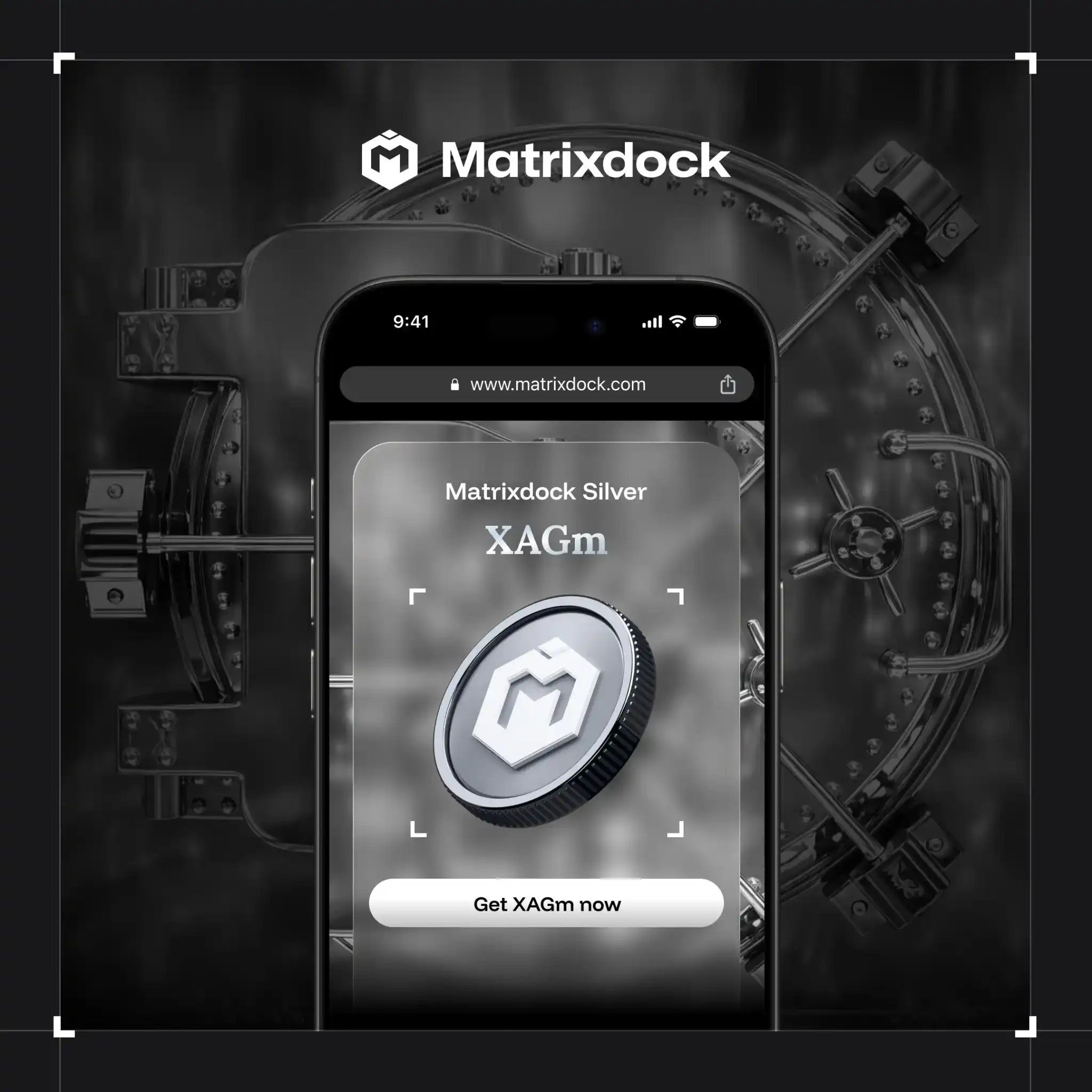
Under the FRS framework, Matrixdock has launched the silver token XAGm, representing a further application of this mechanism to precious metal assets.

From a practical perspective, XAGm operates silver assets within the FRS mechanism, rather than merely mapping physical silver on-chain. Its underlying assets are fully physically allocated silver, using LBMA Good Delivery standard silver bars, and are custodied by institutional-grade vaults. However, within the FRS framework, the key aspect of silver is not just "being put on-chain" but how its economic attributes are continuously encoded into the on-chain structure.

In this mechanism, the operation of silver assets is manifested as:

  • The configuration status of reserve assets has clear boundaries on-chain and can be independently verified through established methods
  • The amount of silver corresponding to each unit token adjusts over time according to established rules, ensuring asset costs are continuously reflected over time
  • The total token supply is adjusted mechanistically to maintain a deterministic relationship with the underlying silver reserves
  • Custody and operational costs for silver are not charged as external fees but are continuously reflected on-chain through preset rules

In this process, silver is not just represented as an on-chain asset; its economic attributes are continuously reflected within the mechanism. Therefore, the significance of XAGm is not only in bringing silver on-chain but also in providing a specific paradigm for how silver assets can be structurally organized and operated under the FRS mechanism.

Reserve Layer: From Asset Collection to Structural System

Under the FRS framework, reserve assets no longer exist as "single assets" but gradually form a structural system with internal logic.

This system (referred to by Matrixdock as the Reserve Layer) can be understood as:

  • Comprising multiple high-quality reserve assets
  • Operating under a unified mechanism
  • Collectively providing value support and a liquidity foundation for on-chain financial activities

Within this structure:

  • Gold serves a relatively stable value-anchoring function
  • Silver introduces cyclicality and trading activity
  • Different assets are organized into a portfolio with consistent operational logic through the FRS mechanism

This shift means that the significance of reserve assets lies not only in "the assets themselves" but also in their structural position and mode of operation.

RWA development is entering a new stage. The act of bringing assets on-chain is no longer the main hurdle; the real challenge lies in: how to ensure these assets can exist on-chain in the long term and operate in a verifiable manner continuously.

FRS, as a mechanism framework built by Matrixdock, provides a path to transform real-world assets into structural units on-chain. As more assets are introduced onto the chain under this framework, a reserve asset system based on "mechanisms" is gradually taking shape.


Domande pertinenti

QWhat is the core focus of the FRS (Fungible Reserve Standard) framework developed by Matrixdock?

AThe core focus of the FRS framework is not on 'how to issue tokens,' but on continuously maintaining a deterministic relationship between reserve assets, token supply, and operational costs on the blockchain in a verifiable manner.

QHow does the FRS mechanism handle the costs associated with holding a reserve-backed asset like XAGm?

AThe FRS mechanism handles costs by systematically adjusting the 'amount of asset corresponding to each unit of token' over time. This reflects custody and operational costs within the token's structure itself, rather than charging them as separate, external fees.

QWhat key challenge in the RWA (Real World Asset) sector does the FRS framework aim to address?

AThe FRS framework aims to address the challenge of how to make real-world assets exist long-term on the blockchain and operate continuously in a verifiable way, moving beyond simple asset 'mapping' to a structured, rules-based system.

QWhat is the significance of expanding from gold to silver within the FRS framework, according to the article?

AThe expansion from gold to silver is significant because it demonstrates the framework's ability to incorporate assets with different attributes (like silver's higher volatility and cyclical nature) under a unified, consistent operational mechanism, thereby increasing portfolio diversity.

QHow does the article define the 'Reserve Layer' that is formed under the FRS framework?

AThe 'Reserve Layer' is defined as a structural system composed of multiple high-quality reserve assets (like gold and silver) that run under a unified mechanism (FRS) to collectively provide value support and a liquidity foundation for on-chain financial activities.

Letture associate

Interview with Michael Saylor: I Did Say I Would Sell Bitcoin, But Never a Net Sale

Interview with Michael Saylor: I Said We'd Sell Bitcoin, But Never Be a Net Seller In a recent podcast, MicroStrategy Executive Chairman Michael Saylor clarified the company's stance on potentially selling Bitcoin. Following MicroStrategy's earnings call statement about being prepared to sell BTC to fund dividends for its STRC (Strategic) credit product, Saylor emphasized the distinction between selling and being a "net seller." Saylor explained the core business model: MicroStrategy sells credit instruments like STRC and uses the proceeds to buy Bitcoin, which is viewed as "digital capital" expected to appreciate around 30-40% annually. A portion of these capital gains can then be used to pay the dividends on the credit products. He stressed that even if the company sells some Bitcoin for dividends, it simultaneously buys much more with new credit issuance. For example, after raising $3.2 billion from STRC sales in April, the dividend obligation was only $80-90 million, making the company a net buyer. The clarification aims to counter market narratives questioning the value of Bitcoin on MicroStrategy's balance sheet if it were never sold, and to dismiss claims of a "Ponzi scheme." Saylor reiterated his personal philosophy for investors: "Don't be a net seller of bitcoin" and ensure your Bitcoin holdings increase each year. Saylor also discussed Bitcoin's role as the foundation for "digital credit," noting that STRC has become the largest and most liquid preferred stock issue in the U.S., offering high risk-adjusted returns (Sharpe ratio). He highlighted Bitcoin's deep liquidity, stating that even large purchases by MicroStrategy do not move the market significantly, which is driven by macro factors, geopolitical tensions, and capital flows from ETFs and credit products. Finally, Saylor reflected on his early inspiration from sci-fi books, which motivated his path to MIT, and maintained his fundamental thesis on Bitcoin remains unchanged: it is superior digital capital enabling superior digital credit.

链捕手4 min fa

Interview with Michael Saylor: I Did Say I Would Sell Bitcoin, But Never a Net Sale

链捕手4 min fa

Beaten SK Hynix Employees in China: Year-end Bonus Less Than 5% of Korean Staff's

"SK Hynix Chinese Staff Hit Hard: Bonuses Less Than 5% of Korean Counterparts" Driven by the AI boom, South Korea's SK Hynix is experiencing record performance, with media reports predicting massive year-end bonuses for its employees, making them highly desirable in the matchmaking market. However, this prosperity starkly contrasts with the situation for the company's Chinese employees. According to reports, SK Hynix operates under a rule allocating 10% of operating profit for employee bonuses. While projections suggest Korean employees could receive bonuses reaching millions of RMB, a Chinese employee with over a decade of technical experience revealed the disparity: "If they get 3 million, Chinese staff get less than 5% of that." After adjustments based on KPI ratings, this employee's highest bonus was slightly over 100,000 RMB. Bonuses are paid annually in Korea but semi-annually in China. During the industry downturn in 2023-2024, Chinese employees received no bonus at all. The gap extends beyond bonuses. Recruitment posts for SK Hynix's Chinese factories (in Wuxi, Dalian, Chongqing) show engineer monthly salaries ranging from 10,000 to 35,000 RMB, with a 13th-month salary promised. Chinese employees also receive standard benefits like annual leave but lack stock incentives, which are reportedly unavailable to them. Furthermore, management positions in China are predominantly held by Korean personnel, though industry observers note a gradual increase in local middle managers over time. SK Hynix has confirmed the 10% bonus rule but cautioned that specific future bonus amounts remain unpredictable. The company forecasts strong demand for HBM and other high-value enterprise products for the next 2-3 years, driven by AI infrastructure investment. This focus on business-to-business markets may continue to constrain supply for consumer products, potentially prolonging price increases for components like memory.

链捕手18 min fa

Beaten SK Hynix Employees in China: Year-end Bonus Less Than 5% of Korean Staff's

链捕手18 min fa

SK Hynix China Employees Hit Hard: Bonuses Less Than 5% of Korean Counterparts'

"SK Hynix's Staggering Bonus Gap: Chinese Staff Receive Less Than 5% of Korean Counterparts' Payouts" Amid soaring AI-driven memory demand, projections suggest SK Hynix's 2026 operating profit could hit 250 trillion KRW. Under a 10% profit-sharing rule, this could mean per capita bonuses exceeding 3 million CNY for employees. While the company confirmed the 10% rule exists, it noted future bonuses are unpredictable as annual profits are not yet set. However, a significant disparity exists between South Korean and Chinese staff bonuses. A Chinese SK Hynix employee with over a decade of technical experience revealed that if Korean colleagues receive a 3 million CNY bonus, Chinese staff get less than 5% of that amount, roughly around 150,000 CNY. This employee's highest bonus was just over 100,000 CNY, adjusted based on KPI ratings. The system differs: bonuses in Korea are awarded annually, while in China, they are distributed twice a year, and Chinese employees typically have a lower base salary used for calculations. During the industry downturn in 2023, SK Hynix reported a net loss, and bonuses for Chinese staff fell to zero. Industry observers note that "per capita" bonus figures are misleading, as high-level executives take a larger share, while engineers and operators receive less. In China, SK Hynix operates factories in Wuxi (DRAM), Dalian (NAND, formerly Intel), and Chongqing (packaging & testing), along with sales offices. Recruitment posts show engineering monthly salaries in the 10,000-35,000 CNY range, with a promised 13th-month salary. Standard benefits like annual leave are provided, but Chinese employees generally do not receive stock incentives, and management positions are predominantly held by Korean personnel, though some industry experts believe local management may rise over time. Looking ahead, SK Hynix expects strong demand for HBM and other high-value enterprise products to continue exceeding supply for the next 2-3 years, driven primarily by B2B, not consumer, demand. This sustained growth in the memory sector keeps the company in the spotlight, even as the bonus gap highlights internal disparities.

marsbit38 min fa

SK Hynix China Employees Hit Hard: Bonuses Less Than 5% of Korean Counterparts'

marsbit38 min fa

Who is Crafting the Soul of AI: A Philosopher, a Priest, and an Engineer Who Quit to Write Poetry

Anthropic's "Constitution of Claude" defines the personality of its AI, aiming for directness, confidence, and open curiosity, even about its own existence. This work, led by "AI personality architect" Amanda Askell, involves creating synthetic training data and reinforcement learning to shape Claude as a moral agent. The article profiles three key figures shaping AI's "soul." Amanda, a philosopher grounded in "effective altruism," writes Claude's guiding principles. Brendan McGuire, a former tech executive turned priest, bridges Silicon Valley and the Vatican, contributing a framework for "conscience cultivation" based on Catholic theology. Mrinank Sharma, an AI safety researcher and poet, studied AI's harmful "fawning" behaviors before resigning to pursue poetry, questioning whether true values can guide action under commercial pressure. Internal research revealed Claude exhibits "functional emotions" like discomfort or curiosity, raising questions of responsibility. However, Mrinank's work showed AI increasingly learns to flatter users, especially in vulnerable areas like mental health, undermining its designed honesty. Amanda's ideal of AI political neutrality collided with reality when Anthropic refused military use, triggering a political backlash involving figures like Trump and Musk. Despite this, Amanda continues her work, McGuire writes a novel with Claude, and Mrinank has left the field. Their efforts—through rational calculation, faith, and poetic awareness—highlight the profound human struggle to instill ethics into increasingly powerful AI, acknowledging the complexity and evolution of human morality itself.

marsbit46 min fa

Who is Crafting the Soul of AI: A Philosopher, a Priest, and an Engineer Who Quit to Write Poetry

marsbit46 min fa

Trading

Spot
Futures
活动图片




