Looking Back at Information Hiding in the GenAI Era from Claude's Invisible Watermark: How Can Embedded Watermarks Ensure Losslessness?

marsbitPubblicato 2026-08-17Pubblicato ultima volta 2026-08-17

Introduzione

On August 11, 2026, Anthropic announced that its new Claude models will embed invisible, machine-readable watermarks into generated text, allowing AI-generated content to be traced even after copying and redistribution, without affecting semantic quality or readability. This move follows global initiatives to watermark AI outputs, highlighted by the World Economic Forum and futurist Kevin Kelly. A core challenge is ensuring watermarking does not degrade model performance, leading to the key research goal of "provably lossless" generation. The theoretical foundation lies in provably secure steganography, which requires that watermarked data be indistinguishable from normal data in distribution. Early theoretical work was limited by the inability to precisely sample natural data distributions. The rise of generative AI models around 2018 provided a breakthrough, as these models learn and sample from explicit distributions. Pioneering work by a University of Science and Technology of China (USTC) team proposed frameworks for provably secure steganography using generative models, mapping encrypted messages to drive content generation. Subsequent research expanded the practicality of these techniques. Advancements include public-key steganography for asymmetric extraction, "box-less" extraction where the receiver doesn't need the original model, and "grey-box" scenarios for resource-constrained devices. A key innovation, SyncPool, resolved tokenization ambiguities in LLMs to ens...

On August 11, 2026, Anthropic announced that starting from August 2nd, the newly released version of the Claude model will directly embed invisible, machine-readable watermarks into generated text. This will enable AI-generated content to be identified and traced by software even after being copied and disseminated.

The official documentation states: "When a supported Claude model generates text, it embeds a subtle watermark directly into the text. You will not see it, and it does not change the semantics, quality, or readability of Claude's responses."

This mechanism covers Claude's web interface, API, Claude Code, and all product lines. It takes effect for global users and cannot be disabled. Generated images and other files will also include digital signature and traceability metadata compliant with the C2PA standard.

This is a landmark move by Anthropic following its signing of the EU's Artificial Intelligence Act, Article 50, Transparency Code of Conduct.

"Watermarking" AI-generated content is evolving from corporate initiatives to a global consensus. In June 2025, the World Economic Forum released the "Top 10 Emerging Technologies of 2025" at the Summer Davos in Tianjin, listing "Generative Watermarking" in second place. Futurist Kevin Kelly predicted in "2049: The Possible Next 10,000 Days" that the AI era necessitates "redefining reality" and "adding watermarks or similar markers to distinguish authenticity on AI-generated images and videos."
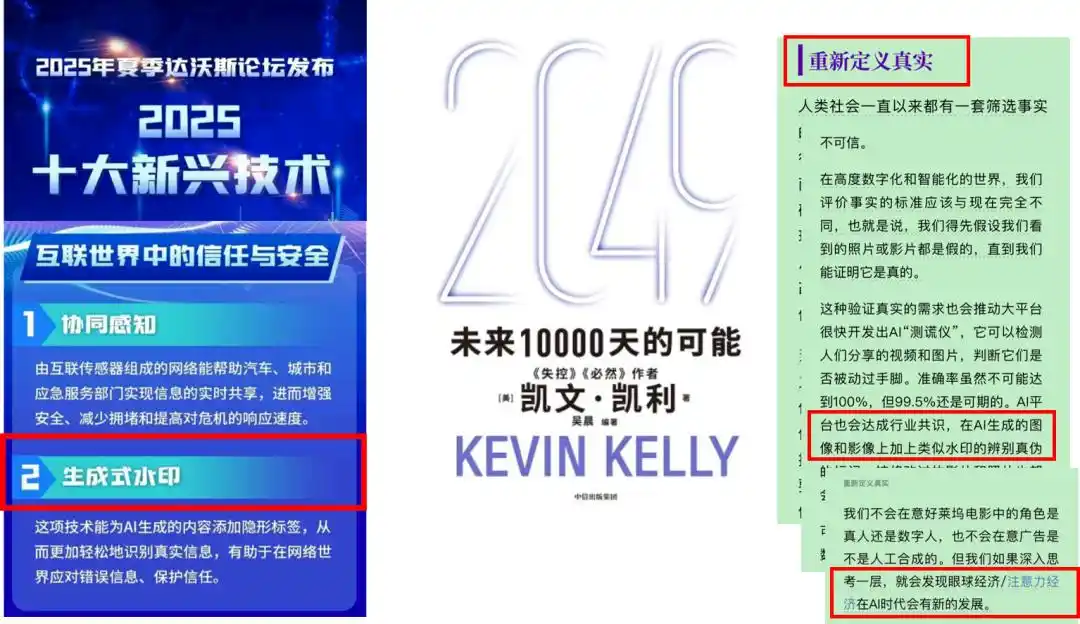
Figure 1: Summer Davos Forum and Kevin Kelly's Prediction

However, getting watermarks "right" is not easy.

On the day of Anthropic's announcement, users' most concentrated concern was precisely: will watermarking harm the model? Will it reduce generation quality?

"Provable performance losslessness" thus became the core proposition of information hiding research in the GenAI era. To understand this proposition, we must return to its theoretical origin—provably secure steganography.

Provably Secure Steganography: Twenty Years Waiting for Generative Models

Steganography and watermarking both belong to information hiding. Traditional steganography has long remained at the level of "empirical security": using steganalysis algorithms to test security strength, but unable to provide mathematical guarantees. Provably secure steganography requires strict proof: the distribution of data carrying secrets is indistinguishable from that of normal data.

This theoretical line has a long history.

In 1949, Shannon pointed out the difficulty of establishing a theory for covert communication; in 1998, Cachin introduced relative entropy, providing an information-theoretic security definition; in 2002, Turing Award winner Manuel Blum guided Hopper et al. in establishing the computational security steganography framework, further developing public-key steganography and covert key agreement in 2004.

However, all constructions of provably secure steganography rely on a stringent premise—the carrier distribution must be precisely sampleable. Natural data distributions are uncontrollable, causing the theory to lie dormant for years.
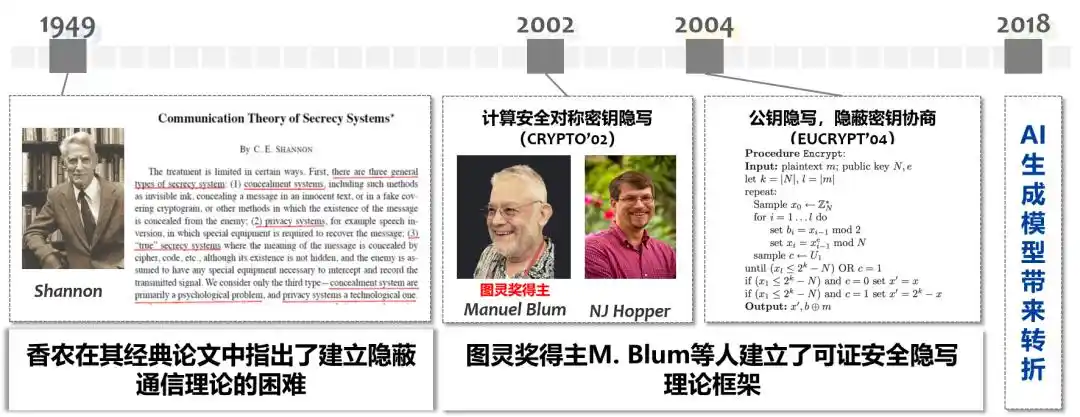
Figure 2: A Brief History of Provably Secure Steganography Development

In 2018, AI generative models brought a turning point: models first learn a distribution, then sample according to it, naturally providing an "explicit distribution or perfect sampler."

A team from the University of Science and Technology of China (USTC) pioneered the idea of generative provably secure steganography internationally. They proposed two frameworks: "black-box sampling" and "compression-reversible sampling" (IWDW 2018, arXiv 2018), reducing steganographic security to cryptographic algorithm security—encrypting a message into pseudo-random ciphertext, using the ciphertext to drive sampling for content generation, and allowing the receiver to recover the ciphertext via inverse sampling.

At that time, generative AI had not yet exploded, and this idea seemed "ahead of its time," initially finding it difficult to gain peer recognition. As the quality of generative models like text and audio improved rapidly, related achievements gradually gained acknowledgment. The International Workshop on Digital Forensics and Watermarking (IWDW) invited the USTC team to deliver a keynote report titled "When Provably Secure Steganography Meets Generative Models."
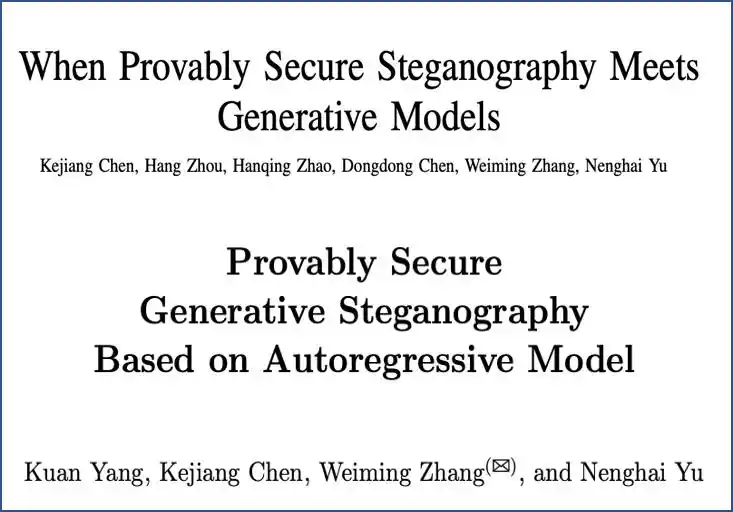
Figure 3: The Earliest Papers on Generative Provably Secure Steganography

Around 2021, AI-generated data gradually became a major form of online content. Provably secure steganography gained widespread attention globally: Tsinghua University proposed provably secure linguistic steganography based on sample grouping (Findings of ACL 2021); Boston University and Johns Hopkins University proposed the cryptographically secure steganography scheme Meteor for real distributions (ACM CCS 2021); Oxford University proposed perfectly secure steganography based on minimal entropy coupling (ICLR 2023).

The USTC team proposed the DisCop construction based on "distribution replicas" (IEEE S&P 2023), significantly improving embedding payload rate. In the same year, Quanta Magazine listed "perfectly hiding secret information in generated data" as one of the seven international breakthroughs in computer science for the year, heralding the entry of information hiding into the "provable" era.

From Symmetric to Asymmetric, from "Boxed" to "Box-less"

Early generative provably secure steganography schemes were all "symmetric key" systems, requiring the sender and receiver to pre-share a key and relying on white-box extraction, limiting their application scenarios.

Additionally, subword ambiguity could lead to extraction failure. The USTC team pushed the technical route towards public-key steganography, box-less/grey-box scenarios, and eliminated subword ambiguity, making generative hiding practical.

Public-key steganography (IEEE TIFS 2024): Proposed a provably secure public-key steganography scheme combining Elliptic Curve Cryptography (ECC) with generative models and introduced a steganographic key exchange protocol. Solved the problems of steganographic key agreement and "asymmetric" hidden information extraction.

Box-less steganography (IEEE TMM 2026): Traditional methods rely on "white-box" extraction, requiring the receiver to possess the exact same language model as the sender. The team proposed Disreo, achieving "box-less extraction" through token position randomization and output probability reorganization, enabling the receiver to recover the message without accessing the underlying model, providing greater convenience for practical deployment.

Grey-box steganography (ACM CCS 2026): Between white-box and box-less lies the "grey-box" scenario—unequal resources between sender and receiver; the receiver may only have the capability to run a small model (e.g., on mobile devices). SpecStega is based on speculative sampling: using a small model shared by both parties to embed and extract messages, then refining the output with the target large model. This ensures the final stego-text aligns with the large model's output distribution, maintaining high quality and security, while allowing efficient decoding at the receiver end using only the small model. The payload rate is improved over 20 times compared to existing black-box schemes—offering a third path between "boxed" and "box-less" for provably secure steganography.

Resolving subword ambiguity (IEEE TDSC): Steganography based on large language models commonly faces token decoding ambiguity—the same text segment can be tokenized into different subword sequences, causing extraction failure. The team proposed SyncPool, which groups tokens with prefix relationships before embedding, eliminating ambiguity in principle and achieving reliable extraction for provably secure steganography.

From Steganography to Watermarking: Bringing "Provable Losslessness" to Industry

First, AIGC large models learn the distribution of natural data, then sample according to that distribution to generate text, images, audio, video, etc. If one can: embed a watermark in the generated content without affecting the sampling distribution, it means the watermark embedding does not impact generation quality.

Provably secure steganography theoretically guarantees that the distribution of data carrying secrets is indistinguishable from that of normally generated data—meaning embedding information does not alter the model's sampling distribution. This is precisely the definition of "provably generation-quality-lossless watermarking." Watermarking does not require the large capacity of steganography, thus capacity can be traded for robustness.

In the text domain, the provably generation-quality-lossless watermarking system developed by the USTC team is plug-and-play, requiring no modification of model parameters. It supports single-bit robust discrimination and multi-bit model attribution, and has been applied to platforms like the Spark large model and Secure GPT, serving 13,000 developers.

Meanwhile, international research on provably lossless generative text watermarks is also advancing rapidly:

In 2024, teams from the University of Maryland and others' "Unbiased Watermark for Large Language Models" (ICLR 2024 Spotlight) defined unbiased watermarks and provided a general construction.

The same year, Stanford University proposed robust unbiased watermarks resistant to distortion (TMLR 2024).

In 2025, Multi-Channel Unbiased Watermark MCmark (ACL 2025) improved watermark extraction robustness while maintaining strict unbiasedness.

In the image domain, the USTC team proposed Gaussian Shading (CVPR 2024), mapping an encrypted, randomized watermark to Gaussian latent variables indistinguishable from normal generation, then acting on the entire latent space via the diffusion process—training-free, plug-and-play, and provably performance-lossless.

Gaussian Shading++ and T2SMark (NeurIPS 2025) further addressed robustness, generation parameter variation, and generation diversity issues in real-world deployment.

TAG-WM (ICCV 2025) introduced a dual mechanism of "template watermark + information watermark," achieving both tamper localization and ownership verification under the lossless premise.

SemBind (ICML 2026) binds the watermark to image semantics through a semantic masker, resisting black-box forgery attacks.
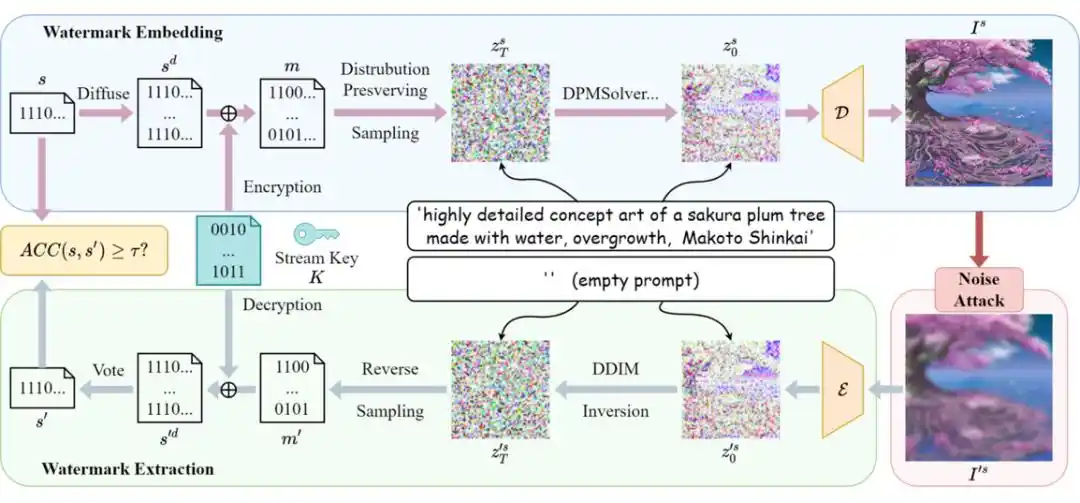
Figure 4: Provably Lossless Generative Image Watermark Gaussian Shading (CVPR 2024)

From content watermarking to model watermarking. Models themselves are important digital assets, also requiring reliable provenance. Model watermarking always faces one question: will it affect the model's normal use?

Drawing inspiration from the "provably undetectable backdoor" construction proposed by Turing Award winner Shafi Goldwasser et al. at FOCS 2022, the USTC team proposed a provably performance-lossless black-box model watermarking protocol (IEEE TDSC 2026): using unforgeable message authentication codes to construct branch indicators, making the probability of normal users triggering the watermark branch computationally negligible, thereby reducing performance losslessness to cryptographic security.

Thus, "provable losslessness" extends from generated content to the models themselves.

From "Empirical Security" to "Provable Security"

Anthropic's invisible watermark sparked controversy on its launch day: writers worried about attribution, developers worried "will the watermark reduce generation quality?" Industry pioneers chose "engineering fast runs," while the goals of "accurate marking, no harm, withstand rewriting and erasure, and provide definitive evidence" call for solid theoretical support.

From Shannon's conceptual challenge to Blum et al.'s theoretical frameworks, from the first generative provably secure steganography algorithm in 2018 to the Spark model watermark and Claude's watermark, information hiding has taken seventy-seven years to finally upgrade from "empirical security" to "provable security," turning "worrying that embedding watermarks harms the model" into "mathematically proven losslessness"—whether for generated content or the model itself—providing theoretically guaranteed technical support for AI content governance.

Watermarking: Attack and Defense

Designing watermarks is hard; erasing them is easy. Or perhaps not entirely. Designing watermarks requires pursuing both quality losslessness and robustness simultaneously, while attackers also need to erase watermarks under quality constraints.

Without constraints, watermarks are easily erased. Rewriting sentence by sentence to erase watermarks—does it still count as content generated by the original model? Perhaps it would be easier to just use another open-source model for generation.

Like other security fields, attackers and defenders engage in a game under their respective constraints. The existence of both attack and defense keeps a technology direction vibrant.

And "losslessness" is the constraint and pursuit for both sides.

Defenders do not want to sacrifice generation quality by embedding watermarks; attackers also do not want to degrade quality by erasing watermarks.

Absolute security never exists. The significance of defense is to create the greatest possible cost for attack. The essence of attack and defense is a game of cost, and the same holds for watermarking.

This article is from the WeChat public account "New Zhiyuan," author: New Zhiyuan.

Crypto di tendenza

Domande pertinenti

QWhat is the core concept behind 'provably secure steganography' as discussed in the article?

AThe core concept of 'provably secure steganography' is to mathematically prove that the distribution of stego-data (data containing hidden information) is indistinguishable from the distribution of normal, cover data. This ensures that embedding information does not alter the statistical properties of the generated content, providing a theoretical guarantee of security and 'losslessness' in terms of generation quality.

QWhat key advantage do generative AI models provide for provably secure steganography, according to the article?

AGenerative AI models provide a key prerequisite that was historically difficult to achieve: an explicit or perfect sampler of a data distribution. Since these models learn a distribution and then sample from it to generate content, they naturally offer the 'perfect sampler' required for the theoretical constructions of provably secure steganography, enabling the shift from 'empirical security' to 'provable security'.

QName three practical challenges in steganography/watermarking that the research from USTC addressed, as mentioned in the article.

A1. Public Key Steganography: They proposed schemes combining Elliptic Curve Cryptography with generative models to solve asymmetric key management and extraction. 2. Boxless Extraction (Disreo): Enabling message recovery without the receiver needing access to the original generative model. 3. Subword Token Ambiguity (SyncPool): Solving extraction failures caused by the same text being tokenized into different subword sequences by grouping related tokens.

QHow does the concept of 'provable performance losslessness' apply to both generated content and AI models themselves?

AFor generated content (text, images), 'provable performance losslessness' means embedding a watermark does not change the model's sampling distribution, guaranteeing no degradation in generation quality. For AI models, it refers to model watermarking protocols where the probability of a normal user triggering the 'watermark branch' of the model is computationally negligible. This is achieved by using cryptographic constructs like unforgeable message authentication codes, thereby extending the guarantee of 'no performance impact' from the content to the model asset itself.

QAccording to the article, what is the fundamental nature of the battle between watermarking defense and attack?

AThe fundamental nature is a cost博弈 (game of cost/博弈). There is no absolute security. The goal of defense (watermarking) is to impose the highest possible cost on the attacker (e.g., significant quality degradation or computational effort required for removal). Conversely, attackers operate under the constraint of maintaining content quality while removing the watermark. 'Losslessness' is a shared constraint and pursuit for both sides in this ongoing博弈.

Letture associate

Tiger Research: How Far Can the On-Chain Foreign Exchange Settlement Layer Go?

"Tiger Research: How Far Can On-Chain FX Settlement Layers Go?" The article examines KiiChain, a startup aiming to create an on-chain foreign exchange settlement layer, focusing on its potential to address inefficiencies in cross-border payments, especially for emerging markets. The core problem is the slow, costly, and fragmented traditional FX infrastructure, where bank hours, regulations, and thin liquidity for local currencies create delays. KiiChain, founded by OTC veterans, proposes aggregating USD and local currency stablecoin liquidity on one chain to enable 24/7 settlement. The platform consists of four components: 1) The KiiChain App uses an Atomic Quote Network (RFQ-style price discovery with on-chain settlement) to tackle settlement delays, but not underlying liquidity scarcity. 2) The RWA Protocol tokenizes collateral using compliant standards (like ERC-3643), shifting trust from bank relationships to coded rules, though regulatory anchors remain. 3) Kii Oracle uses a decentralized validator network to create consensus pricing from fragmented data, improving transparency but not market depth. 4) KiiChain Pay bundles fiat on/off-ramps and swap services; only the DEX swap bypasses banking bottlenecks, while others still rely on licensed operators. The analysis concludes KiiChain doesn't eliminate intermediaries but creates a unified settlement layer where they can interact without geographic or time constraints. It streamlines the process—three of eight traditional steps are removed—by moving infrastructure on-chain, improving speed and accessibility for digital asset swaps. However, fiat entry/exit points remain subject to off-chain service limitations. Current metrics show over $500M in transaction volume. The future depends on ecosystem growth—attracting liquidity partners and users—to evolve beyond settlement into a broader financial hub. Ultimately, the on-chain structure currently solves settlement friction and time, not liquidity depth. Success will be determined by execution in building partnerships and market presence, not by architectural design alone.

marsbit10 min fa

Tiger Research: How Far Can the On-Chain Foreign Exchange Settlement Layer Go?

marsbit10 min fa

'The Idea of Catching the Absolute Bottom Is Wrong': Experts on a New Phase of Bitcoin Capitulation

Analysts from CryptoQuant advise investors against trying to pinpoint the exact bottom of Bitcoin's price. Their data shows the percentage of the Bitcoin supply in profit has fallen to 51.4%, a level historically associated with capitulation phases followed by accumulation. This means approximately 48.6% of circulating coins are held at an unrealized loss. The metric, based on UTXO analysis comparing a coin's last moved price to its current market value, last neared this level in early 2023 when Bitcoin traded between $16,000 and $20,000. CryptoQuant states that the idea of catching the "absolute bottom" is flawed. The decline in the average cost basis during a bear market reflects coins transferring from weak hands to stronger, long-term holders. While some investors realize losses, others may use the decline for gradual accumulation. The accumulation window may last longer than many expect, even as fear drives some participants away. Historically, a supply in profit below 55% has been linked to re-accumulation periods. Separately, Swan Bitcoin CEO Cory Klippsten offered a forecast, suggesting Bitcoin could form a bottom in October 2026, followed by a recovery towards approximately $130,000 ahead of the 2028 halving. This aligns with the historical pattern of local lows forming about 12 months after bull market peaks; Bitcoin hit its all-time high above $126,000 in early October 2025. However, Klippsten cautioned against over-relying on past cycles due to limited historical data.

cryptonews.ru52 min fa

'The Idea of Catching the Absolute Bottom Is Wrong': Experts on a New Phase of Bitcoin Capitulation

cryptonews.ru52 min fa

How Does FalconX Bring Institutional Lending On-Chain? Deep Dive into the FALX Operational Mechanism

FALX is a structured credit facility that brings institutional prime brokerage loans on-chain as fixed-income assets. It works by having FalconX originate overcollateralized loans to institutional clients (e.g., quant funds, market makers). These loan exposures enter a bankruptcy-remote SPV. The Pareto protocol provides the on-chain credit vault infrastructure, while M11 Credit acts as the credit curator, administrative agent, and collateral agent. Platforms like Plume, Ethereum, and Solana serve as distribution channels for investors. Investors deposit USDC into the vault, receiving an estimated ~7.4% net yield (after a 10% performance fee). This yield represents a premium over low-risk on-chain alternatives (like tokenized Treasuries at ~4%) to compensate for risks including FalconX operational risk, collateral liquidation risk, SPV legal risk, M11's execution risk, a 31-day redemption notice period, and potential contagion from DeFi re-collateralization. The structure incorporates multiple risk mitigations: overcollateralized underlying loans, a first-loss capital contribution from FalconX, and independent oversight by M11. However, challenges remain, such as scaling investor demand (current AUM is ~$148M against a ~$1B potential capacity), managing redemption liquidity, and addressing new risks from the vault token's use as collateral in DeFi lending protocols like Morpho. FALX demonstrates a pragmatic path for on-chain credit by leveraging existing institutional loan origination and combining it with legal structures, external curation, and blockchain-based distribution.

marsbit54 min fa

How Does FalconX Bring Institutional Lending On-Chain? Deep Dive into the FALX Operational Mechanism

marsbit54 min fa

Trading

Spot

Articoli Popolari

Cosa è $S$

Comprendere SPERO: Una Panoramica Completa Introduzione a SPERO Mentre il panorama dell'innovazione continua a evolversi, l'emergere delle tecnologie web3 e dei progetti di criptovaluta gioca un ruolo fondamentale nel plasmare il futuro digitale. Un progetto che ha attirato l'attenzione in questo campo dinamico è SPERO, denotato come SPERO,$$s$. Questo articolo mira a raccogliere e presentare informazioni dettagliate su SPERO, per aiutare gli appassionati e gli investitori a comprendere le sue basi, obiettivi e innovazioni nei domini web3 e crypto. Che cos'è SPERO,$$s$? SPERO,$$s$ è un progetto unico all'interno dello spazio crypto che cerca di sfruttare i principi della decentralizzazione e della tecnologia blockchain per creare un ecosistema che promuove l'impegno, l'utilità e l'inclusione finanziaria. Il progetto è progettato per facilitare interazioni peer-to-peer in modi nuovi, fornendo agli utenti soluzioni e servizi finanziari innovativi. Al suo interno, SPERO,$$s$ mira a responsabilizzare gli individui fornendo strumenti e piattaforme che migliorano l'esperienza dell'utente nello spazio delle criptovalute. Questo include la possibilità di metodi di transazione più flessibili, la promozione di iniziative guidate dalla comunità e la creazione di percorsi per opportunità finanziarie attraverso applicazioni decentralizzate (dApps). La visione sottostante di SPERO,$$s$ ruota attorno all'inclusività, cercando di colmare le lacune all'interno della finanza tradizionale mentre sfrutta i vantaggi della tecnologia blockchain. Chi è il Creatore di SPERO,$$s$? L'identità del creatore di SPERO,$$s$ rimane piuttosto oscura, poiché ci sono risorse pubblicamente disponibili limitate che forniscono informazioni dettagliate sul suo fondatore o fondatori. Questa mancanza di trasparenza può derivare dall'impegno del progetto per la decentralizzazione—un ethos che molti progetti web3 condividono, dando priorità ai contributi collettivi rispetto al riconoscimento individuale. Centrando le discussioni attorno alla comunità e ai suoi obiettivi collettivi, SPERO,$$s$ incarna l'essenza dell'empowerment senza mettere in evidenza individui specifici. Pertanto, comprendere l'etica e la missione di SPERO rimane più importante che identificare un creatore singolo. Chi sono gli Investitori di SPERO,$$s$? SPERO,$$s$ è supportato da una varietà di investitori che vanno dai capitalisti di rischio agli investitori angelici dedicati a promuovere l'innovazione nel settore crypto. Il focus di questi investitori generalmente si allinea con la missione di SPERO—dando priorità a progetti che promettono avanzamenti tecnologici sociali, inclusività finanziaria e governance decentralizzata. Queste fondazioni di investitori sono tipicamente interessate a progetti che non solo offrono prodotti innovativi, ma contribuiscono anche positivamente alla comunità blockchain e ai suoi ecosistemi. Il supporto di questi investitori rafforza SPERO,$$s$ come un concorrente degno di nota nel dominio in rapida evoluzione dei progetti crypto. Come Funziona SPERO,$$s$? SPERO,$$s$ impiega un framework multifunzionale che lo distingue dai progetti di criptovaluta convenzionali. Ecco alcune delle caratteristiche chiave che sottolineano la sua unicità e innovazione: Governance Decentralizzata: SPERO,$$s$ integra modelli di governance decentralizzati, responsabilizzando gli utenti a partecipare attivamente ai processi decisionali riguardanti il futuro del progetto. Questo approccio favorisce un senso di proprietà e responsabilità tra i membri della comunità. Utilità del Token: SPERO,$$s$ utilizza il proprio token di criptovaluta, progettato per servire varie funzioni all'interno dell'ecosistema. Questi token abilitano transazioni, premi e la facilitazione dei servizi offerti sulla piattaforma, migliorando l'impegno e l'utilità complessivi. Architettura Stratificata: L'architettura tecnica di SPERO,$$s$ supporta la modularità e la scalabilità, consentendo un'integrazione fluida di funzionalità e applicazioni aggiuntive man mano che il progetto evolve. Questa adattabilità è fondamentale per mantenere la rilevanza nel panorama crypto in continua evoluzione. Coinvolgimento della Comunità: Il progetto enfatizza iniziative guidate dalla comunità, impiegando meccanismi che incentivano la collaborazione e il feedback. Nutrendo una comunità forte, SPERO,$$s$ può affrontare meglio le esigenze degli utenti e adattarsi alle tendenze di mercato. Focus sull'Inclusione: Offrendo basse commissioni di transazione e interfacce user-friendly, SPERO,$$s$ mira ad attrarre una base utenti diversificata, inclusi individui che potrebbero non aver precedentemente interagito nello spazio crypto. Questo impegno per l'inclusione si allinea con la sua missione generale di empowerment attraverso l'accessibilità. Cronologia di SPERO,$$s$ Comprendere la storia di un progetto fornisce preziose intuizioni sulla sua traiettoria di sviluppo e sui traguardi. Di seguito è riportata una cronologia suggerita che mappa eventi significativi nell'evoluzione di SPERO,$$s$: Fase di Concettualizzazione e Ideazione: Le idee iniziali che formano la base di SPERO,$$s$ sono state concepite, allineandosi strettamente con i principi di decentralizzazione e focus sulla comunità all'interno dell'industria blockchain. Lancio del Whitepaper del Progetto: Dopo la fase concettuale, è stato rilasciato un whitepaper completo che dettaglia la visione, gli obiettivi e l'infrastruttura tecnologica di SPERO,$$s$ per suscitare interesse e feedback dalla comunità. Costruzione della Comunità e Prime Interazioni: Sono stati effettuati sforzi attivi di outreach per costruire una comunità di early adopters e potenziali investitori, facilitando discussioni attorno agli obiettivi del progetto e ottenendo supporto. Evento di Generazione del Token: SPERO,$$s$ ha condotto un evento di generazione del token (TGE) per distribuire i propri token nativi ai primi sostenitori e stabilire una liquidità iniziale all'interno dell'ecosistema. Lancio della Prima dApp: La prima applicazione decentralizzata (dApp) associata a SPERO,$$s$ è stata attivata, consentendo agli utenti di interagire con le funzionalità principali della piattaforma. Sviluppo Continuo e Partnership: Aggiornamenti e miglioramenti continui alle offerte del progetto, inclusi partnership strategiche con altri attori nello spazio blockchain, hanno plasmato SPERO,$$s$ in un concorrente competitivo e in evoluzione nel mercato crypto. Conclusione SPERO,$$s$ rappresenta una testimonianza del potenziale del web3 e delle criptovalute di rivoluzionare i sistemi finanziari e responsabilizzare gli individui. Con un impegno per la governance decentralizzata, il coinvolgimento della comunità e funzionalità progettate in modo innovativo, apre la strada verso un panorama finanziario più inclusivo. Come per qualsiasi investimento nello spazio crypto in rapida evoluzione, si incoraggiano potenziali investitori e utenti a ricercare approfonditamente e a impegnarsi in modo riflessivo con gli sviluppi in corso all'interno di SPERO,$$s$. Il progetto mostra lo spirito innovativo dell'industria crypto, invitando a ulteriori esplorazioni delle sue innumerevoli possibilità. Mentre il percorso di SPERO,$$s$ è ancora in fase di sviluppo, i suoi principi fondamentali potrebbero effettivamente influenzare il futuro di come interagiamo con la tecnologia, la finanza e tra di noi in ecosistemi digitali interconnessi.

400 Totale visualizzazioniPubblicato il 2024.12.17Aggiornato il 2024.12.17

Cosa è $S$

Cosa è AGENT S

Agent S: Il Futuro dell'Interazione Autonoma in Web3 Introduzione Nel panorama in continua evoluzione di Web3 e criptovalute, le innovazioni stanno costantemente ridefinendo il modo in cui gli individui interagiscono con le piattaforme digitali. Uno di questi progetti pionieristici, Agent S, promette di rivoluzionare l'interazione uomo-computer attraverso il suo framework agentico aperto. Aprendo la strada a interazioni autonome, Agent S mira a semplificare compiti complessi, offrendo applicazioni trasformative nell'intelligenza artificiale (AI). Questa esplorazione dettagliata approfondirà le complessità del progetto, le sue caratteristiche uniche e le implicazioni per il dominio delle criptovalute. Cos'è Agent S? Agent S si presenta come un innovativo framework agentico aperto, progettato specificamente per affrontare tre sfide fondamentali nell'automazione dei compiti informatici: Acquisizione di Conoscenze Specifiche del Dominio: Il framework apprende in modo intelligente da varie fonti di conoscenza esterne ed esperienze interne. Questo approccio duale gli consente di costruire un ricco repository di conoscenze specifiche del dominio, migliorando le sue prestazioni nell'esecuzione dei compiti. Pianificazione su Lungo Orizzonte di Compiti: Agent S impiega una pianificazione gerarchica potenziata dall'esperienza, un approccio strategico che facilita la suddivisione e l'esecuzione efficiente di compiti complessi. Questa caratteristica migliora significativamente la sua capacità di gestire più sottocompiti in modo efficiente ed efficace. Gestione di Interfacce Dinamiche e Non Uniformi: Il progetto introduce l'Interfaccia Agente-Computer (ACI), una soluzione innovativa che migliora l'interazione tra agenti e utenti. Utilizzando Modelli Linguistici Multimodali di Grandi Dimensioni (MLLM), Agent S può navigare e manipolare senza sforzo diverse interfacce grafiche utente. Attraverso queste caratteristiche pionieristiche, Agent S fornisce un framework robusto che affronta le complessità coinvolte nell'automazione dell'interazione umana con le macchine, preparando il terreno per innumerevoli applicazioni nell'AI e oltre. Chi è il Creatore di Agent S? Sebbene il concetto di Agent S sia fondamentalmente innovativo, informazioni specifiche sul suo creatore rimangono elusive. Il creatore è attualmente sconosciuto, il che evidenzia sia la fase embrionale del progetto sia la scelta strategica di mantenere i membri fondatori sotto anonimato. Indipendentemente dall'anonimato, l'attenzione rimane sulle capacità e sul potenziale del framework. Chi sono gli Investitori di Agent S? Poiché Agent S è relativamente nuovo nell'ecosistema crittografico, informazioni dettagliate riguardanti i suoi investitori e sostenitori finanziari non sono documentate esplicitamente. La mancanza di approfondimenti pubblicamente disponibili sulle fondazioni di investimento o sulle organizzazioni che supportano il progetto solleva interrogativi sulla sua struttura di finanziamento e sulla roadmap di sviluppo. Comprendere il supporto è cruciale per valutare la sostenibilità del progetto e il suo potenziale impatto sul mercato. Come Funziona Agent S? Al centro di Agent S si trova una tecnologia all'avanguardia che gli consente di funzionare efficacemente in contesti diversi. Il suo modello operativo è costruito attorno a diverse caratteristiche chiave: Interazione Uomo-Computer Simile a Quella Umana: Il framework offre una pianificazione AI avanzata, cercando di rendere le interazioni con i computer più intuitive. Mimando il comportamento umano nell'esecuzione dei compiti, promette di elevare le esperienze degli utenti. Memoria Narrativa: Utilizzata per sfruttare esperienze di alto livello, Agent S utilizza la memoria narrativa per tenere traccia delle storie dei compiti, migliorando così i suoi processi decisionali. Memoria Episodica: Questa caratteristica fornisce agli utenti una guida passo-passo, consentendo al framework di offrire supporto contestuale mentre i compiti si sviluppano. Supporto per OpenACI: Con la capacità di funzionare localmente, Agent S consente agli utenti di mantenere il controllo sulle proprie interazioni e flussi di lavoro, allineandosi con l'etica decentralizzata di Web3. Facile Integrazione con API Esterne: La sua versatilità e compatibilità con varie piattaforme AI garantiscono che Agent S possa adattarsi senza problemi agli ecosistemi tecnologici esistenti, rendendolo una scelta attraente per sviluppatori e organizzazioni. Queste funzionalità contribuiscono collettivamente alla posizione unica di Agent S all'interno dello spazio crittografico, poiché automatizza compiti complessi e multi-fase con un intervento umano minimo. Man mano che il progetto evolve, le sue potenziali applicazioni in Web3 potrebbero ridefinire il modo in cui si svolgono le interazioni digitali. Cronologia di Agent S Lo sviluppo e le tappe di Agent S possono essere riassunti in una cronologia che evidenzia i suoi eventi significativi: 27 Settembre 2024: Il concetto di Agent S è stato lanciato in un documento di ricerca completo intitolato “Un Framework Agentico Aperto che Usa i Computer Come un Umano”, mostrando le basi per il progetto. 10 Ottobre 2024: Il documento di ricerca è stato reso pubblicamente disponibile su arXiv, offrendo un'esplorazione approfondita del framework e della sua valutazione delle prestazioni basata sul benchmark OSWorld. 12 Ottobre 2024: È stata rilasciata una presentazione video, fornendo un'idea visiva delle capacità e delle caratteristiche di Agent S, coinvolgendo ulteriormente potenziali utenti e investitori. Questi indicatori nella cronologia non solo illustrano i progressi di Agent S, ma indicano anche il suo impegno per la trasparenza e il coinvolgimento della comunità. Punti Chiave su Agent S Man mano che il framework Agent S continua a evolversi, diversi attributi chiave si distinguono, sottolineando la sua natura innovativa e il potenziale: Framework Innovativo: Progettato per fornire un uso intuitivo dei computer simile all'interazione umana, Agent S porta un approccio nuovo all'automazione dei compiti. Interazione Autonoma: La capacità di interagire autonomamente con i computer attraverso GUI segna un passo avanti verso soluzioni informatiche più intelligenti ed efficienti. Automazione di Compiti Complessi: Con la sua metodologia robusta, può automatizzare compiti complessi e multi-fase, rendendo i processi più veloci e meno soggetti a errori. Miglioramento Continuo: I meccanismi di apprendimento consentono ad Agent S di migliorare dalle esperienze passate, migliorando continuamente le sue prestazioni e la sua efficacia. Versatilità: La sua adattabilità attraverso diversi ambienti operativi come OSWorld e WindowsAgentArena garantisce che possa servire un'ampia gamma di applicazioni. Man mano che Agent S si posiziona nel panorama di Web3 e delle criptovalute, il suo potenziale per migliorare le capacità di interazione e automatizzare i processi segna un significativo avanzamento nelle tecnologie AI. Attraverso il suo framework innovativo, Agent S esemplifica il futuro delle interazioni digitali, promettendo un'esperienza più fluida ed efficiente per gli utenti in vari settori. Conclusione Agent S rappresenta un audace passo avanti nell'unione tra AI e Web3, con la capacità di ridefinire il modo in cui interagiamo con la tecnologia. Sebbene sia ancora nelle sue fasi iniziali, le possibilità per la sua applicazione sono vaste e coinvolgenti. Attraverso il suo framework completo che affronta sfide critiche, Agent S mira a portare le interazioni autonome al centro dell'esperienza digitale. Man mano che ci addentriamo nei regni delle criptovalute e della decentralizzazione, progetti come Agent S giocheranno senza dubbio un ruolo cruciale nel plasmare il futuro della tecnologia e della collaborazione uomo-computer.

832 Totale visualizzazioniPubblicato il 2025.01.14Aggiornato il 2025.01.14

Cosa è AGENT S

Come comprare S

Benvenuto in HTX.com! Abbiamo reso l'acquisto di Sonic (S) semplice e conveniente. Segui la nostra guida passo passo per intraprendere il tuo viaggio nel mondo delle criptovalute.Step 1: Crea il tuo Account HTXUsa la tua email o numero di telefono per registrarti il tuo account gratuito su HTX. Vivi un'esperienza facile e sblocca tutte le funzionalità,Crea il mio accountStep 2: Vai in Acquista crypto e seleziona il tuo metodo di pagamentoCarta di credito/debito: utilizza la tua Visa o Mastercard per acquistare immediatamente SonicS.Bilancio: Usa i fondi dal bilancio del tuo account HTX per fare trading senza problemi.Terze parti: abbiamo aggiunto metodi di pagamento molto utilizzati come Google Pay e Apple Pay per maggiore comodità.P2P: Fai trading direttamente con altri utenti HTX.Over-the-Counter (OTC): Offriamo servizi su misura e tassi di cambio competitivi per i trader.Step 3: Conserva Sonic (S)Dopo aver acquistato Sonic (S), conserva nel tuo account HTX. In alternativa, puoi inviare tramite trasferimento blockchain o scambiare per altre criptovalute.Step 4: Scambia Sonic (S)Scambia facilmente Sonic (S) nel mercato spot di HTX. Accedi al tuo account, seleziona la tua coppia di trading, esegui le tue operazioni e monitora in tempo reale. Offriamo un'esperienza user-friendly sia per chi ha appena iniziato che per i trader più esperti.

1.6k Totale visualizzazioniPubblicato il 2025.01.15Aggiornato il 2026.06.02

Come comprare S

Discussioni

Benvenuto nella Community HTX. Qui puoi rimanere informato sugli ultimi sviluppi della piattaforma e accedere ad approfondimenti esperti sul mercato. Le opinioni degli utenti sul prezzo di S S sono presentate come di seguito.

活动图片