Kraken is Also Issuing Tokens? A Comprehensive Guide to Ink Season 1 Points Program

Odaily星球日报Pubblicato 2026-04-15Pubblicato ultima volta 2026-04-15

Introduzione

Kraken Pro, the professional trading platform of the major cryptocurrency exchange Kraken, has launched the first season of its Ink Points program. Ink is Kraken’s Ethereum Layer 2 blockchain, introduced in October 2024, designed to simplify user onboarding into DeFi by addressing common pain points like complex wallet setups and high gas fees. The article explains the differences between Kraken's three service tiers: the basic Kraken for beginners, the subscription-based Kraken+ offering fee-free tiers, and Kraken Pro for advanced traders with lower fees and professional tools. All versions share the same account and funds. A step-by-step guide is provided for interacting with Kraken Pro: users must register, complete KYC, navigate to the "Promos" section to access Ink Points, deposit funds, and start trading to earn points. Ink Points serve as a loyalty incentive within the Ink Layer 2 ecosystem. Points are earned through trading, staking, and referrals on Kraken Pro, with an affiliate program offering 10% commission on referrals. Points are calculated daily, distributed weekly, and accumulated over four-week seasons. A ranked, tiered competition system is in place, though points currently have no monetary value or tokenization capability. The program is not accessible in all regions.

Original | Odaily Planet Daily (@OdailyChina)

Author | Asher (@Asher_ 0210)
Last night, the Korean cryptocurrency exchange Kraken announced via its Kraken Pro official account that the Ink Season 1 points program is now live.
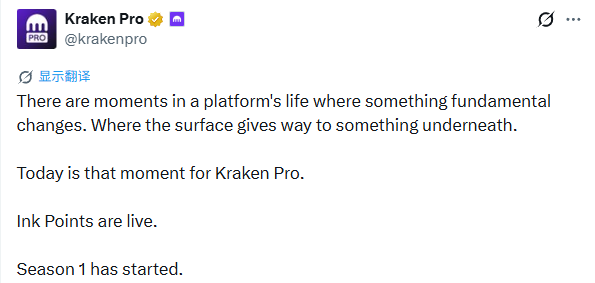
Kraken Pro officially announces the launch of the Ink points program

Kraken officially announced the launch of the Ink chain (an Ethereum Layer 2 designed to simplify user entry into DeFi) in October 2024, aiming to seamlessly bridge Kraken's over 10 million centralized exchange users to the on-chain DeFi ecosystem, addressing the pain points of traditional DeFi (such as complex wallet setup, high gas fees, fragmented liquidity, etc.). Although Ink is not the Kraken exchange itself, but an independent on-chain infrastructure, it is deeply integrated with Kraken's infrastructure (such as Kraken Wallet, zero withdrawal fee support, etc.).

At the end of last year, Kraken's valuation in the primary market once reached $20 billion. However, due to the cooling IPO environment in the crypto industry, its CEO subsequently chose to postpone the planned US listing originally scheduled for 2026. Therefore, it is more likely that Kraken will prioritize promoting the Ink chain to complete its token issuance before going public.

Below, Odaily Planet Daily provides a breakdown of the relationship between Kraken Pro and Kraken, a Kraken Pro interaction tutorial, and the Ink points rules.

Differences Between the 3 Versions of Kraken Exchange

This event takes place on Kraken Pro. Since Kraken currently has three versions, Odaily Planet Daily has compiled the differences between them as follows:

  • Kraken (Basic Version): Focuses on simplicity and ease of use, with a very intuitive interface, suitable for beginners or small-volume users with low trading frequency. Offers a standalone mobile app, low operational barrier, and leans towards a "buy-and-use" experience.
  • Kraken+ (Subscription/Membership Version): Builds upon the basic version with a subscription mechanism where users pay monthly for additional benefits. The core advantage is zero fees on the first $10,000 of trading volume per month, along with some additional perks. Suitable for users with certain trading needs looking to reduce costs.
  • Kraken Pro (Professional Version): Targets experienced traders, offering a standalone app and web interface. Features include more professional candlestick charts, a variety of order types (like limit, stop-loss, etc.), and a lower fee structure. Although it has a separate interface, it shares the same account and funds as the basic version, allowing users to switch between the regular version and Pro at any time.
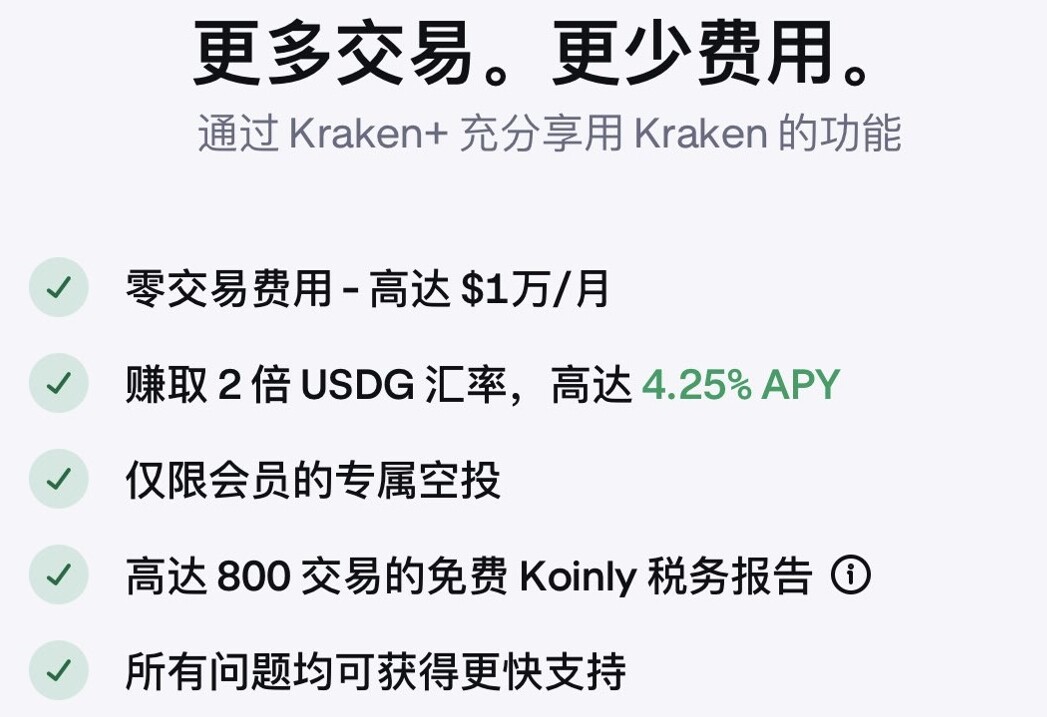
Difference between Kraken and Kraken+

Step-by-Step Guide to Interacting with Kraken Pro

STEP 1. Go to the Kraken Pro website (link: https://pro.kraken.com/) and complete account registration using your email.
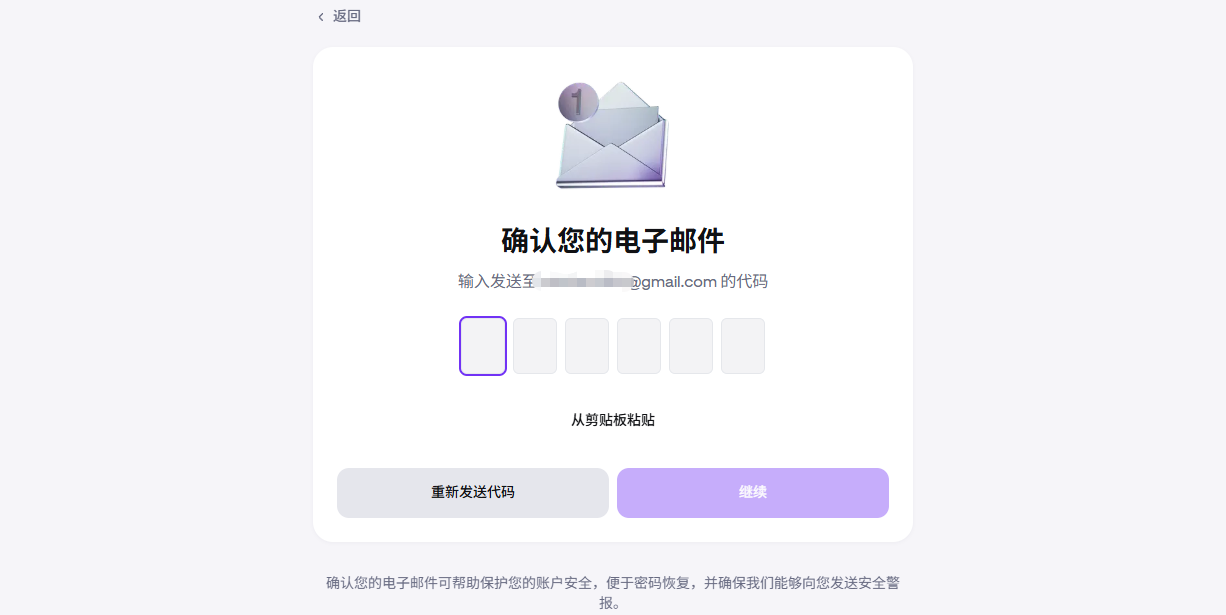
STEP 2. Select the Kraken Pro version. If using a mobile device, simply download the Kraken Pro app from your app store. Additionally, after accessing Kraken Pro, you need to complete KYC verification.
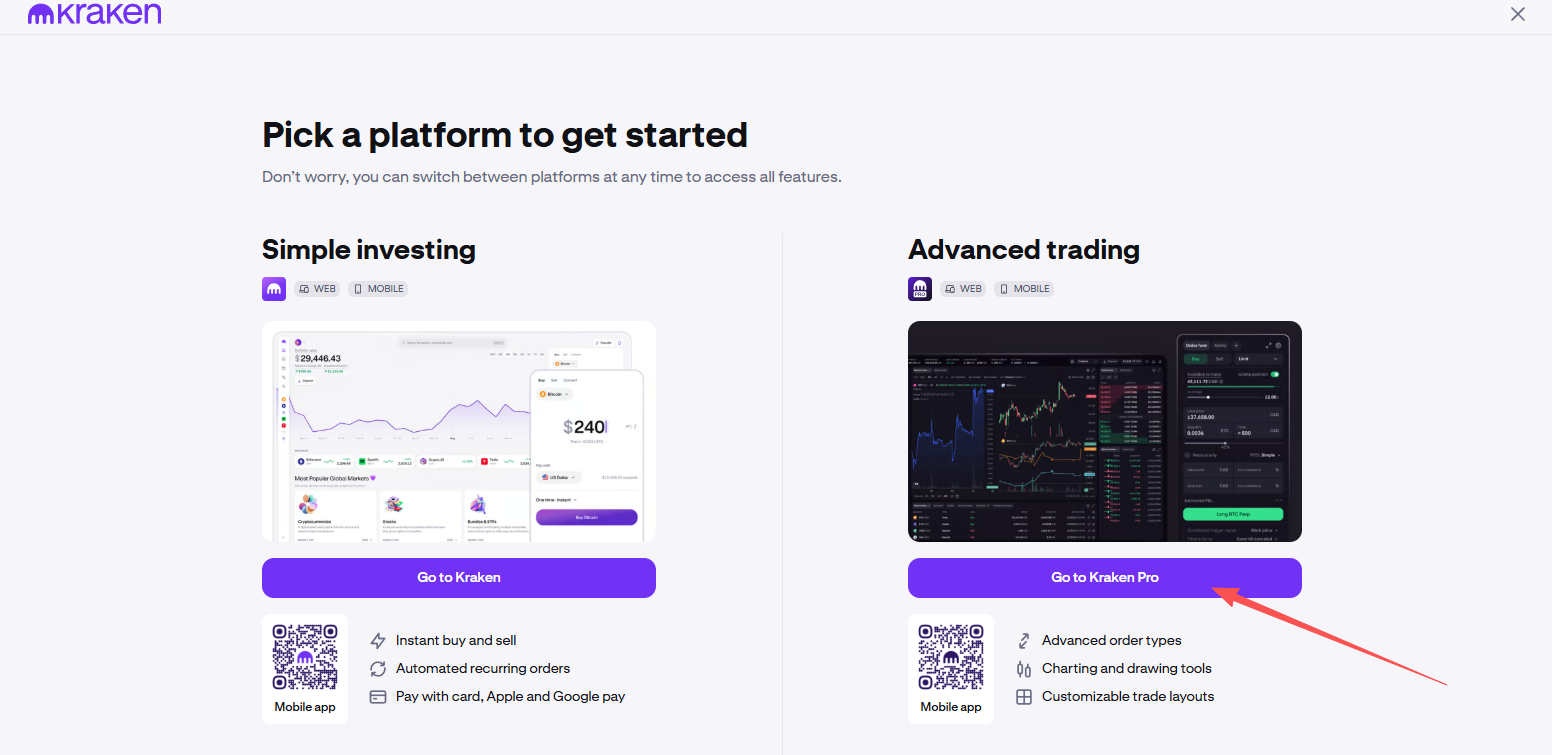
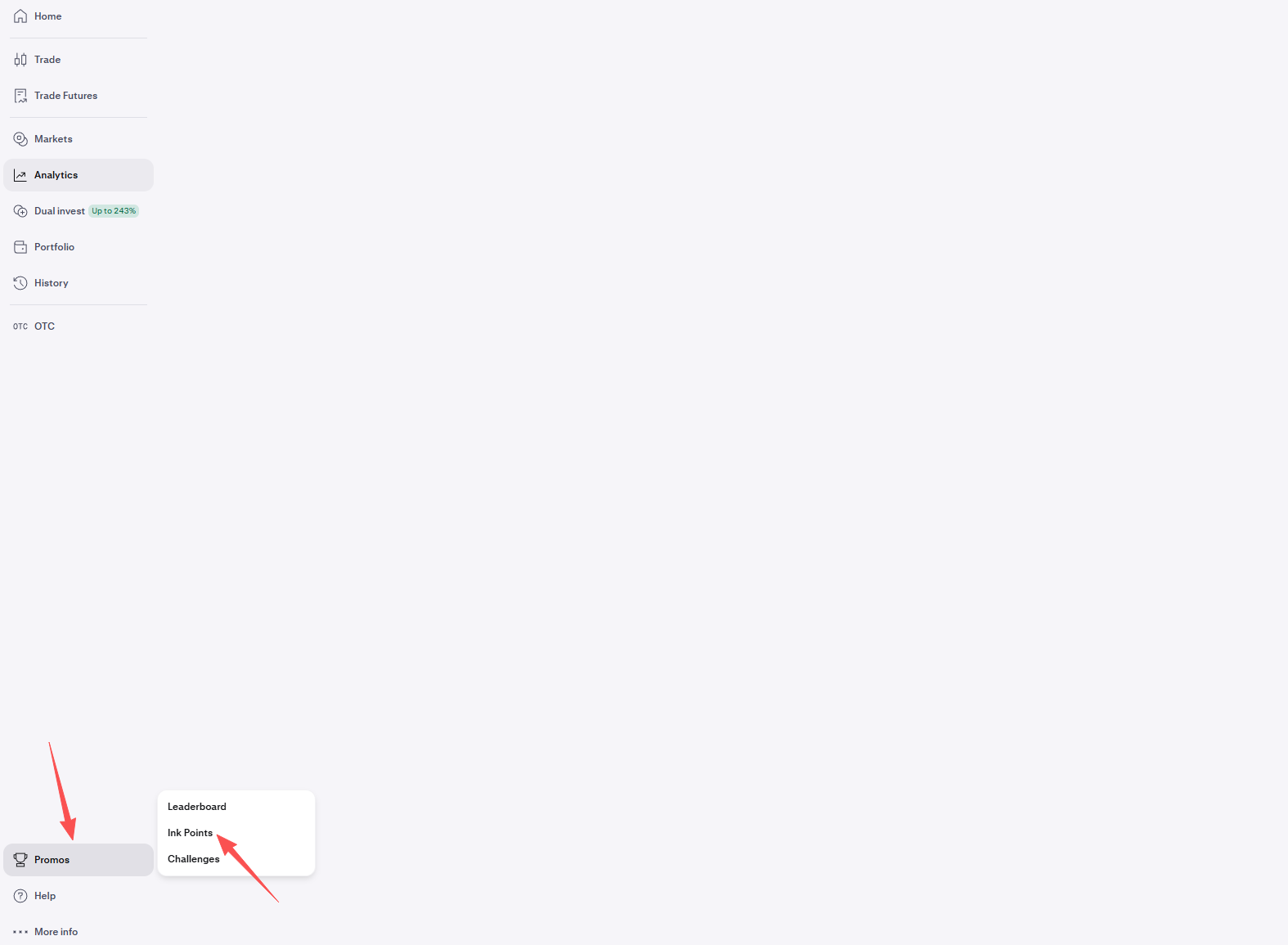
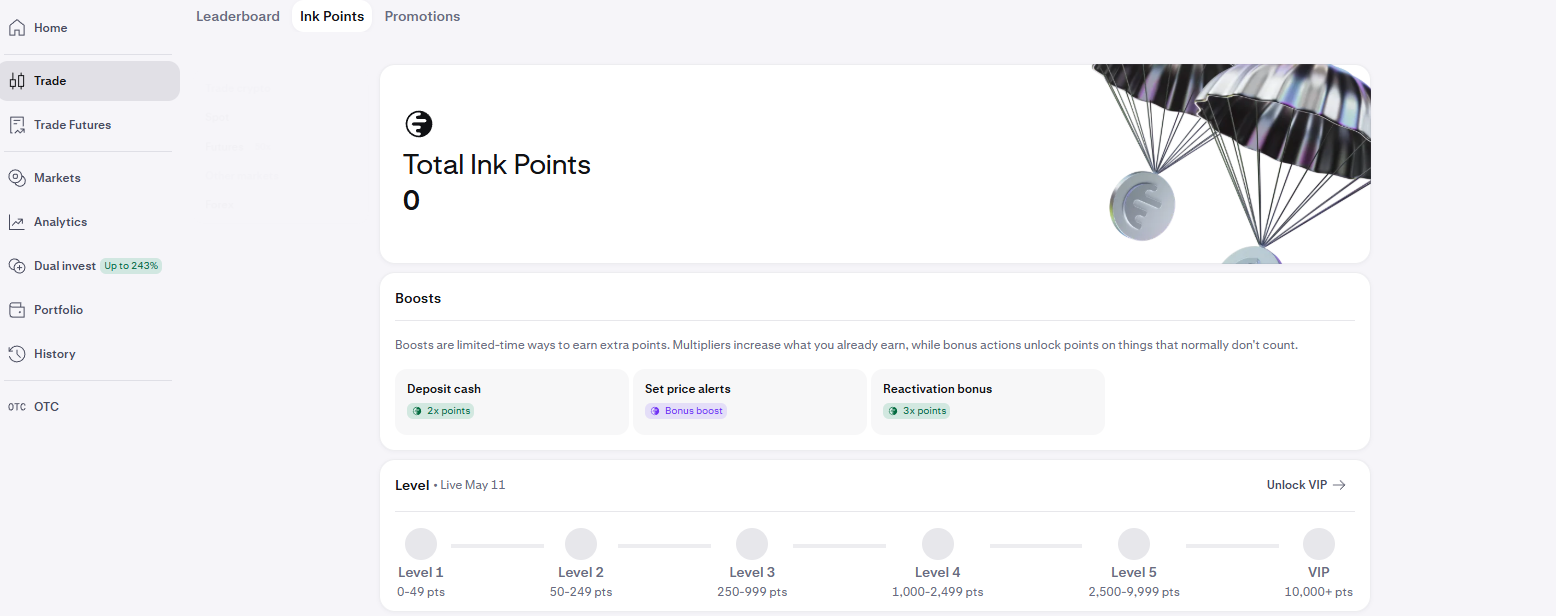
STEP 3. Click on "Promos" at the bottom and select "Ink Points" to enter the points interface.
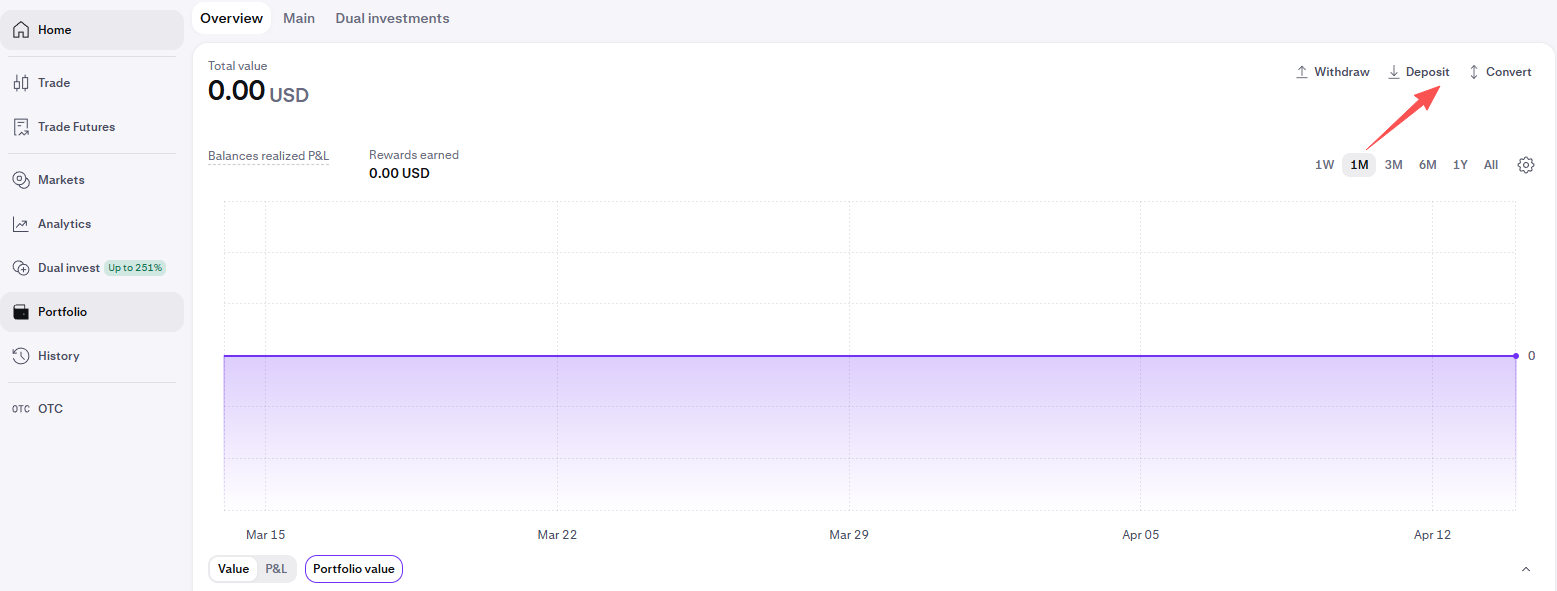
STEP 4. Click on "Portfolio" and then "Deposit" to fund your account, then you can start trading and earning points.
Detailed Explanation of Ink Points Rules

What are Ink Points

  • Ink Points are the points system for the Ink Layer2, connecting real user interactions with incentive mechanisms;
  • The Kraken Pro version will also adopt this points system as a loyalty program.

How to Earn Ink Points

  • Performing actions like trading, staking, and referring new users on Kraken Pro can earn Ink Points;
  • Joining the Kraken Alliance Program can earn a 10% Ink points rebate from referrals;

Additionally, the official encourages genuine user interaction: the earlier you start, the more active you are, and the more Kraken Pro products you use, the more points you will earn.

Ink Points Update Instructions

  • Points Calculation: Points are calculated daily, the system settles automatically every week, and points are distributed every Monday;
  • Season Structure: Every 4 weeks is a season, points for each season are calculated separately, total points are retained for life;
  • Acceleration Mechanism: Point multiplier events will be launched regularly, users should pay attention to official announcements;
  • Leaderboard + Tiers: Rankings are updated weekly, with six tiers based on current points (Tiers 1 to 5 and VIP). The exclusive "Tier System" means you compete only with traders in the same tier. Except for VIP, other tiers currently offer no additional benefits, but plans are to gradually open them up in the future.

Furthermore, the official notes that Ink Points are not tokenizable, not redeemable, have no cash value, and are temporarily unavailable in some regions.


Domande pertinenti

QWhat is the Ink Points program announced by Kraken Pro?

AThe Ink Points program is a loyalty and incentive system for Kraken Pro users, designed to reward activities like trading, staking, and referrals. It is part of the Ink Layer2 ecosystem and aims to encourage user engagement.

QWhat are the key differences between Kraken, Kraken+, and Kraken Pro?

AKraken is the basic version for beginners with a simple interface. Kraken+ is a subscription-based version offering benefits like zero fees on the first $10,000 in monthly trading volume. Kraken Pro is the advanced version for experienced traders, featuring professional charts, lower fees, and more order types, while sharing the same account and funds as the basic version.

QHow can users earn Ink Points on Kraken Pro?

AUsers can earn Ink Points by trading, staking, and referring new users on Kraken Pro. Additionally, joining the Kraken Alliance Program allows users to earn a 10% rebate on Ink Points from referred users.

QWhat is the relationship between Ink Chain and Kraken exchange?

AInk Chain is an independent Ethereum Layer2 infrastructure designed to simplify user entry into DeFi, but it is deeply integrated with Kraken's infrastructure, such as Kraken Wallet and zero withdrawal fees. It is not the Kraken exchange itself.

QWhat are the rules for Ink Points distribution and calculation?

AInk Points are calculated daily and distributed automatically every Monday. The program runs in 4-week seasons, with points accumulated per season but lifetime totals retained. There are six user levels (1 to 5 and VIP), and rankings are updated weekly. Points cannot be tokenized, exchanged, or cashed out.

Letture associate

In Conversation with Ray Dalio: We Are Currently in an AI Bubble, with 1% of My Portfolio in Bitcoin

Ray Dalio, founder of Bridgewater Associates, warns in an interview that the current AI boom shows classic bubble characteristics, which could lead to significant economic downturns as seen in past cycles like 1929 or 2000. He explains that speculative enthusiasm, fueled by debt and overvaluation, often precedes a crash when rising rates or taxation force asset sales, causing widespread losses and recession. Dalio also outlines his "Big Cycle" theory, describing an approximate 80-year pattern where widening wealth gaps, massive government deficits, and shifting geopolitical power (like China's rise) create internal conflict and global instability. He emphasizes that we are in a late-cycle, transitional phase where traditional powers like the US and UK face decline. For personal wealth protection, Dalio advises diversification beyond cash into assets like stocks, bonds, real estate, and particularly gold, which he prefers over Bitcoin. While he holds about 1% of his portfolio in Bitcoin as a non-printable hard asset, he views gold as more secure from technological or governmental threats. Regarding AI's impact, Dalio believes it will disproportionately benefit capital owners, worsening inequality by replacing both physical and cognitive labor. He suggests that human intuition and emotional intelligence, combined with AI, will be key for future workers. On taxation, Dalio argues that wealth taxes are impractical and risk triggering asset sell-offs, reducing productive investment. He points to the UK as a cautionary example of debt, low productivity, and political strife. Geopolitically, Dalio foresees a more regionalized world, with the US showing weakness in prolonged conflicts like with Iran, akin to past imperial declines. The ideal outcome, he suggests, is coexisting powerful blocs (e.g., Americas, China-Asia Pacific) without major war.

marsbit1 min fa

In Conversation with Ray Dalio: We Are Currently in an AI Bubble, with 1% of My Portfolio in Bitcoin

marsbit1 min fa

Daily 7.2 Trillion KRW: Foreign Capital's Record Net Buying on Friday! Wall Street Says Headwinds for Korean Stock Fund Flows Have Subsided

South Korean stock market sees a dramatic shift in fund flows. On July 31, foreign investors made a record net purchase of approximately KRW 7.2 trillion in KOSPI stocks, marking a fundamental reversal from the persistent large-scale net outflows seen in previous months. This contributed to a significant narrowing of foreign net selling in July to KRW 9.8 trillion, down sharply from KRW 48.4 trillion in June and KRW 44.5 trillion in May. Simultaneously, domestic institutional pressure eased. South Korean pension funds and asset managers turned to a net buying position in July, purchasing KRW 1.0 trillion worth of KOSPI shares, contrasting with net sales in May and June. Market volatility is expected to be dampened by new financial regulations. Effective July 31, the Financial Services Commission tightened access for retail investors to single-stock leveraged ETFs by raising the minimum cash deposit requirement. Trading volumes for these products subsequently dropped to about 50% of their monthly average. Citigroup Research maintains its year-end KOSPI target of 10,000 points. The firm cites several supportive factors: the substantial easing of headwinds from capital outflows, a robust fundamental outlook for the semiconductor sector, historically low market valuations, strong economic fundamentals, and the potential for policy support from financial authorities if needed.

marsbit1 min fa

Daily 7.2 Trillion KRW: Foreign Capital's Record Net Buying on Friday! Wall Street Says Headwinds for Korean Stock Fund Flows Have Subsided

marsbit1 min fa

Thanks to Dice Rolls, Bitcoin Keys Are Stored Offline, But Not Everyone Will Do It

The article discusses using dice rolls to generate secure Bitcoin wallet seeds, providing entropy independent of potentially flawed hardware random number generators. It explains that each fair dice roll offers about 2.585 bits of entropy, with around 50 rolls needed for a standard 12-word seed phrase and 99+ recommended for higher security. This method gained attention after a vulnerability was revealed in some Coldcard hardware wallets, where a faulty firmware RNG (dating back to 2021) compromised generated keys. The analysis notes that while a dice-generated main seed was safe from this specific flaw, other Coldcard functions (like creating paper wallets, backup keys, or passwords) could still be vulnerable if they used the defective RNG. The piece argues that while dice-based entropy is technically robust, the manual process is error-prone, tedious, and unrealistic for most new users, who might make mistakes in recording or inputting rolls. It concludes that while manual entropy generation should remain an option for advanced users, the long-term goal is to develop reliable, user-friendly hardware and software that securely generates randomness without requiring specialized knowledge. Coldcard users are advised to check their firmware version and replace any secondary secrets (like paper wallet keys) created with vulnerable devices, while also considering multi-signature setups with devices from different manufacturers for added security.

cryptonews.ru5 h fa

Thanks to Dice Rolls, Bitcoin Keys Are Stored Offline, But Not Everyone Will Do It

cryptonews.ru5 h fa

Trading

Spot
活动图片




