Kevin Warsh Could Hike Rates This Week

cryptonews.ruPubblicato 2026-07-27Pubblicato ultima volta 2026-07-27

Introduzione

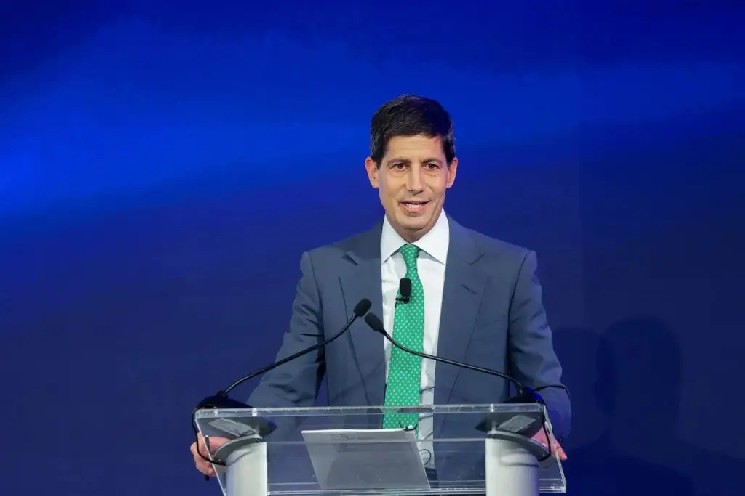
Federal Reserve Chairman Kevin Warsh faces growing expectations of an interest rate hike at this week's policy meeting. Traders have increased the probability of a rate rise to 36%, up from below 10% a week ago, driven by concerns that resurgent Iran-U.S. hostilities have pushed oil prices above $100 a barrel, stoking inflation fears. Strong U.S. jobs data, with unemployment claims at a historic low, provides another reason for tightening, even as consumer inflation has eased to 3.5%, still above the Fed's 2% target. Warsh maintains a secretive approach, avoiding clear policy signals and ending the Fed's previous practice of forward guidance. He has not committed to his predecessor's press conference schedule and has tasked internal groups with reviewing key inflation metrics. During recent Congressional testimony, he offered few firm opinions and contradicted prior statements, frustrating lawmakers seeking clarity. Warsh emphasizes private policy debates, aiming for each meeting to be a "family fight" where officials argue confidentially without pre-announced outcomes.

Federal Reserve Chairman Kevin Warsh convenes a monetary policy meeting this week, with traders anticipating a hike in interest rates. Renewed hostilities between Iran and the U.S. have pushed oil above $100 a barrel, raising concerns that the surge in energy prices will fuel inflation.

The meeting begins on Tuesday and will be Kevin's second as Fed Chairman. A week ago, futures markets priced the probability of a quarter-percentage-point rate increase at less than 10%. By Friday, that probability had risen to 36%.

Investors now largely expect one rate hike by September. They also anticipate another one or two quarter-point increases over the next nine months. Oil has remained volatile since the war began in late February, as Washington and Tehran have alternated pauses and renewed attacks.

Traders had calculated that a closure of the Strait of Hormuz would cause only a brief inflationary disruption, despite around one-fifth of the world's oil typically passing through that route.

Rising Oil Prices Push Traders to Prepare for Fed Tightening

That belief has weakened after oil surpassed $100. Investors sold government bonds across the U.S. and Europe, pushing bond prices down and yields up.

The yield on the 10-year U.S. Treasury note reached its highest level in 18 months. Yields on 10-year German and French bonds also rose to levels not seen in over 15 years. Long-term yields rise when markets anticipate persistent inflation.

Kevin has another reason to consider raising rates, given the latest U.S. statistics showing a resilient labor market: on Thursday, weekly jobless claims fell to their lowest level since 1969. Although consumer inflation in June eased to 3.5%, it remains well above the Fed's 2% target. Officials may be less inclined to delay tightening if the economy is strong, layoffs are few, and oil prices are high.

Kevin gives no explicit hints ahead of policy decisions. Advocating a deliberate approach to policymaking, he has called for an end to preemptive signaling. "If we get policy right, which we will, the inflation spike of the past five years will be left in the past," he told lawmakers this month.

Kevin says little else. He hasn't disclosed which inflation measure he prefers or which economic data he finds most reliable. Instead, he has asked internal working groups to study these issues. This contrasts with the Fed's more communicative approach over the past 20 years.

Kevin Keeps Policy Debates Secret as Congress Demands Clearer Answers

At his swearing-in ceremony at the White House in May, Kevin thanked former Federal Reserve Chairman Alan Greenspan for first "showing me what this job requires"

Alan passed away last month at the age of 100 and was known for answers that left listeners guessing. He once joked: "If my remarks seemed clear, you must have misunderstood me"

This month, Kevin testified before Congress for over five hours but offered few firm opinions. Some responses differed from his previous statements. Representative Ritchie Torres, a Democrat from New York, read him a portion of Kevin's testimony from April during his confirmation hearing.

During the hearings, Kevin spoke favorably of an inflation indicator that excludes the most significant monthly price changes, rather than using a measure the Fed has relied on for years. When Ritchie asked about this, Kevin denied endorsing such an indicator.

"None of these measures is a good enough indicator of underlying inflation," said Kevin. "If I had a preferred measure, I would not be calling for a working group to go back to first principles"

Kevin hasn't committed to following the press conference schedule used by his predecessor, Jerome H. Powell. Jerome held a press conference after every policy meeting, explaining how officials viewed the economy and describing views expressed within the interest-rate setting committee. Kevin's communications working group is reviewing this schedule.

Last month, journalists asked Kevin what might prompt the Fed to raise rates. He responded: "I can't give any specific guidance on what we are going to do next. The good news is we will meet again in six weeks," referring to the meeting on Tuesday. He said he wants each policy meeting to be a "family quarrel," where officials debate in private rather than announcing the outcome before the meeting begins.

Domande pertinenti

QWhat event is expected to lead to an interest rate hike by the Fed this week, according to the article?

AThe resumption of hostilities between Iran and the US, which pushed oil prices above $100 a barrel and raised fears that rising energy costs will fuel inflation.

QHow have the expectations for a Fed rate hike this week changed, as shown by futures market pricing?

AThe probability of a rate hike priced by futures markets increased from below 10% a week ago to 36% by Friday.

QWhat recent U.S. economic data might give Kevin Warsh another reason to consider raising interest rates?

AThe latest U.S. statistics show a resilient labor market, with weekly jobless claims recently falling to their lowest level since 1969.

QHow does Kevin Warsh's approach to policy communication differ from the Fed's practice over the past 20 years?

AHe advocates ending the use of advance policy signals, keeping policy debates secret, and has not committed to his predecessor's schedule of press conferences after every policy meeting.

QWhat did Kevin Warsh say was the purpose of forming internal working groups at the Fed?

AHe said the working groups are tasked with studying questions about preferred inflation measures and reliable economic data, rather than him publicly stating his preferences.

Letture associate

After the Fed's Interest Rate Decision and Comments from Kevin Walsh, Experts Gathered and Shared Their Latest Insights!

Following the Fed's decision to hold interest rates steady, experts highlight a potential shift towards more independent policymaking within the FOMC, as three members dissented. Market strategists note the slight decline in bond yields and a weaker dollar post-announcement, but caution that a rate hike in September remains possible. Experts like Mark Hackett point to the three dissenting votes as a sign of growing committee independence. While markets initially rallied in relief, the final direction hinges on Fed Chair Kevin Warsh's upcoming press conference. Analysts, including Audrey Childs-Freeman, interpret the dissent as the Fed maintaining a hawkish stance. They suggest the Fed will continue monitoring data, with a summer scenario of high bond yields supporting the dollar still in play. Chris Anstey emphasizes that markets will closely watch the 10-year Treasury yield during Warsh's conference. A continued rise could signal investor fears that the Fed is not acting aggressively enough on inflation, posing a challenge for the Chair. The long-term yield is also viewed as critical for mortgages and economic management. Diane Swonk of KPMG argues a September rate hike is likely, stating that an increase now would have been more appropriate given nearly five years of high inflation. She warns that prolonged high prices risk becoming embedded in the economic system. *This is not investment advice.

cryptonews.ru30 min fa

After the Fed's Interest Rate Decision and Comments from Kevin Walsh, Experts Gathered and Shared Their Latest Insights!

cryptonews.ru30 min fa

USDT Supply Shrinks by $5.5 Billion While Stablecoin Turnover Hits Record High

The supply of stablecoins has contracted for the first time in years, with total market capitalization falling 4.3% from its May peak to $308.5 billion. Despite this decline, June saw a record $1.83 trillion in adjusted transaction volume for stablecoins, a 60% increase from May. This divergence suggests a shift in usage patterns: less capital is sitting idle, while the remaining supply circulates more rapidly through payment and trading systems. Specifically, the supply of Tether's USDT decreased from approximately $189.54 billion to $184 billion between May 1 and July 29, while Circle's USDC supply fell from $77.27 billion to $72.41 billion. Part of this capital appears to have moved into tokenized Treasury products, a sector whose value has grown to over $16 billion, partly driven by regulations like the 2025 GENIUS Act that prohibit interest payments on payment-focused stablecoins. Transaction velocity is emerging as a key metric, with stablecoins now turning over about six times per month—double the rate from two years ago. USDC, despite having a smaller supply than USDT, processed about $1.21 trillion in adjusted volume in June, leading in settlement activity. While a significant portion of on-chain volume may not represent genuine economic payments, identifiable real-world payments have grown sharply, reaching an estimated $390 billion in 2025. The data indicates stablecoins are evolving from static collateral into active financial infrastructure.

cryptonews.ru55 min fa

USDT Supply Shrinks by $5.5 Billion While Stablecoin Turnover Hits Record High

cryptonews.ru55 min fa

Trading

Spot
活动图片