Interpreting the True Turning Point of Crypto Regulation: BTC, ETH, and USDC Gain Access to the U.S. Derivatives Market

Odaily星球日报Pubblicato 2025-12-09Pubblicato ultima volta 2025-12-09

Introduzione

The U.S. Commodity Futures Trading Commission (CFTC), under Acting Chair Caroline D. Pham, has launched a Digital Asset Collateral Pilot Program. This initiative allows regulated derivatives market participants to use Bitcoin (BTC), Ethereum (ETH), and the stablecoin USDC as compliant margin. The program is a significant regulatory shift, marking the first time digital assets are formally recognized as collateral in mainstream U.S. finance. Key details of the pilot include: - **Participants:** Licensed Futures Commission Merchants (FCMs) are the eligible entities. - **Assets:** Initially limited to BTC, ETH, and USDC for a three-month period, with strict weekly reporting requirements to the CFTC. - **Safeguards:** Stringent rules are in place, including holding assets in segregated accounts, conservative haircuts to mitigate volatility risk, and immediate reporting of any issues. - **Framework:** The CFTC also issued new guidance for tokenized collateral and provided "No-Action Relief" to give institutions regulatory clarity for operating within the rules. Industry leaders from Coinbase, Crypto.com, Circle, and Ripple hailed the move. They see it as a milestone that unlocks capital efficiency, reduces settlement risk, legitimizes stablecoins for payments, and paves the way for 24/7 trading, ultimately signaling deeper integration between crypto and traditional finance. While the pilot's immediate impact on retail investors is limited, it is a major long-term signal...

Original | Odaily Planet Daily (@OdailyChina)

Author | Asher (@Asher_ 0210)
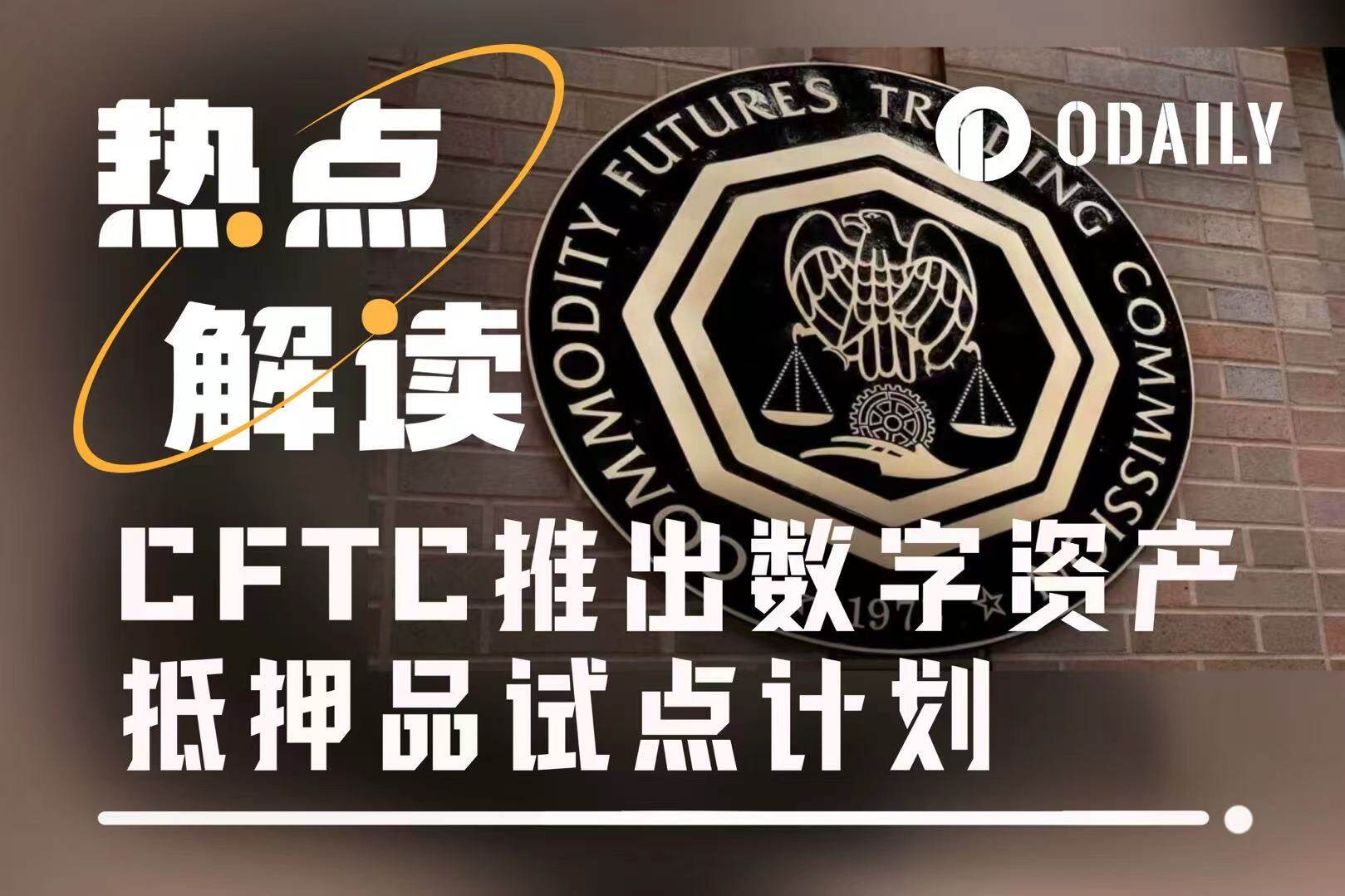
This morning, acting Chairman of the U.S. Commodity Futures Trading Commission (CFTC), Caroline D. Pham, announced the launch of a Digital Asset Collateral Pilot Program, allowing digital assets such as BTC, ETH, and USDC to be used as compliant margin in U.S. regulated derivatives markets, and issued regulatory guidance on tokenized collateral, while simultaneously repealing outdated rules that had become ineffective following the enactment of the GENIUS Act. Additionally, Caroline D. Pham stated: "As I have said before, embracing responsible innovation ensures that U.S. markets remain world-leading and drive U.S. economic growth, as market participants can deploy capital more safely to achieve greater investment returns."

Crypto Assets Officially Enter the Derivatives Market with a Compliant Identity

The Digital Asset Collateral Pilot Program launched by the CFTC is essentially a policy opening where U.S. regulators are proactively "clearing the way." In the past, in U.S. regulated derivatives markets, margin could only exist in the form of traditional assets like cash, Treasury bonds, commercial paper, etc., with crypto assets being excluded. The launch of the pilot program means regulators have, for the first time, explicitly acknowledged that digital assets can participate in mainstream financial transactions as collateral. The specific details of the program are interpreted as follows:

Applicable Entities: Futures Commission Merchants (FCMs)

The pilot targets licensed Futures Commission Merchants, who are core participants in the derivatives market, responsible for custoding client funds, providing margin management, and clearing channels.

Permissible Assets: BTC, ETH, USDC

For the initial three months, the digital asset collateral acceptable by FCMs (Futures Commission Merchants) is limited to BTC, ETH, and USDC, and they must report position sizes to the CFTC weekly on a per-account basis. The regulator clearly stated that this move adheres to a "technology-neutral" principle, focusing on risk attributes rather than asset labels.

Extremely Stringent Regulatory Requirements

To ensure the stability of the traditional financial system, the CFTC has issued highly prudent requirements, including:

  • Digital assets must be held in segregated accounts and cannot be commingled with institutional proprietary funds;
  • FCMs must report position changes to the CFTC weekly;
  • Major issues must be reported immediately;
  • The CFTC will apply the most conservative haircut to digital assets to hedge against price volatility risk.

In other words, the regulator is not simply granting permission but is establishing a controllable, auditable, and traceable institutional framework.

Repealing Old Rules, Introducing New Guidance

Alongside the launch of the Digital Asset Collateral Pilot Program, the CFTC announced the repeal of the 2020 Staff Advisory 20-34—this old rule was no longer suitable for the current market after the passage of the GENIUS Act. The CFTC also issued new regulatory guidelines for "tokenized collateral," providing an institutional foundation for the future on-chain representation of traditional assets like "tokenized Treasuries, tokenized funds."

Shift in Regulatory Attitude: Providing "No-Action Relief"

For FCMs wishing to pilot digital asset margin, the CFTC has provided "No-Action Relief," offering regulatory clarity to institutions and requiring them to maintain robust risk controls. This is equivalent to the CFTC clearly telling institutions: "Operate within the rule framework, and we will not impose additional enforcement risks." For traditional institutions looking to enter the crypto space, this is a crucial "confidence booster."

Industry Leaders' Perspectives

Coinbase: Confirming Industry Consensus, Driving a Payment Revolution

Coinbase Chief Legal Officer Paul Grewal posted on X: "The CFTC's launch of the Digital Asset Collateral Pilot Program confirms a long-standing consensus in the crypto industry: stablecoins and digital assets can make payments faster, cheaper, and reduce risk." Paul Grewal pointed out that this pilot aligns with the original intent of Congress when it passed the GENIUS Act, paving the way for stablecoins to serve as key settlement tools, enabling faster, lower-cost cross-border payments. Coinbase Chief Policy Officer Faryar Shirzad added that this move will significantly enhance the utility of digital assets, attracting more institutional investors into regulated markets. Simultaneously, the potential of stablecoins as settlement tools will be fully unleashed,有望实现有望实现有望实现有望实现有望实现有望实现有望实现有望实现有望实现有望实现有望实现有望实现有望实现有望实现有望实现有望实现有望实现有望实现有望实现有望实现有望实现有望实现有望实现有望实现有望实现有望实现有望实现有望实现有望实现有望实现有望实现有望实现有望实现有望实现有望实现有望实现有望实现有望实现有望实现有望实现有望实现有望实现有望实现有望实现有望实现有望实现有望实现有望实现有望实现有望实现有望实现有望实现有望实现有望实现有望实现有望实现有望实现有望实现有望实现有望实现有望实现有望实现有望实现有望实现有望实现有望实现有望实现有望实现有望实现有望实现有望实现有望实现有望实现有望实现有望实现有望实现有望实现有望实现有望实现有望实现有望实现有望实现有望实现有望实现有望实现有望实现有望实现有望实现有望实现有望实现有望实现有望实现有望实现有望实现有望实现有望实现有望实现有望实现有望实现有望实现有望实现有望实现有望实现有望实现有望实现有望实现有望实现有望实现有望实现有望实现有望实现有望实现有望实现有望实现有望实现有望实现有望实现有望实现有望实现有望实现有望实现有望实现有望实现有望实现有望实现有望实现有望实现有望实现有望实现有望实现有望实现有望实现有望实现有望实现有望实现有望实现有望实现有望实现有望实现有望实现有望实现有望实现有望实现有望实现有望实现有望实现有望实现有望实现有望实现有望实现有望实现有望实现有望实现有望实现有望实现有望实现有望实现有望实现有望实现有望实现有望实现有望实现有望实现有望实现有望实现有望实现有望实现有望实现有望实现有望实现有望实现有望实现有望实现有望实现有望实现有望实现有望实现有望实现有望实现有望实现有望实现有望实现有望实现有望实现有望实现有望实现有望实现有望实现有望实现有望实现有望实现有望实现有望实现有望实现有望实现有望实现有望实现有望实现有望实现有望实现有望实现有望实现有望实现有望实现有望实现有望实现有望实现有望实现有望实现有望实现有望实现有望实现有望实现有望实现有望实现有望实现有望实现有望实现有望实现有望实现有望实现有望实现有望实现有望实现有望实现有望实现有望实现有望实现有望实现有望实现有望实现有望实现有望实现有望实现有望实现有望实现有望实现有望实现有望实现有望实现有望实现有望实现有望实现有望实现有望实现有望实现有望实现有望实现有望实现有望实现有望实现有望实现有望实现有望实现有望实现有望实现有望实现有望实现有望实现有望实现有望实现有望实现有望实现有望实现有望实现有望实现有望实现有望实现有望实现有望实现有望实现有望实现有望实现有望实现有望实现有望实现有望实现有望实现有望实现有望实现有望实现有望实现有望实现有望实现有望实现有望实现有望实现有望实现有望实现有望实现有望实现有望实现有望实现有望实现有望实现有望实现有望实现有望实现有望实现有望实现有望实现有望实现有望实现有望实现有望实现有望实现有望实现有望实现有望实现有望实现有望实现有望实现有望实现有望实现有望实现有望实现有望实现有望实现有望实现有望实现有望实现有望实现有望实现有望实现有望实现有望实现有望实现有望实现有望实现有望实现有望实现有望实现有望实现有望实现有望实现有望实现有望实现有望实现有望实现有望实现有望实现有望实现有望实现有望实现有望实现有望实现有望实现有望实现有望实现有望实现有望实现有望实现有望实现有望实现有望实现有望实现有望实现有望实现有望实现有望实现有望实现有望实现有望实现有望实现有望实现有望实现有望实现有望实现有望实现有望实现有望实现有望实现有望实现有望实现有望实现有望实现有望实现有望实现有望实现有望实现有望实现有望实现有望实现有望实现有望实现有望实现有望实现有望实现有望实现有望实现有望实现有望实现有望实现有望实现有望实现有望实现有望实现有望实现有望实现有望实现有望实现有望实现有望实现有望实现有望实现有望实现有望实现有望实现有望实现有望实现有望实现有望实现有望实现有望实现有望实现有望实现有望实现有望实现有望实现有望实现有望实现有望实现有望实现有望实现有望实现有望实现有望实现有望实现有望实现有望实现有望实现有望实现有望实现有望实现有望实现有望实现有望实现有望实现有望实现有望实现有望实现有望实现有望实现有望实现有望实现有望实现有望实现有望实现有望实现有望实现有望实现有望实现有望实现有望实现有望实现有望实现有望实现有望实现有望实现有望实现有望实现有望实现有望实现有望实现有望实现有望实现有望实现有望实现有望实现有望实现有望实现有望实现有望实现有望实现有望实现有望实现有望实现有望实现有望实现有望实现有望实现有望实现有望实现有望实现有望实现有望实现有望实现有望实现有望实现有望实现有望实现有望实现有望实现有望实现有望实现有望实现有望实现有望实现有望实现有望实现有望实现有望实现有望实现有望实现有望实现有望实现有望实现有望实现有望实现有望实现有望实现有望实现有望实现有望实现有望实现有望实现有望实现有望实现有望实现有望实现有望实现有望实现有望实现有望实现有望实现有望实现有望实现有望实现有望实现有望实现有望实现有望实现有望实现有望实现有望实现有望实现有望实现有望实现有望实现有望实现有望实现有望实现有望实现有望实现有望实现有望实现有望实现有望实现有望实现有望实现有望实现有望实现有望实现有望实现有望实现有望实现有望实现有望实现有望实现有望实现有望实现有望实现有望实现有望实现有望实现有望实现有望实现有望实现有望实现有望实现有望实现有望实现有望实现有望实现有望实现有望实现有望实现有望实现有望实现有望实现有望实现有望实现有望实现有望实现有望实现有望实现有望实现有望实现有望实现有望实现有望实现有望实现有望实现有望实现有望实现有望实现有望实现有望实现有望实现有望实现有望实现有望实现有望实现有望实现有望实现有望实现有望实现有望实现有望实现有望实现有望实现有望实现有望实现有望实现有望实现有望实现有望实现有望实现有望实现有望实现有望实现有望实现有望实现有望实现有望实现有望实现有望实现有望实现有望实现有望实现有望实现有望实现有望实现有望实现有望实现有望实现有望实现有望实现有望实现有望实现有望实现有望实现有望实现有望实现有望实现有望实现有望实现有望实现有望实现有望极有可能实现faster, lower-cost cross-border payments.

Crypto.com: Ushering in the Era of 24/7 Trading in the U.S. Market, a Milestone for Crypto Assets Moving into Mainstream Finance

Crypto.com CEO Kris Marszalek posted on X: "This announcement will make the reality of true 24/7 trading in the U.S. a reality, promoting the deep integration of crypto assets with mainstream finance." He emphasized that the use of tokenized collateral will reduce settlement friction, enhance liquidity, and set a benchmark for global markets. This is not just a technological advancement but also a regulatory "green channel" for innovation.

Circle: Reducing Settlement Risk, Embracing Real-Time Clearing

Circle President Heath Tarbert commented: "This is an 'unlocking moment' for the crypto market, allowing institutions to efficiently manage risk while maintaining asset exposure. These changes will significantly reduce settlement risk and friction in derivatives trading by enabling near real-time margin calls." Additionally, Heath Tarbert specifically mentioned that USDC's qualification as eligible collateral will further solidify the stablecoin's core role in traditional finance.

Ripple: Unlocking Capital Efficiency, the U.S. Regains Leadership

Ripple stated in its response that this pilot "finally provides institutions with the long-awaited unlocking of capital efficiency," strengthening the U.S.'s global leadership at a critical moment. It also noted that allowing BTC, ETH, and USDC to be used directly as margin will reduce the friction of institutions needing to convert crypto assets to cash, driving trillions of dollars into regulated derivatives markets. This marks a strategic shift from "offshore uncertainty" to "onshore compliance."

Overall, while the Digital Asset Collateral Pilot Program is a short-term test (lasting three months), its stringent reporting and risk control mechanisms (such as weekly position disclosures, maximum haircuts) ensure a safety foundation while paving the way for future expansion. Its impact on retail investors is limited in the short term, but in the long run, it is indeed an important signal of institutional-grade recognition.

The True Turning Point of U.S. Crypto Regulation

The CFTC's Digital Asset Collateral Pilot not only means that BTC, ETH, and USDC can be used as compliant margin but also marks the first time digital assets have entered the core U.S. financial market with an institutionalized identity. Futures and swaps markets are the most important capital hubs globally. When crypto assets can be collateralized and used in these markets, they leap from "speculative assets" to regulated financial instruments. Institutional investors gain a clear compliance path, and market liquidity and capital efficiency improve accordingly.

The inclusion of the stablecoin USDC is particularly symbolic. It is officially recognized as a digitized载体 of the U.S. dollar capable of supporting financial transactions, not only consolidating the dollar's core position in on-chain payments and settlements but also paving the way for stablecoins to serve as critical financial infrastructure. This means U.S. regulation is beginning to shift from "restriction" to "institutionalized guidance," providing a clear framework for the development of tokenized finance, including core requirements for custody, segregation, valuation, and risk management, laying the foundation for the future on-chain representation of tokenized Treasuries, funds, and money market instruments.

In the short term, this pilot has limited impact on retail investors, as its strict reporting and risk management mechanisms ensure market safety. However, in the long term, it is an important signal of institutional recognition, meaning more capital will enter the crypto market through regulated channels, the settlement function of stablecoins will be fully unleashed, and derivatives liquidity and market efficiency are expected to improve significantly. More importantly, this pilot reflects a structural shift in U.S. regulation: crypto assets are no longer just objects of speculation but are institutionalized assets that can be incorporated into the mainstream financial system.

If crypto ETFs meant "crypto assets becoming assets," then the CFTC's launch of the Digital Asset Collateral Pilot marks the moment "crypto assets officially enter the U.S. financial system." In the future, more assets will be tokenized, institutions will use on-chain assets as collateral, and the U.S. dollar will circulate on-chain via stablecoins. This is not just a short-term policy but heralds a new cycle of deep integration between crypto and mainstream finance.


Domande pertinenti

QWhat is the significance of the CFTC's Digital Asset Collateral Pilot Program announced by Acting Chairman Caroline D. Pham?

AThe program is a significant policy shift that allows digital assets like BTC, ETH, and USDC to be used as compliant collateral in regulated U.S. derivatives markets for the first time. It marks a move from restriction to institutional guidance, providing a clear regulatory framework and a 'green channel' for innovation, integrating crypto into the core financial system.

QWhich specific entities are eligible to participate in the new pilot program, and what are their roles?

AThe eligible participants are licensed Futures Commission Merchants (FCMs). They are core participants in the derivatives market responsible for custoding client funds, providing margin management, and clearing channels.

QWhat are the three digital assets initially approved for use as collateral, and what is the reporting requirement for FCMs?

AThe initially approved digital assets are Bitcoin (BTC), Ethereum (ETH), and USD Coin (USDC). FCMs are required to report their holdings of these assets to the CFTC on a weekly basis.

QHow did industry leaders from companies like Coinbase and Circle react to the CFTC's announcement?

AIndustry leaders hailed it as a pivotal 'unlock moment.' Coinbase's CLO stated it confirms that stablecoins enable faster, cheaper payments. Circle's President said it reduces settlement risk and embraces real-time clearing, solidifying stablecoins' core role in traditional finance.

QWhat does the inclusion of the stablecoin USDC in this program symbolize for the future of finance?

AThe inclusion of USDC symbolically marks its official recognition as a digitized dollar vehicle for financial transactions. It paves the way for stablecoins to become critical financial infrastructure and lays the foundation for the future tokenization of assets like treasury bonds and funds.

Letture associate

Cook's Curtain Call and Ternus Takes the Helm: The Disruption and Reboot of Apple's 4 Trillion Dollar Empire

Tim Cook has officially announced he will step down as CEO of Apple in September, transitioning to executive chairman after a 15-year tenure during which he grew the company’s market value from around $350 billion to nearly $4 trillion. He will be succeeded by John Ternus, a 50-year-old hardware engineering veteran who has been groomed for the role through increasing public visibility and internal responsibility. Ternus’s appointment signals a strategic shift toward hardware and engineering leadership, with Johny Srouji—head of Apple Silicon—taking on an expanded role as Chief Hardware Officer. This consolidation aims to strengthen Apple’s core technological capabilities. However, Cook’s departure highlights a significant unresolved issue: Apple’s delayed and fragmented approach to artificial intelligence. Despite early efforts, such as hiring John Giannandrea from Google in 2018, Apple’s AI initiatives—particularly around Siri—have struggled with internal restructuring and reliance on external partnerships, including with Google. The transition comes at a critical moment as Apple faces paradigm shifts with the rise of artificial general intelligence (ASI). The company’s closed ecosystem of hardware, software, and services—once a major advantage—now presents challenges in adapting to an AI-centric world where intelligence may matter more than the device itself. Ternus must quickly articulate a clear AI strategy, possibly starting at WWDC, to reassure markets and redefine Apple’s role in a new technological era. His task is not only to maintain Apple’s operational excellence but also to reinvigorate its capacity to innovate and lead in the age of AI.

marsbit2 h fa

Cook's Curtain Call and Ternus Takes the Helm: The Disruption and Reboot of Apple's 4 Trillion Dollar Empire

marsbit2 h fa

Trading

Spot
Futures

Articoli Popolari

Cosa è BITCOIN

Comprendere HarryPotterObamaSonic10Inu (ERC-20) e la sua posizione nel mondo delle criptovalute Negli ultimi anni, il mercato delle criptovalute ha assistito a un aumento della popolarità delle meme coin, catturando l'interesse non solo dei trader, ma anche di coloro che cercano coinvolgimento comunitario e valore di intrattenimento. Tra questi token unici c'è HarryPotterObamaSonic10Inu (ERC-20), un progetto intrigante che mescola riferimenti culturali nel tessuto delle criptovalute. Questo articolo esplora gli aspetti chiave di HarryPotterObamaSonic10Inu, analizzando i suoi meccanismi, l'etica guidata dalla comunità e il suo coinvolgimento con il panorama crittografico più ampio. Che cos'è HarryPotterObamaSonic10Inu (ERC-20)? Come suggerisce il suo nome, HarryPotterObamaSonic10Inu è una meme coin costruita sulla blockchain di Ethereum, classificata secondo lo standard ERC-20. A differenza delle criptovalute tradizionali che possono enfatizzare l'utilità pratica o il potenziale investimento, questo token prospera grazie al valore di intrattenimento e alla forza della sua comunità. Il progetto mira a creare un ambiente in cui gli utenti coinvolti possono riunirsi, condividere idee e partecipare ad attività ispirate a diversi fenomeni culturali. Una caratteristica notevole di HarryPotterObamaSonic10Inu è la zero tassa sulle transazioni. Questo elemento allettante tende a incoraggiare il trading e il coinvolgimento della comunità, privo di costi aggiuntivi che possono scoraggiare i trader di piccole dimensioni. L'offerta totale della moneta è fissata a un miliardo di token, un numero che segna la sua intenzione di mantenere una circolazione sostanziale all'interno della comunità. Creatore di HarryPotterObamaSonic10Inu (ERC-20) Le origini di HarryPotterObamaSonic10Inu sono avvolte in un certo mistero; i dettagli sul creatore rimangono sconosciuti. Lo sviluppo di questo token non presenta un team identificabile o un piano esplicito, cosa non rara nel settore delle meme coin. Invece, il progetto è emerso organicamente, con il suo progresso fortemente dipendente dall'entusiasmo e dalla partecipazione della sua comunità. Investitori di HarryPotterObamaSonic10Inu (ERC-20) Per quanto riguarda investimenti esterni e finanziamenti, HarryPotterObamaSonic10Inu rimane ambiguo. Il token non elenca alcuna fondazione di investimento conosciuta o un sostegno organizzativo significativo. Invece, la linfa vitale del progetto è la sua comunità di base, che informa la sua crescita e sostenibilità attraverso azioni collettive e coinvolgimento nello spazio crittografico. Come funziona HarryPotterObamaSonic10Inu (ERC-20)? In quanto meme coin, HarryPotterObamaSonic10Inu opera principalmente al di fuori delle strutture tradizionali che governano spesso il valore degli asset. Ci sono diversi aspetti distintivi che definiscono il funzionamento del progetto: Transazioni senza tasse: Senza costi fiscali sulle transazioni, gli utenti possono comprare e vendere liberamente il token senza preoccuparsi di costi nascosti. Coinvolgimento della comunità: Il progetto prospera sull'interazione della comunità, sfruttando le piattaforme social per creare entusiasmo e facilitare il coinvolgimento. Discussioni, condivisione di contenuti e coinvolgimento sono elementi cruciali che aiutano ad espandere la sua portata e a favorire la lealtà tra i sostenitori. Nessuna utilità pratica: Va notato che HarryPotterObamaSonic10Inu non offre un'utilità concreta all'interno dell'ecosistema finanziario. Piuttosto, è classificato come un token principalmente per attività di intrattenimento e comunitarie. Riferimento culturale: Il token incorpora astutamente elementi della cultura pop per attirare interesse, collegandosi a appassionati di meme e seguaci delle criptovalute. HarryPotterObamaSonic10Inu esemplifica come le meme coin operino in modo diverso rispetto ai progetti di criptovalute più tradizionali, entrando nel mercato come costrutti sociali innovativi piuttosto che come asset utilitari. Cronologia di HarryPotterObamaSonic10Inu (ERC-20) La storia di HarryPotterObamaSonic10Inu è segnata da diversi traguardi notevoli: Creazione: Il token è emerso da un meme virale, catturando l'immaginazione di molti appassionati di criptovalute. Le date di creazione specifiche non sono disponibili, sottolineando la sua crescita organica. Inserimento negli scambi: HarryPotterObamaSonic10Inu ha fatto il suo ingresso in vari scambi, consentendo un accesso e un trading più facili da parte della comunità. Iniziative di coinvolgimento della comunità: Attività in corso volte a migliorare l'interazione della comunità, comprese gare, campagne sui social media e generazione di contenuti da parte di fan e sostenitori. Piani di espansione futura: La tabella di marcia del progetto include il lancio di una collezione NFT, merchandising e un sito di eCommerce relativo ai suoi temi culturali, coinvolgendo ulteriormente la comunità e cercando di aggiungere più dimensioni al suo ecosistema. Punti chiave su HarryPotterObamaSonic10Inu (ERC-20) Natura guidata dalla comunità: Il progetto dà priorità al contributo collettivo e alla creatività, garantendo che il coinvolgimento degli utenti sia al centro del suo sviluppo. Classificazione come meme coin: Rappresenta l'epitome delle criptovalute basate sull'intrattenimento, distinguendosi dai veicoli d'investimento tradizionali. Nessuna affiliazione diretta con Bitcoin: Nonostante la somiglianza nel nome del ticker, HarryPotterObamaSonic10Inu è distintivo e non ha alcuna relazione con Bitcoin o altre criptovalute consolidate. Focus sulla collaborazione: HarryPotterObamaSonic10Inu è progettato per creare uno spazio per la collaborazione e la condivisione di storie tra i suoi detentori, fornendo un canale per la creatività e il legame comunitario. Prospettive future: L'ambizione di espandersi oltre il suo presupposto iniziale verso NFT e merchandising delinea un percorso per il progetto per potenzialmente entrare in strade più mainstream all'interno della cultura digitale. Poiché le meme coin continuano a catturare l'immaginazione della comunità crittografica, HarryPotterObamaSonic10Inu (ERC-20) si distingue per i suoi legami culturali e il suo approccio centrato sulla comunità. Anche se potrebbe non adattarsi al modello tipico di un token orientato all'utilità, la sua essenza risiede nella gioia e nella camaraderia coltivate tra i suoi sostenitori, evidenziando la natura in evoluzione delle criptovalute in un'epoca sempre più digitale. Con la continuazione dello sviluppo del progetto, sarà importante osservare come le dinamiche della comunità influenzano la sua traiettoria nel panorama in continuo cambiamento della tecnologia blockchain.

1.1k Totale visualizzazioniPubblicato il 2024.04.01Aggiornato il 2024.12.03

Cosa è BITCOIN

Come comprare BTC

Benvenuto in HTX.com! Abbiamo reso l'acquisto di Bitcoin (BTC) semplice e conveniente. Segui la nostra guida passo passo per intraprendere il tuo viaggio nel mondo delle criptovalute.Step 1: Crea il tuo Account HTXUsa la tua email o numero di telefono per registrarti il tuo account gratuito su HTX. Vivi un'esperienza facile e sblocca tutte le funzionalità,Crea il mio accountStep 2: Vai in Acquista crypto e seleziona il tuo metodo di pagamentoCarta di credito/debito: utilizza la tua Visa o Mastercard per acquistare immediatamente BitcoinBTC.Bilancio: Usa i fondi dal bilancio del tuo account HTX per fare trading senza problemi.Terze parti: abbiamo aggiunto metodi di pagamento molto utilizzati come Google Pay e Apple Pay per maggiore comodità.P2P: Fai trading direttamente con altri utenti HTX.Over-the-Counter (OTC): Offriamo servizi su misura e tassi di cambio competitivi per i trader.Step 3: Conserva Bitcoin (BTC)Dopo aver acquistato Bitcoin (BTC), conserva nel tuo account HTX. In alternativa, puoi inviare tramite trasferimento blockchain o scambiare per altre criptovalute.Step 4: Scambia Bitcoin (BTC)Scambia facilmente Bitcoin (BTC) nel mercato spot di HTX. Accedi al tuo account, seleziona la tua coppia di trading, esegui le tue operazioni e monitora in tempo reale. Offriamo un'esperienza user-friendly sia per chi ha appena iniziato che per i trader più esperti.

3.5k Totale visualizzazioniPubblicato il 2024.12.12Aggiornato il 2025.03.21

Come comprare BTC

Cosa è $BITCOIN

ORO DIGITALE ($BITCOIN): Un'Analisi Completa Introduzione all'ORO DIGITALE ($BITCOIN) L'ORO DIGITALE ($BITCOIN) è un progetto basato su blockchain che opera sulla rete Solana, con l'obiettivo di combinare le caratteristiche dei metalli preziosi tradizionali con l'innovazione delle tecnologie decentralizzate. Sebbene condivida un nome con Bitcoin, spesso definito “oro digitale” a causa della sua percezione come riserva di valore, l'ORO DIGITALE è un token separato progettato per creare un ecosistema unico all'interno del panorama Web3. Il suo obiettivo è posizionarsi come un asset digitale alternativo valido, anche se i dettagli riguardanti le sue applicazioni e funzionalità sono ancora in fase di sviluppo. Cos'è l'ORO DIGITALE ($BITCOIN)? L'ORO DIGITALE ($BITCOIN) è un token di criptovaluta esplicitamente progettato per l'uso sulla blockchain di Solana. A differenza di Bitcoin, che fornisce un ruolo di stoccaggio di valore ampiamente riconosciuto, questo token sembra concentrarsi su applicazioni e caratteristiche più ampie. Aspetti notevoli includono: Infrastruttura Blockchain: Il token è costruito sulla blockchain di Solana, nota per la sua capacità di gestire transazioni ad alta velocità e a basso costo. Dinamiche di Offerta: L'ORO DIGITALE ha un'offerta massima fissata a 100 quadrilioni di token (100P $BITCOIN), sebbene i dettagli riguardanti la sua offerta circolante siano attualmente non divulgati. Utilità: Sebbene le funzionalità precise non siano esplicitamente delineate, ci sono indicazioni che il token potrebbe essere utilizzato per varie applicazioni, potenzialmente coinvolgendo applicazioni decentralizzate (dApp) o strategie di tokenizzazione degli asset. Chi è il Creatore dell'ORO DIGITALE ($BITCOIN)? Attualmente, l'identità dei creatori e del team di sviluppo dietro l'ORO DIGITALE ($BITCOIN) rimane sconosciuta. Questa situazione è tipica tra molti progetti innovativi nel settore blockchain, in particolare quelli allineati con la finanza decentralizzata e i fenomeni delle meme coin. Sebbene tale anonimato possa favorire una cultura guidata dalla comunità, intensifica le preoccupazioni riguardo alla governance e alla responsabilità. Chi sono gli Investitori dell'ORO DIGITALE ($BITCOIN)? Le informazioni disponibili indicano che l'ORO DIGITALE ($BITCOIN) non ha alcun sostenitore istituzionale noto o investimenti di venture capital prominenti. Il progetto sembra operare su un modello peer-to-peer incentrato sul supporto e sull'adozione della comunità piuttosto che su percorsi di finanziamento tradizionali. La sua attività e liquidità si trovano principalmente su exchange decentralizzati (DEX), come PumpSwap, piuttosto che su piattaforme di trading centralizzate consolidate, evidenziando ulteriormente il suo approccio di base. Come Funziona l'ORO DIGITALE ($BITCOIN) Le meccaniche operative dell'ORO DIGITALE ($BITCOIN) possono essere elaborate in base al suo design blockchain e alle caratteristiche della rete: Meccanismo di Consenso: Sfruttando il proof-of-history (PoH) unico di Solana combinato con un modello di proof-of-stake (PoS), il progetto garantisce una validazione efficiente delle transazioni contribuendo all'alta performance della rete. Tokenomics: Sebbene meccanismi deflazionistici specifici non siano stati dettagliati ampiamente, l'ampia offerta massima di token implica che potrebbe soddisfare microtransazioni o casi d'uso di nicchia che devono ancora essere definiti. Interoperabilità: Esiste il potenziale per l'integrazione con l'ecosistema più ampio di Solana, inclusi vari piattaforme di finanza decentralizzata (DeFi). Tuttavia, i dettagli riguardanti integrazioni specifiche rimangono non specificati. Cronologia degli Eventi Chiave Ecco una cronologia che evidenzia traguardi significativi riguardanti l'ORO DIGITALE ($BITCOIN): 2023: Il dispiegamento iniziale del token avviene sulla blockchain di Solana, contrassegnato dal suo indirizzo di contratto. 2024: L'ORO DIGITALE guadagna visibilità poiché diventa disponibile per il trading su exchange decentralizzati come PumpSwap, consentendo agli utenti di scambiarlo contro SOL. 2025: Il progetto assiste a un'attività di trading sporadica e a un potenziale interesse per impegni guidati dalla comunità, sebbene non siano state documentate partnership significative o avanzamenti tecnici fino ad ora. Analisi Critica Punti di Forza Scalabilità: L'infrastruttura sottostante di Solana supporta alti volumi di transazioni, il che potrebbe migliorare l'utilità di $BITCOIN in vari scenari di transazione. Accessibilità: Il potenziale basso prezzo di trading per token potrebbe attrarre investitori al dettaglio, facilitando una partecipazione più ampia grazie a opportunità di proprietà frazionata. Rischi Mancanza di Trasparenza: L'assenza di sostenitori, sviluppatori o di un processo di audit pubblicamente noti potrebbe generare scetticismo riguardo alla sostenibilità e all'affidabilità del progetto. Volatilità del Mercato: L'attività di trading è fortemente dipendente dal comportamento speculativo, il che può comportare una significativa volatilità dei prezzi e incertezze per gli investitori. Conclusione L'ORO DIGITALE ($BITCOIN) emerge come un progetto intrigante ma ambiguo all'interno dell'evolvente ecosistema di Solana. Sebbene tenti di sfruttare la narrativa dell'“oro digitale”, la sua partenza dal ruolo consolidato di Bitcoin come riserva di valore sottolinea la necessità di una chiara differenziazione della sua utilità e struttura di governance. L'accettazione e l'adozione future dipenderanno probabilmente dall'affrontare l'attuale opacità e dalla definizione più esplicita delle sue strategie operative ed economiche. Nota: Questo rapporto comprende informazioni sintetizzate disponibili a ottobre 2023, e potrebbero essersi verificati sviluppi oltre il periodo di ricerca.

99 Totale visualizzazioniPubblicato il 2025.05.13Aggiornato il 2025.05.13

Cosa è $BITCOIN

Discussioni

Benvenuto nella Community HTX. Qui puoi rimanere informato sugli ultimi sviluppi della piattaforma e accedere ad approfondimenti esperti sul mercato. Le opinioni degli utenti sul prezzo di BTC BTC sono presentate come di seguito.

活动图片