Inside The White House’s Crucial Crypto Meeting With Banks: Main Takeaways

bitcoinistPubblicato 2026-02-03Pubblicato ultima volta 2026-02-03

Introduzione

White House officials met with crypto industry leaders and major banking trade groups to address a key regulatory dispute stalling the CLARITY Act. The central issue was whether stablecoin issuers and third parties should be allowed to offer rewards on stablecoin holdings. Banks advocate for restrictions, arguing it protects financial stability, while the crypto industry claims such limits unfairly favor traditional banks. The two-hour discussion was described as constructive, with progress noted on balancing risks and benefits. Attendees included major banks, crypto firms like Coinbase and Ripple, and industry groups. Despite positive dialogue, the legislative path remains uncertain as the Senate Banking Committee has yet to advance its portion of the bill.

White House officials met on Monday with leaders from the crypto industry and major banking trade groups in an effort to ease a key regulatory dispute that has slowed progress on the long‐anticipated crypto market structure legislation, known as the CLARITY Act.

The meeting focused on one of the most contentious issues holding up the bill: whether stablecoin issuers and related third parties should be allowed to offer yield or rewards on stablecoin holdings.

Stablecoin Rewards Debate

The discussion comes against the backdrop of intense lobbying from the banking sector. Banks have been pushing lawmakers to insert language into the CLARITY Act that would prohibit not only issuers, but also third parties, from providing rewards tied to stablecoins.

The cryptocurrency industry, however, argues that such restrictions would tilt the playing field in favor of traditional financial institutions, which they say are increasingly concerned about competition from digital asset firms.

Additional details about the meeting were shared by Eleanor Terrett of Crypto In America, who cited sources familiar with the discussion. According to Terrett, the session lasted two hours and was described as constructive, with a balanced exchange around both the risks and potential benefits of stablecoin yield.

The meeting brought together a broad range of stakeholders. Representatives from major banking organizations, including the American Bankers Association, Bank Policy Institute, Financial Services Forum, Consumer Bankers Association, and the Independent Community Bankers of America.

Attendees also included Fidelity, PayPal, Paradigm, SoFi, Coinbase, Paxos, Crypto.com, Kraken, Ripple, and Tether, as well as advocacy groups like the Blockchain Association, Digital Chamber, and Crypto Council. Additional participants included Stripe, Galaxy Digital, Multicoin, Circle, and Cantor.

Crypto And Banking Leaders Signal Progress

Following the meeting, Cody Carbone, who heads the Digital Chamber and leads its crypto policy efforts, described the talks as a meaningful step forward.

Carbone said the meeting represented “exactly the kind of progress needed to find a resolution to one of the biggest issues blocking next steps in market structure legislative progress.”

The White House’s Crypto Council Executive Director, Patrick Witt, echoed that sentiment, thanking participants from both the crypto and banking industries for engaging in what he described as a fact‐based and solutions‐oriented conversation.

Witt noted that policymakers and industry leaders have made progress in recent months on several policy challenges once thought to be unsolvable, and expressed confidence that the stablecoin rewards issue could also be resolved through continued dialogue.

The banking groups involved in the meeting also released a joint statement reinforcing their position. They stressed that any final legislation should continue to support local lending to families and small businesses, safeguard the stability of the financial system, and promote sustainable economic growth.

Despite the apparent progress, the legislative path forward remains uncertain. It is still unclear whether the Senate Banking Committee will follow the lead of the Senate Agriculture Committee, which cleared a significant procedural hurdle last Thursday by approving its portion of the CLARITY Act during a scheduled markup.

The 1-D chart shows the total crypto market cap at $2.6 trillion. Source: TOTAL on TradingView.com

Featured image from OpenArt, chart from TradingView.com

Domande pertinenti

QWhat was the main topic of discussion at the White House meeting between crypto industry leaders and banking trade groups?

AThe meeting focused on the contentious issue of whether stablecoin issuers and related third parties should be allowed to offer yield or rewards on stablecoin holdings, which is a key point holding up the CLARITY Act.

QWhat is the banking sector's position on stablecoin rewards as mentioned in the article?

ABanks have been lobbying to insert language into the CLARITY Act that would prohibit both issuers and third parties from providing rewards tied to stablecoins.

QHow did participants from the crypto industry describe the meeting?

AParticipants like Cody Carbone from the Digital Chamber described the talks as a 'meaningful step forward' and 'exactly the kind of progress needed,' while the White House’s Crypto Council Executive Director called it a 'fact-based and solutions-oriented conversation.'

QWhich major organizations and companies attended the meeting according to the article?

AAttendees included major banking organizations (e.g., American Bankers Association, Bank Policy Institute), crypto companies (e.g., Fidelity, PayPal, Coinbase, Ripple, Tether), and advocacy groups (e.g., Blockchain Association, Digital Chamber).

QWhat remains uncertain despite the progress made in the meeting?

AThe legislative path forward remains uncertain, as it is unclear whether the Senate Banking Committee will follow the lead of the Senate Agriculture Committee, which recently approved its portion of the CLARITY Act.

Letture associate

The AI Agent Era Accelerates Its Arrival: Questflow Defines a New Paradigm of Financial Intelligence with On-Chain AI Brokerage

The AI Agent era is accelerating, with the CB Insights AI 100 list highlighting global investment confidence. The focus has shifted from whether AI works to its speed of deployment and ability to manage complex workflows, with autonomous AI Agents driving this transformation. At the forefront is Questflow, a Singapore-based startup redefining financial intelligence through its on-chain AI brokerage. Unlike tools that merely provide data dashboards, Questflow deploys AI Agents that proactively scan markets, form judgments, and execute trades via a conversational interface—operating 24/7 without requiring manual confirmation for each decision. This embodies the new AI paradigm of agents capable of executing multi-step workflows autonomously. Questflow's mission is to democratize institutional-grade trading intelligence. Historically reserved for the ultra-wealthy, this capability is now accessible starting from just $1 through Questflow's "AI Clone + Copy Trade" model. The platform charges only a 1% execution fee, aligning its incentives directly with users and eliminating traditional management or performance fees. The timing is opportune, aligning with key trends identified by CB Insights: the scalable deployment of AI Agents, accelerated AI adoption in financial services, and the maturation of on-chain infrastructure. With robust liquidity on platforms like Hyperliquid and Polymarket, alongside advancements in AI reasoning and non-custodial wallet security, Questflow is positioned to merge the roles of broker, fund, and exchange into a single, accessible platform for millions.

链捕手4 min fa

The AI Agent Era Accelerates Its Arrival: Questflow Defines a New Paradigm of Financial Intelligence with On-Chain AI Brokerage

链捕手4 min fa

Why Pricing Social Interactions is Doomed to Fail?

Titled "Why Putting a Price on Social Interaction Is Doomed to Fail," this article critiques attempts to monetize social networks directly through SocialFi models, arguing their inevitable failure stems from a fundamental misunderstanding of media dynamics. Using Marshall McLuhan's theory of "hot" and "cold" media, the author posits that social networks are inherently "cold" media. Their value isn't contained in individual posts but is co-created through user participation, interpretation, and fragmented, ongoing interaction (e.g., replies, shares). This ambiguity and need for user involvement are core to their function. The article asserts that SocialFi projects like Friend.tech failed because introducing real-time, tradable financial pricing (a definitive "hot" signal) into this "cold" environment doesn't add a layer—it replaces the medium's essence. The unambiguous price signal overshadows and nullifies the nuanced, participatory social signal. Users become traders, not participants, and when speculative profits vanish, the underlying social ecosystem—never genuinely cultivated—collapses entirely. This principle extends beyond crypto. The author argues platforms like Twitter have gradually "heated up" through metrics (likes, retweets counts, algorithmically defined value), shifting users from participants to performers and eroding organic engagement. The solution isn't to abandon capital but to manage its entry point. Successful models like Substack, Patreon, or Bandcamp allow capital to "condense" at specific, isolated nodes (e.g., subscriptions, one-time payments) without permeating and "heating" every social interaction. They preserve the core "cold," participatory medium while enabling monetization at designated boundaries. The NFT boom and bust serves as a stark parallel: the ancient "cold" medium of collecting (valued for story, community, gradual accumulation) was rapidly destroyed by platforms that introduced real-time floor prices, rarity scores, and trading dashboards, transforming collectors into speculators and vaporizing cultural value when prices fell. The core lesson: "Liquidity equals heat." Injecting high liquidity and definitive pricing into a "cold" participatory medium doesn't optimize it; it fundamentally alters and destroys its value-creating mechanism. The future lies not in pricing every social gesture but in finding precise, non-invasive points for capital to condense without overheating the entire ecosystem.

marsbit12 min fa

Why Pricing Social Interactions is Doomed to Fail?

marsbit12 min fa

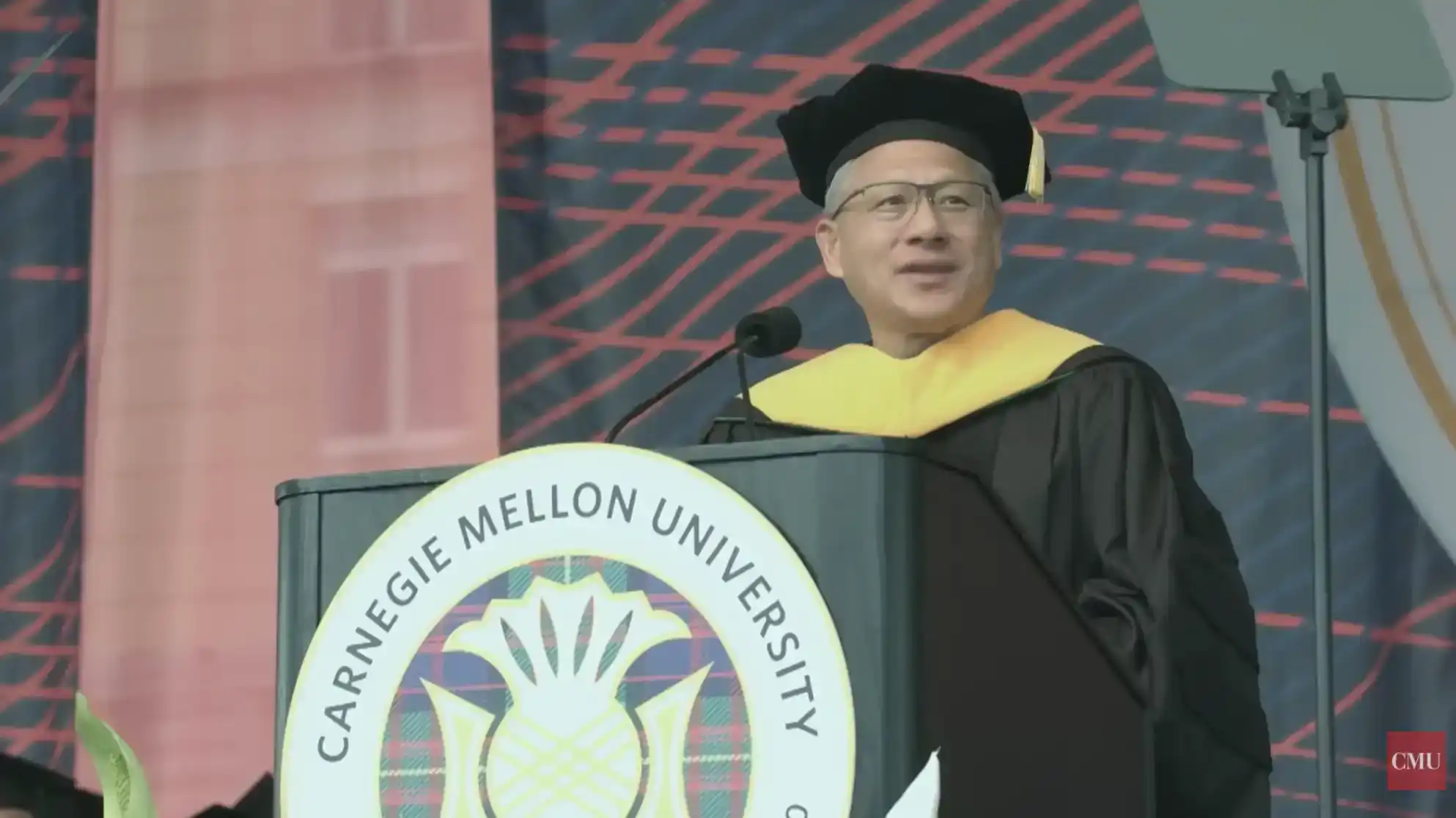
Jensen Huang's CMU Speech: In the AI Era, Don't Just Watch, Build

Jensen Huang, CEO of NVIDIA and a first-generation immigrant, delivered the commencement address to Carnegie Mellon University's class of 2026. He shared his personal journey from a humble background to founding NVIDIA, emphasizing resilience, learning from failure, and the responsibility that comes with leadership. Huang framed the present moment as the dawn of the AI revolution, a shift he believes is more profound than previous computing waves. He described AI as fundamentally resetting computing—moving from human-written software to machines that understand, reason, and use tools. This will create a new industry for generating intelligence and transform every sector. While acknowledging AI's potential to automate tasks and displace some jobs, Huang distinguished between the *tasks* of a job and its core *purpose*. He argued AI will augment human capability, not replace humans. The real risk, he stated, is not AI itself, but people being left behind by those who effectively use AI. He presented AI as a generational opportunity for massive infrastructure investment—in chip factories, data centers, energy grids, and advanced manufacturing—that could re-industrialize nations like the U.S. and bridge the digital divide by making computing and intelligent tools accessible to all. Huang called for a balanced approach: advancing AI safely and responsibly, establishing prudent policies, ensuring broad access, and encouraging universal participation. He urged the graduates not to fear the future but to engage with optimism and ambition, reminding them of CMU's motto, "My heart is in the work." His core message was clear: this is their moment to actively build and shape the AI-powered future, not merely observe it.

marsbit1 h fa

Jensen Huang's CMU Speech: In the AI Era, Don't Just Watch, Build

marsbit1 h fa

Trading

Spot
Futures

Articoli Popolari

Come comprare HOUSE

Benvenuto in HTX.com! Abbiamo reso l'acquisto di Housecoin (HOUSE) semplice e conveniente. Segui la nostra guida passo passo per intraprendere il tuo viaggio nel mondo delle criptovalute.Step 1: Crea il tuo Account HTXUsa la tua email o numero di telefono per registrarti il tuo account gratuito su HTX. Vivi un'esperienza facile e sblocca tutte le funzionalità,Crea il mio accountStep 2: Vai in Acquista crypto e seleziona il tuo metodo di pagamentoCarta di credito/debito: utilizza la tua Visa o Mastercard per acquistare immediatamente HousecoinHOUSE.Bilancio: Usa i fondi dal bilancio del tuo account HTX per fare trading senza problemi.Terze parti: abbiamo aggiunto metodi di pagamento molto utilizzati come Google Pay e Apple Pay per maggiore comodità.P2P: Fai trading direttamente con altri utenti HTX.Over-the-Counter (OTC): Offriamo servizi su misura e tassi di cambio competitivi per i trader.Step 3: Conserva Housecoin (HOUSE)Dopo aver acquistato Housecoin (HOUSE), conserva nel tuo account HTX. In alternativa, puoi inviare tramite trasferimento blockchain o scambiare per altre criptovalute.Step 4: Scambia Housecoin (HOUSE)Scambia facilmente Housecoin (HOUSE) nel mercato spot di HTX. Accedi al tuo account, seleziona la tua coppia di trading, esegui le tue operazioni e monitora in tempo reale. Offriamo un'esperienza user-friendly sia per chi ha appena iniziato che per i trader più esperti.

261 Totale visualizzazioniPubblicato il 2025.04.27Aggiornato il 2025.04.27

Come comprare HOUSE

Discussioni

Benvenuto nella Community HTX. Qui puoi rimanere informato sugli ultimi sviluppi della piattaforma e accedere ad approfondimenti esperti sul mercato. Le opinioni degli utenti sul prezzo di HOUSE HOUSE sono presentate come di seguito.

活动图片