Inside the 2025 altcoin divergence: Could 2026 be an ‘L1 season’?

ambcryptoPubblicato 2026-01-01Pubblicato ultima volta 2026-01-01

Introduzione

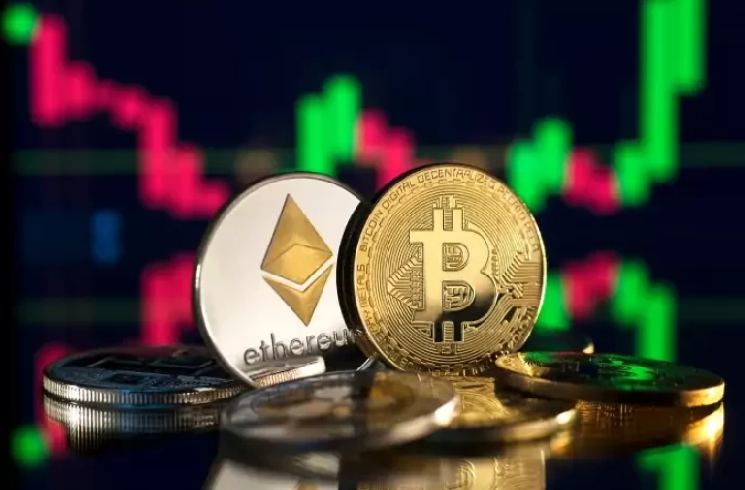
In 2025, the crypto market witnessed a notable divergence: altcoins, including Ethereum (ETH), underperformed Bitcoin (BTC) in price, with ETH closing the year down nearly 11%. However, this price weakness contrasted with robust on-chain fundamentals. Ethereum processed a record 2.23 million transactions with low fees and no congestion, a trend mirrored by other Layer 1 (L1) networks. This disconnect between speculation and utility is drawing significant attention. As 2026 begins, the focus is shifting from speculative hype to real network activity, driven by factors like the RWA market and stablecoins. With strong on-chain metrics and growing institutional ETF flows, the foundation is set for a potential "L1 season" where utility takes center stage.

2026 has started with renewed momentum in the altcoin market.

The Altcoin Season Index is ticking higher, signaling a rotation back into alts. That said, when looking back at the 2025 cycle, a clear divergence stood out, with investors deviating from the usual rotation playbook.

Historically, altcoins tended to outperform during periods of Bitcoin [BTC] consolidation. This cycle, that rotation never fully played out.

The ETH/BTC ratio stayed range-bound, capping Ethereum’s [ETH] speculative upside.

Notably, that dynamic showed up clearly in 2025 returns.

From a technical lens, ETH closed the year down 10.97%, entering the new year below the $3k level. Bitcoin, by contrast, held up better, finishing 2025 down 6.24%, suggesting capital largely stayed parked in BTC.

Still, despite the weakness, Ethereum continued to post strength across key on-chain metrics.

In fact, this wasn’t isolated to Ethereum. Similar upticks were seen across other L1s, highlighting a clear divergence this cycle.

Naturally, the disconnect between price action and fundamentals is drawing attention. With the “speculative” narrative for altcoins under scrutiny, all eyes are now on L1s. Is 2026 shaping up to be their season?

2026 altcoin divergence: Speculation vs. utility

As the new year kicks off, predictions are heating up.

Notably, one theme stands out: Layer 1 utility. From the RWA market and stablecoins to chain-specific upgrades, 2026 is starting to show a clear focus on real network activity rather than just speculative “hype.”

The key part? On-chain numbers back this up.

As the chart below highlights, Ethereum recently processed a record 2.23 million transactions, the largest in its 10-year history, while keeping fees under $0.01 and finality stable, showing no network congestion.

What’s more, other Layer 1s are showing the same trend.

In this context, AMBCrypto’s thesis starts to gain weight. While 2025 didn’t deliver an “altcoin season,” the market still saw a clear shift, with growing ETF flows toward these altcoins showing the trend is more than a one-off.

Now, as the market heads into 2026, the foundation stands strong.

High-cap altcoins are showing solid on-chain usage, while speculative activity is beginning to fade, creating a divergence that could spark a full-blown “L1 season,” with Layer 1 networks finally taking the spotlight.


Final Thoughts

  • Despite altcoins underperforming Bitcoin in 2025, on-chain activity shows strong fundamentals, signaling a divergence between speculation and usage.
  • With high-cap altcoins showing solid network activity, 2026 could be defined by a full-blown Layer 1 season.

Domande pertinenti

QWhat was the key divergence observed in the altcoin market during the 2025 cycle?

AThe key divergence was that the usual rotation of capital from Bitcoin to altcoins during BTC consolidation periods did not fully play out. Capital largely stayed in Bitcoin, as evidenced by the ETH/BTC ratio remaining range-bound and Bitcoin's better performance compared to Ethereum.

QHow did Ethereum's (ETH) price performance in 2025 compare to Bitcoin's (BTC)?

AEthereum closed the year 2025 down 10.97%, falling below the $3,000 level. In contrast, Bitcoin held up better, finishing the year down only 6.24%.

QWhat on-chain metric for Ethereum reached a record high, demonstrating strong fundamental activity?

AEthereum recently processed a record 2.23 million transactions, the largest number in its 10-year history, while maintaining low fees under $0.01 and stable network finality without congestion.

QAccording to the article, what is the main theme that is starting to define the altcoin market in 2026?

AThe main theme defining the 2026 altcoin market is a focus on Layer 1 utility, including real-world asset (RWA) markets, stablecoins, and chain-specific upgrades, rather than just speculative hype.

QWhat does the article suggest could be the result of the current divergence between price action and fundamentals?

AThe article suggests that the divergence between weak price performance and strong on-chain fundamentals could spark a full-blown 'L1 season' in 2026, where Layer 1 networks take the spotlight.

Letture associate

Interview with Robinhood Executive: Meme + Tokenized US Stocks as "Barbell" Customer Acquisition Strategy, All Business Lines Achieve Hundreds of Millions in Revenue

Interview with Robinhood executive Johann Kerbrat reveals the company's "barbell" customer acquisition strategy for its new Robinhood Chain, combining meme tokens with tokenized stocks. Three weeks after mainnet launch, the chain has seen over $3B in weekly DEX volume and 105M transactions. Kerbrat explains the logic behind the permissionless chain: meme tokens attract DeFi users, while tokenized real-world assets (RWA), currently over 90 US stocks and ETFs accessible in 120+ countries, serve global users. The goal is to bring Robinhood's 27 million funded accounts on-chain by simplifying DeFi with a user-friendly interface, exemplified by features like Robinhood Earn which offers yield without requiring wallet management. Built on Arbitrum's technology stack for its speed, low cost, and Ethereum's security, the chain focuses on financial products like Earn, spot trading, and perpetuals. Kerbrat downplays direct competition with platforms like Base, emphasizing the goal of expanding the overall market for on-chain assets. He details selective partnerships (e.g., Morpho, Lighter) based on compliance, unique UX, and differentiation. While regulatory clarity is pending for US perpetuals, the expansion continues via Bitstamp in Europe. Finally, Kerbrat positions Robinhood as a "super app" integrating stocks, options, crypto, banking, and AI trading, with all major business lines generating hundreds of millions in revenue. For the chain, current priority is driving adoption over maximizing gas fee revenue.

marsbit1 h fa

Interview with Robinhood Executive: Meme + Tokenized US Stocks as "Barbell" Customer Acquisition Strategy, All Business Lines Achieve Hundreds of Millions in Revenue

marsbit1 h fa

Fidelity Q3 Report: BTC, ETH, and SOL Continue to Build Bottoms; How Much Further Will This Crypto Bear Market Go?

Fidelity's Q3 Crypto Signal Report analyzes the current bear market, noting Bitcoin (BTC), Ethereum (ETH), and Solana (SOL) are in a prolonged bottoming phase. Key indicators like the weighted Net Unrealized Profit/Loss (NUPL) have turned negative (-0.01), signaling the market is slightly below its aggregate cost basis, with BTC acting as the primary stabilizing asset. BTC's dominance has risen to 68%, indicating a lack of capital rotation to other digital assets. Performance has been weak across the board, with BTC, ETH, and SOL down significantly year-to-date. Market sentiment is depressed, exacerbated by substantial outflows from spot ETPs and a challenging macro environment. The report compares the current ~203-day downtrend to historical ~300-day bottoming cycles, suggesting the process may be two-thirds complete, with late 2026 as a potential timeframe to monitor. For Bitcoin, NUPL at 0.09 indicates cautious sentiment, while momentum signals remain negative. The Yardstick metric points to potential undervaluation relative to network security (hashrate). Ethereum's NUPL is deep in the "capitulation" zone at -0.43, a historically positive signal for future returns, though its momentum and network fee revenue are negative. Solana shows the deepest NUPL at -0.72 but demonstrates relative resilience in on-chain activity and stablecoin transfer volume. The report concludes that while several metrics are near historical capitulation levels, a definitive market bottom has not yet been established. The path forward likely involves continued consolidation, with BTC's relative strength and fundamental on-chain usage for ETH and SOL providing key areas for investor observation.

marsbit1 h fa

Fidelity Q3 Report: BTC, ETH, and SOL Continue to Build Bottoms; How Much Further Will This Crypto Bear Market Go?

marsbit1 h fa

Trading

Spot
活动图片