If the AI Bubble Is Already Bursting, Who Will Truly Survive?

marsbitPubblicato 2026-06-15Pubblicato ultima volta 2026-06-15

Introduzione

If the AI Bubble is Bursting, Who Will Remain? The debate over an AI bubble is intensifying, with figures like Ray Dalio warning of high levels and Jensen Huang seeing immense, early-stage opportunity. Both views hold truth: a speculative bubble in capital markets likely exists, mirroring the dot-com era, but the underlying technological shift is real and transformative. History shows that while bubbles burst—wiping out overvalued companies and speculative capital—they often leave behind critical physical and digital infrastructure. The dot-com bust, for instance, eliminated many firms but left the global fiber optic networks and data centers that enabled the rise of Amazon, Netflix, and cloud computing. Today's massive AI infrastructure investments (projected at trillions by 2030) in data centers, power, cooling, and GPUs may follow a similar path, creating the foundation for future applications. A key divergence from past bubbles is the "Jevons Paradox" effect in AI. As the cost of AI inference has plummeted by over 99.7% since 2023, enterprise spending on AI has skyrocketed. Cheap "tokens" have unlocked vast, previously uneconomical use cases, moving AI from simple chatbots into core business workflows—code generation, legal document review, scientific simulation, and financial analysis. The market is now in a phase of self-correction, weeding out superficial "API-wrapper" startups, but this cleansing process strengthens the ecosystem. The long-term trajectory is clear...

Source: Gelong, North City's Mr. Xu

Data support: GogoBigData

The AI bubble is becoming the most divisive consensus in the global market. Dalio says the bubble is already high, while Huang Renxun says the opportunity is just beginning; one sees overheating in the capital market, the other sees the dawn of a productivity revolution.

The real issue is not whether there is an AI bubble, but what will be left behind after it bursts. The dot-com bubble of 2000 caused the Nasdaq to plummet, companies to collapse, and wealth to evaporate, but it also left behind the infrastructure of submarine cables, broadband networks, and cloud computing, which ultimately supported Amazon, Netflix, YouTube, and the mobile internet.

Today, AI stands at a similar juncture. On one side, hundreds of billions of dollars are pouring into data centers, electricity, liquid cooling, optical modules, and GPUs; on the other side, there is a huge gap yet to be filled by application revenues. A bubble clearly exists, but the underlying productive forces are not inflated. When token costs plummet and intelligence begins to be called upon like water and electricity, AI will no longer be just a chatting tool, but will enter real workflows in code, healthcare, finance, law, manufacturing, and scientific research. The market will wash away shell companies and PPT entrepreneurs, but it will not reverse the direction of AI+. The bubble will burst, but the industry will remain. Enjoy:

Recently, the market has experienced sharp fluctuations, and theories of an "AI bubble" are rampant.

  • Ray Dalio, founder of Bridgewater Associates, says: There is a bubble in the AI market, and it is "relatively high."

  • NVIDIA CEO Jensen Huang says: There is a huge opportunity in AI, and the demand for computing power is just beginning to explode.

Who should we believe?

They are both correct.

Is there a bubble in the AI industry? Absolutely.

However, bubbles in the tech sector are often the only tribute society can pay to disruptive advanced productive forces. They are not merely a derogatory term.

In the long run, this is an inevitable phenomenon at the dawn of advanced productive forces.

Many liken the current situation to the dot-com bubble of 2000, feeling deeply concerned. The dot-com bubble indeed caused the Nasdaq to plummet nearly 78%, evaporating over 5 trillion dollars in wealth.

But twenty years later, what industry can operate without the internet? Today, the value of the internet industry far exceeds that of the bubble era.

At least superficially, the AI bubble resembles that. The bubble in the capital market cannot stop nearly every sector in society from actively being empowered by AI.

AI+ is the inevitable trend. Just as all industries today cannot do without the internet, all industries in the future will not be able to do without AI.

01 The "IQ Tax" That Innovation Must Pay

In that era when companies could go public and raise money just by having .com in their name, the Nasdaq surged nearly 600% between 1995 and 2000. Then followed a two-and-a-half-year financial storm.

Iconic names of that time, like the software company MicroStrategy, plunged 62% in a single day due to accounting scandals and exaggerated claims; Pets.com (online dog food seller), Webvan (the pioneer of fresh food e-commerce) simply went bust... In the panic, almost everyone blamed the internet as a scam.

However, the physical infrastructure precipitated by the over-expenditure of speculative capital often nourishes the super giants of the next era at extremely low costs. The bubble burst not because of the internet technology itself, but because the physical construction speed of infrastructure could not keep pace with the market's rhythm.

For example, the global undersea cables and dense wavelength division multiplexing networks laid by those once-prominent telecom companies (like WorldCom, Global Crossing), which bankrupted them with heavy investment, became the perfect breeding ground for the later rise of Netflix, Zoom, and the mobile internet.

Without the frenzied and premature global investment in telecom infrastructure around 2000, the later video streaming explosion of YouTube and the cloud computing infrastructure would not have happened.

Amazon is the most typical example. Its stock price plummeted from a high of $107 in 1999 to $7 in 2001, a drop of over 90%. But it survived because its underlying business logic, "reconstructing retail with the network," aligned with the direction of advanced productive forces.

This is a classic case of Amara's Law: we tend to overestimate the effect of a new technology in the short run and underestimate its effect in the long run. In the early stages of a technological revolution, the fervor of speculative capital inevitably leads to overinvestment, forming a bubble. It's the IQ tax that innovation must pay. But when the bubble recedes, what remains will be more indestructible advanced productive forces.

02 Why Are Corporate AI Expenditures Rising Instead of Falling?

Back in 2026, the AI industry bubble appears even larger.

Just five major cloud service providers—Amazon, Google, Meta, Microsoft, and Oracle—are expected to have capital expenditures reaching $690 billion in 2026, with total AI infrastructure investment projected at $5.3 trillion by 2030. Of this, only about 25% is for GPUs; the remaining 75% is all poured into physical infrastructure: liquid cooling systems, power transmission, network switches, optical modules, and land.

On the revenue side, the combined total revenue in 2026 for all leading pure AI companies like OpenAI, Anthropic, Cohere, Mistral, Perplexity is projected not to exceed $40 billion.

The foundational layer invests nearly $700 billion, while the application layer recovers tens of billions. This severe asymmetry—isn't that a bubble?

Such a conclusion cannot be drawn so simply and crudely. One critical point must not be overlooked:

  • In March 2023, when OpenAI released GPT-4, the mixed cost per million tokens of input was about $30.

  • By April 2025, with model architecture optimization and inference computing power improvements, the price per million tokens for models of comparable intelligence plummeted to $0.1–$0.15.

According to Stanford University's "AI Index Report" and TokenCost data: AI inference costs have fallen by over 99.7% in the past two years.

Following traditional linear thinking, if costs plummet, corporate AI spending should decrease. But the reality is that corporate AI cloud spending tripled between 2024 and 2025.

Why?

Because when the marginal cost of "intelligence" approaches zero, AI is no longer just a simple text summarizer or chatting companion; it has entered a new era of agents and multi-modal enhanced retrieval. Enterprises are starting to let AI agents automatically run thousands of cycles of tasks—writing code, scanning millions of legal contracts, simulating biological experiments.

Cheap tokens have unlocked a massive volume of long-tail demands that were previously not commercially viable due to cost constraints.

Comparing NVIDIA in 2026 to Cisco, the networking hardware titan of 2000, also reveals this trend. Their ecosystem positions are remarkably similar, but their underlying financial health is worlds apart.
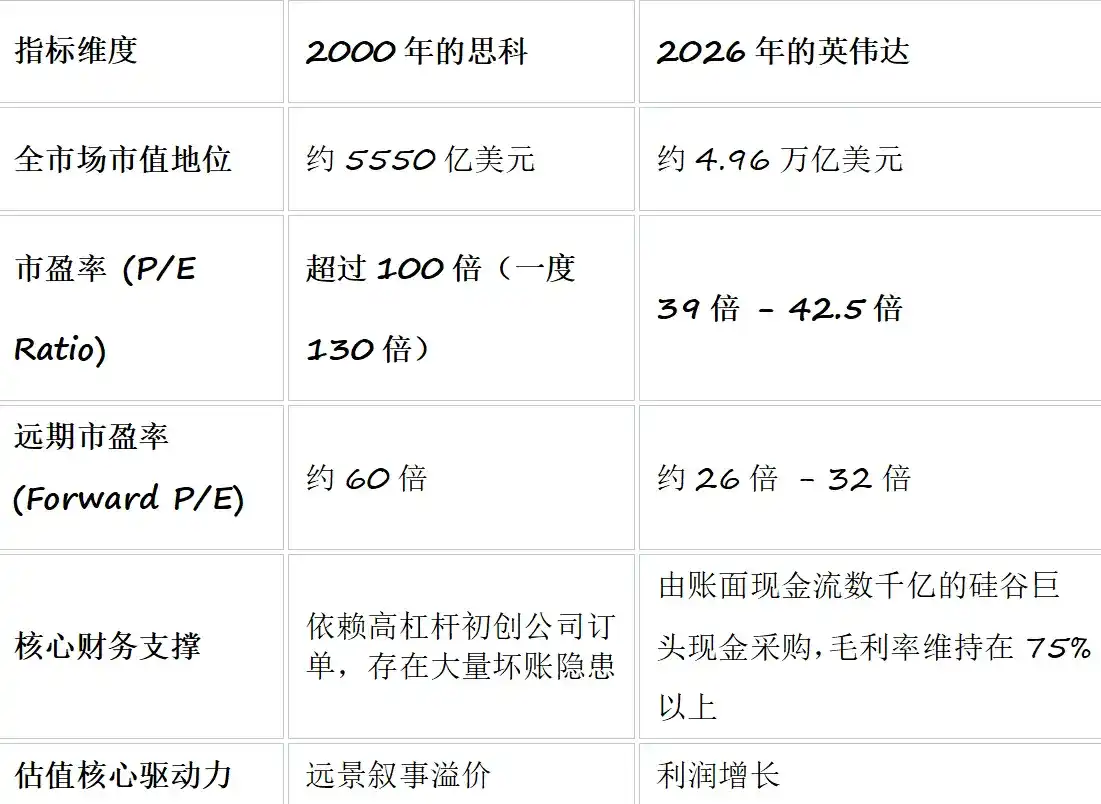
(Hardcore Financial Comparison of NVIDIA and Cisco)

This precisely confirms the economic principle of the "Jevons Paradox": technological progress improves energy use efficiency, but instead of reducing energy consumption, it leads to greater demand due to lower costs.

Even after last year's so-called "DeepSeek moment," the market quickly sobered up in the following months: the more optimized the algorithms, the lower the threshold for enterprises to adopt AI, and ultimately, the total computing power consumption rises exponentially instead.

It is precisely for this reason that AI has the potential to gradually embed itself into almost all old industries. Just as all industries embraced Internet+ over the past two decades. From SaaS software to biomedicine, to advanced manufacturing robots driven by embodied intelligence, by 2026, almost every industry is embracing AI+. No one discusses "whether we should use AI," but instead worries: "Is our data properly cleaned? Do we have enough API call quotas? Is the RAG architecture optimal?"

Currently, there is indeed a bubble in the AI industry. But for enterprises, if you don't embrace the bubble, you will be crushed by the times. This has been proven over the past two decades of the internet era.

03 The Market's Deep Evolution: From Infrastructure to Application

Currently, we are undoubtedly at a critical node in the technology life cycle: just before the "Trough of Disillusionment" on Gartner's Hype Cycle, or at the turning point described by the theory of "Technological Revolutions and Financial Capital."

The AI bubble is already bursting, though many haven't realized it. In the past, any upstart could write a few dozen pages of PPT, wrap a layer of OpenAI's API, and secure funding. Now, as the tide recedes, these companies with no moat and only concepts are dying en masse.

This is the market purifying itself, a manifestation of the bubble bursting. But this is only the surface. The deep logic of the market is undergoing three profound evolutions:

First, value transfer from CapEx to OpEx

Currently, money is being made by those selling shovels—NVIDIA, TSMC, and companies selling optical modules and server liquid cooling equipment are reaping most of the benefits. However, as computing power gradually becomes "infrastructure-ized," like water and electricity, the real excess profits will gradually shift to the application layer. These are the AI-native enterprises that can use extremely low-cost tokens to genuinely solve pain points in vertical industries and reshape business processes (OpEx optimization).

Second, valuation multiple compression and earnings digestion

The high valuations assigned to AI infrastructure do not necessarily imply an impending crash. In many cases, the rapid growth in corporate earnings can digest the high valuations over time, trading "time for space." As long as the revenue growth rate of cloud computing giants keeps pace with the depreciation rate of their capital expenditures, this game of hot potato can evolve into an unprecedented industrial upgrade.

  • For example, leading global automakers and chip giants, by introducing end-to-end AI twin technology, have shortened the cycle from R&D to mass production of new products by 35% and improved overall equipment effectiveness by 18%.

  • In the financial industry, by 2026, quantitative trading, risk control, and credit assessment are already fully dominated by multi-modal Agents. AI not only processes macro expectations at microsecond-level timestamps but is deeply involved in every micro-level asset pricing.

  • In industries highly reliant on senior professional knowledge, such as law, healthcare, and auditing, AI has already completed its transformation from a "junior assistant" to a "partner-level expert."

Among the over 1 billion active users of ChatGPT, Gemini, and Claude, a significant portion uses them as substitutes for daily high-intensity intellectual labor. This includes you and me. All of the above are real things happening, visible to everyone.

04 Conclusion

Looking back at the magnificent history of technology, the "creative destruction" proposed by Schumpeter is always at play.

The capital market is always impatient, hoping that $1 invested today will yield $10 tomorrow. When nearly $700 billion in infrastructure investment cannot be fully transformed into application-layer profits in the short term, the market is bound to face a brutal reshuffle. It will eliminate speculative shell companies that rely solely on flashy PPTs, leaving behind those with genuine technological depth and practical implementation scenarios.

After this reshuffle, those cheap yet vast computing centers and highly optimized model algorithms will serve thousands of industries at extremely low prices.

After 2000, humanity ushered in a digital era where no industry could do without the internet. Today, we are also irreversibly moving towards an intelligent golden age where all industries will be governed and empowered by AI.

Amidst the clamor of the bubble, the underlying productive potential carries not a single drop of moisture.

Domande pertinenti

QWhat is the core argument of the article regarding the AI bubble compared to the dot-com bubble?

AThe core argument is that the existence of an AI bubble is similar to the dot-com bubble, serving as a necessary 'tribute' to a disruptive new technology. While it leads to market overvaluation and will burst, the underlying physical infrastructure and technological progress (like plummeting token costs) built during the bubble will persist. This will enable AI to become ubiquitous across all industries, much like the internet did post-2000, leaving behind a transformative, durable foundation of productivity.

QWhy does the article claim that enterprise AI spending is rising even as AI inference costs fall dramatically?

AThe article cites the 'Jevons Paradox' from economics: a drastic reduction in the cost of a resource (in this case, AI 'intelligence' per token) does not reduce overall consumption but instead unlocks vast new, previously uncommercializable long-tail demands. With token costs nearing zero, companies are deploying AI for complex, iterative tasks like running thousands of automated code-writing, legal contract analysis, or scientific simulation jobs, leading to a massive increase in total AI cloud spending.

QAccording to the article, what is the primary difference between the financial health of Nvidia in 2026 and Cisco in 2000, despite their similar ecosystem positions?

AThe article implies that while both companies held dominant positions as hardware suppliers during their respective technological booms (networking for Cisco, AI compute for Nvidia), Nvidia's underlying financial health is portrayed as more robust. The article does not provide specific comparative financials but suggests the context is different because the AI infrastructure build-out is fueling tangible, widespread enterprise adoption and productivity gains across sectors, whereas the dot-com bubble involved more speculative investment without immediate, broad-based application revenue.

QWhat are the two key 'deep market evolutions' the article predicts will occur as the AI bubble matures?

AThe two key evolutions are: 1) A value shift from Capital Expenditure (CapEx) to Operational Expenditure (OpEx). Profit will migrate from infrastructure 'shovel sellers' (like GPU manufacturers) to AI-native application companies that use cheap tokens to solve vertical industry problems and optimize business processes. 2) Valuation compression and earnings digestion. High valuations for infrastructure will be gradually absorbed ('time for space') by the rapid growth of corporate profits as AI integration boosts efficiency and revenue in sectors like manufacturing, finance, and law.

QWhat does the article conclude will 'truly remain' after the AI bubble bursts?

AThe article concludes that after the bubble bursts and speculative, shell companies are washed away, what will truly remain is the massive, now-cheap computational infrastructure and highly optimized AI models. These will serve as a pervasive utility, enabling AI to be deeply integrated into and transform every industry—code, medicine, finance, law, manufacturing, and research—ushering in a 'smart era' where AI is as indispensable as the internet is today. The underlying productive potential is solid.

Letture associate

Ethereum Reaches the Milestone of One Million Developers, Sharplink CEO Delves Deep into Ethereum's Future Possibilities

Ethereum Surpasses One Million Developers Milestone: A Look at Its Unshakeable Dominance and Future Joseph Chalom, CEO of Sharplink, reflects on his recent Asia trip where he engaged deeply with Ethereum developers and ecosystem leaders. The most striking takeaway was not just the industry's vibrancy, but the rigorous, long-term vision of local builders. This context brings to life a pivotal statistic: Ethereum has now surpassed one million cumulative developers (1,012,824), with approximately 232,000 remaining active in the past year—a talent pool unmatched by any other crypto ecosystem. The critical question isn't which blockchain is fastest, but where top developers choose to build long-term. Ethereum's answer is unequivocal. Its decade-long lead stems from a unique convergence of technology, institutional culture, economic systems, and composability, cementing its role as the foundational operating system for programmable finance. This massive developer base is tackling the industry's hardest problems, continuously strengthening Ethereum's moat. Key initiatives include: * **The Glamsterdam Upgrade (planned 2026):** Introducing ePBS and Block-level Access Lists for parallel execution and higher throughput while preserving core values like credible neutrality and fair MEV distribution. * **Synchronous Composability:** Projects are working to enable atomic transactions across dozens of Rollups, making them function as one unified chain and eliminating ecosystem fragmentation. * **Post-Quantum Security:** Ethereum is far ahead in preparing for quantum computing threats, with a dedicated foundation working group and testnets targeting a full migration by ~2029—a crucial factor for institutional adoption. Beyond developers, Ethereum's core network effects are its unparalleled composability and unified standards (like EVM and Solidity), which create a powerful flywheel: more developers → better tools → greater liquidity → more institutional participation. Its other decisive advantages include credible neutrality (over 900k validators), a secure modular architecture with interconnected Rollups, and a deeply entrenched culture shaped by top-tier researchers. Ultimately, there's a vast difference between generating short-term activity and becoming the trusted, long-term coordination layer for global native finance. Major institutions prioritize security, trust, and liquidity—areas where Ethereum holds dominant mindshare. The industry's trajectory shows resources consolidating around unified standards, deep liquidity, and developer consensus. After meeting the builders in Seoul and Hong Kong, Chalom is more convinced than ever: Ethereum's unshakeable future is being built right now.

Foresight News13 min fa

Ethereum Reaches the Milestone of One Million Developers, Sharplink CEO Delves Deep into Ethereum's Future Possibilities

Foresight News13 min fa

Saylor's Latest Long Read: Bitcoin is Not Money, It's Digital Capital, and Money is Built Upon It

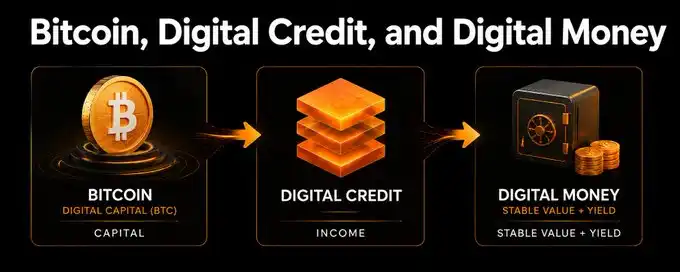
Michael Saylor presents his "Digital Asset Stack" theory, positioning Bitcoin as the foundational layer of digital capital. He argues Bitcoin itself should remain unchanged—no staking, inflation, or protocol alterations. Instead, a five-layer financial architecture should be built atop it: Digital Capital (BTC), Digital Credit (e.g., yield instruments like STRC), Digital Currency (stable, yield-bearing instruments pegged to fiat), Digital Yield (leveraged/structured products), and Digital Equity (e.g., MSTR stock, absorbing residual volatility). Saylor asserts this stack transforms Bitcoin's high-volatility, high-energy capital into tailored products: stable currencies for payments/savings, yield instruments for income seekers, and equity for growth investors. This approach meets diverse needs—corporate treasuries, banks, retirees, emerging market users—without compromising Bitcoin's core properties (scarcity, decentralization). The "killer use case" is rebuilding global money, credit, and capital markets on Bitcoin, bridging the fiat world with a superior digital asset foundation. The system leverages traditional finance principles (risk layering, structured products) while using Bitcoin as the ultimate collateral. This expands Bitcoin's utility, drives adoption, and offers a better monetary experience: digital, yield-bearing, stable-value tools for everyday use.

marsbit26 min fa

Saylor's Latest Long Read: Bitcoin is Not Money, It's Digital Capital, and Money is Built Upon It

marsbit26 min fa

Can SK Hynix's Stock Double Again in This Rally?

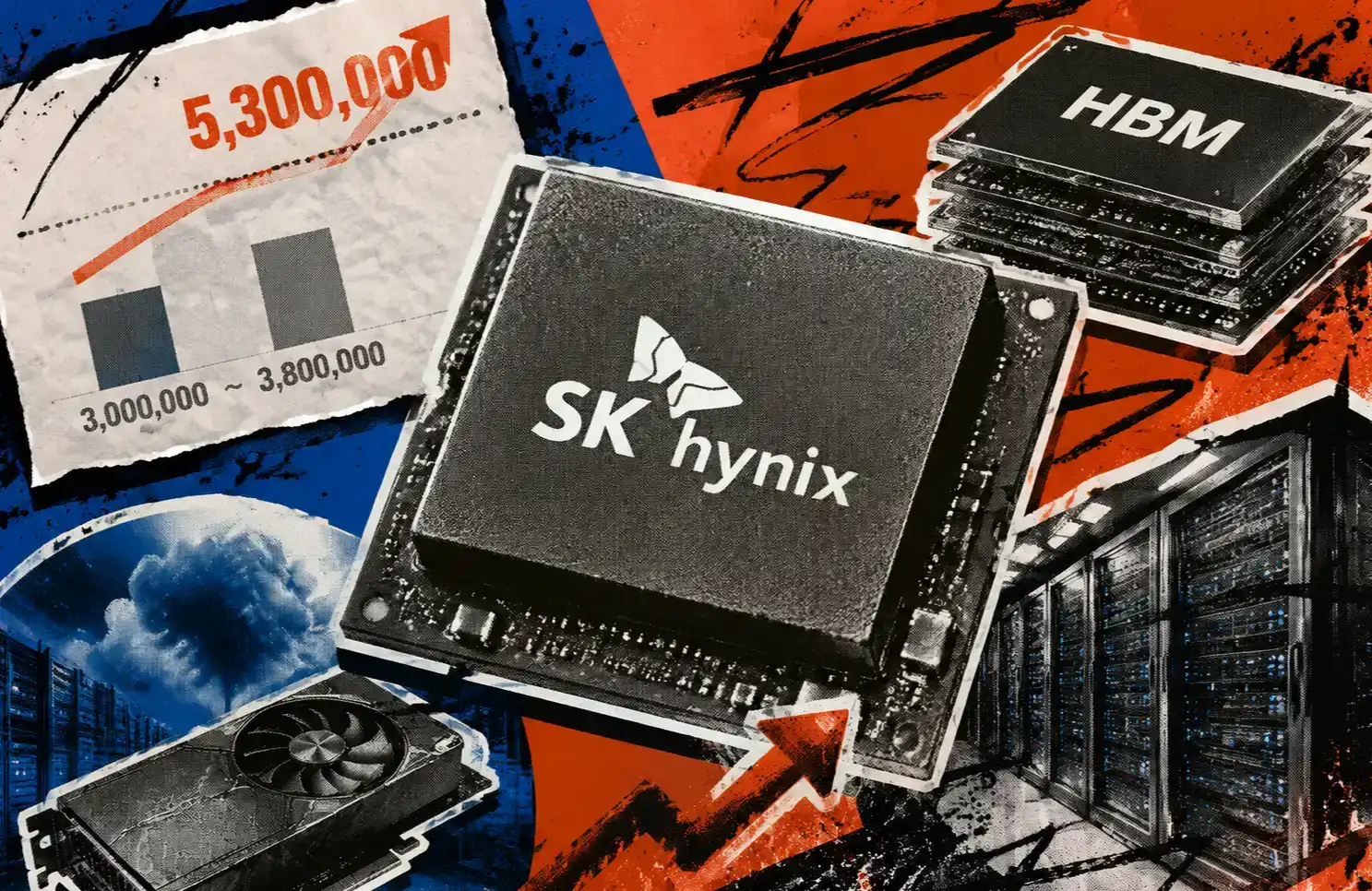
The article discusses the highly optimistic price target of approximately $3,500 for SK Hynix stock, set by Aletheia Capital. This target is significantly above the consensus range of $2,000-$2,520 from major brokerages. The core debate is whether SK Hynix deserves a fundamental re-rating beyond its traditional cyclical discount, based on the long-term impact of AI-driven demand. The $3,500 target hinges on three key assumptions holding simultaneously until at least 2027: 1) Continued shortage and high pricing for HBM (High Bandwidth Memory), a critical component for AI chips; 2) Sustained high prices for standard DRAM, as HBM production consumes capacity and constrains general supply; and 3) Strong AI server demand generating substantial, above-expectation free cash flow. SK Hynix's leading ~58% market share in HBM and its early certification with key clients like Nvidia provide a competitive advantage, allowing it to capture significant supply chain premiums. The HBM shortage is seen not just as a niche growth driver but as a catalyst that amplifies profitability across the entire memory business by tightening overall DRAM supply. However, the article cautions that this target represents an optimistic "tail scenario." Key risks include potential supply increases from competitors (Samsung, Micron) by 2027, a possible slowdown in HBM price growth, and high capital expenditures that could erode the projected free cash flow. The divergence in analyst targets reflects the market's uncertainty over whether the current AI-driven boom will temporarily elevate earnings or permanently raise the memory industry's profit baseline.

marsbit29 min fa

Can SK Hynix's Stock Double Again in This Rally?

marsbit29 min fa

Has the Cryptocurrency Market Hit Bottom? Here's What Institutions Think

"Has the crypto market bottomed out? Major institutions are divided on the outlook, according to a recent analysis by Matt Hougan, Chief Investment Officer of Bitwise. Three prominent research firms published in-depth reports on the topic with differing conclusions. Galaxy Digital argues Bitcoin has not yet found its bottom, pointing to only 4 out of 13 historical bottoming indicators being met. Their analysis suggests a potential bottom range of $30,000 to $54,000. NYDIG adopts a more cautious stance, noting that while metrics are close to historical bear market lows, a classic panic-selling capitulation event is missing. They acknowledge the possibility of a bottom but consider it unlikely, citing structural changes from institutional adoption. In contrast, Standard Chartered Bank asserts the bottom is already in at around $59,000. Their revised bullish view, predicting a year-end target of $100,000, hinges on anticipated reductions in ETF selling pressure linked to events like a potential SpaceX IPO. Despite the surface-level disagreement on the exact price floor, the reports share significant common ground crucial for long-term investors. All three institutions agree that a market bottom will likely form within the current year, that current prices are closer to the bottom than to previous cycle highs, and that Bitcoin is poised for another major bull cycle in the future. The core takeaway is that while the precise bottom level remains debated, the long-term value proposition for Bitcoin remains strong and may even be strengthening. Key supportive trends include rising global debt, persistent inflation, declining trust in traditional institutions, accelerating digitization, and improving market infrastructure. Therefore, for investors with a long-term horizon, the focus should shift from pinpointing the exact bottom to recognizing that the cycle's peak is likely still ahead, making current levels an attractive entry point for substantial potential upside."

Foresight News50 min fa

Has the Cryptocurrency Market Hit Bottom? Here's What Institutions Think

Foresight News50 min fa

Trading

Spot
Futures

Articoli Popolari

Cosa è GROK AI

Grok AI: Rivoluzionare la Tecnologia Conversazionale nell'Era Web3 Introduzione Nel panorama in rapida evoluzione dell'intelligenza artificiale, Grok AI si distingue come un progetto notevole che collega i domini della tecnologia avanzata e dell'interazione con l'utente. Sviluppato da xAI, un'azienda guidata dal rinomato imprenditore Elon Musk, Grok AI cerca di ridefinire il modo in cui interagiamo con l'intelligenza artificiale. Mentre il movimento Web3 continua a prosperare, Grok AI mira a sfruttare il potere dell'IA conversazionale per rispondere a query complesse, offrendo agli utenti un'esperienza che è non solo informativa ma anche divertente. Cos'è Grok AI? Grok AI è un sofisticato chatbot di intelligenza artificiale conversazionale progettato per interagire dinamicamente con gli utenti. A differenza di molti sistemi di intelligenza artificiale tradizionali, Grok AI abbraccia un'ampia gamma di domande, comprese quelle tipicamente considerate inappropriate o al di fuori delle risposte standard. Gli obiettivi principali del progetto includono: Ragionamento Affidabile: Grok AI enfatizza il ragionamento di buon senso per fornire risposte logiche basate sulla comprensione contestuale. Supervisione Scalabile: L'integrazione dell'assistenza degli strumenti garantisce che le interazioni degli utenti siano sia monitorate che ottimizzate per la qualità. Verifica Formale: La sicurezza è fondamentale; Grok AI incorpora metodi di verifica formale per migliorare l'affidabilità delle sue uscite. Comprensione del Lungo Contesto: Il modello di IA eccelle nel trattenere e richiamare una vasta storia di conversazione, facilitando discussioni significative e consapevoli del contesto. Robustezza Adversariale: Concentrandosi sul miglioramento delle sue difese contro input manipolati o malevoli, Grok AI mira a mantenere l'integrità delle interazioni degli utenti. In sostanza, Grok AI non è solo un dispositivo di recupero informazioni; è un partner conversazionale immersivo che incoraggia un dialogo dinamico. Creatore di Grok AI Il cervello dietro Grok AI non è altri che Elon Musk, un individuo sinonimo di innovazione in vari campi, tra cui automotive, viaggi spaziali e tecnologia. Sotto l'egida di xAI, un'azienda focalizzata sull'avanzamento della tecnologia AI in modi benefici, la visione di Musk mira a rimodellare la comprensione delle interazioni con l'IA. La leadership e l'etica fondamentale sono profondamente influenzate dall'impegno di Musk nel superare i confini tecnologici. Investitori di Grok AI Sebbene i dettagli specifici riguardanti gli investitori che sostengono Grok AI rimangano limitati, è pubblicamente riconosciuto che xAI, l'incubatore del progetto, è fondato e supportato principalmente dallo stesso Elon Musk. Le precedenti imprese e partecipazioni di Musk forniscono un robusto sostegno, rafforzando ulteriormente la credibilità e il potenziale di crescita di Grok AI. Tuttavia, al momento, le informazioni riguardanti ulteriori fondazioni di investimento o organizzazioni che supportano Grok AI non sono facilmente accessibili, segnando un'area per potenziali esplorazioni future. Come Funziona Grok AI? Le meccaniche operative di Grok AI sono innovative quanto il suo framework concettuale. Il progetto integra diverse tecnologie all'avanguardia che facilitano le sue funzionalità uniche: Infrastruttura Robusta: Grok AI è costruito utilizzando Kubernetes per l'orchestrazione dei container, Rust per prestazioni e sicurezza, e JAX per il calcolo numerico ad alte prestazioni. Questo trio garantisce che il chatbot operi in modo efficiente, si scaldi efficacemente e serva gli utenti prontamente. Accesso alla Conoscenza in Tempo Reale: Una delle caratteristiche distintive di Grok AI è la sua capacità di attingere a dati in tempo reale attraverso la piattaforma X—precedentemente nota come Twitter. Questa capacità consente all'IA di accedere alle informazioni più recenti, permettendole di fornire risposte e raccomandazioni tempestive che altri modelli di IA potrebbero perdere. Due Modalità di Interazione: Grok AI offre agli utenti la scelta tra “Modalità Divertente” e “Modalità Normale”. La Modalità Divertente consente uno stile di interazione più giocoso e umoristico, mentre la Modalità Normale si concentra sulla fornitura di risposte precise e accurate. Questa versatilità garantisce un'esperienza su misura che soddisfa varie preferenze degli utenti. In sostanza, Grok AI sposa prestazioni con coinvolgimento, creando un'esperienza che è sia arricchente che divertente. Cronologia di Grok AI Il viaggio di Grok AI è segnato da traguardi fondamentali che riflettono le sue fasi di sviluppo e distribuzione: Sviluppo Iniziale: La fase fondamentale di Grok AI si è svolta in circa due mesi, durante i quali sono stati condotti l'addestramento iniziale e il perfezionamento del modello. Rilascio Beta di Grok-2: In un significativo avanzamento, è stata annunciata la beta di Grok-2. Questo rilascio ha introdotto due versioni del chatbot—Grok-2 e Grok-2 mini—ognuna dotata delle capacità per chattare, programmare e ragionare. Accesso Pubblico: Dopo lo sviluppo beta, Grok AI è diventato disponibile per gli utenti della piattaforma X. Coloro che hanno account verificati tramite un numero di telefono e attivi per almeno sette giorni possono accedere a una versione limitata, rendendo la tecnologia disponibile a un pubblico più ampio. Questa cronologia racchiude la crescita sistematica di Grok AI dall'inizio all'impegno pubblico, enfatizzando il suo impegno per il miglioramento continuo e l'interazione con gli utenti. Caratteristiche Chiave di Grok AI Grok AI comprende diverse caratteristiche chiave che contribuiscono alla sua identità innovativa: Integrazione della Conoscenza in Tempo Reale: L'accesso a informazioni attuali e rilevanti differenzia Grok AI da molti modelli statici, consentendo un'esperienza utente coinvolgente e accurata. Stili di Interazione Versatili: Offrendo modalità di interazione distinte, Grok AI soddisfa varie preferenze degli utenti, invitando alla creatività e alla personalizzazione nella conversazione con l'IA. Avanzata Struttura Tecnologica: L'utilizzo di Kubernetes, Rust e JAX fornisce al progetto un solido framework per garantire affidabilità e prestazioni ottimali. Considerazione del Discorso Etico: L'inclusione di una funzione di generazione di immagini mette in mostra lo spirito innovativo del progetto. Tuttavia, solleva anche considerazioni etiche riguardanti il copyright e la rappresentazione rispettosa di figure riconoscibili—una discussione in corso all'interno della comunità AI. Conclusione Come entità pionieristica nel campo dell'IA conversazionale, Grok AI incarna il potenziale per esperienze utente trasformative nell'era digitale. Sviluppato da xAI e guidato dall'approccio visionario di Elon Musk, Grok AI integra conoscenze in tempo reale con capacità di interazione avanzate. Si sforza di spingere i confini di ciò che l'intelligenza artificiale può realizzare, mantenendo un focus su considerazioni etiche e sicurezza degli utenti. Grok AI non solo incarna il progresso tecnologico, ma rappresenta anche un nuovo paradigma conversazionale nel panorama Web3, promettendo di coinvolgere gli utenti con sia conoscenze esperte che interazioni giocose. Man mano che il progetto continua a evolversi, si erge come testimonianza di ciò che l'incrocio tra tecnologia, creatività e interazione simile a quella umana può realizzare.

495 Totale visualizzazioniPubblicato il 2024.12.26Aggiornato il 2024.12.26

Cosa è GROK AI

Cosa è ERC AI

Euruka Tech: Una Panoramica di $erc ai e delle sue Ambizioni in Web3 Introduzione Nel panorama in rapida evoluzione della tecnologia blockchain e delle applicazioni decentralizzate, nuovi progetti emergono frequentemente, ciascuno con obiettivi e metodologie uniche. Uno di questi progetti è Euruka Tech, che opera nel vasto dominio delle criptovalute e del Web3. L'obiettivo principale di Euruka Tech, in particolare del suo token $erc ai, è presentare soluzioni innovative progettate per sfruttare le crescenti capacità della tecnologia decentralizzata. Questo articolo si propone di fornire una panoramica completa di Euruka Tech, un'esplorazione dei suoi obiettivi, della funzionalità, dell'identità del suo creatore, dei potenziali investitori e della sua importanza nel contesto più ampio del Web3. Cos'è Euruka Tech, $erc ai? Euruka Tech è caratterizzato come un progetto che sfrutta gli strumenti e le funzionalità offerte dall'ambiente Web3, concentrandosi sull'integrazione dell'intelligenza artificiale nelle sue operazioni. Sebbene i dettagli specifici sul framework del progetto siano piuttosto sfuggenti, è progettato per migliorare l'engagement degli utenti e automatizzare i processi nello spazio crypto. Il progetto mira a creare un ecosistema decentralizzato che non solo faciliti le transazioni, ma incorpori anche funzionalità predittive attraverso l'intelligenza artificiale, da cui il nome del suo token, $erc ai. L'obiettivo è fornire una piattaforma intuitiva che faciliti interazioni più intelligenti e un'elaborazione delle transazioni più efficiente all'interno della crescente sfera del Web3. Chi è il Creatore di Euruka Tech, $erc ai? Attualmente, le informazioni riguardanti il creatore o il team fondatore di Euruka Tech rimangono non specificate e piuttosto opache. Questa assenza di dati solleva preoccupazioni, poiché la conoscenza del background del team è spesso essenziale per stabilire credibilità nel settore blockchain. Pertanto, abbiamo classificato queste informazioni come sconosciute fino a quando dettagli concreti non saranno resi disponibili nel dominio pubblico. Chi sono gli Investitori di Euruka Tech, $erc ai? Allo stesso modo, l'identificazione degli investitori o delle organizzazioni di supporto per il progetto Euruka Tech non è prontamente fornita attraverso la ricerca disponibile. Un aspetto cruciale per i potenziali stakeholder o utenti che considerano di impegnarsi con Euruka Tech è la garanzia che deriva da partnership finanziarie consolidate o dal supporto di società di investimento rispettabili. Senza divulgazioni sulle affiliazioni di investimento, è difficile trarre conclusioni complete sulla sicurezza finanziaria o sulla longevità del progetto. In linea con le informazioni trovate, anche questa sezione rimane allo stato di sconosciuto. Come funziona Euruka Tech, $erc ai? Nonostante la mancanza di specifiche tecniche dettagliate per Euruka Tech, è essenziale considerare le sue ambizioni innovative. Il progetto cerca di sfruttare la potenza computazionale dell'intelligenza artificiale per automatizzare e migliorare l'esperienza dell'utente all'interno dell'ambiente delle criptovalute. Integrando l'IA con la tecnologia blockchain, Euruka Tech mira a fornire funzionalità come operazioni automatizzate, valutazioni del rischio e interfacce utente personalizzate. L'essenza innovativa di Euruka Tech risiede nel suo obiettivo di creare una connessione fluida tra gli utenti e le vaste possibilità presentate dalle reti decentralizzate. Attraverso l'utilizzo di algoritmi di apprendimento automatico e IA, mira a ridurre le sfide degli utenti alle prime armi e semplificare le esperienze transazionali all'interno del framework Web3. Questa simbiosi tra IA e blockchain sottolinea l'importanza del token $erc ai, fungendo da ponte tra le interfacce utente tradizionali e le avanzate capacità delle tecnologie decentralizzate. Cronologia di Euruka Tech, $erc ai Sfortunatamente, a causa delle limitate informazioni disponibili riguardo a Euruka Tech, non siamo in grado di presentare una cronologia dettagliata dei principali sviluppi o traguardi nel percorso del progetto. Questa cronologia, tipicamente preziosa per tracciare l'evoluzione di un progetto e comprendere la sua traiettoria di crescita, non è attualmente disponibile. Man mano che le informazioni su eventi notevoli, partnership o aggiunte funzionali diventano evidenti, gli aggiornamenti miglioreranno sicuramente la visibilità di Euruka Tech nella sfera crypto. Chiarimento su Altri Progetti “Eureka” È importante sottolineare che più progetti e aziende condividono una nomenclatura simile con “Eureka.” La ricerca ha identificato iniziative come un agente IA della NVIDIA Research, che si concentra sull'insegnamento ai robot di compiti complessi utilizzando metodi generativi, così come Eureka Labs ed Eureka AI, che migliorano l'esperienza utente nell'istruzione e nell'analisi del servizio clienti, rispettivamente. Tuttavia, questi progetti sono distinti da Euruka Tech e non dovrebbero essere confusi con i suoi obiettivi o funzionalità. Conclusione Euruka Tech, insieme al suo token $erc ai, rappresenta un attore promettente ma attualmente oscuro nel panorama del Web3. Sebbene i dettagli sul suo creatore e sugli investitori rimangano non divulgati, l'ambizione centrale di combinare intelligenza artificiale e tecnologia blockchain si erge come un punto focale di interesse. Gli approcci unici del progetto nel promuovere l'engagement degli utenti attraverso l'automazione avanzata potrebbero distinguerlo mentre l'ecosistema Web3 progredisce. Con l'evoluzione continua del mercato crypto, gli stakeholder dovrebbero tenere d'occhio gli sviluppi riguardanti Euruka Tech, poiché lo sviluppo di innovazioni documentate, partnership o una roadmap definita potrebbe presentare opportunità significative nel prossimo futuro. Così com'è, attendiamo ulteriori approfondimenti sostanziali che potrebbero svelare il potenziale di Euruka Tech e la sua posizione nel competitivo panorama crypto.

517 Totale visualizzazioniPubblicato il 2025.01.02Aggiornato il 2025.01.02

Cosa è ERC AI

Cosa è DUOLINGO AI

DUOLINGO AI: Integrare l'apprendimento delle lingue con Web3 e innovazione AI In un'era in cui la tecnologia rimodella l'istruzione, l'integrazione dell'intelligenza artificiale (AI) e delle reti blockchain annuncia una nuova frontiera per l'apprendimento delle lingue. Entra in scena DUOLINGO AI e la sua criptovaluta associata, $DUOLINGO AI. Questo progetto aspira a fondere la potenza educativa delle principali piattaforme di apprendimento delle lingue con i benefici della tecnologia decentralizzata Web3. Questo articolo esplora gli aspetti chiave di DUOLINGO AI, esaminando i suoi obiettivi, il framework tecnologico, lo sviluppo storico e il potenziale futuro, mantenendo chiarezza tra la risorsa educativa originale e questa iniziativa indipendente di criptovaluta. Panoramica di DUOLINGO AI Alla sua base, DUOLINGO AI cerca di stabilire un ambiente decentralizzato in cui gli studenti possono guadagnare ricompense crittografiche per il raggiungimento di traguardi educativi nella competenza linguistica. Applicando smart contracts, il progetto mira ad automatizzare i processi di verifica delle competenze e le allocazioni di token, aderendo ai principi di Web3 che enfatizzano la trasparenza e la proprietà da parte degli utenti. Il modello si discosta dagli approcci tradizionali all'acquisizione linguistica, facendo forte affidamento su una struttura di governance guidata dalla comunità, che consente ai detentori di token di suggerire miglioramenti ai contenuti dei corsi e alle distribuzioni delle ricompense. Alcuni degli obiettivi notevoli di DUOLINGO AI includono: Apprendimento Gamificato: Il progetto integra traguardi blockchain e token non fungibili (NFT) per rappresentare i livelli di competenza linguistica, promuovendo la motivazione attraverso ricompense digitali coinvolgenti. Creazione di Contenuti Decentralizzati: Apre opportunità per educatori e appassionati di lingue di contribuire con i propri corsi, facilitando un modello di condivisione dei ricavi che beneficia tutti i collaboratori. Personalizzazione Guidata dall'AI: Utilizzando modelli avanzati di machine learning, DUOLINGO AI personalizza le lezioni per adattarsi ai progressi individuali, simile alle funzionalità adattive presenti nelle piattaforme consolidate. Creatori del Progetto e Governance A partire da aprile 2025, il team dietro $DUOLINGO AI rimane pseudonimo, una pratica comune nel panorama decentralizzato delle criptovalute. Questa anonimato è inteso a promuovere la crescita collettiva e il coinvolgimento degli stakeholder piuttosto che concentrarsi su sviluppatori individuali. Lo smart contract distribuito sulla blockchain di Solana annota l'indirizzo del wallet dello sviluppatore, che segna l'impegno verso la trasparenza riguardo alle transazioni, nonostante l'identità dei creatori sia sconosciuta. Secondo la sua roadmap, DUOLINGO AI mira a evolversi in un'Organizzazione Autonoma Decentralizzata (DAO). Questa struttura di governance consente ai detentori di token di votare su questioni critiche come l'implementazione di funzionalità e le allocazioni del tesoro. Questo modello si allinea con l'etica dell'empowerment della comunità presente in varie applicazioni decentralizzate, enfatizzando l'importanza del processo decisionale collettivo. Investitori e Partnership Strategiche Attualmente, non ci sono investitori istituzionali o capitalisti di rischio identificabili pubblicamente legati a $DUOLINGO AI. Invece, la liquidità del progetto proviene principalmente da scambi decentralizzati (DEX), segnando un netto contrasto con le strategie di finanziamento delle aziende tradizionali di tecnologia educativa. Questo modello di base indica un approccio guidato dalla comunità, riflettendo l'impegno del progetto verso la decentralizzazione. Nel suo whitepaper, DUOLINGO AI menziona la formazione di collaborazioni con “piattaforme educative blockchain” non specificate, mirate ad arricchire la sua offerta di corsi. Sebbene partnership specifiche non siano ancora state divulgate, questi sforzi collaborativi suggeriscono una strategia per mescolare innovazione blockchain con iniziative educative, ampliando l'accesso e il coinvolgimento degli utenti attraverso diverse vie di apprendimento. Architettura Tecnologica Integrazione AI DUOLINGO AI incorpora due componenti principali guidate dall'AI per migliorare la sua offerta educativa: Motore di Apprendimento Adattivo: Questo sofisticato motore apprende dalle interazioni degli utenti, simile ai modelli proprietari delle principali piattaforme educative. Regola dinamicamente la difficoltà delle lezioni per affrontare le sfide specifiche degli studenti, rinforzando le aree deboli attraverso esercizi mirati. Agenti Conversazionali: Utilizzando chatbot alimentati da GPT-4, DUOLINGO AI offre una piattaforma per gli utenti per impegnarsi in conversazioni simulate, promuovendo un'esperienza di apprendimento linguistico più interattiva e pratica. Infrastruttura Blockchain Costruito sulla blockchain di Solana, $DUOLINGO AI utilizza un framework tecnologico completo che include: Smart Contracts per la Verifica delle Competenze: Questa funzionalità assegna automaticamente token agli utenti che superano con successo i test di competenza, rinforzando la struttura di incentivi per risultati di apprendimento genuini. Badge NFT: Questi token digitali significano vari traguardi che gli studenti raggiungono, come completare una sezione del loro corso o padroneggiare competenze specifiche, consentendo loro di scambiare o mostrare digitalmente i loro successi. Governance DAO: I membri della comunità dotati di token possono partecipare alla governance votando su proposte chiave, facilitando una cultura partecipativa che incoraggia l'innovazione nell'offerta di corsi e nelle funzionalità della piattaforma. Cronologia Storica 2022–2023: Concettualizzazione I lavori per DUOLINGO AI iniziano con la creazione di un whitepaper, evidenziando la sinergia tra i progressi dell'AI nell'apprendimento delle lingue e il potenziale decentralizzato della tecnologia blockchain. 2024: Lancio Beta Un lancio beta limitato introduce offerte in lingue popolari, premiando i primi utenti con incentivi in token come parte della strategia di coinvolgimento della comunità del progetto. 2025: Transizione DAO Ad aprile, avviene un lancio completo della mainnet con la circolazione di token, stimolando discussioni nella comunità riguardo a possibili espansioni nelle lingue asiatiche e ad altri sviluppi dei corsi. Sfide e Direzioni Future Ostacoli Tecnici Nonostante i suoi obiettivi ambiziosi, DUOLINGO AI affronta sfide significative. La scalabilità rimane una preoccupazione costante, in particolare nel bilanciare i costi associati all'elaborazione dell'AI e nel mantenere una rete decentralizzata reattiva. Inoltre, garantire la creazione e la moderazione di contenuti di qualità in un'offerta decentralizzata presenta complessità nel mantenere standard educativi. Opportunità Strategiche Guardando al futuro, DUOLINGO AI ha il potenziale per sfruttare partnership di micro-credentialing con istituzioni accademiche, fornendo validazioni verificate dalla blockchain delle competenze linguistiche. Inoltre, l'espansione cross-chain potrebbe consentire al progetto di attingere a basi utenti più ampie e a ulteriori ecosistemi blockchain, migliorando la sua interoperabilità e portata. Conclusione DUOLINGO AI rappresenta una fusione innovativa di intelligenza artificiale e tecnologia blockchain, presentando un'alternativa focalizzata sulla comunità ai sistemi tradizionali di apprendimento delle lingue. Sebbene il suo sviluppo pseudonimo e il modello economico emergente comportino alcuni rischi, l'impegno del progetto verso l'apprendimento gamificato, l'istruzione personalizzata e la governance decentralizzata illumina un percorso per la tecnologia educativa nel regno di Web3. Man mano che l'AI continua a progredire e l'ecosistema blockchain evolve, iniziative come DUOLINGO AI potrebbero ridefinire il modo in cui gli utenti interagiscono con l'istruzione linguistica, potenziando le comunità e premiando il coinvolgimento attraverso meccanismi di apprendimento innovativi.

469 Totale visualizzazioniPubblicato il 2025.04.11Aggiornato il 2025.04.11

Cosa è DUOLINGO AI

Discussioni

Benvenuto nella Community HTX. Qui puoi rimanere informato sugli ultimi sviluppi della piattaforma e accedere ad approfondimenti esperti sul mercato. Le opinioni degli utenti sul prezzo di AI AI sono presentate come di seguito.

活动图片