How Japan’s 2.30% bond yield could spark a global crypto opportunity

ambcryptoPubblicato 2026-03-24Pubblicato ultima volta 2026-03-24

Introduzione

Japan's 10-year government bond yield rising to 2.30% could create a long-term bullish opportunity for crypto, according to analysis. As a major energy importer, Japan faces inflation from rising oil prices, pressuring its bond market. With USD/JPY nearing 160, Japanese authorities may intervene by selling U.S. Treasuries to support the yen. As the largest foreign holder of U.S. debt, such a move could weaken the dollar. Historically, a weaker dollar drives liquidity into crypto. Although recent FOMC decisions strengthened the dollar and caused a short-term crypto drop, this is viewed as a temporary shock. Broader macro pressures, including recession risks, may ultimately reduce dollar strength and benefit crypto markets over time.

No country has been spared from the economic stress triggered by ongoing geopolitical crises.

According to The Kobeissi Letter, Asian markets are now entering a structurally driven energy shock. For crypto investors, the implications extend beyond short-term volatility. Instead, what matters is how these macro shifts play out “over time,” determining whether the current dip evolves into a broader opportunity.

Notably, Japan serves as a key case study. With roughly 90% of its energy imported, rising oil prices are directly feeding into inflation. Consequently, this pressure is now showing up in bond markets, with Japan’s 10-year government bond yield climbing to 2.30%, nearing levels last seen in 1999.
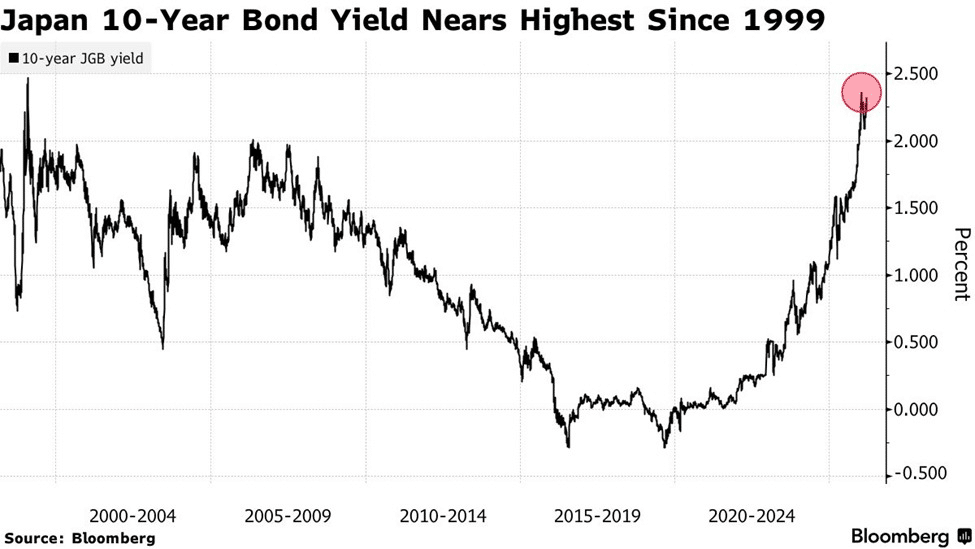
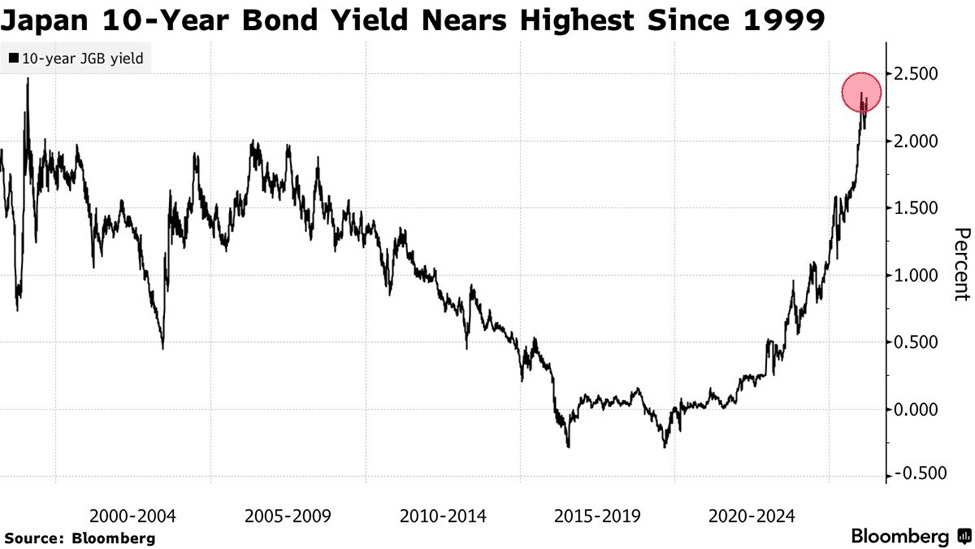
Source: Bloomberg

So naturally, the question becomes, how do crypto investors position themselves around this?

From a technical lens, USD/JPY is approaching the 160 level, reflecting sustained yen weakness against the U.S. dollar. Historically, this level has acted as a trigger point for intervention. The mechanism is critical: to support the yen, Japanese authorities intervene by selling U.S. Treasuries to buy their domestic currency.

Why does this matter? Japan is the largest foreign holder of U.S. Treasuries, with roughly $1.1 trillion in holdings. If Japan starts selling, it signals money moving out of U.S. assets and back into yen. That shift reduces demand for the dollar, putting downward pressure on it.

Historically, a weaker dollar has supported liquidity and driven capital into crypto. So the question is, with the crypto market still capped amid ongoing geopolitical uncertainty, could this weakening dollar setup be creating a longer-term bullish opportunity?

Recession fears push investors to rethink crypto exposure

The focus isn’t on oil. Instead, it’s on the U.S. bond market, where the real action is unfolding.

For context, the latest FOMC meeting kept interest rates steady, signaling that rate cuts are unlikely anytime soon. That move pushed the U.S. Dollar Index (DXY) above 100 and sent the 10-year Treasury yield up nearly 4%, back to levels last seen in July 2025.

Crypto markets reacted immediately, dropping 5.5% for the week, underscoring the familiar inverse relationship with the dollar. Yet, smart money appears unconcerned about a sustained trend, treating this as a short-term shock rather than a structural shift.
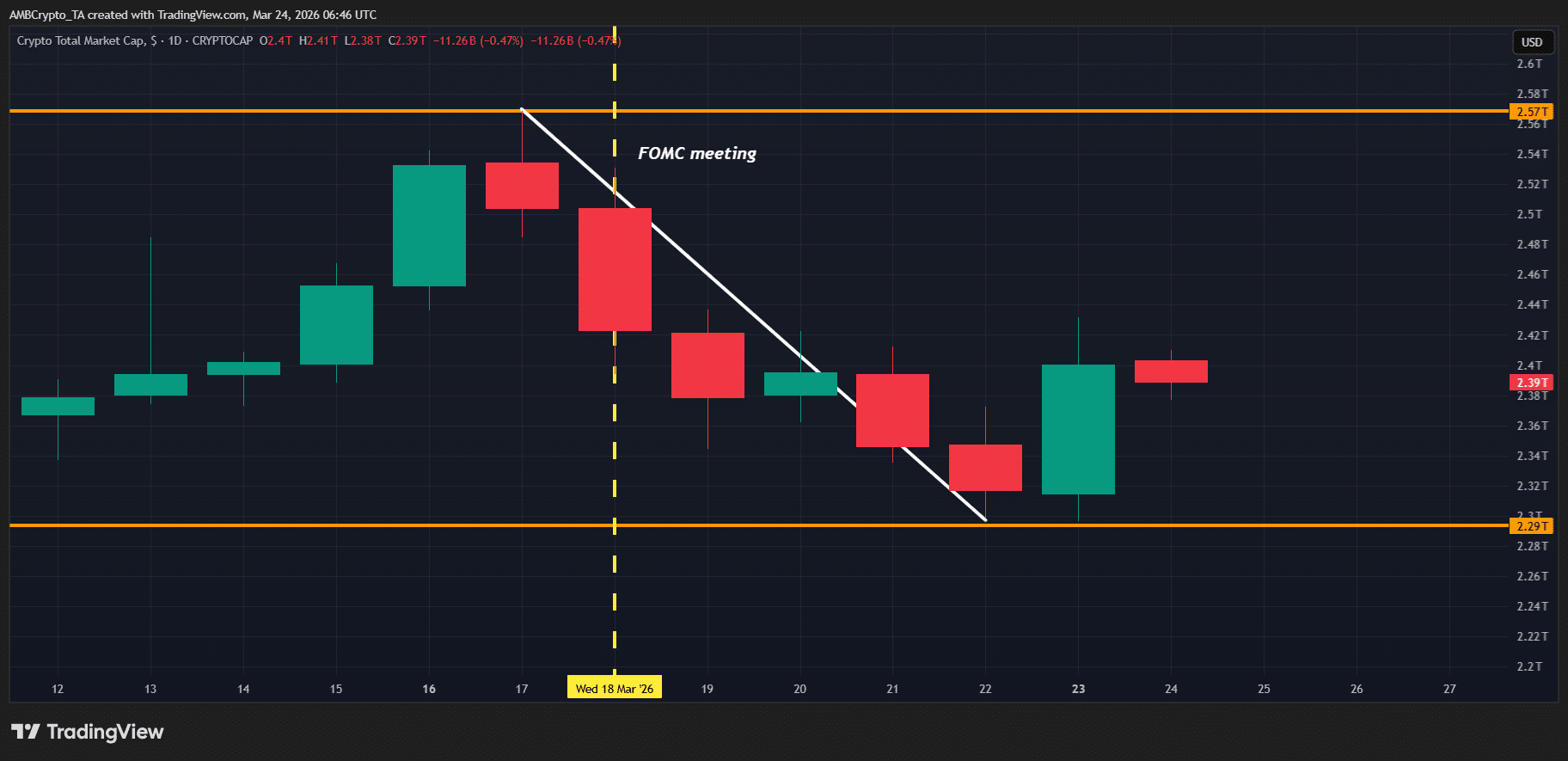
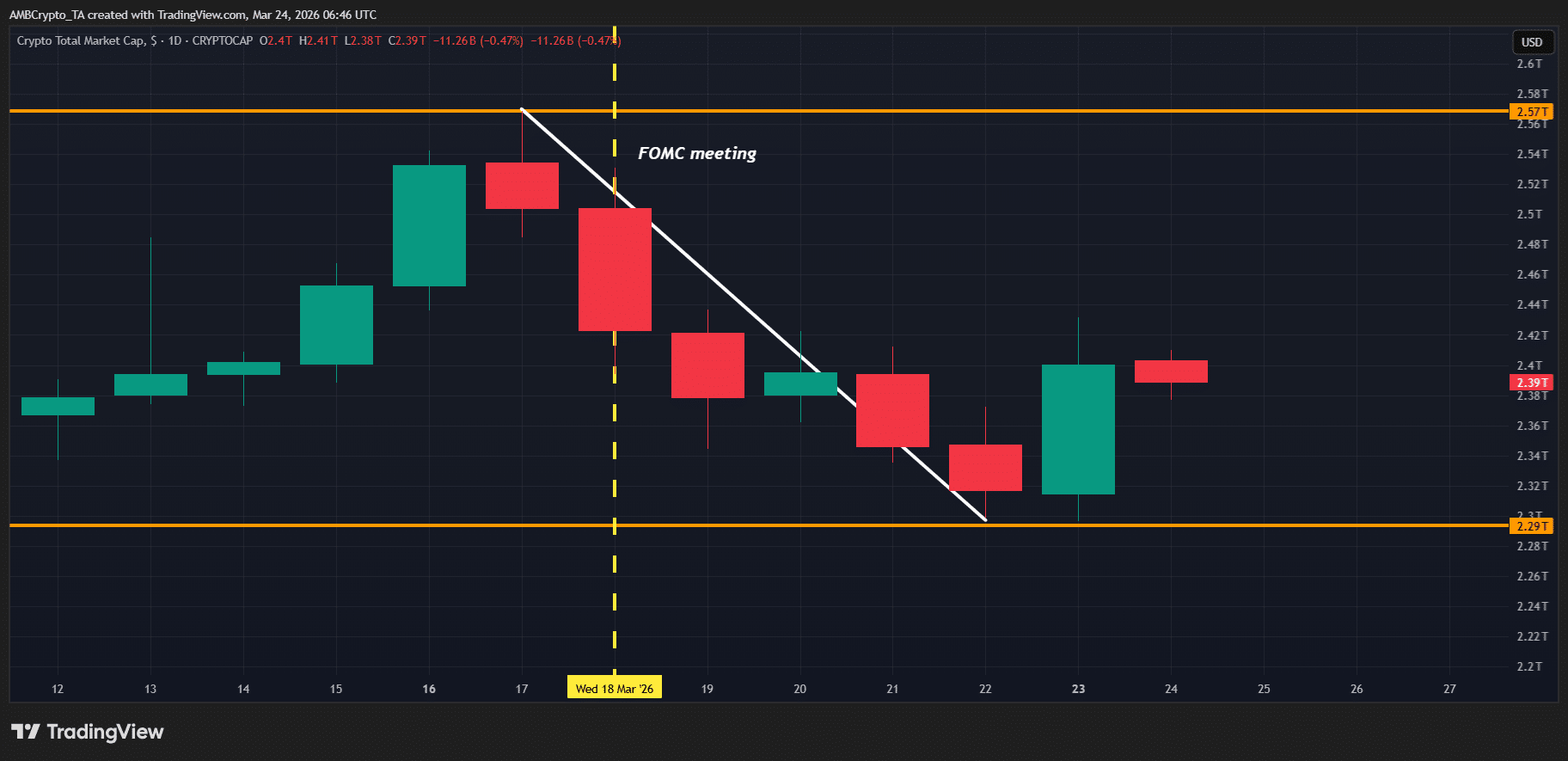
Source: TradingView (TOTAL/USD)

Goldman Sachs, for instance, has raised the U.S. recession probability to 30%, a 5 percentage point increase from prior estimates. The drivers include rising oil prices, tighter financial conditions, and ongoing Middle East tensions.

The implications are clear: slower GDP growth (1.25%-1.75% in H2) and rising unemployment (4.6%) put pressure on the economy, while the door remains open for rate cuts later this year. Notably, Japan is already showing similar stress, reflecting how these pressures are playing out across Asian markets.

Taken together, these shifts could reroute global capital flows, weigh on the U.S. dollar over time, and create potential opportunities for crypto. This suggests that much of the current volatility in risk assets is likely a short-term reaction rather than a long-term trend.


Final Summary

  • Rising yields, yen interventions, and weaker U.S. dollar conditions could create long-term opportunities for crypto.
  • The recent FOMC triggered a crypto drawdown, but smart money views it as a temporary shock rather than a lasting trend.


Domande pertinenti

QHow could Japan's rising 10-year government bond yield (2.30%) potentially create a global crypto opportunity?

AJapan's rising bond yield reflects inflationary pressures from high energy imports. To support the weakening yen, Japanese authorities may sell U.S. Treasuries (as the largest foreign holder), reducing dollar demand. Historically, a weaker dollar drives liquidity into crypto, creating a potential long-term bullish opportunity.

QWhat is the significance of USD/JPY approaching the 160 level mentioned in the article?

AThe 160 level for USD/JPY historically acts as a trigger point for intervention by Japanese authorities. To support the yen, they would sell U.S. Treasuries and buy yen, which could weaken the U.S. dollar and potentially drive capital into crypto assets.

QHow did the recent FOMC meeting impact crypto markets according to the article?

AThe FOMC kept rates steady, signaling no imminent cuts, which pushed the U.S. Dollar Index (DXY) above 100 and raised the 10-year Treasury yield. Crypto markets dropped 5.5% for the week, showing an inverse relationship with the dollar, but smart money views this as a short-term shock rather than a structural shift.

QWhy does Goldman Sachs' increased U.S. recession probability (to 30%) matter for crypto investors?

AGoldman Sachs raised the recession probability due to rising oil prices, tighter financial conditions, and Middle East tensions. This suggests potential slower GDP growth and rising unemployment, which could lead to future rate cuts, a weaker dollar, and rerouted global capital flows that may benefit crypto as an alternative asset.

QWhat key factors does the article suggest could drive long-term crypto opportunities despite short-term volatility?

AThe article highlights rising bond yields (especially in Japan), potential yen intervention leading to U.S. Treasury sales, a subsequently weaker U.S. dollar, and macroeconomic shifts like recession fears and possible future rate cuts as factors that could create long-term crypto opportunities, with current volatility seen as temporary.

Letture associate

From SpaceX's IPO to the Future of Crypto: Which Crypto Sectors Will Host the Trillion-Dollar Narrative?

From the SpaceX IPO, which targets a $750 billion raise at a $1.77 trillion valuation, we can extrapolate capital flow trends relevant to crypto. The focus shifts from speculative narratives to foundational infrastructure and real-world asset (RWA) integration. Key crypto sectors poised to benefit include: 1. **AI Infrastructure**: The narrative is moving from consumer-facing AI applications to underlying, scarce resources like compute power and decentralized GPU networks (e.g., TAO, RENDER, AKT, IO). These protocols are positioning as the essential "picks and shovels" providers for the AI economy. 2. **Real-World Assets (RWA)**: Beyond tokenized treasury bonds, RWA's future lies in on-chain equity and pre-IPO assets like SpaceX. This could democratize access to high-growth assets and reshape global capital flows, benefiting infrastructure projects like ONDO, LINK, and Plume that facilitate issuance, data, and liquidity. 3. **Core Financial Infrastructure**: Stablecoins, payment networks, and DePIN (Decentralized Physical Infrastructure Networks) are critical for settling the future on-chain economy. Their role expands from internal trading tools to foundational layers for global finance, AI systems, and real-world asset networks, leading to potential value reassessment. In summary, the next cycle may prioritize long-term infrastructure value—AI compute, asset tokenization networks, and settlement layers—over short-lived application hype, mirroring the broader market's shift towards funding the foundational systems of the future.

marsbit15 min fa

From SpaceX's IPO to the Future of Crypto: Which Crypto Sectors Will Host the Trillion-Dollar Narrative?

marsbit15 min fa

Tech Stocks Plunge and Bitcoin Slumps, Retail Investors Face Ultimate Test Ahead of SpaceX IPO

Technology stocks suffered their biggest drop in months, and Bitcoin fell below the $60,000 mark, coinciding with the eve of SpaceX's massive IPO plans. The sell-off was triggered by strong U.S. jobs data, dashing hopes for Fed rate cuts and reviving fears of further hikes. High-valuation sectors like AI and semiconductors led the declines, with the Nasdaq plunging over 4%. Cryptocurrencies, sensitive to higher interest rates and a strong dollar, also tumbled sharply. This market stress test raises critical questions about the limits of retail investor capital and its next destination. SpaceX's upcoming IPO, which plans to allocate an unusually high 30% of shares to retail investors, now faces a more uncertain landscape. Analysts warn that to buy SpaceX,散户 may need to sell existing holdings, with Tesla seen as a potential source of funds. The market is saturated with speculative options—from crypto and meme stocks to zero-day options and AI-themed ETFs—all competing for the same pool of retail attention and capital. While SpaceX's listing could inject fresh excitement, it also enters a fiercely competitive environment where investor loyalty is fleeting. The ease of zero-commission trading and lower barriers to margin trading accelerate capital rotation between narratives, making it difficult for any single story, even a historic IPO like SpaceX's, to dominate for long.

华尔街日报1 h fa

Tech Stocks Plunge and Bitcoin Slumps, Retail Investors Face Ultimate Test Ahead of SpaceX IPO

华尔街日报1 h fa

Trading

Spot
Futures
活动图片




