How crypto is used in 2025: YouTube, Pokémon cards and more

cointelegraphPubblicato 2025-12-15Pubblicato ultima volta 2025-12-15

Introduzione

In 2025, cryptocurrency is increasingly used in specific digital workflows, though not yet as everyday money. A major use case is for payments: freelancers, YouTubers, and creators receive income in stablecoins like USDC and USDT, bypassing traditional payment delays and fees. Platforms like YouTube now allow payouts via PayPal’s PYUSD. Crypto is also used for purchasing digital goods and services, such as domain registrations, VPNs, and hosting, with companies like Namecheap and Mullvad accepting it. Additionally, crypto supports the digitization of physical collectibles, with tokenized versions of items like Pokémon cards gaining popularity. In DeFi and GameFi, users engage in token swaps, yield farming, and play-to-earn games, though these remain niche. Decentralized autonomous organizations (DAOs) use crypto for onchain governance, though participation is limited to crypto-native users. While challenges like banking restrictions and bot cheating persist, crypto is growing by reducing friction in global digital transactions.

For years, one of the simplest and most effective criticisms of cryptocurrency was the same question repeated over and over: “Where can you actually use it?”

Bitcoin (BTC) was pitched as money, but outside a handful of novelty merchants, it rarely behaved like one. The question lingered through bull markets and crashes, reinforcing the idea that crypto was something to hold, trade or argue about rather than something to use.

That looks different in 2025. Crypto is still not everyday money at the checkout counter, but it is used across specific digital workflows, where speed or direct settlement are prioritized over familiarity.

Here are the places where people are actually using crypto today.

YouTubers and freelancers get paid in crypto

One of the most common ways people use crypto today is to pay for work and receive income online. Freelancers, contractors and creators use stablecoins like USDC (USDC) or Tether’s USDt (USDT) to settle payments directly between wallets, without relying on traditional payment processors.

A recent example comes from YouTube. The world’s largest video-sharing platform reportedly enabled US-based content creators to cash out using PayPal’s stablecoin, PayPal USD (PYUSD).
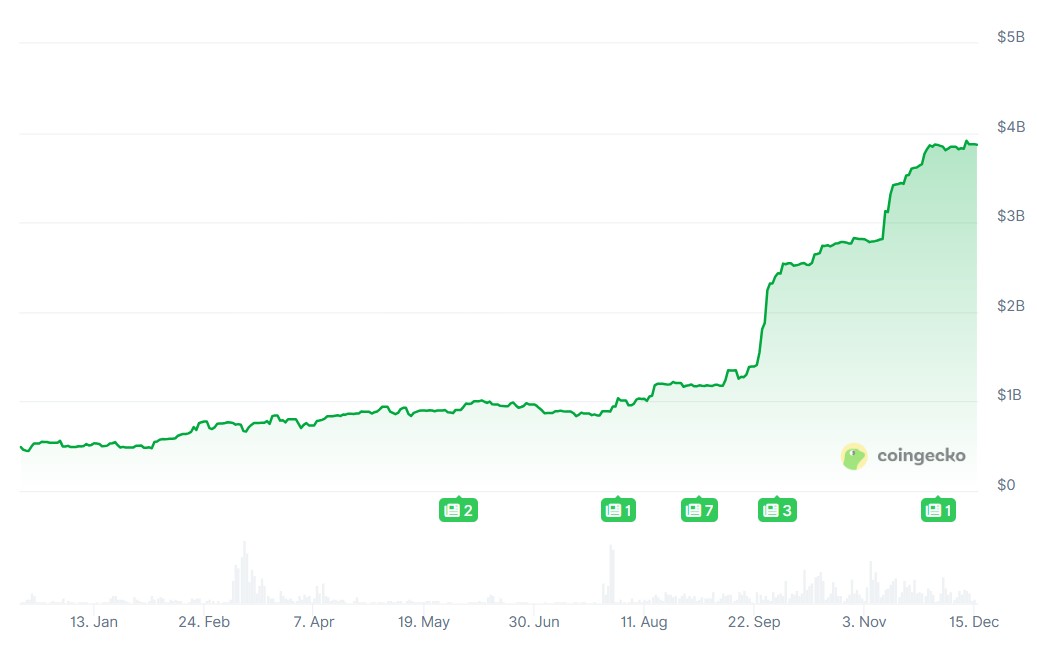
PayPal’s stablecoin is closing in on a $4-billion market capitalization. Source: CoinGecko

For clients and employers, this removes delays, fees and transfer limits that often come with international payments. This model is especially common in remote work and creator economies.

However, those who opt for crypto payments may still face difficulties when converting crypto into fiat. Industry participants have said banks continue to close or restrict the accounts of crypto firms with little explanation despite a more crypto-friendly stance taken by the current US administration.

Use crypto to purchase digital goods

Beyond paying individuals, crypto is also used to settle payments with businesses. This is most common among online services with global customers, where traditional payment systems introduce friction through fees, delays or regional restrictions.

Domain registrars, hosting providers and privacy-focused software companies are among the most visible adopters. Providers like Mullvad VPN allow customers to pay using cryptocurrency, while Namecheap and Porkbun accept crypto for domain registrations and hosting services. On Sept. 9, Namecheap CEO Richard Kirkendall said the company received a $2-million BTC payment for a domain sale.

Namesake received Bitcoin for one of its largest sales ever. Source: Richard Kirkendall

More recently, mainstream payments and commerce platforms have started integrating stablecoin payments. Stripe has enabled businesses to accept USDC payments and launched the public testnet of its own stablecoin blockchain, Tempo. Shopify has piloted stablecoin-based checkout options for merchants selling internationally.

Related: Bitcoin decouples from stocks in second half of 2025

Clearer regulatory treatment of stablecoins in the US, driven by the signing of the GENIUS Act into law, has reduced uncertainty for some merchants considering these pilots.

Digitizing and extending physical collectible cultures

Crypto has also found use in the digitization of collectible cultures that were already thriving offline. In 2025, interest in physical collectibles surged again, driven by renewed demand for Pokémon cards, Labubu figures and other toys.

Alongside that revival, digital and tokenized versions of collectibles gained traction as an extension rather than a replacement of physical collecting.

Tokenized Pokémon-style cards and digital gachas — popular randomized item vending machines — became popular ways for collectors to participate in familiar formats online, especially as marketplaces and communities shifted from binders and display cases to apps and web platforms.
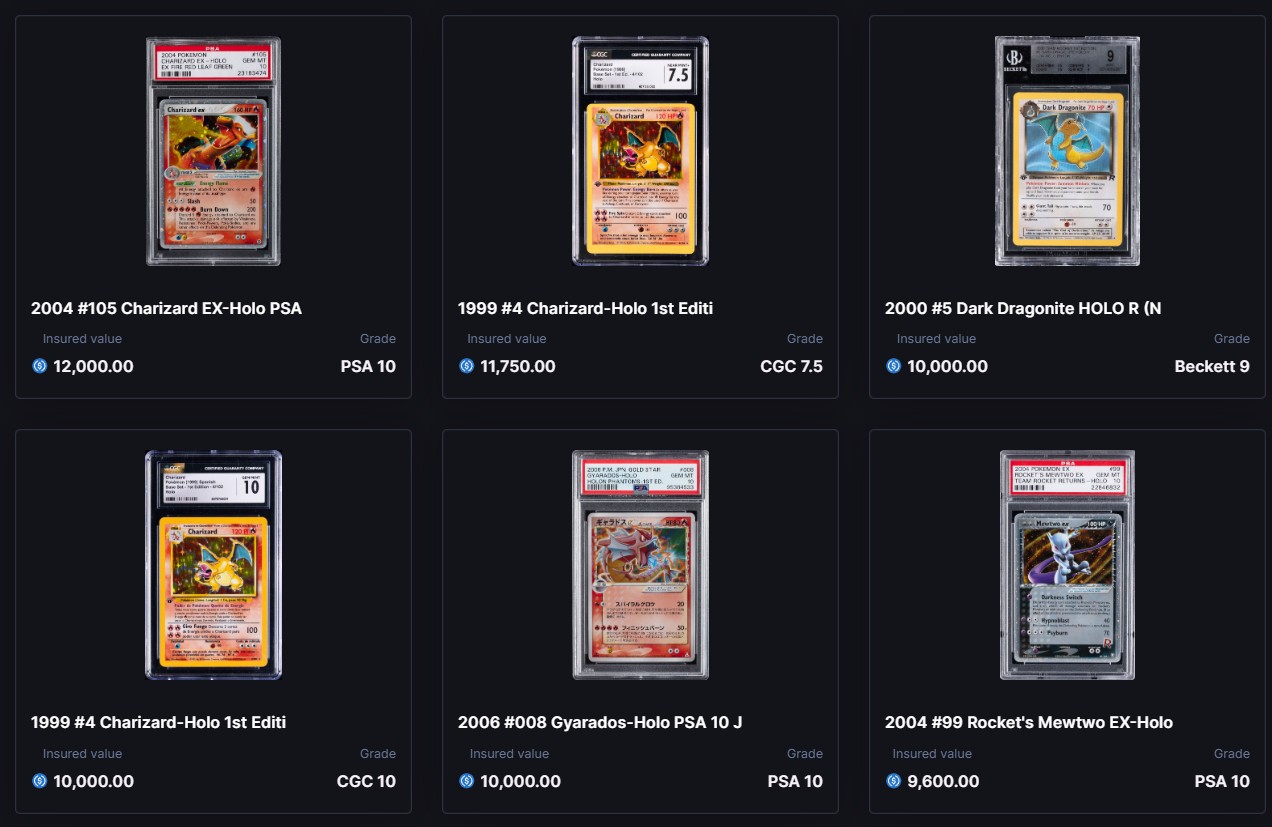
Collectors can spend between $50 and $250 to test their luck on tokenized versions of legendary Pokémon cards. Source: Collector Crypt

Crypto’s niche inside DeFi and GameFi

In decentralized finance (DeFi), users swap tokens, provide liquidity to farm yield, lend assets or borrow against collateral through smart contracts.

Blockchain-based games operate in a similar way. Often, blockchain and crypto add economic layers to games running on Web2 infrastructure. Players use crypto to buy or trade in-game items and move assets between marketplaces.

Related: How prediction markets raise insider trading and credit risks

A popular model is play-to-earn gaming, where players earn crypto through gameplay. A well-known example is Axie Infinity, which became a primary source of income for some communities in the Philippines during the pandemic. In 2025, play-to-earn games are more likely to provide extra income rather than a primary livelihood. Developers also face persistent challenges, including cheaters using bots to farm rewards, which takes value away from fair players.

According to DappRadar, World of Dypians, which operates across multiple chains, including Ethereum and BNB Chain, leads blockchain games with more than 1 million unique active wallets interacting with the game. Treasure-collecting game Pixudi Runs, which also operates across multiple chains, such as Sei and Polygon, ranks second with nearly 570,000 active wallets.
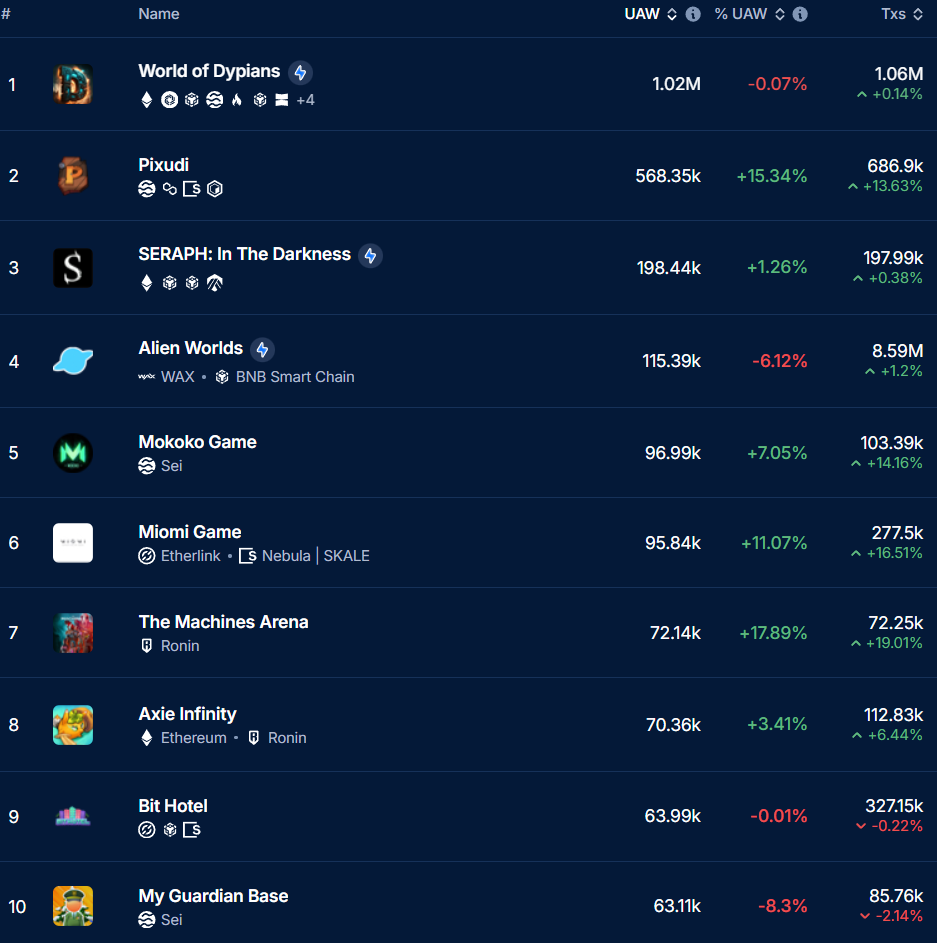
Blockchain games remain niche but attract thousands of active wallets daily. Source: DappRadar

Running organizations with crypto onchain

Deeper in DeFi, crypto is used to coordinate decentralized autonomous organizations (DAOs). In these groups, tokenholders are the members. They use their tokens to vote on proposals, approve spending and decide how the organization is run. Votes are recorded onchain, and once a proposal passes, actions such as payments or rule changes are carried out automatically through smart contracts.
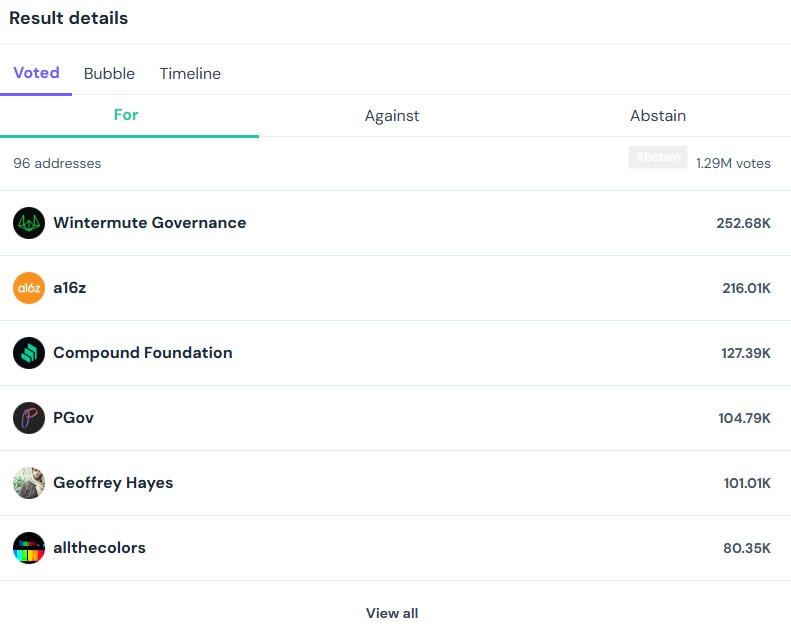
Voting power is concentrated among large tokenholders, many of whom often abstain from governance votes. Source: Tally

DAOs are mostly used to manage crypto-native projects. Taking part usually means holding governance tokens, navigating onchain voting proposals and managing a wallet. These requirements make DAO governance impractical for most casual users.

As a result, DAOs remain largely the domain of people already active in the crypto ecosystem.

Crypto’s current uses are broader than its early ambitions, and development continues. Financial companies are using blockchains to tokenize real-world assets, settle transactions with stablecoins and test onchain versions of traditional financial products.

Other experiments, such as wallet-based identity systems and Bitcoin-backed lending, remain in early stages. But they follow familiar patterns, with crypto most likely to integrate into existing services and remove frictions created by intermediaries.

Magazine: Big questions: Would Bitcoin survive a 10-year power outage?

Letture associate

Lightning Fast Five-Whip Combo! Strategy's Self-Rescue Plan Officially Released

Strategy, amidst the STRC de-pegging crisis, has unveiled its "Digital Credit Capital Framework" self-rescue plan. The five-part framework includes: 1) **Cash Reserves**: Management of ~$2.55B in USD reserves, dedicated solely to covering ~17.4 months of preferred stock dividends and debt interest, with a 12-month minimum coverage floor. 2) **Dividend Policy**: STRC's dividend yield rises to 12% from July 1st, with monthly reviews. Strategy clarifies de-pegging does not automatically trigger further hikes. 3) **Preferred Stock Buyback**: A $1B authorization, prioritizing STRC repurchases to support its price, reduce future dividend obligations, and signal commitment, using funds separate from dividend reserves. 4) **Common Stock Buyback**: A separate $1B authorization for MSTR stock, aimed at creating shareholder value when the stock is deemed undervalued, establishing a two-way capital management mechanism. 5) **Bitcoin Monetization**: Formal authorization to sell BTC (up to $1.25B earmarked) to build USD reserves, cover dividends/interest, or fund buybacks, marking a strategic shift where BTC becomes a managed asset rather than a strictly "hold-only" reserve. Market reaction saw MSTR and STRC shares rise pre-market, while BTC remained stable. The plan aims to restore confidence in STRC, ensure dividend sustainability, and reopen Strategy's funding channels.

Odaily星球日报57 min fa

Lightning Fast Five-Whip Combo! Strategy's Self-Rescue Plan Officially Released

Odaily星球日报57 min fa

The Sword of Damocles Over the AI Bull Market: Not Just in South Korea, Leverage in U.S. Stocks Is Equally Staggering

Global equity markets are hitting new highs driven by the AI boom, but the fuel behind this rally is becoming increasingly dangerous. From the US to South Korea, margin debt and leveraged ETF assets have soared to historical extremes, with their pro-cyclical nature amplifying tail risks in market volatility. In the US, margin debt rose 54% year-over-year in May, reaching a record $1.4 trillion. Simultaneously, leveraged ETF assets nearly doubled in under 70 days to over $220 billion by early June, with intense focus on tech, semiconductor indices, and single stocks like NVIDIA and Tesla. A warning sign appeared in South Korea, where the KOSPI index experienced extreme volatility, plunging 10% to trigger a circuit breaker, then sharply rebounding before halting again, partly driven by concentrated, highly leveraged positions in chip stocks. Analysts are raising alarms. Barclays warns that leveraged funds have accumulated roughly $300 billion in equity-linked derivatives since late March, creating a major source of non-discretionary risk. Morgan Stanley notes an unprecedented reliance on leveraged financing by marginal buyers, with financing becoming more expensive and scarce. Charles Schwab has tightened margin requirements. The core risk lies in the mechanics: leveraged ETFs and derivatives can create a "tail wags the dog" effect, where fund flows force market makers to buy underlying stocks, amplifying gains. This process reverses in a downturn, triggering a self-reinforcing selling spiral as funds deleverage. Additionally, the cost of borrowing to buy stocks has spiked to multi-year highs. Morgan Stanley warns this sets up a nonlinear risk: high financing costs stall momentum, a price decline triggers forced deleveraging, and selling pressure is multiplied by leverage, potentially leading to outsized declines. The current market breadth is narrow, with gains heavily concentrated in tech, making the rally vulnerable to a pullback in leveraged positions. In summary, the AI-fueled bull market is increasingly propped up by record leverage. When this trend reverses, the deleveraging process could magnify losses, posing a significant threat to financial stability.

marsbit1 h fa

The Sword of Damocles Over the AI Bull Market: Not Just in South Korea, Leverage in U.S. Stocks Is Equally Staggering

marsbit1 h fa

Strategy Launches 'Digital Credit Capital Framework': Authorizes Sale of $12 Billion in Bitcoin, Ending the 'Never Sell' Script

Strategic, the world’s largest corporate holder of Bitcoin (formerly MicroStrategy), has dramatically shifted its long-standing “never sell Bitcoin” strategy by announcing a new “Digital Credit Capital Framework” on June 29. This plan authorizes the sale of up to $1.25 billion worth of Bitcoin to raise cash, establishes a $2.55 billion USD reserve, increases the dividend rate on its STRG preferred shares to 12%, and authorizes up to $1 billion each for repurchases of its own digital credit securities and Class A common stock. This pivot comes amid severe financial pressure. The company’s STRG preferred shares are trading at a ~24% discount to their $100 face value, making new issuances difficult and stalling its buy-Bitcoin funding flywheel. Its annualized dividend obligation has surged to ~$1.2 billion. Meanwhile, its MSTR stock has plummeted 36% in eight days, erasing its traditional premium over its Bitcoin holdings per share. In recent weeks, Strategic has already shifted focus from accumulating Bitcoin to bolstering cash reserves by selling its own MSTR shares. The new framework formalizes this defensive turn, aiming to ensure liquidity, cover dividends, and support its securities prices through buybacks. However, the move risks triggering a “death spiral” if Bitcoin sales pressure the market, further devaluing the company’s core asset. The company also faces a potential securities investigation and carries significant debt, with Bitcoin’s current price below its average acquisition cost.

marsbit1 h fa

Strategy Launches 'Digital Credit Capital Framework': Authorizes Sale of $12 Billion in Bitcoin, Ending the 'Never Sell' Script

marsbit1 h fa

Trading

Spot
活动图片