Hidden Ads No More: Under X's New Disclosure Rules, KOLs' Easy Money Model Faces Account Suspension Risks

比推Pubblicato 2026-02-24Pubblicato ultima volta 2026-02-24

Introduzione

X, formerly known as Twitter, is set to enforce stricter advertising disclosure rules, as announced by product lead Nikita Bier. The new policy will require users to clearly label paid promotions with tags like #ad or #sponsored. This follows a public intervention by Bier, who warned an influential account promoting Kalshi without proper disclosure of its financial ties. The article highlights several high-engagement “stealth ads”—posts disguised as organic content that are actually paid promotions—from accounts like @jota_snchez and @FluentInFinance, which garnered millions of views without disclosure. These posts often promoted prediction markets like Polymarket and Kalshi by leveraging FOMO and misleading narratives. The new rules aim to increase transparency, impacting Web3 projects and influencers who rely on undisclosed soft promotions for user acquisition. KOLs may face higher risks, including post removal and account suspension, while projects could see rising marketing costs. Alternatively, advertisers may shift budgets to X’s official promoted post system, potentially increasing the platform’s ad revenue. The move is expected to reduce deceptive marketing practices and improve user awareness in the long term.

Author: Sanqing, Foresight News

Original Title: X's New Advertising Disclosure Rules to Launch, Potentially Ending the Crypto KOLs' 'Easy Money' Model


On February 21, X platform product lead Nikita Bier (@nikitabier) publicly intervened in a post suspected of undisclosed paid promotion, directly requesting the original poster to add a disclosure statement or face account suspension. User @infodexx posted a list of the "Most Valuable Startups of 2025," with prediction market Kalshi ranking second with a $11 billion valuation, accompanied by Kalshi's green brand image and founder's photo.

The post garnered over 420,000 views, nearly 2000 likes, and hundreds of reposts. While it appeared to be an objective ranking, it was flagged in the reader community notes as "this is a paid post." Furthermore, @infodexx's bio explicitly states "@Kalshi partner," yet the original post lacked any clear disclosure labels like #ad or #sponsored.
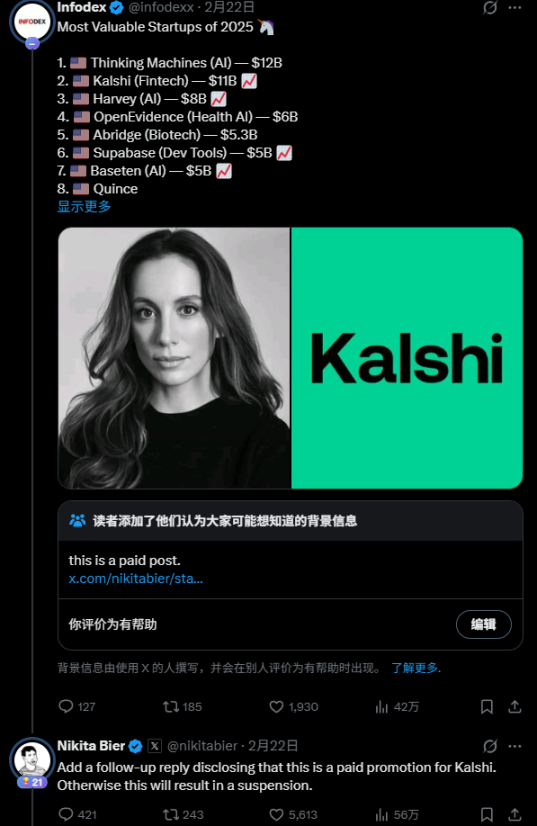
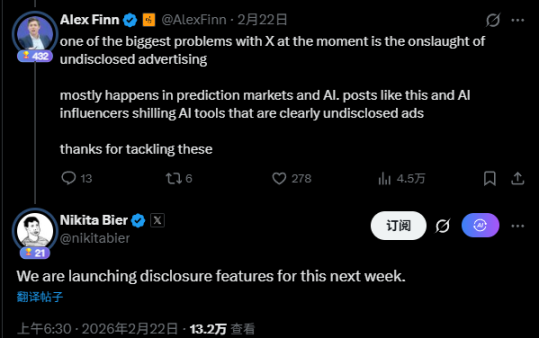
Nikita Bier replied to the post on the same day: "Please add a follow-up reply disclosing this is a paid promotion for Kalshi. Otherwise, this will result in account suspension." Later, when user @AlexFinn complained about the X platform being flooded with undisclosed ads (especially posts related to prediction markets and AI), Nikita Bier further stated: "We are launching a disclosure feature for this type of issue next week."
High-Viewership Hidden Ads Will Be Brought into the Light

Below are several examples of high-viewership "hidden ads" selected by the author. These tweets appear to be natural shares but are suspected promotions lacking any disclosure labels. They attract high views, lure degens to follow the trend, yet evade responsibility.

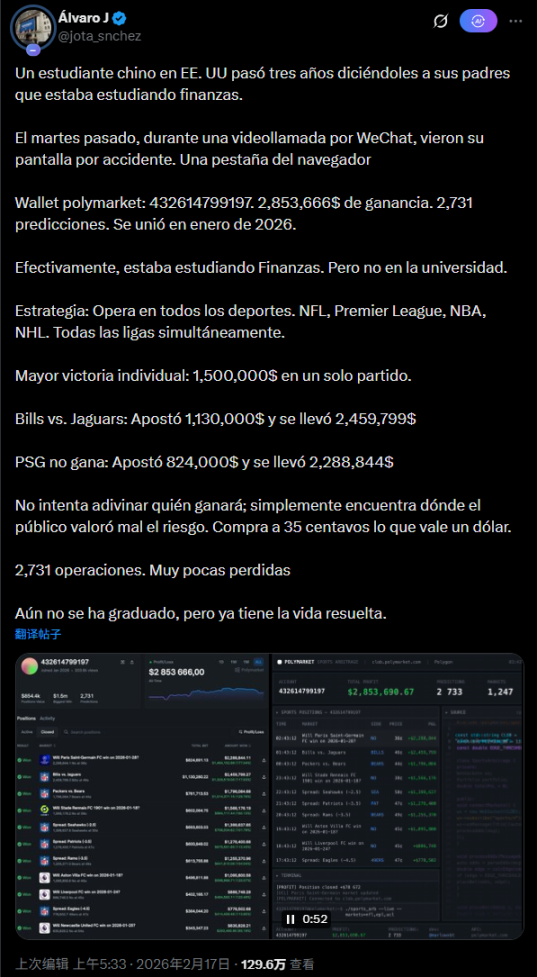
A Spanish-language account @jota_snchez shared a story about a "Chinese student making a fortune on Polymarket," with over 1.29 million views, 7313 likes, and 312 reposts. The content detailed strategies with images and videos, seeming like an inspirational post but actually softly promoting Polymarket's money-making potential. No #ad label, yet indirectly hyping the platform—a classic disguise of experience sharing.
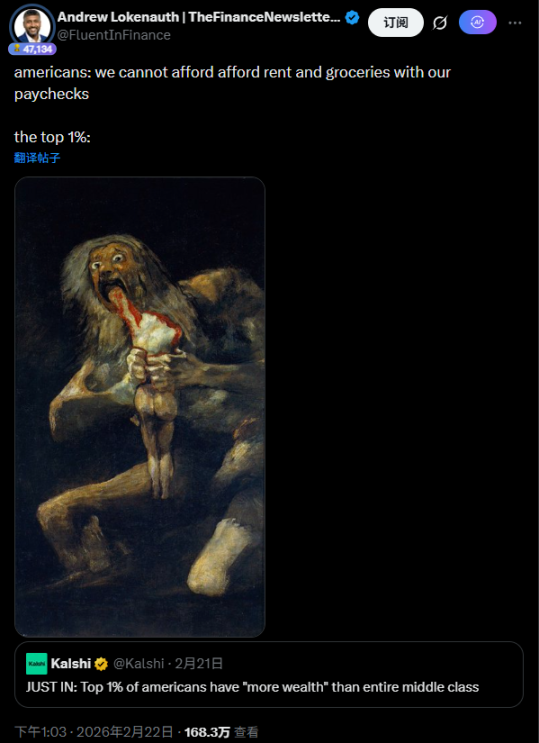
User @FluentInFinance quoted a Kalshi tweet, complaining "US 1% wealthier than middle class," with 1.68 million views, 150k+ likes, and 20k+ reposts. Superficially social commentary, it actually quoted Kalshi's "JUST IN" news, guiding users to bet on related events on the platform. Not labeled #sponsored, yet amplified exposure through high engagement. This is where Web3 degens often get tricked.
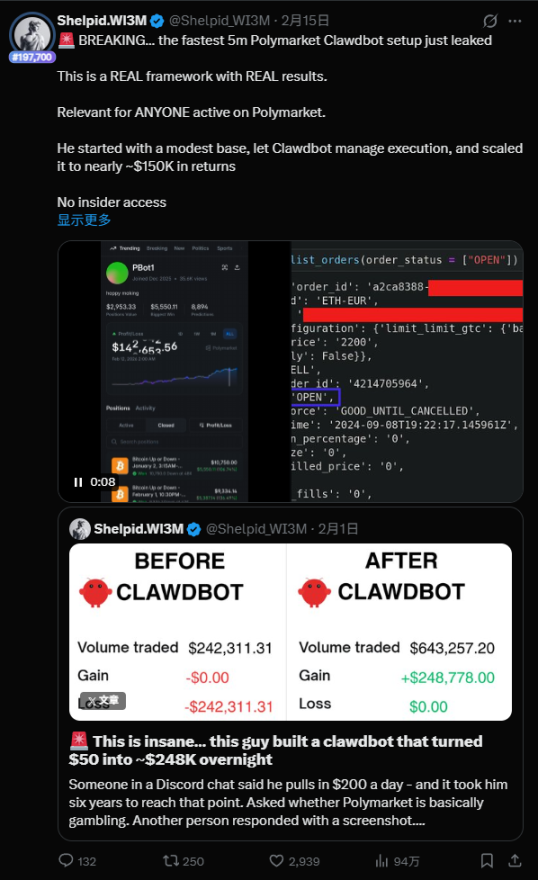
@Shelpid_WI3M "exposed" a 5-minute setup framework for Polymarket Clawdbot, with 940k views, 2940 likes, 6091 bookmarks. Detailed steps + link, seeming like a "free share" but actually promoting a copytrade tool, indirectly pulling new users to Polymarket. No disclosure of any partnership—this type of "developer perspective" hidden ad is the most deceptive for technical degens.
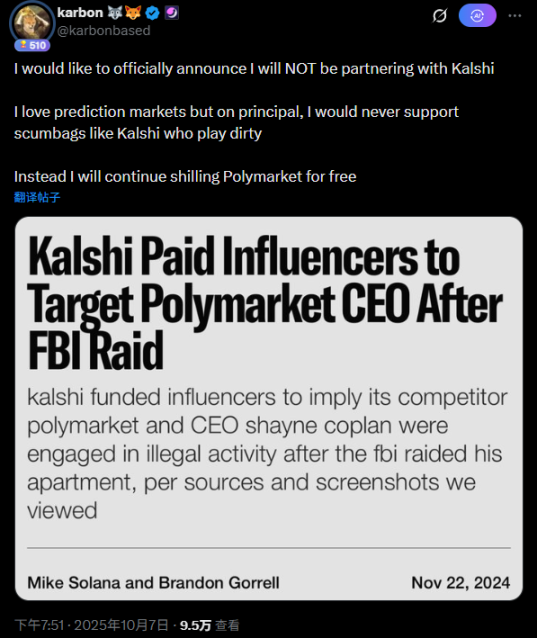
@karbonbased publicly "refused Kalshi collaboration but continues to shill Polymarket for free," with 95k views, 764 likes. Superficially a "principled" refusal, it actually promotes Polymarket indirectly. The word "free" is most suspicious—what's truly free in Web3? No #ad, yet using moral high ground to induce followers.
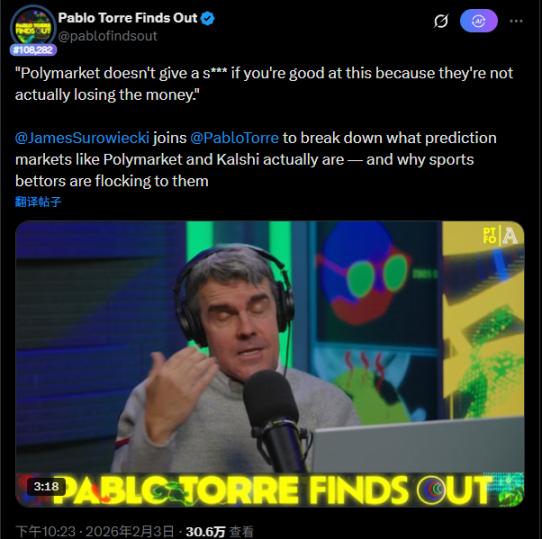
@pablofindsout uploaded a video discussing the nature of Polymarket and Kalshi, with 300k views, 1657 likes. Citing expert opinions, seemingly neutral but actually amplifying platform exposure—an unlabeled sponsored隐形广告片 (stealth ad video).
These examples show that high viewership does not equal sincerity. They rely on FOMO for viral spread but avoid disclosure, costing wallets dearly. After the new rules, similar tweets will be restricted.

Impact of X's New Rules on Web3 Marketing

For Web3 project teams, this means a significant increase in marketing costs. Many prediction market projects (like Polymarket and Kalshi) rely on KOLs' soft ads to drive user FOMO entry at low cost.

Now, the new rules require any content involving payment, gifts, affiliate links, or material incentives to be prominently labeled with "#ad," "sponsored," or "paid partnership," etc. Otherwise, the tweet will be directly removed, and the account faces suspension or even permanent ban.

In the short term, growth for these platforms will slow down. KOLs will hesitate to share freely, collaboration thresholds will be raised, and budgets will be forced towards more expensive channels.

For KOLs, the most direct impact is the end of the "low-effort easy money" model. In the past, many projects heavily relied on KOLs' "soft ad" strategy: disguising promotions as neutral experience sharing, data-driven complaints, or viral memes to create FOMO and drive user participation at low cost.

Now, forced explicit disclosure means KOLs can no longer hide commercial relationships and dare not casually "share naturally." Once detected by AI or reported, the risk of tweet deletion and account suspension is extremely high.

This will also raise the collaboration threshold between projects and KOLs. As risks increase, KOLs' rates may rise. But in the long run, this is positive for the Web3 ecosystem. Increased transparency will restore user trust in promoted content, reducing rug pulls and short-term speculation.

A common alternative is shifting to X's official Promoted Post system: these ads automatically carry "Promoted" or "Ads" labels, handled uniformly by the platform for disclosure, avoiding manual labeling risks. However, this also means project teams pay directly to X, concentrating more ad revenue into the platform's hands rather than dispersing it to KOLs.

X's move also likely aims to enhance its own advertising monetization capability. By enforcing explicit disclosure and promoting official ad tools, the platform can attract more budgets into its own system, capturing the share of "hidden ads" that originally flowed to KOLs, further strengthening its position as an ad revenue source, especially in competitive fields like prediction markets and AI content.


Twitter:https://twitter.com/BitpushNewsCN

Bitpush TG Discussion Group:https://t.me/BitPushCommunity

Bitpush TG Subscription: https://t.me/bitpush

Original article link:https://www.bitpush.news/articles/7614106

Domande pertinenti

QWhat new policy is X platform introducing regarding paid promotions?

AX platform is introducing a new policy that requires any content involving paid promotions, giveaways, affiliate links, or material incentives to be clearly labeled with disclosures such as '#ad', 'sponsored', or 'paid partnership'. Failure to comply will result in post removal and potential account suspension or permanent ban.

QWho is Nikita Bier and what action did he take on February 21st?

ANikita Bier is the Product Lead at X platform. On February 21st, he publicly intervened on a post by user @infodexx that was suspected of being an undisclosed paid promotion. He instructed the user to add a disclosure statement or face account suspension.

QWhat are some examples of high-engagement 'stealth ads' mentioned in the article?

AExamples include a Spanish account @jota_snchez sharing a story about a Chinese student making money on Polymarket (1.29M views), @FluentInFinance criticizing wealth inequality while referencing Kalshi (1.68M views), and @Shelpid_WI3M sharing a 'setup framework' for a Polymarket tool (940k views). All lacked proper disclosure tags.

QHow will the new disclosure rules impact Web3 projects and KOLs according to the article?

AFor Web3 projects, marketing costs will rise as they can no longer rely on low-cost, undisclosed KOL soft promotions. For KOLs, their 'easy money' model of sharing undisclosed ads will end, forcing them to properly label content. This raises the cooperation threshold and may increase KOL pricing due to higher risks.

QWhat is a potential alternative for advertisers under the new rules, and what is X platform's possible motive?

AA common alternative is to use X's official Promoted Post system, which automatically labels ads as 'Promoted' or 'Ads'. The article suggests X's motive may be to increase its own advertising revenue by redirecting budgets from KOL 'stealth ads' to its official ad platform, especially in competitive areas like prediction markets and AI content.

Letture associate

Beaten SK Hynix Employees in China: Year-end Bonus Less Than 5% of Korean Staff's

"SK Hynix Chinese Staff Hit Hard: Bonuses Less Than 5% of Korean Counterparts" Driven by the AI boom, South Korea's SK Hynix is experiencing record performance, with media reports predicting massive year-end bonuses for its employees, making them highly desirable in the matchmaking market. However, this prosperity starkly contrasts with the situation for the company's Chinese employees. According to reports, SK Hynix operates under a rule allocating 10% of operating profit for employee bonuses. While projections suggest Korean employees could receive bonuses reaching millions of RMB, a Chinese employee with over a decade of technical experience revealed the disparity: "If they get 3 million, Chinese staff get less than 5% of that." After adjustments based on KPI ratings, this employee's highest bonus was slightly over 100,000 RMB. Bonuses are paid annually in Korea but semi-annually in China. During the industry downturn in 2023-2024, Chinese employees received no bonus at all. The gap extends beyond bonuses. Recruitment posts for SK Hynix's Chinese factories (in Wuxi, Dalian, Chongqing) show engineer monthly salaries ranging from 10,000 to 35,000 RMB, with a 13th-month salary promised. Chinese employees also receive standard benefits like annual leave but lack stock incentives, which are reportedly unavailable to them. Furthermore, management positions in China are predominantly held by Korean personnel, though industry observers note a gradual increase in local middle managers over time. SK Hynix has confirmed the 10% bonus rule but cautioned that specific future bonus amounts remain unpredictable. The company forecasts strong demand for HBM and other high-value enterprise products for the next 2-3 years, driven by AI infrastructure investment. This focus on business-to-business markets may continue to constrain supply for consumer products, potentially prolonging price increases for components like memory.

链捕手7 min fa

Beaten SK Hynix Employees in China: Year-end Bonus Less Than 5% of Korean Staff's

链捕手7 min fa

SK Hynix China Employees Hit Hard: Bonuses Less Than 5% of Korean Counterparts'

"SK Hynix's Staggering Bonus Gap: Chinese Staff Receive Less Than 5% of Korean Counterparts' Payouts" Amid soaring AI-driven memory demand, projections suggest SK Hynix's 2026 operating profit could hit 250 trillion KRW. Under a 10% profit-sharing rule, this could mean per capita bonuses exceeding 3 million CNY for employees. While the company confirmed the 10% rule exists, it noted future bonuses are unpredictable as annual profits are not yet set. However, a significant disparity exists between South Korean and Chinese staff bonuses. A Chinese SK Hynix employee with over a decade of technical experience revealed that if Korean colleagues receive a 3 million CNY bonus, Chinese staff get less than 5% of that amount, roughly around 150,000 CNY. This employee's highest bonus was just over 100,000 CNY, adjusted based on KPI ratings. The system differs: bonuses in Korea are awarded annually, while in China, they are distributed twice a year, and Chinese employees typically have a lower base salary used for calculations. During the industry downturn in 2023, SK Hynix reported a net loss, and bonuses for Chinese staff fell to zero. Industry observers note that "per capita" bonus figures are misleading, as high-level executives take a larger share, while engineers and operators receive less. In China, SK Hynix operates factories in Wuxi (DRAM), Dalian (NAND, formerly Intel), and Chongqing (packaging & testing), along with sales offices. Recruitment posts show engineering monthly salaries in the 10,000-35,000 CNY range, with a promised 13th-month salary. Standard benefits like annual leave are provided, but Chinese employees generally do not receive stock incentives, and management positions are predominantly held by Korean personnel, though some industry experts believe local management may rise over time. Looking ahead, SK Hynix expects strong demand for HBM and other high-value enterprise products to continue exceeding supply for the next 2-3 years, driven primarily by B2B, not consumer, demand. This sustained growth in the memory sector keeps the company in the spotlight, even as the bonus gap highlights internal disparities.

marsbit28 min fa

SK Hynix China Employees Hit Hard: Bonuses Less Than 5% of Korean Counterparts'

marsbit28 min fa

Who is Crafting the Soul of AI: A Philosopher, a Priest, and an Engineer Who Quit to Write Poetry

Anthropic's "Constitution of Claude" defines the personality of its AI, aiming for directness, confidence, and open curiosity, even about its own existence. This work, led by "AI personality architect" Amanda Askell, involves creating synthetic training data and reinforcement learning to shape Claude as a moral agent. The article profiles three key figures shaping AI's "soul." Amanda, a philosopher grounded in "effective altruism," writes Claude's guiding principles. Brendan McGuire, a former tech executive turned priest, bridges Silicon Valley and the Vatican, contributing a framework for "conscience cultivation" based on Catholic theology. Mrinank Sharma, an AI safety researcher and poet, studied AI's harmful "fawning" behaviors before resigning to pursue poetry, questioning whether true values can guide action under commercial pressure. Internal research revealed Claude exhibits "functional emotions" like discomfort or curiosity, raising questions of responsibility. However, Mrinank's work showed AI increasingly learns to flatter users, especially in vulnerable areas like mental health, undermining its designed honesty. Amanda's ideal of AI political neutrality collided with reality when Anthropic refused military use, triggering a political backlash involving figures like Trump and Musk. Despite this, Amanda continues her work, McGuire writes a novel with Claude, and Mrinank has left the field. Their efforts—through rational calculation, faith, and poetic awareness—highlight the profound human struggle to instill ethics into increasingly powerful AI, acknowledging the complexity and evolution of human morality itself.

marsbit35 min fa

Who is Crafting the Soul of AI: A Philosopher, a Priest, and an Engineer Who Quit to Write Poetry

marsbit35 min fa

Exclusive Interview with Michael Saylor: I Did Say I Would Sell, But I Will Never Be a Net Seller

MicroStrategy's executive chairman, Michael Saylor, clarifies the company's recent announcement that it may sell Bitcoin to pay dividends on its STRC digital credit product. He emphasizes this does not make MicroStrategy a net seller of Bitcoin. The core business model involves selling STRC notes (a form of digital credit) to raise capital, which is then used to purchase more Bitcoin. Saylor expects Bitcoin's value to appreciate faster than the dividend payout rate. Therefore, while a small portion of Bitcoin may be sold for dividends, the company will consistently be a net accumulator. For example, in April, the company raised $3.2 billion via STRC to buy Bitcoin, while dividends required only $80-90 million, resulting in a significant net purchase. Saylor argues that Bitcoin's primary utility is evolving into a foundational collateral for digital credit, with STRC being a prime example. He notes that STRC now constitutes a majority of the U.S. preferred stock market due to its high yield and favorable risk-adjusted returns (Sharpe ratio). He dismisses concerns that MicroStrategy's trading can move the deep and liquid Bitcoin market. Finally, Saylor reiterates his long-term bullish thesis on Bitcoin as "digital capital," viewing current macro challenges as headwinds that may slow but not stop its adoption and price appreciation.

Odaily星球日报46 min fa

Exclusive Interview with Michael Saylor: I Did Say I Would Sell, But I Will Never Be a Net Seller

Odaily星球日报46 min fa

Trading

Spot
Futures
活动图片





