Global debt markets show dollar dominance moves in cycles, US Fed says

cointelegraphPubblicato 2025-12-18Pubblicato ultima volta 2025-12-18

Introduzione

A new Federal Reserve discussion paper reveals that the U.S. dollar’s dominance in global debt markets has moved in cycles over the past 60 years, with no clear long-term trend toward either dollarization or de-dollarization. The study identifies three distinct "dollarization waves" since the 1960s, showing currency usage shifts are cyclical rather than structural. As of 2024, emerging markets still rely heavily on dollar-denominated debt, which makes up about 80% of their international bonds. Meanwhile, the rise of dollar-pegged stablecoins like USDT and USDC—which together represent 85% of the $309.6 billion stablecoin market—has reinforced dollar dominance. These stablecoins are backed significantly by U.S. Treasury holdings, making their issuers major holders of U.S. government debt. The report concludes that despite vulnerabilities, the dollar’s global role remains unchallenged due to a lack of alternatives. Efforts to internationalize other currencies, including the Chinese renminbi, have seen limited success. European policymakers have expressed concern over the growing influence of dollar-backed stablecoins.

A new Federal Reserve discussion paper finds that the US dollar’s role in global bond markets has risen and fallen in cycles over the past six decades, with no clear long-term trend toward either greater dollar dominance or de-dollarization.

Using the Bank for International Settlements’ (BIS) international debt securities database, the authors identify three distinct “dollarization waves” since the 1960s, showing that shifts in currency use have followed cyclical patterns rather than a steady structural change in global financing.

“We find no monotonic dollarization or de-dollarization trend; instead, the dollar’s share exhibits a wavelike pattern,” the paper says.

The most recent wave emerged after the 2008 global financial crisis, when the dollar regained market share in international bond issuance, climbing back toward levels seen before the surge in euro-denominated bond issuance in the early 2000s, according to the report.
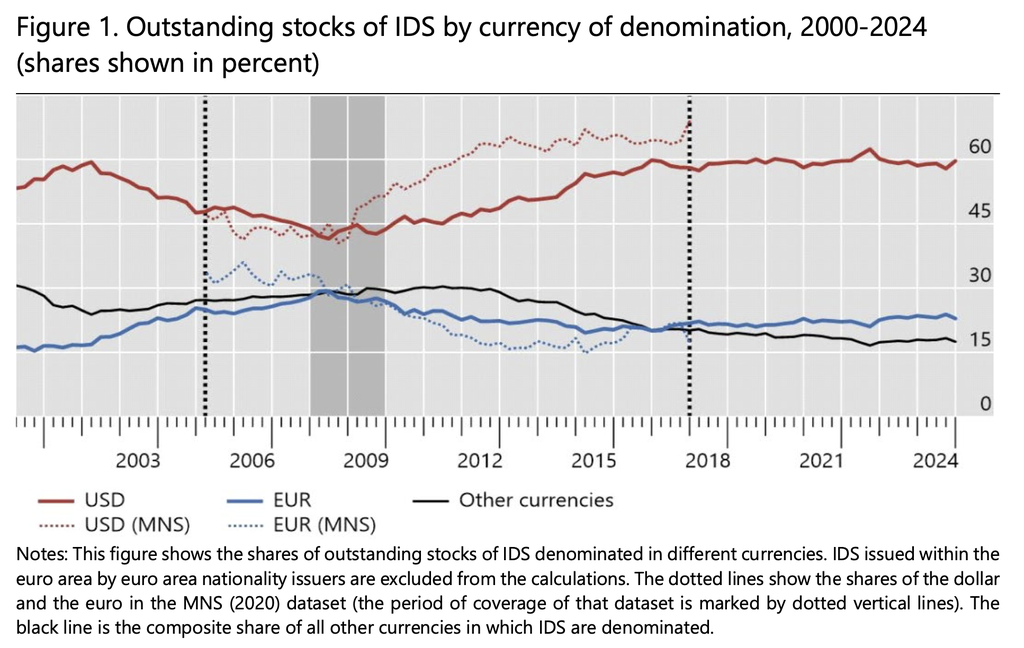
Share of international debt issued by currency, 2000–2024. Source: Federalreserve.gov

The study also found that, as of 2024, emerging market issuers still rely predominantly on dollar-denominated debt, which accounts for about 80% of their outstanding international bonds, while efforts by China begun in 2010 to internationalize its currency, the renminbi, have produced only modest gains.

“While the dollar’s eminence rests on vulnerable foundations, the absence of viable alternatives has left the dollar’s primacy unchallenged,” the report said.

Related: Intuit to use Circle’s stablecoin for financial platforms

Stablecoins back US Treasurys

The global stablecoin market has expanded sharply over the past year, growing to roughly $309.6 billion from $205.5 billion in December 2024, according to DefiLlama data.

Most of that growth has been concentrated in US dollar-pegged tokens, with Tether’s USDt (USDT) and Circle’s USDC (USDC) together accounting for about 85% of total stablecoin supply, or roughly $264 billion of the market at the time of writing.
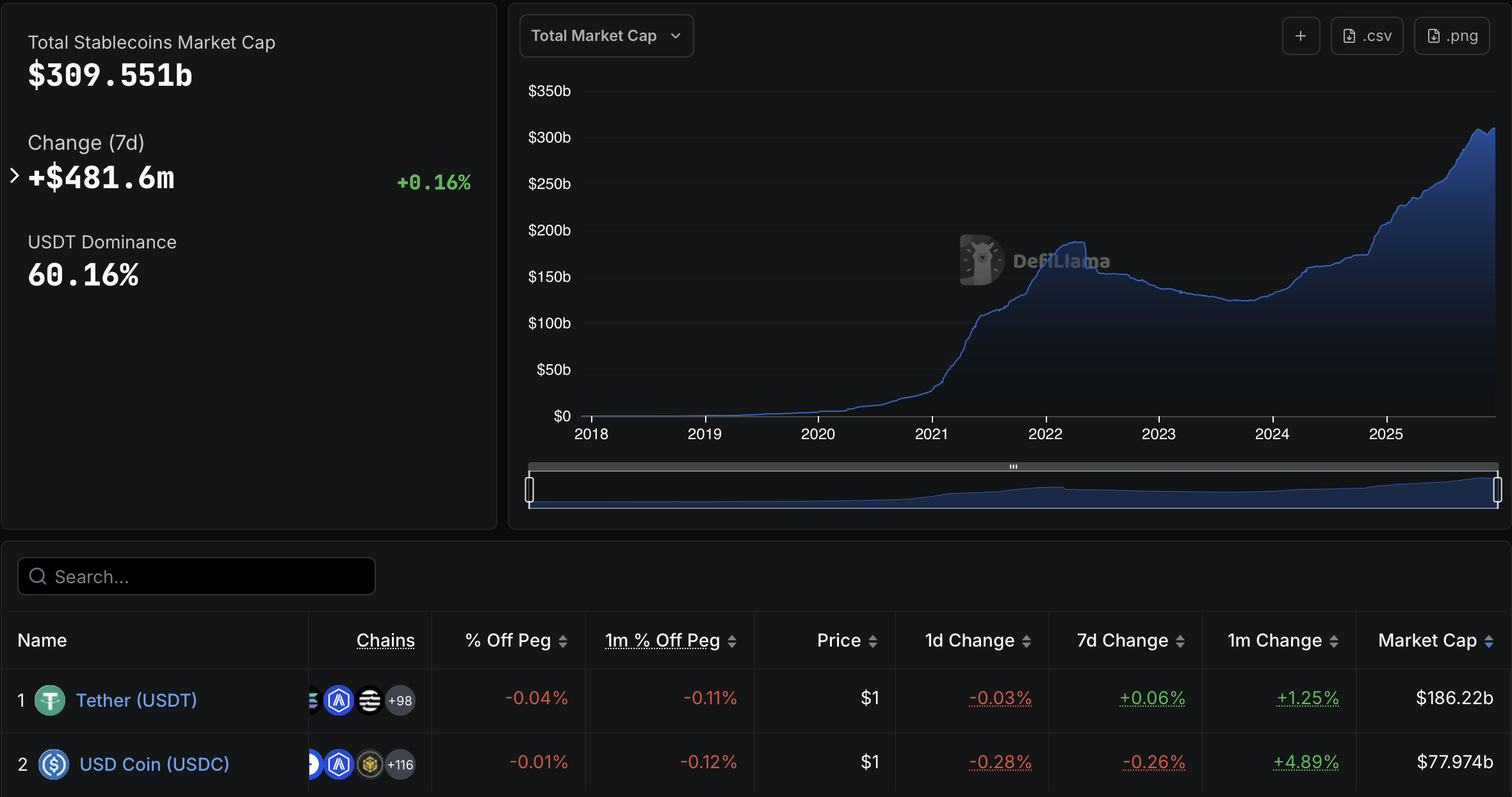
Stablecoin market cap. Source: DefiLlama

As dollar-pegged stablecoins have expanded, issuers have become significant holders of short-term US government debt.

In its second-quarter 2025 reserve report, Tether said its exposure to US Treasurys exceeded $127 billion, including $105.5 billion held directly and $21.3 billion held indirectly. According to the company, that level of Treasury holdings places Tether among the largest holders of US government debt.

Circle’s latest transparency report, dated Dec. 15, shows USDC is also backed largely by US government debt instruments, including $49.7 billion in overnight reverse Treasury repos and $18.5 billion in short-term Treasurys.
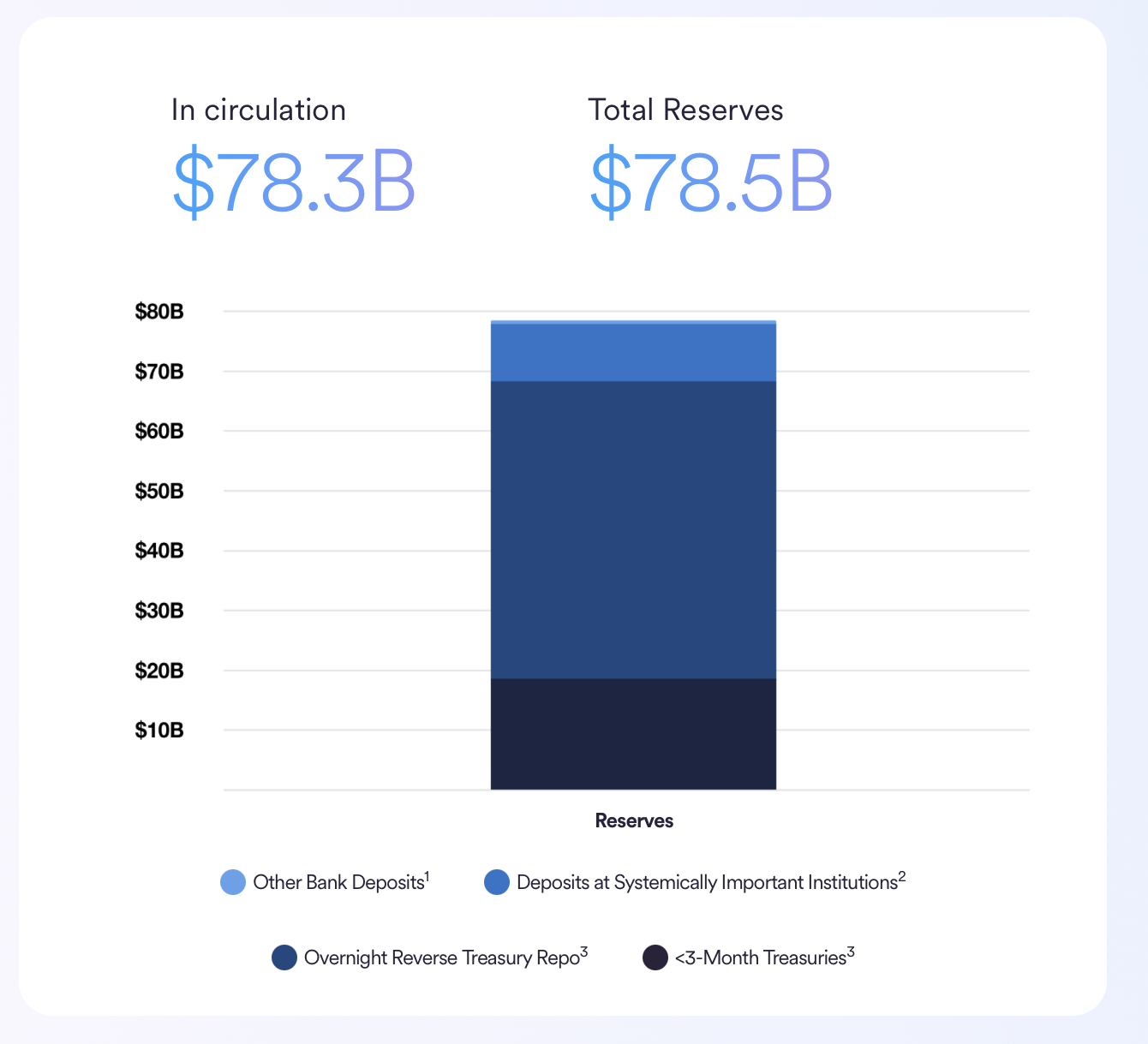
Circle’s reserves composition. Dec. 15, 2025. Source: Circle

A July report from digital asset bank Sygnum said the US government sees dollar-pegged stablecoins as a means to reinforce the dollar’s role as a global reserve currency and is backing their growth through legislation.

Other countries have taken notice. In April, Italy’s Economy and Finance Minister Giancarlo Giorgetti warned that US policies supporting dollar-backed stablecoins pose a greater long-term risk to Europe’s financial system than trade tariffs, citing their potential to erode the euro’s role in cross-border payments.

In December, a group of 10 European banks said they plan to launch a euro-pegged stablecoin in the second half of 2026.

Magazine: Meet the onchain crypto detectives fighting crime better than the cops

Crypto di tendenza

Domande pertinenti

QWhat is the main finding of the Federal Reserve discussion paper regarding the US dollar's role in global debt markets?

AThe paper finds that the US dollar's role in global bond markets has risen and fallen in cyclical waves over the past six decades, with no clear long-term trend toward either greater dollar dominance or de-dollarization.

QAccording to the report, what percentage of emerging market issuers' outstanding international bonds are denominated in US dollars as of 2024?

AAs of 2024, dollar-denominated debt accounts for about 80% of emerging market issuers' outstanding international bonds.

QWhich two stablecoins dominate the stablecoin market, and what is their combined market share?

ATether's USDt (USDT) and Circle's USDC (USDC) together account for about 85% of the total stablecoin supply.

QHow significant is Tether's holding of US Treasurys, according to its Q2 2025 reserve report?

ATether's exposure to US Treasurys exceeded $127 billion, a level that places it among the largest holders of US government debt.

QWhat concern did Italy's Economy and Finance Minister raise regarding US policies on dollar-backed stablecoins?

AHe warned that US policies supporting dollar-backed stablecoins pose a greater long-term risk to Europe's financial system than trade tariffs, citing their potential to erode the euro's role in cross-border payments.

Letture associate

Thanks to Dice Rolls, Bitcoin Keys Are Stored Offline, But Not Everyone Will Do It

The article discusses using dice rolls to generate secure Bitcoin wallet seeds, providing entropy independent of potentially flawed hardware random number generators. It explains that each fair dice roll offers about 2.585 bits of entropy, with around 50 rolls needed for a standard 12-word seed phrase and 99+ recommended for higher security. This method gained attention after a vulnerability was revealed in some Coldcard hardware wallets, where a faulty firmware RNG (dating back to 2021) compromised generated keys. The analysis notes that while a dice-generated main seed was safe from this specific flaw, other Coldcard functions (like creating paper wallets, backup keys, or passwords) could still be vulnerable if they used the defective RNG. The piece argues that while dice-based entropy is technically robust, the manual process is error-prone, tedious, and unrealistic for most new users, who might make mistakes in recording or inputting rolls. It concludes that while manual entropy generation should remain an option for advanced users, the long-term goal is to develop reliable, user-friendly hardware and software that securely generates randomness without requiring specialized knowledge. Coldcard users are advised to check their firmware version and replace any secondary secrets (like paper wallet keys) created with vulnerable devices, while also considering multi-signature setups with devices from different manufacturers for added security.

cryptonews.ru5 h fa

Thanks to Dice Rolls, Bitcoin Keys Are Stored Offline, But Not Everyone Will Do It

cryptonews.ru5 h fa

Trading

Spot

Articoli Popolari

Come comprare US

Benvenuto in HTX.com! Abbiamo reso l'acquisto di Talus Network (US) semplice e conveniente. Segui la nostra guida passo passo per intraprendere il tuo viaggio nel mondo delle criptovalute.Step 1: Crea il tuo Account HTXUsa la tua email o numero di telefono per registrarti il tuo account gratuito su HTX. Vivi un'esperienza facile e sblocca tutte le funzionalità,Crea il mio accountStep 2: Vai in Acquista crypto e seleziona il tuo metodo di pagamentoCarta di credito/debito: utilizza la tua Visa o Mastercard per acquistare immediatamente Talus NetworkUS.Bilancio: Usa i fondi dal bilancio del tuo account HTX per fare trading senza problemi.Terze parti: abbiamo aggiunto metodi di pagamento molto utilizzati come Google Pay e Apple Pay per maggiore comodità.P2P: Fai trading direttamente con altri utenti HTX.Over-the-Counter (OTC): Offriamo servizi su misura e tassi di cambio competitivi per i trader.Step 3: Conserva Talus Network (US)Dopo aver acquistato Talus Network (US), conserva nel tuo account HTX. In alternativa, puoi inviare tramite trasferimento blockchain o scambiare per altre criptovalute.Step 4: Scambia Talus Network (US)Scambia facilmente Talus Network (US) nel mercato spot di HTX. Accedi al tuo account, seleziona la tua coppia di trading, esegui le tue operazioni e monitora in tempo reale. Offriamo un'esperienza user-friendly sia per chi ha appena iniziato che per i trader più esperti.

440 Totale visualizzazioniPubblicato il 2025.12.11Aggiornato il 2026.06.02

Come comprare US

Discussioni

Benvenuto nella Community HTX. Qui puoi rimanere informato sugli ultimi sviluppi della piattaforma e accedere ad approfondimenti esperti sul mercato. Le opinioni degli utenti sul prezzo di US US sono presentate come di seguito.

活动图片













