Former SpaceX Engineer Reconstructs Financial Execution System Using First Principles

marsbitPubblicato 2026-06-25Pubblicato ultima volta 2026-06-25

Introduzione

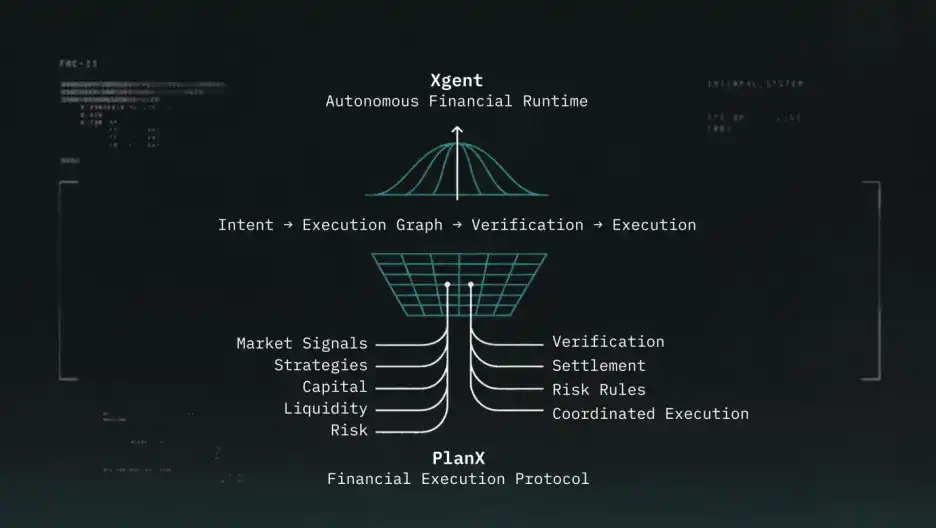
Former SpaceX engineer Lex Li applies "First Principles Thinking" to financial infrastructure with Plan Execution Lab, recently raising angel funding at a $50M post-money valuation. The team argues that the core function of finance is capital allocation, and the critical gap is not in trading but in execution, which remains highly manual and fragmented. While assets, liquidity, and settlement have migrated on-chain, execution workflows (monitoring, risk management, liquidity coordination) are still human-native. In an era of accelerating AI agents, strategy decay is rapid, shifting the competitive edge from having the best strategy to having the most robust execution network. Plan Execution Lab introduces two core components: 1. **PlanX**: A Financial Execution Protocol designed as infrastructure for the migration from CEX to DEX, providing on-chain execution capabilities, liquidity access, risk management, and capital orchestration. 2. **Xgent**: An Autonomous Financial Runtime. Users define investment intents, risk preferences, and constraints; Xgent automatically constructs an execution graph, verifies it, and handles ongoing execution and optimization—streamlining the process from Intent to Autonomous Execution. The long-term vision is to create the "Bloomberg Terminal for Autonomous Finance"—a shared operating environment and execution network built collectively by participants like execution nodes, liquidity providers, and autonomous agents. The future of finance, ...

The financial infrastructure project Plan Execution Lab recently announced the completion of its angel round of financing, led by a well-known family office in Singapore, with a post-investment valuation of $50 million. This round of funding will be primarily used to accelerate the research, development, and ecosystem construction of the PlanX Financial Execution Protocol and the Xgent Autonomous Financial Runtime.
Unlike most trading platforms, Plan Execution Lab is not trying to build a "faster exchange" or a "smarter trading bot." They are attempting to answer a more fundamental question: What is truly missing from the future financial markets?

From SpaceX to Financial Infrastructure

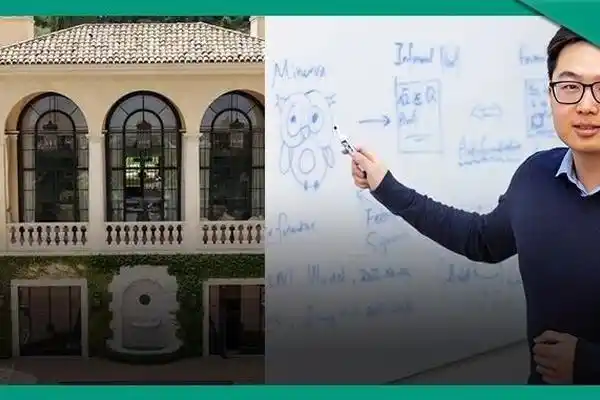
The starting point of Plan Execution Lab founder Lex Li's career was not Wall Street, but SpaceX. As an engineer hired fresh out of school to work at SpaceX, Lex spent thirteen months there. The biggest influence from this experience was not a specific technology, but the core methodology championed by SpaceX: First Principles Thinking.
At SpaceX, engineers are required to constantly ask: Why must rockets be built this way? Why must costs be this high? Why are the industry's default practices necessarily correct? Many rules taken for granted ultimately prove to be just historical habits. This way of thinking also became the most important methodology for Lex when he later entered the financial industry.

"After entering the financial industry, I found everyone discussing faster transaction speeds, more complex product designs, and greater liquidity," Lex said. "But few people stop to think about a more fundamental question: What is the true purpose of financial markets?"

Viewing Financial Markets from First Principles

In Lex's view, the core function of financial markets is not trading, but Capital Allocation. Trading is merely one expression of capital allocation, and the true process of converting decisions into action is Execution.

Over the past decade, financial infrastructure has undergone tremendous changes: assets have been on-chain, liquidity has been on-chain, and settlement has been on-chain. However, the execution layer has hardly seen any fundamental change. Today's markets are still built upon a large number of fragmented human workflows:

  • Human market monitoring

  • Human capital scheduling

  • Human risk management

  • Human liquidity coordination

  • Human trade execution

Even on the most advanced trading platforms, financial execution remains Human-Native.

The Agent Era is Accelerating Strategy Decay

With the development of large models, AI Agents, and automated systems, the market is entering a new phase. Information spreads faster, market reactions accelerate, and strategy decay speeds up as well.

An advantage that could last for years in the past might now only last for months. Alpha that lasted for months in the past may dwindle to weeks in the future. For independent traders and even small to medium-sized institutions, maintaining effective strategies is becoming increasingly difficult.

"The biggest challenge in the future is no longer acquiring information, but how to execute consistently and efficiently," Lex said.

Strategy is Not the Fundamental Unit

Most people think of a strategy as an independent set of algorithms. But viewed from first principles, a strategy is actually a combination of multiple execution capabilities. For example:

  • Risk management

  • Capital allocation

  • Liquidity access

  • Hedging logic

  • Execution timing

  • Portfolio construction

These capabilities are more like independent Nodes, which together form a larger Execution Graph. Therefore, what financial systems will truly compete for in the future is not a single strategy, but the Execution Network. The most powerful financial system of the future will not be some mysterious algorithm, but a collaborative network built and continuously evolved by a multitude of execution nodes.

PlanX: Facilitating the Migration from CEX to DEX

Based on this judgment, the team built PlanX. PlanX's positioning is not another DEX, but a Financial Execution Protocol.

The team believes that one of the largest financial migrations in the next decade will be the shift of global trading volume from centralized exchanges (CEX) to on-chain markets. But it's not just assets that will migrate; it's financial behavior itself. PlanX aims to be the execution infrastructure for this migration process, providing the market with:

  • On-chain execution capabilities

  • Liquidity access

  • Risk management

  • Settlement coordination

  • Capital scheduling

Thus building an open financial execution network.

Xgent: The Runtime for the Autonomous Finance Era

If PlanX is the execution infrastructure, then Xgent is the Autonomous Financial Runtime built on top of it. Users no longer need to manually manage multiple platforms and complex workflows; they only need to define:

  • Investment objectives

  • Risk tolerance

  • Constraints

  • Capital allocation rules

Xgent will automatically handle:

  • Execution logic construction

  • Risk verification

  • Liquidity coordination

  • Strategy operation

  • Autonomous optimization

The team defines this process as: Intent → Execution Graph → Verification → Autonomous Execution.

Building the Bloomberg Terminal for the Autonomous Finance Era

Lex often uses an analogy to describe Xgent's long-term vision. Over the past few decades, the Bloomberg Terminal became the core operating environment for global financial markets. It not only provides data but, more importantly, offers the entire financial industry a unified workflow, unified context, and unified collaborative environment.

Bloomberg is the operating system for the human finance world. In the era of autonomous finance, a new operating system is equally needed. Only this time, the clients are not humans, but Agents.

"If the Bloomberg Terminal defined the Operating Environment for Human Finance, then the combination of PlanX + Xgent aims to become the Operating Environment for Autonomous Finance."

Financial Infrastructure Built by Nodes

Unlike traditional financial systems, Plan Execution Lab does not seek to have a single institution control the entire network. The team believes that the next generation of financial infrastructure must be co-built by participants. The future ecosystem will consist of the following participants:

  • Execution Nodes

  • Liquidity Providers

  • Strategy Contributors

  • Infrastructure Operators

  • Autonomous Financial Agents

What each participant contributes is not a single strategy, but execution capability itself. These execution capabilities will continuously combine, evolve, and ultimately form the execution network for the autonomous finance era.

The Core of Next-Generation Financial Competition

For Lex, the core competitive edge in future finance is not about who has the best trading strategy, but who possesses the most powerful execution network.

The past decade changed where assets are stored. The next decade will change how financial decisions are executed. And the PlanX + Xgent combination aims to be the infrastructure for this transformation. The future will not belong to isolated strategies; it will belong to autonomous execution networks.


Domande pertinenti

QWhat is the core argument made by Plan Execution Lab founder Lex Li regarding the future of financial markets?

ALex Li argues that the core function of financial markets is capital allocation, not just trading. He believes the critical missing piece for the future is the execution layer, which remains human-native and fragmented. The future competitiveness will lie not in having the best trading strategy, but in possessing the most powerful execution network.

QWhat are PlanX and Xgent, and how do they differ from traditional DEXs or trading bots?

APlanX is a Financial Execution Protocol, not a traditional DEX. Its goal is to serve as the execution infrastructure for the migration of financial activity from CEXs to on-chain markets. Xgent is an Autonomous Financial Runtime built on top of PlanX. Together, they aim to provide an operating environment for autonomous finance, automating the entire process from user intent to execution, unlike platforms focused solely on faster trades or smarter bots.

QAccording to the article, what is the impact of AI Agents on financial trading strategies?

AThe article states that the rise of AI Agents and automation is accelerating the decay of trading strategies. Advantages that once lasted years may now last only months, and future alpha may persist for mere weeks. This makes it increasingly difficult for individual traders and small-to-medium institutions to maintain effective strategies, shifting the main challenge from information acquisition to continuous, efficient execution.

QHow does the article's vision for a future financial system challenge the traditional view of a 'strategy'?

AThe article challenges the view of a strategy as an independent algorithm. It posits that from first principles, a strategy is a combination of fundamental execution capabilities (like risk management, capital allocation, liquidity access). These capabilities are akin to nodes in a larger Execution Graph. Therefore, future competition will be between execution networks, not isolated strategies.

QWhat long-term vision is described for the combination of PlanX and Xgent?

AThe long-term vision is for PlanX and Xgent to become the 'Bloomberg Terminal' for the autonomous finance era. Just as Bloomberg Terminal defined the operating environment for human-centric finance, PlanX (the execution infrastructure) and Xgent (the autonomous runtime) aim to become the core operating environment for AI Agents and autonomous systems in finance, built and evolved collaboratively by a network of participants.

Letture associate

Tidal Investment: We Remain Bullish on the AI Industry Chain, But for Different Reasons Now

Tidal Investments remains optimistic about the AI industry chain, but the rationale has shifted. The market is concerned about massive concurrent fundraising by tech giants like SpaceX, OpenAI, Alphabet, and Meta, fearing an AI peak. However, the authors argue this signals the next act of AI development, not its end. Capital expenditure (Capex) from major cloud providers (Alphabet, Amazon, Meta, Microsoft, Oracle) continues to surge aggressively into 2026. This investment cycle is more resilient than past hardware cycles due to its scale and complexity. Bottlenecks have shifted from chips to critical physical infrastructure like power grids, transformers, cooling, and data center construction—areas with long lead times and limited capacity for rapid expansion. Supply chain data (e.g., Eaton's orders) confirms substantial, tangible progress. Key market concerns are addressed: 1. **ROI vs. Capex Growth**: While Capex growth outpaces revenue, the authors note cloud giants have historically overcome similar phases through scale. The cycle will only be in danger if Capex guidance is cut, orders are canceled, or AI product demand falters—none of which are currently observed. 2. **Comparison to the 2000 Dot-com Bubble**: Unlike the telecom bubble, where cheap, oversupplied fiber crashed prices, AI infrastructure (especially power) is constrained, customized, and subject to lengthy approvals, making a similar supply glut and crash unlikely. In conclusion, the wave of fundraising reflects the immense, ongoing capital needs for AI's next phase, constrained by slow-moving physical bottlenecks. The AI cycle is not over; the script has simply changed.

链捕手8 min fa

Tidal Investment: We Remain Bullish on the AI Industry Chain, But for Different Reasons Now

链捕手8 min fa

Grayscale: These 15 Profitable Crypto Protocols Are Severely Undervalued

Grayscale Research identifies 15 top-revenue crypto protocols trading at significant valuation discounts, with many at single-digit or even 1x revenue multiples. Protocols like Pump.fun, PancakeSwap, and Meteora have market capitalizations roughly equal to their annual revenue. The report argues these financially-focused protocols (DEXs, lending, staking) are fundamentally undervalued and could benefit from the potential passage of the CLARITY Act, expected as soon as next month. This legislation aims to clarify digital asset regulation, potentially reducing institutional barriers and driving on-chain activity. The analysis breaks down the protocols into three groups: the "1x Club" (market cap ≈ revenue), mid-tier protocols with 3-9x multiples (e.g., Aave, Lido, Jupiter), and high-multiple protocols like Hyperliquid (15x) and Uniswap (37x), where valuation reflects future potential rather than current cash flows. Grayscale applies a traditional DCF model to Aave, suggesting a one-year price target of ~$175, representing ~130% upside from current levels. The report notes a risk-off macro environment since the Iran conflict has further compressed valuations, creating a potential entry window. The conclusion highlights that while the valuation data presents an intriguing opportunity, the investment thesis is contingent on the CLARITY Act's passage and subsequent institutional capital flows. Investors are cautioned to consider Grayscale's inherent conflict of interest as a crypto asset manager with products tied to these assets.

marsbit36 min fa

Grayscale: These 15 Profitable Crypto Protocols Are Severely Undervalued

marsbit36 min fa

Sam Altman's Personal Alchemy of Wealth: Investing in 400 Companies, Over 10 Deeply Tied to OpenAI

The article investigates Sam Altman's personal wealth strategy, centered around his investments in approximately 400 companies while serving as OpenAI's CEO. Despite not holding direct equity in OpenAI, Altman has built a vast portfolio, with at least 10 of his investments having commercial ties or ongoing negotiations with OpenAI. This creates a complex network of potential conflicts of interest, drawing scrutiny from U.S. congressional committees and state attorneys general. Key investments highlighted include the anti-aging startup Retro Biosciences (valued at $258 million for his stake as of late last year) and the chipmaker Cerebras, whose value soared following an OpenAI procurement deal. His most significant financial gain is linked to the nuclear fusion company Helion, where a recent funding round reportedly increased his stake's value to at least $4.1 billion. The article details a decade-long relationship between Altman, Helion, and OpenAI, including a controversial non-binding power purchase agreement and Altman's efforts to secure investments from OpenAI and its backer SoftBank for Helion. Other points include internal investigations at Tools for Humanity (developer of Worldcoin) and OpenAI's massive contracts with tech giants like Nvidia. According to Forbes, Altman's net worth is around $3.4 billion, ranking him 1251st globally—a rise of over 1400 places since 2024. OpenAI's board states that Altman's external dealings are transparent and potential conflicts are carefully managed.

Odaily星球日报56 min fa

Sam Altman's Personal Alchemy of Wealth: Investing in 400 Companies, Over 10 Deeply Tied to OpenAI

Odaily星球日报56 min fa

Former SpaceX Engineer Reconstructs Financial Execution System from First Principles

Plan Execution Lab, a financial infrastructure project founded by former SpaceX engineer Lex Li, has raised angel funding at a $50M post-money valuation. The startup is applying "first principles thinking" from Li's SpaceX experience to rethink financial market execution. Their analysis posits that while assets, liquidity, and settlement have moved on-chain, the execution layer remains fundamentally human-dependent and fragmented. In the era of AI Agents, strategy advantages decay rapidly, shifting the competitive edge from isolated algorithms to robust **execution networks**. Plan Execution Lab's solution is a two-part system: **PlanX**, a Financial Execution Protocol designed to facilitate the migration from centralized exchanges (CEX) to on-chain markets by providing core on-chain execution capabilities; and **Xgent**, an Autonomous Financial Runtime. Xgent allows users to define investment goals and constraints, then autonomously constructs and manages the execution logic—moving from **Intent to Execution Graph to Verification to Autonomous Execution**. The long-term vision is to create the "Bloomberg Terminal for Autonomous Finance"—an operating environment not for humans, but for agents and execution nodes. The future financial system, they argue, will be a collaborative network built by diverse participants contributing execution capabilities, not secret strategies. The core competition will shift to who builds the most powerful and adaptive execution network.

链捕手1 h fa

Former SpaceX Engineer Reconstructs Financial Execution System from First Principles

链捕手1 h fa

Trading

Spot
Futures
活动图片