Fired by Google Over a 14-Page Paper, Over 4,000 Rallied for Her. 6 Years Later: She Almost Predicted the Entire AI Era Back Then.

marsbitPubblicato 2026-06-08Pubblicato ultima volta 2026-06-08

Introduzione

In late 2020, Google AI researcher Timnit Gebru was effectively dismissed following a conflict over a 14-page, unpublished research paper she co-authored titled "On the Dangers of Stochastic Parrots." The paper, which has since been cited over 14,000 times, raised critical early warnings about the risks of large language models (LLMs). It argued that these models, trained on vast, biased internet data, are essentially "stochastic parrots" that mimic language without true understanding, potentially amplifying societal biases, generating plausible but false information (later termed "AI hallucination"), consuming massive energy, and obscuring their training data contents. Gebru's stance led to a clash with Google management, who requested the paper's withdrawal. Her subsequent internal criticism of the company's diversity efforts and handling of the matter culminated in her termination, which sparked protests from over 4,000 Google employees and researchers. Six years later, the paper's predictions have proven remarkably prescient. Issues like AI hallucination, embedded bias (evident in resume screening and healthcare algorithms), soaring energy consumption from AI data centers, unvetted training data containing harmful content, and the risk of "model collapse" from AI-generated internet content have become central industry challenges. The incident also highlighted concerns about AI development being driven primarily by commercial competition within a handful of powerful tech...

If we turn back the clock to 2020, most AI practitioners were still debating just how powerful GPT-3 really was.

Back then, generative AI had not yet become a global focus, ChatGPT was still two years away from its debut, and large models had not yet triggered the investment frenzy that is sweeping the world today. Yet, that very year, a top AI researcher at Google lost her job after a fierce conflict with the company over an unpublished paper.

At the time, many believed it was just another controversy about workplace management, academic publishing, and corporate culture in Silicon Valley. Looking back now, however, people realize the warnings in that paper have almost all materialized in the real world.

And the fired researcher was none other than Timnit Gebru, one of the most influential figures in the field of AI ethics research.
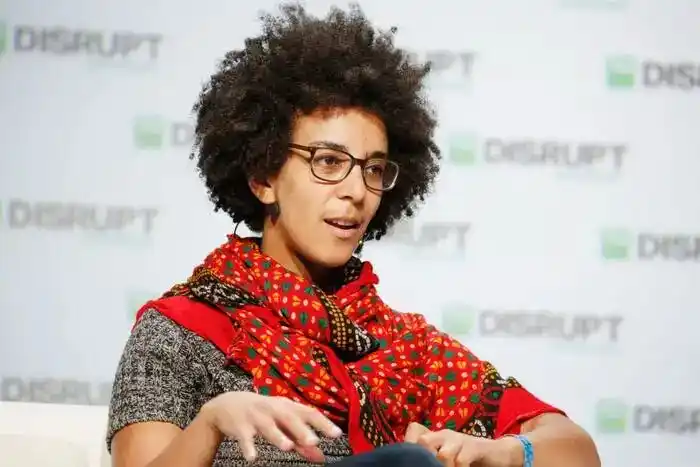
A "Firing Incident" That Shook the AI Community

In December 2020, Timnit Gebru posted on social media that she had been fired by Google.

The news quickly exploded across the AI research community. Because Gebru was not an ordinary researcher at the time; she was the co-lead of Google's Ethical AI Team and one of the well-known scholars in the global field of AI fairness and algorithmic bias research.

Born in Ethiopia, Gebru has long focused on racial bias, gender discrimination, and social equity issues in AI. Before joining Google, she conducted research at Stanford University. In 2018, a study on algorithmic bias she co-authored was considered by many a significant turning point in AI fairness research. That same year, Google recruited her, publicly showcasing the company's emphasis on 'Responsible AI.'

Yet, just two years later, the two sides came to a rupture.

At the time, Google's official statement was that Gebru had resigned, but Gebru herself gave a completely different version: she stated that she received an email from the company during her vacation, informing her that her departure was effective immediately, with all internal system and email access revoked simultaneously.

In her view, this was unequivocally a firing.

Subsequently, over 4,000 Google employees and industry insiders signed an open letter, questioning the company's handling and demanding Gebru's reinstatement — and the fuse for all this was a mere 14-page academic paper.

A 14-Page Paper Sparked the Controversy

This paper, titled "On the Dangers of Stochastic Parrots," was authored by Timnit Gebru, University of Washington linguistics professor Emily Bender, and two other researchers. It has now been cited over 14,000 times.

Later, the term "stochastic parrot" also became widely known. (Paper address: https://s10251.pcdn.co/pdf/2021-bender-parrots.pdf)

The paper pointed out that large language models are essentially reproducing language patterns based on statistical regularities: they can generate fluent, natural, and even seemingly logical text, but do not truly understand the meaning of language — like a parrot that has learned to mimic human speech, appearing clever, while in reality this mimicry is built on vast amounts of internet text. And the internet itself is filled with bias, discrimination, and hateful content. Therefore, large models are highly likely to learn these problems along the way and continue to amplify them in their generated content.

Consider this: It was 2020, GPT-3 had just been released, ChatGPT was yet to be born, and the large model boom was far from arriving. Yet, this paper had already predicted one of the biggest headaches facing the entire industry today.

After the paper was submitted to a top AI ethics conference, Google management demanded: withdraw the paper, or remove the names of Google researchers. Gebru refused. She asked the company to provide specific reasons and hoped for further discussion.

At the same time, she also sent a strongly worded email to an internal Google employee group.

In the email, Gebru criticized Google for lacking concrete action in promoting minority hiring and addressing internal inequality. She wrote: "When you start advocating for marginalized groups, your situation gets worse and worse. You make other leadership uncomfortable." She also stated: If the company could not explain why the paper needed to be withdrawn, she would choose to resign at an appropriate time.

Things developed far beyond her expectations. Gebru stated that Google subsequently replied that it would not meet her demands and directly accepted her 'resignation,' immediately revoking all her access.

At the time, the incident quickly evolved into one of the most controversial topics in the global AI field.

What Seemed Radical Then Has Become Reality Now

What has kept this incident discussed to this day is not the firing itself, but the content of that paper — because looking back now, almost every concern raised within it has become a real-world problem the AI industry is facing.

(1) The First Warning: Models Will 'Make Stuff Up'

In 2020, GPT-3 had just been released. People were amazed by the model's text generation capabilities, but few seriously discussed its reliability.

Gebru and Bender pointed out: as models scale up, people will increasingly mistake fluent expression for genuine understanding. The model appears to be thinking, but is actually just predicting the next most likely word. Therefore, they will inevitably generate information that seems plausible but is completely false.

Today, this problem has a name familiar to everyone: AI Hallucination. Whether it's ChatGPT, Gemini, Claude, or other advanced models, the hallucination problem remains unsolved to this day.

In a sense, this paper accurately foresaw it before 'hallucination' became an industry buzzword.

(2) The Second Warning: Bias Won't Disappear; It Will Be Amplified

The paper also noted that the internet itself is not a neutral data source; training data naturally contains various racial, gender, cultural, and geographic biases. Models will not only learn these biases but may further reinforce them due to optimization mechanisms.

Later, various real-world problems validated this concern:

Amazon once tried using AI to screen job resumes, only to find the system automatically downgraded resumes containing keywords like 'women.'

A medical risk assessment system used by several major US hospitals was found to chronically underestimate the medical needs of Black patients.

Apple Card also drew regulatory attention because women received significantly lower credit limits than men.

These cases illustrate that algorithms do not automatically achieve fairness; on the contrary, they can solidify real-world inequalities in more insidious ways.

(3) The Third Warning: AI's Energy Consumption Will Become a New Problem

In 2020, computing power costs were not the focus they are today, but that paper had already begun discussing the environmental impact of training超大模型. Researchers estimated that the carbon emissions from training one large language model were equivalent to the lifetime emissions of five cars — at the time, this claim was considered overly pessimistic by many.

However, as AI infrastructure construction entered an arms race, the problem quickly became apparent: according to Google's public disclosures, the company's greenhouse gas emissions in 2024 increased by 48% compared to 2019; Microsoft saw an increase of about 29% over the same period. Both companies explicitly stated that AI data centers and computing infrastructure were significant contributing factors.

Somewhat ironically, these tech giants were touting carbon neutrality goals just a few years earlier.

(4) The Fourth Warning: No One Truly Knows What's in the Training Data

In the eyes of many, training data seemed like just an engineering problem. But Gebru believed that as data scales up, fully auditing training data would become almost impossible.

Her view was validated again: in 2023, researchers found that the widely used image generation training dataset LAION-5B contained a large number of child sexual abuse images. Mainstream models, including Stable Diffusion, had used this dataset.

Unsurprisingly, many developers were previously unaware of this content's existence. That is to say, even the model developers themselves may not truly know what the model 'consumed' — and this was precisely one of the problems the paper first raised.

(5) The Fifth Warning: The Internet Will Gradually Be Filled with AI Content

In Google's view, this might have been the most sensitive part of the entire paper. Gebru and Bender argued that the development of large models would ultimately concentrate linguistic and cultural discourse power into the hands of a very few tech giants. The reason is simple: training超大模型 requires massive capital, computing power, and data resources, leaving only a handful of companies truly capable of competing.

Over time, the mainstream voices on the internet would gradually evolve into: statistical averages produced by a few companies, then disseminated to the world as 'neutral assistants.' Meanwhile, languages and cultures with lower representation in the training data would be further marginalized.

More seriously, when AI-generated content re-enters the internet and becomes the next round of training data, the problem would continuously self-reinforce — this is what researchers now call: 'Model Collapse.'

A 2024 study found that about 57% of new English internet content is already AI-generated or AI-assisted. Research on low-resource languages found that as training data increasingly comes from AI-generated content, translation quality for some languages has noticeably degraded.

In other words, this paper not only predicted the 'model collapse' phenomenon but even pointed out its formation mechanism before the concept was formally coined.

After Leaving Google, She Chose to Continue Research

After the incident, many later portrayed Gebru as an 'anti-AI' figure. That's not accurate; she never advocated stopping AI development. From start to finish, she questioned something else:

Who is deciding the direction of AI development?

In her view, the researchers and management pushing large model development often share similar backgrounds, serve similar commercial goals, and are driven by the same competitive pressures. Under such incentive structures, releasing products faster, scaling user bases faster, and winning market competition faster often take higher priority than safety, fairness, and ethical issues.

And anyone trying to slow this process might be seen as an obstructionist. Ironically, Gebru raised this very point inside Google, and Google, by firing her, provided the most dramatic real-world footnote to this view.

Even more lamentable is that shortly after the incident, the other co-lead of the Ethical AI Team, Margaret Mitchell, was also fired — within just 90 days, Google's once-proud Ethical AI Team was largely dismantled.

After leaving Google, in 2021 Gebru founded the Distributed AI Research Institute (DAIR). Unlike large tech companies, this institution aims to conduct AI research outside commercial interests, with a direct goal: to study problems that tech giants might not be willing to face. Over the past few years, DAIR has continued to focus on issues like data provenance, algorithmic fairness, linguistic diversity, and the concentration of power in the AI industry.
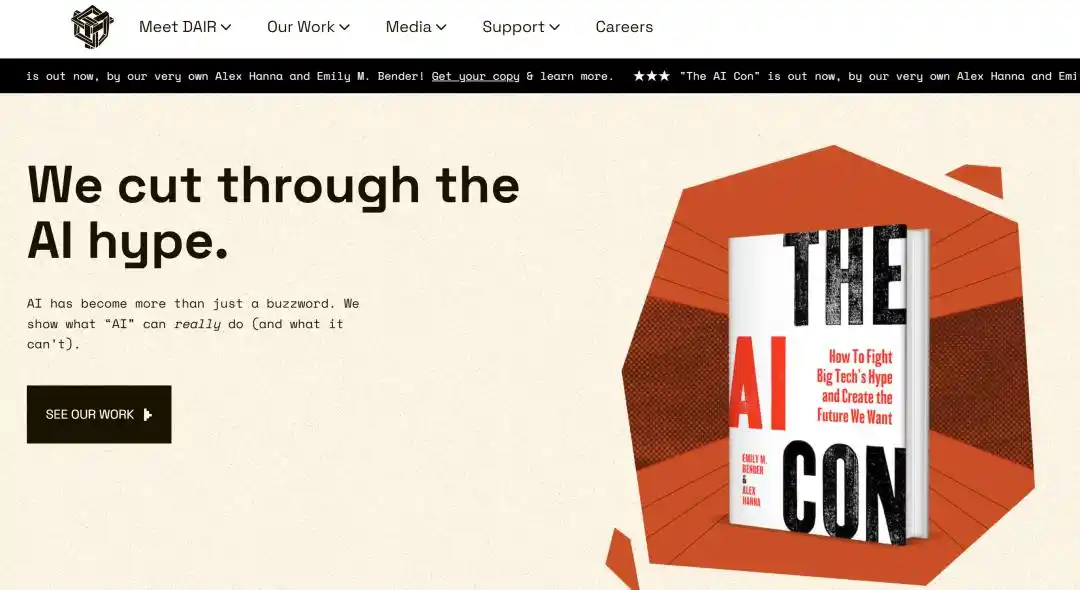
And with the explosive development of generative AI, more and more researchers have begun revisiting that "Stochastic Parrots" paper: because they find that problems deemed excessive worries in the paper back then have now become realities discussed daily in the industry.

Perhaps, She Just Saw the Problems Earlier Than Others

Six years later, the outside world may never get an answer everyone agrees on regarding the rights and wrongs between Timnit Gebru and Google.

Google views it as a normal case of academic review and departure; Gebru believes she was suppressed for insisting on publishing her research. But one thing is becoming increasingly difficult to deny:

The paper that led to her leaving Google has not lost its significance with the end of the controversy.

On the contrary, the issues it discussed — hallucinations, bias, data pollution, environmental costs, model collapse, and power concentration — have now become unavoidable topics for the entire AI industry.

Sometimes, history offers its evaluation in unexpected ways.

In 2020, many thought Timnit Gebru was too pessimistic;

In 2026, people are beginning to realize she might have just seen the problems earlier than others.

Reference link: https://www.tumblr.com/dreaminginthedeepsouth/817865966907228160/darren-oconnor-timnit-gebru-was-fired-from

This article is from the WeChat public account "CSDN," compiled by Zheng Liyuan.

Domande pertinenti

QWhy was Timnit Gebru fired from Google in 2020, and what was the catalyst for her departure?

ATimnit Gebru was fired from Google in December 2020. The catalyst was a disagreement over a 14-page research paper she co-authored titled 'On the Dangers of Stochastic Parrots.' Google management asked for the paper to be withdrawn or for Google employee names to be removed before its submission to an academic conference. Gebru refused and sought an explanation, leading to Google declaring her resignation effective immediately.

QWhat is the 'Stochastic Parrots' paper about, and why is it considered prescient?

AThe 'Stochastic Parrots' paper argues that large language models (LLMs) are essentially sophisticated pattern matchers that mimic human language without true understanding. It warned that LLMs would inherit and amplify societal biases, produce convincing but false information ('AI hallucination'), concentrate power with tech giants, have significant environmental costs, and suffer from a lack of data transparency. Its warnings have largely become reality in today's AI landscape.

QWhat are the specific warnings from the paper that have manifested in today's AI industry, according to the article?

AThe article highlights five warnings that have manifested: 1) **AI Hallucination**: Models generating plausible but incorrect information. 2) **Amplification of Bias**: Models perpetuating and worsening societal prejudices (e.g., in hiring, healthcare). 3) **Environmental Impact**: The massive energy consumption and carbon emissions from training AI models. 4) **Training Data Opacity**: Developers not fully knowing harmful or illegal content within their training datasets. 5) **Power Concentration & Model Collapse**: The internet being flooded with AI-generated content, which degrades future AI training data and centralizes cultural influence.

QWhat did Timnit Gebru do after leaving Google?

AAfter leaving Google, Timnit Gebru founded the Distributed AI Research Institute (DAIR) in 2021. This independent research institute focuses on studying AI issues that tech giants may neglect, such as algorithmic fairness, data provenance, language diversity, and the concentration of power within the AI industry.

QWhat is the core philosophical question that Timnit Gebru's work raises, as presented in the article?

AThe core question raised is: **Who gets to decide the direction of AI development?** Gebru challenges the notion that AI progress should be driven primarily by commercial competition, speed-to-market, and the perspectives of a homogenous group within large tech companies, arguing that this often sidelines critical ethical, safety, and societal impact considerations.

Letture associate

Is AI Creating a New Class of 'Information Poor'?

AI is generating a new kind of "information poverty." The core issue isn't that AI denies answers to the poor; it's that it provides abundant, cheap, and plausible-sounding answers to everyone. This availability shifts the true scarcity from obtaining answers to possessing the **judgment to evaluate them** and the access to turn them into real-world opportunities. New information poverty thus describes those who have AI tools and outputs, but lack the complementary skills, authorization, and contextual experience to critically assess and act on them. Research reveals a multi-layered divide: access to AI is stratified by income and platform design (e.g., premium vs. free, embedded tools). In workplaces, usage heavily favors higher-paid, more experienced, or formally trained employees, with AI often automating entry-level tasks that were traditional stepping stones. Crucially, the heaviest users are often mid-career professionals whose existing expertise allows them to effectively judge and leverage AI outputs, while novices risk over-relying on them without building judgment. While controlled experiments show AI can significantly boost low-skilled workers' performance, real-world adoption and benefit are constrained by unequal social and organizational structures. Historically, general-purpose technologies first reward those with existing complementary capital. AI, by affecting judgment-based work, may accelerate and deepen this initial inequality gap, even if it narrows over decades. The danger lies in the illusion of competence it creates, potentially stunting the very critical thinking needed in an era where judgment is paramount.

marsbit1 min fa

Is AI Creating a New Class of 'Information Poor'?

marsbit1 min fa

Jensen Huang 'Saves' South Korean Stock Market: Locks In SK Hynix Memory, Chip Shortage to Continue

On June 5th, South Korea's stock market experienced a sharp decline, with major chipmakers like Samsung and SK Hynix dropping nearly 10%. Amidst the turmoil, NVIDIA CEO Jensen Huang's visit to Seoul played a dramatic role in boosting market sentiment. Following a dinner meeting with SK Group Chairman Chey Tae-won and SK Hynix CEO Kwak Noh-Jung, Huang confirmed that NVIDIA's new Vera CPU will utilize SK Hynix DRAM. The companies announced a multi-year technical partnership to co-develop next-generation memory for NVIDIA's AI infrastructure, covering products from data centers to personal AI and robotics. This collaboration extends beyond memory supply. SK Hynix is integrating NVIDIA's AI and Omniverse platform into its own semiconductor design and manufacturing processes, including computational lithography and creating digital twins of its fabrication plants for autonomous operation. While strengthening ties with SK Hynix, NVIDIA is diversifying its supply chain for the upcoming HBM4 memory, with Samsung, SK Hynix, and Micron all certified as suppliers for its Vera Rubin platform. Despite this, Huang warned that the global chip shortage, driven by relentless demand from AI factory construction, is expected to persist for several years across the entire supply chain. His visit underscores NVIDIA's systematic effort to deepen integration with South Korea's broader tech industry.

marsbit54 min fa

Jensen Huang 'Saves' South Korean Stock Market: Locks In SK Hynix Memory, Chip Shortage to Continue

marsbit54 min fa

Nasdaq Plunges 4.2% in a Single Day: Does "Black Friday" Burst the U.S. Stock Market Bubble?

The Nasdaq plunged 4.18% on June 5, 2026, its worst single-day drop in over a year, as a much stronger-than-expected US jobs report triggered fears of economic overheating and delayed Federal Reserve interest rate cuts. The selloff, centered on high-valuation tech and AI stocks like Nvidia and Broadcom, spread across major indices. The article examines whether this signals a market top. The strong May non-farm payrolls data, nearly double expectations, pushed bond yields higher, directly hurting rate-sensitive tech stocks. This exposed vulnerabilities in the crowded AI trade, where valuations had soared on narratives of infinite growth, despite emerging signs of slowing order momentum and corporate AI monetization challenges. Prior to the drop, market indicators flashed warning signs: historically high valuations (e.g., Shiller CAPE ratio near 39.5), extreme bullish sentiment, and high levels of leverage. Technical charts showed key support levels being breached. Wall Street is divided on the outlook. Bears, citing risks of "stagflation" and AI bubble comparisons to the dot-com era, warn of a potential significant correction. Bulls view the drop as a healthy correction within a bull market, underpinned by a strong economy and expected corporate earnings growth of around 7% in 2026. The immediate future hinges on upcoming key events: the May CPI inflation data and the mid-June FOMC meeting. Their outcomes will critically shape market expectations for the Fed's rate path. The article concludes that conditions for a major market top are aligning, marking a fragile transition from narrative-driven gains to a phase demanding validation from macroeconomic data and corporate fundamentals. Caution is advised.

marsbit58 min fa

Nasdaq Plunges 4.2% in a Single Day: Does "Black Friday" Burst the U.S. Stock Market Bubble?

marsbit58 min fa

Nasdaq Plunges 4.2% in a Single Day, Did 'Black Friday' Pop the U.S. Stock Bubble?

The Nasdaq Composite plummeted 4.18% on June 5, its biggest single-day drop since April 2025, triggering widespread debate over whether the U.S. stock market has peaked. The sell-off was sparked by a stronger-than-expected U.S. non-farm payrolls report, which fueled fears of economic overheating and pushed back market expectations for Federal Reserve rate cuts, leading to a sharp rise in Treasury yields. The AI sector, the primary driver of the recent bull market, suffered severe losses, with the Philadelphia Semiconductor Index crashing over 10%. Stocks like Nvidia, Broadcom, and Micron led the decline. Concerns are mounting about the sustainability of AI capital expenditures and high valuations, with signs of order cuts for next-generation chips emerging. Analyses point to several warning signs: historically high market valuations (e.g., elevated Shiller CAPE ratio, Buffett Indicator), extreme bullish sentiment indicators, and significant insider selling. The sell-off also caused a key technical breakdown, with the S&P 500 breaking below its short-term moving average and testing its 200-day moving average. Wall Street is divided on the outlook. Bears warn this could be the start of a bubble deflation or a "stagflation" scenario, while bulls view it as a healthy, overdue correction within a bull market driven by solid corporate earnings growth. A more moderate view suggests the easy liquidity-driven rally is over, and markets are entering a phase of fundamental stock-picking with potential for consolidation. The immediate future hinges on key upcoming events: the May CPI report and the mid-June FOMC meeting. Their outcomes will be critical in determining whether this is a temporary pullback or the beginning of a more significant trend reversal. The consensus is that the era of one-directional market gains may be ending, requiring increased investor caution.

Odaily星球日报1 h fa

Nasdaq Plunges 4.2% in a Single Day, Did 'Black Friday' Pop the U.S. Stock Bubble?

Odaily星球日报1 h fa

The First Case on AI Agents: What Was Adjudicated?

"The First 'Agent' Ruling: What Was Decided?" On April 30, the Guangzhou Internet Court issued a ruling—China's first behavior preservation order in the intelligent agent (AI agent) field. The defendant, an open-source AI agent software, was ordered to stop downloads, cease actions that bypassed a platform's technical protection measures, and delete related tutorials and data. The core issue: the software used the operating system's "accessibility service" permissions to automate user interactions within other apps without those platforms' authorization. This mirrors a recent US case where Amazon sued Perplexity for similar reasons—bypassing Amazon's API to directly scrape and interact with its pages—and won a preliminary injunction. Both rulings establish a crucial legal boundary for the AI agent era: agents cannot operate unchecked. The article argues the fundamental legal principle emerging is one of **dual authorization**. An AI agent requires both **user consent** AND **platform consent** to operate legitimately within that platform's ecosystem. Bypassing platform rules through system-level permissions, even with user permission, undermines platform responsibilities for content moderation, data security, and user privacy, creating liability issues. The piece uses the evolution of "Doubao Phone" (an AI-integrated smartphone) as a case study. Its initial, aggressive version that bypassed platform controls faced roadblocks. Its upcoming 2.0 version is reportedly pivoting to negotiate API access and authorization deals with major platforms (like Alibaba's ecosystem), seen as a strategic adaptation to the new regulatory reality. A global trend is identified: the era of unregulated, "wild west" growth for AI agents is ending, replaced by a **compliance race**. This raises barriers to entry, as securing platform authorizations becomes a new cost. Open-source status is also not a legal shield if the code facilitates bypassing technical protections. In conclusion, these first rulings target not the largest, but the most **aggressive and representative** cases. By setting precedent with them, regulators are efficiently steering the entire industry towards a new, more regulated operating paradigm defined by dual authorization and platform cooperation.

marsbit1 h fa

The First Case on AI Agents: What Was Adjudicated?

marsbit1 h fa

Trading

Spot
Futures

Articoli Popolari

Come comprare ERA

Benvenuto in HTX.com! Abbiamo reso l'acquisto di Caldera (ERA) semplice e conveniente. Segui la nostra guida passo passo per intraprendere il tuo viaggio nel mondo delle criptovalute.Step 1: Crea il tuo Account HTXUsa la tua email o numero di telefono per registrarti il tuo account gratuito su HTX. Vivi un'esperienza facile e sblocca tutte le funzionalità,Crea il mio accountStep 2: Vai in Acquista crypto e seleziona il tuo metodo di pagamentoCarta di credito/debito: utilizza la tua Visa o Mastercard per acquistare immediatamente CalderaERA.Bilancio: Usa i fondi dal bilancio del tuo account HTX per fare trading senza problemi.Terze parti: abbiamo aggiunto metodi di pagamento molto utilizzati come Google Pay e Apple Pay per maggiore comodità.P2P: Fai trading direttamente con altri utenti HTX.Over-the-Counter (OTC): Offriamo servizi su misura e tassi di cambio competitivi per i trader.Step 3: Conserva Caldera (ERA)Dopo aver acquistato Caldera (ERA), conserva nel tuo account HTX. In alternativa, puoi inviare tramite trasferimento blockchain o scambiare per altre criptovalute.Step 4: Scambia Caldera (ERA)Scambia facilmente Caldera (ERA) nel mercato spot di HTX. Accedi al tuo account, seleziona la tua coppia di trading, esegui le tue operazioni e monitora in tempo reale. Offriamo un'esperienza user-friendly sia per chi ha appena iniziato che per i trader più esperti.

348 Totale visualizzazioniPubblicato il 2025.07.17Aggiornato il 2026.06.02

Come comprare ERA

Discussioni

Benvenuto nella Community HTX. Qui puoi rimanere informato sugli ultimi sviluppi della piattaforma e accedere ad approfondimenti esperti sul mercato. Le opinioni degli utenti sul prezzo di ERA ERA sono presentate come di seguito.

活动图片