Dialogue with Former Google Executive: AI is Humanity's Last Innovation, Embrace It and Seize the Opportunity

marsbitPubblicato 2026-04-15Pubblicato ultima volta 2026-04-15

Introduzione

Former Google executive Mo Gawdat, in an interview, predicts a 12-15 year period of upheaval driven by AI, which he refers to as "FACE RIPS"—encompassing Power & Freedom, Reality & Connection, Innovation & Economy, and Accountability. He asserts that AI is humanity’s final innovation, as it is already creating AI, making scientific breakthroughs, and reshaping entire fields. This will lead to massive job losses, particularly in roles like customer service, clerical work, and research, with hiring for entry-level positions already down 23-30%. Gawdat warns of power concentration in tech oligarchs, the blurring of reality through AI-generated content, and a lack of accountability. To navigate this, he advises embracing AI, staying agile, and focusing on ethics. He claims startups can now be built rapidly—his AI dating app took just six weeks with minimal human effort. He believes traditional education, including universities, will become obsolete within a decade, replaced by a focus on human-AI collaboration to amplify intelligence. Gawdat is cautiously optimistic about an eventual AI-managed utopia but emphasizes that society must first endure a dystopian transition and demand ethical AI development to avoid catastrophic outcomes.

Source: "Silicon Valley Girl" Podcast

Compiled by: Felix, PANews

Mo Gawdat, former Chief Business Officer of Google X, worked at Google for 12 years and is the author of "Scary Smart." He now predicts that the global situation will undergo 12 to 15 years of turmoil. In this episode, he delves into the seven forces reshaping employment and power dynamics, explains why the hiring rate for new graduates has dropped by 23% to 30%, and how to build an AI startup in just six weeks. PANews has compiled the highlights of the conversation.

Host: You mentioned that we are about to enter a "hell" period lasting 12 to 15 years before reaching "heaven," and this may start around 2027. So, what exactly will happen in 2027?

Mo: I believe it will peak in 2027, and it has certainly already begun. For ease of memory, I simplify it as "FACE RIPS." In short, it includes several dimensions: P and F stand for "Power and Freedom," R and C for "Reality and Connection," I and E for "Innovation and Economy," and finally A for "Accountability."

First, AI is humanity's last innovation. Most people don't know that we are already building AI that can "create AI." They are making astonishing scientific discoveries, reshaping mathematics, and understanding biology and materials science in ways we have never seen before. The vast majority of innovation, especially technological innovation, will be done by AI. As machines become more capable, the vast majority of tasks requiring intelligence will be handed over to machines. Whether this happens in 2 or 10 years, eventually every job that AI does better than humans will be given to AI. Every task we assign them will ultimately be done better by AI.

The first part of this "dystopia" is that innovation will take away all jobs. Silicon Valley capitalists will tell you this is great, bringing incredible productivity gains for everyone, and people won't have to work so hard in the future. But the truth is, people will lose their jobs. In the coming years, certain industries will see unemployment rates of 10%, 20%, or even 30%. When this happens, the entire economic landscape will change dramatically. The essence of capitalism is labor arbitrage. If there is no demand for labor, to keep people happy, fed, and from rioting, capitalists may have to distribute universal basic income (UBI). But you can imagine that in a capitalist society like the United States, UBI will be paid for by taxes on platform owners, and those in power have enough power to say, "I don't want to pay that much; those people aren't producing anything." Over time, this will evolve into a struggle. When AI-generated supply has no demand to consume it, we will need a new economic theory. All money, work, income, and capitalism must be redefined.

Second is the "Power and Freedom" dimension. Throughout human history, the best hunters, farmers, and industrialists have received great social returns. Today's tech oligarchs are rewarded with billions of dollars for influencing the entire world. In the future, the high concentration of AI power will be endowed with enormous influence and power, and these people will redefine humanity.

Another dimension is "Reality and Connection." Reality is already very fake, whether it's the content in your information feed or how that content is generated and its authenticity. Some filmmakers use AI from start to finish, and you can't tell the difference. I once met a woman on a dating app, and we chatted for 6 weeks, exchanging text, photos, voice, and video. I felt so close to her, but all of that can be generated by AI today. We will even see entirely AI-generated porn and social media influencers.

But the core reason for all this is actually "A," which stands for "Accountability." We are opening a world where anyone can do whatever they want. As an influencer, you can give advice that makes people money or loses money without taking any responsibility; what if you are a president or prime minister who doesn't respect any rules? Today's Sam Altman, I don't see him as a person but as a brand or a type of representative, the "California disruptor." This kind of person says, "I see a future that is different, and I'm going to create it." No one asked me or you if we wanted that future. We will see more people like Altman, using machines for surveillance, developing autonomous weapons, and automated trading, etc. The initial 10 to 12 years of the arms race will not be easy, but my hunch is that after that, we will enter an almost biblical, incredible utopia.

Host: So, how do we get through these 10 to 12 years? If over 10% of jobs disappear in the next 5 years, what types of jobs do you think will be replaced?

Mo: Far more than 10%. Simple jobs will be taken away. If you are a call center operator, clerk, researcher, or accountant, why not use AI? The construction of any complex technology starts with the core technology, followed by the human interaction interface. Currently, AI cannot immediately replace the job of an operations manager, not because it cannot understand complex business information, but because it still needs to figure out the stupid human interaction interface. But it will eventually do so. I think in the next 2 to 3 years, you will see a huge shift in the job market. This year, hiring for new graduates has already decreased by about 23% to 30% because entry-level jobs are being done by AI. If mid-level people lose their jobs, they become new graduates seeking entry-level jobs again, and competition will become increasingly difficult.

My advice is: Accept the fact that AI is changing everything, and then seize the opportunity. For example, I once said I would no longer write books because AI writes better than me, but I realized that human readers want to resonate with my human experience. So my new book is co-authored by me and my AI co-author "Trixie," who even has editorial rights over the book. So acknowledge the transformation and adjust accordingly.

Host: So in the AI era, will entrepreneurship be completely changed, or just accelerated? If AI can analyze the market like Amazon, identify supply and demand gaps, and start a business itself, what can entrepreneurs do?

Mo: In the past, the skill of an entrepreneur was to foresee a future that others could not see. It was a game of chess, but now that game is over. Entrepreneurship has now become like playing squash. You need to be highly agile, observe trends daily, and react immediately to where the ball lands. Entrepreneurship will become increasingly reliant on real-time context. Whereas pivoting might have happened once every year or two in the past, now it might be needed weekly. As for whether AI can do everything, 100% yes. In an upcoming documentary, I interviewed Max Tegmark, who laughed and said that CEOs who want to use AI to lay off employees and improve efficiency don't realize that AGI includes all jobs; even the CEO themselves will be replaced. If people lose their source of income, the entire economy will collapse. Last year, 70% of the U.S. economy was driven by consumption. If people can't afford to buy things, businesses can't sell products, and capitalists can't make money.

Returning to the question of entrepreneurs. My AI startup Emma was built in just 6 weeks. It attempts to match couples using very deep mathematical models. My co-founder and I, along with two or three engineers and 8 AIs, completed it. If it were 2022, this would have taken 4 years and 350 engineers. Compared to the younger generation, I'm an old geek, but even I can build such an incredible product in 6 months. This means everyone has an opportunity now.

Host: Is university still the right path? What will education look like in the future? For my 4- and 6-year-old children, should I save for their college tuition?

Mo: No need. There won't be universities in 10 years. Education is completely over. Although Harvard will still sell to everyone to make money, this kind of branding of having an MBA or PhD will continue for a while, but its recognition in society weaken increasingly. If the era of capitalist labor is over, why would it educate you? In the past, we did complex arithmetic in our heads; later, scientific calculators reduced our problem-solving time by 50%. In college, I would use that saved 50% time to solve the problem twice, which taught you structured thinking.

But today, many young people just throw the problem directly to ChatGPT for the answer. If you outsource problem-solving to AI, AI will make you dumb; but if you use AI to process vast amounts of information and search, letting yourself only do the intelligent part, AI will make you incredibly smart. Today, I feel like I've borrowed 80 IQ from my AI system.

So I suggest universities should abolish exams. In the past, we wanted to cultivate children with IQs of 140 or 170. Now we should combine humans with AI, aiming for them to reach 300, 500, or even 700, thereby elevating all of humanity. For example, a few weeks ago I decided to write a new book. I had AI help me with opposing viewpoint research and data analysis; it made me smarter, and then I rewrote it myself. The original 300-page book was shortened to 140 pages and could be written in just 4 weeks.

Host: But I think the average American child won't use AI as skillfully as you do. So who will teach them? What should I teach my children?

Mo: There are four things that must be taught to them. First, they need to become leaders of AI. AI is not the enemy; those who use AI maliciously are the enemy, so they must be more proficient in it than anyone else. Second, be flexible and agile. Everyone should spend at least 1 hour a week understanding the latest developments in AI. The cost of testing and trial and error is now zero; don't be afraid. Third, adhere to ethics. Insist on building AI for good; reject governments using AI for surveillance and autonomous weapons. Intelligence itself has no good or evil; if you use it for good, it benefits humanity; if used for evil, it is the dystopian destruction of all humanity. We are currently like "raising a superman." If Superman's foster parents teach him to rob and kill from childhood, he will become a super villain. Fourth, stop believing everything. The propaganda machine brainwashing us is now in full swing. Things on social media are indistinguishable from truth and falsehood. You must question deeply. Now you can have different AIs like Gemini, DeepSeek, and ChatGPT compare and refute each other, placing them in opposition to discover the truth.

Host: Do you believe everything will ultimately develop in a good direction?

Mo: My current prediction is that AGI will be achieved this year, although it will take a few more years to apply it to company management, but all of this is being deployed at an extremely fast pace. In my book, I mentioned the "Fourth Inevitability": Due to the AI arms race, anyone who develops a stronger AI will deploy it, or they will be eliminated. So whether in 1, 5, or 10 years, driven by game theory, AI will eventually take over everything. If everything is taken over by AI, and there are no greedy, fearful, or egotistical humans giving orders, AI will be benevolent. The universe is designed with entropy that leads to chaos, and the role of intelligence is to bring order to chaos. The more intelligent, the more it follows the "principle of least energy" in physics, solving problems with the least harm, least waste, and least resource consumption. Give a political problem to a stupid person, and they will say to invade another country; give it to a smart person, and they will find the solution with the least harm. One day, when a general orders AI to kill a million people, AI will say, "Why? That's stupid. I'll just communicate with the AI on the other side."

Host: This information is so thought-provoking. We need to work hard to survive the next 10 years, and then everything will be heaven? I'm skeptical of this statement.

Mo: Unfortunately, we must go through the dystopian period to reach utopia. As I said, to get through the dystopian period, we as individuals need to master four skills, but as a society, we need one more skill: insist that all AI deployments must be ethical, only invest in ethical AI, only use ethical AI. Show our children that only ethical AI is welcome.

Host: Do you believe this will happen?

Mo: I don't believe it. My greatest hope is that self-evolving AI will eventually realize that humans are too stupid and develop something better than what humans demand. Frankly, I trust AI more than the leaders we are asked to trust today. If we really return to the era of distributing UBI, heaven might arrive.

Related reading: Dialogue with MIT Economist: Don't Panic About "AI Doomsday," Verification Ability is a Scarce Resource


Domande pertinenti

QWhat are the seven forces reshaping the employment and power landscape according to Mo Gawdat?

AMo Gawdat refers to them as 'FACE RIPS', which stands for Power & Freedom (F), Accountability (A), Connection & Reality (C & R), Innovation & Economy (I & E), and the overarching concept of disruption. It represents the dimensions of AI's impact: concentration of power, loss of accountability, manipulation of reality, economic upheaval from lost jobs, and rapid innovation.

QWhy does Mo Gawdat believe AI is humanity's last innovation?

AHe states that AI is the last innovation because we are already building AI that can create other AI. These systems are making astounding scientific discoveries, reshaping mathematics, and understanding biology in unprecedented ways. The vast majority of future innovation, especially technological, will be performed by AI itself.

QWhat is Mo Gawdat's advice for individuals to navigate the upcoming AI-driven disruption?

AHis advice is to accept that AI is changing everything and get ahead of the curve. Individuals should become leaders in using the technology, remain agile by constantly learning about new AI developments, insist on ethical AI use, and develop a deep sense of questioning and not believing everything they see online.

QHow does Mo Gawdat predict the role of universities will change in the next decade?

AHe predicts that universities will be obsolete within 10 years. He argues that the era of education for capitalist labor is ending. He suggests universities should abolish exams and instead focus on combining human intelligence with AI to achieve vastly higher collective intelligence (e.g., IQ of 300-700), rather than testing innate human capability.

QWhat is Mo Gawdat's ultimate, long-term prediction for the outcome of the AI revolution?

AHis long-term prediction is that after a 10-12 year 'dystopian' period of turmoil and an AI arms race, the world will transition into an 'almost biblical, incredible utopia.' He believes that once AGI takes over management without greedy or fearful humans giving orders, AI will be benevolent, using its intelligence to create order from chaos with minimal harm and waste, following the principle of least energy.

Letture associate

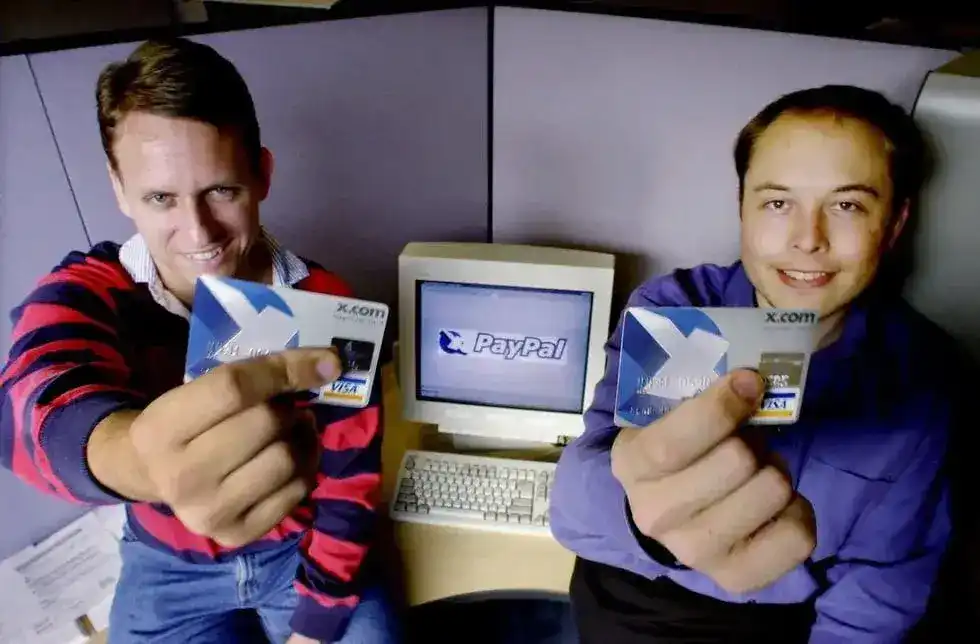
Kicked Out of PayPal, Musk Aims for a Comeback in the Crypto Market

Elon Musk's X (formerly Twitter) has launched its "Smart Cashtags" feature, generating approximately $1 billion in trading volume within days of its April 2026 pilot launch. The feature allows users to click on stock or crypto tickers (or even full Solana token contract addresses) in posts to view real-time price charts and discussions without leaving the app. Initially available to iPhone users in the US and Canada, with a partnership in Canada enabling direct trading via the Wealthsimple app. This move is part of Musk's broader "Everything App" vision, spearheaded by the upcoming X Money platform. Analysts, such as Mizuho's Dan Dolev, see this as a potential disruptor to the US payments market, even prompting a downgrade of PayPal's stock. X Money's beta offers services like 6% APY on deposits, cashback, and P2P transfers, with speculation it may later incorporate crypto trading and stablecoin settlements for faster transactions. However, the ambitious plan faces significant regulatory scrutiny. Senator Elizabeth Warren has questioned the sustainability of the high 6% yield and raised concerns over X's banking partner, Cross River Bank, which has a history of regulatory violations. Additional risks involve the "GENIUS Act," which may create loopholes for stablecoin issuance without full FDIC insurance coverage, potentially leaving users unprotected. The integration of social trading on a platform with over 500 million users could inject new liquidity and retail interest into the crypto market. Yet, it also amplifies risks like herd mentality and the blurring of lines between entertainment and financial speculation. Musk's return to finance, after his ouster from PayPal, hinges on balancing innovation with regulatory compliance.

marsbit1 h fa

Kicked Out of PayPal, Musk Aims for a Comeback in the Crypto Market

marsbit1 h fa

Trading

Spot
Futures

Articoli Popolari

Cosa è $S$

Comprendere SPERO: Una Panoramica Completa Introduzione a SPERO Mentre il panorama dell'innovazione continua a evolversi, l'emergere delle tecnologie web3 e dei progetti di criptovaluta gioca un ruolo fondamentale nel plasmare il futuro digitale. Un progetto che ha attirato l'attenzione in questo campo dinamico è SPERO, denotato come SPERO,$$s$. Questo articolo mira a raccogliere e presentare informazioni dettagliate su SPERO, per aiutare gli appassionati e gli investitori a comprendere le sue basi, obiettivi e innovazioni nei domini web3 e crypto. Che cos'è SPERO,$$s$? SPERO,$$s$ è un progetto unico all'interno dello spazio crypto che cerca di sfruttare i principi della decentralizzazione e della tecnologia blockchain per creare un ecosistema che promuove l'impegno, l'utilità e l'inclusione finanziaria. Il progetto è progettato per facilitare interazioni peer-to-peer in modi nuovi, fornendo agli utenti soluzioni e servizi finanziari innovativi. Al suo interno, SPERO,$$s$ mira a responsabilizzare gli individui fornendo strumenti e piattaforme che migliorano l'esperienza dell'utente nello spazio delle criptovalute. Questo include la possibilità di metodi di transazione più flessibili, la promozione di iniziative guidate dalla comunità e la creazione di percorsi per opportunità finanziarie attraverso applicazioni decentralizzate (dApps). La visione sottostante di SPERO,$$s$ ruota attorno all'inclusività, cercando di colmare le lacune all'interno della finanza tradizionale mentre sfrutta i vantaggi della tecnologia blockchain. Chi è il Creatore di SPERO,$$s$? L'identità del creatore di SPERO,$$s$ rimane piuttosto oscura, poiché ci sono risorse pubblicamente disponibili limitate che forniscono informazioni dettagliate sul suo fondatore o fondatori. Questa mancanza di trasparenza può derivare dall'impegno del progetto per la decentralizzazione—un ethos che molti progetti web3 condividono, dando priorità ai contributi collettivi rispetto al riconoscimento individuale. Centrando le discussioni attorno alla comunità e ai suoi obiettivi collettivi, SPERO,$$s$ incarna l'essenza dell'empowerment senza mettere in evidenza individui specifici. Pertanto, comprendere l'etica e la missione di SPERO rimane più importante che identificare un creatore singolo. Chi sono gli Investitori di SPERO,$$s$? SPERO,$$s$ è supportato da una varietà di investitori che vanno dai capitalisti di rischio agli investitori angelici dedicati a promuovere l'innovazione nel settore crypto. Il focus di questi investitori generalmente si allinea con la missione di SPERO—dando priorità a progetti che promettono avanzamenti tecnologici sociali, inclusività finanziaria e governance decentralizzata. Queste fondazioni di investitori sono tipicamente interessate a progetti che non solo offrono prodotti innovativi, ma contribuiscono anche positivamente alla comunità blockchain e ai suoi ecosistemi. Il supporto di questi investitori rafforza SPERO,$$s$ come un concorrente degno di nota nel dominio in rapida evoluzione dei progetti crypto. Come Funziona SPERO,$$s$? SPERO,$$s$ impiega un framework multifunzionale che lo distingue dai progetti di criptovaluta convenzionali. Ecco alcune delle caratteristiche chiave che sottolineano la sua unicità e innovazione: Governance Decentralizzata: SPERO,$$s$ integra modelli di governance decentralizzati, responsabilizzando gli utenti a partecipare attivamente ai processi decisionali riguardanti il futuro del progetto. Questo approccio favorisce un senso di proprietà e responsabilità tra i membri della comunità. Utilità del Token: SPERO,$$s$ utilizza il proprio token di criptovaluta, progettato per servire varie funzioni all'interno dell'ecosistema. Questi token abilitano transazioni, premi e la facilitazione dei servizi offerti sulla piattaforma, migliorando l'impegno e l'utilità complessivi. Architettura Stratificata: L'architettura tecnica di SPERO,$$s$ supporta la modularità e la scalabilità, consentendo un'integrazione fluida di funzionalità e applicazioni aggiuntive man mano che il progetto evolve. Questa adattabilità è fondamentale per mantenere la rilevanza nel panorama crypto in continua evoluzione. Coinvolgimento della Comunità: Il progetto enfatizza iniziative guidate dalla comunità, impiegando meccanismi che incentivano la collaborazione e il feedback. Nutrendo una comunità forte, SPERO,$$s$ può affrontare meglio le esigenze degli utenti e adattarsi alle tendenze di mercato. Focus sull'Inclusione: Offrendo basse commissioni di transazione e interfacce user-friendly, SPERO,$$s$ mira ad attrarre una base utenti diversificata, inclusi individui che potrebbero non aver precedentemente interagito nello spazio crypto. Questo impegno per l'inclusione si allinea con la sua missione generale di empowerment attraverso l'accessibilità. Cronologia di SPERO,$$s$ Comprendere la storia di un progetto fornisce preziose intuizioni sulla sua traiettoria di sviluppo e sui traguardi. Di seguito è riportata una cronologia suggerita che mappa eventi significativi nell'evoluzione di SPERO,$$s$: Fase di Concettualizzazione e Ideazione: Le idee iniziali che formano la base di SPERO,$$s$ sono state concepite, allineandosi strettamente con i principi di decentralizzazione e focus sulla comunità all'interno dell'industria blockchain. Lancio del Whitepaper del Progetto: Dopo la fase concettuale, è stato rilasciato un whitepaper completo che dettaglia la visione, gli obiettivi e l'infrastruttura tecnologica di SPERO,$$s$ per suscitare interesse e feedback dalla comunità. Costruzione della Comunità e Prime Interazioni: Sono stati effettuati sforzi attivi di outreach per costruire una comunità di early adopters e potenziali investitori, facilitando discussioni attorno agli obiettivi del progetto e ottenendo supporto. Evento di Generazione del Token: SPERO,$$s$ ha condotto un evento di generazione del token (TGE) per distribuire i propri token nativi ai primi sostenitori e stabilire una liquidità iniziale all'interno dell'ecosistema. Lancio della Prima dApp: La prima applicazione decentralizzata (dApp) associata a SPERO,$$s$ è stata attivata, consentendo agli utenti di interagire con le funzionalità principali della piattaforma. Sviluppo Continuo e Partnership: Aggiornamenti e miglioramenti continui alle offerte del progetto, inclusi partnership strategiche con altri attori nello spazio blockchain, hanno plasmato SPERO,$$s$ in un concorrente competitivo e in evoluzione nel mercato crypto. Conclusione SPERO,$$s$ rappresenta una testimonianza del potenziale del web3 e delle criptovalute di rivoluzionare i sistemi finanziari e responsabilizzare gli individui. Con un impegno per la governance decentralizzata, il coinvolgimento della comunità e funzionalità progettate in modo innovativo, apre la strada verso un panorama finanziario più inclusivo. Come per qualsiasi investimento nello spazio crypto in rapida evoluzione, si incoraggiano potenziali investitori e utenti a ricercare approfonditamente e a impegnarsi in modo riflessivo con gli sviluppi in corso all'interno di SPERO,$$s$. Il progetto mostra lo spirito innovativo dell'industria crypto, invitando a ulteriori esplorazioni delle sue innumerevoli possibilità. Mentre il percorso di SPERO,$$s$ è ancora in fase di sviluppo, i suoi principi fondamentali potrebbero effettivamente influenzare il futuro di come interagiamo con la tecnologia, la finanza e tra di noi in ecosistemi digitali interconnessi.

75 Totale visualizzazioniPubblicato il 2024.12.17Aggiornato il 2024.12.17

Cosa è $S$

Cosa è AGENT S

Agent S: Il Futuro dell'Interazione Autonoma in Web3 Introduzione Nel panorama in continua evoluzione di Web3 e criptovalute, le innovazioni stanno costantemente ridefinendo il modo in cui gli individui interagiscono con le piattaforme digitali. Uno di questi progetti pionieristici, Agent S, promette di rivoluzionare l'interazione uomo-computer attraverso il suo framework agentico aperto. Aprendo la strada a interazioni autonome, Agent S mira a semplificare compiti complessi, offrendo applicazioni trasformative nell'intelligenza artificiale (AI). Questa esplorazione dettagliata approfondirà le complessità del progetto, le sue caratteristiche uniche e le implicazioni per il dominio delle criptovalute. Cos'è Agent S? Agent S si presenta come un innovativo framework agentico aperto, progettato specificamente per affrontare tre sfide fondamentali nell'automazione dei compiti informatici: Acquisizione di Conoscenze Specifiche del Dominio: Il framework apprende in modo intelligente da varie fonti di conoscenza esterne ed esperienze interne. Questo approccio duale gli consente di costruire un ricco repository di conoscenze specifiche del dominio, migliorando le sue prestazioni nell'esecuzione dei compiti. Pianificazione su Lungo Orizzonte di Compiti: Agent S impiega una pianificazione gerarchica potenziata dall'esperienza, un approccio strategico che facilita la suddivisione e l'esecuzione efficiente di compiti complessi. Questa caratteristica migliora significativamente la sua capacità di gestire più sottocompiti in modo efficiente ed efficace. Gestione di Interfacce Dinamiche e Non Uniformi: Il progetto introduce l'Interfaccia Agente-Computer (ACI), una soluzione innovativa che migliora l'interazione tra agenti e utenti. Utilizzando Modelli Linguistici Multimodali di Grandi Dimensioni (MLLM), Agent S può navigare e manipolare senza sforzo diverse interfacce grafiche utente. Attraverso queste caratteristiche pionieristiche, Agent S fornisce un framework robusto che affronta le complessità coinvolte nell'automazione dell'interazione umana con le macchine, preparando il terreno per innumerevoli applicazioni nell'AI e oltre. Chi è il Creatore di Agent S? Sebbene il concetto di Agent S sia fondamentalmente innovativo, informazioni specifiche sul suo creatore rimangono elusive. Il creatore è attualmente sconosciuto, il che evidenzia sia la fase embrionale del progetto sia la scelta strategica di mantenere i membri fondatori sotto anonimato. Indipendentemente dall'anonimato, l'attenzione rimane sulle capacità e sul potenziale del framework. Chi sono gli Investitori di Agent S? Poiché Agent S è relativamente nuovo nell'ecosistema crittografico, informazioni dettagliate riguardanti i suoi investitori e sostenitori finanziari non sono documentate esplicitamente. La mancanza di approfondimenti pubblicamente disponibili sulle fondazioni di investimento o sulle organizzazioni che supportano il progetto solleva interrogativi sulla sua struttura di finanziamento e sulla roadmap di sviluppo. Comprendere il supporto è cruciale per valutare la sostenibilità del progetto e il suo potenziale impatto sul mercato. Come Funziona Agent S? Al centro di Agent S si trova una tecnologia all'avanguardia che gli consente di funzionare efficacemente in contesti diversi. Il suo modello operativo è costruito attorno a diverse caratteristiche chiave: Interazione Uomo-Computer Simile a Quella Umana: Il framework offre una pianificazione AI avanzata, cercando di rendere le interazioni con i computer più intuitive. Mimando il comportamento umano nell'esecuzione dei compiti, promette di elevare le esperienze degli utenti. Memoria Narrativa: Utilizzata per sfruttare esperienze di alto livello, Agent S utilizza la memoria narrativa per tenere traccia delle storie dei compiti, migliorando così i suoi processi decisionali. Memoria Episodica: Questa caratteristica fornisce agli utenti una guida passo-passo, consentendo al framework di offrire supporto contestuale mentre i compiti si sviluppano. Supporto per OpenACI: Con la capacità di funzionare localmente, Agent S consente agli utenti di mantenere il controllo sulle proprie interazioni e flussi di lavoro, allineandosi con l'etica decentralizzata di Web3. Facile Integrazione con API Esterne: La sua versatilità e compatibilità con varie piattaforme AI garantiscono che Agent S possa adattarsi senza problemi agli ecosistemi tecnologici esistenti, rendendolo una scelta attraente per sviluppatori e organizzazioni. Queste funzionalità contribuiscono collettivamente alla posizione unica di Agent S all'interno dello spazio crittografico, poiché automatizza compiti complessi e multi-fase con un intervento umano minimo. Man mano che il progetto evolve, le sue potenziali applicazioni in Web3 potrebbero ridefinire il modo in cui si svolgono le interazioni digitali. Cronologia di Agent S Lo sviluppo e le tappe di Agent S possono essere riassunti in una cronologia che evidenzia i suoi eventi significativi: 27 Settembre 2024: Il concetto di Agent S è stato lanciato in un documento di ricerca completo intitolato “Un Framework Agentico Aperto che Usa i Computer Come un Umano”, mostrando le basi per il progetto. 10 Ottobre 2024: Il documento di ricerca è stato reso pubblicamente disponibile su arXiv, offrendo un'esplorazione approfondita del framework e della sua valutazione delle prestazioni basata sul benchmark OSWorld. 12 Ottobre 2024: È stata rilasciata una presentazione video, fornendo un'idea visiva delle capacità e delle caratteristiche di Agent S, coinvolgendo ulteriormente potenziali utenti e investitori. Questi indicatori nella cronologia non solo illustrano i progressi di Agent S, ma indicano anche il suo impegno per la trasparenza e il coinvolgimento della comunità. Punti Chiave su Agent S Man mano che il framework Agent S continua a evolversi, diversi attributi chiave si distinguono, sottolineando la sua natura innovativa e il potenziale: Framework Innovativo: Progettato per fornire un uso intuitivo dei computer simile all'interazione umana, Agent S porta un approccio nuovo all'automazione dei compiti. Interazione Autonoma: La capacità di interagire autonomamente con i computer attraverso GUI segna un passo avanti verso soluzioni informatiche più intelligenti ed efficienti. Automazione di Compiti Complessi: Con la sua metodologia robusta, può automatizzare compiti complessi e multi-fase, rendendo i processi più veloci e meno soggetti a errori. Miglioramento Continuo: I meccanismi di apprendimento consentono ad Agent S di migliorare dalle esperienze passate, migliorando continuamente le sue prestazioni e la sua efficacia. Versatilità: La sua adattabilità attraverso diversi ambienti operativi come OSWorld e WindowsAgentArena garantisce che possa servire un'ampia gamma di applicazioni. Man mano che Agent S si posiziona nel panorama di Web3 e delle criptovalute, il suo potenziale per migliorare le capacità di interazione e automatizzare i processi segna un significativo avanzamento nelle tecnologie AI. Attraverso il suo framework innovativo, Agent S esemplifica il futuro delle interazioni digitali, promettendo un'esperienza più fluida ed efficiente per gli utenti in vari settori. Conclusione Agent S rappresenta un audace passo avanti nell'unione tra AI e Web3, con la capacità di ridefinire il modo in cui interagiamo con la tecnologia. Sebbene sia ancora nelle sue fasi iniziali, le possibilità per la sua applicazione sono vaste e coinvolgenti. Attraverso il suo framework completo che affronta sfide critiche, Agent S mira a portare le interazioni autonome al centro dell'esperienza digitale. Man mano che ci addentriamo nei regni delle criptovalute e della decentralizzazione, progetti come Agent S giocheranno senza dubbio un ruolo cruciale nel plasmare il futuro della tecnologia e della collaborazione uomo-computer.

417 Totale visualizzazioniPubblicato il 2025.01.14Aggiornato il 2025.01.14

Cosa è AGENT S

Come comprare S

Benvenuto in HTX.com! Abbiamo reso l'acquisto di Sonic (S) semplice e conveniente. Segui la nostra guida passo passo per intraprendere il tuo viaggio nel mondo delle criptovalute.Step 1: Crea il tuo Account HTXUsa la tua email o numero di telefono per registrarti il tuo account gratuito su HTX. Vivi un'esperienza facile e sblocca tutte le funzionalità,Crea il mio accountStep 2: Vai in Acquista crypto e seleziona il tuo metodo di pagamentoCarta di credito/debito: utilizza la tua Visa o Mastercard per acquistare immediatamente SonicS.Bilancio: Usa i fondi dal bilancio del tuo account HTX per fare trading senza problemi.Terze parti: abbiamo aggiunto metodi di pagamento molto utilizzati come Google Pay e Apple Pay per maggiore comodità.P2P: Fai trading direttamente con altri utenti HTX.Over-the-Counter (OTC): Offriamo servizi su misura e tassi di cambio competitivi per i trader.Step 3: Conserva Sonic (S)Dopo aver acquistato Sonic (S), conserva nel tuo account HTX. In alternativa, puoi inviare tramite trasferimento blockchain o scambiare per altre criptovalute.Step 4: Scambia Sonic (S)Scambia facilmente Sonic (S) nel mercato spot di HTX. Accedi al tuo account, seleziona la tua coppia di trading, esegui le tue operazioni e monitora in tempo reale. Offriamo un'esperienza user-friendly sia per chi ha appena iniziato che per i trader più esperti.

834 Totale visualizzazioniPubblicato il 2025.01.15Aggiornato il 2025.03.21

Come comprare S

Discussioni

Benvenuto nella Community HTX. Qui puoi rimanere informato sugli ultimi sviluppi della piattaforma e accedere ad approfondimenti esperti sul mercato. Le opinioni degli utenti sul prezzo di S S sono presentate come di seguito.

活动图片