$467K In Crypto Seized As Spain Cracks Down On Illegal Piracy Platform

bitcoinistPubblicato 2026-04-24Pubblicato ultima volta 2026-04-24

Introduzione

Spanish police seized €400,000 ($467,000) in cryptocurrency from two cold wallets hidden inside a wall thermometer during a raid in Almería. Three suspects were arrested in connection with the country’s largest illegal Spanish-language manga distribution platform, operational since 2014. The site generated over €4 million ($4.55 million) in ad revenue by offering pirated content. Authorities have not confirmed whether they can access the seized funds, as cold wallets require PINs or seed phrases. The case highlights challenges law enforcement face in handling crypto seizures, illustrated by custody failures in other countries like South Korea.

Spanish police made an unusual discovery during their raid — two crypto cold wallets tucked inside a household wall thermometer. The devices contained roughly 400,000 euros, about $467,000.

Authorities arrested three suspects in Almería in connection with what officials described as the biggest illegal Spanish-language manga distribution platform in the country’s history.

The site had been running since 2014. Over roughly a decade, it pulled in more than 4 million euros — around $4.55 million — mostly through advertising revenue. Visitors got free access to pirated manga while the operators quietly collected ad money in the background.

Spain’s Interior Ministry confirmed the arrests and the seizure. The investigation was opened in June 2025 after rights holders filed complaints against the platform.
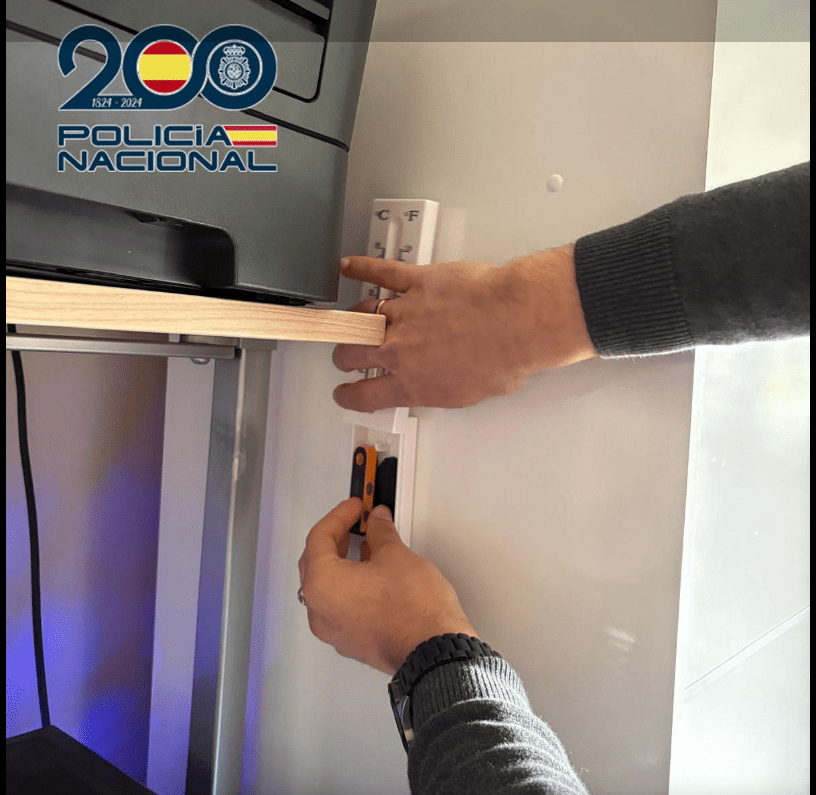
Authorities uncovered an unusual find during the raid: two crypto cold wallets hidden inside a household wall thermometer. Source: Ministerio Del Interior

Whether Police Can Actually Access The Funds Remains Unclear

Seizing a cold wallet is one thing. Getting inside it is another.

Cold wallets require a PIN or a seed phrase to unlock. Without those credentials, the hardware is essentially useless — the funds stay locked, inaccessible to anyone, including law enforcement.

Officials have not said whether they obtained the information needed to open the devices. Spain’s Interior Ministry had not responded to requests for comment before the story was published.

The case puts a spotlight on a problem that police departments worldwide are still working through. Hardware wallets are showing up in investigations that have nothing to do with crypto fraud or digital currency schemes. Piracy operations, it turns out, are now storing earnings the same way crypto investors do.

BTCUSD currently trading at $77,860. Chart: TradingView

South Korea Has Faced Its Own Custody Failures

Even when authorities can access seized crypto, holding onto it has proven difficult. South Korea has dealt with two high-profile losses of confiscated digital assets in recent years.

In one case, about 22 Bitcoin — valued at $1.5 million at the time — went missing from the Gangnam Police Station.

The funds had been seized in 2021 and vanished without the cold wallet being physically stolen, according to reports. A nationwide audit of digital asset custody practices uncovered the loss.

Featured image from DualShockers, chart from TradingView

Domande pertinenti

QWhat unusual item did Spanish police discover during their raid that contained the seized funds?

ATwo crypto cold wallets hidden inside a household wall thermometer.

QHow much money, in US dollars, was contained in the seized crypto wallets?

AApproximately $467,000.

QWhat was the primary source of revenue for the illegal manga distribution platform?

AAdvertising revenue.

QWhat is one major challenge law enforcement faces when seizing a cold wallet?

AAccessing the funds without the required PIN or seed phrase.

QWhich country was cited as an example of facing high-profile losses of confiscated digital assets?

ASouth Korea.

Letture associate

Luno Cuts 20% of Global Workforce as Cryptocurrency Exchange Shifts Priorities Towards Automation

Luno, a global cryptocurrency exchange owned by Digital Currency Group, is reducing its global workforce by 20% as part of a major operational restructuring driven by a downturn in retail crypto activity and increased automation. CEO James Lanigan announced the layoffs on July 28, stating it was a difficult but necessary decision to build a more sustainable structure for the long term. The company did not disclose the total number of affected employees, though South African staff are among those impacted, with formal consultations initiated there in line with local labor laws. This marks the second major round of layoffs in three and a half years, following a 35% staff reduction in January 2023. The company cites cyclical declines in retail user activity and ongoing investment in automated tools as key factors behind the restructuring, which has fundamentally changed the firm's resource needs. Concurrently, Luno is reorganizing into three unified divisions built on a single core platform: 1) a consolidated consumer and API platform serving over 16 million users in Africa and Asia-Pacific, 2) a stablecoin solutions unit focused on the zar-backed 'Zaru' stablecoin launched in February 2026, and 3) an institutional arm offering OTC services and cross-border settlement networks. This restructuring follows recent market withdrawals, with Luno discontinuing services in certain markets from September 1, 2026.

cryptonews.ru1 h fa

Luno Cuts 20% of Global Workforce as Cryptocurrency Exchange Shifts Priorities Towards Automation

cryptonews.ru1 h fa

Trading

Spot
活动图片