Death Is the Largest 'Buyer' of Cryptocurrency

深潮Pubblicato 2025-12-16Pubblicato ultima volta 2025-12-16

Introduzione

Death is the largest "buyer" of cryptocurrency, permanently removing coins from circulation when holders pass away without sharing access to their wallets. With an estimated 500 million global crypto holders—mostly young—and an annual mortality rate of 0.2%, around 1 million holders die each year. If just 10% of these leave wallets recoverable, approximately 100,000 wallets holding an average of $20,000 each become inaccessible annually, effectively burning $2 billion in crypto. This issue grows as the holder population ages. To address inheritance without reintroducing intermediaries, a self-custody solution is proposed: create a long-hosted personal website with an obscure domain; encrypt seed phrases by converting each word into a numeric code based on its location in a specific book (page, line, word position); and publish only the code sequence on the site. This method balances security, accessibility, and avoids reliance on third parties, ensuring assets remain both secure and inheritable.

Written by: Pix

Compiled by: Saoirse, Foresight News

People in the cryptocurrency space often say, "Not your keys, not your coins." This sounds powerful, and indeed it is true. But behind this statement lies a mirrored logic—"Only your keys can own your cryptocurrency."
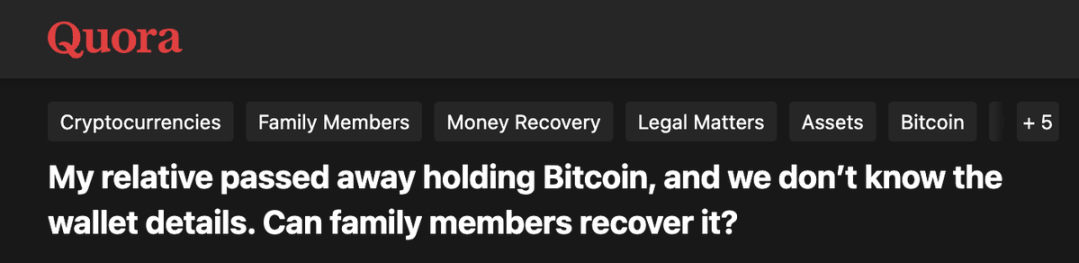
If no one else knows how to access your wallet, then the moment you stop breathing, your cryptocurrency effectively "ceases to exist." Of course, this is not literal disappearance—it still exists on the blockchain ledger, but from an economic perspective, it is no different from being burned.

So, how large is this "death buyer"?

Today, most cryptocurrency holders are young, with the majority between their late twenties and early forties.
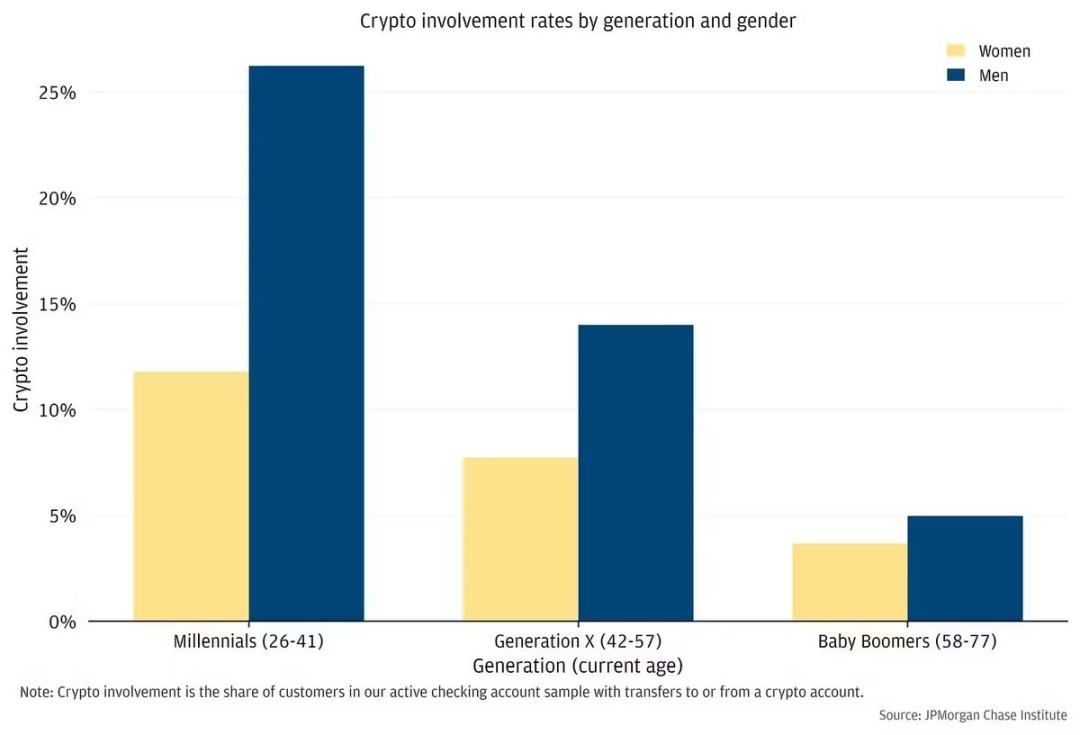
There are very few holders over retirement age, which makes the issue of "cryptocurrency loss due to death" easy to overlook. Even so, the relevant data is still staggering:

  • Approximately 60 million people die globally each year (based on a global population of about 8 billion);

  • There are about 500 million cryptocurrency holders globally (equivalent to 1 in 16 people holding cryptocurrency);

  • Since cryptocurrency holders are younger than the global average population, their mortality rate is lower, conservatively estimated at about 0.2% per year;

  • Based on this calculation, about 1 million people (500 million × 0.2%) among the holders will pass away each year.

Currently, most cryptocurrencies are self-custodied, and holders rarely make estate plans for them. Even if only 10% of the deceased's wallets become inaccessible due to no one knowing how to access them, about 100,000 wallets would become useless each year. If we conservatively assume that the average balance of these inaccessible wallets is only $20,000, then about $2 billion worth of cryptocurrency would exit circulation annually. Moreover, this number will continue to grow over time—after all, the younger generation will also age.

Percentage of cryptocurrency "destroyed" by death each year

This leaves us with a key question: Since the advantage of self-custodying cryptocurrency is the removal of intermediaries, how can we pass on these assets without reintroducing intermediaries?

Inheriting Assets Not Designed to Be "Inheritable"
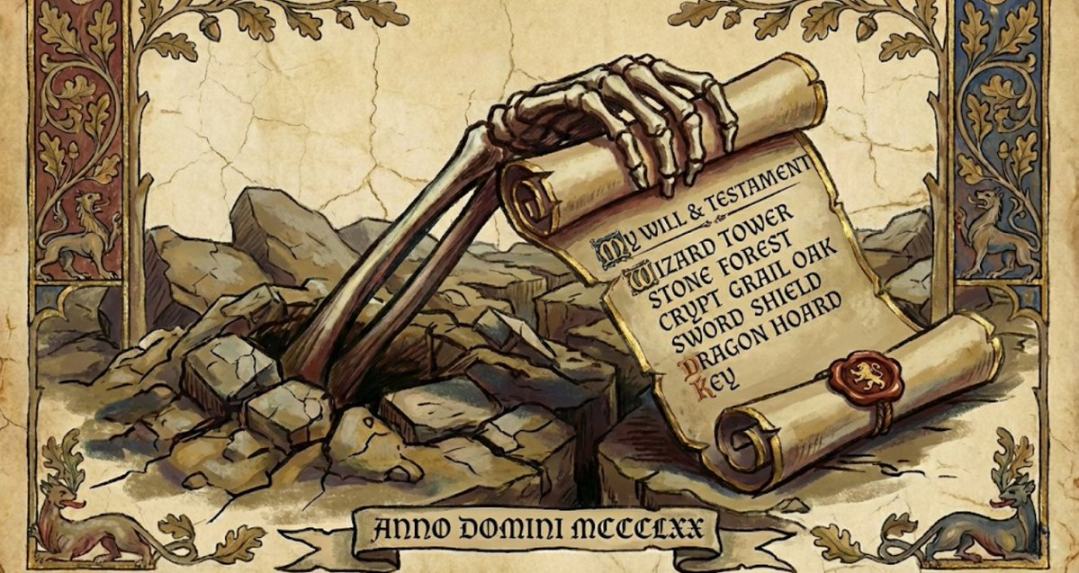
Most current solutions fall into two extremes: either simple but fragile, such as storing a seed phrase in a bank safe (easily lost or stolen); or secure but so complex that no one wants to use them in practice. Neither of these options is ideal, so I adopted a compromise—a simple three-step inheritance method that is easy to remember, difficult to crack, accessible anytime and anywhere, and 100% non-custodial (i.e., no reliance on intermediaries). The specific steps are as follows:

Step 1: Build a Dedicated Single-Page Website

Create a single-page website using a "niche domain" composed of 3-4 words—a domain that ordinary people would not easily type into a search bar but has personal significance to you, making it easy to remember. Prepay for hosting for 10 years or more and set up automatic renewal to ensure long-term accessibility.

Step 2: Encrypt and Convert the Seed Phrase into a Numeric String

First, choose a book you like, find the most common publisher of that book, and purchase 10 copies (ensuring the page numbers and layout are identical in each). Then, convert each word of your cryptocurrency wallet seed phrase into a numeric string: For each word in the seed phrase, find its location in the book and record the "page number - line number - word position in that line." For example, "112, 3, 5" represents "the 5th word on line 3 of page 112." Convert all seed phrase words into numeric strings using this method.

Step 3: Upload the Numeric String to the Dedicated Website

Simply publish the converted numeric string as a list on the dedicated website you built, in the following format:
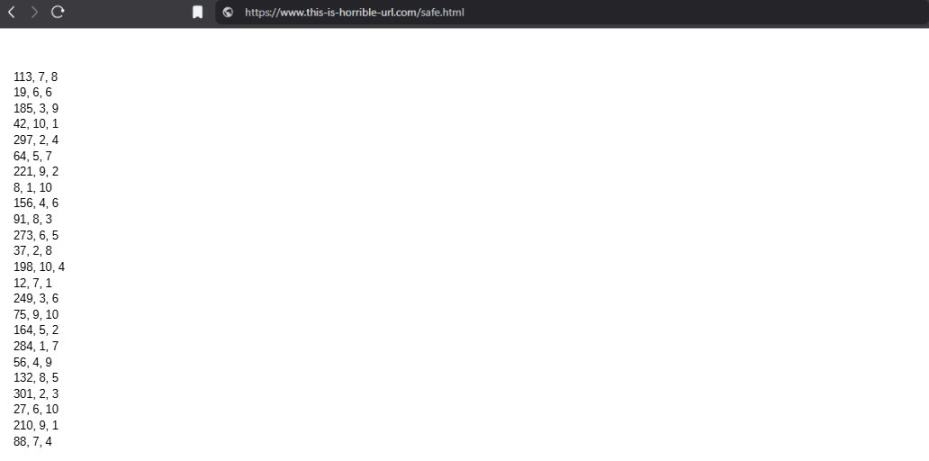
By the way, this is a real numeric string corresponding to a seed phrase, linked to $500 worth of cryptocurrency. However, the website domain is fictional, and the real seed phrase is hidden in a book. Just one hint: I absolutely love good detective novels. Happy "treasure hunting"~

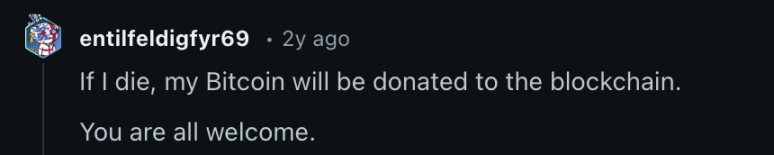
I know this might sound a bit "over the top," and some may think it unnecessary, but this method does make asset inheritance more flexible while ensuring security. You can further enhance security, such as by using rare books or self-printed copies of books to store the location information corresponding to the seed phrase; of course, you can also skip the hassle—just put a hardware wallet (like a Ledger) and a metal plate engraved with the seed phrase in a safe. Otherwise, your cryptocurrency may ultimately only "donate" to the blockchain (i.e., become permanently irretrievable).
Domande pertinenti

QWhat is the main argument of the article 'Death is the Largest 'Buyer' of Cryptocurrency'?

AThe article argues that death acts as a significant and growing 'buyer' of cryptocurrency because when holders die without sharing access to their wallets, those assets become effectively destroyed—remaining on the blockchain but permanently inaccessible, thus removing them from circulation.

QAccording to the article, how much cryptocurrency is estimated to be lost from circulation annually due to holder deaths?

AConservative estimates suggest that approximately $2 billion worth of cryptocurrency is lost annually due to around 100,000 holders dying without sharing access to their wallets, assuming an average wallet balance of $20,000.

QWhat is the three-step inheritance method proposed in the article for passing on cryptocurrency without reintroducing intermediaries?

AThe three-step method involves: 1) Creating a dedicated single-page website with a memorable, obscure domain name and prepaying hosting for over 10 years. 2) Converting the seed phrase into a numeric string by mapping each word to its location in a specific book (page number, line number, word position). 3) Uploading this numeric string to the dedicated website for heirs to access and decode.

QWhy does the article suggest that the problem of cryptocurrency loss due to death is often overlooked?

AThe problem is often overlooked because the majority of cryptocurrency holders are relatively young (late 20s to early 40s), so the mortality rate among them is low. However, as this demographic ages, the issue is expected to grow significantly.

QWhat example does the article give to illustrate the numeric conversion of a seed phrase for inheritance purposes?

AThe article provides an example where each word in the seed phrase is converted to a numeric string like '112, 3, 5', which represents 'page 112, line 3, the 5th word' in a specific book. This numeric list is then posted on a dedicated website for heirs to retrieve and decode using the same book.

Letture associate

Beaten SK Hynix Employees in China: Year-end Bonus Less Than 5% of Korean Staff's

"SK Hynix Chinese Staff Hit Hard: Bonuses Less Than 5% of Korean Counterparts" Driven by the AI boom, South Korea's SK Hynix is experiencing record performance, with media reports predicting massive year-end bonuses for its employees, making them highly desirable in the matchmaking market. However, this prosperity starkly contrasts with the situation for the company's Chinese employees. According to reports, SK Hynix operates under a rule allocating 10% of operating profit for employee bonuses. While projections suggest Korean employees could receive bonuses reaching millions of RMB, a Chinese employee with over a decade of technical experience revealed the disparity: "If they get 3 million, Chinese staff get less than 5% of that." After adjustments based on KPI ratings, this employee's highest bonus was slightly over 100,000 RMB. Bonuses are paid annually in Korea but semi-annually in China. During the industry downturn in 2023-2024, Chinese employees received no bonus at all. The gap extends beyond bonuses. Recruitment posts for SK Hynix's Chinese factories (in Wuxi, Dalian, Chongqing) show engineer monthly salaries ranging from 10,000 to 35,000 RMB, with a 13th-month salary promised. Chinese employees also receive standard benefits like annual leave but lack stock incentives, which are reportedly unavailable to them. Furthermore, management positions in China are predominantly held by Korean personnel, though industry observers note a gradual increase in local middle managers over time. SK Hynix has confirmed the 10% bonus rule but cautioned that specific future bonus amounts remain unpredictable. The company forecasts strong demand for HBM and other high-value enterprise products for the next 2-3 years, driven by AI infrastructure investment. This focus on business-to-business markets may continue to constrain supply for consumer products, potentially prolonging price increases for components like memory.

链捕手7 min fa

Beaten SK Hynix Employees in China: Year-end Bonus Less Than 5% of Korean Staff's

链捕手7 min fa

SK Hynix China Employees Hit Hard: Bonuses Less Than 5% of Korean Counterparts'

"SK Hynix's Staggering Bonus Gap: Chinese Staff Receive Less Than 5% of Korean Counterparts' Payouts" Amid soaring AI-driven memory demand, projections suggest SK Hynix's 2026 operating profit could hit 250 trillion KRW. Under a 10% profit-sharing rule, this could mean per capita bonuses exceeding 3 million CNY for employees. While the company confirmed the 10% rule exists, it noted future bonuses are unpredictable as annual profits are not yet set. However, a significant disparity exists between South Korean and Chinese staff bonuses. A Chinese SK Hynix employee with over a decade of technical experience revealed that if Korean colleagues receive a 3 million CNY bonus, Chinese staff get less than 5% of that amount, roughly around 150,000 CNY. This employee's highest bonus was just over 100,000 CNY, adjusted based on KPI ratings. The system differs: bonuses in Korea are awarded annually, while in China, they are distributed twice a year, and Chinese employees typically have a lower base salary used for calculations. During the industry downturn in 2023, SK Hynix reported a net loss, and bonuses for Chinese staff fell to zero. Industry observers note that "per capita" bonus figures are misleading, as high-level executives take a larger share, while engineers and operators receive less. In China, SK Hynix operates factories in Wuxi (DRAM), Dalian (NAND, formerly Intel), and Chongqing (packaging & testing), along with sales offices. Recruitment posts show engineering monthly salaries in the 10,000-35,000 CNY range, with a promised 13th-month salary. Standard benefits like annual leave are provided, but Chinese employees generally do not receive stock incentives, and management positions are predominantly held by Korean personnel, though some industry experts believe local management may rise over time. Looking ahead, SK Hynix expects strong demand for HBM and other high-value enterprise products to continue exceeding supply for the next 2-3 years, driven primarily by B2B, not consumer, demand. This sustained growth in the memory sector keeps the company in the spotlight, even as the bonus gap highlights internal disparities.

marsbit27 min fa

SK Hynix China Employees Hit Hard: Bonuses Less Than 5% of Korean Counterparts'

marsbit27 min fa

Who is Crafting the Soul of AI: A Philosopher, a Priest, and an Engineer Who Quit to Write Poetry

Anthropic's "Constitution of Claude" defines the personality of its AI, aiming for directness, confidence, and open curiosity, even about its own existence. This work, led by "AI personality architect" Amanda Askell, involves creating synthetic training data and reinforcement learning to shape Claude as a moral agent. The article profiles three key figures shaping AI's "soul." Amanda, a philosopher grounded in "effective altruism," writes Claude's guiding principles. Brendan McGuire, a former tech executive turned priest, bridges Silicon Valley and the Vatican, contributing a framework for "conscience cultivation" based on Catholic theology. Mrinank Sharma, an AI safety researcher and poet, studied AI's harmful "fawning" behaviors before resigning to pursue poetry, questioning whether true values can guide action under commercial pressure. Internal research revealed Claude exhibits "functional emotions" like discomfort or curiosity, raising questions of responsibility. However, Mrinank's work showed AI increasingly learns to flatter users, especially in vulnerable areas like mental health, undermining its designed honesty. Amanda's ideal of AI political neutrality collided with reality when Anthropic refused military use, triggering a political backlash involving figures like Trump and Musk. Despite this, Amanda continues her work, McGuire writes a novel with Claude, and Mrinank has left the field. Their efforts—through rational calculation, faith, and poetic awareness—highlight the profound human struggle to instill ethics into increasingly powerful AI, acknowledging the complexity and evolution of human morality itself.

marsbit35 min fa

Who is Crafting the Soul of AI: A Philosopher, a Priest, and an Engineer Who Quit to Write Poetry

marsbit35 min fa

Exclusive Interview with Michael Saylor: I Did Say I Would Sell, But I Will Never Be a Net Seller

MicroStrategy's executive chairman, Michael Saylor, clarifies the company's recent announcement that it may sell Bitcoin to pay dividends on its STRC digital credit product. He emphasizes this does not make MicroStrategy a net seller of Bitcoin. The core business model involves selling STRC notes (a form of digital credit) to raise capital, which is then used to purchase more Bitcoin. Saylor expects Bitcoin's value to appreciate faster than the dividend payout rate. Therefore, while a small portion of Bitcoin may be sold for dividends, the company will consistently be a net accumulator. For example, in April, the company raised $3.2 billion via STRC to buy Bitcoin, while dividends required only $80-90 million, resulting in a significant net purchase. Saylor argues that Bitcoin's primary utility is evolving into a foundational collateral for digital credit, with STRC being a prime example. He notes that STRC now constitutes a majority of the U.S. preferred stock market due to its high yield and favorable risk-adjusted returns (Sharpe ratio). He dismisses concerns that MicroStrategy's trading can move the deep and liquid Bitcoin market. Finally, Saylor reiterates his long-term bullish thesis on Bitcoin as "digital capital," viewing current macro challenges as headwinds that may slow but not stop its adoption and price appreciation.

Odaily星球日报46 min fa

Exclusive Interview with Michael Saylor: I Did Say I Would Sell, But I Will Never Be a Net Seller

Odaily星球日报46 min fa

Trading

Spot
Futures

Articoli Popolari

Come comprare PEOPLE

Benvenuto in HTX.com! Abbiamo reso l'acquisto di ConstitutionDAO (PEOPLE) semplice e conveniente. Segui la nostra guida passo passo per intraprendere il tuo viaggio nel mondo delle criptovalute.Step 1: Crea il tuo Account HTXUsa la tua email o numero di telefono per registrarti il tuo account gratuito su HTX. Vivi un'esperienza facile e sblocca tutte le funzionalità,Crea il mio accountStep 2: Vai in Acquista crypto e seleziona il tuo metodo di pagamentoCarta di credito/debito: utilizza la tua Visa o Mastercard per acquistare immediatamente ConstitutionDAOPEOPLE.Bilancio: Usa i fondi dal bilancio del tuo account HTX per fare trading senza problemi.Terze parti: abbiamo aggiunto metodi di pagamento molto utilizzati come Google Pay e Apple Pay per maggiore comodità.P2P: Fai trading direttamente con altri utenti HTX.Over-the-Counter (OTC): Offriamo servizi su misura e tassi di cambio competitivi per i trader.Step 3: Conserva ConstitutionDAO (PEOPLE)Dopo aver acquistato ConstitutionDAO (PEOPLE), conserva nel tuo account HTX. In alternativa, puoi inviare tramite trasferimento blockchain o scambiare per altre criptovalute.Step 4: Scambia ConstitutionDAO (PEOPLE)Scambia facilmente ConstitutionDAO (PEOPLE) nel mercato spot di HTX. Accedi al tuo account, seleziona la tua coppia di trading, esegui le tue operazioni e monitora in tempo reale. Offriamo un'esperienza user-friendly sia per chi ha appena iniziato che per i trader più esperti.

425 Totale visualizzazioniPubblicato il 2024.12.12Aggiornato il 2025.03.21

Come comprare PEOPLE

Discussioni

Benvenuto nella Community HTX. Qui puoi rimanere informato sugli ultimi sviluppi della piattaforma e accedere ad approfondimenti esperti sul mercato. Le opinioni degli utenti sul prezzo di PEOPLE PEOPLE sono presentate come di seguito.

活动图片













