Crypto Trader's Account: Friends Are Leaving, What's Left to Do in This Industry?

marsbitPubblicato 2026-04-22Pubblicato ultima volta 2026-04-22

Introduzione

Crypto trader Donn reflects on the declining state of the cryptocurrency industry, noting that many peers are leaving due to three core challenges: lack of innovation in the past 2-3 years, the threat of quantum computing to Bitcoin by 2029, and increased DeFi attacks exacerbated by AI models like Claude Mythos. VC activity has stagnated, with few quality token projects generating over $50M in annual income. Liquidity and investor interest have dwindled, shifting focus to traditional markets. For traders, event-based strategies remain viable but are increasingly competitive and low-yield due to reduced open interest and retail participation. Systematic and basis traders are exploring alternative strategies as traditional methods become less profitable. DeFi yield farming is increasingly unattractive due to rising hack risks and insufficient returns, pushing farmers toward off-chain options. On-chain gem hunters still chase high-risk, high-reward opportunities, but success rates are low, and most tokens crash shortly after peaking. Personally, the author is scaling down crypto trading, maintaining a small arbitrage strategy on Polymarket, and exploring AI automation for analytical tasks. He is also researching AI model fine-tuning and broader AI applications beyond crypto, seeking new focus areas as the industry wanes.

Author: donn (@tzedonn)

Compiled by: Deep Tide TechFlow

Deep Tide Introduction: When only 12 projects have annual revenues exceeding $50 million, when DeFi is attacked by AI and becomes a pit of fire, when on-chain gold diggers are still trapped in a battlefield that has already ended—every crypto practitioner should ask themselves the same question: What can I still do here?

Many of my friends have left or are considering leaving the crypto industry, so I want to share some broader thoughts about the market and discuss what is left to do in cryptocurrency?

The core of the problem is that cryptocurrency is stuck in three key areas: (i) a lack of innovation, with nothing new emerging in the past 2-3 years; (ii) the advancement of quantum technology threatening Bitcoin's survival by 2029; (iii) large language models like Claude Mythos increasing the number of attacks, making the risk/reward of DeFi unattractive.

This leads to the question: What is left to do in cryptocurrency?

VCs and Liquid Token Investors

Due to this innovation drought, the VC industry has been quite quiet, especially in token trading. Every crypto VC will tell you how boring it is, unless they are doing larger Series B+ funding or backing stablecoin payment startups.

The few good VCs I interact with are investing in contrarian verticals, such as quantum startups (e.g., Project Eleven, Oratomic) or novel ideas (e.g., Shift Foundation, PostFiat, Ambient).

I think this is normal because we have basically figured out what works and what infrastructure is needed, so there are fewer and fewer exciting new things. Now we are in the adoption phase of payments and remittances. The endgame and institutions have arrived.

Similarly, for those working in crypto, it only makes sense to work at stablecoin fintech companies (e.g., Circle, OpenFX, Tempo, Arc, Plasma), trading platforms (e.g., Polymarket, Kalshi, Hyperliquid), or novel contrarian startups (as mentioned above). Working at an L1 foundation is a well-paid dead-end job that does you no good in the long run.

The lack of "cool new things" on the VC side means fewer quality tokens will come to market, and less VC capital will flow into the liquid market.

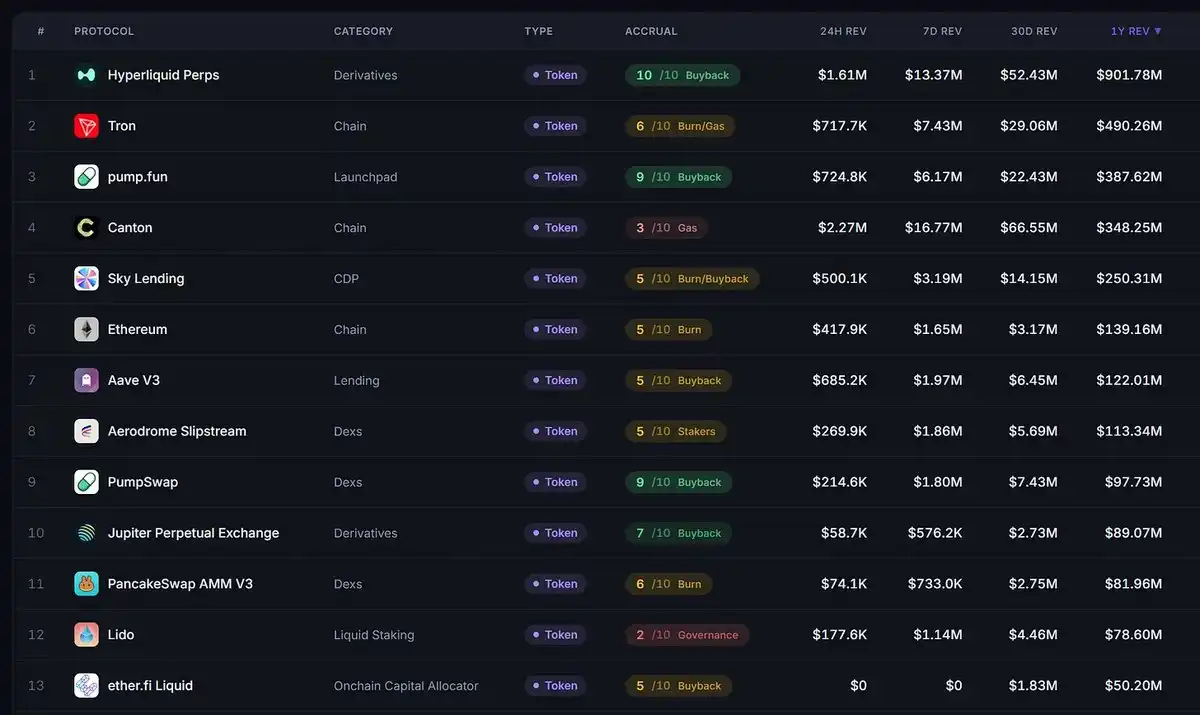
Therefore, long-term liquid token investors who evaluate tokens based on growth, fundamentals, and value accumulation probably have fewer than 10 quality targets now, and this number seems unlikely to increase in the short term.

Only 12 token projects have annual revenues exceeding $50 million. Only three of them have a value accumulation score >=7 (HYPE, PUMP, JUP). Even if you evaluate based on "growth" and teams improving token value accumulation, you might add another 5-10 tokens to the list below (e.g., MORPHO, SYRUP).

The market cap of OTHERS has also dropped from about $450 billion to about $180 billion, while the stock market is experiencing speculative frenzies in areas like high-bandwidth memory, photonics, quantum, polypeptides, etc.
Subjective and Systematic Traders

You might say cryptocurrency is mostly narrative trading and momentum trading, so it suits subjective traders who go long/short, trade narratives, or catalysts/news. This is the area I am in and know best.

In the depths of the bear market, trading catalysts has been more profitable, although many require you to stay alert and react quickly. There is a lot of edge and decent trading opportunities here.

Still, there have been quite a few event-driven trades in the past 3 months, such as...

Shorting TAO when the Templar subnet left, dropping from $330 to $260 in 5 hours (April 9)... Going long TAO on Chamath and Jason Cal's shills (with varying success)

No trade here, but interestingly, WLD didn't even rise on the Tinder and Zoom partnership announcement (down 8% in two days)

Shorting AAVE on the KelpDAO hack, which happened around 1730 UTC but was first reported on Twitter about an hour later at 1830 UTC (April 19)

Shorting AAVE on Marc Zeller's ACI departure (March 3)

Shorting the pullback in TRUMP after the Trump dinner announcement (March 12)

Shorting ACX to the "conversion price" after the spike from the token-to-equity conversion announcement (March 11)

Shorting DRIFT on the exploit, down 40% in 1 hour (April 1)

Shorting RESOLV on the exploit, down about 10% (March 22)

Going long ALGO on the Google quantum breakthrough (March 31)

Going long LDO on the buyback announcement, up about 17% in about 5 days (March 27)

Going long/short on pump-and-dump scams like RAVE, SIREN, STO, PIPPIN, POWER (things I prefer not to participate in)

Still, open interest has dropped about 60% since October 10th, and reactions to news are often small. You need to be selective about what news to trade and whether others care about it, because retail trading interest is scarce (usually the slowest to react to headlines), so you are mainly PVPing with other news traders.

I increasingly see subjective traders spending more time on prediction markets and trading stocks/commodities, and Hyperliquid makes this transition much easier.

As for systematic traders and basis traders. As trading volume and funding rates decline, traditional strategies are becoming less profitable. To keep themselves interested, they are doing HIP-3 markets, arbitraging prediction markets, trading Pendle PT/Boros, or arbitraging new perpetual DEXs (with limited liquidity).

Yield Farmers

The increasing number of hacks in DeFi has also put yield farmers (or TVL trading on the institutional side) into hibernation or completely exiting this year, as the last few good trades were Plasma and USDai. FlyingTulip might work in a bull cycle, but it didn't get much attention at launch.

Usually, "yield trading" makes sense because you can sell the governance tokens rewarded to you (as I highlighted here), but this assumes someone buys it from you. If liquid investors/subjective traders aren't there to add fuel, it's hard to make the risk/reward worthwhile.

This was true in the past (OHM), is true now (XPL, ENA), and will likely be true in the future (CHIP for USDai). The threshold for on-chain DeFi yield used to be 15-25% APY to account for treasury rates around 0% and a hack probability of about 10-15%.

The reason OHM was worth it back then wasn't because the risk was lower, but because the returns were much higher.

Now the threshold is probably closer to 50-60% APY, due to the increasing number of hacks ($795 million hacked in DeFi in the first four months of 2026) plus Claude Mythos potentially leading to more hacks and rising quantum risk. Since no one is buying the emitted tokens, it's hard to achieve a reasonable risk/reward.

Most rational farmers have almost entirely moved off-chain, because even an 11.5% STRC TradFi fixed note yield offers better risk-adjusted returns (15-20%).
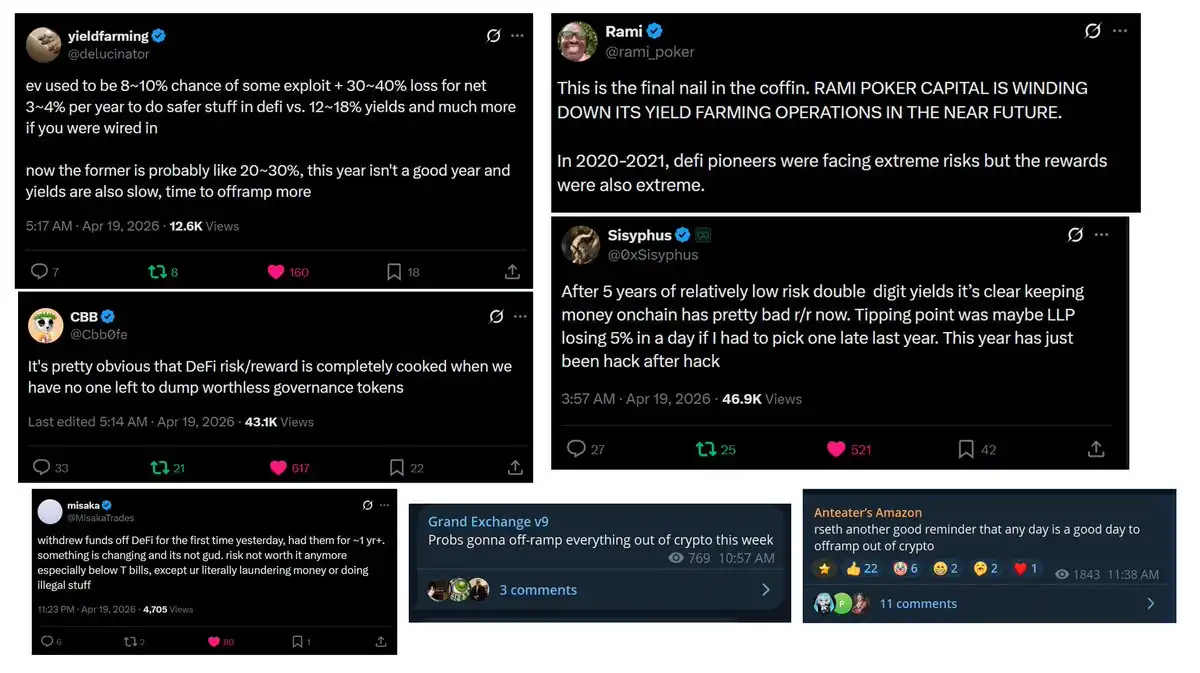
See: Rami poker, CBB, Sisyphus, delucinator, misaka

On-Chain Prospectors

Last but not least... the infamous on-chain prospectors: those who buy at $1 million market cap and sell at $100 million. I think these people will still exist, because the trenches are still the only place where you can pull off 100x.

On-chain prospectors also feel like WWII soldiers trapped in a cave, unaware that the gold rush era is basically over.

Needless to say, meme coins peaked when our dear President and First Lady launched their coins. We are nearing the end of the euthanasia coaster, things don't pump like they used to, and there are too many value extractors everywhere ("FNF groups", "LA vape groups", serial rug factories, and extractive transaction fees).

Still, I don't think this segment will die completely; a glimmer of hope keeps people in the trenches. In the past few months, we've seen...

$GAS: GasTown went from $100k market cap to $60 million in 3 days, then back to $1 million in 3 days, now at $50k market cap. (Jan 15)

$RALPH: RalphWiggum went from $500k to $55 million in 2 weeks, then dropped to $3 million (-93%) in 12 hours when the dev abandoned it, now trading at $50k market cap. (Jan 21)

$PENGUIN: Nietzschean Penguin pumped to $170 million in three days (Jan 24), but now trades at $3 million.

$MOLT hit $120 million in one day (Jan 31), but now trades at $1 million

$WHITEWHALE hit $200 million (Jan 10), but now trades at $7 million

$ASTEROID hit $200 million yesterday (April 19) after Musk tweeted it could be a SpaceX mascot. It will probably trend to zero in a few days.

While these show that pumps do happen from time to time, your odds of hitting them are probably <10%, and the absolute maximum potential is maybe a net 10x ($10m → $100m), because things don't pump past $100m anymore. Now you only have a few hours to sell it after the peak, because things drop >90% in a few hours.

So... What Am I Doing?

I am maintaining my arbitrage strategies on Polymarket, generating about 15% APY, with a max capacity of about $250k. Fully deployed, it only makes about $3500 per month. Arbitrage opportunities have also decreased since Polymarket introduced trading fees, and with the recent npm package poisoning, I increasingly feel the risk/reward isn't there (especially post-airdrop). The current plan is to kill it after the airdrop.

I continue to trade crypto, but not as actively as before. I had the idea of "starting an AI hedge fund," but my exploration led me to conclude that AI isn't creative enough for subjective trading (e.g., for idea generation), but it's great if you give it a task or methodology you've used before that requires a bit of logical reasoning.

So, I am spending time automating certain "hedge fund analyst" tasks, like automating the on-chain reconnaissance I used to do for internal wallets on Polymarket, which is quite process-based but requires a bit of logical thinking. It's a perfect task for Claude.

I am also increasingly looking into the fine-tuning aspect of AI models, especially from a crypto and financial data perspective. I've been reading outside of crypto, and I find topics like the AI stack (social impact and stocks across the stack), physical AI (world action models, vision language models, and data issues), and the idea of "AI roll-ups" (PE roll-ups but with AI) intellectually very stimulating, but haven't found a problem interesting enough to dedicate my life to solving yet.

If you have anything interesting to discuss, feel free to reach out!

Domande pertinenti

QAccording to the author, what are the three main reasons why the cryptocurrency industry is in trouble?

AThe three main reasons are: (i) lack of innovation with nothing new in the past 2-3 years, (ii) the threat of quantum computing advancements to Bitcoin's survival by 2029, and (iii) the increase in attacks from large language models like Claude Mythos, which makes DeFi's risk/reward unattractive.

QHow has the lack of innovation impacted Venture Capital (VC) activity in the crypto space?

AThe lack of innovation has made the VC industry quite quiet, especially in token deals. VCs find it boring unless they are working on larger Series B+ rounds or funding stablecoin payment startups. Fewer 'cool new things' mean fewer quality tokens are coming to market, and less VC capital is flowing into the liquid markets.

QWhat challenge do 'yield farmers' face in the current DeFi landscape according to the article?

AYield farmers face the challenge of increasingly frequent hacks in DeFi, making the risk/reward unattractive. The required annualized yield to justify the risk has risen to an estimated 50-60% due to the high probability of hacks and the fact that no one is buying the governance tokens they farm, making it hard to achieve a reasonable return.

QWhat does the author say about the current state and prospects for 'on-chain gold rushers'?

AThe author states that on-chain gold rushers feel like soldiers trapped in a cave, unaware that the gold rush era is essentially over. While occasional pumps still happen (e.g., tokens reaching $100M-$200M market cap), the odds of success are low (<10%), the maximum potential is a net 10x return, and tokens often crash by over 90% within hours of peaking.

QWhat personal projects is the author currently working on, as mentioned at the end of the article?

AThe author is maintaining an arbitrage strategy on Polymarket (yielding ~15% APY but with reduced opportunities), exploring the automation of 'hedge fund analyst' tasks using AI (e.g., automating on-chain sleuthing for internal wallets), researching the fine-tuning of AI models for crypto/financial data, and reading about topics outside of crypto like the AI stack and physical AI.

Letture associate

Trading

Spot
Futures

Articoli Popolari

Cosa è $S$

Comprendere SPERO: Una Panoramica Completa Introduzione a SPERO Mentre il panorama dell'innovazione continua a evolversi, l'emergere delle tecnologie web3 e dei progetti di criptovaluta gioca un ruolo fondamentale nel plasmare il futuro digitale. Un progetto che ha attirato l'attenzione in questo campo dinamico è SPERO, denotato come SPERO,$$s$. Questo articolo mira a raccogliere e presentare informazioni dettagliate su SPERO, per aiutare gli appassionati e gli investitori a comprendere le sue basi, obiettivi e innovazioni nei domini web3 e crypto. Che cos'è SPERO,$$s$? SPERO,$$s$ è un progetto unico all'interno dello spazio crypto che cerca di sfruttare i principi della decentralizzazione e della tecnologia blockchain per creare un ecosistema che promuove l'impegno, l'utilità e l'inclusione finanziaria. Il progetto è progettato per facilitare interazioni peer-to-peer in modi nuovi, fornendo agli utenti soluzioni e servizi finanziari innovativi. Al suo interno, SPERO,$$s$ mira a responsabilizzare gli individui fornendo strumenti e piattaforme che migliorano l'esperienza dell'utente nello spazio delle criptovalute. Questo include la possibilità di metodi di transazione più flessibili, la promozione di iniziative guidate dalla comunità e la creazione di percorsi per opportunità finanziarie attraverso applicazioni decentralizzate (dApps). La visione sottostante di SPERO,$$s$ ruota attorno all'inclusività, cercando di colmare le lacune all'interno della finanza tradizionale mentre sfrutta i vantaggi della tecnologia blockchain. Chi è il Creatore di SPERO,$$s$? L'identità del creatore di SPERO,$$s$ rimane piuttosto oscura, poiché ci sono risorse pubblicamente disponibili limitate che forniscono informazioni dettagliate sul suo fondatore o fondatori. Questa mancanza di trasparenza può derivare dall'impegno del progetto per la decentralizzazione—un ethos che molti progetti web3 condividono, dando priorità ai contributi collettivi rispetto al riconoscimento individuale. Centrando le discussioni attorno alla comunità e ai suoi obiettivi collettivi, SPERO,$$s$ incarna l'essenza dell'empowerment senza mettere in evidenza individui specifici. Pertanto, comprendere l'etica e la missione di SPERO rimane più importante che identificare un creatore singolo. Chi sono gli Investitori di SPERO,$$s$? SPERO,$$s$ è supportato da una varietà di investitori che vanno dai capitalisti di rischio agli investitori angelici dedicati a promuovere l'innovazione nel settore crypto. Il focus di questi investitori generalmente si allinea con la missione di SPERO—dando priorità a progetti che promettono avanzamenti tecnologici sociali, inclusività finanziaria e governance decentralizzata. Queste fondazioni di investitori sono tipicamente interessate a progetti che non solo offrono prodotti innovativi, ma contribuiscono anche positivamente alla comunità blockchain e ai suoi ecosistemi. Il supporto di questi investitori rafforza SPERO,$$s$ come un concorrente degno di nota nel dominio in rapida evoluzione dei progetti crypto. Come Funziona SPERO,$$s$? SPERO,$$s$ impiega un framework multifunzionale che lo distingue dai progetti di criptovaluta convenzionali. Ecco alcune delle caratteristiche chiave che sottolineano la sua unicità e innovazione: Governance Decentralizzata: SPERO,$$s$ integra modelli di governance decentralizzati, responsabilizzando gli utenti a partecipare attivamente ai processi decisionali riguardanti il futuro del progetto. Questo approccio favorisce un senso di proprietà e responsabilità tra i membri della comunità. Utilità del Token: SPERO,$$s$ utilizza il proprio token di criptovaluta, progettato per servire varie funzioni all'interno dell'ecosistema. Questi token abilitano transazioni, premi e la facilitazione dei servizi offerti sulla piattaforma, migliorando l'impegno e l'utilità complessivi. Architettura Stratificata: L'architettura tecnica di SPERO,$$s$ supporta la modularità e la scalabilità, consentendo un'integrazione fluida di funzionalità e applicazioni aggiuntive man mano che il progetto evolve. Questa adattabilità è fondamentale per mantenere la rilevanza nel panorama crypto in continua evoluzione. Coinvolgimento della Comunità: Il progetto enfatizza iniziative guidate dalla comunità, impiegando meccanismi che incentivano la collaborazione e il feedback. Nutrendo una comunità forte, SPERO,$$s$ può affrontare meglio le esigenze degli utenti e adattarsi alle tendenze di mercato. Focus sull'Inclusione: Offrendo basse commissioni di transazione e interfacce user-friendly, SPERO,$$s$ mira ad attrarre una base utenti diversificata, inclusi individui che potrebbero non aver precedentemente interagito nello spazio crypto. Questo impegno per l'inclusione si allinea con la sua missione generale di empowerment attraverso l'accessibilità. Cronologia di SPERO,$$s$ Comprendere la storia di un progetto fornisce preziose intuizioni sulla sua traiettoria di sviluppo e sui traguardi. Di seguito è riportata una cronologia suggerita che mappa eventi significativi nell'evoluzione di SPERO,$$s$: Fase di Concettualizzazione e Ideazione: Le idee iniziali che formano la base di SPERO,$$s$ sono state concepite, allineandosi strettamente con i principi di decentralizzazione e focus sulla comunità all'interno dell'industria blockchain. Lancio del Whitepaper del Progetto: Dopo la fase concettuale, è stato rilasciato un whitepaper completo che dettaglia la visione, gli obiettivi e l'infrastruttura tecnologica di SPERO,$$s$ per suscitare interesse e feedback dalla comunità. Costruzione della Comunità e Prime Interazioni: Sono stati effettuati sforzi attivi di outreach per costruire una comunità di early adopters e potenziali investitori, facilitando discussioni attorno agli obiettivi del progetto e ottenendo supporto. Evento di Generazione del Token: SPERO,$$s$ ha condotto un evento di generazione del token (TGE) per distribuire i propri token nativi ai primi sostenitori e stabilire una liquidità iniziale all'interno dell'ecosistema. Lancio della Prima dApp: La prima applicazione decentralizzata (dApp) associata a SPERO,$$s$ è stata attivata, consentendo agli utenti di interagire con le funzionalità principali della piattaforma. Sviluppo Continuo e Partnership: Aggiornamenti e miglioramenti continui alle offerte del progetto, inclusi partnership strategiche con altri attori nello spazio blockchain, hanno plasmato SPERO,$$s$ in un concorrente competitivo e in evoluzione nel mercato crypto. Conclusione SPERO,$$s$ rappresenta una testimonianza del potenziale del web3 e delle criptovalute di rivoluzionare i sistemi finanziari e responsabilizzare gli individui. Con un impegno per la governance decentralizzata, il coinvolgimento della comunità e funzionalità progettate in modo innovativo, apre la strada verso un panorama finanziario più inclusivo. Come per qualsiasi investimento nello spazio crypto in rapida evoluzione, si incoraggiano potenziali investitori e utenti a ricercare approfonditamente e a impegnarsi in modo riflessivo con gli sviluppi in corso all'interno di SPERO,$$s$. Il progetto mostra lo spirito innovativo dell'industria crypto, invitando a ulteriori esplorazioni delle sue innumerevoli possibilità. Mentre il percorso di SPERO,$$s$ è ancora in fase di sviluppo, i suoi principi fondamentali potrebbero effettivamente influenzare il futuro di come interagiamo con la tecnologia, la finanza e tra di noi in ecosistemi digitali interconnessi.

75 Totale visualizzazioniPubblicato il 2024.12.17Aggiornato il 2024.12.17

Cosa è $S$

Cosa è AGENT S

Agent S: Il Futuro dell'Interazione Autonoma in Web3 Introduzione Nel panorama in continua evoluzione di Web3 e criptovalute, le innovazioni stanno costantemente ridefinendo il modo in cui gli individui interagiscono con le piattaforme digitali. Uno di questi progetti pionieristici, Agent S, promette di rivoluzionare l'interazione uomo-computer attraverso il suo framework agentico aperto. Aprendo la strada a interazioni autonome, Agent S mira a semplificare compiti complessi, offrendo applicazioni trasformative nell'intelligenza artificiale (AI). Questa esplorazione dettagliata approfondirà le complessità del progetto, le sue caratteristiche uniche e le implicazioni per il dominio delle criptovalute. Cos'è Agent S? Agent S si presenta come un innovativo framework agentico aperto, progettato specificamente per affrontare tre sfide fondamentali nell'automazione dei compiti informatici: Acquisizione di Conoscenze Specifiche del Dominio: Il framework apprende in modo intelligente da varie fonti di conoscenza esterne ed esperienze interne. Questo approccio duale gli consente di costruire un ricco repository di conoscenze specifiche del dominio, migliorando le sue prestazioni nell'esecuzione dei compiti. Pianificazione su Lungo Orizzonte di Compiti: Agent S impiega una pianificazione gerarchica potenziata dall'esperienza, un approccio strategico che facilita la suddivisione e l'esecuzione efficiente di compiti complessi. Questa caratteristica migliora significativamente la sua capacità di gestire più sottocompiti in modo efficiente ed efficace. Gestione di Interfacce Dinamiche e Non Uniformi: Il progetto introduce l'Interfaccia Agente-Computer (ACI), una soluzione innovativa che migliora l'interazione tra agenti e utenti. Utilizzando Modelli Linguistici Multimodali di Grandi Dimensioni (MLLM), Agent S può navigare e manipolare senza sforzo diverse interfacce grafiche utente. Attraverso queste caratteristiche pionieristiche, Agent S fornisce un framework robusto che affronta le complessità coinvolte nell'automazione dell'interazione umana con le macchine, preparando il terreno per innumerevoli applicazioni nell'AI e oltre. Chi è il Creatore di Agent S? Sebbene il concetto di Agent S sia fondamentalmente innovativo, informazioni specifiche sul suo creatore rimangono elusive. Il creatore è attualmente sconosciuto, il che evidenzia sia la fase embrionale del progetto sia la scelta strategica di mantenere i membri fondatori sotto anonimato. Indipendentemente dall'anonimato, l'attenzione rimane sulle capacità e sul potenziale del framework. Chi sono gli Investitori di Agent S? Poiché Agent S è relativamente nuovo nell'ecosistema crittografico, informazioni dettagliate riguardanti i suoi investitori e sostenitori finanziari non sono documentate esplicitamente. La mancanza di approfondimenti pubblicamente disponibili sulle fondazioni di investimento o sulle organizzazioni che supportano il progetto solleva interrogativi sulla sua struttura di finanziamento e sulla roadmap di sviluppo. Comprendere il supporto è cruciale per valutare la sostenibilità del progetto e il suo potenziale impatto sul mercato. Come Funziona Agent S? Al centro di Agent S si trova una tecnologia all'avanguardia che gli consente di funzionare efficacemente in contesti diversi. Il suo modello operativo è costruito attorno a diverse caratteristiche chiave: Interazione Uomo-Computer Simile a Quella Umana: Il framework offre una pianificazione AI avanzata, cercando di rendere le interazioni con i computer più intuitive. Mimando il comportamento umano nell'esecuzione dei compiti, promette di elevare le esperienze degli utenti. Memoria Narrativa: Utilizzata per sfruttare esperienze di alto livello, Agent S utilizza la memoria narrativa per tenere traccia delle storie dei compiti, migliorando così i suoi processi decisionali. Memoria Episodica: Questa caratteristica fornisce agli utenti una guida passo-passo, consentendo al framework di offrire supporto contestuale mentre i compiti si sviluppano. Supporto per OpenACI: Con la capacità di funzionare localmente, Agent S consente agli utenti di mantenere il controllo sulle proprie interazioni e flussi di lavoro, allineandosi con l'etica decentralizzata di Web3. Facile Integrazione con API Esterne: La sua versatilità e compatibilità con varie piattaforme AI garantiscono che Agent S possa adattarsi senza problemi agli ecosistemi tecnologici esistenti, rendendolo una scelta attraente per sviluppatori e organizzazioni. Queste funzionalità contribuiscono collettivamente alla posizione unica di Agent S all'interno dello spazio crittografico, poiché automatizza compiti complessi e multi-fase con un intervento umano minimo. Man mano che il progetto evolve, le sue potenziali applicazioni in Web3 potrebbero ridefinire il modo in cui si svolgono le interazioni digitali. Cronologia di Agent S Lo sviluppo e le tappe di Agent S possono essere riassunti in una cronologia che evidenzia i suoi eventi significativi: 27 Settembre 2024: Il concetto di Agent S è stato lanciato in un documento di ricerca completo intitolato “Un Framework Agentico Aperto che Usa i Computer Come un Umano”, mostrando le basi per il progetto. 10 Ottobre 2024: Il documento di ricerca è stato reso pubblicamente disponibile su arXiv, offrendo un'esplorazione approfondita del framework e della sua valutazione delle prestazioni basata sul benchmark OSWorld. 12 Ottobre 2024: È stata rilasciata una presentazione video, fornendo un'idea visiva delle capacità e delle caratteristiche di Agent S, coinvolgendo ulteriormente potenziali utenti e investitori. Questi indicatori nella cronologia non solo illustrano i progressi di Agent S, ma indicano anche il suo impegno per la trasparenza e il coinvolgimento della comunità. Punti Chiave su Agent S Man mano che il framework Agent S continua a evolversi, diversi attributi chiave si distinguono, sottolineando la sua natura innovativa e il potenziale: Framework Innovativo: Progettato per fornire un uso intuitivo dei computer simile all'interazione umana, Agent S porta un approccio nuovo all'automazione dei compiti. Interazione Autonoma: La capacità di interagire autonomamente con i computer attraverso GUI segna un passo avanti verso soluzioni informatiche più intelligenti ed efficienti. Automazione di Compiti Complessi: Con la sua metodologia robusta, può automatizzare compiti complessi e multi-fase, rendendo i processi più veloci e meno soggetti a errori. Miglioramento Continuo: I meccanismi di apprendimento consentono ad Agent S di migliorare dalle esperienze passate, migliorando continuamente le sue prestazioni e la sua efficacia. Versatilità: La sua adattabilità attraverso diversi ambienti operativi come OSWorld e WindowsAgentArena garantisce che possa servire un'ampia gamma di applicazioni. Man mano che Agent S si posiziona nel panorama di Web3 e delle criptovalute, il suo potenziale per migliorare le capacità di interazione e automatizzare i processi segna un significativo avanzamento nelle tecnologie AI. Attraverso il suo framework innovativo, Agent S esemplifica il futuro delle interazioni digitali, promettendo un'esperienza più fluida ed efficiente per gli utenti in vari settori. Conclusione Agent S rappresenta un audace passo avanti nell'unione tra AI e Web3, con la capacità di ridefinire il modo in cui interagiamo con la tecnologia. Sebbene sia ancora nelle sue fasi iniziali, le possibilità per la sua applicazione sono vaste e coinvolgenti. Attraverso il suo framework completo che affronta sfide critiche, Agent S mira a portare le interazioni autonome al centro dell'esperienza digitale. Man mano che ci addentriamo nei regni delle criptovalute e della decentralizzazione, progetti come Agent S giocheranno senza dubbio un ruolo cruciale nel plasmare il futuro della tecnologia e della collaborazione uomo-computer.

415 Totale visualizzazioniPubblicato il 2025.01.14Aggiornato il 2025.01.14

Cosa è AGENT S

Come comprare S

Benvenuto in HTX.com! Abbiamo reso l'acquisto di Sonic (S) semplice e conveniente. Segui la nostra guida passo passo per intraprendere il tuo viaggio nel mondo delle criptovalute.Step 1: Crea il tuo Account HTXUsa la tua email o numero di telefono per registrarti il tuo account gratuito su HTX. Vivi un'esperienza facile e sblocca tutte le funzionalità,Crea il mio accountStep 2: Vai in Acquista crypto e seleziona il tuo metodo di pagamentoCarta di credito/debito: utilizza la tua Visa o Mastercard per acquistare immediatamente SonicS.Bilancio: Usa i fondi dal bilancio del tuo account HTX per fare trading senza problemi.Terze parti: abbiamo aggiunto metodi di pagamento molto utilizzati come Google Pay e Apple Pay per maggiore comodità.P2P: Fai trading direttamente con altri utenti HTX.Over-the-Counter (OTC): Offriamo servizi su misura e tassi di cambio competitivi per i trader.Step 3: Conserva Sonic (S)Dopo aver acquistato Sonic (S), conserva nel tuo account HTX. In alternativa, puoi inviare tramite trasferimento blockchain o scambiare per altre criptovalute.Step 4: Scambia Sonic (S)Scambia facilmente Sonic (S) nel mercato spot di HTX. Accedi al tuo account, seleziona la tua coppia di trading, esegui le tue operazioni e monitora in tempo reale. Offriamo un'esperienza user-friendly sia per chi ha appena iniziato che per i trader più esperti.

831 Totale visualizzazioniPubblicato il 2025.01.15Aggiornato il 2025.03.21

Come comprare S

Discussioni

Benvenuto nella Community HTX. Qui puoi rimanere informato sugli ultimi sviluppi della piattaforma e accedere ad approfondimenti esperti sul mercato. Le opinioni degli utenti sul prezzo di S S sono presentate come di seguito.

活动图片