Crypto Tax Data Collection Begins in 48 Countries Ahead of CARF 2027

TheNewsCryptoPubblicato 2026-01-02Pubblicato ultima volta 2026-01-02

Introduzione

Ahead of the 2027 global implementation of the Crypto-Asset Reporting Framework (CARF), tax authorities in 48 countries have begun collecting detailed cryptocurrency transaction data from service providers as of January 1 this year. Developed by the OECD, CARF aims to enhance tax transparency, combat evasion, and address money laundering risks by requiring centralized exchanges, certain decentralized platforms, and crypto brokers to report transaction data. Many jurisdictions have already enacted laws to enforce this data collection, with a second group of 27 countries, including Australia and Canada, set to follow in 2027. While the data is officially for tax purposes, concerns exist about its potential use for broader financial surveillance and tracing anonymous crypto ownership. Investors should expect stricter compliance procedures from trading platforms and increased transparency similar to traditional finance.

Crypto investors across 48 countries will soon face a major shift in tax transparency as authorities begin collecting detailed crypto transaction data ahead of the global rollout of the Crypto-Asset Reporting Framework (CARF) in 2027.

Although CARF officially takes effect in 2027, crypto service providers in participating jurisdictions must begin collecting transaction data from Jan. 1 this year. The early start signals a coordinated push by governments to strengthen oversight, combat tax evasion, and address money laundering risks tied to digital assets.

CARF was developed by the Organisation for Economic Co-operation and Development as a global standard for crypto tax transparency. The framework focuses on centralized exchanges, certain decentralized platforms, crypto ATMs, and persons acting as broker-dealers in facilitating crypto-transactions.

Governments move toward early enforcement

In an update released in November, the OECD reported that many of the countries involved have already introduced a law requiring crypto service providers to collect data related to the CARF. Others are in the final stages of enforcement. This progress allows tax authorities to prepare for full-scale information exchange once the framework activates in 2027.

CARF aims to ensure taxpayers meet their obligations regardless of where they trade or hold crypto assets. Regulators designed the system to close loopholes that allow investors to shift activity across borders to avoid detection.

The move comes as a result of many years of lobbying from the G20, whose finance ministers began advocating for improved reporting standards in cryptocurrencies as far back as 2021. By 2022, the OECD refined the fundamental rules of CARF.

Two rollout phases shape global coverage

The first group includes 48 Countries, which will begin reporting transactions in year 2026 and will start exchanging in year 2027. A second group of 27 jurisdictions will follow one year later, with data sharing beginning in 2028.

Countries in the second phase include Australia, Canada, Mexico, and Switzerland. These jurisdictions have until Jan. 1, 2027, to require crypto firms to start collecting the necessary data.

In Asia, Hong Kong has already begun consultations on CARF implementation. The authorities are also assessing changes in the requirements to report taxes, as the matter has been linked with combating cross-border evasion of taxes.

Data may extend beyond tax enforcement

CARF restricts the use of the collected data to taxation, but in the industry, expectations are high regarding the implications that might arise from it. Crypto tax software company TaxBit, in November, warned of the potential deep insights that might arise from CARF data regarding crypto ownership and identity.

This could enable authorities to trace anonymous owners of cryptocurrencies, enable financial intelligence, and enable authorities to link these digital wallets to criminal instances. This has led to an ongoing debate among privacy activists and participants regarding how governments will protect confidentiality.

At the same time, regulators argue that transparency remains essential as crypto markets mature and integrate further into the global financial system.

What investors should expect

While the process of collecting data is intensified, crypto-users can also look forward to stricter compliance procedures from crypto-trading platforms. They might start asking for more personal detail information, with transaction details also under scrutiny.

With CARF looming on the horizon, it is now apparent that the taxation of cryptocurrencies is soon going to have the same transparency standards as the traditional finance sector. For investors, the message is simple: global reporting rules are coming, and preparation has already begun.

Highlighted Crypto News:

Jupiter Launches Mobile V3 With Native Pro Trading Tools

TagsCrypto Tax

Crypto di tendenza

Domande pertinenti

QWhat is the Crypto-Asset Reporting Framework (CARF) and when does it officially take effect?

AThe Crypto-Asset Reporting Framework (CARF) is a global standard for crypto tax transparency developed by the Organisation for Economic Co-operation and Development (OECD). It officially takes effect in 2027.

QWhy are crypto service providers in participating jurisdictions required to start collecting data from January 2024, even though CARF doesn't start until 2027?

ACrypto service providers are required to start collecting data early to allow tax authorities to prepare for full-scale information exchange once the framework activates in 2027. This early start signals a coordinated push by governments to strengthen oversight, combat tax evasion, and address money laundering risks.

QHow many countries are in the first group for CARF rollout, and when will they begin exchanging data?

AThe first group includes 48 countries. They will begin reporting transactions in 2026 and will start exchanging data in 2027.

QBeyond tax enforcement, what are some potential implications of the data collected under CARF according to industry experts?

AAccording to industry experts like crypto tax software company TaxBit, the data collected under CARF could provide deep insights into crypto ownership and identity. This could enable authorities to trace anonymous cryptocurrency owners, enhance financial intelligence, and link digital wallets to criminal activity, raising debates about privacy and confidentiality.

QWhat should crypto investors expect as a result of CARF's implementation?

ACrypto investors should expect stricter compliance procedures from trading platforms, which may start asking for more personal details and scrutinizing transaction information. The taxation of cryptocurrencies is moving toward the same transparency standards as the traditional finance sector, meaning global reporting rules are coming and preparation has already begun.

Letture associate

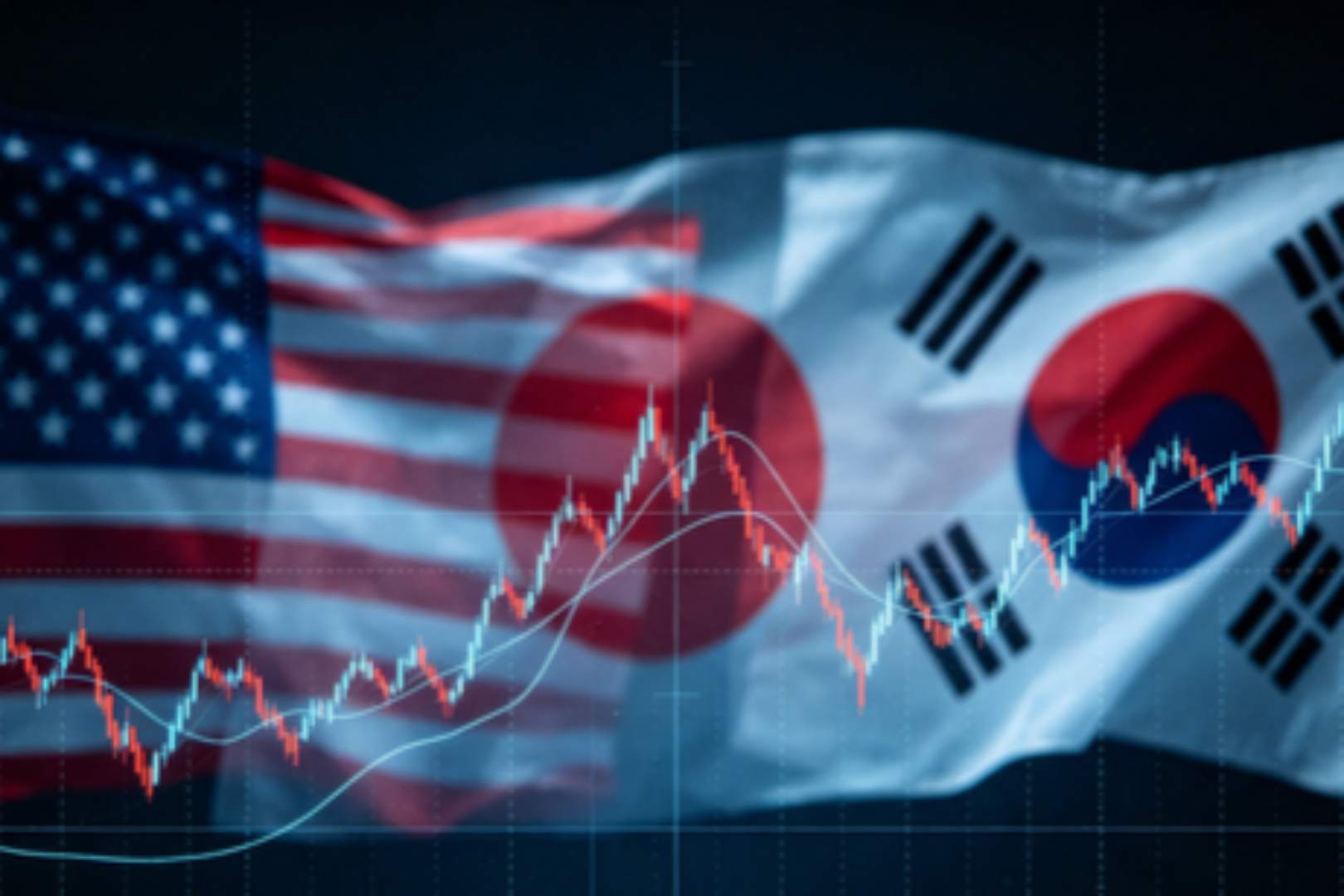
A 'Overlooked' Market Event: Joint US-Japan-South Korea Intervention, Rare US Treasury Involvement, and Bessent's Quiet 'Market Rescue'?

Summary: The United States, Japan, and South Korea executed their largest coordinated foreign exchange intervention in nearly 30 years. The action targeted depreciation pressure on the Japanese yen and South Korean won. This move is seen as a significant effort by the US to stabilize the financial markets of its key allies and prevent the spillover of risks. Key details: * Japan reportedly intervened on July 30 using approximately 8.45 trillion yen (about $52.8 billion). South Korean authorities also intervened that day, selling dollars to support the won. * Notably, the US Treasury Department intervened directly in yen markets for the first time in roughly 30 years. The New York Fed, reportedly acting on behalf of the Treasury, sold euros to buy yen via Goldman Sachs and Morgan Stanley on July 31. Analysts view the use of the euro-yen pair as a way to alleviate yen pressure without adding selling pressure to the US dollar. * Prior to the action, the New York Fed conducted "rate checks" on both USD/JPY and EUR/JPY, a newer signaling tool that falls between verbal and physical intervention. The intervention is interpreted as going beyond traditional currency stabilization. Analysts, such as Michael Hartnett of Bank of America, suggest it resembles a "Price Keeping Operation" for the AI era. The core US objectives are perceived to be: 1. Preventing rapid yen depreciation from triggering a sharp rise in Japanese government bond yields. 2. Containing financial stress from spreading across Asian markets like South Korea and Japan. 3. Reducing the risk of disorderly capital flows impacting the US bond market. This coordinated action underscores the importance of Japan and South Korea as critical partners in the US semiconductor and AI supply chain. Stabilizing their financial markets is seen as vital to mitigating risks to the broader tech industry and the US market itself. The intervention coincides with market pressures, including the KOSDAQ index hitting a low since October 2022. While seen as a move to control volatility, some analysts caution it may not fundamentally reverse existing market trends.

marsbit3 min fa

A 'Overlooked' Market Event: Joint US-Japan-South Korea Intervention, Rare US Treasury Involvement, and Bessent's Quiet 'Market Rescue'?

marsbit3 min fa

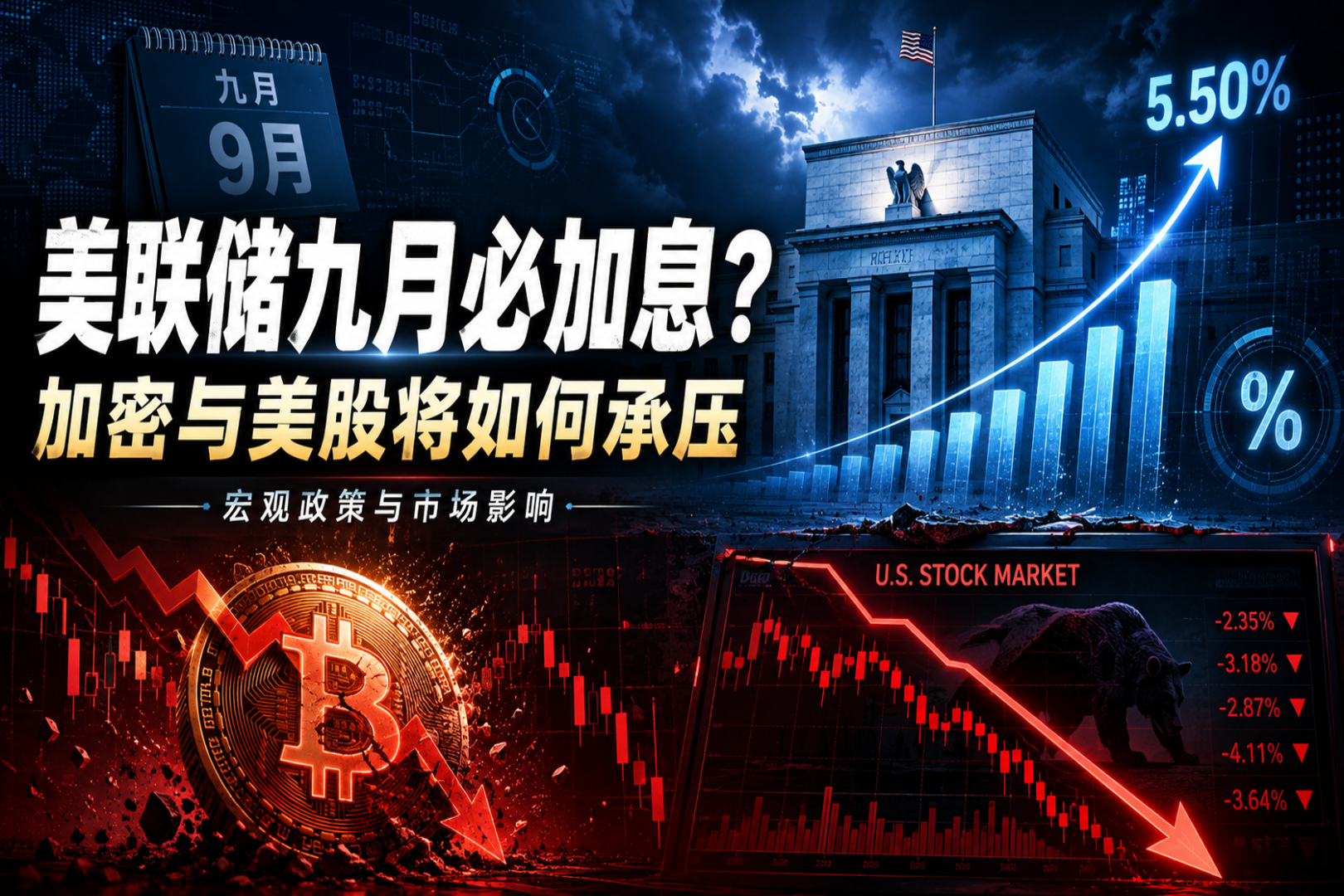
Will the Federal Reserve Definitely Raise Interest Rates in September? How Will Cryptocurrencies and US Stocks Bear the Pressure?

In early August 2024, market expectations for a September Federal Reserve rate hike surged dramatically, from below 50% to over 80%, driven by renewed inflation concerns. This shift followed a contentious July FOMC meeting where a 9-3 vote to hold rates revealed a growing hawkish faction advocating for an immediate hike, citing prolonged above-target inflation. The key catalyst is escalating conflict near the Strait of Hormuz, which has pushed oil prices up approximately 20% in July, threatening to reignite inflation. The next critical data point is the July CPI report on August 12th; a hot reading could solidify hike expectations. For crypto assets, particularly Bitcoin, this represents near-term pressure. Bitcoin continues to exhibit high-beta, risk-on characteristics, making it sensitive to tightening liquidity and higher opportunity costs. However, historical precedent suggests that if a hike is perceived as the cycle's end rather than its start, the negative impact may be brief, with markets quickly pivoting to anticipate future rate cuts. U.S. stocks, especially crypto-linked equities like Coinbase and high-valuation tech stocks, face amplified volatility. Higher rates increase discount rates in valuation models, pressuring growth stocks. This coincides with a pivotal tech earnings season where investor focus has shifted from massive AI capital expenditures to demonstrable revenue and cash flow generation. Companies with negative cash flows and weak growth narratives could see severe pressure if a September hike materializes, as financing costs would rise. Key indicators to watch include oil prices, upcoming inflation data, and Fed commentary at events like the Jackson Hole symposium.

Odaily星球日报3 min fa

Will the Federal Reserve Definitely Raise Interest Rates in September? How Will Cryptocurrencies and US Stocks Bear the Pressure?

Odaily星球日报3 min fa

From South Korea to the United States: Blue-Collar Jobs Are Becoming Increasingly Popular, Thanks to AI

AI is reshaping the labor market's value proposition. The traditional four-year college degree is losing its appeal as a guaranteed career path, while skilled blue-collar trades like electricians, welders, and plumbers are experiencing historic demand and wage premiums. This shift is driven by dual pressures: AI's displacement of certain white-collar roles and a booming need for physical infrastructure and data center construction. Data confirms the trend. In the U.S., vocational school revenue surged, and a significant portion of recent layoffs are AI-related. Surveys show a majority of Gen Z adults plan to pursue blue-collar work, citing better job security against AI automation. Vocational education interest has exploded recently. Experts cite a psychological shift as younger generations seek tangible, AI-resistant careers and avoid high student debt. In many cases, salaries for skilled trades now match or exceed those requiring a bachelor's degree. In South Korea, semiconductor vocational high schools boast near-total employment, with graduates securing high-paying roles at companies like Samsung. The shortage is structural, exacerbated by a retiring baby boomer workforce and massive infrastructure projects. Companies like JPMorgan Chase, Meta, and Lowe's are investing heavily in training programs. However, overcoming historical stigma and a "perception gap" around trade careers remains a key challenge to closing the talent gap.

marsbit1 h fa

From South Korea to the United States: Blue-Collar Jobs Are Becoming Increasingly Popular, Thanks to AI

marsbit1 h fa

Trading

Spot

Articoli Popolari

Come comprare O

Benvenuto in HTX.com! Abbiamo reso l'acquisto di O1 exchange (O) semplice e conveniente. Segui la nostra guida passo passo per intraprendere il tuo viaggio nel mondo delle criptovalute.Step 1: Crea il tuo Account HTXUsa la tua email o numero di telefono per registrarti il tuo account gratuito su HTX. Vivi un'esperienza facile e sblocca tutte le funzionalità,Crea il mio accountStep 2: Vai in Acquista crypto e seleziona il tuo metodo di pagamentoCarta di credito/debito: utilizza la tua Visa o Mastercard per acquistare immediatamente O1 exchangeO.Bilancio: Usa i fondi dal bilancio del tuo account HTX per fare trading senza problemi.Terze parti: abbiamo aggiunto metodi di pagamento molto utilizzati come Google Pay e Apple Pay per maggiore comodità.P2P: Fai trading direttamente con altri utenti HTX.Over-the-Counter (OTC): Offriamo servizi su misura e tassi di cambio competitivi per i trader.Step 3: Conserva O1 exchange (O)Dopo aver acquistato O1 exchange (O), conserva nel tuo account HTX. In alternativa, puoi inviare tramite trasferimento blockchain o scambiare per altre criptovalute.Step 4: Scambia O1 exchange (O)Scambia facilmente O1 exchange (O) nel mercato spot di HTX. Accedi al tuo account, seleziona la tua coppia di trading, esegui le tue operazioni e monitora in tempo reale. Offriamo un'esperienza user-friendly sia per chi ha appena iniziato che per i trader più esperti.

586 Totale visualizzazioniPubblicato il 2026.06.19Aggiornato il 2026.06.29

Come comprare O

Come comprare PROS

Benvenuto in HTX.com! Abbiamo reso l'acquisto di Pharos (PROS) semplice e conveniente. Segui la nostra guida passo passo per intraprendere il tuo viaggio nel mondo delle criptovalute.Step 1: Crea il tuo Account HTXUsa la tua email o numero di telefono per registrarti il tuo account gratuito su HTX. Vivi un'esperienza facile e sblocca tutte le funzionalità,Crea il mio accountStep 2: Vai in Acquista crypto e seleziona il tuo metodo di pagamentoCarta di credito/debito: utilizza la tua Visa o Mastercard per acquistare immediatamente PharosPROS.Bilancio: Usa i fondi dal bilancio del tuo account HTX per fare trading senza problemi.Terze parti: abbiamo aggiunto metodi di pagamento molto utilizzati come Google Pay e Apple Pay per maggiore comodità.P2P: Fai trading direttamente con altri utenti HTX.Over-the-Counter (OTC): Offriamo servizi su misura e tassi di cambio competitivi per i trader.Step 3: Conserva Pharos (PROS)Dopo aver acquistato Pharos (PROS), conserva nel tuo account HTX. In alternativa, puoi inviare tramite trasferimento blockchain o scambiare per altre criptovalute.Step 4: Scambia Pharos (PROS)Scambia facilmente Pharos (PROS) nel mercato spot di HTX. Accedi al tuo account, seleziona la tua coppia di trading, esegui le tue operazioni e monitora in tempo reale. Offriamo un'esperienza user-friendly sia per chi ha appena iniziato che per i trader più esperti.

550 Totale visualizzazioniPubblicato il 2026.06.22Aggiornato il 2026.06.29

Come comprare PROS

Cosa è VERONA

I. Introduzione al Progetto VERONA è una blockchain costruita per tutti, ovunque attraverso l'astrazione della catena. Utilizzando il suo livello di astrazione generalizzato, VERONA si distingue integrando funzionalità blockchain complesse, come conti, firme e interoperabilità, direttamente a livello di protocollo. Questo approccio consente di interagire con le applicazioni blockchain senza la necessità di comprendere le tecnologie sottostanti.1) Informazioni di Base Nome:VERONA(VERONA)III. Link Correlati Link al sito ufficiale:https://xion.burnt.com/ Whitepaper:https://xion.burnt.com/whitepaper.pdf Esploratori:https://explorer.burnt.com/ Social Media: https://x.com/burnt_xion Nota: L'introduzione al progetto proviene dai materiali pubblicati o forniti dal team ufficiale del progetto, che è solo a scopo di riferimento e non costituisce consulenza per investimenti. HTX non si assume responsabilità per eventuali perdite dirette o indirette risultanti.

534 Totale visualizzazioniPubblicato il 2026.06.22Aggiornato il 2026.06.22

Cosa è VERONA

Discussioni

Benvenuto nella Community HTX. Qui puoi rimanere informato sugli ultimi sviluppi della piattaforma e accedere ad approfondimenti esperti sul mercato. Le opinioni degli utenti sul prezzo di A A sono presentate come di seguito.

活动图片