Crypto Stablecoin Law Faces Pushback As New York Prosecutors Target Tether, Circle

bitcoinistPubblicato 2026-02-04Pubblicato ultima volta 2026-02-04

Introduzione

New York Attorney General Letitia James, along with four district attorneys, is pushing back against the newly enacted GENIUS Act, the first major U.S. stablecoin law. They argue the law fails to protect victims of financial crimes, as it does not require stablecoin issuers to return stolen funds. This omission, they warn, could embolden companies to retain stolen assets. The prosecutors specifically criticized the two largest issuers, Tether and Circle. They allege Tether inconsistently freezes funds and primarily cooperates only with federal law enforcement. They claim Circle’s policies are “significantly worse,” alleging it often retains control of frozen assets to continue earning interest, creating a financial incentive to delay returning funds. Both companies rejected the allegations, asserting their commitment to combating illicit activity.

As negotiations continue in Washington over the crypto market structure legislation known as the CLARITY Act, New York’s top law enforcement officials are now turning their attention to a bill that has already become law.

Led by New York Attorney General Letitia James, a group of senior prosecutors is raising concerns about the GENIUS Act, the first major US crypto law focused on regulating stablecoins.

Alleged Regulatory Gaps In Crypto Law

According to a report from CNN, James joined four district attorneys, including Manhattan District Attorney Alvin Bragg, in warning lawmakers that the GENIUS Act fails to adequately protect victims of financial crime.

In a letter to Congress, the prosecutors argue that the law gives what they describe as an “imprimatur of legitimacy” to stablecoins, while allowing issuing companies to sidestep critical regulatory obligations needed to combat terrorism financing, drug trafficking, money laundering, and, in particular, cryptocurrency fraud.

A central concern for the prosecutors is not what the GENIUS Act includes, but what it leaves out. They argue that the law does not require stablecoin issuers to return stolen funds to victims of fraud. This omission, they say, risks encouraging harmful behavior.

In their view, the lack of a clear legal obligation could embolden stablecoin companies to retain stolen assets rather than cooperate fully with law enforcement efforts to make victims whole. The prosecutors warned that this gap may effectively provide legal cover for firms that choose to keep control of stolen funds.

Tether Rejects Allegations

The letter singles out the two largest stablecoin issuers, Tether (USDT) and Circle (USDC), claiming both have hindered efforts to seize and return illicit funds, while continuing to profit from activity that prosecutors say remains widespread in stablecoin markets.

The prosecutors allege that the company has used this power inconsistently and primarily in coordination with federal law enforcement, rather than in response to state or local actions.

As a result, they argue, many victims have little chance of recovering stolen funds once assets are converted into USDT. The letter states that funds moved into USDT are often never frozen, seized, or returned, and that Tether currently decides on a case‐by‐case basis whether to assist in recovery efforts.

Tether responded to CNN by strongly rejecting the suggestion that it tolerates illicit activity. The company said it takes fraud, consumer harm, and misuse of USDT extremely seriously and maintains a zero‐tolerance policy toward criminal behavior.

Circle Faces Sharper Scrutiny

The prosecutors’ criticism of Circle, the second‐largest stablecoin issuer, is even sharper. Circle is publicly traded and based in New York, and the letter acknowledges that the company presents itself as a partner in the fight against financial crime.

However, the prosecutors argue that Circle’s policies are “significantly worse than those of Tether” when it comes to helping victims recover stolen funds.

They allege that even when Circle agrees to freeze assets linked to fraud, it typically retains control of those funds rather than returning them to victims or law enforcement.

By holding the underlying reserves, the prosecutors say, Circle continues to earn interest, creating what they describe as a “crystal clear” financial incentive to delay or deny fund returns.

Circle pushed back against these claims in a statement to CNN. Dante Disparte, the company’s chief strategy officer, said Circle has consistently prioritized financial integrity and the advancement of strong regulatory standards in the US and globally.

He argued that the crypto law clearly requires stablecoin issuers to follow applicable rules to combat illicit activity while also strengthening consumer protections.

The 1-D chart shows the total crypto market drop to $2.5 trillion on Tuesday. Source: TOTAL on TradingView.com

Featured image from OpenArt, chart from TradingView.com

Domande pertinenti

QWhat is the main concern raised by New York prosecutors regarding the GENIUS Act?

AThe main concern is that the GENIUS Act fails to adequately protect victims of financial crime by not requiring stablecoin issuers to return stolen funds to victims, which could embolden companies to retain stolen assets and provide legal cover for firms that choose to keep control of stolen funds.

QWhich two major stablecoin issuers are specifically targeted in the prosecutors' letter?

AThe two major stablecoin issuers specifically targeted are Tether (USDT) and Circle (USDC).

QHow did Tether respond to the prosecutors' allegations?

ATether strongly rejected the suggestion that it tolerates illicit activity, stating that it takes fraud, consumer harm, and misuse of USDT extremely seriously and maintains a zero-tolerance policy toward criminal behavior.

QWhy do prosecutors claim Circle's policies are 'significantly worse than those of Tether'?

AProsecutors claim that even when Circle agrees to freeze assets linked to fraud, it typically retains control of those funds rather than returning them to victims or law enforcement, and continues to earn interest on the underlying reserves, creating a financial incentive to delay or deny fund returns.

QWhat is the name of the crypto market structure legislation mentioned that is still under negotiation in Washington?

AThe crypto market structure legislation mentioned is called the CLARITY Act.

Letture associate

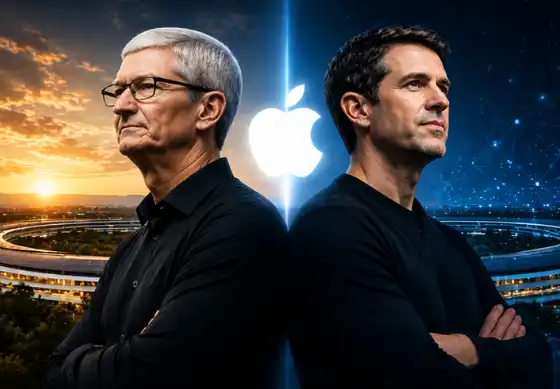
Cook's Curtain Call and Ternus Takes the Helm: The Disruption and Reboot of Apple's 4 Trillion Dollar Empire

Tim Cook has officially announced he will step down as CEO of Apple in September, transitioning to executive chairman after a 15-year tenure during which he grew the company’s market value from around $350 billion to nearly $4 trillion. He will be succeeded by John Ternus, a 50-year-old hardware engineering veteran who has been groomed for the role through increasing public visibility and internal responsibility. Ternus’s appointment signals a strategic shift toward hardware and engineering leadership, with Johny Srouji—head of Apple Silicon—taking on an expanded role as Chief Hardware Officer. This consolidation aims to strengthen Apple’s core technological capabilities. However, Cook’s departure highlights a significant unresolved issue: Apple’s delayed and fragmented approach to artificial intelligence. Despite early efforts, such as hiring John Giannandrea from Google in 2018, Apple’s AI initiatives—particularly around Siri—have struggled with internal restructuring and reliance on external partnerships, including with Google. The transition comes at a critical moment as Apple faces paradigm shifts with the rise of artificial general intelligence (ASI). The company’s closed ecosystem of hardware, software, and services—once a major advantage—now presents challenges in adapting to an AI-centric world where intelligence may matter more than the device itself. Ternus must quickly articulate a clear AI strategy, possibly starting at WWDC, to reassure markets and redefine Apple’s role in a new technological era. His task is not only to maintain Apple’s operational excellence but also to reinvigorate its capacity to innovate and lead in the age of AI.

marsbit1 h fa

Cook's Curtain Call and Ternus Takes the Helm: The Disruption and Reboot of Apple's 4 Trillion Dollar Empire

marsbit1 h fa

Trading

Spot
Futures
活动图片