Crypto venture capital firm Andreessen Horowitz (A16z) has opened its first Asian office in Seoul, South Korea, signaling a deeper push into the region where on-chain activity and user adoption have surged. According to the firm, the new hub will support portfolio companies and help build local partnerships and communities.
A16z Moves Into Seoul
The office will be led by Sungmo Park, who has held roles at Monad and Polygon, and who joins a16z as Head of APAC go-to-market. Reports have disclosed that Anthony Albanese, the fund’s chief operating officer, announced the move and framed it as a way to put teams closer to where users and builders are located.
I’m honored to share that I will be joining @a16zcrypto as Head of APAC go-to-market.
a16z crypto backs exceptional founders, providing not just capital but also hands-on support to help them grow into transformative companies.
Now, a16z crypto is opening an office in Seoul and...
— sungmo (@sungmo_apac16z) December 10, 2025
A16z said Seoul will act as a gateway for interacting with companies across Asia and for giving portfolio firms local support on partnerships, marketing and expansion. Park will focus on regional strategy and on helping founders navigate local markets. This is not described as a small PR outpost; it is positioned as a real operating base for the region.
Excited to announce that @a16zcrypto is expanding into Asia and opening our first office in Seoul, South Korea. As part of this, we’re thrilled to have @sungmo_apac16z join our team as Head of APAC go-to-market to lead the Seoul office and start building our presence in the... pic.twitter.com/KBljioBCqx
— Anthony Albanese (@AAlbaneseNY) December 10, 2025
Based on reports, Asia-Pacific recorded about US$2.36 trillion in on-chain value over the 12 months ending June 2025, an increase of close to 70% from the prior year. That growth helped convince a16z that Asia needs a local presence. Chainalysis and several industry trackers show heavy on-chain flows and deep retail participation across the region.
Our latest State of Crypto report shows that onchain users are widely distributed around the world, with a particularly strong concentration in Asia. It now represents a significant share of global crypto activity, for example:
🇰🇷 South Korea is the second-largest crypto market...
— Anthony Albanese (@AAlbaneseNY) December 10, 2025
Why Korea Matters To Crypto
South Korea itself is highlighted as one of the largest national crypto markets. According to a16z and other coverage, nearly one in three adults in South Korea hold crypto assets — a rate that in some measures is higher than local stock ownership. That level of retail use, plus a thriving developer community, made Seoul an attractive choice for the firm.

What The Move Could Mean
The entry of a major US venture firm into Seoul may boost interest among local startups seeking international partners and could make capital more accessible for teams in South Korea and nearby markets. Several news outlets describe the office as focused on go-to-market support rather than immediate, large-scale local investing, at least at launch.
Competition For Deals
Reports note that other global funds and crypto firms have been increasing activity in Asia this year. A16z’s decision comes as several markets across the region report rising developer activity and fresh funding rounds. For founders, having an established US investor with a local office may speed introductions to global customers and partners.
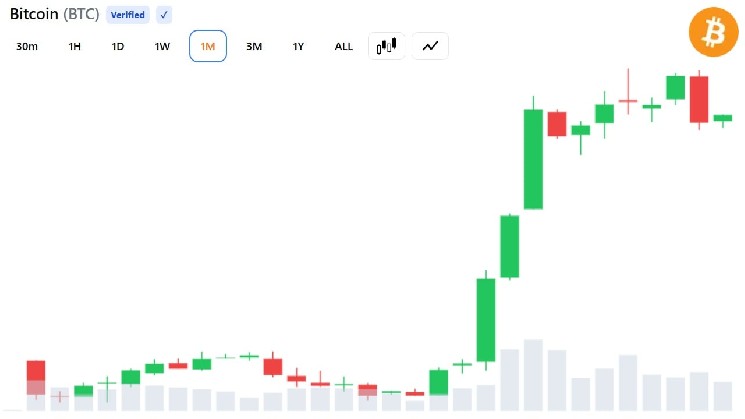
Featured image from Unsplash, chart from TradingView