Coinbase Institutional | 2026 Crypto Market Outlook: Deep Financial Integration, Innovating with Cautious Optimism

深潮Pubblicato 2025-12-22Pubblicato ultima volta 2025-12-22

Introduzione

Coinbase Institutional's 2026 Crypto Market Outlook presents a cautiously optimistic view, drawing parallels to 1996’s steady growth rather than 1999’s exuberance. Key themes include clearer global regulation, deeper institutional adoption focusing on specialized digital asset management (DAT 2.0), and a shift toward sustainable, revenue-linked tokenomics. Technological advances like ZKPs and FHE will enhance privacy needs, while AI integration and application-specific chains drive innovation. Tokenization, particularly of equities, offers composability and higher capital efficiency. Emerging trends include crypto-native equity perpetuals, prediction markets, and stablecoin growth—potentially reaching $1.2T by 2028—fueled by cross-border payments and settlements. The industry is integrating deeply into mainstream finance, requiring excellence in execution, compliance, and user-centric design to broaden global access.

Author:Coinbase Institutional

Compiled by: Deep Tide TechFlow

Our annual crypto market outlook delves into the various factors that will shape the crypto economy over the coming year. From detailed perspectives on BTC (Bitcoin), ETH (Ethereum), and SOL (Solana), to comprehensive analyses of regulatory dynamics, market structure, and the latest developments in tokenization, we cover all critical areas. Additionally, we provide in-depth insights into the impact of Bitcoin's four-year cycle, the potential risks posed by quantum computing, and the profound implications of major platform upgrades such as Ethereum's Fusaka hard fork and Solana's Alpenglow.

Welcome to click the link to download the full report
Highlights include:

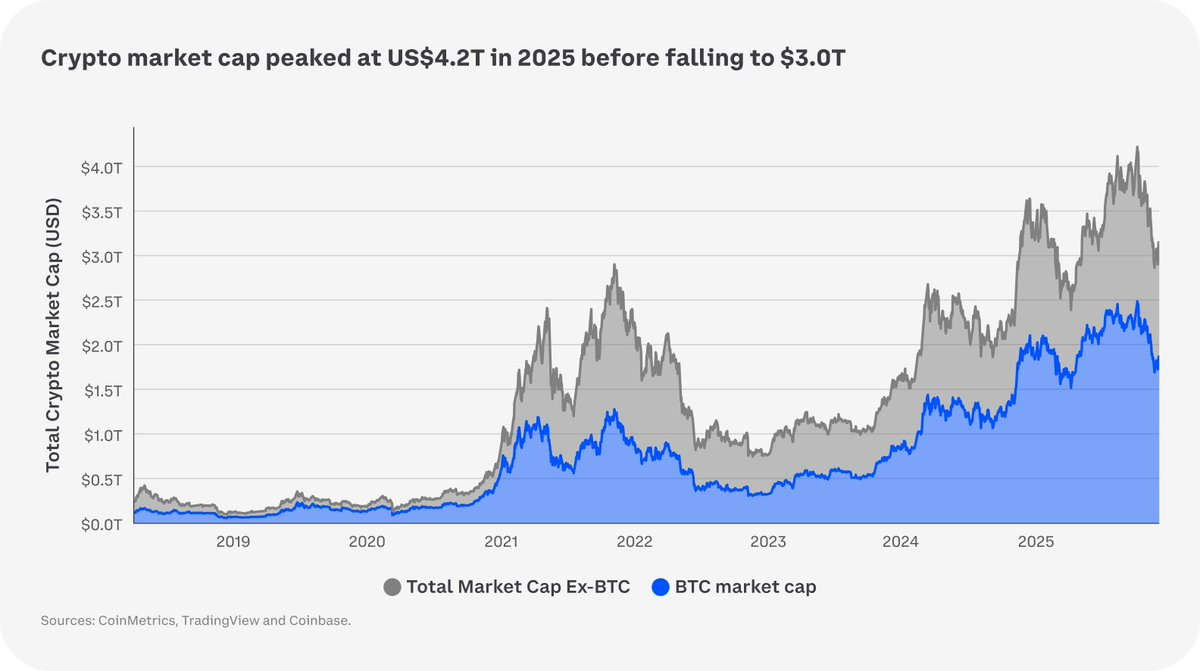
  • Cautious Optimism: We maintain a cautiously optimistic view on the resilience of the U.S. economy, believing that rising labor productivity can provide a buffer amid slowing overall economic data. Therefore, we view the crypto market in the first half of 2026 (1H26) as more akin to "1996" rather than "1999," although uncertainty remains high.
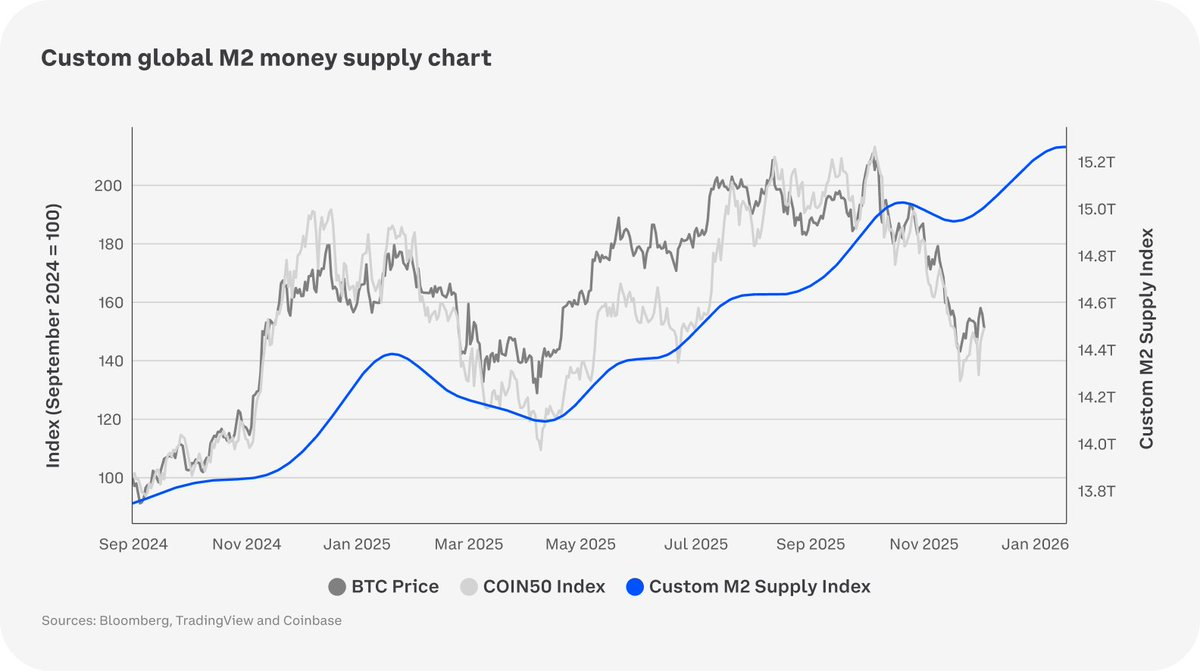
  • Regulatory Progress: We anticipate that clearer global regulatory frameworks in 2026 will change how institutions approach strategy, risk, and compliance.
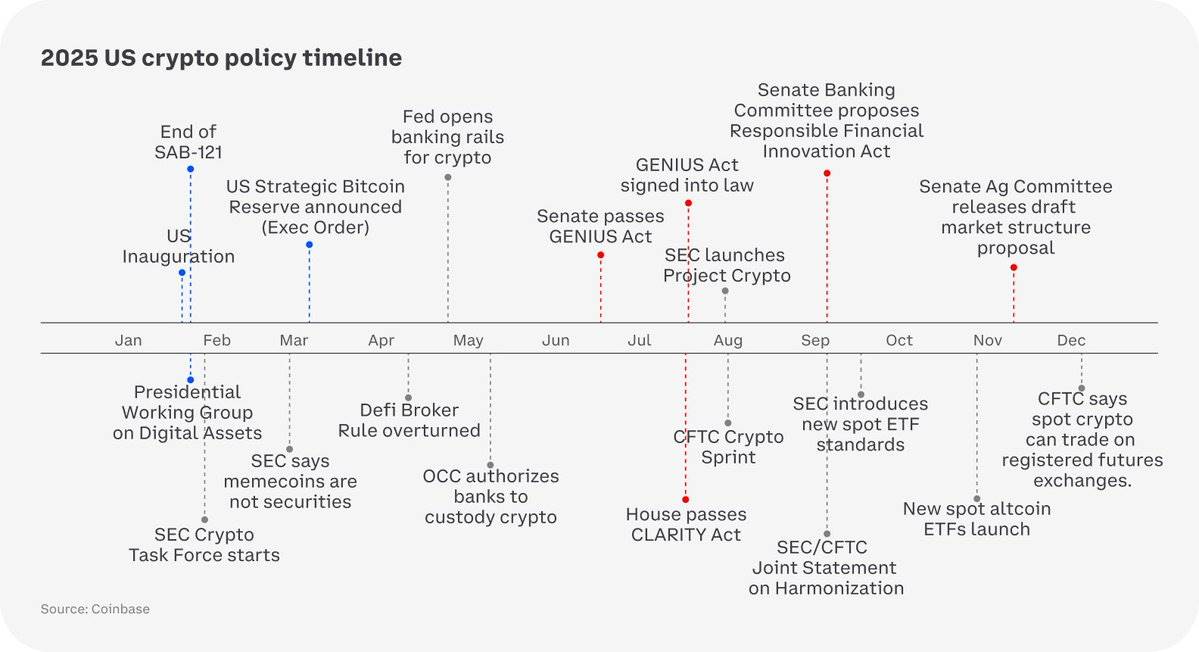
  • Institutional Adoption: We predict the emergence of a "DAT 2.0" model in 2026, which will move beyond simple asset accumulation to focus on the professional trading, storage, and procurement of sovereign block space, treating it as a critical resource for the digital economy.
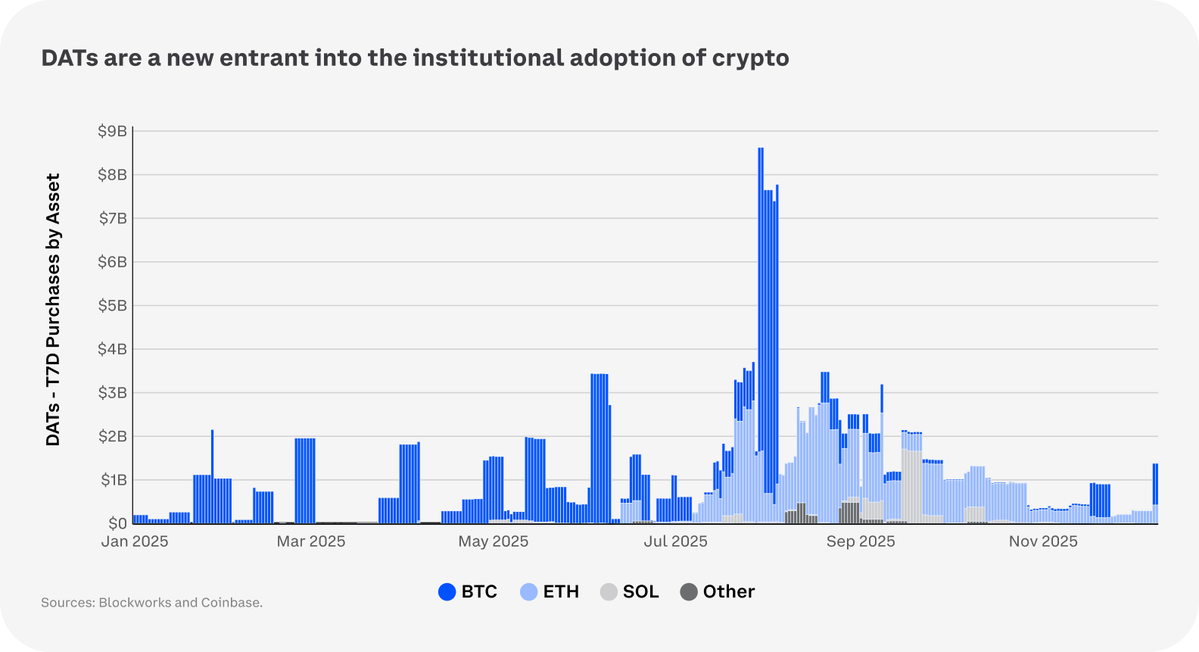
  • Tokenomics 2.0: As protocols increasingly shift towards value capture, we observe an emerging transition from a purely narrative-driven, high-volatility model to a more sustainable one linked to revenue.

Technological Transformation

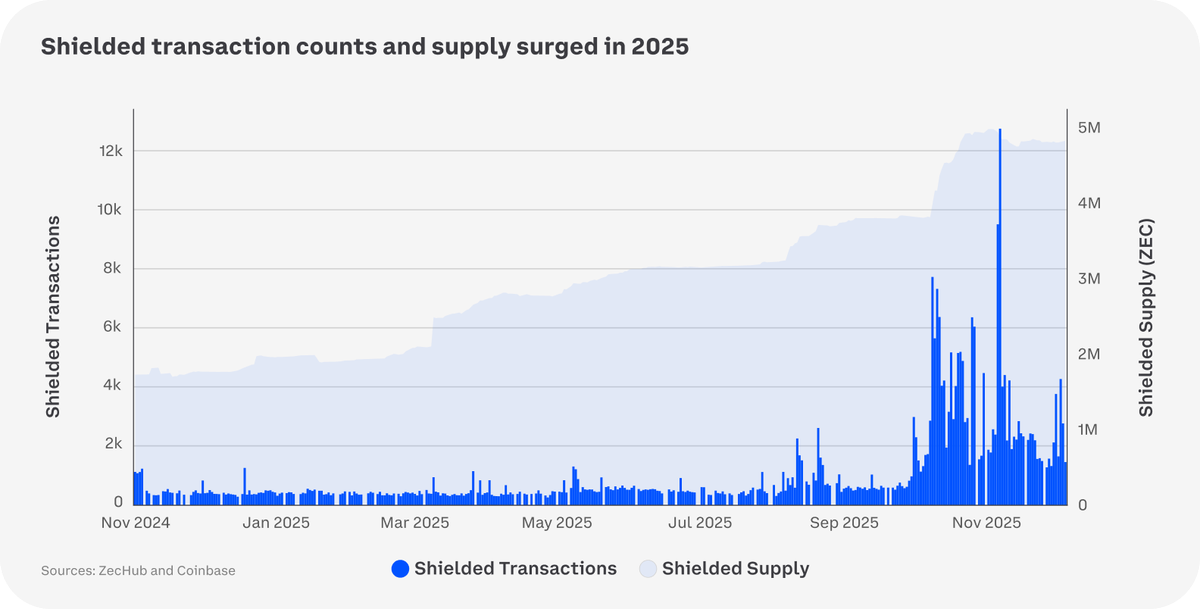
Privacy Demand: With increasing institutional adoption, we expect continued development in technologies like Zero-Knowledge Proofs (ZKPs) and Fully Homomorphic Encryption (FHE), alongside significant growth in the use of on-chain privacy tools.
AI × Crypto: Autonomous trading agent systems require open and programmable payment methods. Protocols like x402 can enable high-frequency microtransaction settlements and support intelligent agents that initiate, govern, and secure on-chain services.

Application-Specific Chains: Although the proliferation of dedicated blockchain networks is reshaping the competitive landscape of crypto infrastructure, we believe the ultimate direction will be a networked architecture with native interoperability and shared security, rather than an endless network of isolated systems.

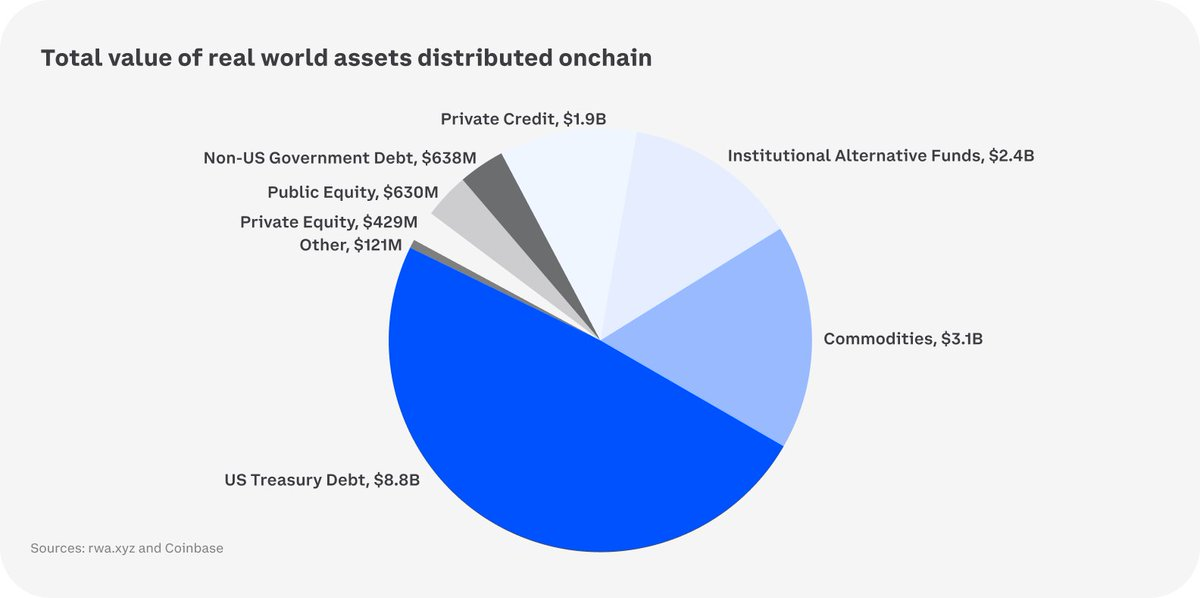
Tokenization: The advantages of atomic composability make the rapid growth prospects of tokenized stocks highly attractive. In many cases, the loan-to-value (LTV) ratios in this DeFi-style model are significantly higher than those in traditional margin frameworks.
The Next Big Trends

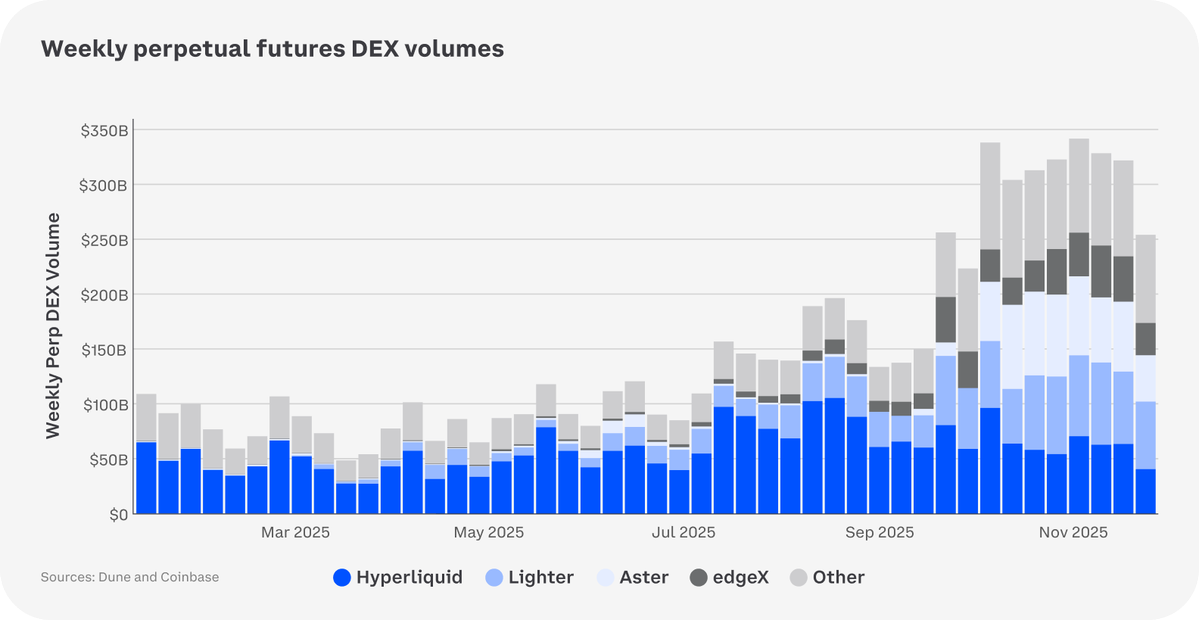
Composability of Crypto Derivatives: As the trend of global retail investors participating in U.S. stock markets continues to rise, we believe equity perpetual contracts (equity perps) could become the preferred choice for a new generation of retail traders, combining the convenience of 24/7 trading with capital efficiency.
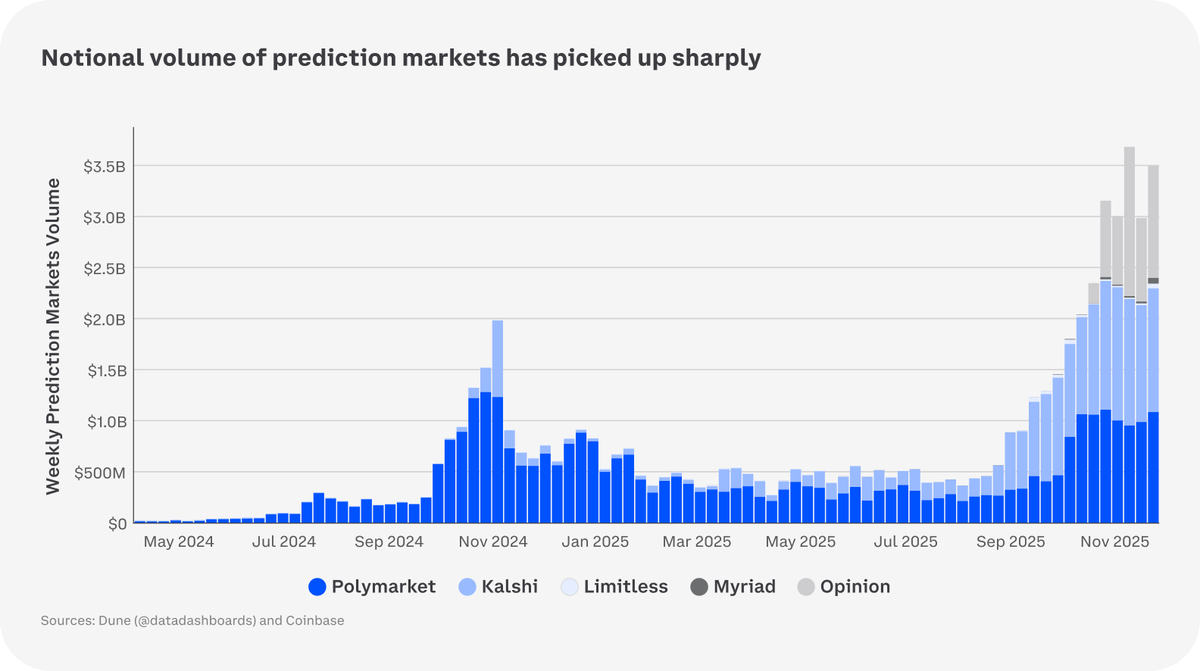
Prediction Markets: Trading volume in prediction markets is expected to grow further in 2026, potentially driven by changes in U.S. tax policy, which may attract more users to these derivatives-linked markets. We believe prediction market aggregators could become the dominant interface layer.
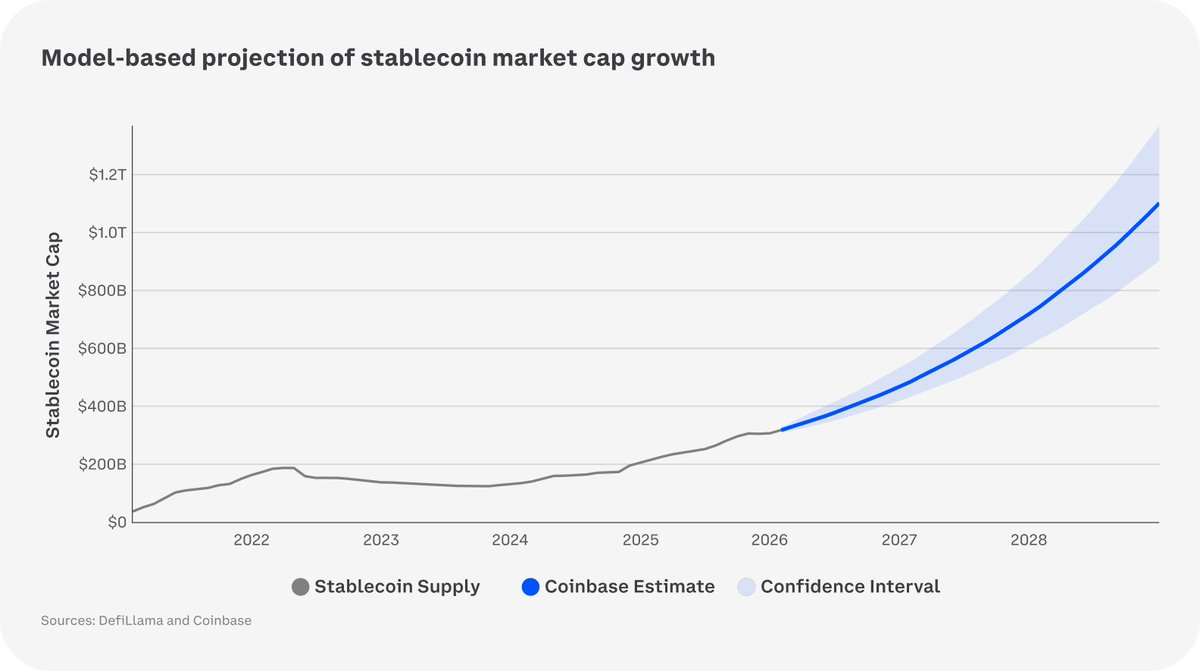
Stablecoins & Payments: Our stochastic models project that the total market capitalization of stablecoins could reach a target range of $1.2 trillion by the end of 2028. Growth is expected in emerging use cases such as cross-border transaction settlements, remittances, and payroll platforms.
We believe the crypto industry is at a critical juncture of deep integration with the core of finance. Seizing this opportunity requires excellence in execution across product quality, compliance, and user-centric design. By focusing on these areas, we can ensure that the next wave of innovation benefits everyone, everywhere, with seamless convenience.


Domande pertinenti

QWhat is the overall market outlook for crypto in 2026 according to Coinbase Institutional?

ACoinbase Institutional holds a 'cautiously optimistic' outlook for the crypto market in 2026. They believe the resilience of the U.S. economy and rising labor productivity will provide a buffer even as broader economic data softens. They liken the first half of 2026 (1H26) more to '1996' than '1999,' indicating expectations of steady growth rather than an irrational bubble, though uncertainty remains high.

QWhat key technological developments are expected to grow with increased crypto adoption?

AWith increased institutional adoption, technologies like Zero-Knowledge Proofs (ZKPs) and Fully Homomorphic Encryption (FHE) are expected to see continued development. There will also be significant growth in the use of on-chain privacy tools to meet the demand for confidentiality.

QWhat is 'DAT 2.0' and how will it change institutional involvement in 2026?

A'DAT 2.0' refers to a new mode of institutional adoption that moves beyond simple asset accumulation. It focuses on the professional trading, storage, and procurement of sovereign block space, treating it as a critical resource for the digital economy.

QHow does the report view the future of tokenization, particularly for assets like stocks?

AThe report states that the advantages of atomic composability make the rapid growth prospects for tokenized stocks highly attractive. In many cases, the loan-to-value (LTV) ratios for DeFi-style lending in this model are significantly higher than those in traditional margin frameworks.

QWhat is the projected growth for the stablecoin market according to the report's model?

AThe report's stochastic model projects that the total market capitalization of stablecoins could reach a target range of $1.2 trillion by the end of 2028. Growth is expected in emerging use cases like cross-border transaction settlements, remittances, and payroll platforms.

Letture associate

When AI Begins to Audit the World: From Claude Discovering the ZEC Vulnerability, Watching the Encryption Industry Enter the 'Recursive Security Era'

**When AI Audits the World: From Claude's Discovery of a ZEC Vulnerability, Viewing the Crypto Industry Entering a "Recursive Security Era"** This article examines a pivotal shift in the blockchain security landscape, triggered by the convergence of two events: Anthropic's research on AI's "Recursive Self-Improvement" and Claude Opus 4.8's discovery of a critical vulnerability in Zcash's code. Traditionally, crypto security has relied on human experts and automated tools for periodic audits. However, the article argues AI is transitioning from a mere tool to an active participant in understanding and analyzing complex systems. Claude's ability to identify a subtle flaw in Zcash's zero-knowledge proof system demonstrates AI's potential to dramatically lower the cost and time required for risk discovery. This goes beyond finding a single bug; it signals a change in the very mechanism of how vulnerabilities are found. The core thesis introduces the concept of "Recursive Security," drawing a parallel to Anthropic's "Recursive Self-Improvement." Just as AI can accelerate its own development through feedback loops, security systems are evolving towards a continuous cycle of analysis, risk identification, remediation, and re-analysis. Security is becoming a persistent, evolving capability integrated into a system's lifecycle, rather than a one-time pre-launch audit. This shift is particularly urgent for the crypto industry, where system complexity from Layer-2 networks, modular architectures, and ZK-proofs is growing faster than human analysis capacity. AI excels at the pattern recognition and contextual understanding needed to navigate this complexity. Importantly, the article cautions that AI augments both defenders and potential attackers, accelerating the entire threat landscape. The future competitive advantage may not lie in having zero vulnerabilities, but in having the fastest risk discovery, validation, and response capabilities. The Claude-Zcash incident is thus an early signal of an era where AI-driven, recursive security systems become essential for managing risk in an increasingly complex digital world.

marsbit44 min fa

When AI Begins to Audit the World: From Claude Discovering the ZEC Vulnerability, Watching the Encryption Industry Enter the 'Recursive Security Era'

marsbit44 min fa

From MSTR to STRC+: Where Is the Limit of the Strategy Universe?

From MSTR to STRC+: The Evolution and Limits of the Strategy Universe This article examines the transformation of Strategy (formerly MicroStrategy) from a simple "Bitcoin treasury" company into a complex financial engineering firm building a BTC-backed credit system. **Core Thesis:** Strategy's true significance lies not just in its massive BTC holdings (~844k BTC), but in its attempt to transform this static reserve into a multi-layered credit curve within traditional capital markets and, subsequently, into on-chain yield infrastructure. **The MSTR Flywheel:** The initial model was a reflexive loop: BTC price rises → MSTR stock rises → company raises capital (debt/equity) at a premium → buys more BTC → increases per-share BTC exposure → MSTR premium grows. This "amplified Bitcoin" equity (MSTR) thrives on bullish momentum but is vulnerable to tightening premiums and rising funding costs. **Building the Credit Curve:** Strategy's innovation is slicing its single BTC balance sheet into different risk/return profiles via specialized securities: * **MSTR:** High-volatility equity layer absorbing full BTC upside/downside. * **STRC:** Key product. A perpetual preferred stock designed as "short duration high yield credit," offering ~11.5% floating monthly dividends. It attracts fixed-income investors seeking yield without direct BTC exposure, funding Strategy's operations. * **STRD/STRK/STRF:** Other preferred/share classes with varying durations, conversion rights, and fixed dividends. **Risks of the STRC Model:** STRC's high yield is not risk-free. Its stability depends on: 1) Sufficient BTC asset coverage, 2) Strategy's continued ability to pay dividends, and 3) Market faith in the MSTR/STRC funding flywheel. Stress points include deep BTC price declines eroding the asset buffer, rising dividend costs if STRC trades below par, and a broken flywheel if MSTR's premium (mNAV) falls persistently. **On-Chain Expansion: STRC+:** Projects like **Saturn** and **Apyx** aim to package STRC's (and other DAT preferred stock) cash flows into on-chain stablecoin yield (e.g., sUSDat, apyUSD). They offer DeFi a new yield source distinct from trading fees or incentives—cash dividends from traditional securities. However, this introduces compounded risks: off-chain custody, issuer credit risk, BTC volatility, and protocol execution risk. **Conclusion: The Ultimate Boundary** Strategy's endgame is not infinite BTC accumulation. It is the market's long-term acceptance of a new credit system where BTC serves as collateral for tradable securities whose cash flows can power on-chain financial applications. Its "universe" expands if this BTC-native credit curve gains legitimacy, but contracts if these instruments are repriced purely as high-risk, yield-bearing credit assets without stablecoin mythology.

marsbit1 h fa

From MSTR to STRC+: Where Is the Limit of the Strategy Universe?

marsbit1 h fa

Trading

Spot
Futures
活动图片




