ChangXin's Debut: The Missed 50 Billion Yuan by Country Garden, and the Handover of an Era

marsbitPubblicato 2026-07-28Pubblicato ultima volta 2026-07-28

Introduzione

On July 27, 2026, Changxin Memory Technologies (CXMT) debuted on the STAR Market, its share price surging 471.59%. With a market cap exceeding ICBC, it became China’s most valuable A-share company, highlighting a dramatic technological and economic shift. In 2021, at the peak of China's real estate boom, developer Country Garden invested 2 billion yuan (20 billion) for a 1.56% stake in the fledgling chipmaker through its venture capital arm. The investment was strategic; CXMT represented a crucial "chain-blocker" in China's semiconductor supply chain. Country Garden’s unique "perpetual capital" model allowed for long-term bets on hard tech, from space rockets to memory chips. However, the property sector’s severe downturn forced Country Garden's hand. Facing immense liquidity pressure to fund construction and deliver pre-sold homes, it sold its entire CXMT stake back to Hefei's state-owned capital for the original 2 billion yuan in December 2024. By the IPO date, that stake was worth roughly 50 billion yuan, a 500 billion opportunity lost. This story encapsulates a pivotal transition. Money accumulated during the property boom was redirected to seed next-generation industries like semiconductors. Yet the old cycle collapsed faster than the new one could mature. While Country Garden accurately foresaw the strategic importance of chip manufacturing, it ultimately misjudged how long its own capital could wait, becoming a poignant symbol of an era's handover from bricks and mo...

On the morning of July 27, 2026, at 9:30, ChangXin Technology opened for trading on the STAR Market.

The issue price was 8.66 yuan, the opening price was 49.50 yuan, a gain of 471.59%. Based on the 66.881 billion shares post-issuance, the total market capitalization reached 3.31 trillion yuan, surpassing Industrial and Commercial Bank of China to become the company with the highest market cap in the A-share market. At midday, the stock price reached 54.65 yuan, pushing the total market cap to nearly 3.66 trillion yuan at one point; the closing turnover was 141.187 billion yuan, setting a new record for a single stock's single-day turnover on the A-share market.

Reportedly, 9.4288 million retail investors participated in the online subscription, with a winning rate of 0.4714%. Selling one lot of 500 shares at the opening could net a profit of 20,000 yuan. ChangXin raised 57.919 billion yuan based on the initial offering size, making it the largest IPO on the STAR Market since its launch.

After the bell rang, people quickly calculated the fortunes of the old shareholders. What was the value of Hefei State-owned Assets' holding? How much was Alibaba's stake worth? And the employee stock ownership platform?

But one name was missing from the list: Country Garden.
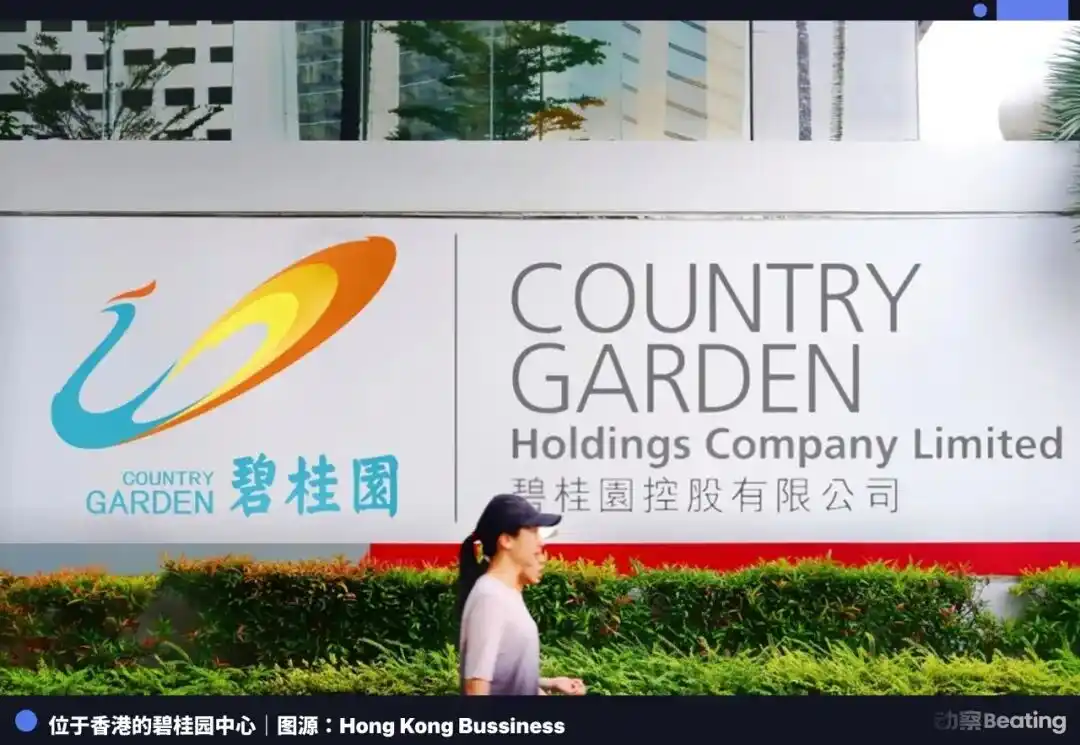
In 2021, it invested 2 billion yuan to acquire approximately 2.24% of ChangXin's equity. After several rounds of capital increases and dilution, its stake was reduced to 1.56%. In December 2024, Country Garden sold this entire stake to Hefei State-owned Assets, recovering 2 billion yuan. On the day of ChangXin's debut, the shares Country Garden once held were worth roughly 50 billion yuan.

Five years ago, it correctly judged an extremely difficult matter. Nineteen months ago, it was forced to sell that judgment.

Country Garden assessed the industry correctly, but miscalculated how long it could wait.

Why Did a Property Seller Venture into Hard Tech Research?

Country Garden Capital (CGC) was established in 2019.

A year before its establishment, Country Garden proposed a transformation into a "high-tech comprehensive enterprise." At that time, it was still one of China's private enterprises with the most abundant cash flow. The property main business could provide large amounts of proprietary capital, and the group's brand helped this new investment arm access projects that smaller institutions couldn't reach. Back then, it certainly didn't lack money, but it lacked a path beyond real estate.

CGC's first high-profile hard tech investment was in rockets.

In 2019, the team spent nearly six months interviewing domestic commercial aerospace companies to first understand the industry's real bottlenecks. Remote sensing, communications, and navigation all had satellite launch needs, and the bottleneck lay in launch capacity. Ultimately, they selected LandSpace, which was then focusing on medium-to-large liquid-fuel rockets, and exclusively invested 500 million yuan in its Series C round in December. They later led two more consecutive rounds, boosting LandSpace's valuation from around 3 billion yuan to over 10 billion yuan.

This episode is quite illustrative of how Country Garden learned to invest.

It brought its house-building approach into venture capital. Real estate development is inherently a business highly dependent on supply chains; Country Garden was most familiar with how to break down a long chain and find its most critical nodes.

In investment, this approach was given two names. Core companies on the industrial chain were called "chain anchors," and bottlenecks were called "chain constraints." Before entering a new industry, the team had to conduct complete industry research; in principle, projects couldn't enter investment decision-making without it. Its first semiconductor investment was Unisoc, a "chain anchor" enterprise; moving towards the manufacturing end, ChangXin was the kind of unavoidable "chain constraint" enterprise.

Country Garden's capital allocation was also distinctive. Most ordinary RMB funds have a lifespan; they must exit after seven or ten years. CGC primarily used the group's proprietary capital, which managing partner Niu Ruolei then called "perpetual capital," theoretically without time constraints. It adopted a barbell strategy, investing in very early-stage technology projects on one end and super unicorns close to IPO with single investments exceeding 1 billion yuan on the other, rarely participating in the most crowded growth stage in the middle.

By early 2022, CGC had independently completed over 90 investments, backing 26 unicorns and 10 listed companies; 52% of the investment amount was placed in hard tech fields like advanced manufacturing, semiconductors, and carbon neutrality. The list included ChangXin, LandSpace, Unisoc, Biren Technology, BYD Semiconductor, SJ Semiconductor, SVOLT, Dreame Technology.

Why Invest 2 Billion in ChangXin?

The DRAM produced by ChangXin is the memory used when computers, phones, and servers are running. The product may seem small, but behind it lies a massive factory that needs to be sustained.

A wafer fab must continuously buy equipment, modify processes, support engineers, and endure the severe cyclical fluctuations of memory prices. By the end of 2024, ChangXin had accumulated losses of approximately 38.52 billion yuan on its books. Before the IPO, it already had three 12-inch wafer fabs, nearly 20,000 employees, including over 6,000 R&D personnel.

In 2025, Samsung, SK Hynix, and Micron still collectively held over 90% of the global DRAM market. In semiconductors, many tracks can start with a smart, small team, but DRAM cannot. Design capability, manufacturing processes, yield, equipment, and capital—fail at any one, and you cannot achieve scale.

ChangXin was founded in 2016. On September 20, 2019, it announced the production of its self-developed manufacturing project, with the first appearance of its 8Gb DDR4, proving that mainland China finally had an enterprise crossing the threshold of "whether it can be made" for DRAM mass manufacturing.

Therefore, when Country Garden entered in 2021, ChangXin's earliest technical risks had decreased, while the most expensive phases of capacity expansion, iteration, and market competition were still ahead. This position precisely fell on the large-investment end of Country Garden's "barbell."

On July 5, 2021, Country Garden Capital (Haikou) signed a Series B capital increase agreement with ChangXin and other shareholders. The unified price for the Series B was 2.219 yuan per registered capital unit, with an initial fundraising cap of 26 billion yuan. Country Garden invested 2 billion yuan, subscribing to approximately 901.3 million registered capital units, holding 2.24% post-investment.

The same round also included National Integrated Circuit Industry Investment Fund Phase II, Anhui Provincial Investment Group, China Structure Reform Fund, China Merchants Bank, Xiaomi, Midea, and other institutions and companies; in December of that year, the fundraising cap was raised again to 36 billion yuan.

From Unisoc's chip design to ChangXin's wafer manufacturing to SJ Semiconductor's packaging, Country Garden Capital pieced together the semiconductor chain segment by segment. Investing in ChangXin was because they believed manufacturing was the unavoidable "chain constraint" for China's semiconductors.

China was a major global demand market for DRAM, and at that time, mainland规模化 supply was almost starting from zero. As long as ChangXin survived, expansion itself would allow it to grow rapidly.

This judgment later proved quite accurate. By the fourth quarter of 2025, ChangXin's global market share based on sales rose to 7.67%, becoming China's No. 1 and the world's No. 4; in the first quarter of 2026, revenue was 50.8 billion yuan, with net profit attributable to the parent company reaching 24.762 billion yuan. It took many years to turn "can manufacture" into "can sell," and it coincided with AI servers pushing memory demand to a new height.

"Perpetual Capital" Suddenly Had a Deadline

2021 was the year of ChangXin's Series B funding, and also the peak year for China's real estate sales.

That year, 1.794 billion square meters of commercial housing were sold nationwide, with sales value reaching 18.19 trillion yuan. By 2025, the sales area of newly built commercial housing was only 881 million square meters, almost halving in four years. The national population was 1.4126 billion at the end of 2021, and negative growth began the following year.

In the ebbing tide, Country Garden was among the first to feel the impact. In 2021, 68% of its sales came from third- and fourth-tier cities. These cities once gave Country Garden its broadest market but also made it harder to pivot when demand contracted.
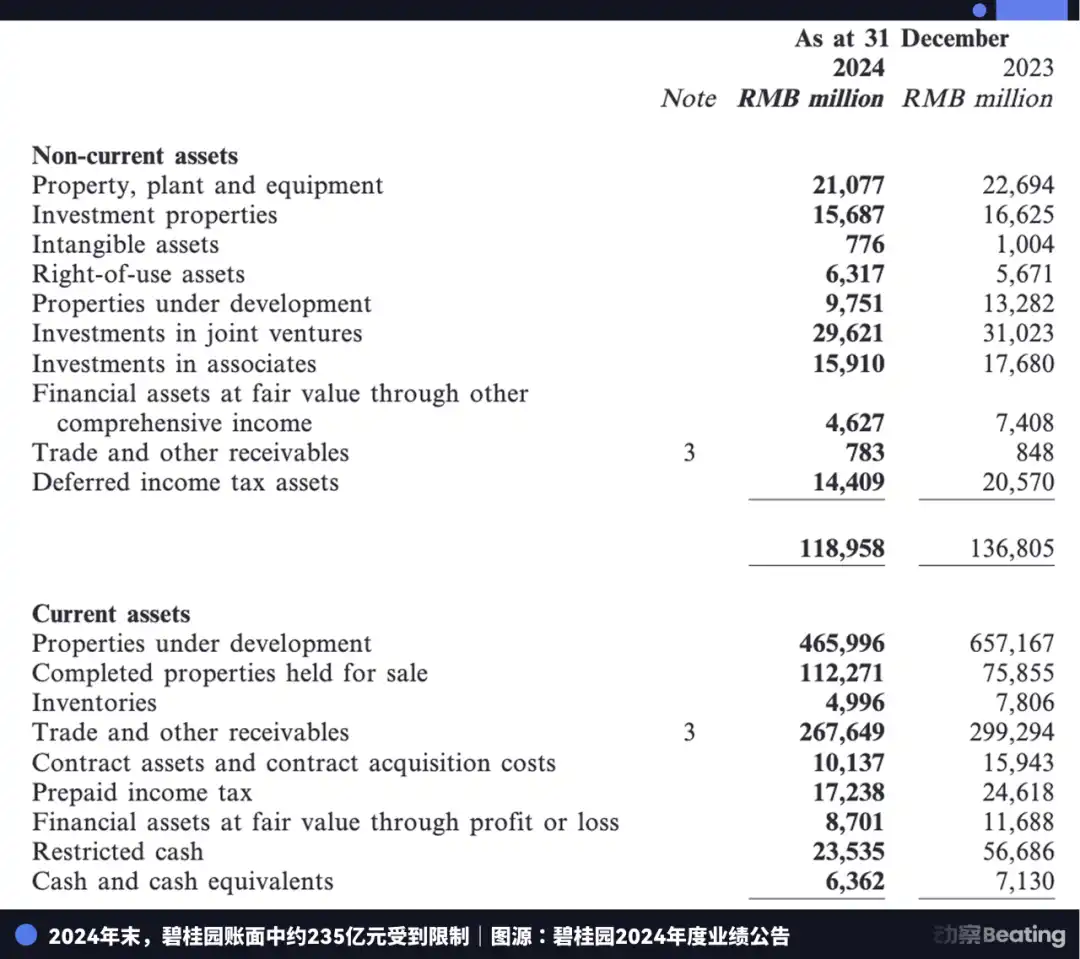
At its peak, Country Garden's equity contract sales were 558 billion yuan, with cash collection of 502.2 billion yuan, and available cash of 181.3 billion yuan. Three years later, equity contract sales dropped to 47.2 billion yuan, with a net loss attributable to the parent of 32.8 billion yuan, and total borrowings of 253.5 billion yuan. At year-end, total cash was 29.9 billion yuan, of which 23.5 billion was restricted, leaving only 6.362 billion yuan listed as cash and cash equivalents.

Two billion yuan on Country Garden's books in 2021 was an industrial investment that could wait ten years. By 2024, it was equivalent to nearly one-third of the year-end free cash.

Pre-sale payments received by sales offices do not truly belong to the developer. Behind each pre-sale payment is a house yet to be delivered; the money must eventually become steel, concrete, elevators, and keys.

From 2022 to November 2025, Country Garden delivered approximately 1.8 million housing units cumulatively. To deliver these units, starting from 2022, it sold equity stakes, hotels, major assets, and even corporate vehicles, cumulatively recovering over 65 billion yuan. The 2 billion yuan from ChangXin was part of this.

On May 31, 2024, Bloomberg reported that Country Garden Capital was seeking a buyer for its ChangXin stake, asking for about 2 billion yuan. The transaction was still under review and might not be completed. Country Garden later responded that the group was assessing its asset portfolio and potential disposal opportunities to optimize its asset-liability structure.

In June, ChangXin completed a new round of capital increase, with 12 investors subscribing to 10.8 billion yuan at 2.61 yuan per share. Based on this price, Country Garden's holding was already worth over 2.3 billion yuan.

On December 27, the seller Huibi Fund V, the buyer Hefei Jianchang, and ChangXin Technology signed a share transfer agreement, with the final price still at 2 billion yuan, approximately 2.22 yuan per share. Hefei Jianchang is directly held 87.45% by Hefei Construction Investment Holding Group, with the ultimate beneficial owner being the Hefei State-owned Assets Supervision and Administration Commission. The entity taking over Country Garden's stake was the state-owned capital of the city where ChangXin is based.

This was no longer a composed investment institution choosing the optimal exit window. Both buyer and seller knew the seller needed cash, and the last semblance of dignity Country Garden could maintain was to get its principal back intact.

The payment arrangement in the agreement also reflected this urgency. ChangXin was to provide a sealed new shareholder register on the tenth business day; Hefei Jianchang would pay in full upon receiving the register and payment notice. Hefei Construction Investment also provided joint and several guarantees for 99.985% of the consideration, up to 1.9997 billion yuan. If not completed within 180 days, the party not in breach could terminate the agreement. Other old shareholders explicitly or implicitly waived their pre-emptive rights.

Country Garden's announcement specified the use of this 2 billion yuan as general working capital, mainly for project construction such as completing pre-sold projects. ChangXin's equity was turned into construction payments for the work sites.

Judging from the changes in shareholding during the reporting period disclosed in ChangXin's prospectus, Country Garden was also the only early-stage external investor that completely sold off its holding, not waiting for the IPO. Some made small transfers, some moved shares to related platforms; only it truly cleared its position.

The Tale of Twenty-Four Cities

At the end of 1958, a large number of cadres, workers, and equipment from Shenyang's Factory 111 migrated southwest. Some sold their houses and furniture, taking their families by train and ship across thousands of kilometers to Chengdu. In January 1959, Factory 420 was formally established. It later became an important aviation engine factory in southwestern China, with workshops, dormitories, schools, and canteens all connected, the lives of generations revolving around the machinery.
Half a century later, Chengdu's eastern suburbs adjusted their industrial layout. The old site of Factory 420 was handed over for real estate development, the original factory area becoming the residential complex "Twenty-Four Cities."

Upon hearing that a state-owned factory with tens of thousands of workers was to be turned into residential housing within a year, Jia Zhangke felt there was "too much that could be said" about this event and thus filmed "24 City." In the movie, people sit in front of the old factory buildings, talking about production lines, collective dormitories, and a vanished way of life.

Country Garden's bell-ringing in Hong Kong, China, was on April 20, 2007. The issue price was HK$5.38, and it closed at HK$7.27 on its first trading day. The public offering was oversubscribed 255.7 times, freezing approximately HK$330 billion. Yang Huiyan, not yet thirty, held 58.19% of the shares; real estate created China's new richest person that morning.

Factory 420 becoming Twenty-Four Cities and Country Garden becoming a rising star in the capital market happened in the same era. There was a strong sense of direction in cities then; old factories represented the past, commodity housing represented the future; the land under the production lines was vacated, built into residential properties, and only then was its value rediscovered.

Country Garden grew precisely within this direction. It connected land, population mobility, and pre-sale funds into a massive machine, moving from Shunde to over two hundred cities. By 2019, it was attempting to channel the private capital accumulated from real estate towards rockets, chips, and new energy.

The money earned from the old industry should naturally fund the new industries not yet mature. It's just that the old cycle receded too quickly, and the new cycle arrived too slowly.

On July 27, 2026, the bell rang again. This time, standing on the podium was a wafer manufacturing enterprise.


Crypto di tendenza

Domande pertinenti

QAccording to the article, what was the opening price and market capitalization of Changxin Technology on its first day of trading on the Science and Technology Innovation Board?

AChangxin Technology opened at 49.50 yuan per share, and based on 66.881 billion shares post-issuance, its initial market capitalization reached 3.31 trillion yuan, making it the highest-valued company on the A-share market at that time.

QWhy did Country Garden (BGY) have to sell its stake in Changxin Technology in December 2024, despite having made a correct judgment about the company's potential?

ACountry Garden sold its stake because it faced severe liquidity pressure. The sharp downturn in China's real estate market, particularly impacting its core businesses in third- and fourth-tier cities, forced it to sell assets to generate cash for 'guaranteed housing delivery' and other operational needs. The 20 billion yuan recovered was equivalent to nearly one-third of its free cash at the end of 2024.

QHow did BGY Venture Capital's investment strategy, particularly its 'dumbbell strategy', differ from typical RMB funds?

ABGY Venture Capital primarily used the group's own capital, which was described as 'perpetual capital' without a fixed time limit for exit. It employed a 'dumbbell strategy,' focusing on very early-stage technological projects on one end and large-scale, near-IPO 'super unicorns' like Changxin on the other, while largely avoiding the crowded mid-stage growth investment segment typical of many RMB funds.

QWhat was the significance of Changxin Technology's DRAM production in 2019 for China's semiconductor industry?

AIn September 2019, Changxin announced the production of its independently manufactured 8Gb DDR4 DRAM. This milestone proved that a mainland Chinese company had finally crossed the threshold of 'whether it could be produced at scale' for DRAM manufacturing, addressing a critical 'chain chokepoint' in the domestic semiconductor supply chain.

QWhat broader symbolic transition does the article suggest by contrasting the stories of Country Garden's 2007 IPO and Changxin Technology's 2026 IPO?

AThe article suggests a symbolic transition from one economic era to another. Country Garden's 2007 IPO represented the peak of the real estate-driven growth model, transforming land value. In contrast, Changxin's 2026 IPO represents the rise of hard technology and advanced manufacturing. It highlights the intended but disrupted flow of capital from the 'old cycle' of real estate to fund the 'new cycle' of innovation, which arrived too slowly for capital-strapped traditional players like Country Garden.

Letture associate

In Conversation with Ray Dalio: We Are Currently in an AI Bubble, with 1% of My Portfolio in Bitcoin

Ray Dalio, founder of Bridgewater Associates, warns in an interview that the current AI boom shows classic bubble characteristics, which could lead to significant economic downturns as seen in past cycles like 1929 or 2000. He explains that speculative enthusiasm, fueled by debt and overvaluation, often precedes a crash when rising rates or taxation force asset sales, causing widespread losses and recession. Dalio also outlines his "Big Cycle" theory, describing an approximate 80-year pattern where widening wealth gaps, massive government deficits, and shifting geopolitical power (like China's rise) create internal conflict and global instability. He emphasizes that we are in a late-cycle, transitional phase where traditional powers like the US and UK face decline. For personal wealth protection, Dalio advises diversification beyond cash into assets like stocks, bonds, real estate, and particularly gold, which he prefers over Bitcoin. While he holds about 1% of his portfolio in Bitcoin as a non-printable hard asset, he views gold as more secure from technological or governmental threats. Regarding AI's impact, Dalio believes it will disproportionately benefit capital owners, worsening inequality by replacing both physical and cognitive labor. He suggests that human intuition and emotional intelligence, combined with AI, will be key for future workers. On taxation, Dalio argues that wealth taxes are impractical and risk triggering asset sell-offs, reducing productive investment. He points to the UK as a cautionary example of debt, low productivity, and political strife. Geopolitically, Dalio foresees a more regionalized world, with the US showing weakness in prolonged conflicts like with Iran, akin to past imperial declines. The ideal outcome, he suggests, is coexisting powerful blocs (e.g., Americas, China-Asia Pacific) without major war.

marsbit1 h fa

In Conversation with Ray Dalio: We Are Currently in an AI Bubble, with 1% of My Portfolio in Bitcoin

marsbit1 h fa

Daily 7.2 Trillion KRW: Foreign Capital's Record Net Buying on Friday! Wall Street Says Headwinds for Korean Stock Fund Flows Have Subsided

South Korean stock market sees a dramatic shift in fund flows. On July 31, foreign investors made a record net purchase of approximately KRW 7.2 trillion in KOSPI stocks, marking a fundamental reversal from the persistent large-scale net outflows seen in previous months. This contributed to a significant narrowing of foreign net selling in July to KRW 9.8 trillion, down sharply from KRW 48.4 trillion in June and KRW 44.5 trillion in May. Simultaneously, domestic institutional pressure eased. South Korean pension funds and asset managers turned to a net buying position in July, purchasing KRW 1.0 trillion worth of KOSPI shares, contrasting with net sales in May and June. Market volatility is expected to be dampened by new financial regulations. Effective July 31, the Financial Services Commission tightened access for retail investors to single-stock leveraged ETFs by raising the minimum cash deposit requirement. Trading volumes for these products subsequently dropped to about 50% of their monthly average. Citigroup Research maintains its year-end KOSPI target of 10,000 points. The firm cites several supportive factors: the substantial easing of headwinds from capital outflows, a robust fundamental outlook for the semiconductor sector, historically low market valuations, strong economic fundamentals, and the potential for policy support from financial authorities if needed.

marsbit1 h fa

Daily 7.2 Trillion KRW: Foreign Capital's Record Net Buying on Friday! Wall Street Says Headwinds for Korean Stock Fund Flows Have Subsided

marsbit1 h fa

Thanks to Dice Rolls, Bitcoin Keys Are Stored Offline, But Not Everyone Will Do It

The article discusses using dice rolls to generate secure Bitcoin wallet seeds, providing entropy independent of potentially flawed hardware random number generators. It explains that each fair dice roll offers about 2.585 bits of entropy, with around 50 rolls needed for a standard 12-word seed phrase and 99+ recommended for higher security. This method gained attention after a vulnerability was revealed in some Coldcard hardware wallets, where a faulty firmware RNG (dating back to 2021) compromised generated keys. The analysis notes that while a dice-generated main seed was safe from this specific flaw, other Coldcard functions (like creating paper wallets, backup keys, or passwords) could still be vulnerable if they used the defective RNG. The piece argues that while dice-based entropy is technically robust, the manual process is error-prone, tedious, and unrealistic for most new users, who might make mistakes in recording or inputting rolls. It concludes that while manual entropy generation should remain an option for advanced users, the long-term goal is to develop reliable, user-friendly hardware and software that securely generates randomness without requiring specialized knowledge. Coldcard users are advised to check their firmware version and replace any secondary secrets (like paper wallet keys) created with vulnerable devices, while also considering multi-signature setups with devices from different manufacturers for added security.

cryptonews.ru6 h fa

Thanks to Dice Rolls, Bitcoin Keys Are Stored Offline, But Not Everyone Will Do It

cryptonews.ru6 h fa

Trading

Spot

Articoli Popolari

Cosa è $S$

Comprendere SPERO: Una Panoramica Completa Introduzione a SPERO Mentre il panorama dell'innovazione continua a evolversi, l'emergere delle tecnologie web3 e dei progetti di criptovaluta gioca un ruolo fondamentale nel plasmare il futuro digitale. Un progetto che ha attirato l'attenzione in questo campo dinamico è SPERO, denotato come SPERO,$$s$. Questo articolo mira a raccogliere e presentare informazioni dettagliate su SPERO, per aiutare gli appassionati e gli investitori a comprendere le sue basi, obiettivi e innovazioni nei domini web3 e crypto. Che cos'è SPERO,$$s$? SPERO,$$s$ è un progetto unico all'interno dello spazio crypto che cerca di sfruttare i principi della decentralizzazione e della tecnologia blockchain per creare un ecosistema che promuove l'impegno, l'utilità e l'inclusione finanziaria. Il progetto è progettato per facilitare interazioni peer-to-peer in modi nuovi, fornendo agli utenti soluzioni e servizi finanziari innovativi. Al suo interno, SPERO,$$s$ mira a responsabilizzare gli individui fornendo strumenti e piattaforme che migliorano l'esperienza dell'utente nello spazio delle criptovalute. Questo include la possibilità di metodi di transazione più flessibili, la promozione di iniziative guidate dalla comunità e la creazione di percorsi per opportunità finanziarie attraverso applicazioni decentralizzate (dApps). La visione sottostante di SPERO,$$s$ ruota attorno all'inclusività, cercando di colmare le lacune all'interno della finanza tradizionale mentre sfrutta i vantaggi della tecnologia blockchain. Chi è il Creatore di SPERO,$$s$? L'identità del creatore di SPERO,$$s$ rimane piuttosto oscura, poiché ci sono risorse pubblicamente disponibili limitate che forniscono informazioni dettagliate sul suo fondatore o fondatori. Questa mancanza di trasparenza può derivare dall'impegno del progetto per la decentralizzazione—un ethos che molti progetti web3 condividono, dando priorità ai contributi collettivi rispetto al riconoscimento individuale. Centrando le discussioni attorno alla comunità e ai suoi obiettivi collettivi, SPERO,$$s$ incarna l'essenza dell'empowerment senza mettere in evidenza individui specifici. Pertanto, comprendere l'etica e la missione di SPERO rimane più importante che identificare un creatore singolo. Chi sono gli Investitori di SPERO,$$s$? SPERO,$$s$ è supportato da una varietà di investitori che vanno dai capitalisti di rischio agli investitori angelici dedicati a promuovere l'innovazione nel settore crypto. Il focus di questi investitori generalmente si allinea con la missione di SPERO—dando priorità a progetti che promettono avanzamenti tecnologici sociali, inclusività finanziaria e governance decentralizzata. Queste fondazioni di investitori sono tipicamente interessate a progetti che non solo offrono prodotti innovativi, ma contribuiscono anche positivamente alla comunità blockchain e ai suoi ecosistemi. Il supporto di questi investitori rafforza SPERO,$$s$ come un concorrente degno di nota nel dominio in rapida evoluzione dei progetti crypto. Come Funziona SPERO,$$s$? SPERO,$$s$ impiega un framework multifunzionale che lo distingue dai progetti di criptovaluta convenzionali. Ecco alcune delle caratteristiche chiave che sottolineano la sua unicità e innovazione: Governance Decentralizzata: SPERO,$$s$ integra modelli di governance decentralizzati, responsabilizzando gli utenti a partecipare attivamente ai processi decisionali riguardanti il futuro del progetto. Questo approccio favorisce un senso di proprietà e responsabilità tra i membri della comunità. Utilità del Token: SPERO,$$s$ utilizza il proprio token di criptovaluta, progettato per servire varie funzioni all'interno dell'ecosistema. Questi token abilitano transazioni, premi e la facilitazione dei servizi offerti sulla piattaforma, migliorando l'impegno e l'utilità complessivi. Architettura Stratificata: L'architettura tecnica di SPERO,$$s$ supporta la modularità e la scalabilità, consentendo un'integrazione fluida di funzionalità e applicazioni aggiuntive man mano che il progetto evolve. Questa adattabilità è fondamentale per mantenere la rilevanza nel panorama crypto in continua evoluzione. Coinvolgimento della Comunità: Il progetto enfatizza iniziative guidate dalla comunità, impiegando meccanismi che incentivano la collaborazione e il feedback. Nutrendo una comunità forte, SPERO,$$s$ può affrontare meglio le esigenze degli utenti e adattarsi alle tendenze di mercato. Focus sull'Inclusione: Offrendo basse commissioni di transazione e interfacce user-friendly, SPERO,$$s$ mira ad attrarre una base utenti diversificata, inclusi individui che potrebbero non aver precedentemente interagito nello spazio crypto. Questo impegno per l'inclusione si allinea con la sua missione generale di empowerment attraverso l'accessibilità. Cronologia di SPERO,$$s$ Comprendere la storia di un progetto fornisce preziose intuizioni sulla sua traiettoria di sviluppo e sui traguardi. Di seguito è riportata una cronologia suggerita che mappa eventi significativi nell'evoluzione di SPERO,$$s$: Fase di Concettualizzazione e Ideazione: Le idee iniziali che formano la base di SPERO,$$s$ sono state concepite, allineandosi strettamente con i principi di decentralizzazione e focus sulla comunità all'interno dell'industria blockchain. Lancio del Whitepaper del Progetto: Dopo la fase concettuale, è stato rilasciato un whitepaper completo che dettaglia la visione, gli obiettivi e l'infrastruttura tecnologica di SPERO,$$s$ per suscitare interesse e feedback dalla comunità. Costruzione della Comunità e Prime Interazioni: Sono stati effettuati sforzi attivi di outreach per costruire una comunità di early adopters e potenziali investitori, facilitando discussioni attorno agli obiettivi del progetto e ottenendo supporto. Evento di Generazione del Token: SPERO,$$s$ ha condotto un evento di generazione del token (TGE) per distribuire i propri token nativi ai primi sostenitori e stabilire una liquidità iniziale all'interno dell'ecosistema. Lancio della Prima dApp: La prima applicazione decentralizzata (dApp) associata a SPERO,$$s$ è stata attivata, consentendo agli utenti di interagire con le funzionalità principali della piattaforma. Sviluppo Continuo e Partnership: Aggiornamenti e miglioramenti continui alle offerte del progetto, inclusi partnership strategiche con altri attori nello spazio blockchain, hanno plasmato SPERO,$$s$ in un concorrente competitivo e in evoluzione nel mercato crypto. Conclusione SPERO,$$s$ rappresenta una testimonianza del potenziale del web3 e delle criptovalute di rivoluzionare i sistemi finanziari e responsabilizzare gli individui. Con un impegno per la governance decentralizzata, il coinvolgimento della comunità e funzionalità progettate in modo innovativo, apre la strada verso un panorama finanziario più inclusivo. Come per qualsiasi investimento nello spazio crypto in rapida evoluzione, si incoraggiano potenziali investitori e utenti a ricercare approfonditamente e a impegnarsi in modo riflessivo con gli sviluppi in corso all'interno di SPERO,$$s$. Il progetto mostra lo spirito innovativo dell'industria crypto, invitando a ulteriori esplorazioni delle sue innumerevoli possibilità. Mentre il percorso di SPERO,$$s$ è ancora in fase di sviluppo, i suoi principi fondamentali potrebbero effettivamente influenzare il futuro di come interagiamo con la tecnologia, la finanza e tra di noi in ecosistemi digitali interconnessi.

185 Totale visualizzazioniPubblicato il 2024.12.17Aggiornato il 2024.12.17

Cosa è $S$

Cosa è AGENT S

Agent S: Il Futuro dell'Interazione Autonoma in Web3 Introduzione Nel panorama in continua evoluzione di Web3 e criptovalute, le innovazioni stanno costantemente ridefinendo il modo in cui gli individui interagiscono con le piattaforme digitali. Uno di questi progetti pionieristici, Agent S, promette di rivoluzionare l'interazione uomo-computer attraverso il suo framework agentico aperto. Aprendo la strada a interazioni autonome, Agent S mira a semplificare compiti complessi, offrendo applicazioni trasformative nell'intelligenza artificiale (AI). Questa esplorazione dettagliata approfondirà le complessità del progetto, le sue caratteristiche uniche e le implicazioni per il dominio delle criptovalute. Cos'è Agent S? Agent S si presenta come un innovativo framework agentico aperto, progettato specificamente per affrontare tre sfide fondamentali nell'automazione dei compiti informatici: Acquisizione di Conoscenze Specifiche del Dominio: Il framework apprende in modo intelligente da varie fonti di conoscenza esterne ed esperienze interne. Questo approccio duale gli consente di costruire un ricco repository di conoscenze specifiche del dominio, migliorando le sue prestazioni nell'esecuzione dei compiti. Pianificazione su Lungo Orizzonte di Compiti: Agent S impiega una pianificazione gerarchica potenziata dall'esperienza, un approccio strategico che facilita la suddivisione e l'esecuzione efficiente di compiti complessi. Questa caratteristica migliora significativamente la sua capacità di gestire più sottocompiti in modo efficiente ed efficace. Gestione di Interfacce Dinamiche e Non Uniformi: Il progetto introduce l'Interfaccia Agente-Computer (ACI), una soluzione innovativa che migliora l'interazione tra agenti e utenti. Utilizzando Modelli Linguistici Multimodali di Grandi Dimensioni (MLLM), Agent S può navigare e manipolare senza sforzo diverse interfacce grafiche utente. Attraverso queste caratteristiche pionieristiche, Agent S fornisce un framework robusto che affronta le complessità coinvolte nell'automazione dell'interazione umana con le macchine, preparando il terreno per innumerevoli applicazioni nell'AI e oltre. Chi è il Creatore di Agent S? Sebbene il concetto di Agent S sia fondamentalmente innovativo, informazioni specifiche sul suo creatore rimangono elusive. Il creatore è attualmente sconosciuto, il che evidenzia sia la fase embrionale del progetto sia la scelta strategica di mantenere i membri fondatori sotto anonimato. Indipendentemente dall'anonimato, l'attenzione rimane sulle capacità e sul potenziale del framework. Chi sono gli Investitori di Agent S? Poiché Agent S è relativamente nuovo nell'ecosistema crittografico, informazioni dettagliate riguardanti i suoi investitori e sostenitori finanziari non sono documentate esplicitamente. La mancanza di approfondimenti pubblicamente disponibili sulle fondazioni di investimento o sulle organizzazioni che supportano il progetto solleva interrogativi sulla sua struttura di finanziamento e sulla roadmap di sviluppo. Comprendere il supporto è cruciale per valutare la sostenibilità del progetto e il suo potenziale impatto sul mercato. Come Funziona Agent S? Al centro di Agent S si trova una tecnologia all'avanguardia che gli consente di funzionare efficacemente in contesti diversi. Il suo modello operativo è costruito attorno a diverse caratteristiche chiave: Interazione Uomo-Computer Simile a Quella Umana: Il framework offre una pianificazione AI avanzata, cercando di rendere le interazioni con i computer più intuitive. Mimando il comportamento umano nell'esecuzione dei compiti, promette di elevare le esperienze degli utenti. Memoria Narrativa: Utilizzata per sfruttare esperienze di alto livello, Agent S utilizza la memoria narrativa per tenere traccia delle storie dei compiti, migliorando così i suoi processi decisionali. Memoria Episodica: Questa caratteristica fornisce agli utenti una guida passo-passo, consentendo al framework di offrire supporto contestuale mentre i compiti si sviluppano. Supporto per OpenACI: Con la capacità di funzionare localmente, Agent S consente agli utenti di mantenere il controllo sulle proprie interazioni e flussi di lavoro, allineandosi con l'etica decentralizzata di Web3. Facile Integrazione con API Esterne: La sua versatilità e compatibilità con varie piattaforme AI garantiscono che Agent S possa adattarsi senza problemi agli ecosistemi tecnologici esistenti, rendendolo una scelta attraente per sviluppatori e organizzazioni. Queste funzionalità contribuiscono collettivamente alla posizione unica di Agent S all'interno dello spazio crittografico, poiché automatizza compiti complessi e multi-fase con un intervento umano minimo. Man mano che il progetto evolve, le sue potenziali applicazioni in Web3 potrebbero ridefinire il modo in cui si svolgono le interazioni digitali. Cronologia di Agent S Lo sviluppo e le tappe di Agent S possono essere riassunti in una cronologia che evidenzia i suoi eventi significativi: 27 Settembre 2024: Il concetto di Agent S è stato lanciato in un documento di ricerca completo intitolato “Un Framework Agentico Aperto che Usa i Computer Come un Umano”, mostrando le basi per il progetto. 10 Ottobre 2024: Il documento di ricerca è stato reso pubblicamente disponibile su arXiv, offrendo un'esplorazione approfondita del framework e della sua valutazione delle prestazioni basata sul benchmark OSWorld. 12 Ottobre 2024: È stata rilasciata una presentazione video, fornendo un'idea visiva delle capacità e delle caratteristiche di Agent S, coinvolgendo ulteriormente potenziali utenti e investitori. Questi indicatori nella cronologia non solo illustrano i progressi di Agent S, ma indicano anche il suo impegno per la trasparenza e il coinvolgimento della comunità. Punti Chiave su Agent S Man mano che il framework Agent S continua a evolversi, diversi attributi chiave si distinguono, sottolineando la sua natura innovativa e il potenziale: Framework Innovativo: Progettato per fornire un uso intuitivo dei computer simile all'interazione umana, Agent S porta un approccio nuovo all'automazione dei compiti. Interazione Autonoma: La capacità di interagire autonomamente con i computer attraverso GUI segna un passo avanti verso soluzioni informatiche più intelligenti ed efficienti. Automazione di Compiti Complessi: Con la sua metodologia robusta, può automatizzare compiti complessi e multi-fase, rendendo i processi più veloci e meno soggetti a errori. Miglioramento Continuo: I meccanismi di apprendimento consentono ad Agent S di migliorare dalle esperienze passate, migliorando continuamente le sue prestazioni e la sua efficacia. Versatilità: La sua adattabilità attraverso diversi ambienti operativi come OSWorld e WindowsAgentArena garantisce che possa servire un'ampia gamma di applicazioni. Man mano che Agent S si posiziona nel panorama di Web3 e delle criptovalute, il suo potenziale per migliorare le capacità di interazione e automatizzare i processi segna un significativo avanzamento nelle tecnologie AI. Attraverso il suo framework innovativo, Agent S esemplifica il futuro delle interazioni digitali, promettendo un'esperienza più fluida ed efficiente per gli utenti in vari settori. Conclusione Agent S rappresenta un audace passo avanti nell'unione tra AI e Web3, con la capacità di ridefinire il modo in cui interagiamo con la tecnologia. Sebbene sia ancora nelle sue fasi iniziali, le possibilità per la sua applicazione sono vaste e coinvolgenti. Attraverso il suo framework completo che affronta sfide critiche, Agent S mira a portare le interazioni autonome al centro dell'esperienza digitale. Man mano che ci addentriamo nei regni delle criptovalute e della decentralizzazione, progetti come Agent S giocheranno senza dubbio un ruolo cruciale nel plasmare il futuro della tecnologia e della collaborazione uomo-computer.

644 Totale visualizzazioniPubblicato il 2025.01.14Aggiornato il 2025.01.14

Cosa è AGENT S

Come comprare S

Benvenuto in HTX.com! Abbiamo reso l'acquisto di Sonic (S) semplice e conveniente. Segui la nostra guida passo passo per intraprendere il tuo viaggio nel mondo delle criptovalute.Step 1: Crea il tuo Account HTXUsa la tua email o numero di telefono per registrarti il tuo account gratuito su HTX. Vivi un'esperienza facile e sblocca tutte le funzionalità,Crea il mio accountStep 2: Vai in Acquista crypto e seleziona il tuo metodo di pagamentoCarta di credito/debito: utilizza la tua Visa o Mastercard per acquistare immediatamente SonicS.Bilancio: Usa i fondi dal bilancio del tuo account HTX per fare trading senza problemi.Terze parti: abbiamo aggiunto metodi di pagamento molto utilizzati come Google Pay e Apple Pay per maggiore comodità.P2P: Fai trading direttamente con altri utenti HTX.Over-the-Counter (OTC): Offriamo servizi su misura e tassi di cambio competitivi per i trader.Step 3: Conserva Sonic (S)Dopo aver acquistato Sonic (S), conserva nel tuo account HTX. In alternativa, puoi inviare tramite trasferimento blockchain o scambiare per altre criptovalute.Step 4: Scambia Sonic (S)Scambia facilmente Sonic (S) nel mercato spot di HTX. Accedi al tuo account, seleziona la tua coppia di trading, esegui le tue operazioni e monitora in tempo reale. Offriamo un'esperienza user-friendly sia per chi ha appena iniziato che per i trader più esperti.

1.3k Totale visualizzazioniPubblicato il 2025.01.15Aggiornato il 2026.06.02

Come comprare S

Discussioni

Benvenuto nella Community HTX. Qui puoi rimanere informato sugli ultimi sviluppi della piattaforma e accedere ad approfondimenti esperti sul mercato. Le opinioni degli utenti sul prezzo di S S sono presentate come di seguito.

活动图片













